2026 BMW 1 Series 118 review
The cheapest BMW you can buy still feels properly premium, drives with real intent and comes loaded with kit - even if the badge tax is real.

Rob Leigh
Pros
- Genuinely engaging chassis with adaptive damping standard
- Premium cabin with strong tech and standard M Sport kit
- Characterful three-cylinder turbo that stays light on fuel
Cons
- Pushing $66k driveaway is steep for a 1.5-litre triple
- Ride leans firmer than some buyers will tolerate
- Climate controls buried in the touchscreen
Our verdict
The 118 is the BMW for buyers who want the badge, the chassis tuning and the cabin polish without leaping into M135 money. It nails the fundamentals of a premium European hatch and throws in a surprising amount of standard kit. The catch is the price has crept high enough that the value argument needs working through carefully.
What does the BMW 118 cost in Australia?
The 118 M Sport lists at $59,500 before on-road costs, which works out to roughly $66,000 driveaway depending on your state. That’s $800 more than when it launched, and it means the cheapest BMW you can buy now costs almost exactly the same as a Volkswagen Golf GTI.
Three variants make up the local range: the 118, the 120 at $62,500 and the M135 xDrive at $85,500, all before on-roads. There’s no diesel, no plug-in hybrid and no full EV, which is starting to feel like a missed opportunity in this segment.
| Specifications | 118 M Sport (tested) | 120 M Sport | M135 xDrive |
| Powertrain | 1.5L turbo petrol | 2.0L turbo petrol | 2.0L turbo petrol |
| Power | Torque | 115kW | 230Nm | 150kW | 300Nm | 233kW | 400Nm |
| Transmission | 7 speed DCT | 7 speed DCT | 7 speed DCT |
| Drivetrain | FWD | FWD | AWD |
| 0-100km/h | 8.5 sec | 7.2 sec | 4.9 sec |
| Fuel use (claimed) | 6.4L/100km | 7.0L/100km | 7.8L/100km |
| ANCAP | Four stars (2025) | Four stars (2025) | Four stars (2025) |
| Warranty | 5 years | Unlimited km | 5 years | Unlimited km | 5 years | Unlimited km |
View BMW 1 Series driveaway pricing and specifications →
What does the BMW 118 look like?
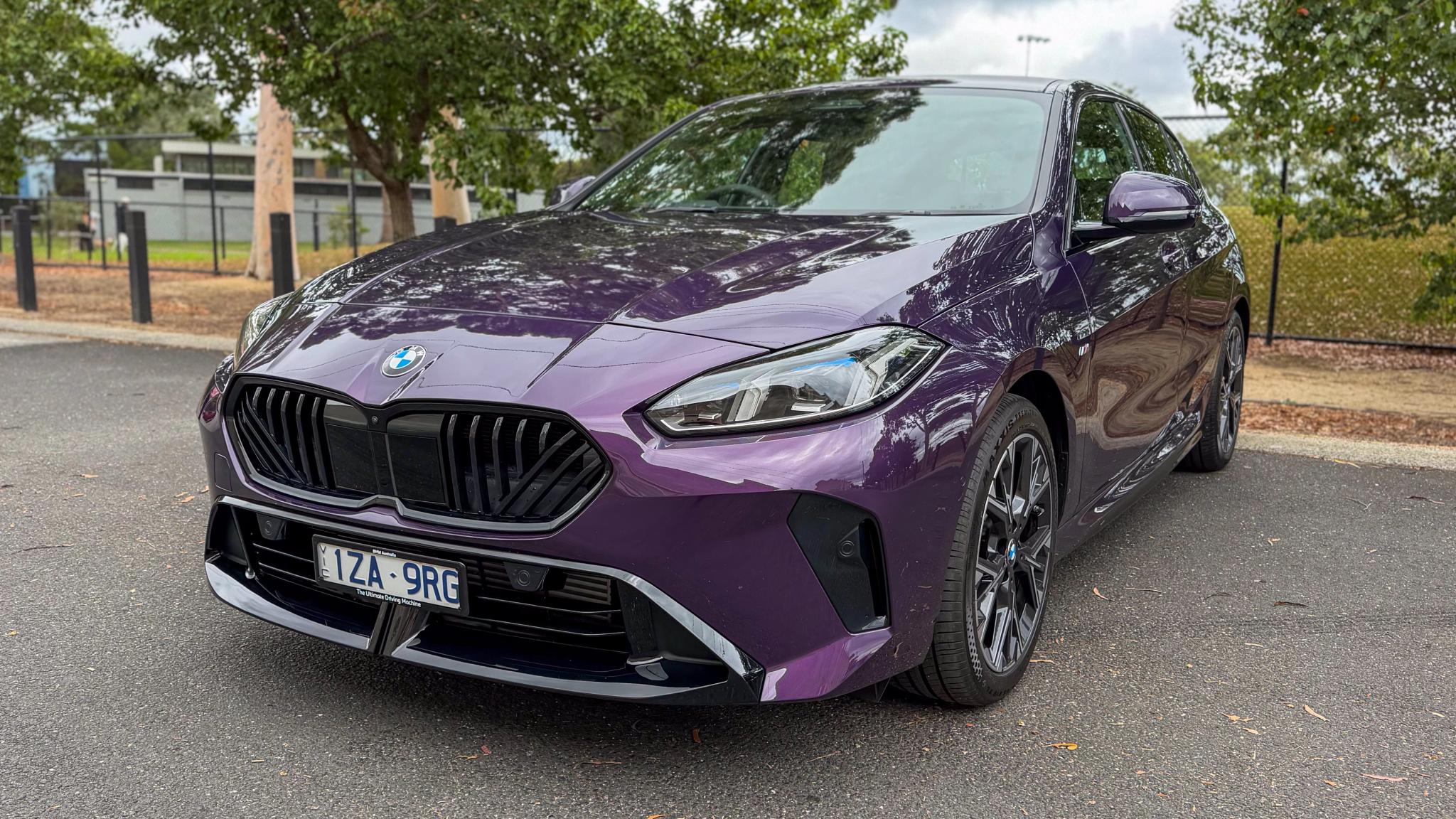
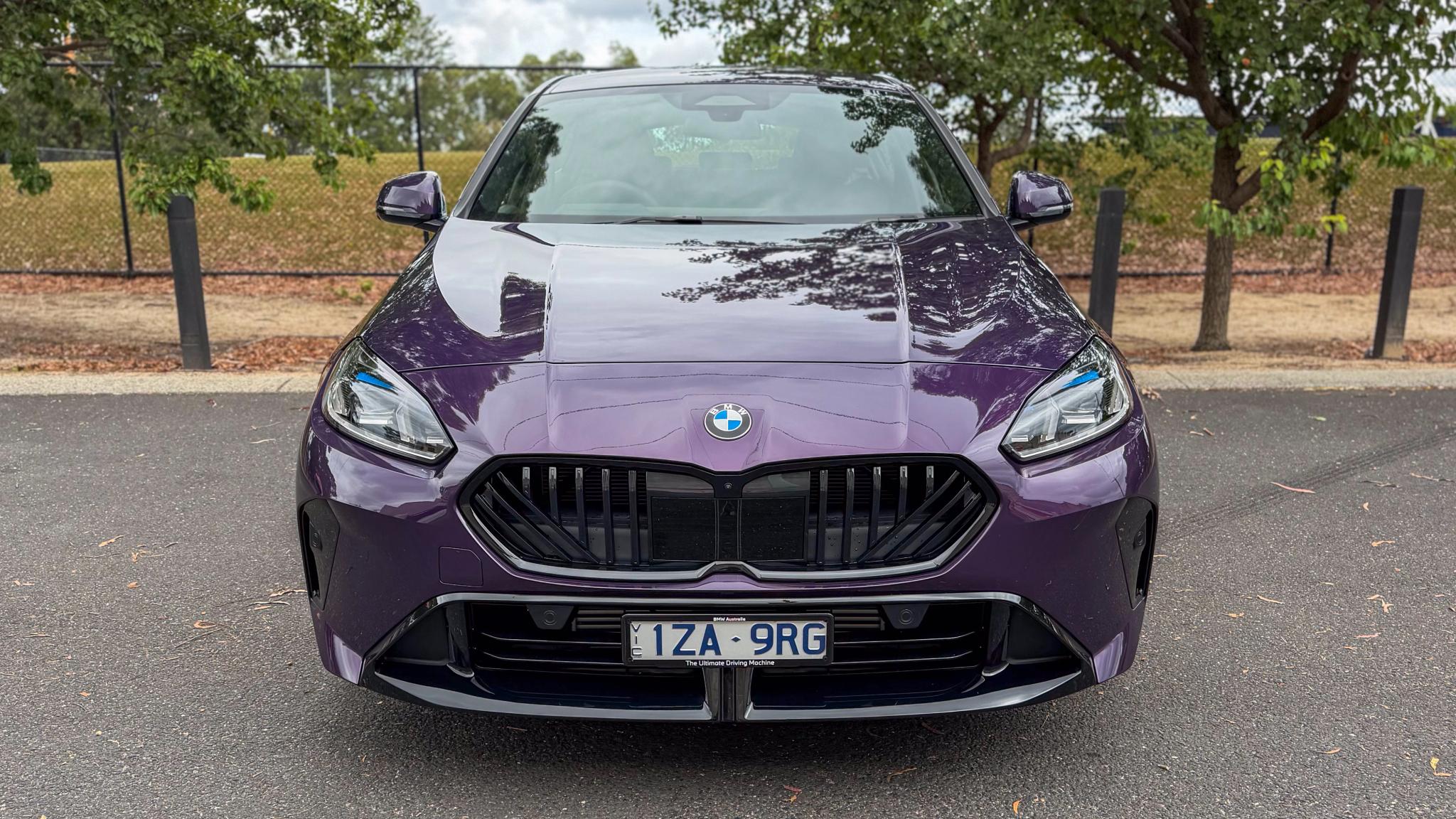
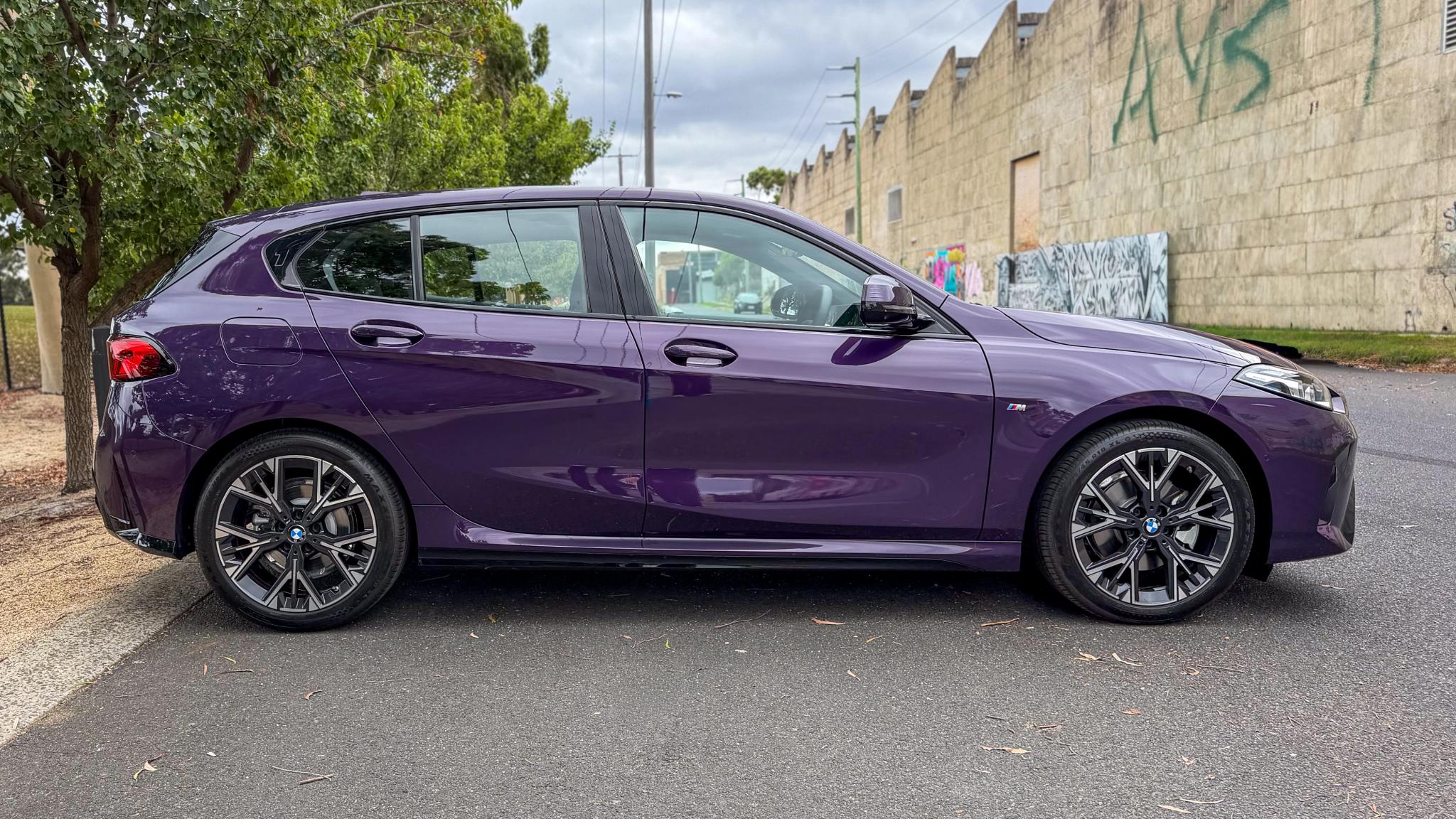
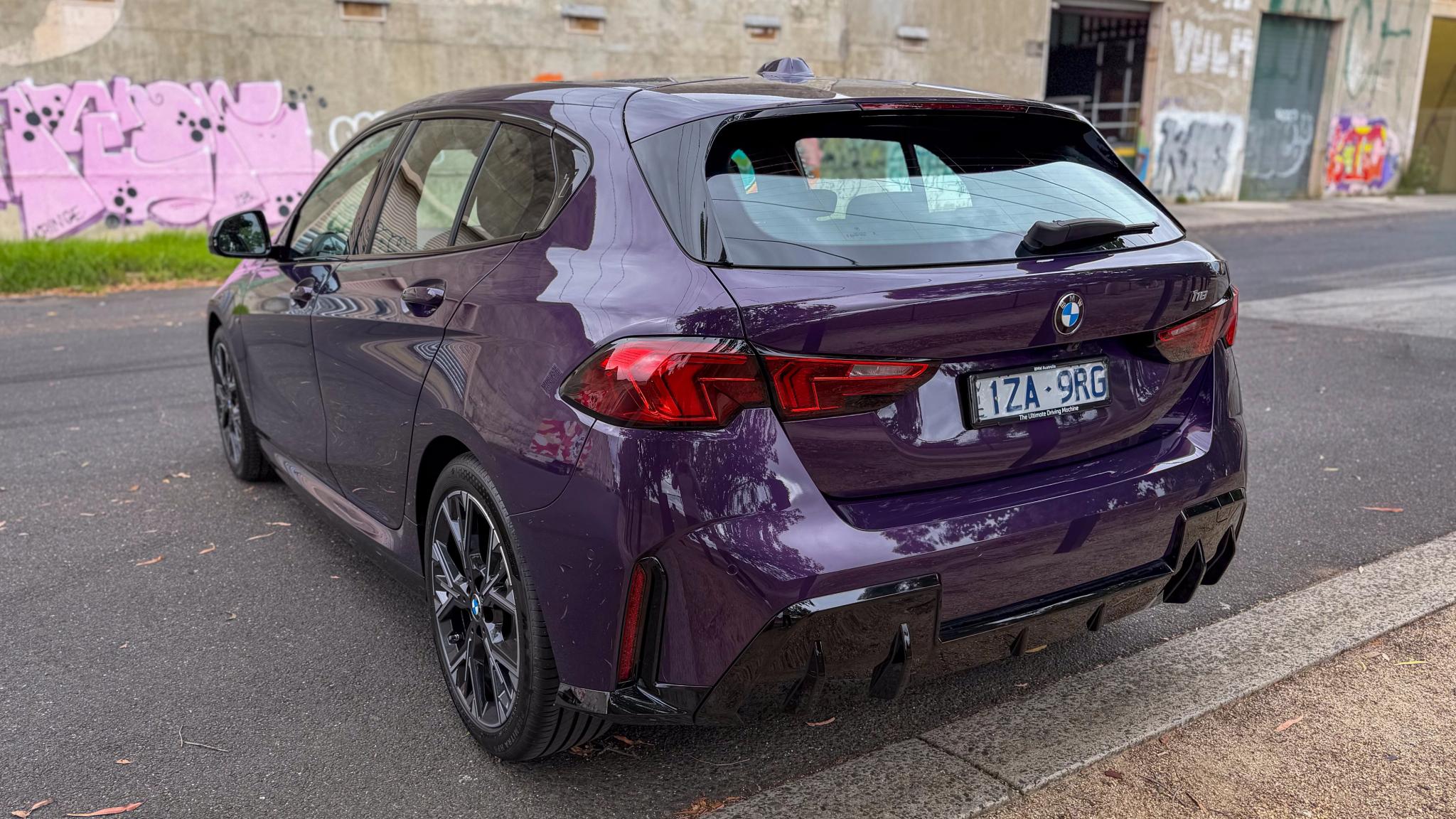
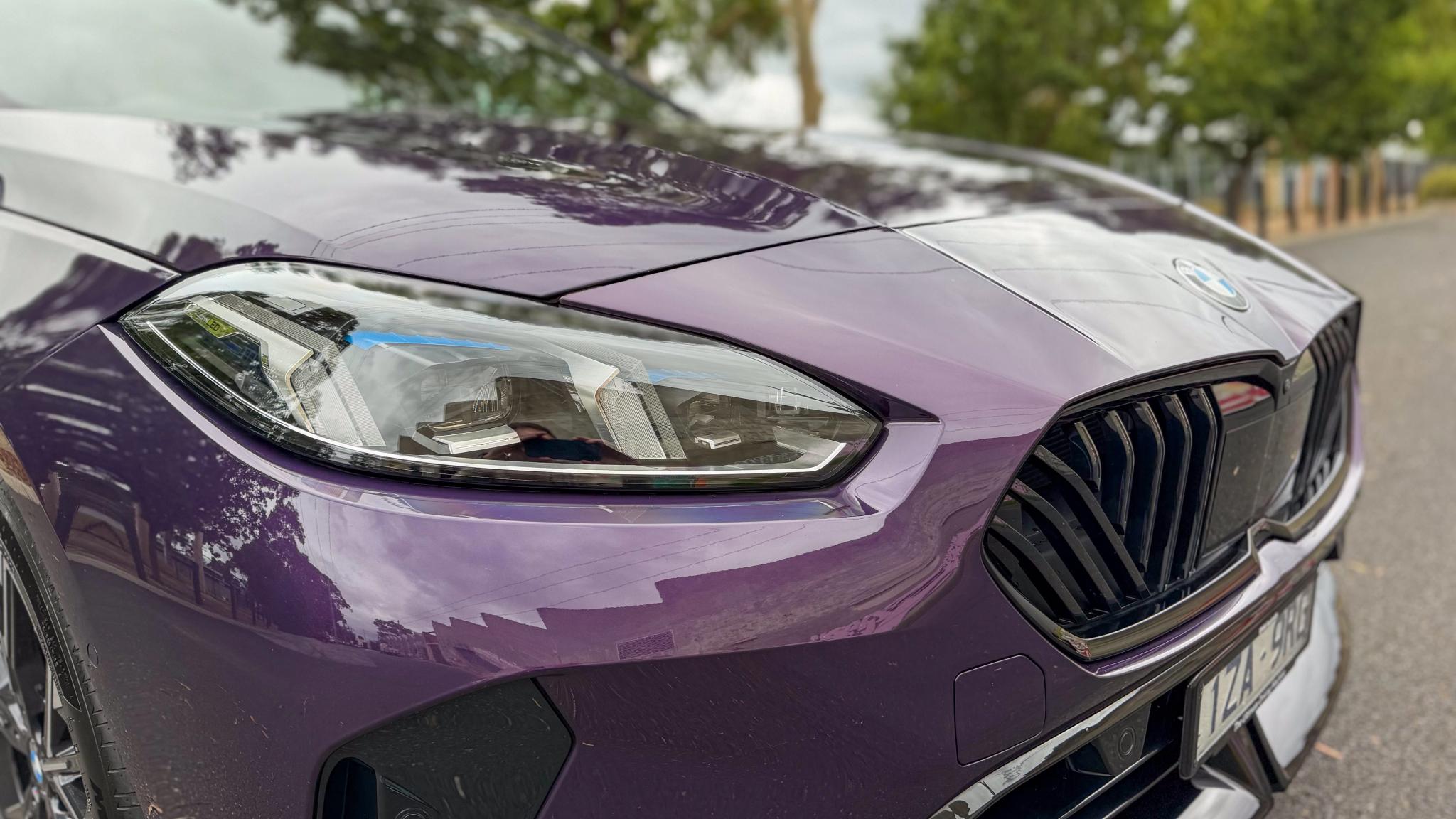
Styling is where the 118 splits opinion. BMW has gone bigger and bolder with the front end and the latest grille treatment is restrained by recent BMW standards, which is meant as a compliment. The proportions are tidier than the previous F40 hatch, helped by a 42mm stretch in length without any change to the wheelbase.
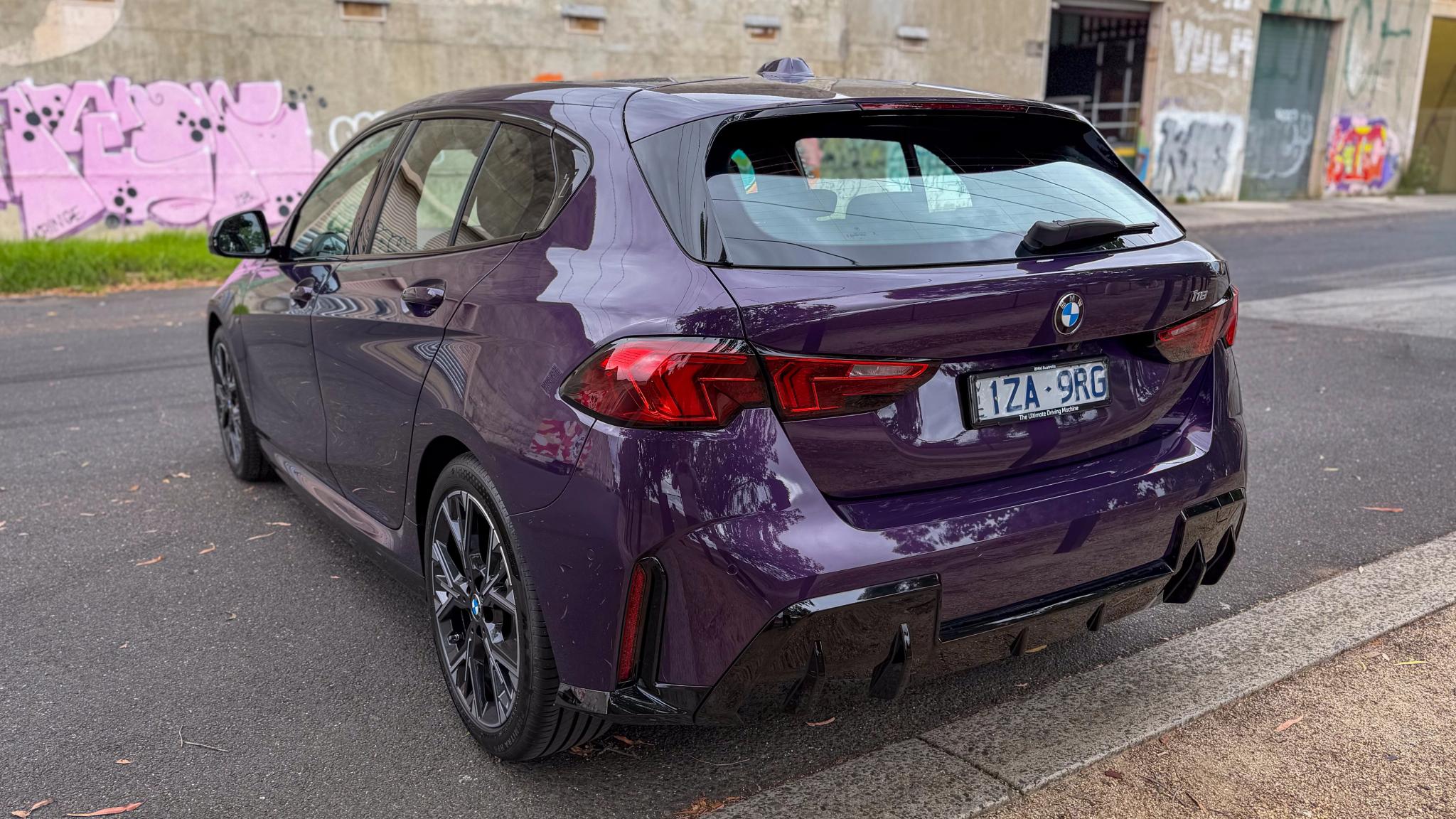
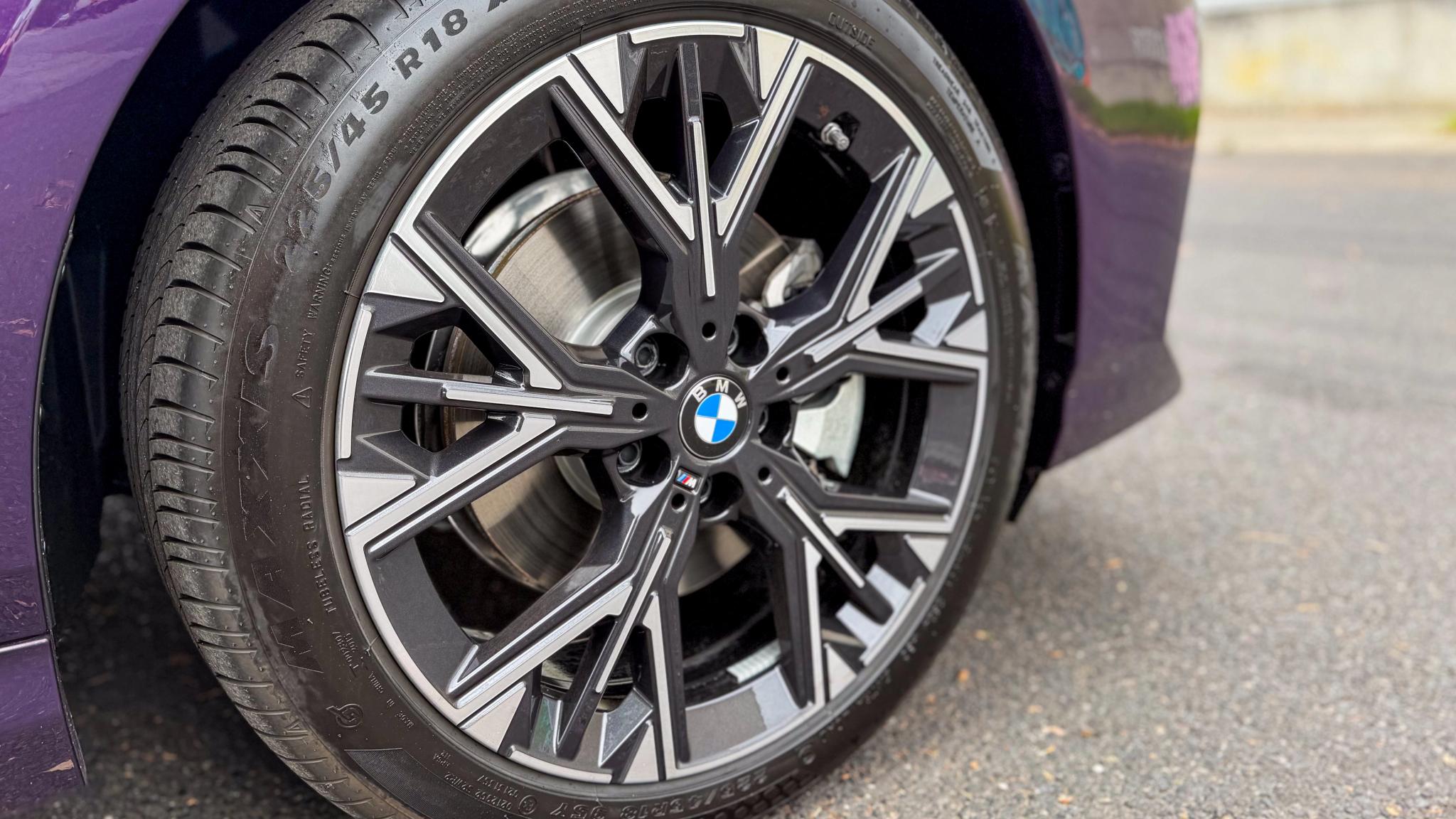
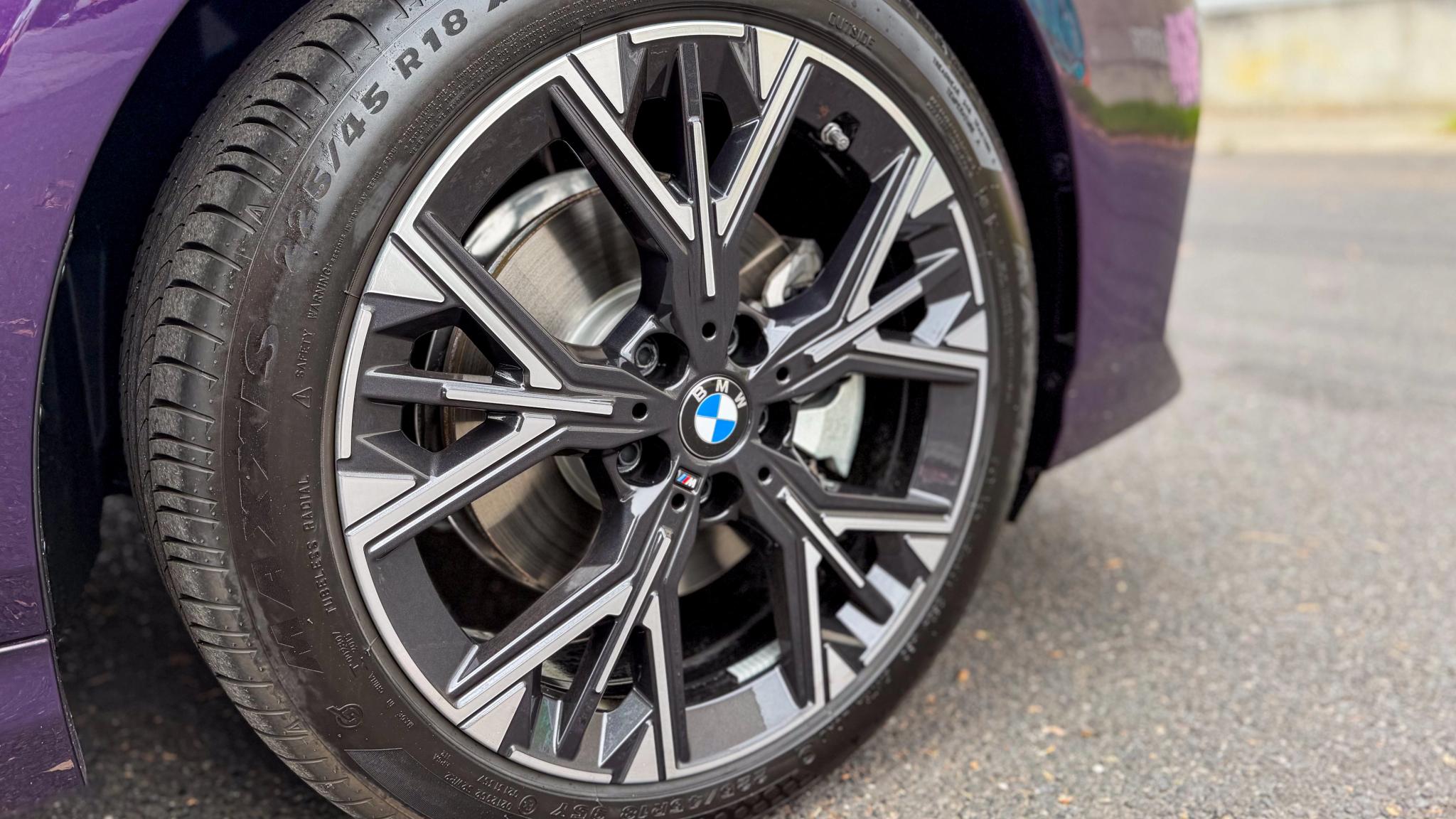
Standard M Sport package does the heavy lifting visually. You get blacked-out trim, sportier bumpers, M door mirrors and 18-inch alloys as standard, with 19s available through the Enhancement Package. Adaptive LED headlights are part of the deal too, which adds genuine presence at night.
It's not a hatch that turns heads in the way an old E87 130i might have, but it looks expensive in the metal and the M Sport detailing earns its keep.
What is the BMW 118 like inside?
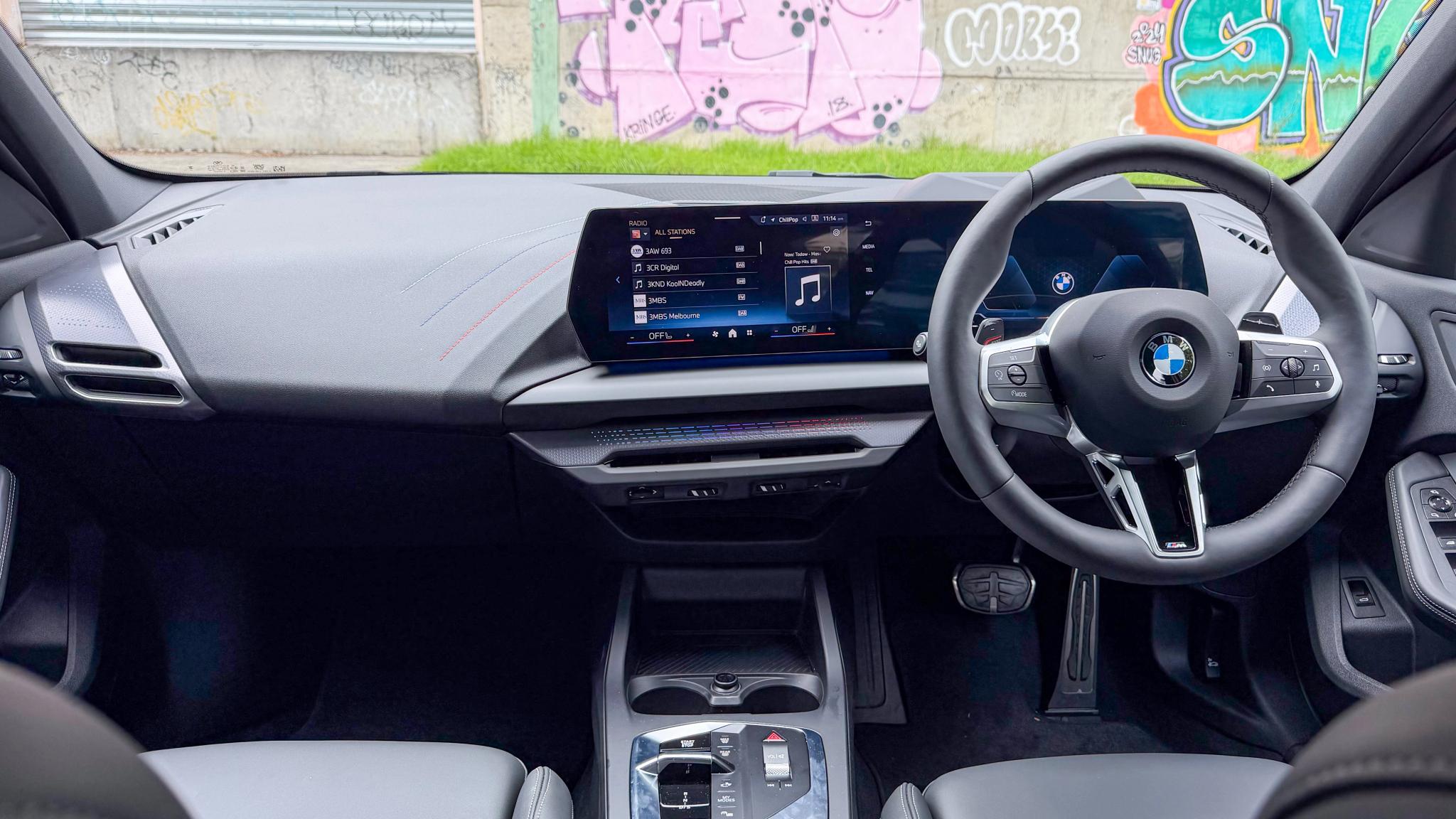
The cabin feels closer to a 3 Series than to anything in the small hatch segment, and the materials genuinely hold up under scrutiny. Soft-touch surfaces, properly weighted switchgear on the wheel, and a clean dash architecture built around the curved display housing the 10.25-inch driver cluster and 10.7-inch central touchscreen.
BMW's latest Operating System 9 runs the show, and it's a mixed result. The graphics are slick, wireless Apple CarPlay and Android Auto connect cleanly. The frustration is that almost every secondary function lives behind a menu, including climate. BMW has kept a permanent climate strip at the bottom of the screen, which helps, but physical dials would be better and we shouldn't have to keep saying that.
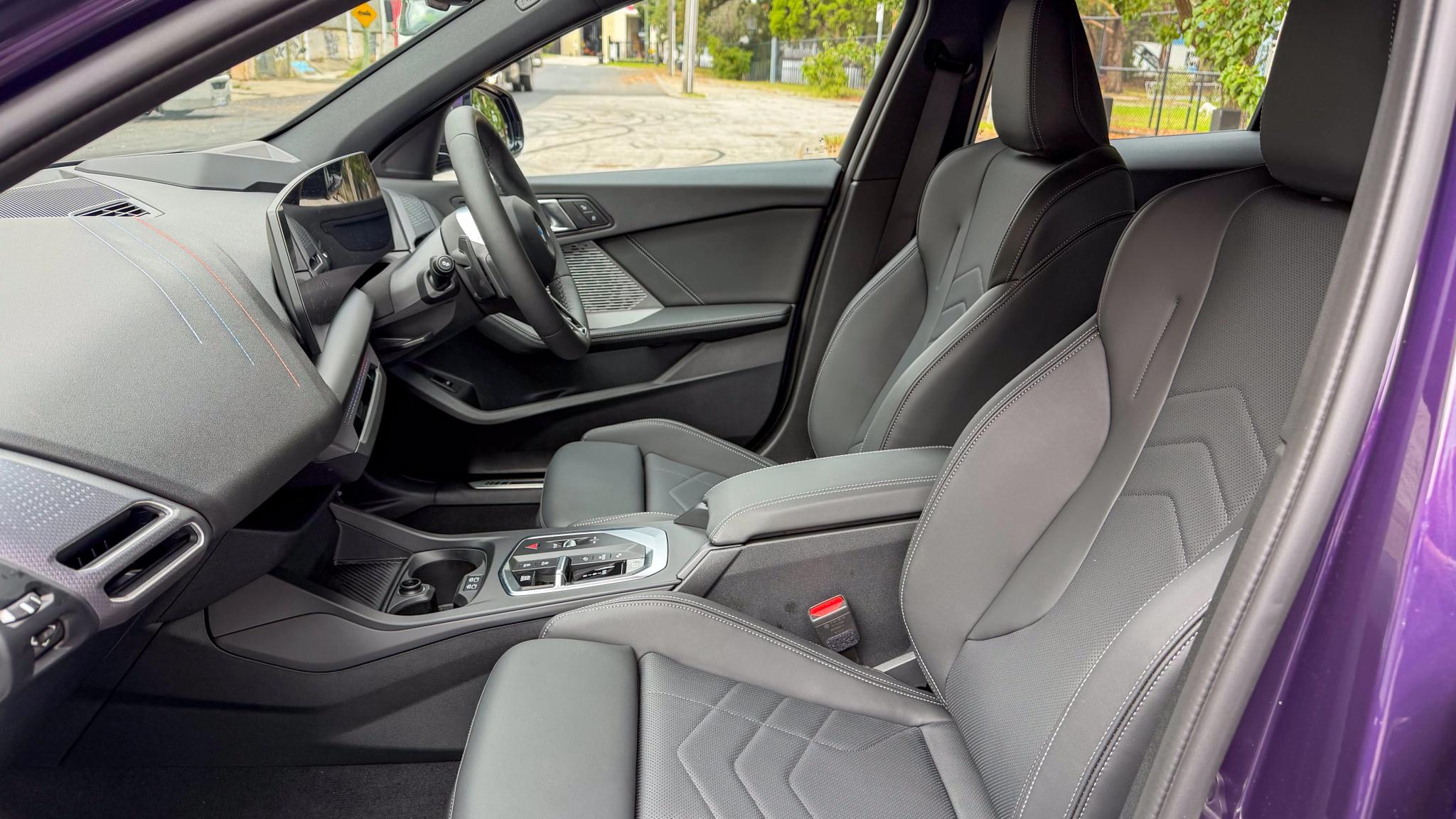
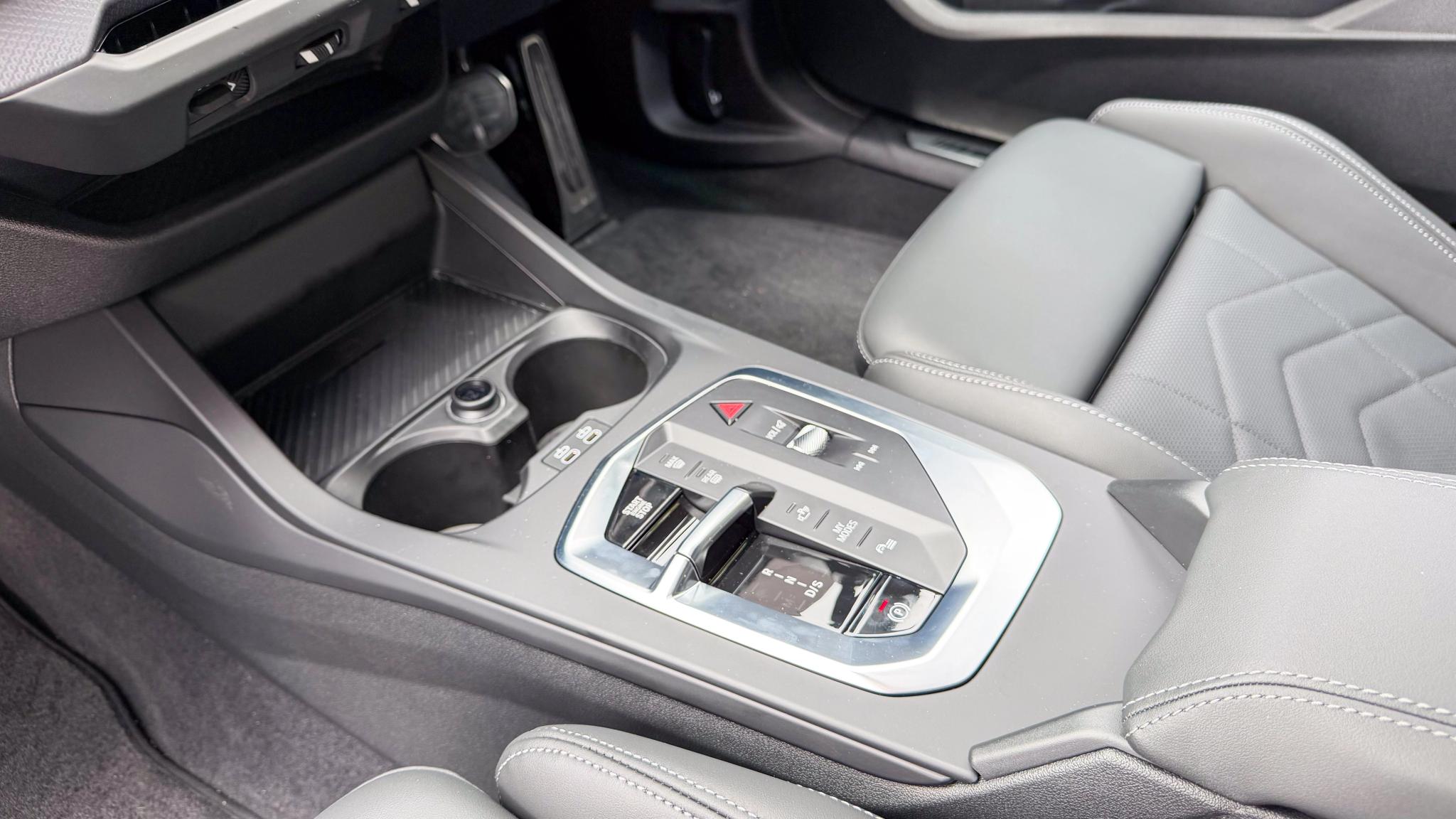
The M Sport leather steering wheel feels excellent, the heated power-adjustable front sport seats are supportive and the head-up display is crisp. Wireless charging, dual-zone climate, ambient lighting and adaptive M suspension are all standard. Trying to spec a rival to match this kit list quickly closes the price gap.
How practical is the BMW 118?
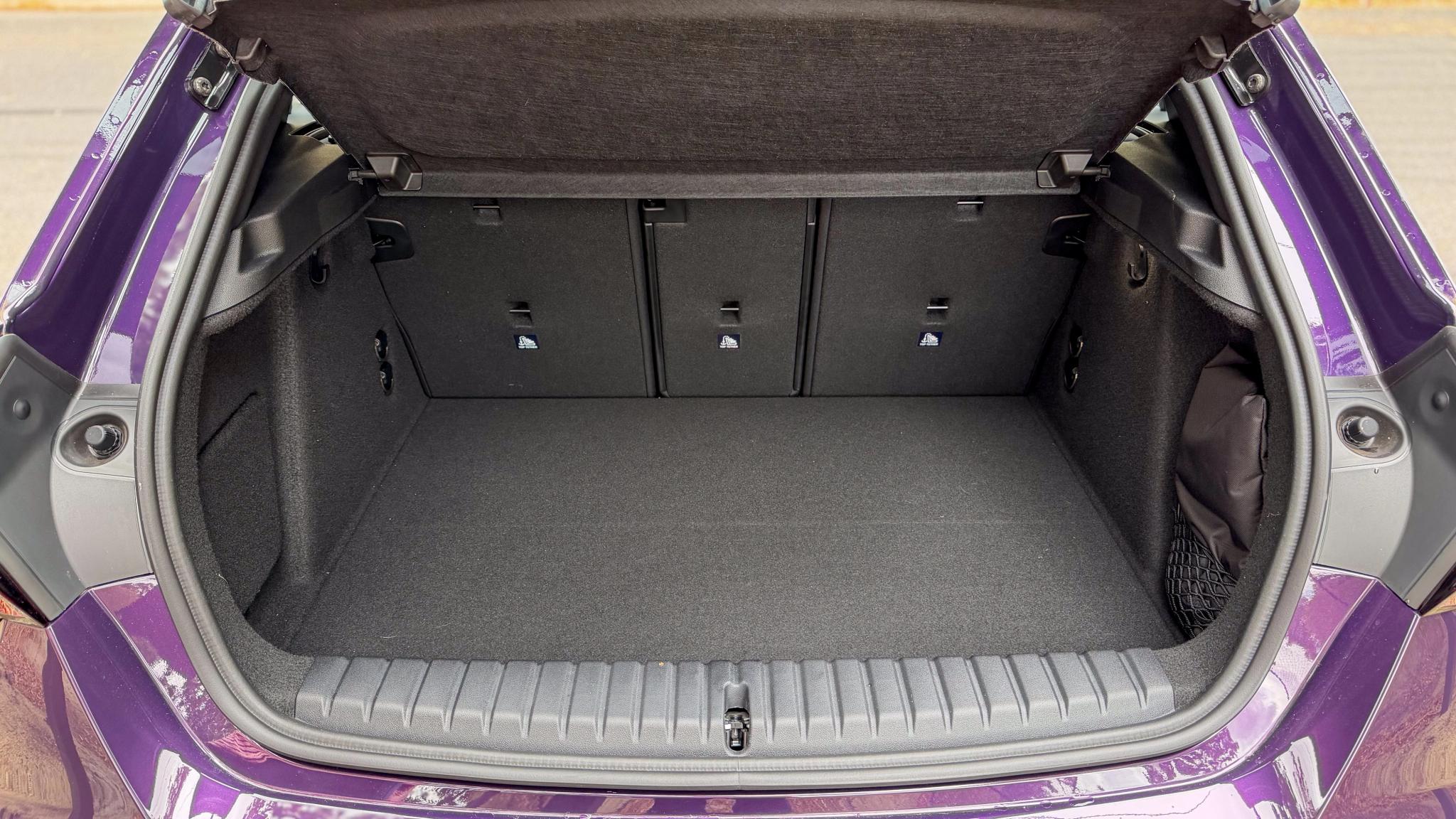
The 380-litre boot is competitive for the class, expanding to 1,200 litres with the 40:20:40 rear seats folded. The opening is wide, the floor is flat, and there's a powered tailgate as standard. The trade-off is no spare wheel, just a repair kit, which is increasingly the norm but still worth flagging if you regularly drive country roads.
Rear seat space is fine for two adults on shorter trips. Three across will be a squeeze, and taller passengers may find headroom tightens if you option the panoramic sunroof. USB-C ports front and rear, rear air vents, and a fold-down centre armrest cover the daily essentials.
It's not a Golf in terms of outright space efficiency, but it's perfectly liveable as a daily, school run or weekender for a couple.
What is the 118 like to drive?
Underneath the hatch silhouette is a chassis that genuinely communicates with you and the inclusion of adaptive M suspension as standard is a quiet win that competitors at this price don't match.
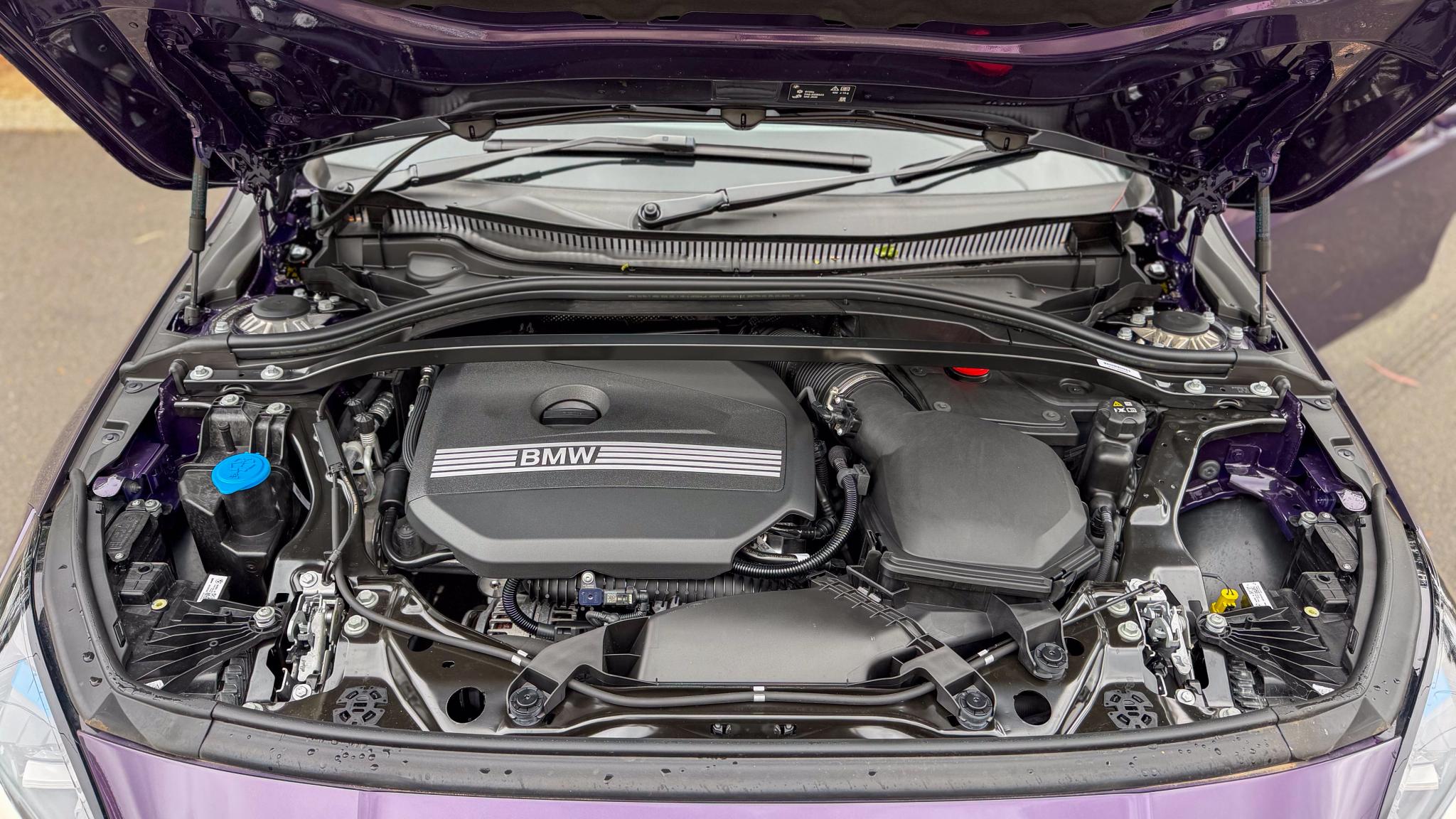
The 1.5-litre turbo three-cylinder produces 115kW and 230Nm, sent through a seven-speed dual-clutch automatic to the front wheels. Zero to 100km/h takes a claimed 8.5 seconds, which on paper sounds modest. In practice, the 118 feels quicker than the number suggests because the chassis is doing so much of the work. Boost mode, accessed by holding the left paddle, gives you 10 seconds of full beans for overtakes.
The triple has real character. There's that uneven thrum at low revs that three-cylinders do so well and it pulls cleanly through the mid-range. It isn't the soundtrack of the M135's four-pot, but it doesn't feel like a budget engine either.
Handling is the standout. Turn-in is sharp, the steering is accurate without being overly heavy, and the front end stays planted through quicker corners. Push hard out of tight bends and you'll find the limit of front-wheel drive grip, but the 118 telegraphs it cleanly rather than washing wide. The adaptive dampers do excellent work, keeping body control tight in Sport while taking enough edge off in Comfort to make broken city roads bearable.
The ride is firm. It's the BMW house style and most buyers shopping a small premium hatch will accept it. If your priority is plush cushioning, the A-Class rides softer and the Audi A3 splits the difference. The 118 is tuned for drivers and that comes through every kilometre.
One genuine annoyance: the speed limit warning beeps incessantly every time you nudge a kilometre over. Thankfully it switches off through a quick menu dive.
How efficient is the BMW 118?
BMW claims 6.4L/100km combined, and that’s broadly achievable in mixed driving. Highway running drops it comfortably into the fives, while urban work pushes it closer to seven, which isn’t bad for a petrol hatch with this much standard kit.
The 49-litre tank takes premium unleaded and gives a real-world touring range comfortably north of 700km.
BMW uses condition-based servicing, so the car tells you when a service is due rather than following a fixed schedule. The Service Inclusive Basic pack covers scheduled servicing for five years or 80,000km in one upfront payment. It’s worth ticking at purchase, since it locks in the price and BMW’s servicing costs have already gone up since launch.
| Servicing and Warranty | BMW 118 M Sport |
| Service interval | Condition-based |
| Servicing cost (5 years) | $2470 |
| Average annual cost | $494 |
| Vehicle warranty | 5 years | Unlimited km |
The five-year, unlimited-kilometre warranty matches what premium rivals offer, but roadside assistance only runs for three years, which falls short of the warranty.
Is the BMW 118 safe?
The 1 Series scored a 4-star Euro NCAP rating in September 2025, a notch below the 5 stars some rivals manage. Side impact protection was excellent with full marks in both barrier and pole tests, but chest protection was rated weak for the driver and rear passenger in the full-width frontal crash, and driver leg protection was weak in the offset test.
Standard kit covers AEB with pedestrian, cyclist and motorcyclist detection, adaptive cruise with stop and go, lane keep assist, rear cross-traffic alert, a 360-degree camera and semi-autonomous parking. The 118 also gets an active bonnet that lifts on pedestrian impact.
The speed limit warning beeps every time you nudge over, though thankfully it switches off through a quick menu dive.
What are the main competitors to the BMW 118?
The premium small hatch segment has thinned out in recent years, but the contenders that remain are all seriously well-developed cars and the gaps between them are closer than badge loyalty suggests.
The Audi A3 TFSI 110kW is the obvious cross-shop and undercuts the BMW by close to four grand. The Audi's interior feels a touch more resolved and the styling is less divisive, but the 118 is the better drive. Worth the premium if chassis feel matters.
The Mercedes-Benz A200 lines up almost exactly on price at $57,500 and leans on cabin plushness and the three-pointed star to make its case. The 118 is sharper through corners, better resolved over broken roads and the standard kit list is stronger. The BMW is the more complete driver's car.
The Volkswagen Golf GTI at $59,890 plus on-roads is the curveball. It's faster, more practical and arguably more fun for similair money. You give up the premium badge, but on outright performance per dollar the GTI is hard to dismiss.
The Mini Cooper S suits buyers who want more visual personality and don't mind a smaller footprint. It shares plenty of mechanical DNA with the 118 but trades practicality for character.
Should I buy the BMW 118?
If your priority is how a premium small hatch drives and feels, yes. The 118 is one of the most engaging German hatch at this price point right now, and the standard M Sport package and adaptive damping make it feel like the deal you'd otherwise have to option up to.
If you're chasing maximum value, the Audi A3 makes a stronger sticker-price case. And if outright driving thrills are what you're really after, the Golf GTI remains the benchmark hot hatch and gives nothing away to the BMW on the road.
But for buyers who want a properly premium small car that drives like a BMW should, with a cabin that punches above its segment and a kit list that justifies most of the price hike, the 118 is hard to fault.
Just be honest with yourself about that $66k driveaway number.
VerdictThe Beep Verdict
Rob Leigh
Co-founder & Director
Rob Leigh is Co-founder and Director of The Beep based in Melbourne, Australia. He has 15+ years inside a major automotive OEM, specialising in product planning, pricing and vehicle strategy.
About Author