2026 Honda CR-V e:HEV RS review
The updated CR-V e:HEV RS adds all-wheel drive and a wave of new features to an already polished formula - and the result is the most complete car Honda sells in Australia right now.

Rob Leigh
Pros
- Hybrid powertrain that is genuinely transparent and rewarding to use
- Drives better than almost anything else in the mid-size SUV segment
- Capped servicing at $199 per visit is hard to match at this price
Cons
- Four-star ANCAP rating is a weak point at $64,400
- Infotainment screen trails the best in the segment for size and polish
- 750kg tow rating rules out buyers with a trailer in the mix
Our verdict
The updated Honda CR-V e:HEV RS reminds you what this brand is capable of when it stops playing it safe. It is more polished, more enjoyable and more thoughtfully engineered than anything else in the current Honda Australia lineup - a significant step above the HR-V and ZR-V in almost every measurable way.
The addition of all-wheel drive, a head-up display, ventilated front seats and heated rear seats completes a package that was already one of the better arguments in the mid-size SUV segment.
What does the Honda CR-V e:HEV RS AWD cost in Australia?
The updated 2026 CR-V range starts at $44,900 drive away for the VTi X and climbs through six variants, with the e:HEV RS AWD sitting at the top at $64,400 drive away. That flagship position reflects a meaningful specification jump over lower grades - the RS is the only variant with a head-up display, ventilated front seats, heated rear outer seats, a heated steering wheel, matrix adaptive high beam, alloy sports pedals and an individual drive mode.
| Variant | Powertrain | Drivetrain | Drive away price |
| VTi X | 1.5L turbo petrol, 140kW | Front-wheel drive | $44,900 |
| e:HEV X | 2.0L petrol hybrid, 135kW | Front-wheel drive | $49,900 |
| e:HEV L | 2.0L petrol hybrid, 135kW | Front-wheel drive | $53,900 |
| VTi L7 | 1.5L turbo petrol, 140kW | Front-wheel drive | $54,900 |
| e:HEV LX AWD | 2.0L petrol hybrid, 135kW | All-wheel drive | $58,900 |
| e:HEV RS AWD | 2.0L petrol hybrid, 135kW | All-wheel drive | $64,400 |
See Honda CR-V drive away pricing and specifications →
In segment terms the RS AWD lines up against the Toyota RAV4 Cruiser AWD, Kia Sportage GT-Line HEV AWD and Nissan X-Trail Ti e-Power. At this level of the market the differences between them are genuinely close - these are all well-developed, capable cars. Where the CR-V consistently pulls ahead is driving refinement and long-term ownership cost with capped servicing at $199 per visit hard to match at this price point.
For buyers who want the full package from a Japanese hybrid SUV, this is a serious contender. For those who can compromise on specification, the e:HEV L at $53,900 and e:HEV LX AWD at $58,900 offer strong value lower in the range.
What does the Honda CR-V e:HEV RS AWD look like?
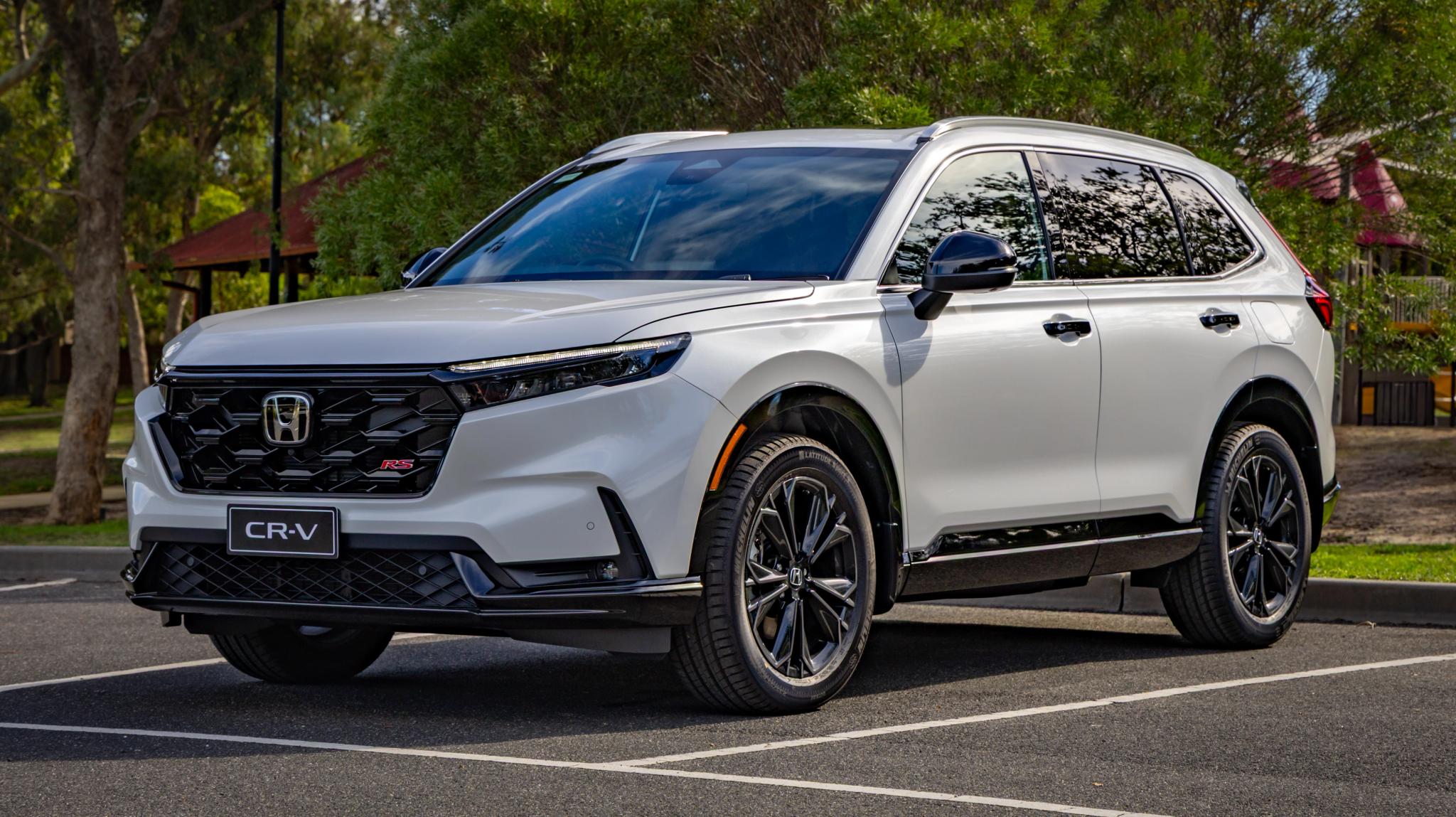
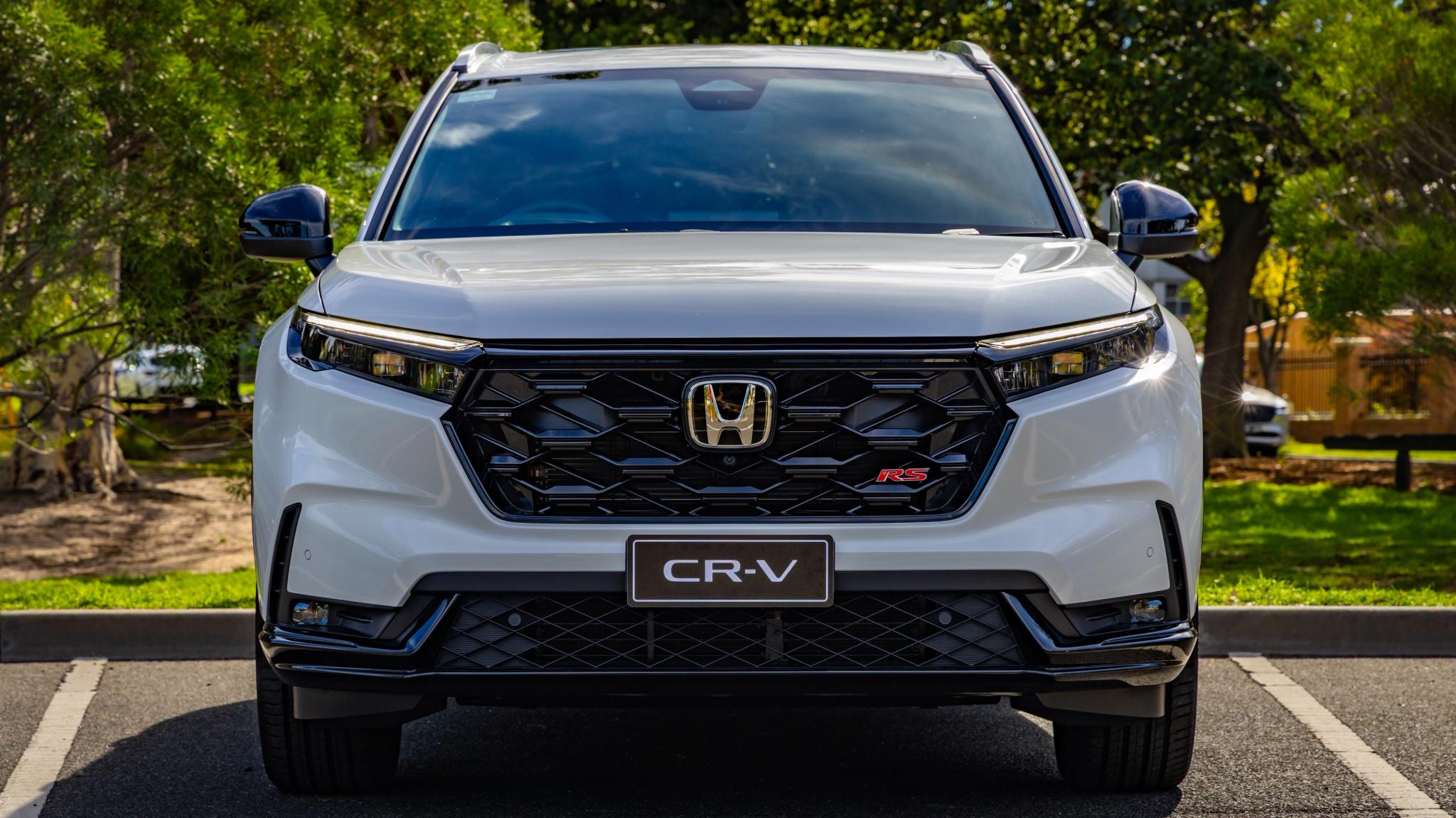
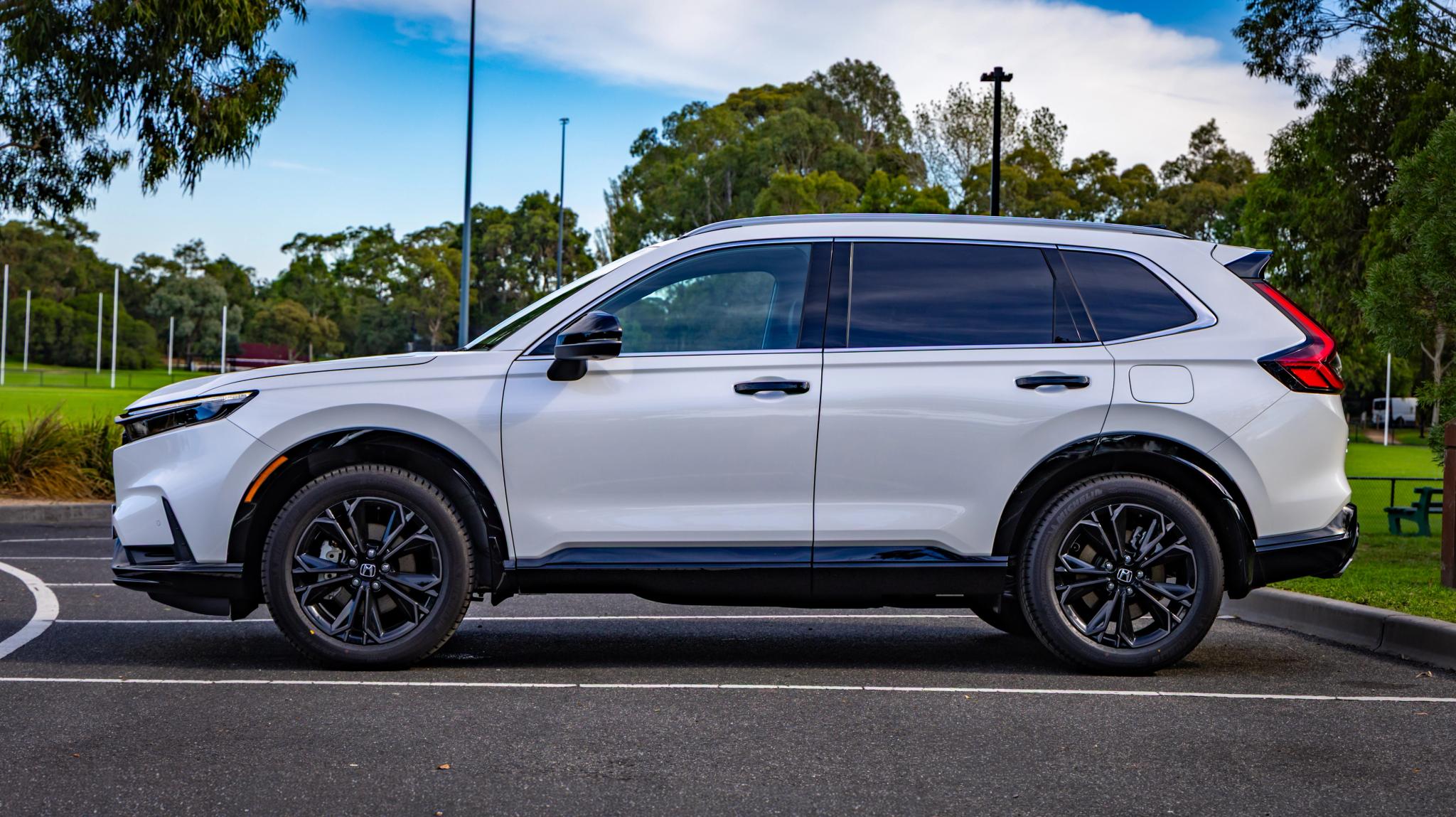
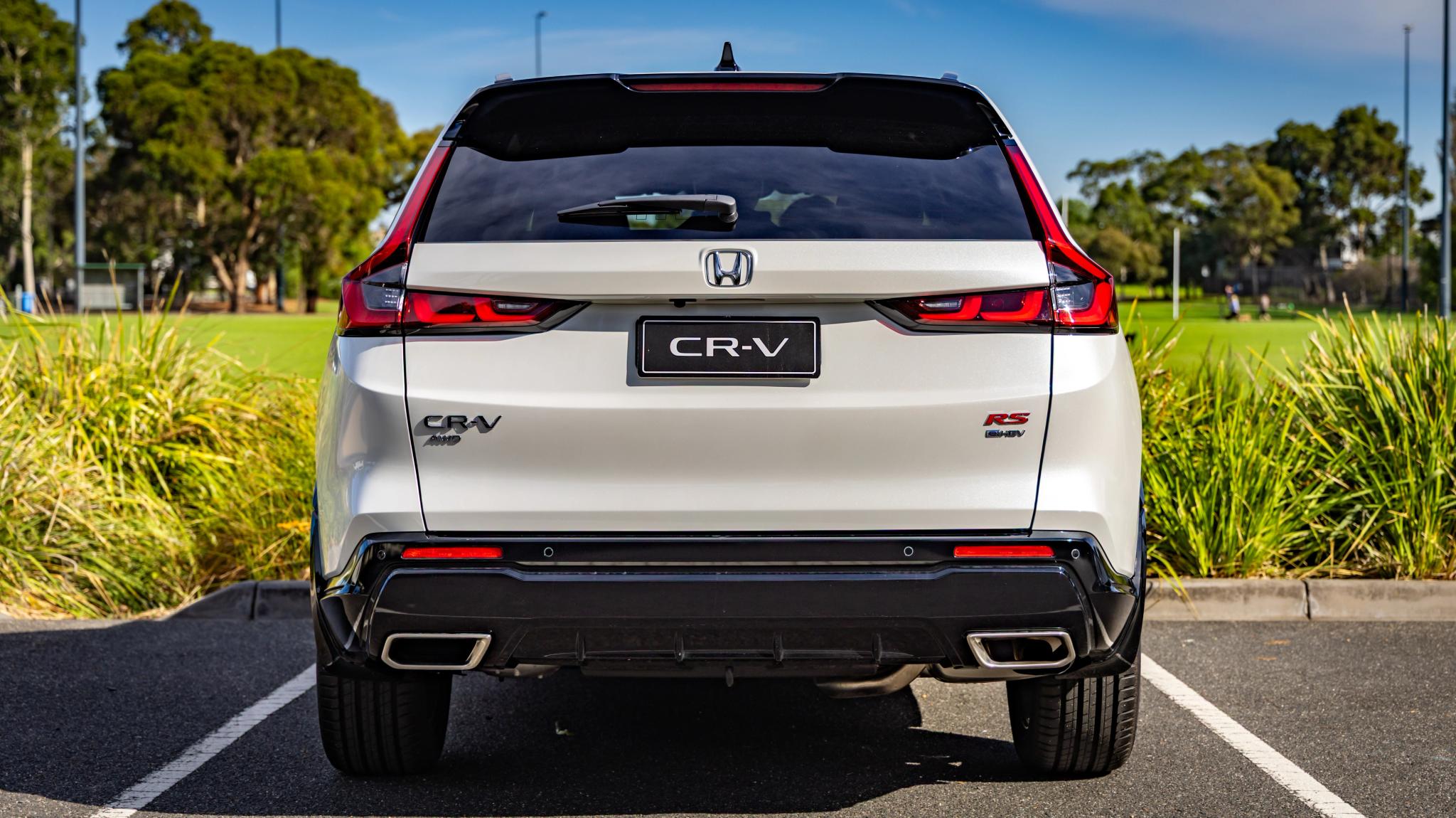
The updated CR-V carries forward the clean proportions of its predecessor with a few sharpening details. The RS now wears black wheel arch cladding and black door handles in place of the previous body-coloured items, which gives the exterior a more intentional, slightly more assertive character. Piano black mirror covers and 19-inch alloy wheels complete a look that is cohesive rather than flashy.
LED headlights are now matrix adaptive on the RS, which means the high beam adjusts around oncoming traffic rather than simply switching off. Sequential front turn signals remain. The overall silhouette is unhurried and well-resolved - a car that ages well precisely because Honda resisted the temptation to overdesign it.
In a segment full of aggressive grilles and busy surfacing, the CR-V's restraint reads as confidence. Some buyers will want more drama. Those buyers are probably buying the wrong car.
What is the Honda CR-V e:HEV RS AWD like inside?
Step inside and the quality of Honda's engineering thinking becomes immediately apparent. The interior is not trying to be a tech showcase - it is trying to be a great place to spend time, and it succeeds.
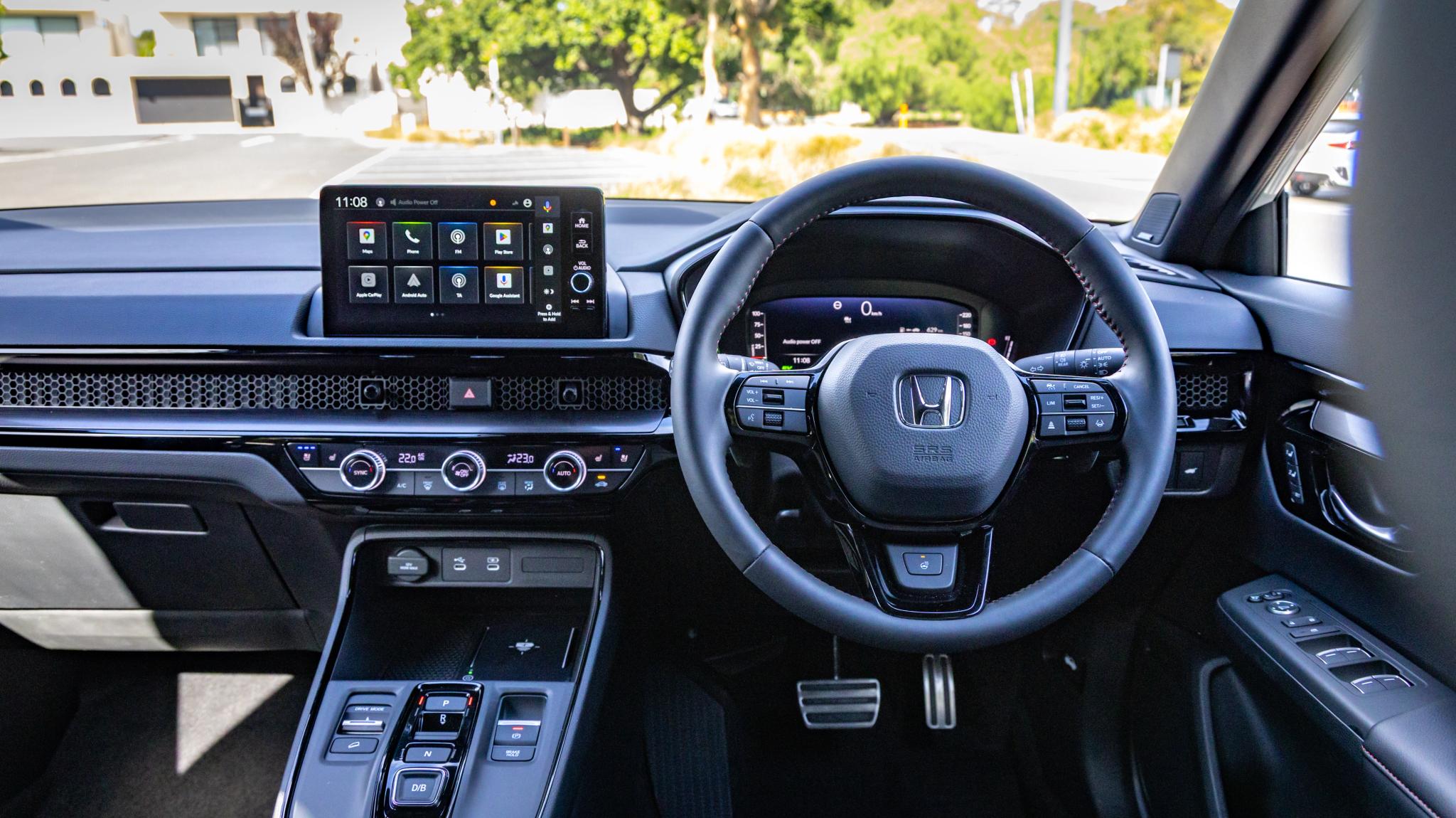
The 10.2-inch digital instrument cluster sits under a cowl that eliminates glare properly - a detail that sounds minor until you have spent a summer behind a floating screen that turns into a mirror at 3pm. A head-up display is now standard on the RS, projecting speed and navigation prompts onto the windscreen without requiring you to move your eyes from the road.
The 9.0-inch central touchscreen is smaller than what several rivals offer and the interface lacks the polish of the best screens in the segment. In isolation, it would be a talking point. In practice, having Google Built-In largely neutralises it - native Maps, the Play Store and Assistant mean you are rarely working within Honda's own menus for long. Physical controls for volume and track navigation help too and wireless Apple CarPlay and Android Auto connect without complaint. It works. It just doesn’t wow.
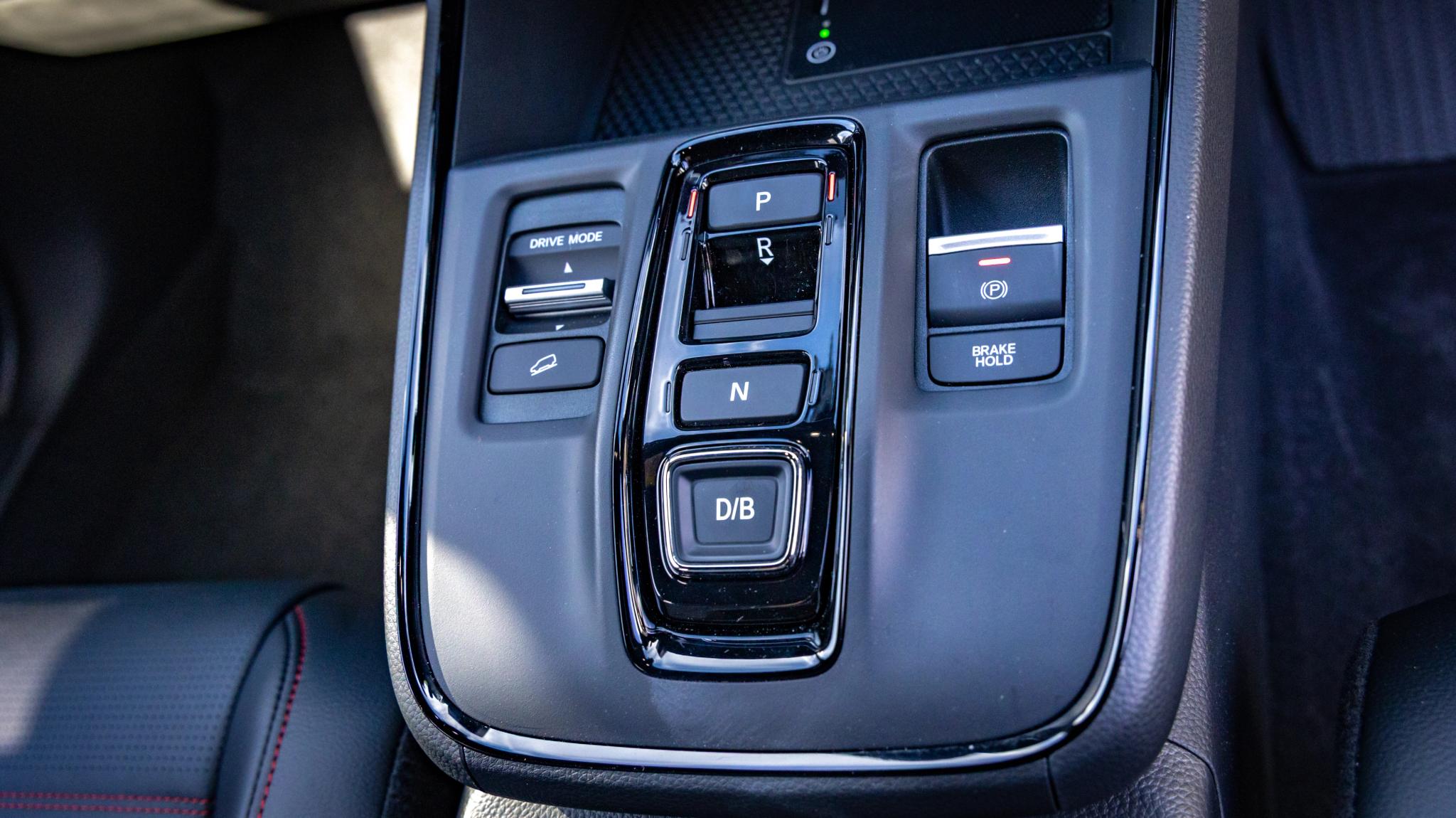
The Bose 12-speaker audio system with active noise cancelling is genuinely good. Climate controls are physical buttons and dials. The gear selector is a conventional stick shift. Both feel deliberate and correct in a market that increasingly hides everything behind glass.
Ventilated and heated front seats are now standard on the RS, as are heated outer rear seats and a heated steering wheel - a meaningful upgrade over the outgoing model. Leather-appointed trim, dual-zone climate and a wireless phone charger complete the spec. Materials throughout are solid and well-fitted. Nothing feels cheap, nothing feels overwrought.
How practical is the Honda CR-V e:HEV RS AWD?
Very. The CR-V was built with families in mind and it shows at every turn.
Rear passengers in the outboard seats get generous legroom - genuinely comfortable for adults on long trips, not just technically adequate - along with adjustable air vents, two USB-C outlets and a fold-down armrest with cupholders. The centre rear seat is tight, limited by a raised transmission tunnel, so five-up seating is best reserved for shorter runs.
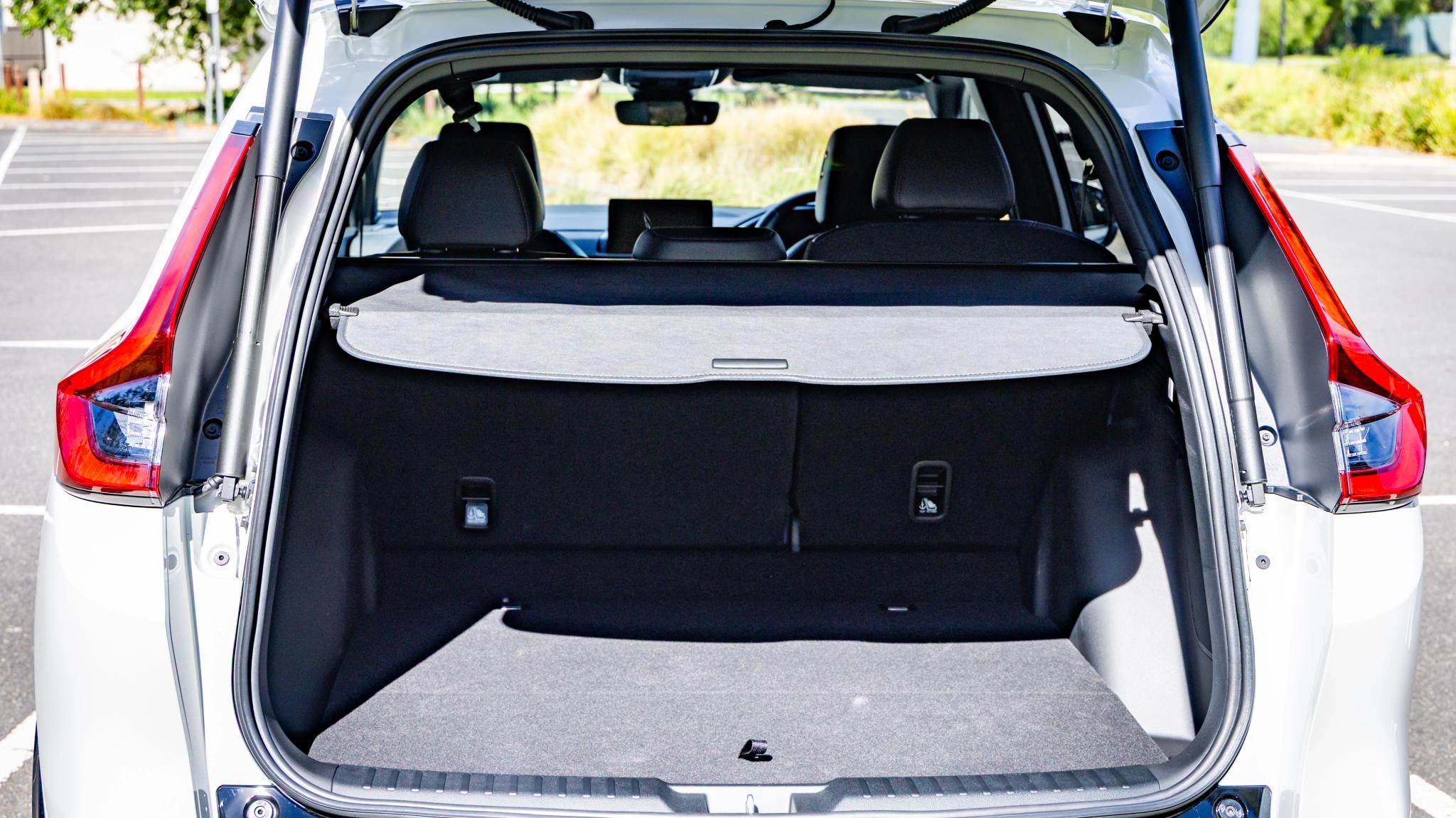
Boot capacity sits at 581 litres with all seats up, expanding to 1,636 litres with the 60:40 rear seatback folded. The power-operated tailgate is standard across the range. Honda's optional cargo organiser - a segmented boot insert that holds position via Velcro and clips down at the sides - is worth the $200 asking price if you carry gear regularly.
The 750kg braked tow rating is the one practical limitation worth flagging. If a trailer is a regular requirement, this is not the right tool for the job.
What is the Honda CR-V e:HEV RS AWD like to drive?
This is where the Honda separates itself from most of its competition.
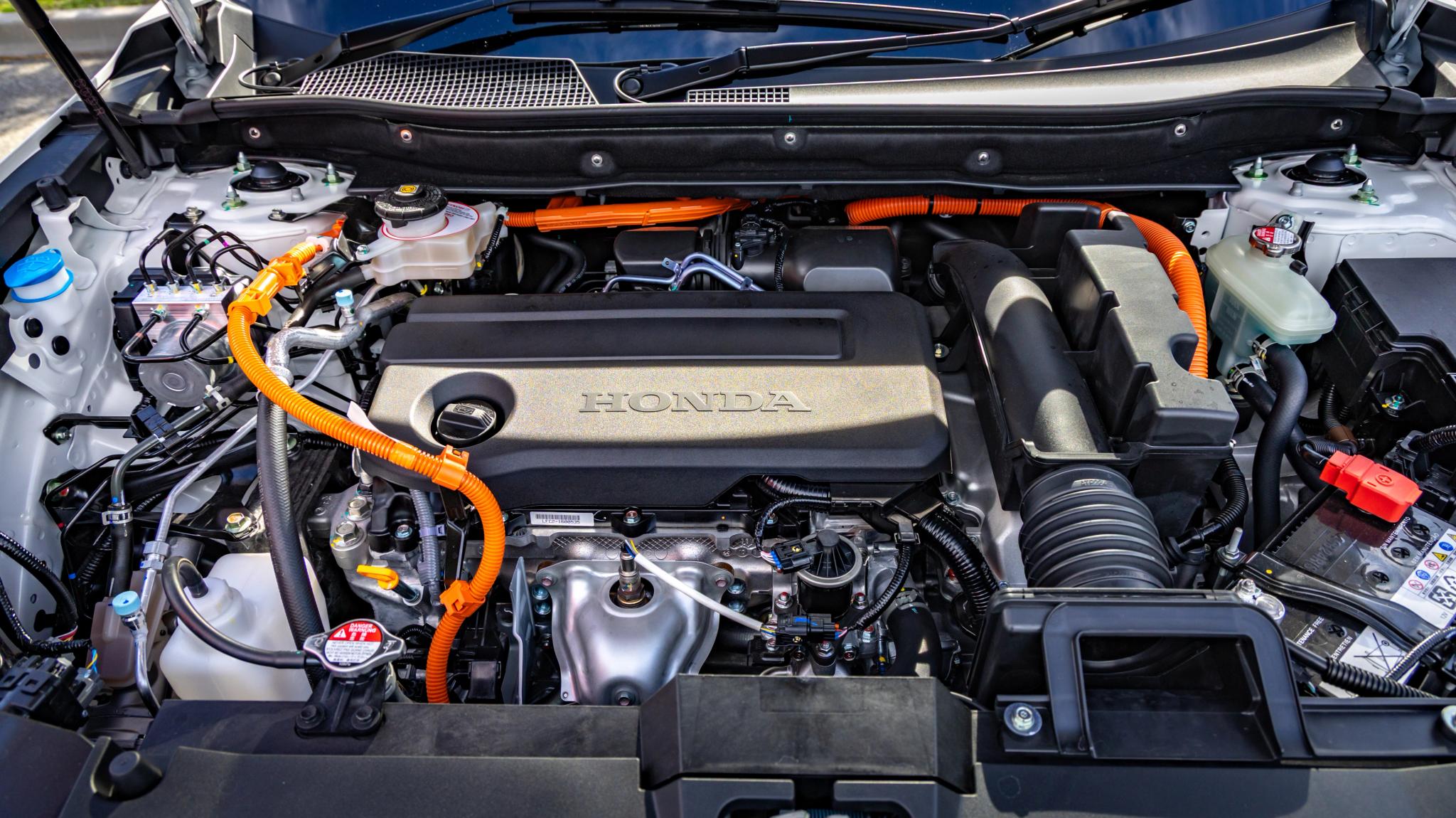
The e:HEV hybrid system pairs a 2.0-litre naturally aspirated four-cylinder with two electric motors through an electronic CVT, producing 135kW and 335Nm combined. Real-world performance feels stronger than those numbers suggest, particularly in the low and mid-range where the electric motors do most of the work. A secondary motor in the transmission acts as an on-board generator, keeping the battery topped up under light acceleration rather than relying solely on regenerative braking. The result is a system that always has charge ready when you want it.
The hybrid management is so transparent that you stop thinking about it almost immediately, which is exactly the right outcome. No jolt when the petrol engine comes online, no lurch between modes and a brake pedal with a natural, consistent feel through its full travel range - an area where many hybrids still feel two-stage and artificial.
Dynamically, the CR-V punches above its SUV weight class. Steering is direct and well-weighted, body control is composed and the ride sits on the firmer side - noticeable on broken surfaces. The AWD system adds real confidence in wet conditions and paddle shifters allow you to adjust regenerative braking force or enable one-pedal driving if you want it.
Honda's sports car heritage is not just a marketing line here. You can feel it in the way this chassis is calibrated.
How efficient is the Honda CR-V e:HEV RS AWD?
Honda rates the AWD e:HEV at 5.7L/100km combined. Real-world figures in predominantly suburban driving typically come in close to that figure. Extended highway running pushes it slightly higher. With a 57-litre tank, the theoretical range sits around 1,000km between fills.
Servicing costs are a genuine highlight. The first five services are capped at $199 each - $995 total across five years - at 12-month or 10,000km intervals. The CR-V is covered by Honda's standard five-year, unlimited-kilometre warranty with five years of roadside assistance.
For a car at this price point, the total cost of ownership picture is unusually favourable.
Is the Honda CR-V e:HEV RS AWD safe?
The CR-V holds a four-star ANCAP rating from 2024 testing with adult and child occupant protection both scoring 88%. Vulnerable road user protection came in at 76% and safety assist at 68%. In a segment where five-star ratings are close to universal, this is the CR-V's most notable weak point - and it is worth acknowledging at $64,400.
Honda's Sensing suite covers autonomous emergency braking, lane-keeping assistance, adaptive cruise control, traffic sign recognition, blind-spot monitoring, rear cross-traffic alert and driver attention monitoring. Front and rear parking sensors and a 360-degree surround-view camera are standard on the RS. The matrix adaptive high beam adjusts around oncoming traffic automatically.
Honda Sensing calibration deserves credit - interventions are high-threshold and measured rather than constant and intrusive. Eight airbags are fitted including a driver knee bag and a centre airbag between the front seats. Five years of Honda Connect telematics access is included, enabling remote climate activation, geofencing and automatic collision alert to Honda's customer care line.
The four-star rating is not a reason to walk away, but it is a reason to ask questions at the dealership.
What are the main competitors to the Honda CR-V e:HEV RS AWD?
The mid-size hybrid SUV segment is the most competitive in Australia and the differences between the leading contenders are closer than the spec sheets suggest. These are all well-developed, capable cars.
The Toyota RAV4 Cruiser AWD is the most natural comparison - five-star ANCAP, bulletproof reliability reputation and exceptional real-world fuel economy. The CR-V is more enjoyable to drive and noticeably quieter inside, but the Toyota's safety rating advantage is hard to dismiss at this price.
The Kia Sportage GT-Line HEV AWD undercuts the Honda by several thousand dollars and brings a five-star rating and strong feature content. The gap in driving refinement and interior quality is real, but it is not vast.
The Nissan X-Trail Ti e-Power uses a similar series-hybrid philosophy to the CR-V, adds three-row seating and costs less. It trails the Honda in chassis dynamics, but for families who need that third row it is an easy shortlist inclusion.
The Hyundai Tucson Hybrid Elite AWD rounds out the key cross-shop options with a five-star rating and a well-resolved interior. Again, splitting hairs in most areas - but the CR-V pulls clear when it matters most, behind the wheel.
Should I buy the 2026 Honda CR-V e:HEV RS AWD?
The updated CR-V RS is the most complete version of this car Honda has sold in Australia. All-wheel drive addresses the previous model's most obvious gap and the wave of new features - head-up display, ventilated front seats, heated rear seats, heated steering wheel, surround-view camera - rounds out a flagship specification that can now stand alongside its Japanese competition without apology.
The four-star ANCAP rating remains a legitimate concern at $64,400, and the 750kg tow rating will eliminate it from consideration for buyers who need to pull a trailer. The infotainment screen, while functional, does not match the best in the segment. And in a class this competitive no single car wins every category cleanly - the CR-V included.
What it does deliver is a genuinely refined driving experience, a hybrid system that works better than almost anything else in this segment and running costs that flatter the purchase price over time.
For families who spend most of their time in urban and suburban environments and want a car that rewards without demanding, it makes a strong case.
VerdictThe Beep Verdict
Rob Leigh
Co-founder & Director
Rob Leigh is Co-founder and Director of The Beep based in Melbourne, Australia. He has 15+ years inside a major automotive OEM, specialising in product planning, pricing and vehicle strategy.
About Author