2026 Suzuki Vitara Hybrid quick drive review
Suzuki's Vitara returns with mild-hybrid power, a fresh nose and a sharper price tag, none of which can hide the fact this small SUV is now well past its use-by date.

Rob Leigh
Pros
- Light steering and easy, unintimidating driving manners
- Decent fuel economy claims across both variants
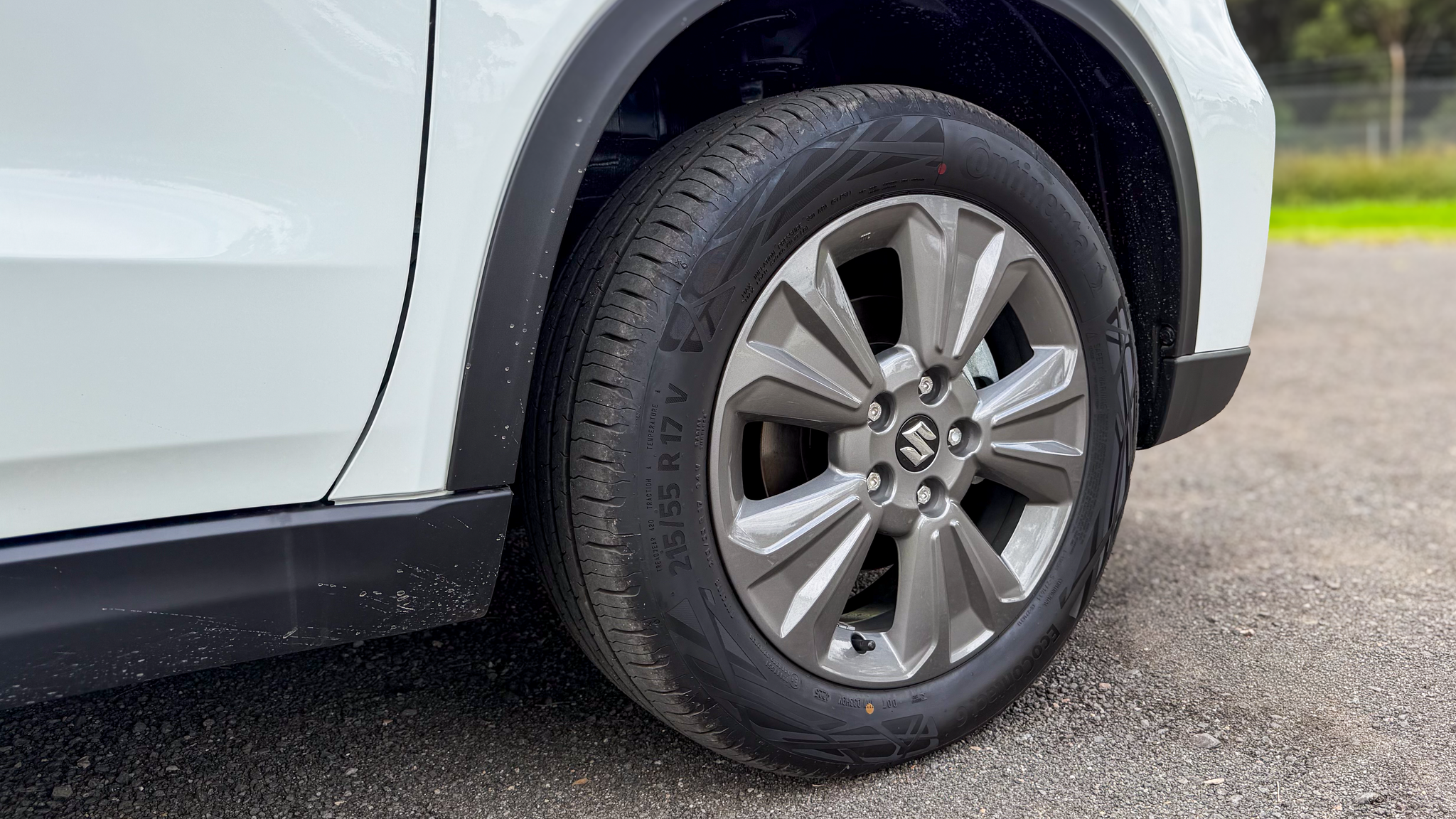
- Space-saver spare wheel still fitted as standard
Cons
- Interior feels a decade out of date
- Pricing has crept up to mainstream rival territory
- Hybrid badge oversells what the system actually does
Our verdict
The 2026 Suzuki Vitara Hybrid is a familiar shape with a new powertrain, a slightly bigger screen and a noticeably bigger price. It still drives easily enough, but the cabin and dynamics tell you exactly how old this platform really is. Brand loyalists will get it. Most other buyers will find newer, fresher options at the same money.
Find a deal on the Suzuki VitaraWhat does the Suzuki Vitara Hybrid cost in Australia?
Pricing kicks off at $39,990 drive-away for the Vitara Turbo Hybrid FWD, with the AllGrip AWD sitting at $45,990 drive-away.
| Variant | Drive-away |
| Vitara Turbo Hybrid FWD | $39,990 |
| Vitara Turbo Hybrid AllGrip | $45,990 |
That puts the entry Vitara in a tough spot. The Hyundai Kona Hybrid and Toyota Corolla Cross Hybrid sit in the same money. Chinese hybrid rivals like the GWM Haval Jolion HEV and Chery Tiggo 4 Hybrid land closer to $30,000 drive-away, which makes the Suzuki's premium hard to justify on paper. The pitch is brand reputation and Japanese badge equity. Whether that's worth ten grand is another question entirely.
What does the Suzuki Vitara look like?
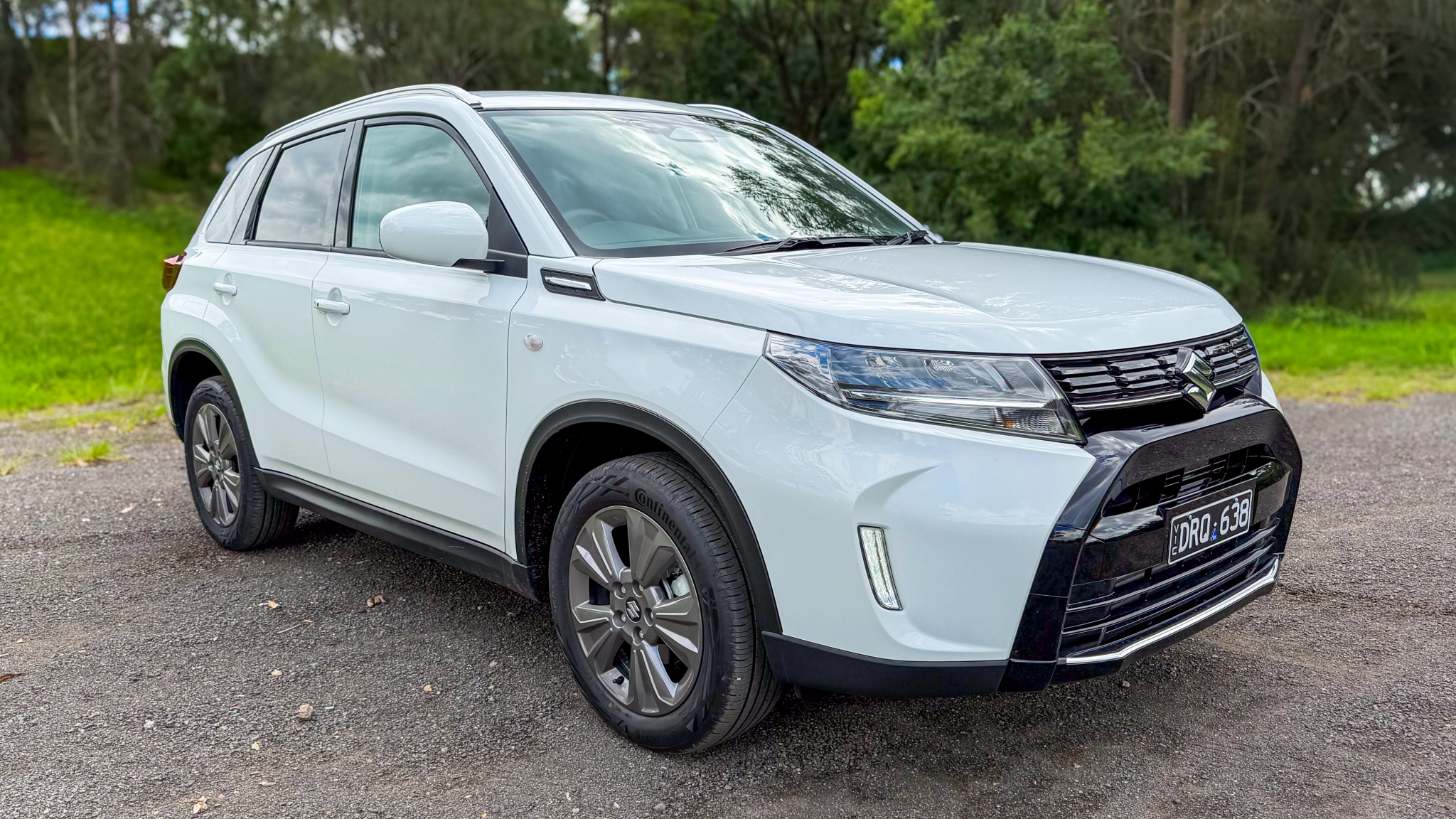
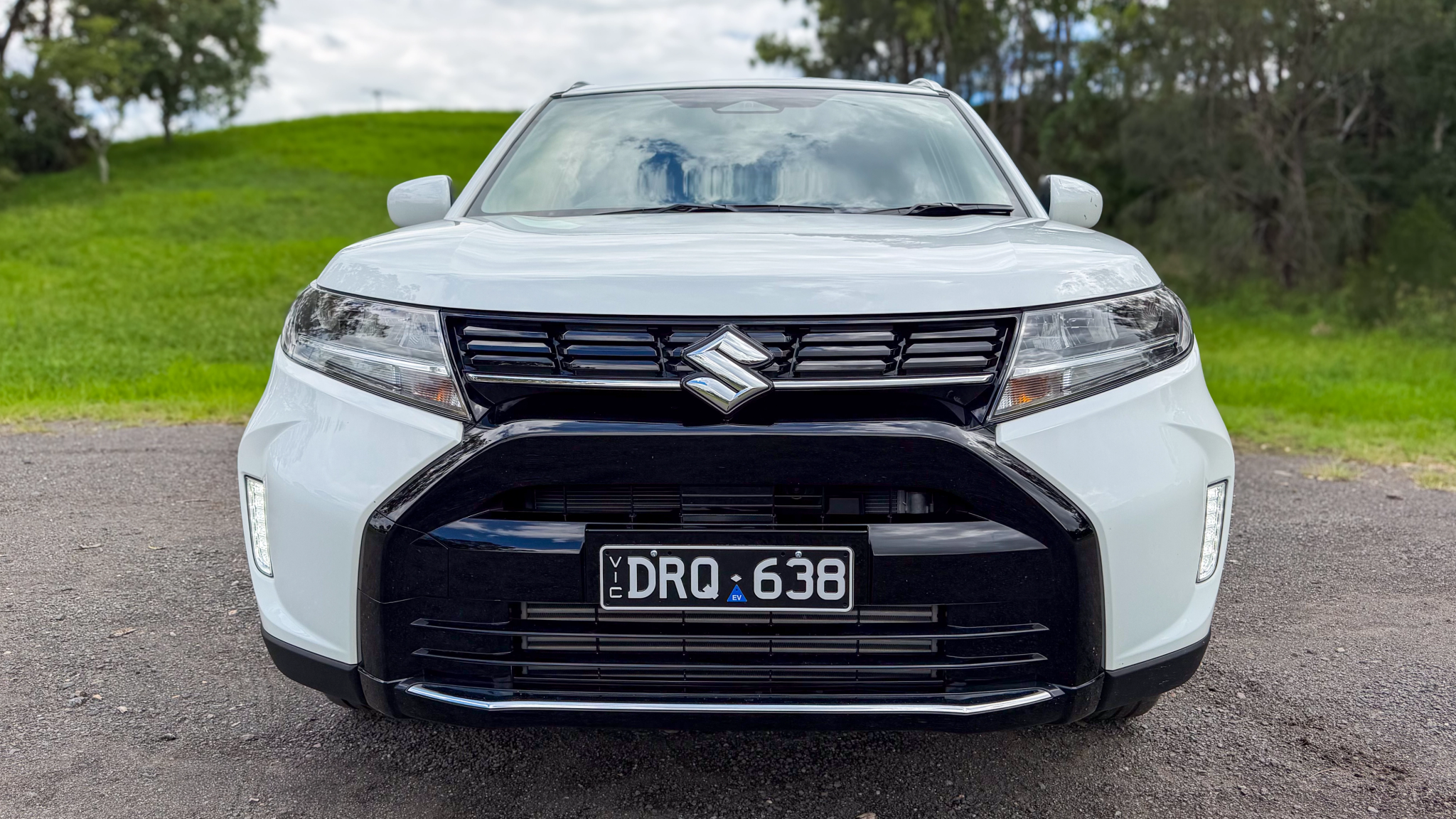
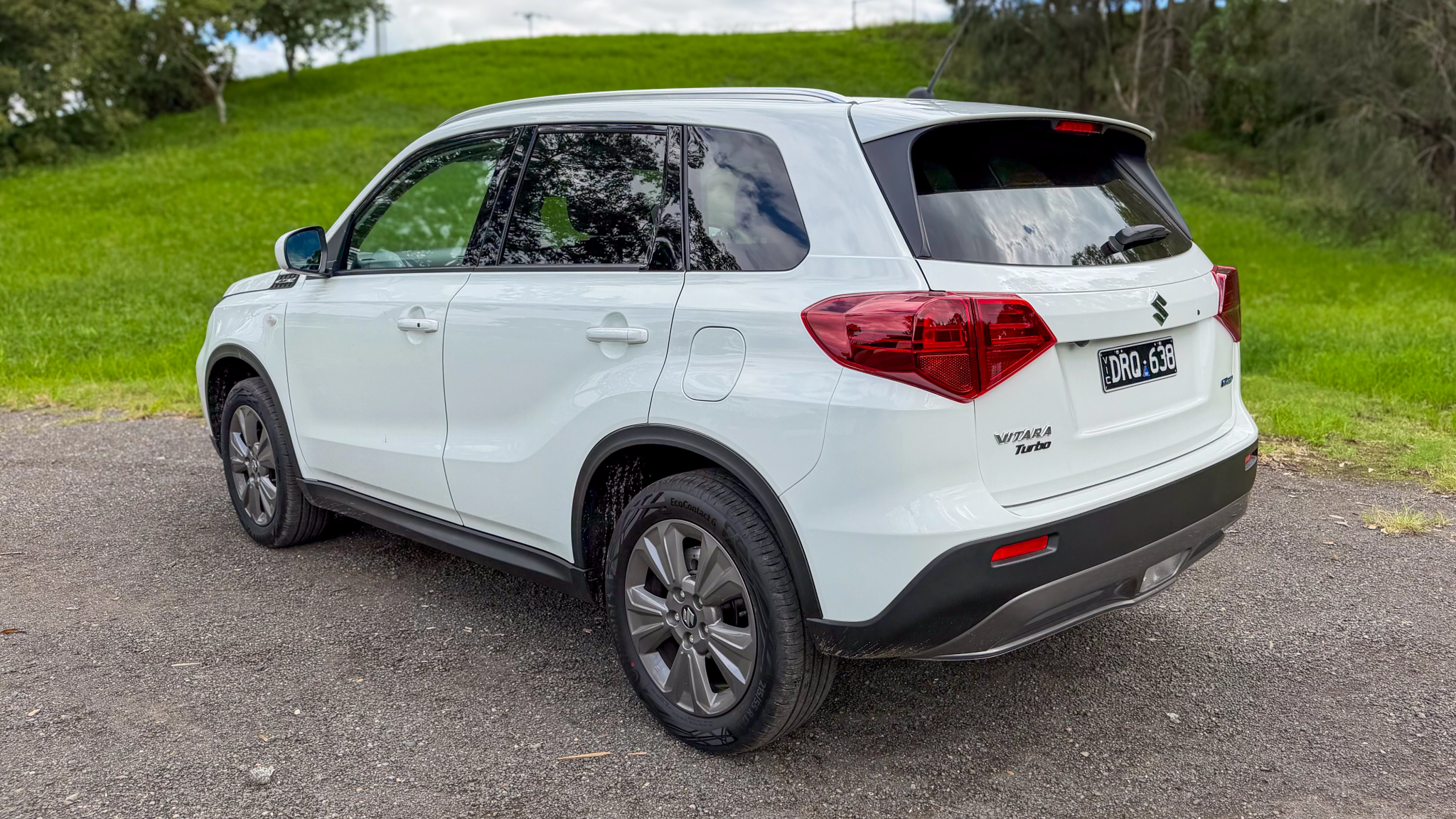
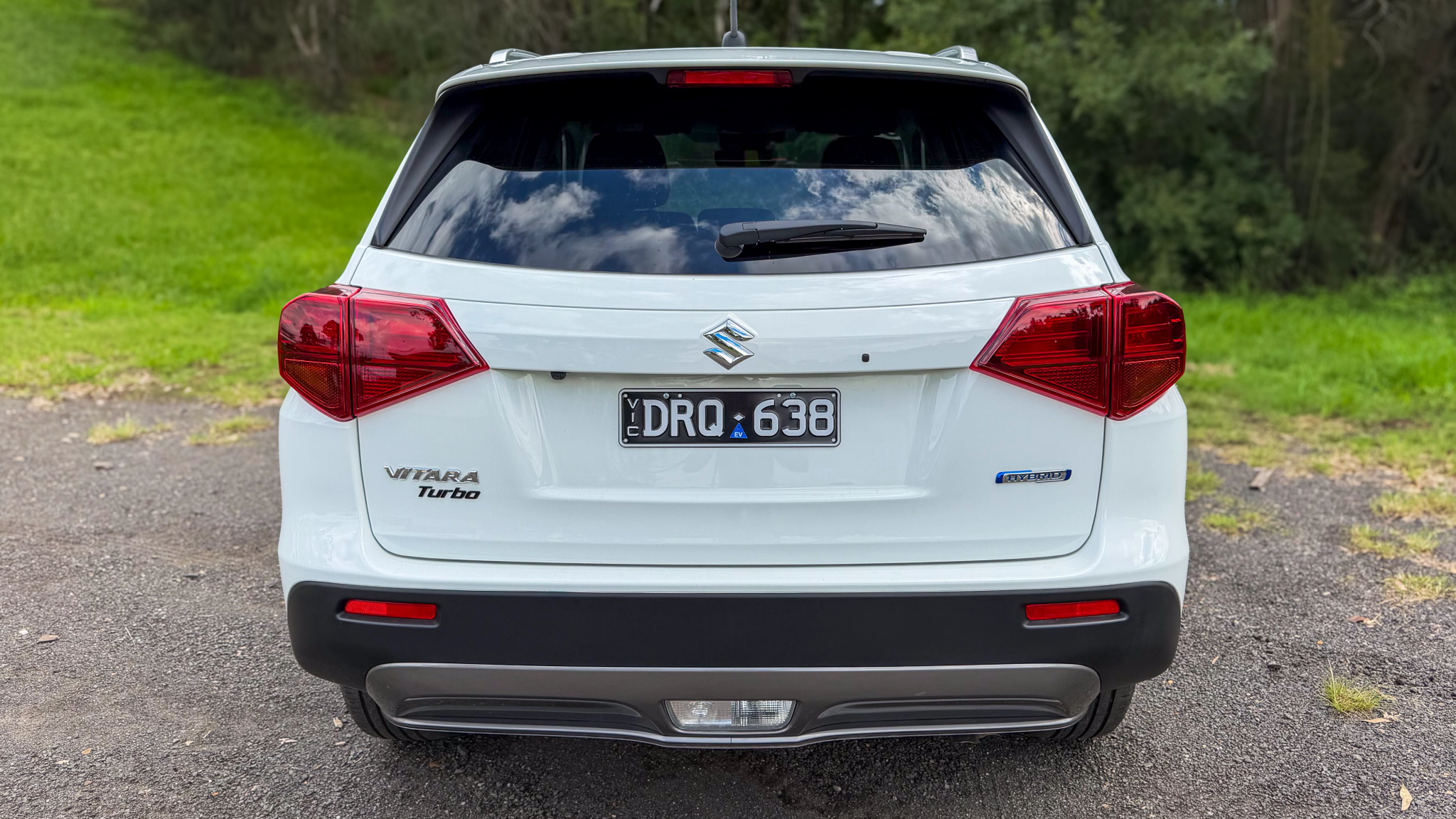
The Vitara has always worn its boxy shape well, and the design has aged better than most. Updates for 2026 include a refreshed grille, tweaked headlights, new bumper detailing and revised wheel designs. You'd need the old and new side by side to spot the changes.
That's both the appeal and the problem. The proportions still look fresh, but this is essentially a 2015 design with new clothes. Park it next to a Hyundai Kona, GWM Haval Jolion or Chery Tiggo 4 and the Vitara looks like the older sibling, because it is.
What is the Suzuki Vitara like inside?
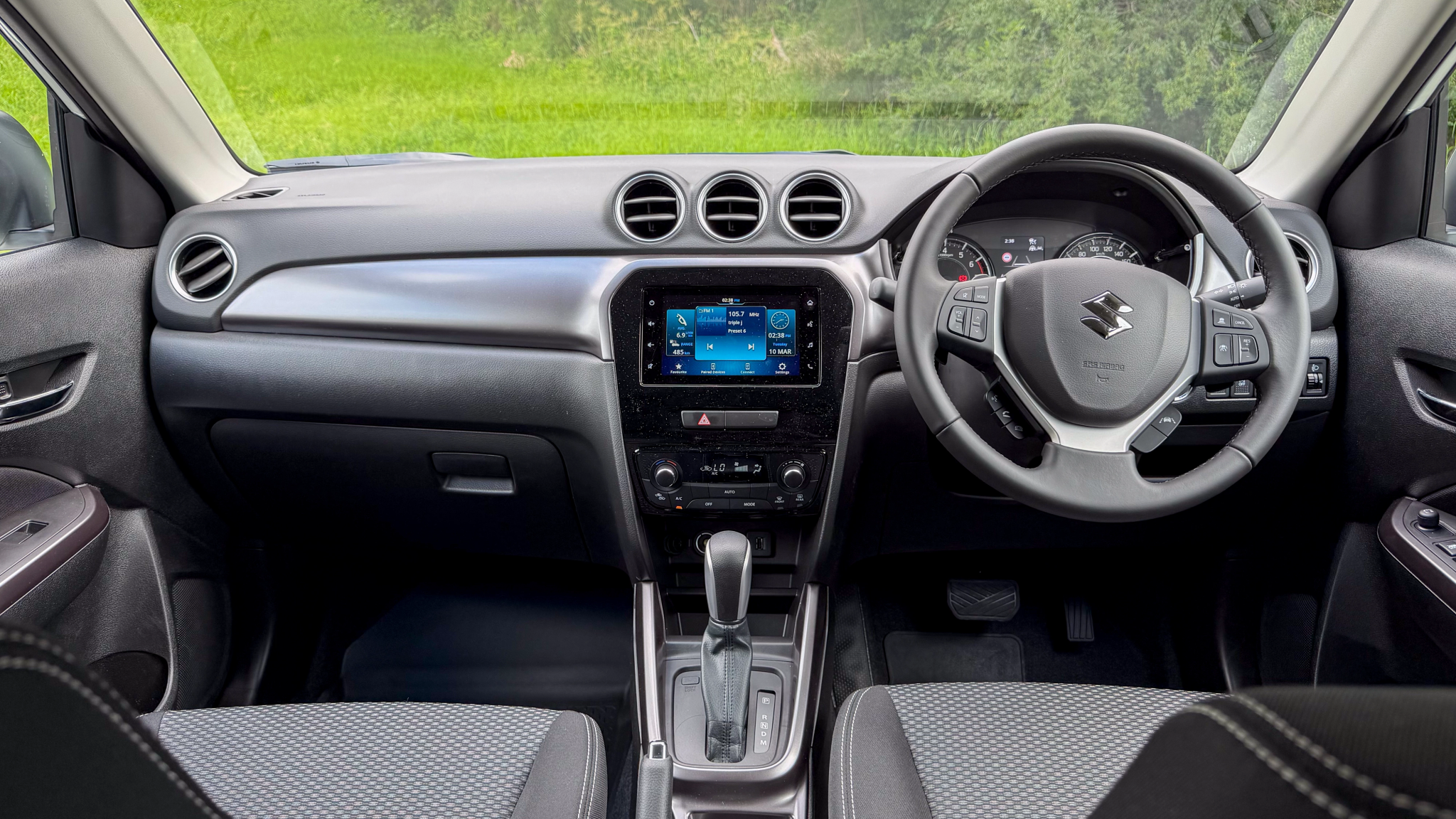
This is where the years really show. Step into a Toyota Yaris Cross or even an MG ZS and you'll see modern digital instruments, larger displays and softer touchpoints. Step into the Vitara and you get analogue dials, hard plastics and a layout that has barely budged since launch.
The infotainment has been upgraded to 7.0 inches on the base car and 9.0 inches on the AllGrip, with wireless Apple CarPlay and Android Auto reserved for the top spec. The interface looks more current but still lags when you tap through menus. Suzuki has kept physical climate buttons and switchgear, which is genuinely welcome. The trade-off is that everything around those buttons feels and looks dated.
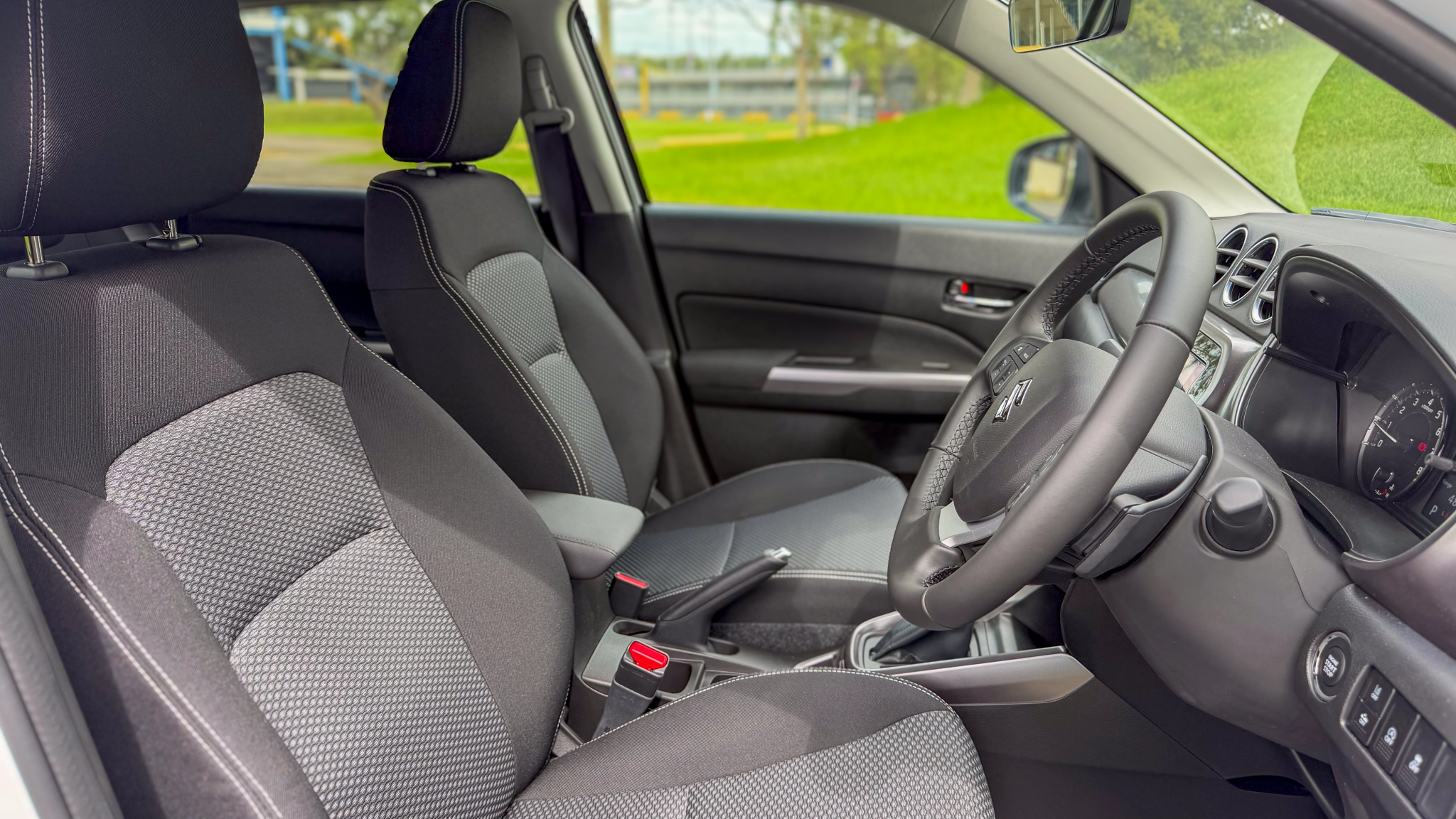
Materials are the bigger issue. Door tops, dash trim and centre console plastics are hard, scratchy and unconvincing. Where your elbow rests, you're pushed against surfaces that feel cheap. The AllGrip's suede inserts add a touch of class, but they sit next to plastics that would have felt average five years ago.
The driving position is sound. Seats are flat but supportive, visibility is excellent, and shortcut buttons mean you're not hunting through menus while moving. That's the saving grace. The basics work. The price tag now expects a lot more than basics.
How practical is the Suzuki Vitara?
The Vitara has never been a big car, and that hasn't changed. At 4185mm long, 1775mm wide and 1600mm high on a 2500mm wheelbase, it sits at the smaller end of the small SUV class.
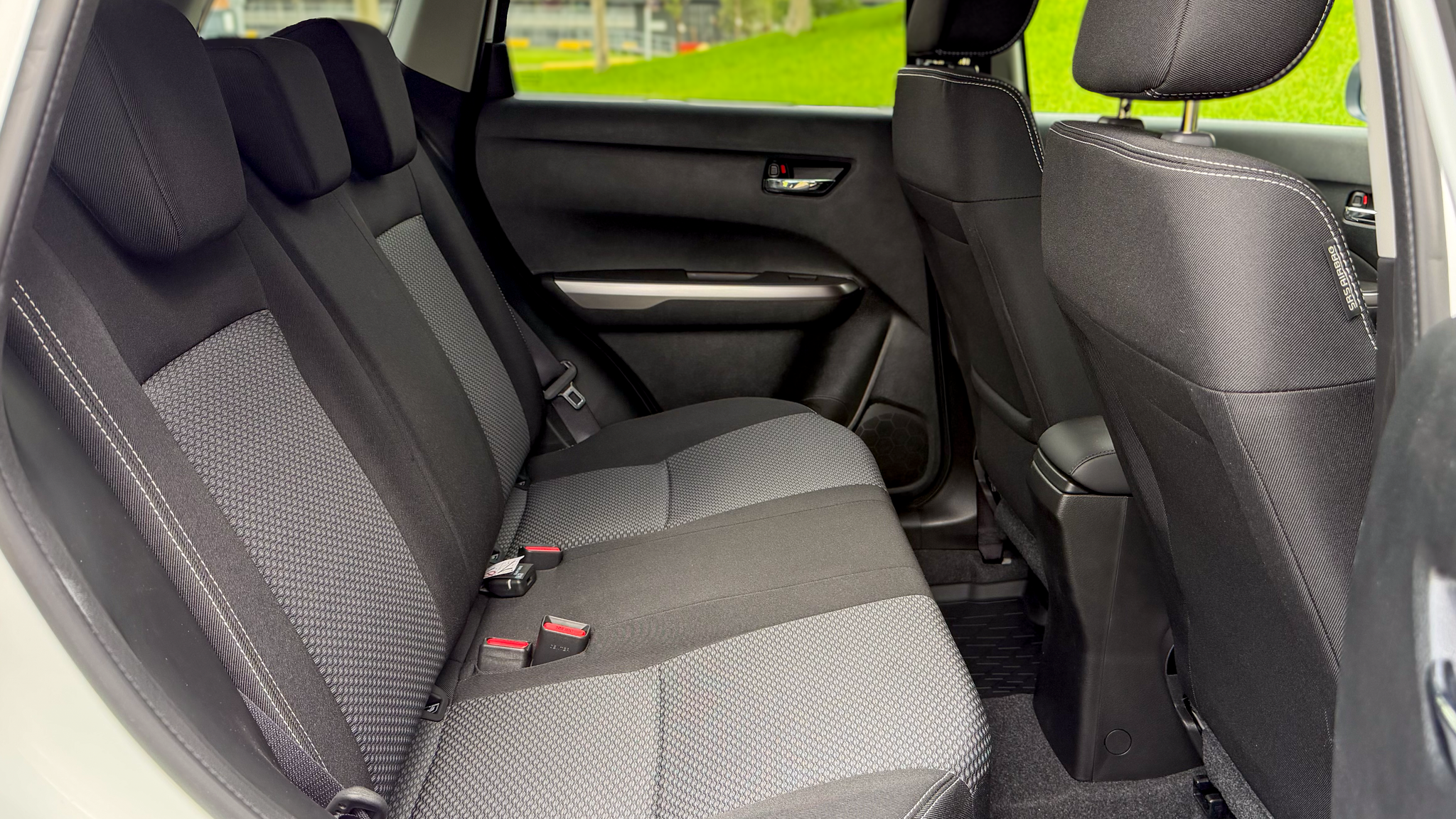
The second row is fine for two adults on shorter trips. Knee and head room get tight for anyone over 180cm, particularly with the sunroof fitted. There are no rear air vents, no map pockets and no fold-down armrest. ISOFIX anchors sit on the outer rear seats with three top tethers.
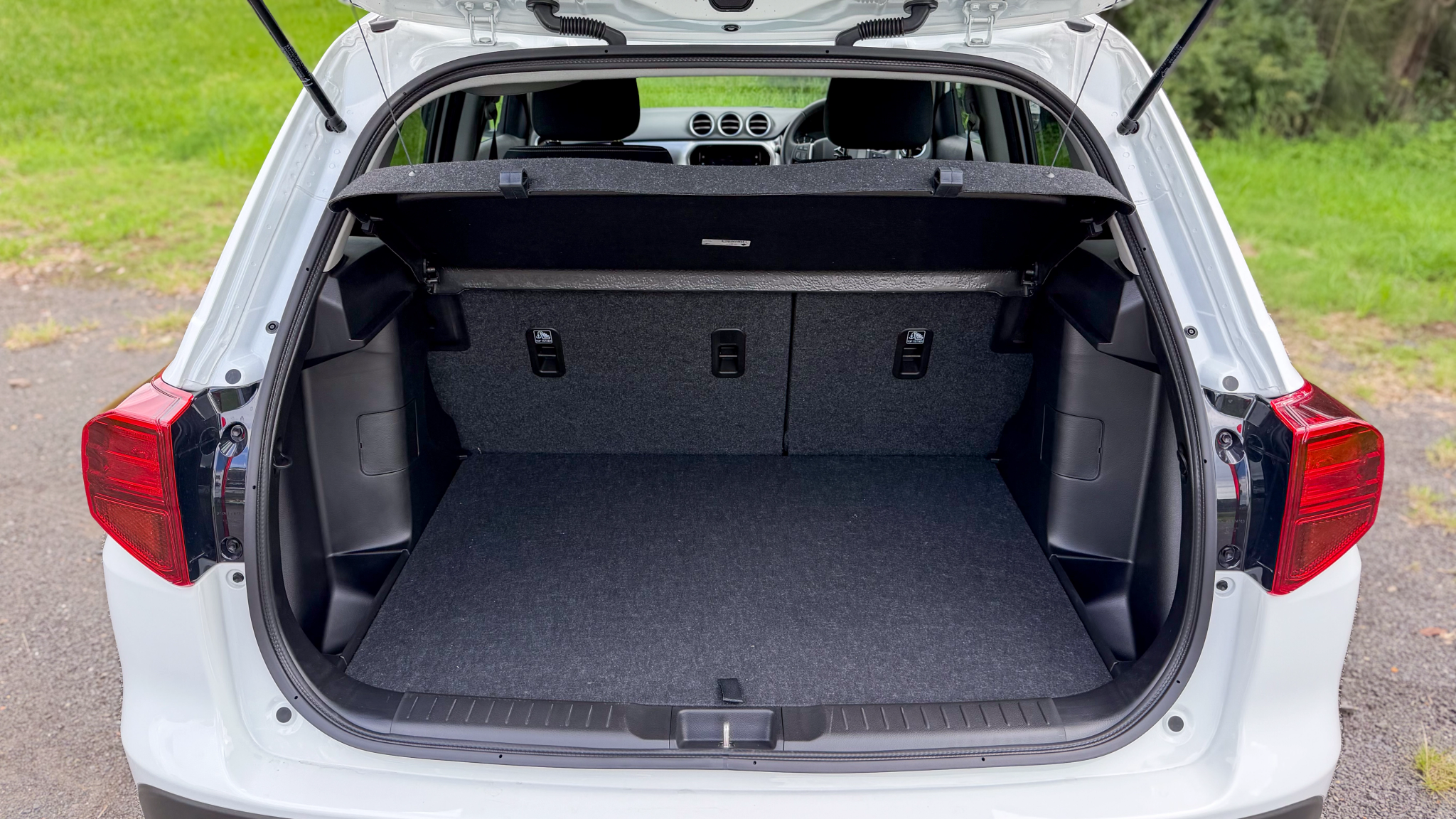
Boot space is 362L with the rear seats up, which is 13 litres less than the previous model thanks to mild-hybrid battery packaging. Folding the seats opens up 642L. A space-saver spare is included, which is increasingly rare and worth a tick.
Front storage is average. The phone shelf is shallow, the centre bin is small, and the cupholders are an odd shape. None of it's bad. None of it's clever either.
What is the Suzuki Vitara like to drive?
The Vitara has always been pleasant to drive in an unfussy, old-school way. That much survives. What's missing is any real progress.
Steering is light and direct. The car turns in willingly and feels nimble in tight stuff, helped by its short wheelbase and modest 1245kg kerb weight (1275kg in AllGrip). Ride quality is on the softer side, which works on patchy suburban roads but produces noticeable body roll through corners. Push it through quick direction changes and the chassis starts to lean and shuffle.
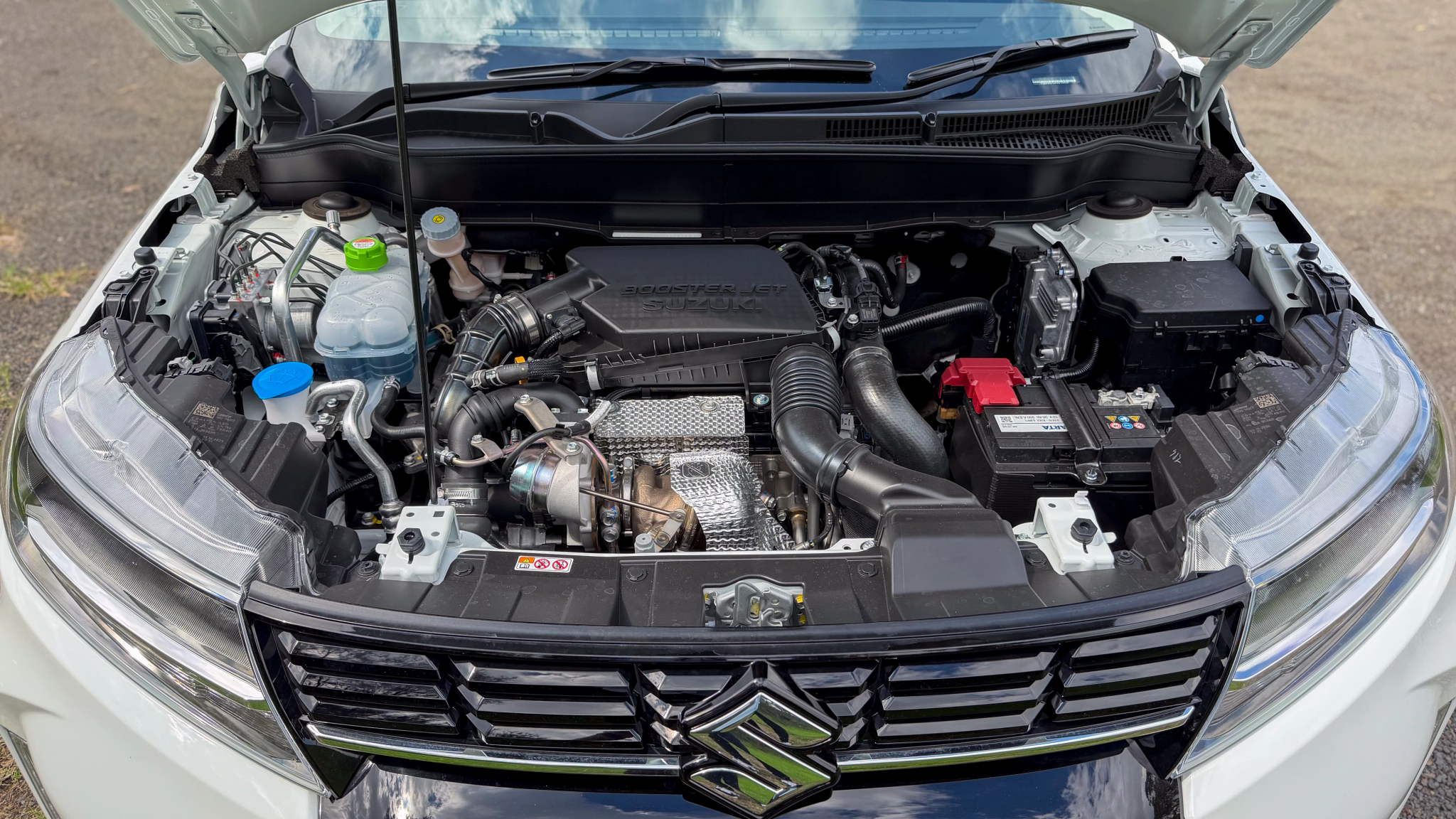
The 1.4-litre turbo now produces 80.9kW and 235Nm, with the 48-volt mild-hybrid system adding up to 12kW and 50Nm of assist. Power is down 22kW on the previous turbo. Torque is up 15Nm. In practice, the car feels softer off the line, with most of the urgency arriving once the turbo has spooled. Sport mode sharpens throttle response and gets closer to the old car's character. Eco and Auto modes feel lazy by comparison.
The six-speed torque-converter auto is a strength. Shifts are smooth and ratios suit the engine. The hybrid system fires the engine back up smoothly from stops with none of the shudder you get from older stop-start setups.
The bigger issue is refinement. Tyre roar over coarse-chip surfaces is loud, wind noise is noticeable at highway speeds and the cabin booms over bumps. At its old price point this was forgivable. At forty grand drive-away it isn't.
On a brief off-road loop the AllGrip handled mud, wet clay and mild ruts confidently. Hill descent control works well. Don't mistake any of this for proper off-road capability. Ground clearance is 175mm and that's the ceiling.
How efficient is the Suzuki Vitara?
Claimed fuel use is 5.8L/100km for the FWD and 5.9L/100km for the AllGrip. Real-world testing on launch returned figures in the 6.0 to 6.4L/100km range, which is fine for a petrol-only small SUV but underwhelming for anything badged hybrid.
This is where the marketing gets misleading. The 48-volt mild-hybrid system can't drive the car on electricity alone. It can't shut off the engine while coasting. It can't deliver the kind of urban efficiency a Toyota or Hyundai full hybrid will. Calling it "Hybrid" with a capital H sets an expectation the system can't meet.
The 47L tank also requires 95 RON premium unleaded, which adds to running costs. Service intervals are 12 months or 10,000km, with capped pricing of $329, $429, $339, $539 and $349 across the first five visits. Warranty is the industry-standard five years unlimited km with roadside assist included.
Is the Suzuki Vitara safe?
The Vitara's ANCAP rating expired in December 2022 and hasn't been refreshed. That's a meaningful gap given how much crash testing has tightened since 2015.
Standard safety gear includes six airbags, autonomous emergency braking, adaptive cruise control, lane keep assist with lane centring, blind-spot monitoring, rear cross-traffic alert, traffic sign recognition and a reversing camera. The AllGrip adds front and rear parking sensors.
The driver assist tech is calibrated sensibly. Lane keep doesn't yank the wheel and the speed sign alerts aren't intrusive. A surround-view camera would be useful at this price, but Suzuki hasn't fitted one.
What are the main competitors to the Suzuki Vitara?
The Hyundai Kona Hybrid is the obvious benchmark at this price point. It's a proper full-hybrid with newer tech, better materials and significantly stronger real-world fuel economy. For most buyers cross-shopping the Vitara, this is the one to beat.
The Toyota Corolla Cross Hybrid delivers the kind of urban efficiency the Vitara's badge implies but can't actually achieve. Toyota's hybrid system is proven, resale is strong and the dealer network is everywhere.
The GWM Haval Jolion HEV lands around $10,000 cheaper drive-away with a full hybrid system, more interior space and a longer warranty. The Suzuki's brand reputation is the main thing holding it level against this one.
The Chery Tiggo 4 Hybrid starts from $29,990 drive-away and undercuts the Vitara by a serious margin while offering a more modern cabin and proper hybrid efficiency. The value gap is hard to argue with.
The Volkswagen T-Cross suits buyers who want a European feel without going Japanese. It drives well and feels contemporary inside, but you'll pay similar money for less equipment.
Should I buy the Suzuki Vitara?
If you've owned Suzukis your whole life and want something familiar, you'll like the Vitara. It drives the same way it always has, it's easy to live with and the dealer network is well established.
For everyone else, this car is hard to recommend. The price has moved up to mainstream rival territory without the cabin, tech or efficiency to back it. The hybrid badge oversells a system that delivers modest gains. The platform is more than a decade old and feels it.
This update was Suzuki's chance to keep the Vitara competitive. A bigger screen and a mild-hybrid badge weren't enough.
Ready to buy the Vitara Hybrid? Compare real prices and find the best deal.
VerdictThe Beep Verdict
Rob Leigh
Co-founder & Director
Rob Leigh is Co-founder and Director of The Beep based in Melbourne, Australia. He has 15+ years inside a major automotive OEM, specialising in product planning, pricing and vehicle strategy.
About Author