2026 Mitsubishi Outlander Exceed Tourer review
The Outlander has always been a lot of car for the money - now it drives like it too.

Rob Leigh
Pros
- Ride comfort genuinely transformed - especially on long regional trips
- Impressive standard kit for the money with a standout Yamaha stereo
- Full-size spare retained at this trim level
Cons
- Intrusive driver monitoring system you can't permanently disable
- Petrol engine feels underdone for a near 1,700kg SUV
- Seven seats gone from the Exceed Tourer
For years the Mitsubishi Outlander sold well in spite of how it drove. Buyers loved the space, the price and the plug-in hybrid option - and quietly tolerated a ride that could rattle your fillings loose on anything short of freshly laid bitumen. That problem has been addressed for the latest model and the result is a car that's considerably easier to live with. The Exceed Tourer sits at the top of the petrol range at $57,990 before on-road costs and for that money you're getting a five-seat family SUV with serious long-haul ability. The catch? The engine remains the weakest part of the package.
What does the Outlander cost in Australia?
The Outlander range opens at $39,990 for the entry ES (front-wheel drive), stepping through LS, Aspire, Exceed and topping out at the $57,990 Exceed Tourer - all-wheel drive standard from Exceed upward. Price increases of roughly $2,000 to $3,000 across the range are offset by meaningful spec additions, making the value equation broadly defensible.
The refreshed Outlander PHEV arrived in Australian showrooms in March 2026 with the Exceed Tourer variant priced at $74,490 before on-road costs. The full PHEV range runs from $58,990 for the ES to $66,790 for the Aspire and $71,640 for the Exceed. If you're doing regular short commutes with the ability to charge at home, the PHEV justifies the premium over the petrol comfortably. For everyone else, the ICE Exceed Tourer at $57,990 remains the value pick.
Rivals including the Kia Sorento GT-Line ($68,790), Hyundai Santa Fe Calligraphy ($72,500), and Skoda Kodiaq 140TSI Launch Edition ($65,890) all ask significantly more for similar or comparable specification, giving the Outlander a real price-point advantage - even factoring in what you give up dynamically.
What does the Outlander look like?
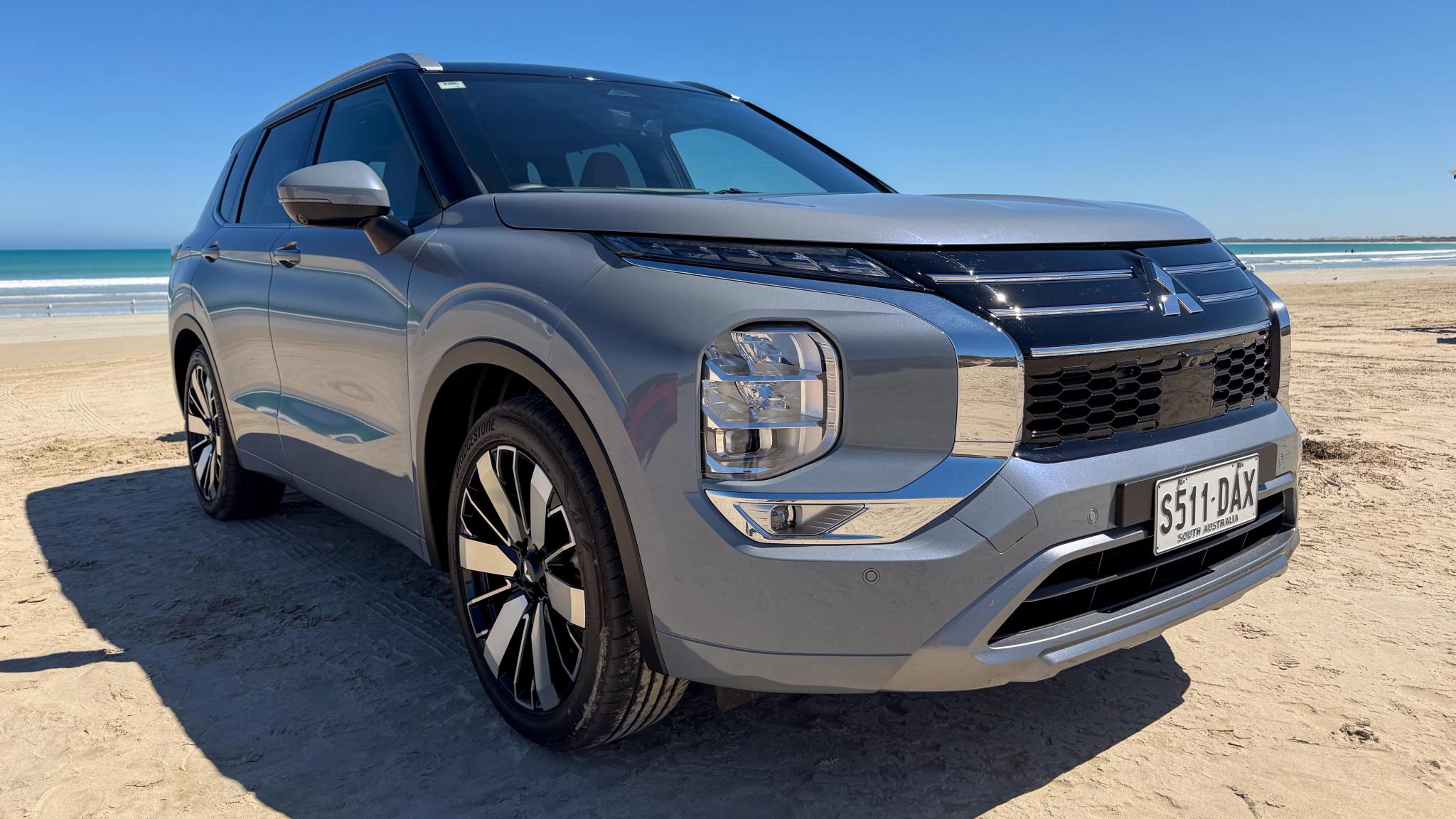
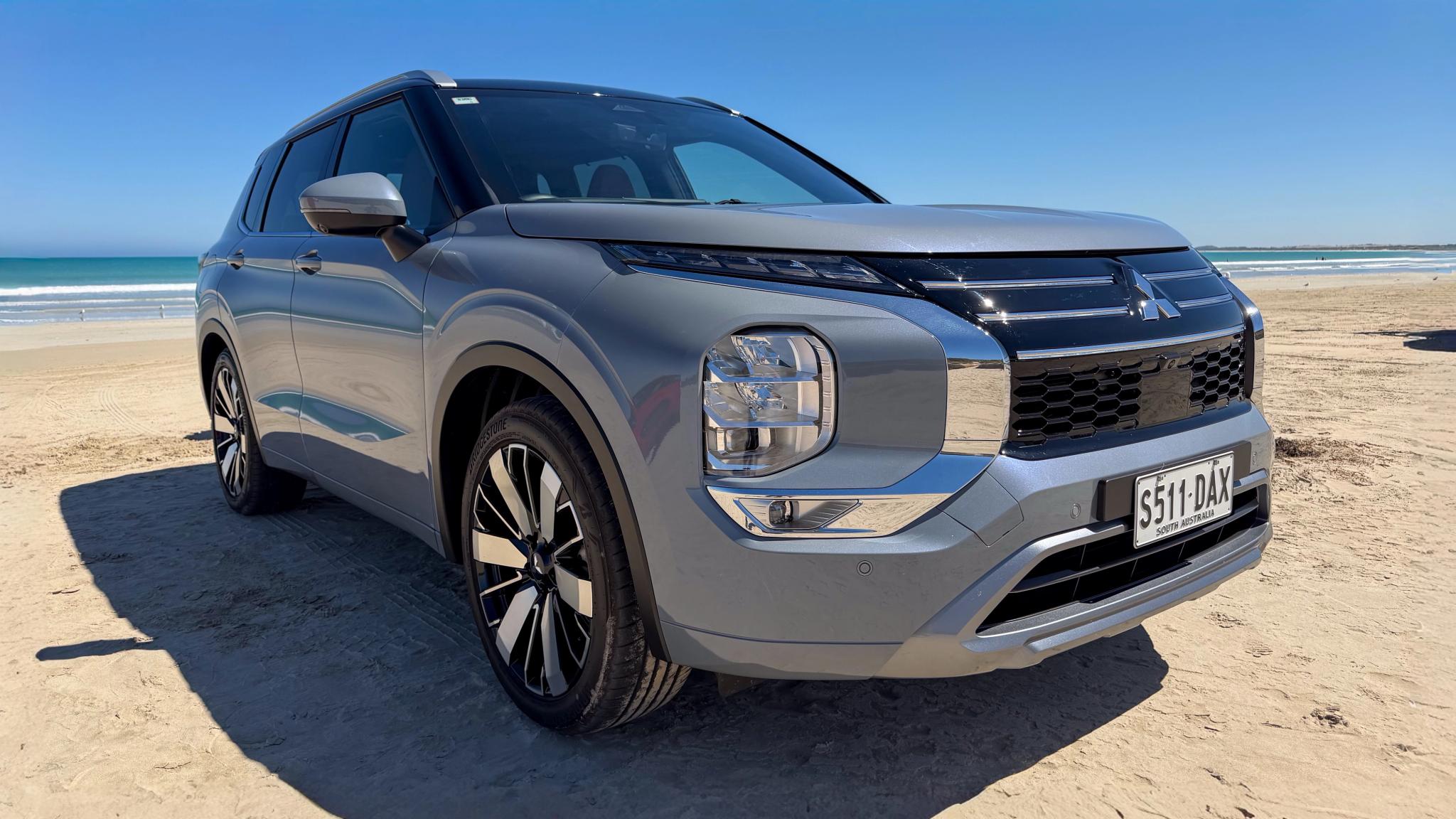
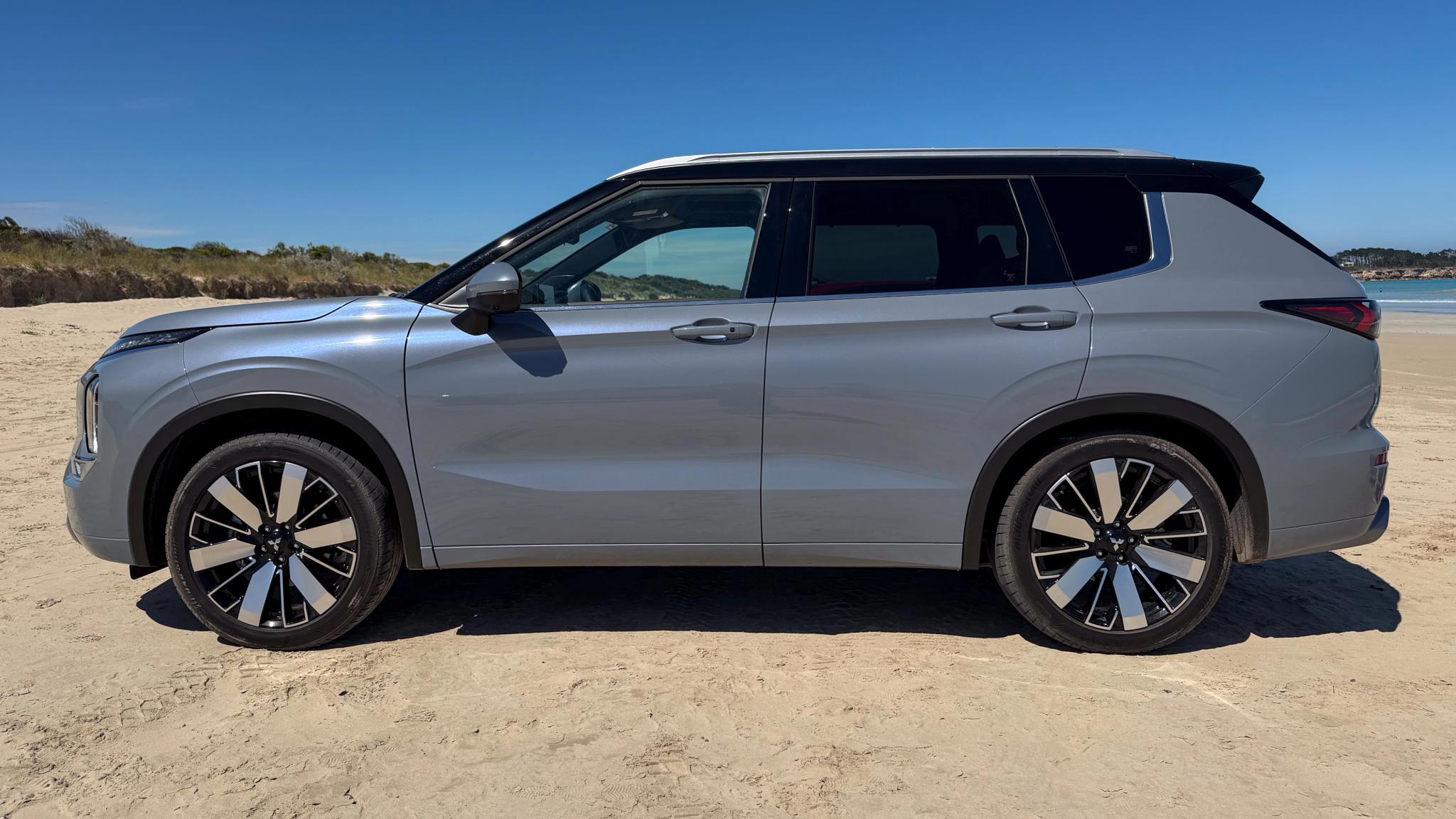
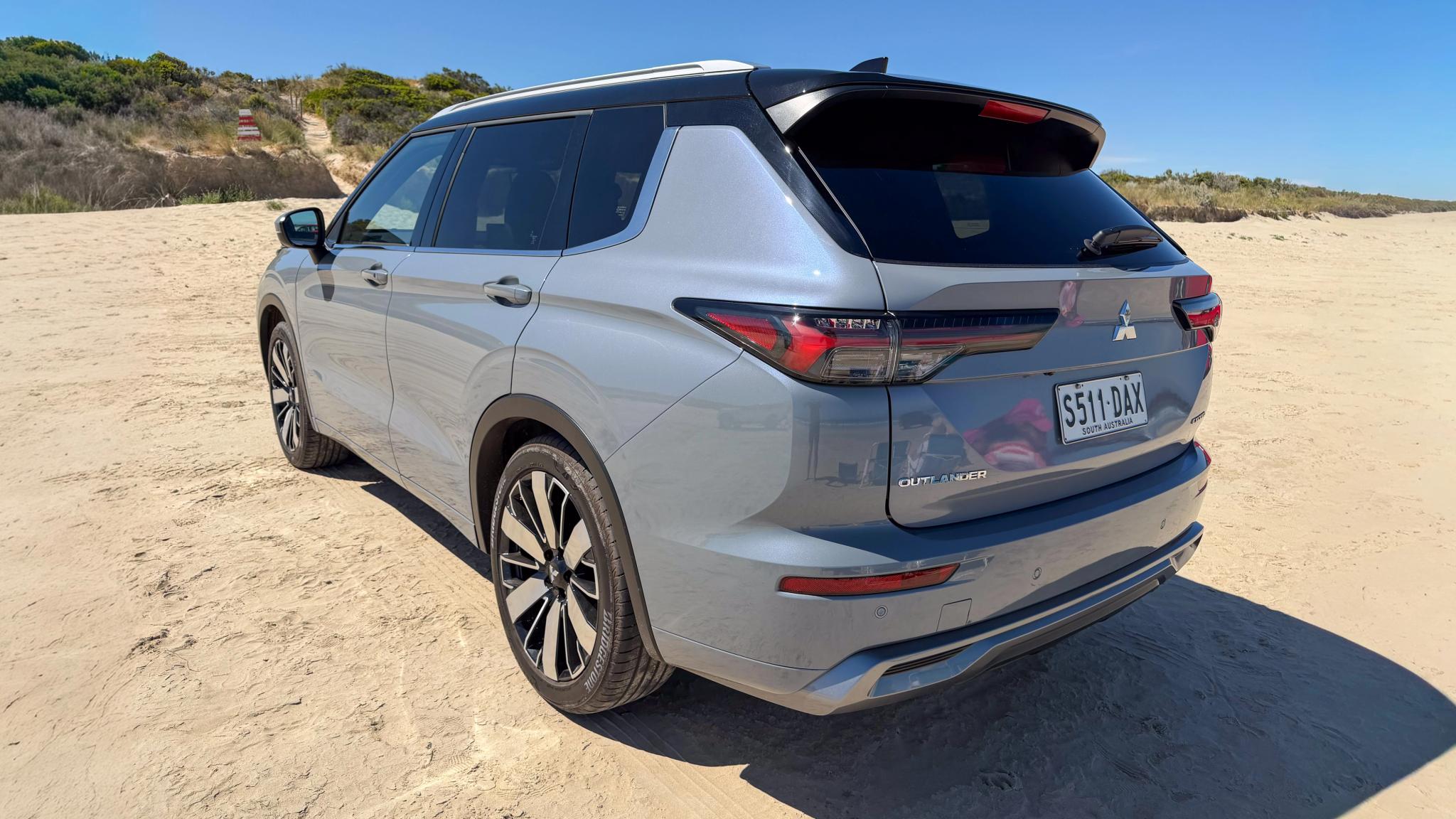
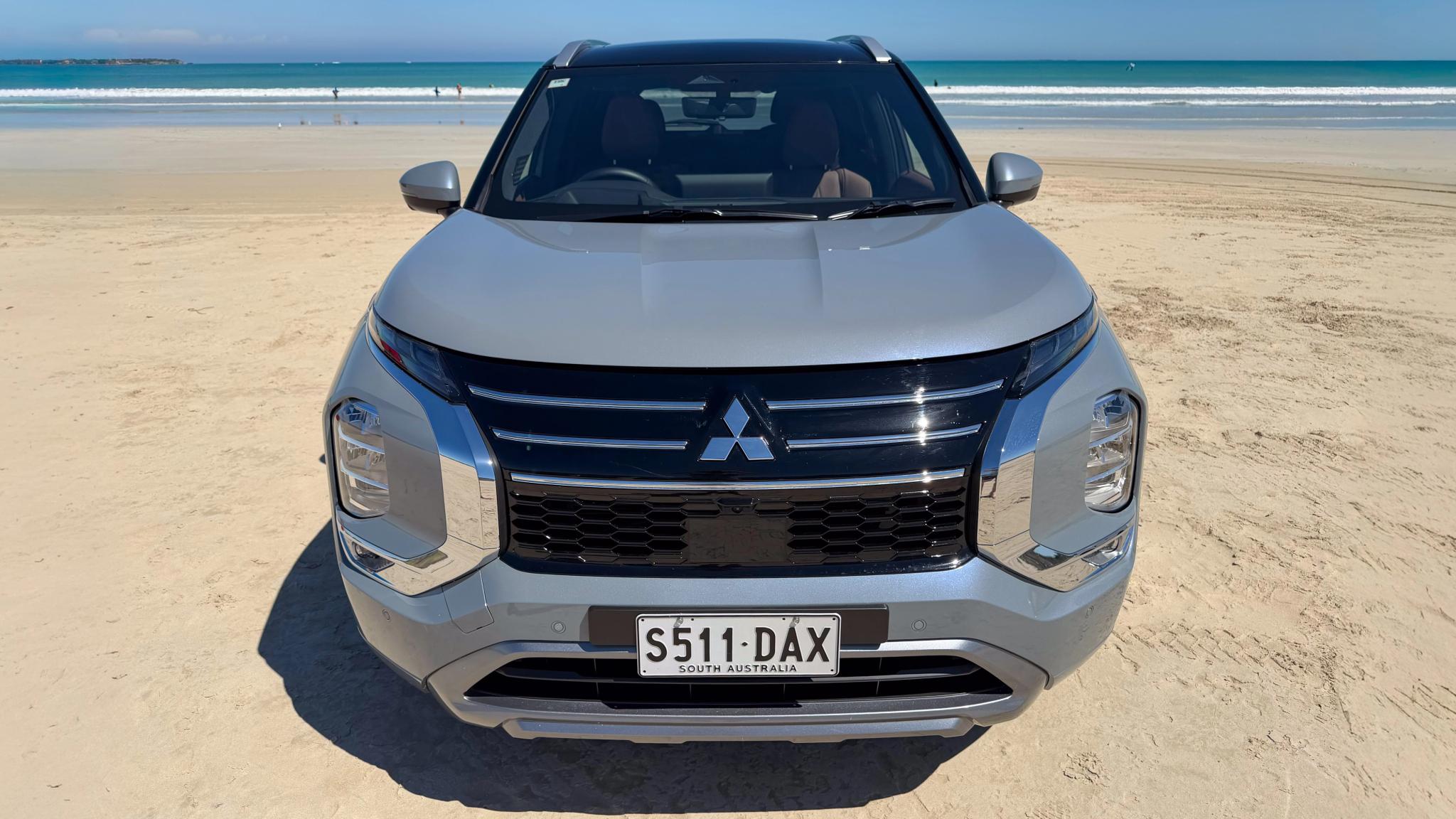
The Outlander's exterior hasn't changed dramatically and that's fine - the fourth-gen design has aged well. It's a substantial-looking thing on the road, helped by the 20-inch wheels standard on Exceed Tourer that fill the arches properly. Minor updates to the front grille and bumper lips are barely perceptible unless you park them side by side.
It's a confident shape without being polarising. Australians have responded warmly to it and the contrast black roof on the Exceed Tourer adds some visual interest at the top of the range. It doesn't try to be a Kodiaq - it has its own presence and it works.
What is the Outlander like inside?
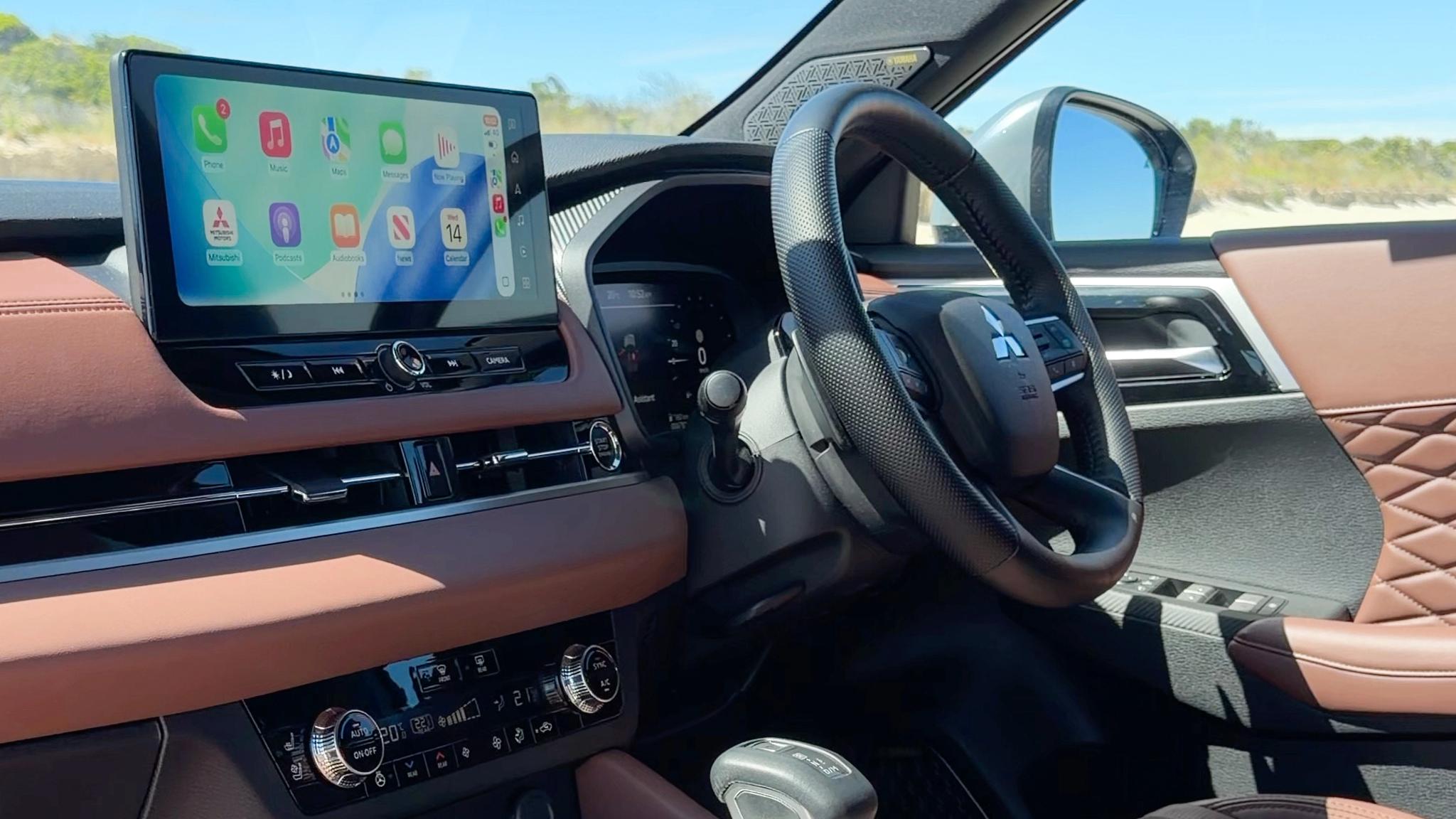
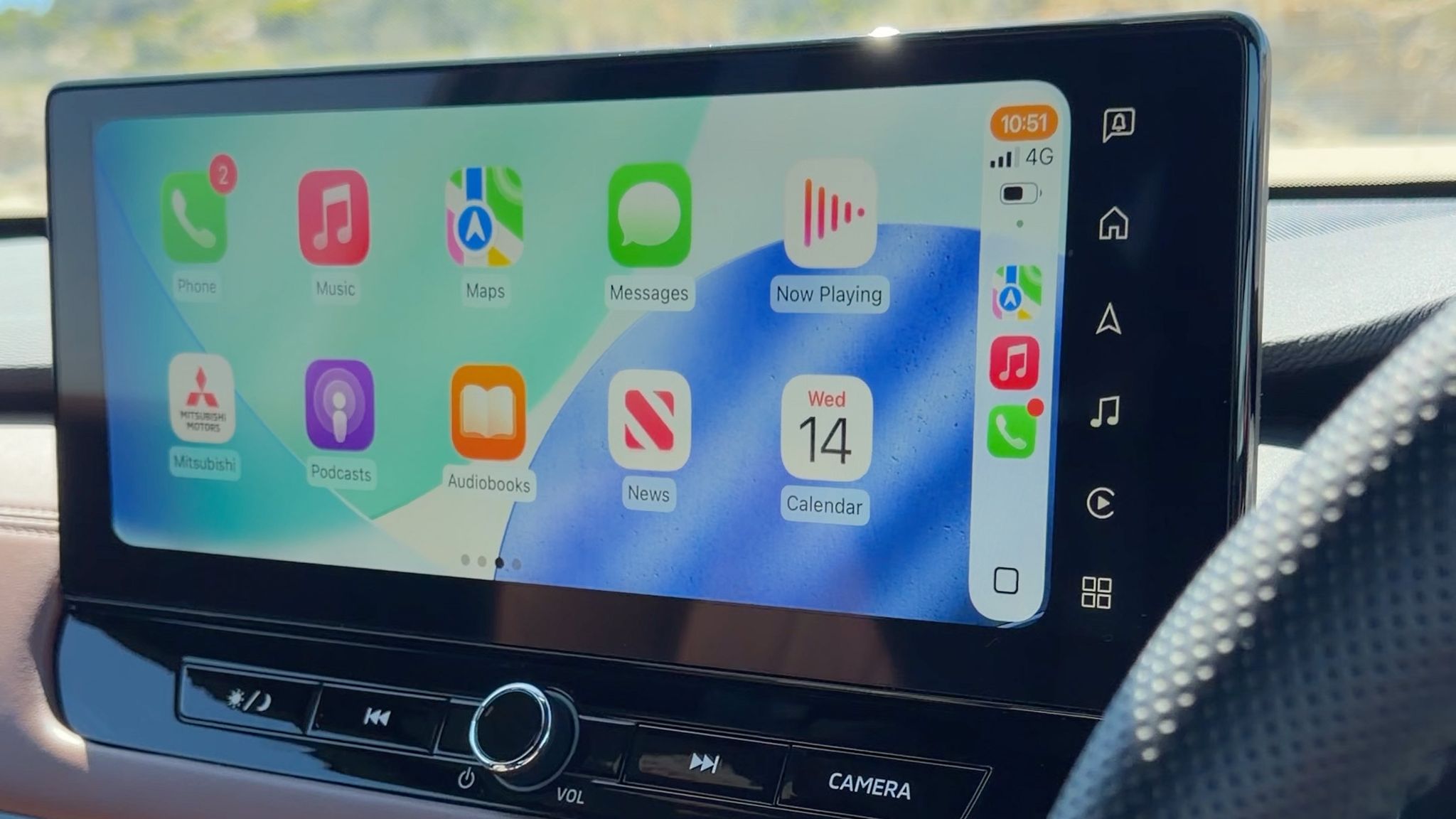
Mitsubishi deserves credit here. The cabin layout is one of the most ergonomically sensible in the segment - physical climate knobs, proper steering wheel buttons and a volume dial rather than a swipe-and-hope strip. The addition of twin 12.3-inch screens across the range feels like a genuine upgrade rather than a specification checkbox.
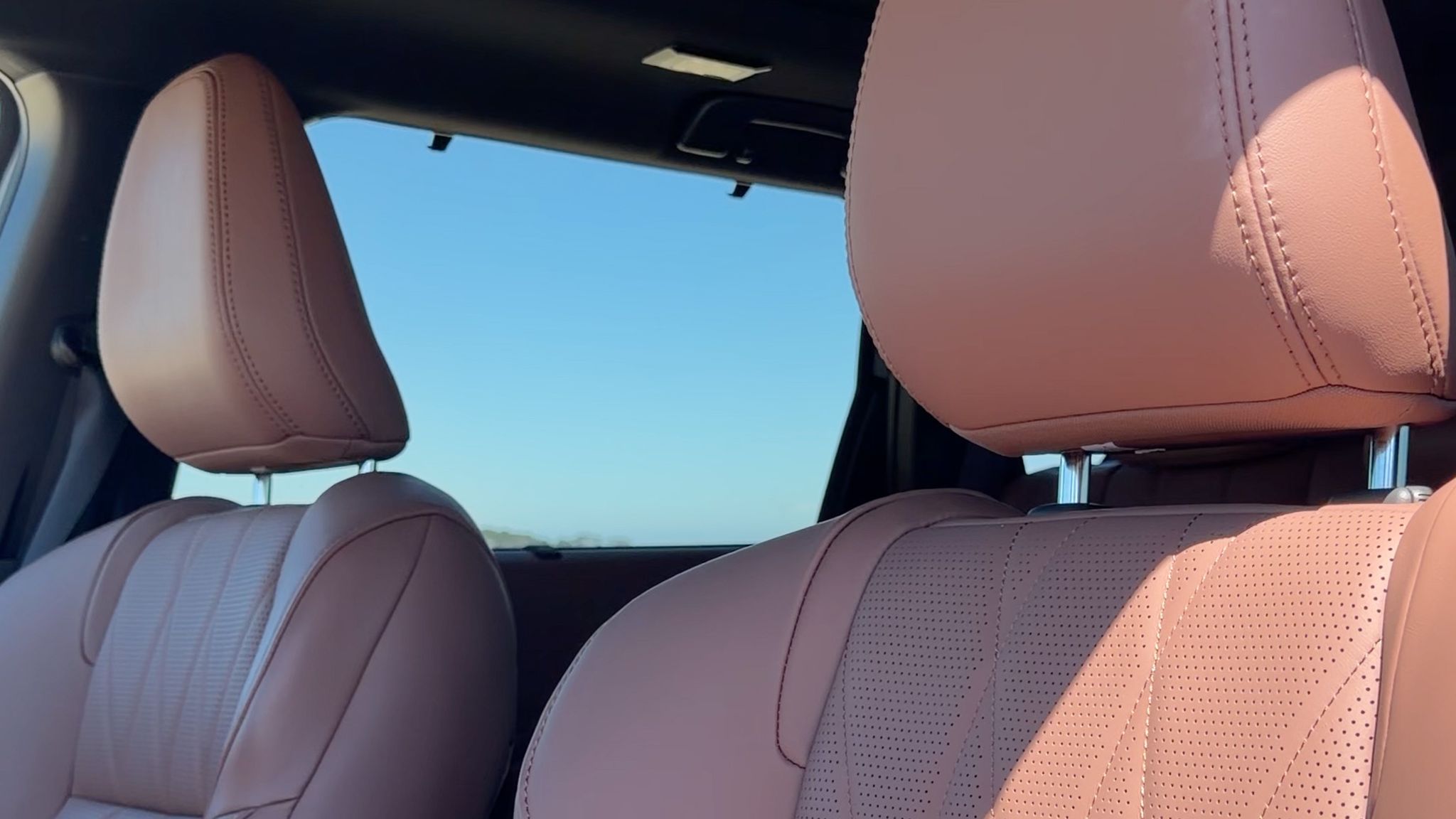
Exceed Tourer cabin materials are a step up - brick brown leather upholstery looks genuinely premium and the heated, ventilated, and massaging front seats make long trips comfortable. The 12-speaker Yamaha Ultimate stereo is the unexpected highlight of this trim level. It's seriously good - the kind of audio system you'd expect in a car costing considerably more.
On the tech side, Mitsubishi Connect is now standard offering remote vehicle access via a smartphone app. Wireless Apple CarPlay and Android Auto are standard across the range.
How practical is the Outlander?
Mostly excellent. The second row is genuinely spacious for adults with slide and recline functions adding flexibility. Rear passengers on the Exceed Tourer get heated seats, sunblinds and a dedicated climate zone - real-world amenities that matter on family trips.
Boot space is 485 litres with seats up. Not class-leading, but the shape is square and usable. The power tailgate is standard here and works well.
The significant trade-off at this trim level is the loss of the third row. Mitsubishi dropped seven-seat configurations from the Exceed and Exceed Tourer in favour of a full-size alloy spare - a sensible swap if you're regularly loading the car for road trips, less so if you occasionally need extra seats. For buyers who need seven seats, the LS or Aspire is the answer. For everyone else, the spare is the smarter call.
What is the Outlander like to drive?
This is where the 2025 update earns its money - and where the gap between the old car and new is most obvious.
Mitsubishi's Australian engineering team reworked the damper internals, revised spring rates front and rear, changed the front anti-roll bar, and retuned the electric steering. Tokyo was sufficiently impressed that this tune has since been applied to Outlanders in global production - a meaningful acknowledgement for a local team.
The difference on Australian roads is real. On the highway and across the sort of patchy regional bitumen that makes up a significant portion of any genuine road trip, the Outlander has gone from jarring to composed. There's far less cabin movement, far less head toss, and a general sense that the suspension is actually managing the road rather than fighting it. We spent a week putting kilometres through this thing across varied terrain, and it consistently felt settled and assured.
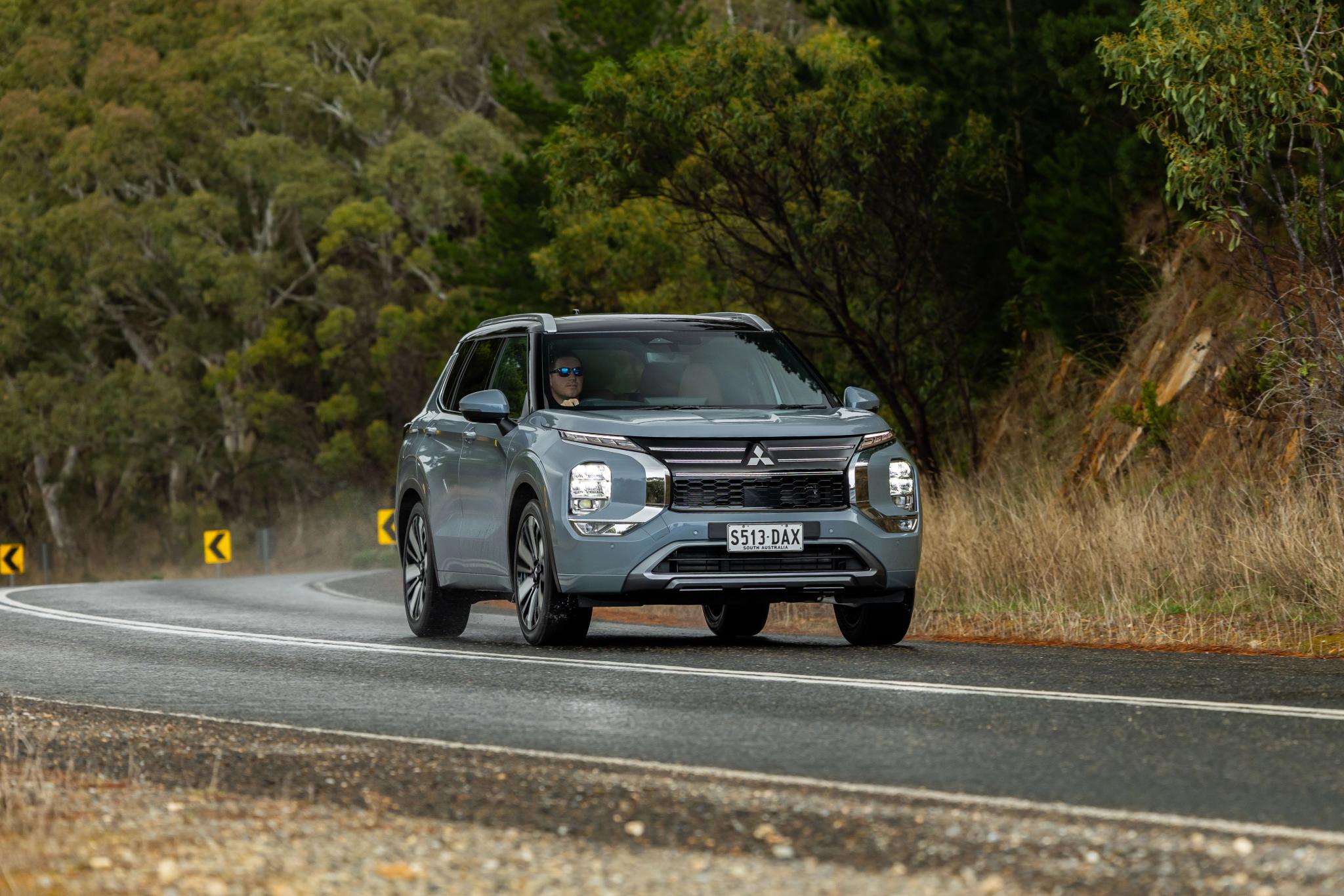
Steering feel is improved too. The previous Outlander's on-centre behaviour was vague and required constant small corrections; this one requires less intervention and responds more predictably to directional changes.
Where it still falls short is at low speed over sharp urban impacts - potholes and expansion joints still transmit through the cabin more than you'd want. And the handling at the limit of its chassis reveals that there are structural compromises the tuning team couldn't engineer around - a disconnected feeling from the front axle over mid-corner bumps among them.
The bigger ongoing frustration is the 2.5-litre naturally aspirated petrol engine. At 135kW and 244Nm through a CVT, it's adequate in city traffic and acceptable on the open road - but push it for an overtake with a loaded car and you'll be reminded of what's missing. At nearly 1,700kg, this engine is working hard when it needs to work hard. It's not offensive, but it's not inspiring either, and the CVT amplifies the impression of effort. A turbo petrol or a conventional hybrid option would transform the package.
How efficient is the Outlander?
Real-world fuel consumption sits around 9.0-11.0L/100km depending on conditions. The 55-litre tank provides a real-world range of approximately 600km - useful for longer trips.
Servicing costs are reasonable: the first five years total $1,700 on the capped-price schedule, with years six through ten running to $2,640. Mitsubishi Australia is currently offering the first three services free with purchase of a 2025 model.
The warranty headline is a five-year/100,000km standard cover, extendable to 10 years/200,000km conditionally - annual dealer servicing required through years six to ten to maintain eligibility. The extension is a genuine ownership benefit, but read the conditions before counting on it.
Is the Outlander safe?
The Outlander carries a five-star ANCAP rating awarded in 2022, valid until December 2028. It scored well across adult and child occupant protection, and the active safety suite is comprehensive across the range.
Standard equipment includes AEB with pedestrian detection, adaptive cruise control, blind spot monitoring, rear cross-traffic alert, and a 360-degree camera - the last of these being a welcome addition across all grades.
The driver monitoring system is a 2025 addition and it's the one piece of technology that genuinely annoys. It flags head-checks, glances at the touchscreen and other normal driving behaviour as inattention events. The alerts are disruptive. The inability to turn it off permanently makes it worse. It's well-intentioned safety technology that needs a software maturity pass before it stops frustrating drivers who are, by any measure, paying attention.
Lane-keeping assistance is similarly heavy-handed, particularly in tighter conditions. Both systems will likely improve over time via software updates, but right now they're the most irritating part of daily life in the Outlander.
What are the main rivals to the Outlander?
The Kia Sorento and Hyundai Santa Fe both offer a more polished driving experience and broader powertrain options - but both cost $10,000-$15,000 more for comparable specification. If the Outlander's dynamics frustrate you, that price gap narrows quickly.
The Skoda Kodiaq is arguably the most dynamically accomplished option in this segment, but prices start higher and top-spec models push well beyond $65,000.
Toyota RAV4 buyers looking to step up to a larger car will find the Outlander's pricing competitive and the cabin roomier, though the RAV4's hybrid powertrain is a more satisfying daily proposition than the Outlander petrol.
Budget-conscious buyers should also look at the Chery Tiggo 8 at $38,990 driveaway - it offers significant savings, though with an unproven long-term network.
Should I buy the Outlander?
If you do a genuine mix of highway and suburban driving - road trips, school runs, weekends away - the Outlander Exceed Tourer is a strong case. The ride is now genuinely good on the open road, the interior is comfortable and logically laid out, the audio system punches well above its price and at under $60,000 before on-roads, the value proposition is hard to dismiss.
The petrol engine remains a weak link and if you're regularly carrying five people and their luggage, the PHEV version will likely suit you better. The driver assists need a tolerance adjustment before they stop feeling like a distraction.
But for a family SUV that does long-distance work with comfort, practicality, and genuine peace of mind? The Outlander makes a very convincing argument. It's the car that finally caught up with how good everyone already thought it was.
VerdictThe Beep Verdict
Rob Leigh
Co-founder & Director
Rob Leigh is Co-founder and Director of The Beep based in Melbourne, Australia. He has 15+ years inside a major automotive OEM, specialising in product planning, pricing and vehicle strategy.
About Author