2026 KGM Musso EV review
Korea's first electric ute for Australia ticks the right boxes on paper, but the real world tells a more complicated story.

Rob Leigh
Pros
- Competitive pricing for an electric ute
- SUV-like ride makes daily driving genuinely comfortable
- V2L capability adds real-world versatility
Cons
- 1.8 tonne tow rating limits serious work use
- No spare wheel or tub power socket
- Busy styling tries too hard
For once an electric ute that isn't Chinese. The KGM Musso EV is Korean-built, starts from $60,000 drive-away and currently has the Australian electric ute segment almost entirely to itself. That's both its biggest advantage and the thing that makes it hard to judge fairly - there's simply not much to compare it to. What it offers is a fairly capable, comfortable lifestyle ute that drives more like an SUV than a workhorse. What it isn't is a genuine tradie vehicle. Know which one you need before you sign anything.
What does the KGM Musso EV cost in Australia?
The range opens at $60,000 drive-away for the 2WD and tops out at $64,000 for the AWD.
On paper $60,000 for an electric dual-cab is competitive. The only real rival in the electric ute space right now is the LDV eT60, which costs significantly more, tows less and has shorter range. For buyers who've been waiting for an EV ute without Chinese branding at a mainstream price, the entry point here is hard to argue with.
What does the KGM Musso EV look like?
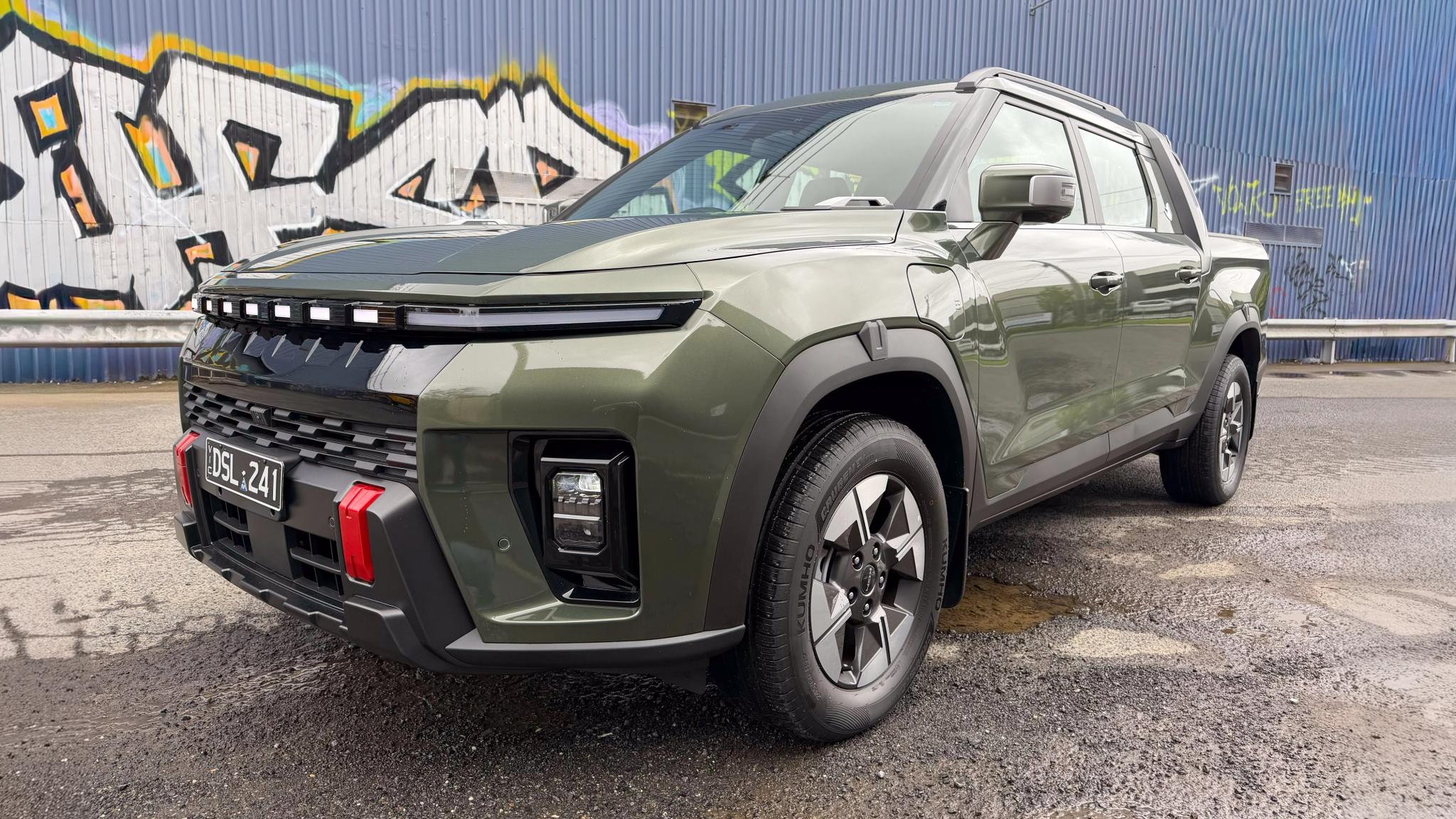
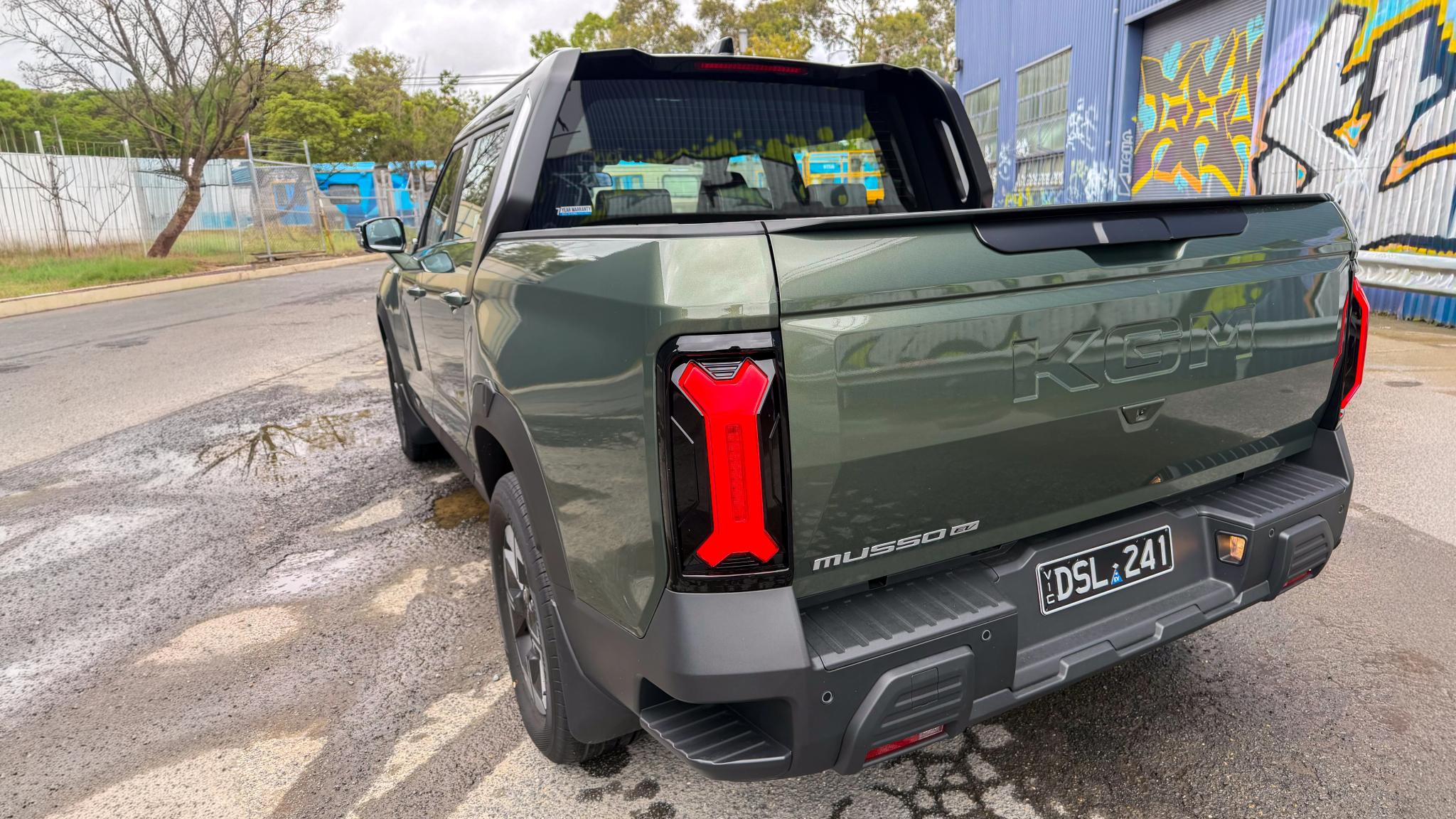
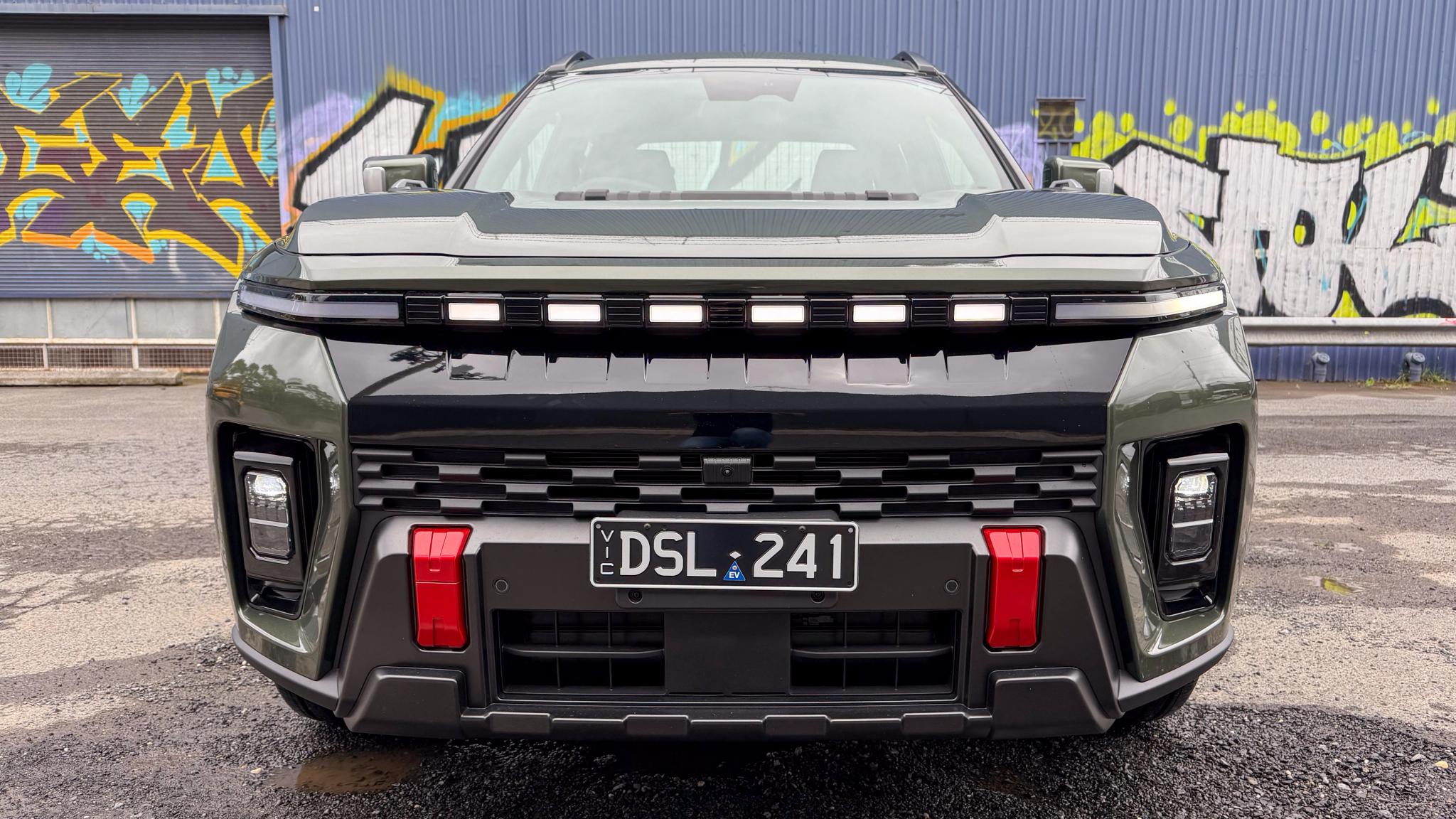
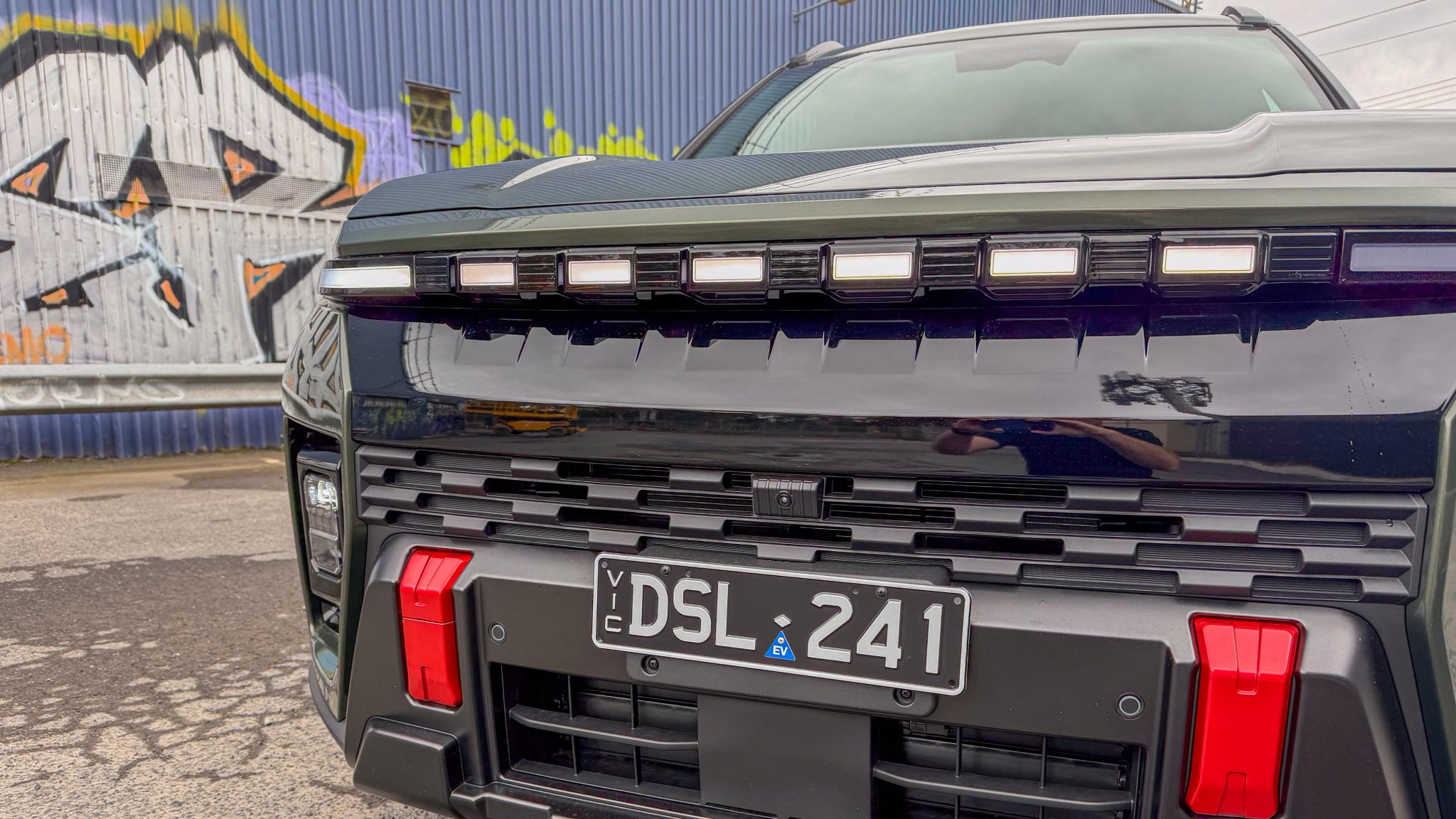
The Musso EV is built on the same platform as KGM's Torres SUV, which explains why it sits noticeably lower than a traditional body-on-frame ute. In practice, that's actually a benefit - easier to get in and out of, more car-like to park. But the styling itself is a lot to process.
KGM has gone hard on visual aggression: sharp body creases, pronounced wheel arches and an assortment of trim details that pile up fast. The front end works well - it's bold without tipping into excess. The rest of the body is less restrained. It reads more concept car than production vehicle.
In darker colours the design settles down considerably. The proportions are actually good. The visual noise just needs somewhere to hide.
17-inch alloys are standard across the range and full LED lighting front and rear. Side steps are included. The tub sits a manageable height for loading.
What is the KGM Musso EV like inside?
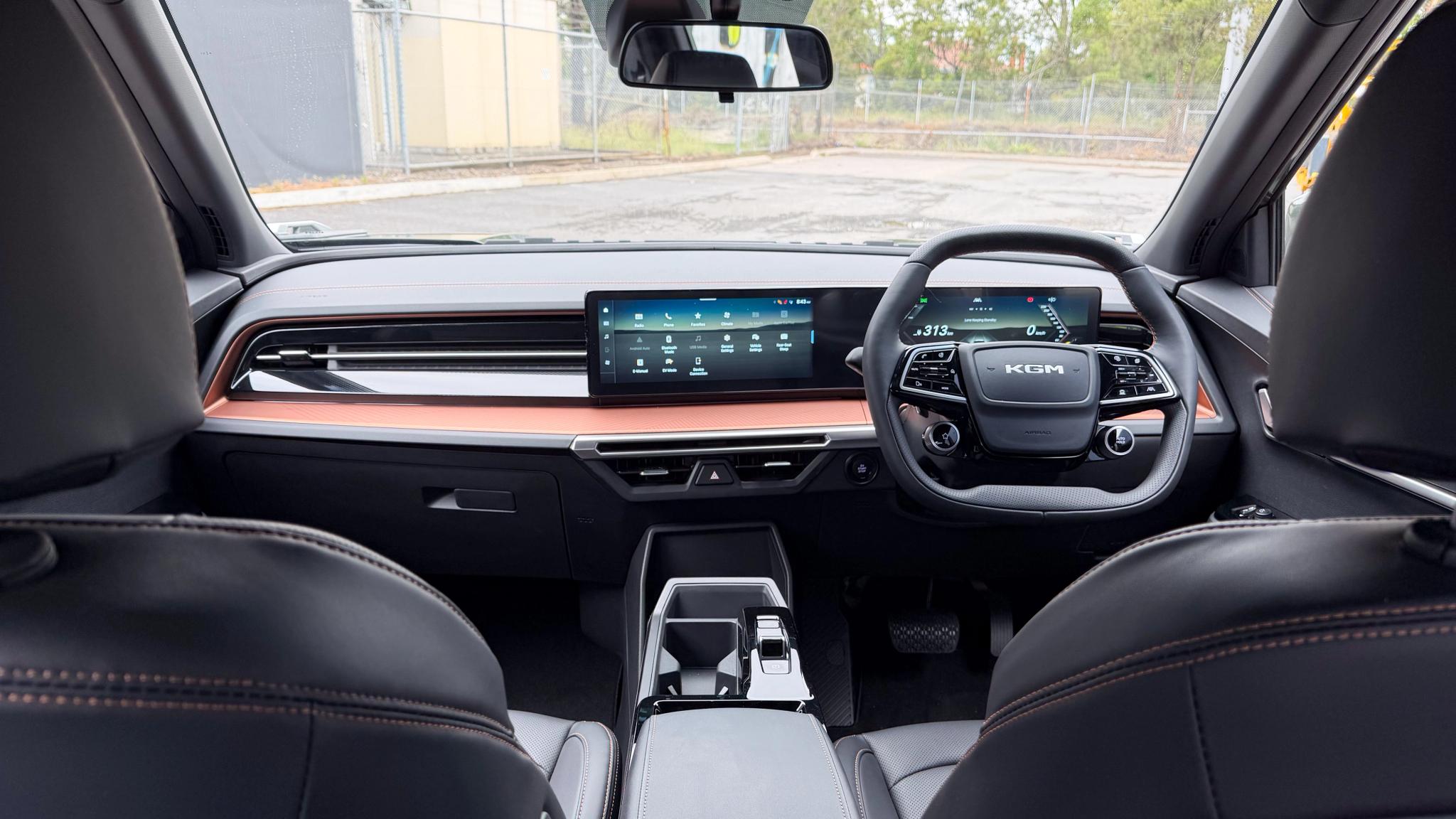
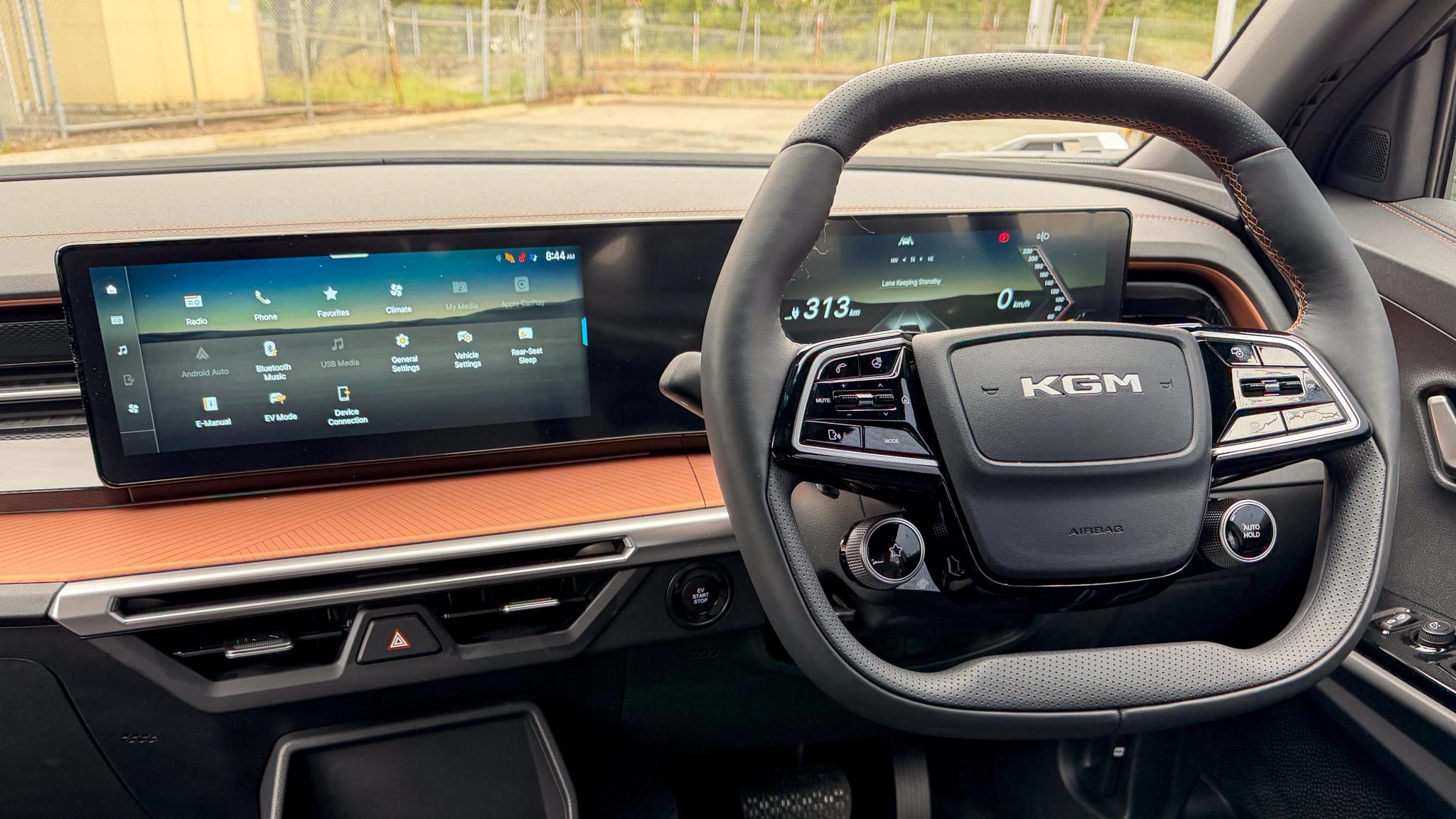
The cabin is modern, screen-heavy and clearly pitched at private buyers rather than tradies. Two 12.3-inch displays run side by side - one for instruments, one for infotainment - and most functions are handled through the touchscreen. Physical buttons are minimal.
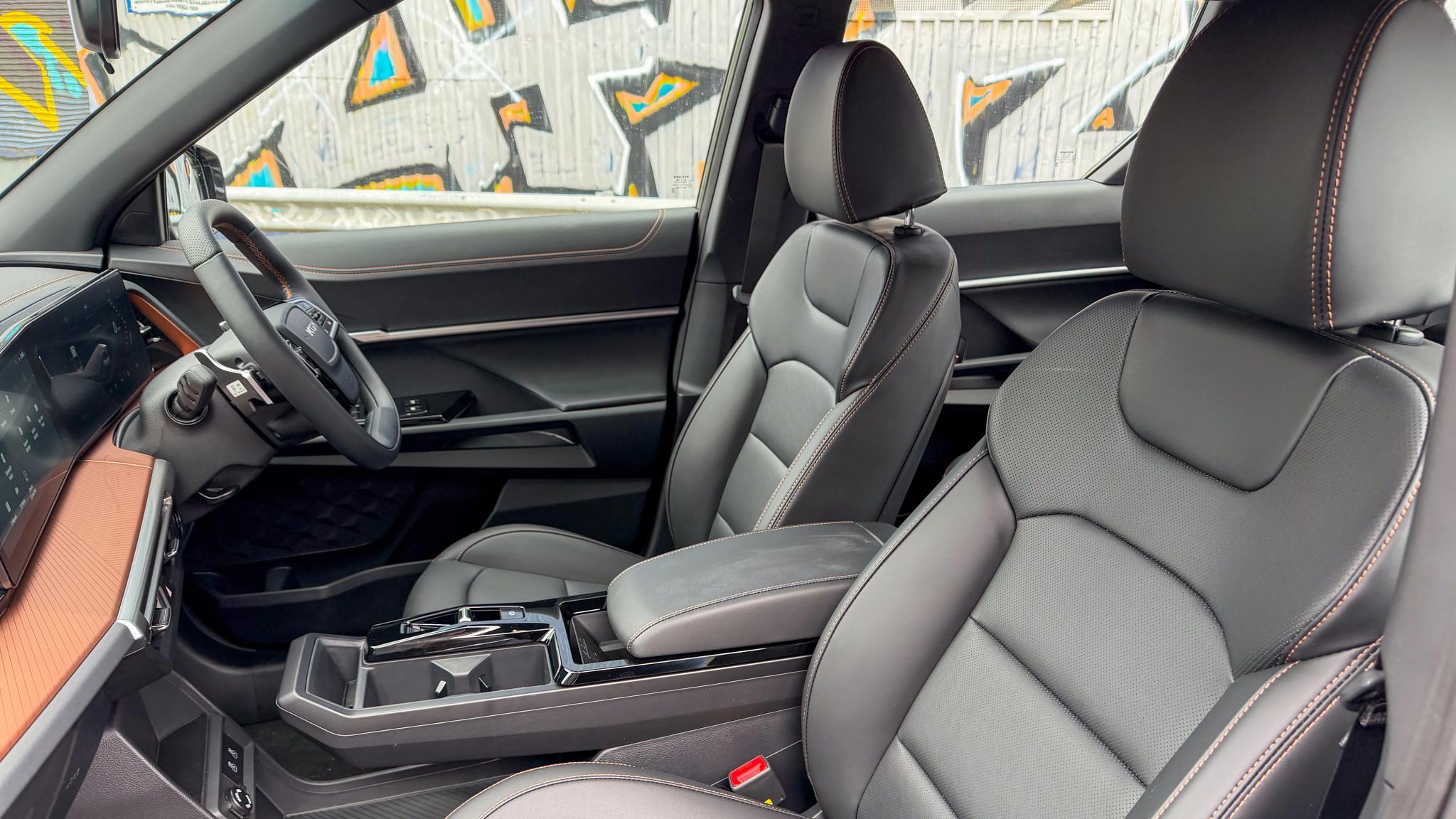
Materials are decent for the price. The leatherette trim feels respectable, the seats are comfortable and the heated front and rear items are a genuine benefit in winter. Ventilated front seats come standard too which at this price point is a solid inclusion.
The hexagonal steering wheel is a talking point for the wrong reasons. Unusual shapes on steering wheels rarely improve on the round version, and this one confirms that. It functions fine - it just looks like a design decision that escaped the editing process.
Wired Apple CarPlay and Android Auto are standard. No wireless connectivity at $60,000 is a genuine gripe - it's become a baseline expectation across most segments including budget vehicles. It isn't a dealbreaker, but it's the kind of omission that lingers.
Fit and finish feels adequate rather than impressive. Some elements - switchgear, panel joins, certain trim pieces - have a slightly hollow quality that the price tag almost justifies, but doesn't fully excuse.
How practical is the KGM Musso EV?
The rear cabin offers enough space for two adults on longer runs. The seat angle is reasonably relaxed and the sliding rear bench adds some flexibility. It's not as cavernous as some traditional utes, but it covers the brief for most families.
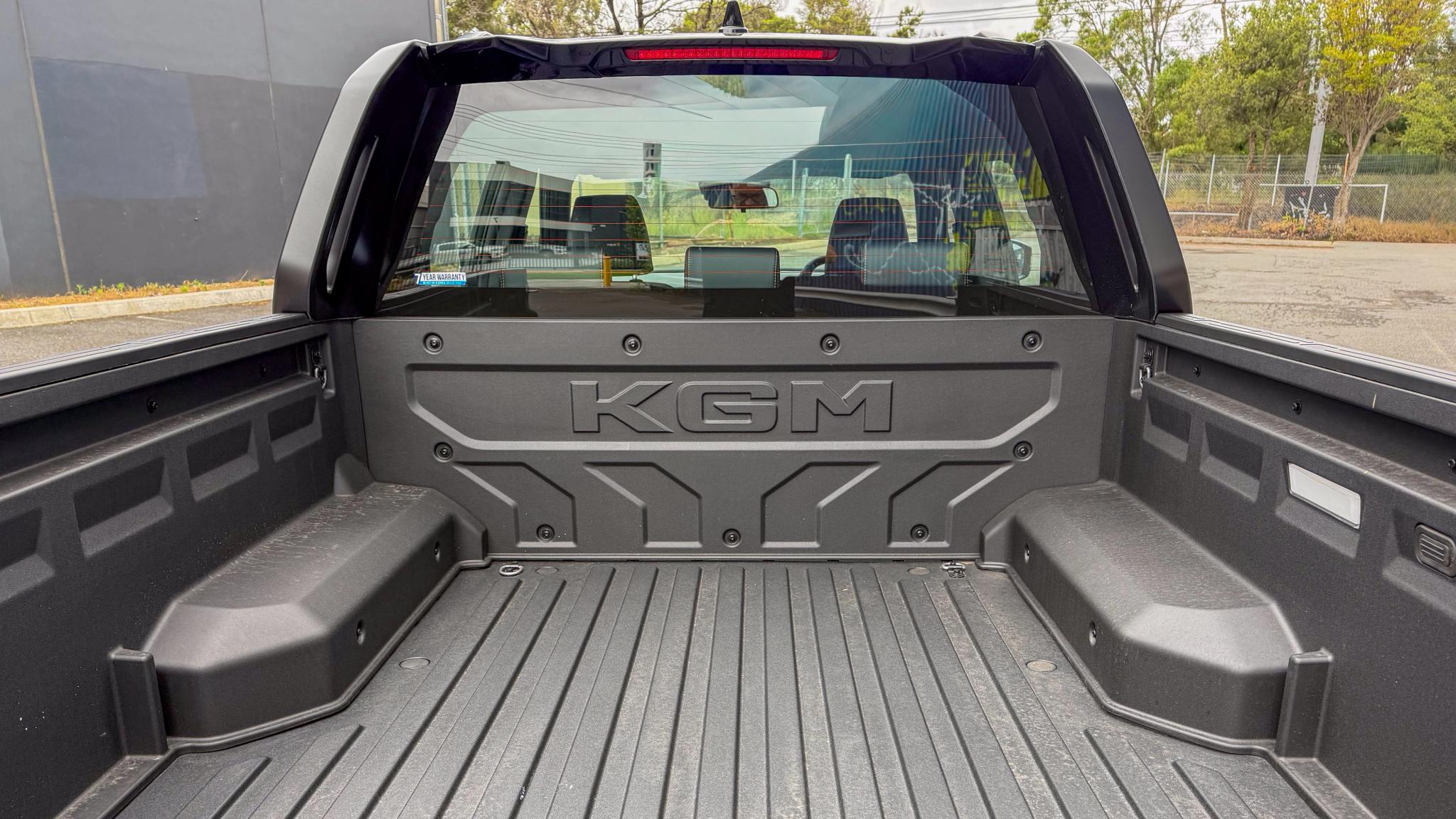
The tub is well-executed. A full liner covers the floor, sides, and tailgate. Eight tie-down hooks, a 150kg-rated tailgate and a handy tub light are all included. Payload sits at around 900kg for the 2WD - reasonable without being class-leading.
Two omissions stand out: there's no spare wheel and there's no tub power socket. The latter is particularly odd on an EV that already supports V2L (vehicle-to-load) functionality - the ability to run 240V appliances from the car's battery. V2L access is via the charge port with an adaptor, which works, but a dedicated tub outlet would have made far more sense here.
What is the KGM Musso EV like to drive?
This is where the Musso EV makes its position clearest. It drives like an SUV. A comfortable, composed, relatively undemanding one - not a workhorse ute with a body-on-frame chassis and leaf springs.
On regular roads that's a compliment. Ride quality is noticeably better than traditional ute rivals. The multi-link rear suspension smooths out urban surfaces well, the steering is light and the whole experience is easy to live with daily. The low ride height contributes to a less truck-like feel in traffic, which for the majority of buyers will be a benefit they appreciate quickly.
The AWD setup runs a motor on each axle - 266kW and 630Nm combined. The numbers sound substantial. The feeling doesn't quite match. Off the line, there's a noticeable lag - likely a deliberate calibration choice to mimic the feel of a diesel - and once rolling, the power builds progressively rather than urgently. It's not slow, but it doesn't feel fast either. For a lifestyle ute, that's probably appropriate.
Steering feel is loose rather than precise, which reinforces the SUV character. It's not a problem unless you're expecting something sharper.
The gear selector proved inconsistent during testing - occasionally slow to register inputs, particularly moving in and out of reverse. It's a minor frustration that stands out precisely because the rest of the drive experience is smooth.
How efficient is the KGM Musso EV?
WLTP range is 420km for the 2WD and 380km for the AWD. Those figures are achievable in normal driving conditions, but 380km in a vehicle this size, used for the purpose it's designed for, has real limits. Tow anything meaningful and that range shrinks fast. Head somewhere remote and the charging infrastructure may not be there to back you up. For urban and suburban use it's fine - but for the kind of owner who actually needs a dual-cab ute, long runs, loaded tub, trailer on the back, it asks for more planning than most diesel drivers are used to.
DC fast charging is rated to 300kW which is among the better figures in the segment. In practice, finding a 300kW charger in most of Australia requires some planning, but 11kW AC charging handles overnight top-ups easily enough.
KGM offers a 7-year/unlimited kilometre warranty on the vehicle and a separate 10-year/unlimited kilometre warranty on the battery - which is a strong statement of confidence. Capped-price servicing runs to 7 years or 140,000km with an average annual service cost of around $285. Running costs compared to a diesel ute are significantly lower.
Is the KGM Musso EV safe?
The Musso EV hasn't yet been rated by ANCAP. That's worth noting for buyers who weight crash test scores heavily in their decision-making.
Standard equipment includes adaptive cruise control, autonomous emergency braking, lane-keep assist, front and rear parking sensors, a surround-view camera with 3D view and eight airbags. The lane-keep assist can be intrusive on country roads where moving within a lane is routine - but it's straightforward to switch off.
What are the main rivals to the KGM Musso EV?
The honest answer is there aren't many yet. The electric ute segment in Australia is still in its early stages.
BYD Shark 6 - the plug-in hybrid alternative that muddies the waters. It tows more, has the security of a petrol engine for range anxiety, and carries the BYD brand momentum behind it. Not a pure EV, but worth serious consideration if the 380km range gives you pause.
Toyota HiLux - the BEV version is confirmed for Australia but pricing and range details suggest it will sit at a higher price point. Not an immediate threat to the Musso's value position.
For buyers cross-shopping diesel, the Ford Ranger and Toyota HiLux remain the obvious comparisons - and both tow more, carry more and have a larger dealer network. If work capability is the priority, both remain stronger choices today.
Should I buy the KGM Musso EV?
If you want an electric dual-cab ute in Australia right now, your choices are extremely limited - and on current evidence, the Musso EV is the pick of them.
It's priced fairly, runs well, drives comfortably and comes with a warranty package that puts many rivals to shame. The V2L capability is genuinely useful for camping and outdoor use. The low-slung SUV-derived ride will suit the majority of buyers far better than the leaf-spring alternative.
But go in clear-eyed. The 1.8-tonne tow rating rules it out for anyone pulling a serious caravan or work trailer. Payload around 900kg is adequate, not exceptional. And some of the interior and feature details - wired-only CarPlay, no spare, no tub socket - feel like compromises made to hit the price point.
This is a lifestyle ute, not a tradie's tool. If that matches your actual use case, it's worth considering - particularly at $60,000 drive-away. If you genuinely need a workhorse, the diesel competition still has the edge.
The Musso EV earns its place today largely because nothing else is here yet. That's not a criticism - but it is context worth keeping in mind before you sign.
VerdictThe Beep Verdict
Rob Leigh
Co-founder & Director
Rob Leigh is Co-founder and Director of The Beep based in Melbourne, Australia. He has 15+ years inside a major automotive OEM, specialising in product planning, pricing and vehicle strategy.
About Author