2026 Hyundai Palisade Calligraphy Hybrid AWD review
The second-generation Palisade is the most convincing large luxury SUV Hyundai has ever built - but at nearly $100,000 drive-away it had better be.

Rob Leigh
Pros
- Interior quality that genuinely punches above its price point
- Ride comfort is best-in-segment - smooth, quiet and refined
- All three rows are genuinely usable, not just technically present
Cons
- Real-world fuel economy falls short of the 6.8L/100km claim
- Annoying, reset-every-time driver assistance alerts
- $89,900 before on-roads puts it dangerously close to six figures in your driveway
The Palisade is Hyundai at its most ambitious - a three-row luxury SUV that is genuinely hard to fault on comfort, space and interior quality. The catch? You'll pay for every bit of it. This is a car for families who want maximum passenger comfort in a premium package and who would rather not drive a van. The price is real, but so is the product.
What does the 2026 Hyundai Palisade cost in Australia?
The 2026 Palisade range now spans two grades with a third still to come.
The flagship Calligraphy Hybrid AWD is priced at $89,900 before on-road costs - $90,900 for the seven-seat captain's chair layout. Add on-roads and you're close to $100,000 on your driveway depending on your state. Not a comfortable number for a Hyundai badge.
The good news is that a more accessible entry point now exists. The recently launched Elite Hybrid AWD comes in at $76,500 before on-roads - a $13,400 saving over the Calligraphy. It keeps the same 245kW hybrid powertrain, the 14-speaker Bose system, wireless CarPlay and Android Auto and a strong safety suite. What you give up includes the nappa leather, suede headliner, ventilated seats, head-up display, laminated glass and the option of captain's chairs. For many buyers, that's a perfectly reasonable trade.
A rugged XRT Pro grade with increased ground clearance and all-terrain tyres is expected to follow by mid-year.
For context, the Toyota Kluger Grande is noticeably cheaper. The Kia Sorento GT-Line is cheaper still. But neither gives you this much car.
What does the 2026 Hyundai Palisade look like?
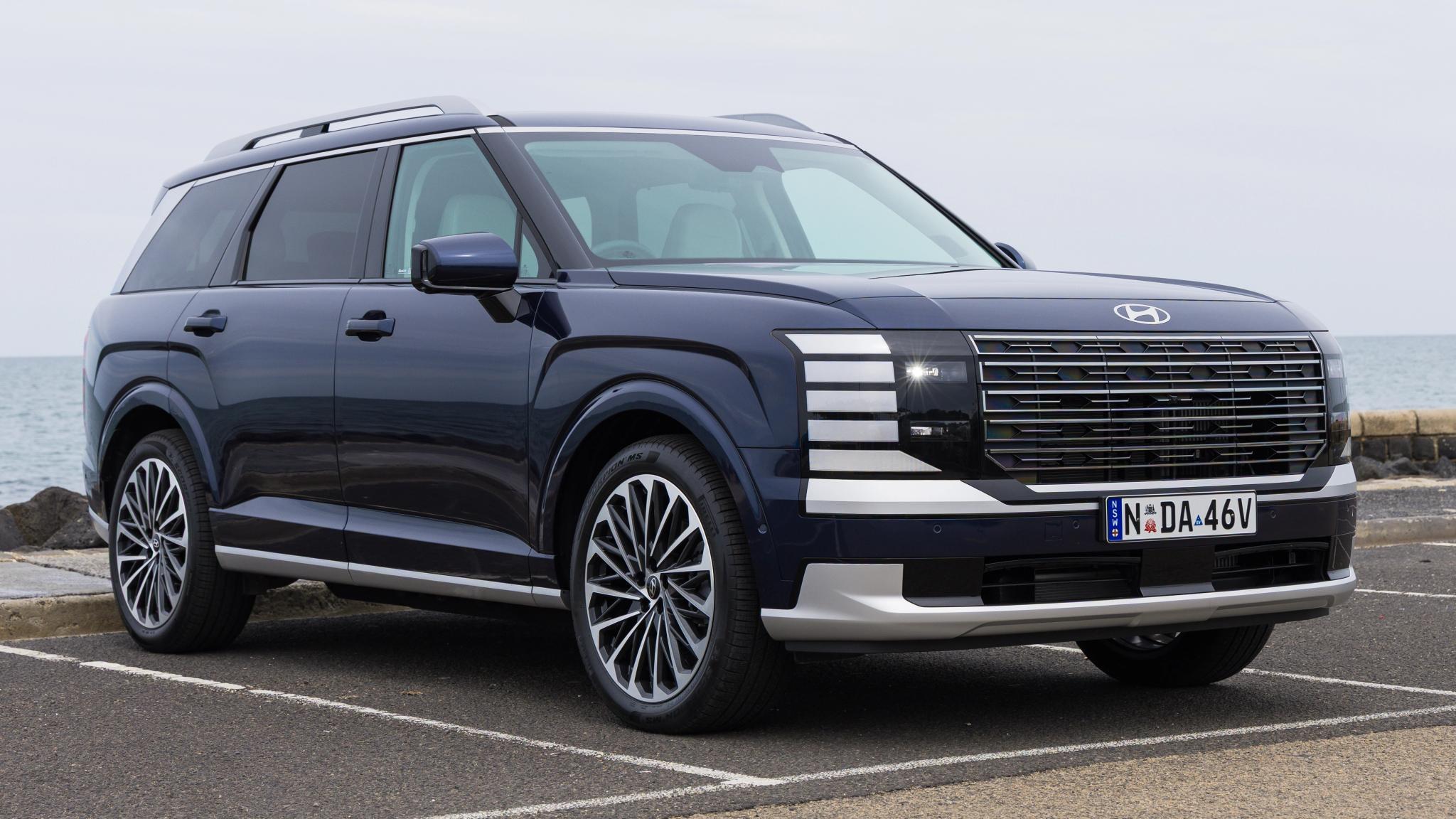
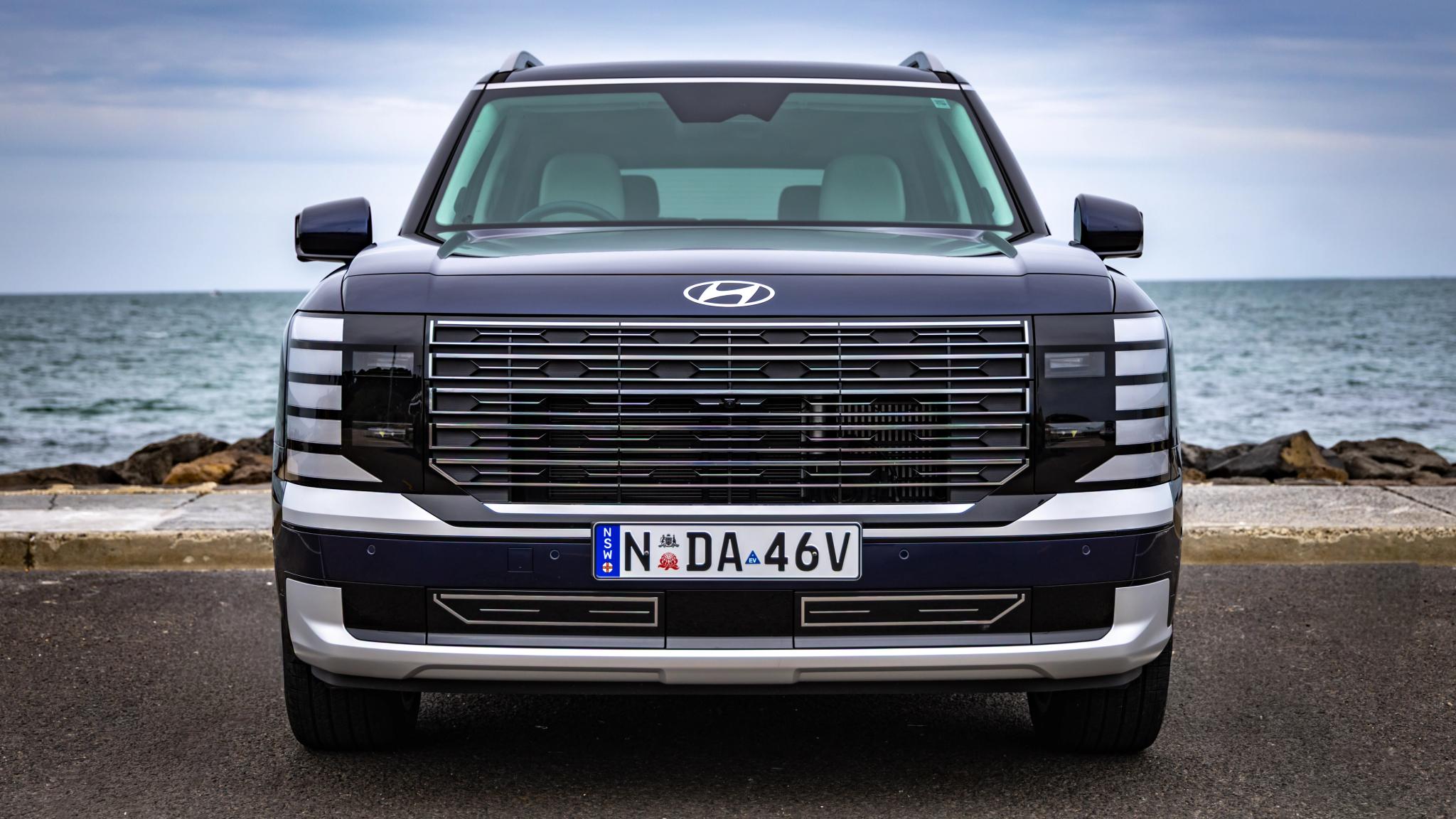
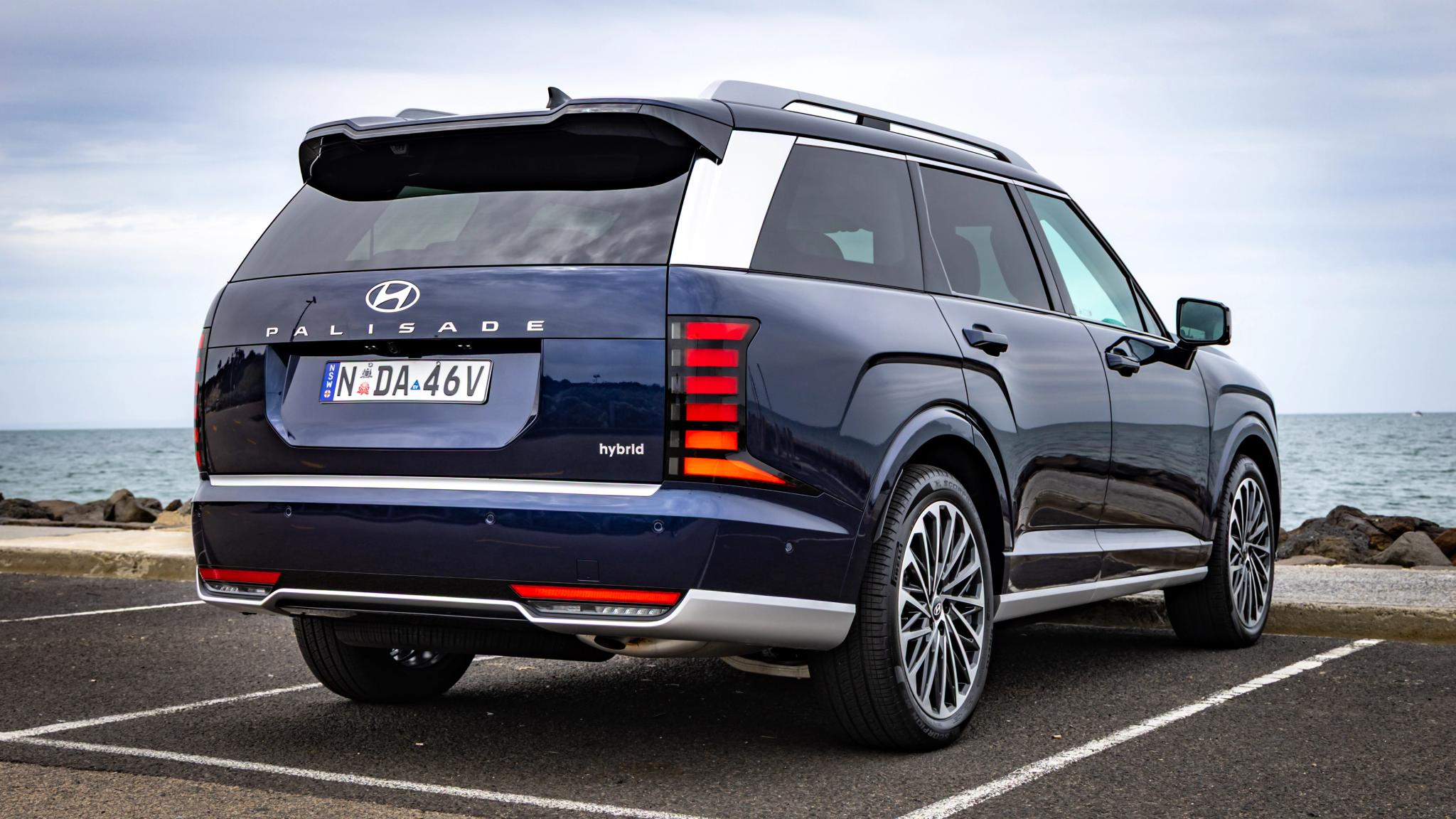
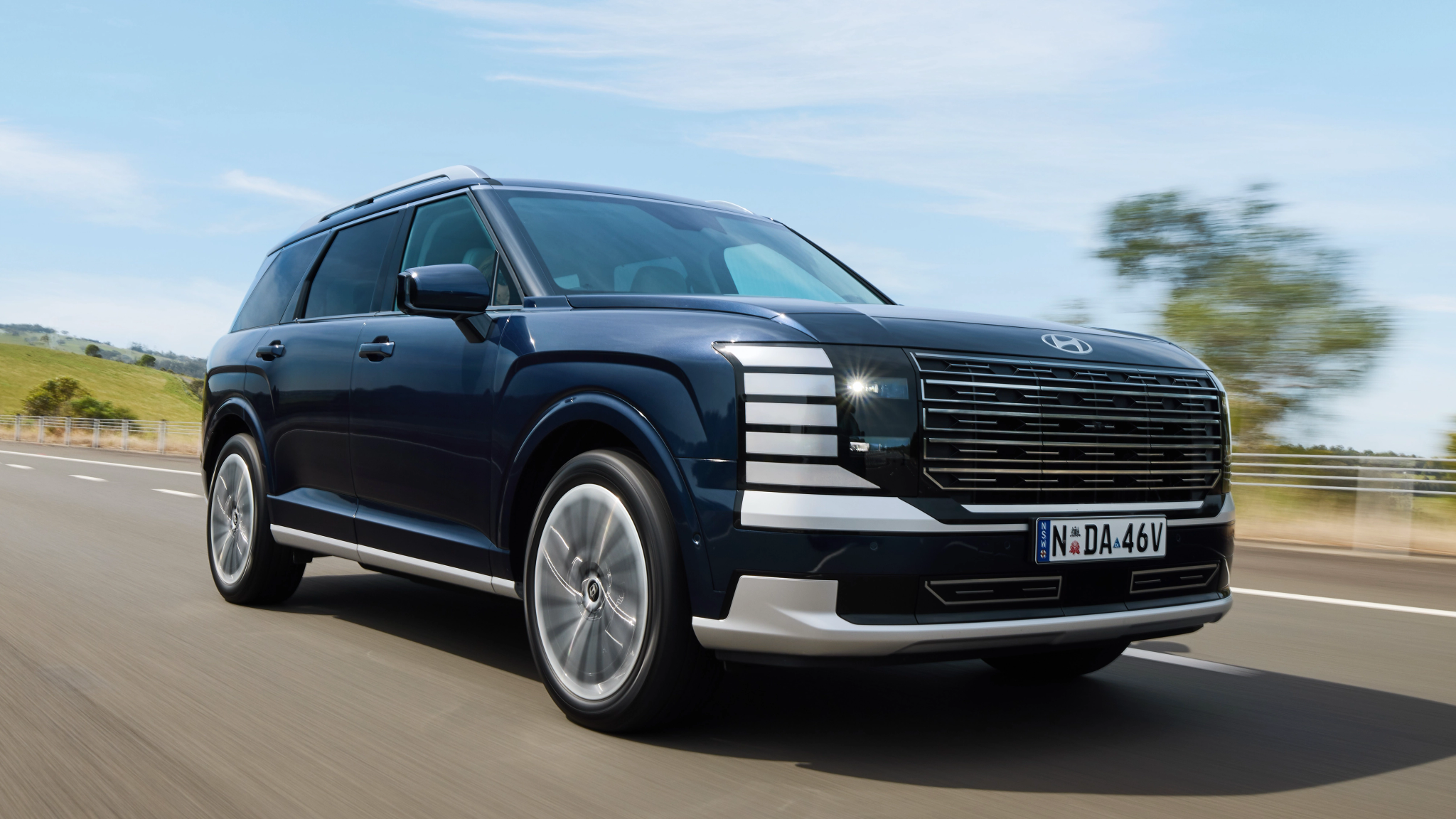
The previous Palisade was a decent-looking thing. This one is a proper step forward. It's big and boxy in a way that feels deliberately confident rather than awkward - wide shoulders, short front overhang and a clean, upright profile that gives it an almost American full-size SUV presence. It looks expensive from across a car park.
21-inch alloy wheels fill the arches properly on the Calligraphy, and the LED lighting front and rear is sharp without being overdone. The overall silhouette is more formal than the Santa Fe - broader, taller, more composed - and that distinction matters. These two Hyundais don't look like siblings; they look like colleagues from different departments.
Colour choice plays into this. The Calligraphy adds exclusive finishes including Robust Emerald and Cast Iron Brown, and some of the deeper tones in particular do the exterior no harm at all.
What is the 2026 Hyundai Palisade like inside?
Open the door and the interior is the first thing that makes you forget what you paid. It is genuinely, properly good - not good-for-a-Hyundai good, just good full stop.
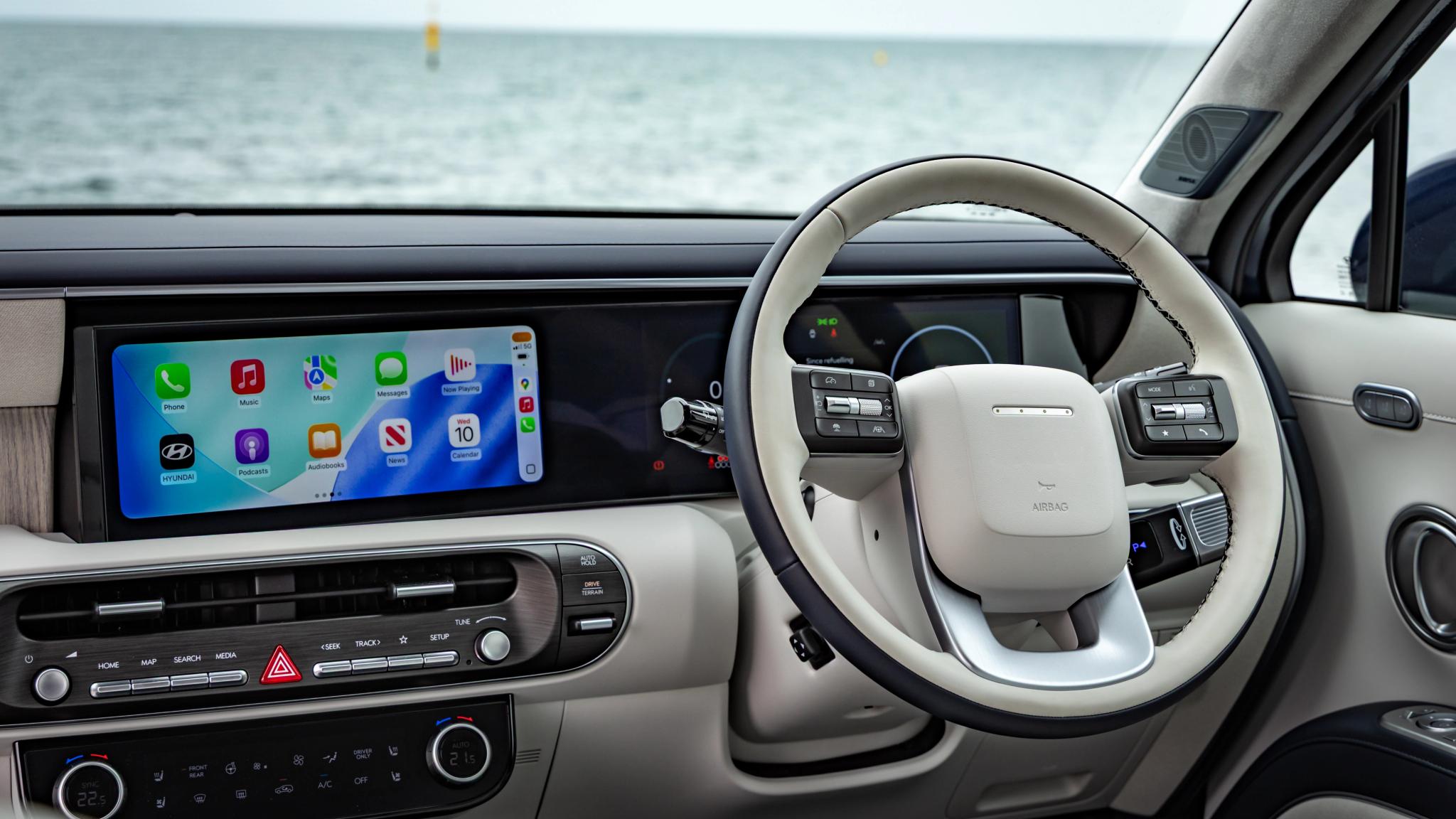
Nappa leather covers the seats throughout, a suede headliner runs the length of the roof and the dashboard architecture is clean and wide without the sterile slab look that plagues some rivals. The switchgear feels solid. The materials are convincing. The Genesis influence is obvious and entirely welcome.
Twin 12.3-inch screens are integrated into the dash in a way that doesn't overwhelm the space, and critically, Hyundai has kept physical controls for climate - a proper decision. The infotainment is intuitive, wireless Apple CarPlay and Android Auto work without drama, and the 14-speaker Bose sound system is excellent.
The driver's seat offers 16-way power adjustment including bolster control - a genuine luxury item. Front seats heat and ventilate. The steering wheel heats too and there's a head-up display with genuinely useful information.
How practical is the 2026 Hyundai Palisade?
Outrageous is not too strong a word. Every row of this car is genuinely liveable, which is not something you can say about most three-row SUVs.
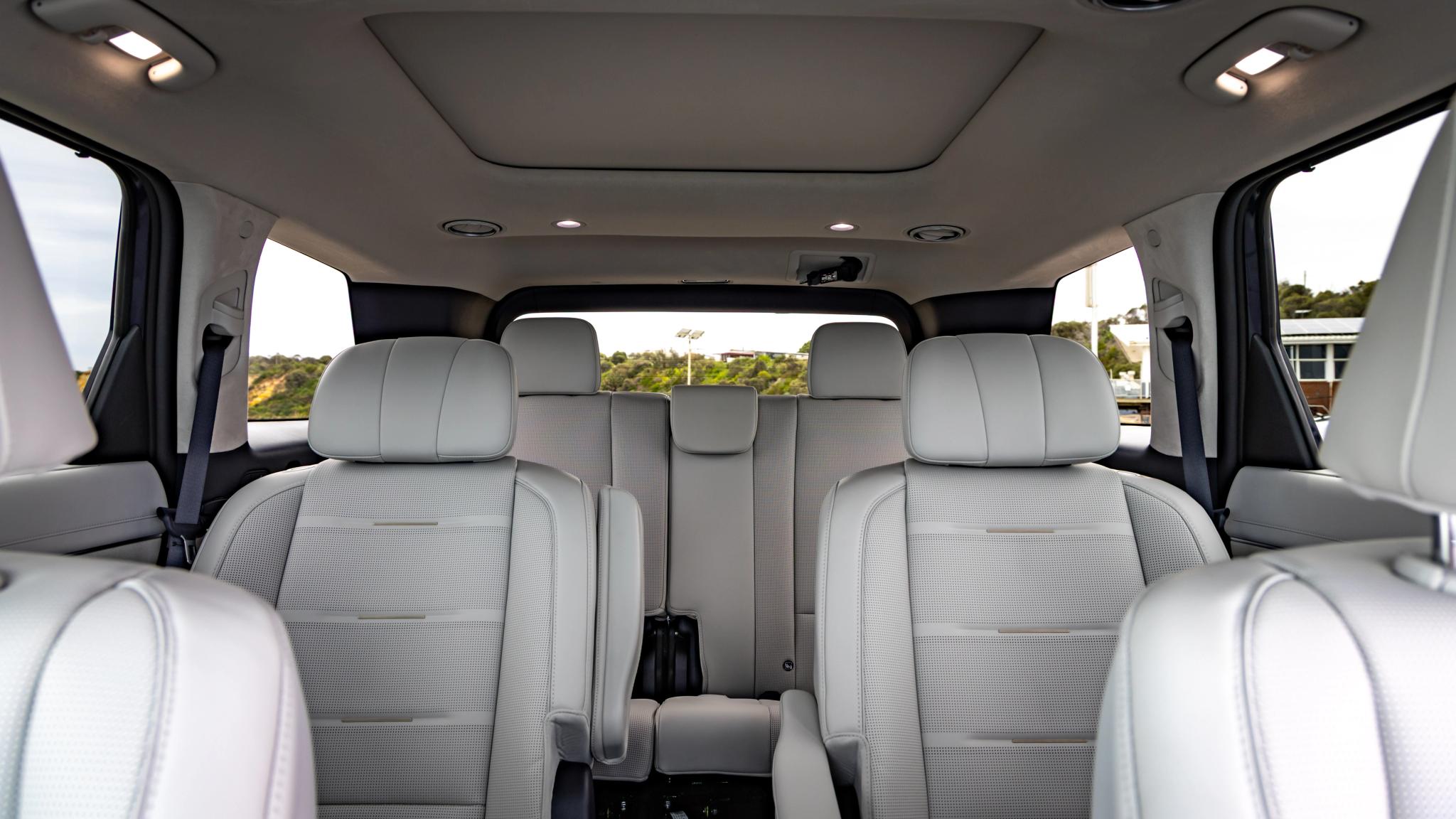
The second row - available as captain's chairs in the seven-seat Calligraphy layout or a full bench in the eight-seat version - offers slide, recline and ventilated heating for outboard passengers. The captain's chairs are more comfortable and allow walk-through access to the rear; most buyers will choose them.
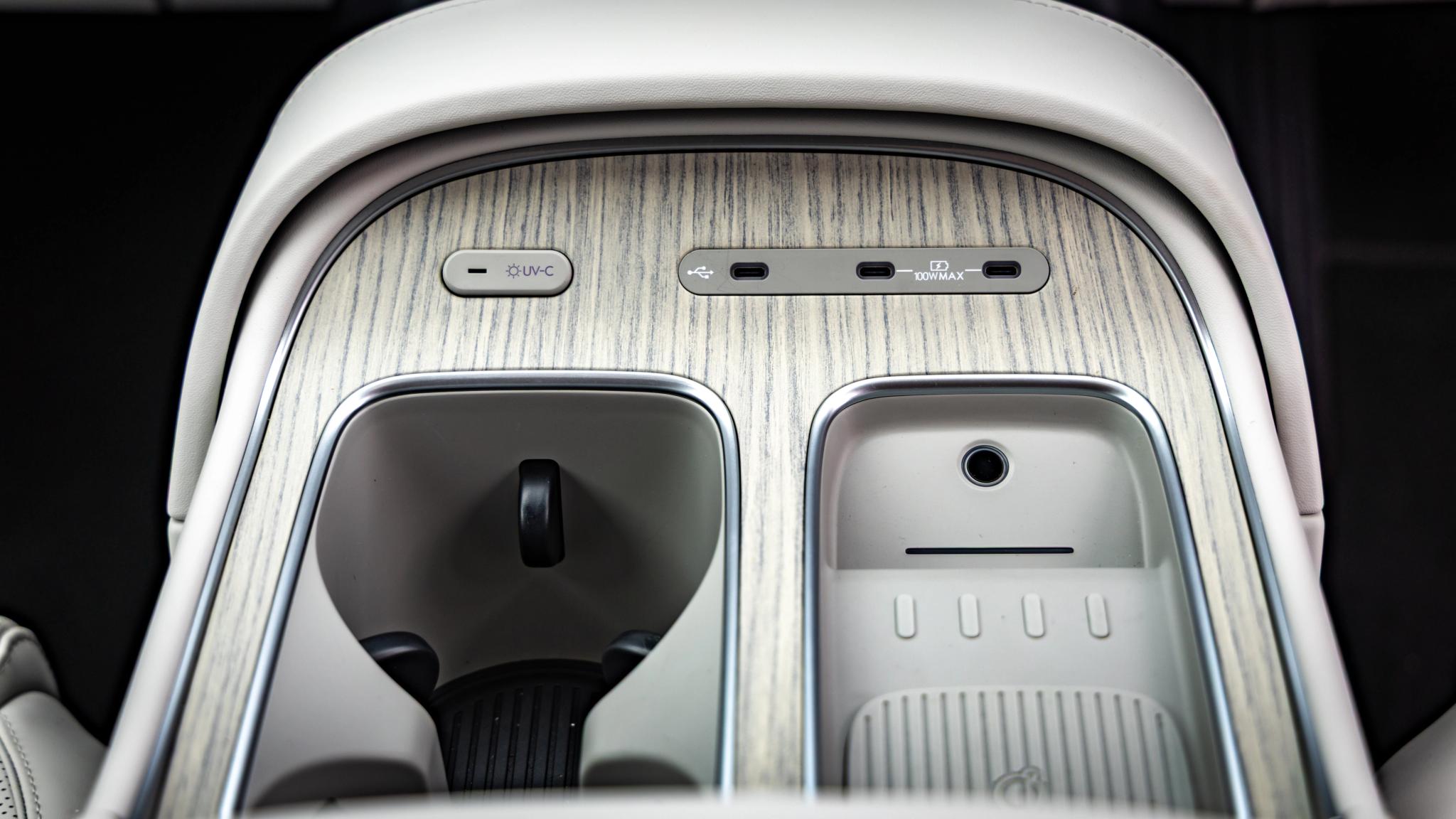
The third row is the real achievement. Electric slide and tilt adjustment, three heating settings, USB-C ports, roof vents and cupholders - it is genuinely equipped rather than just physically present. Two adults fit without negotiation.
Boot space runs to 300 litres behind the third row or 712 litres with it folded. A full-size 21-inch alloy spare wheel lives under the floor which alone puts the Palisade ahead of most rivals that hand you a temporary spare or a can of goo.
For a family that actually uses all three rows, regularly, this is one of the most capable vehicles on the market at any price.
What is the 2026 Hyundai Palisade like to drive?
Here is the thing about the Palisade that no specification sheet can convey: it is extraordinarily comfortable. The ride quality is the single most impressive thing about this car. Over broken suburban roads, through long freeway stretches, across the kind of patchy bitumen that Australia specialises in - the Palisade simply absorbs it. The frequency-selective front dampers and self-levelling rear dampers have been locally tuned for Australian conditions and you can feel the difference.
Acoustic laminated glass, thick door seals and foam-filled tyres keep noise at bay. The cabin is genuinely quiet at highway speeds in a way that makes long trips feel half as long.
The 245kW, 460Nm hybrid powertrain is strong by any measure and muscular enough when you need it - overtaking is relaxed rather than anxious, and from a standstill the electric torque fills in the gaps before the engine settles into its rhythm. It's not a sporting car and doesn't pretend to be. Body roll is present in corners, the steering is light and communicative rather than precise, and from the driver's seat you are acutely aware of the vehicle's size. But none of that is a criticism in context - the Palisade is a luxury family hauler, and at that job it excels without qualification.
What does need fixing is the driver assistance system behaviour. The driver monitoring camera, lane keeping and speed warning alerts all reset to on every time you restart the car. Switching them off becomes a ritual. It is genuinely irritating and doesn't belong in a near-six-figure vehicle.
How efficient is the 2026 Hyundai Palisade?
Hyundai's official combined figure is 6.8L/100km - impressive for a 2,258kg seven-seat AWD SUV. In controlled conditions it's achievable. In real-world mixed driving - school runs, freeway commuting, weekend trips - expect somewhere closer to 9.0L/100km. That's not a disaster, but it's a gap worth knowing about before you buy.
Part of the issue is the absence of adjustable regenerative braking. Unlike other Hyundai hybrids, the Palisade doesn't let you dial up regen intensity, which limits the opportunity to actively manage battery charge and maximise EV running in stop-start traffic.
The 72-litre fuel tank gives you a workable real-world range of around 800km regardless.
Servicing is capped at $520 per visit for the first five years, totalling $2,600 over 50,000km - reasonable for this segment. The warranty is five years/unlimited kilometres as standard, extendable to seven years if you service within the Hyundai dealer network. Roadside assistance is lifetime.
Is the 2026 Hyundai Palisade safe?
The Palisade has earned a five-star ANCAP safety rating confirmed through local Australian testing. Scores break down as 84 per cent for Adult Occupant Protection, 86 per cent for Child Occupant Protection, 71 per cent for Vulnerable Road User Protection and 73 per cent for Safety Assist - clearing the minimum thresholds in each category.
ANCAP did note a small structural opening in the footwell following the frontal-offset crash test and flagged dashboard structures as a potential injury source for front occupants. Neither was severe enough to cost the Palisade its top rating, but worth noting for transparency.
Standard safety equipment is comprehensive: autonomous emergency braking with pedestrian, cyclist and junction detection, blind-spot monitoring with camera display, rear cross-traffic alert, lane keeping, intelligent speed limit assist, surround-view cameras and Highway Driving Assist 2 with automatic lane changes on designated highways.
Eight airbags cover all three rows, including a front-centre bag and full-length curtain airbags.
What are the main rivals to the 2026 Hyundai Palisade?
The Toyota Kluger is the obvious comparison - more affordable, with Toyota's reliability reputation and strong hybrid economy, but the interior is a noticeable step down in quality and the third row is less liveable.
The Kia Sorento undercuts the Palisade significantly on price, shares platform DNA and is an excellent family SUV. It doesn't match the Palisade for third-row comfort or overall interior refinement, but the price gap is real.
The Mazda CX-90 brings genuine premium ambition and a more engaging driving experience, but cargo and third-row practicality fall short of the Palisade's benchmark.
Buyers cross-shopping prestige badges should also consider the Genesis GV80 - fewer seats, but a genuine luxury experience - and the Kia Carnival which remains unbeatable on pure passenger capacity at a fraction of the price.
Should I buy the 2026 Hyundai Palisade?
If your family genuinely needs three usable rows, wants real luxury rather than the impression of it, and is prepared to spend accordingly - yes, the Palisade earns its price.
The interior quality is legitimately impressive. The ride comfort is segment-leading. The third row is the best in class. And the hybrid powertrain, while not as efficient as the claimed figures suggest, is smooth and capable enough to make the ownership experience easy.
The price remains the hardest part - and for buyers who can live without the nappa leather, suede headlining and ventilated seats, the new Elite grade at $76,500 is worth serious consideration. It keeps the powertrain, the Bose audio and the safety suite intact, and brings the Palisade into a far more competitive price bracket against the Kluger and Sorento.
For those who want the full experience, the Calligraphy makes a compelling case - assuming you can stomach the price tag.
VerdictThe Beep Verdict
Rob Leigh
Co-founder & Director
Rob Leigh is Co-founder and Director of The Beep based in Melbourne, Australia. He has 15+ years inside a major automotive OEM, specialising in product planning, pricing and vehicle strategy.
About Author