2026 Hyundai Kona Hybrid review
It will never be the car you brag about, but the Kona Hybrid does the quiet, everyday stuff so well that thousands of Australians keep handing over their money for one.

Rob Leigh
Pros
- Frugal hybrid that never needs a plug
- Genuinely roomy and yes, a real spare wheel
- Easygoing daily manners around town
Cons
- Speed-sign chimes still nag on every drive
- Four-star ANCAP trails the segment's sharpest rivals
- Dealer servicing is dear, and the N Line tax buys little
Our verdict
The Kona Hybrid is built for people who want a small SUV to disappear into their routine. It is smooth, efficient and easy to live with, and the hybrid is the version worth having over the plain petrol. The catch: it now costs proper money once you start climbing the range and Hyundai's safety nannies and service pricing test your patience.
Find a deal on the Hyundai KonaWhat does the Hyundai Kona cost in Australia?
The 2026 range has been trimmed and tidied. The old turbo all-wheel-drive variant is gone, leaving a 2.0-litre petrol and the 1.6-litre hybrid, both front-wheel drive, across base, Elite and Premium grades.
| Variant | Engine | Drivetrain | Driveaway price |
| Base | 2.0L petrol | FWD | $35,990 |
| Elite | 2.0L petrol | FWD | $39,990 |
| Hybrid Base | 1.6L hybrid | FWD | $39,990 |
| Hybrid Elite | 1.6L hybrid | FWD | $44,322 (NSW) |
| Premium | 2.0L petrol | FWD | $45,990 |
| Hybrid Premium | 1.6L hybrid | FWD | $50,562 (NSW) |
The hybrid opens at $39,990 drive-away which is the sweet spot and the telling detail is that it costs the same as the 2.0-litre Elite petrol. Same money, far better drivetrain.
The N Line styling pack adds $3,500 on Elite or $3,000 on Premium pushing a fully loaded Hybrid Premium N Line up near $55,000 on the road. That is small-SUV money turning into mid-size money.
On value, the Kona sits roughly where the Toyota Corolla Cross, Nissan Qashqai and Mazda CX-30 sit once you option them up, so it is competitive rather than cut-price. The smart buy is a mid-grade hybrid, not the flagship.
What does the Hyundai Kona look like?
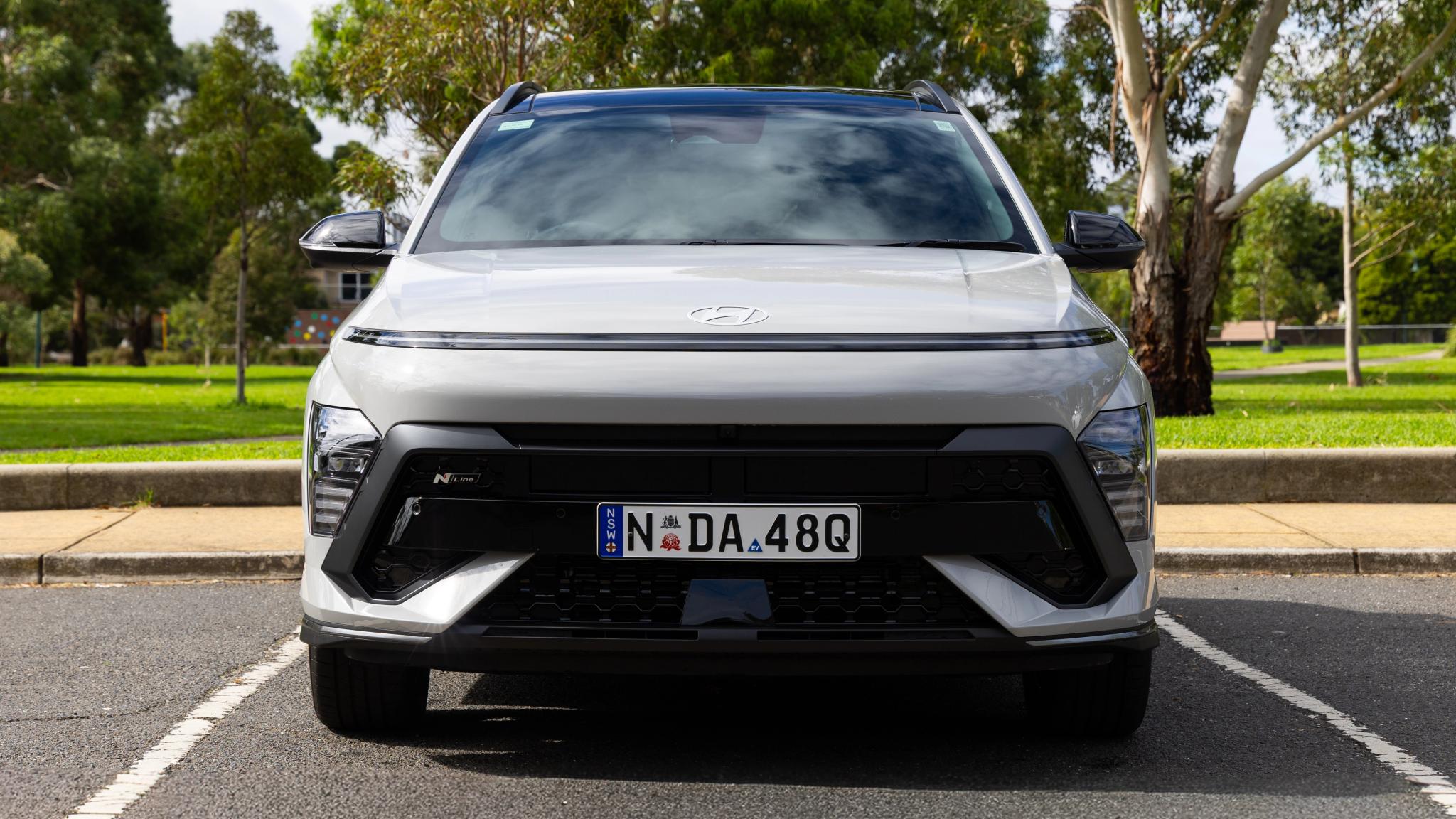
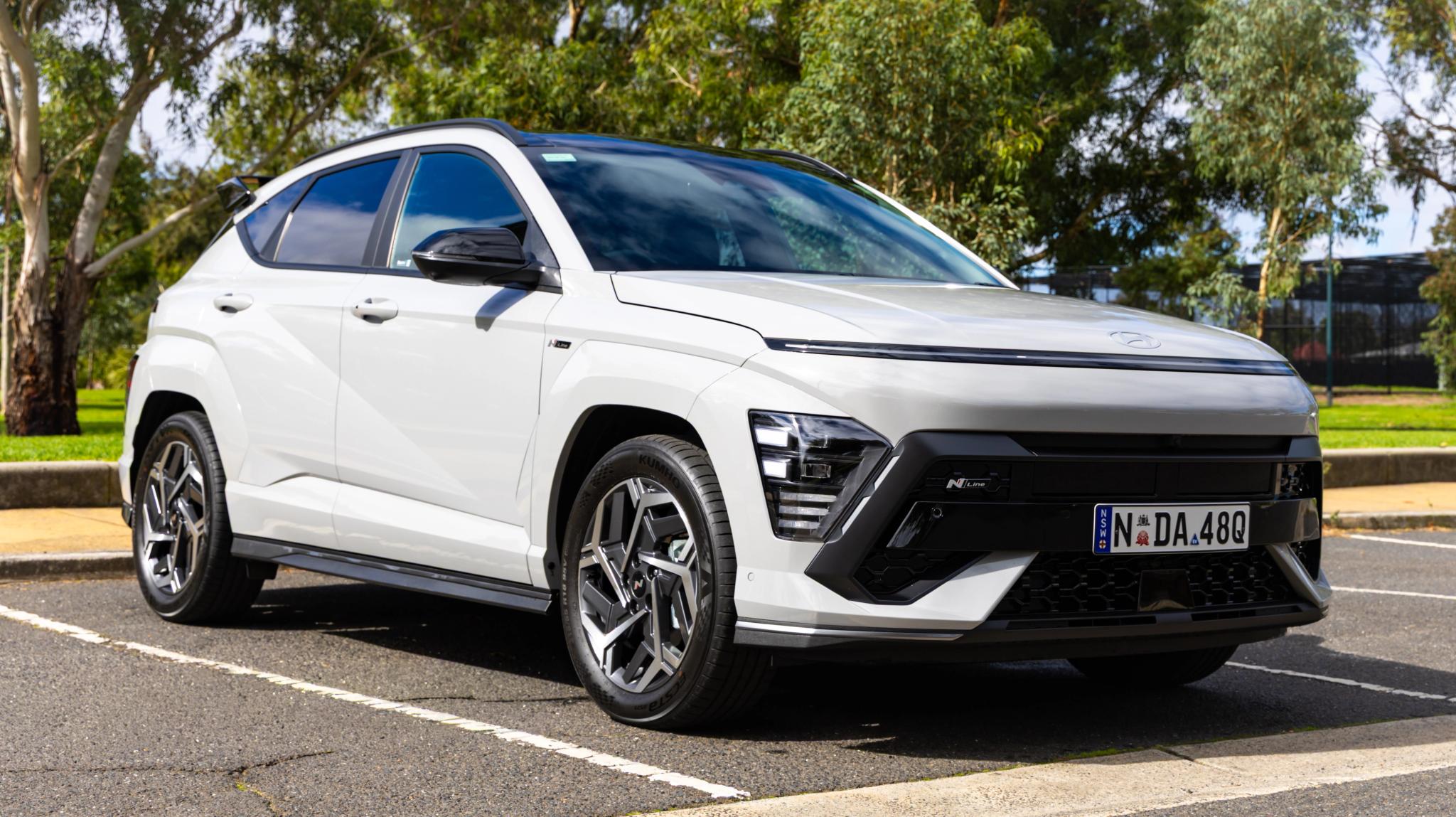
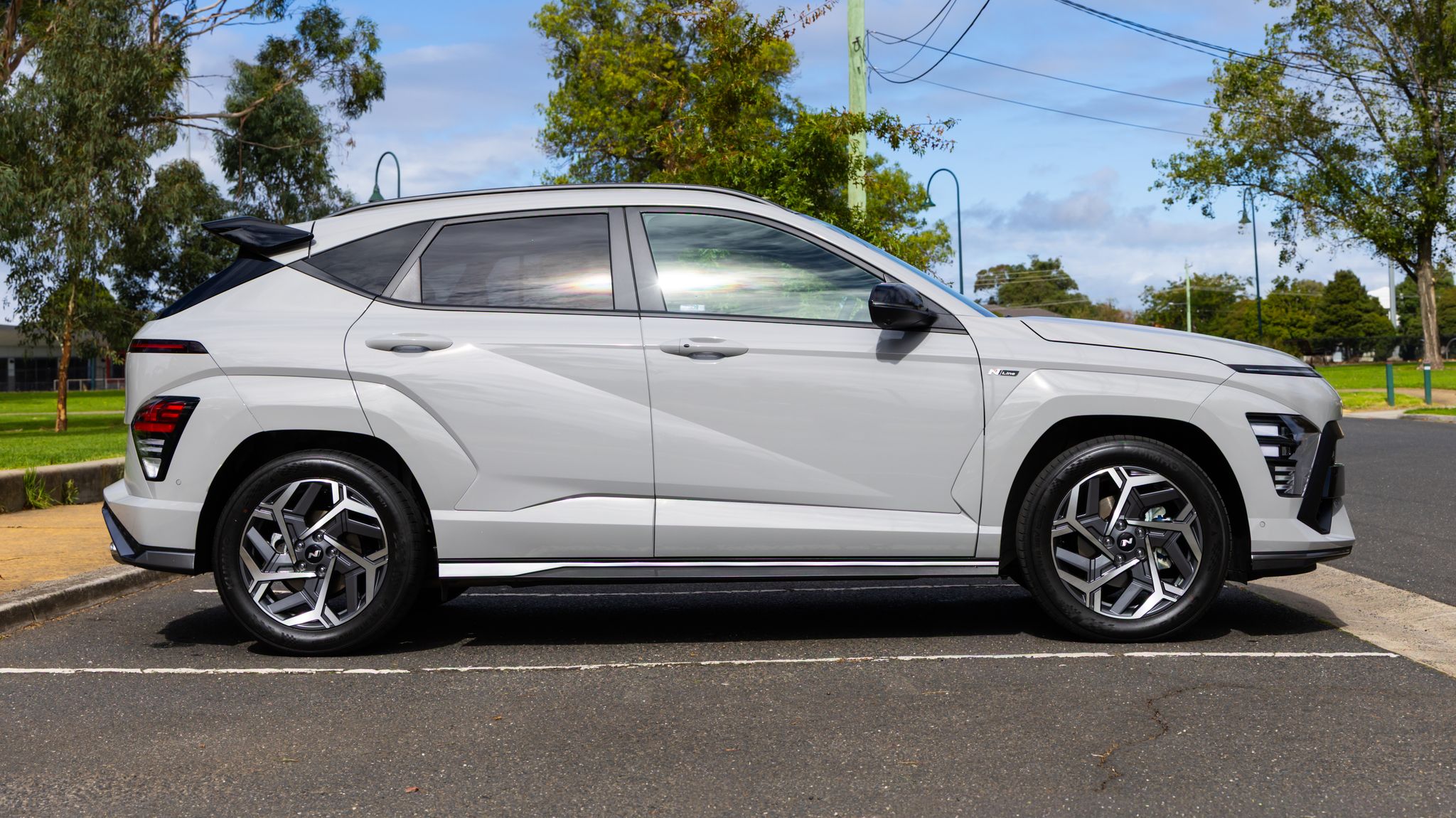
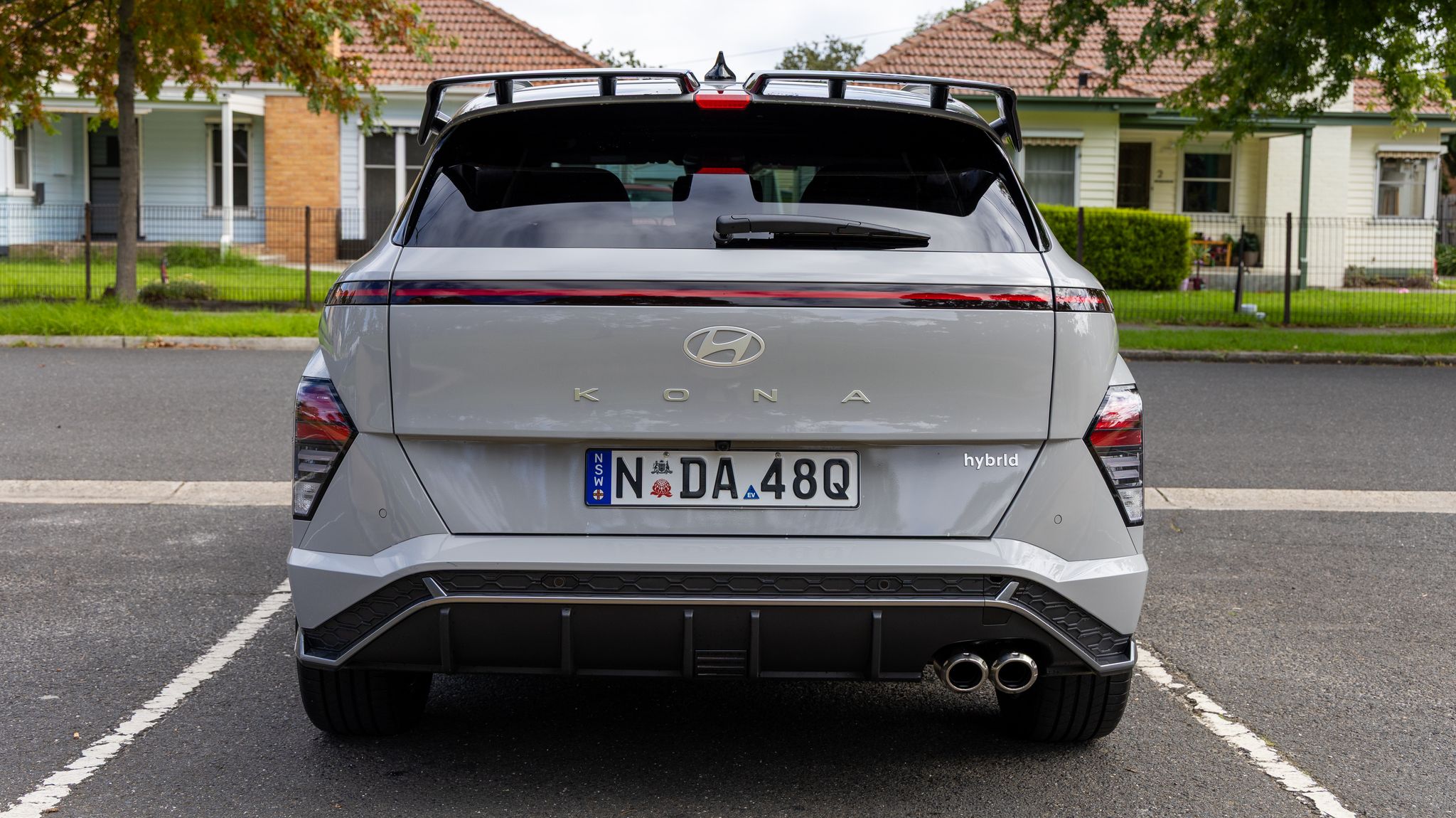
Three years on, the Kona's sci-fi face has clearly won people over. The full-width light bars front and rear still look fresh, the proportions are chunky without being awkward, and it reads as more expensive than it is. That matters in a segment where so many rivals play it safe.
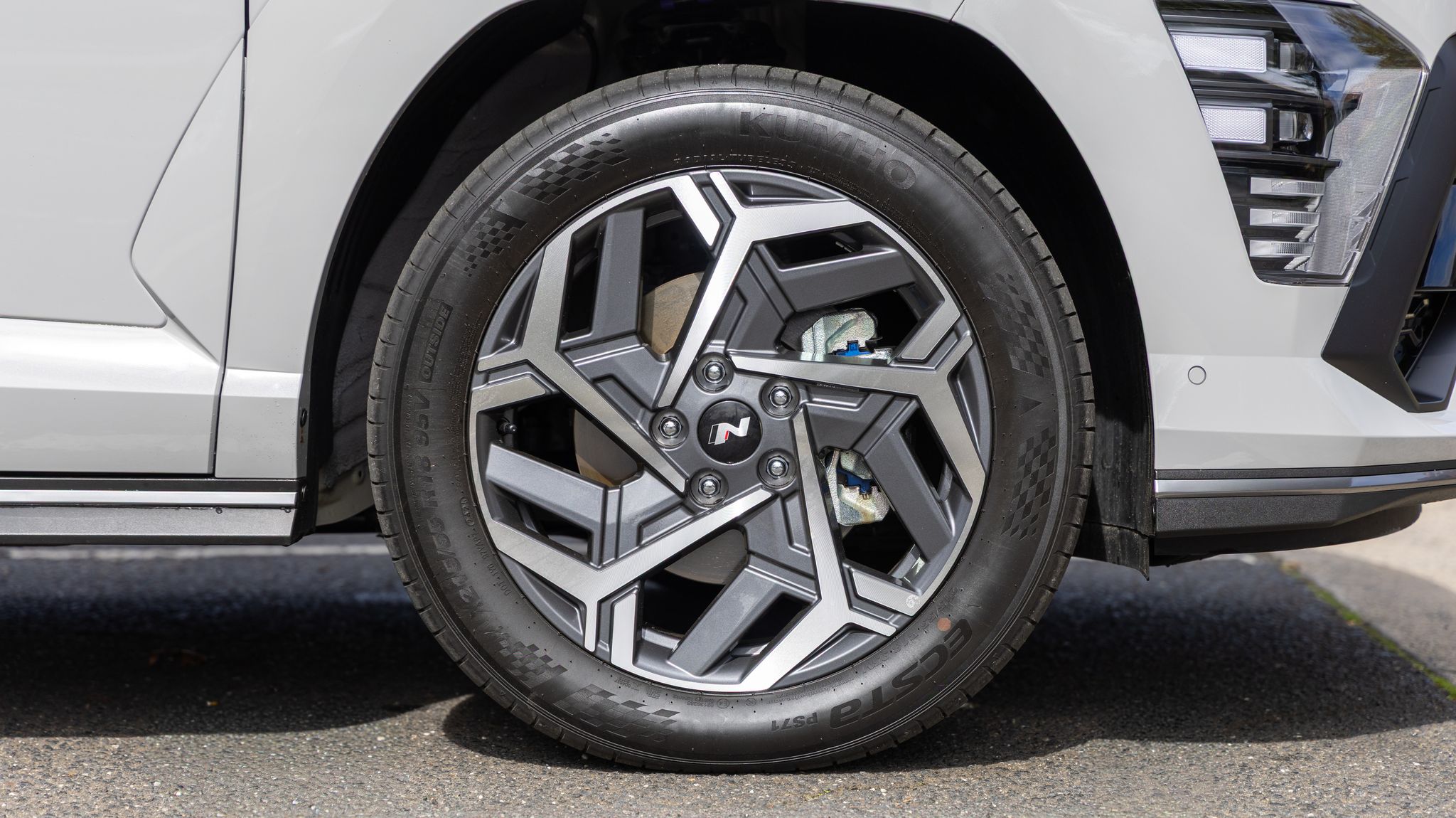
The N Line pack piles on body-coloured cladding, a rear wing, darker detailing and bigger wheels. It looks sharp in photos, but in the metal it tries a little too hard for what is, underneath, a sensible family hauler. If you are buying a Kona Hybrid to be the car you never think about, the wing is working against you. Save the cash.
What is the Hyundai Kona like inside?
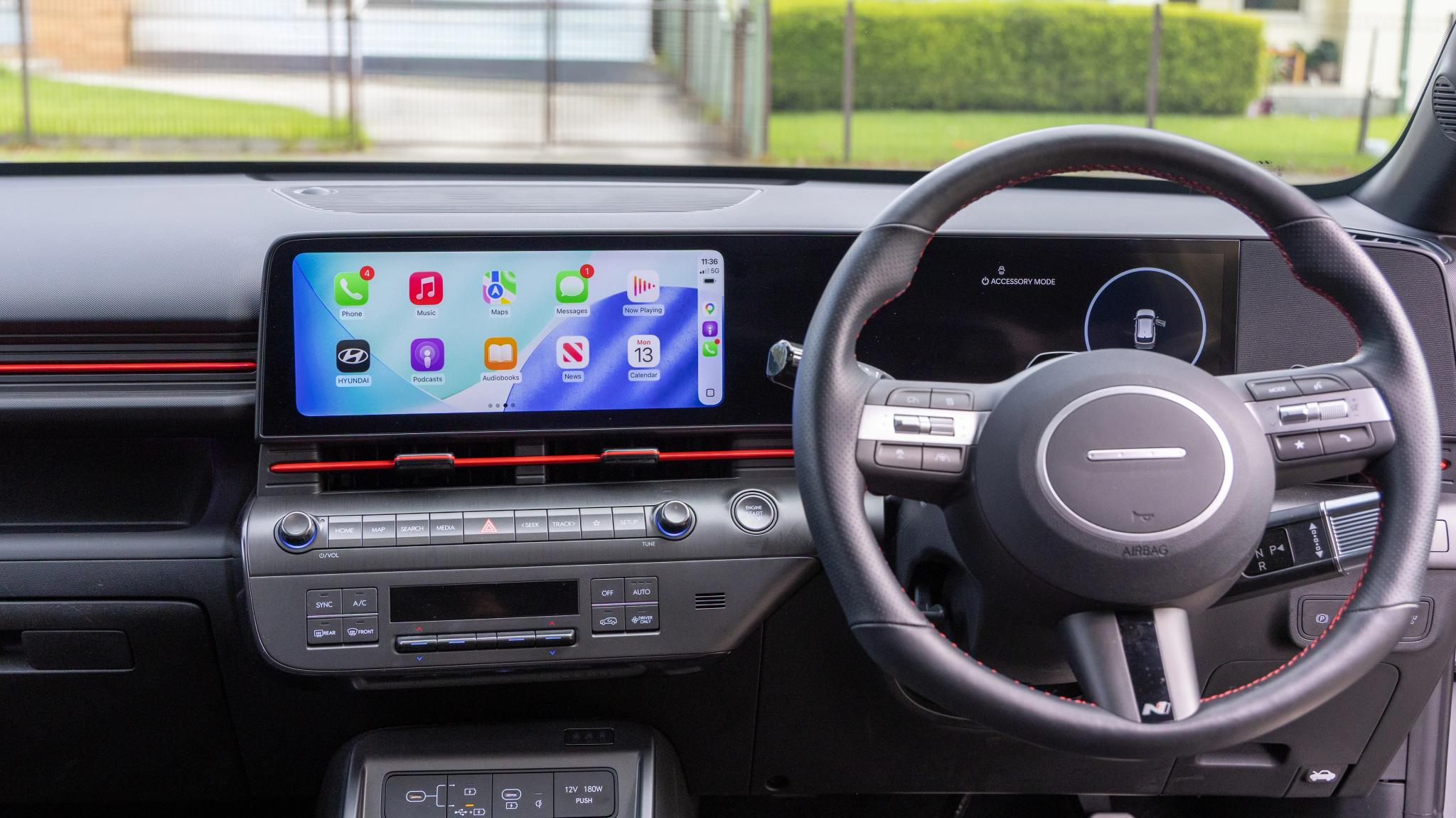
The cabin is the Kona's strongest pitch. The twin 12.3-inch displays on Premium grades look modern, the graphics are crisp, and wireless Apple CarPlay and Android Auto connect without drama. Lower grades make do with a smaller driver readout, which feels a touch mean next to the big central screen.
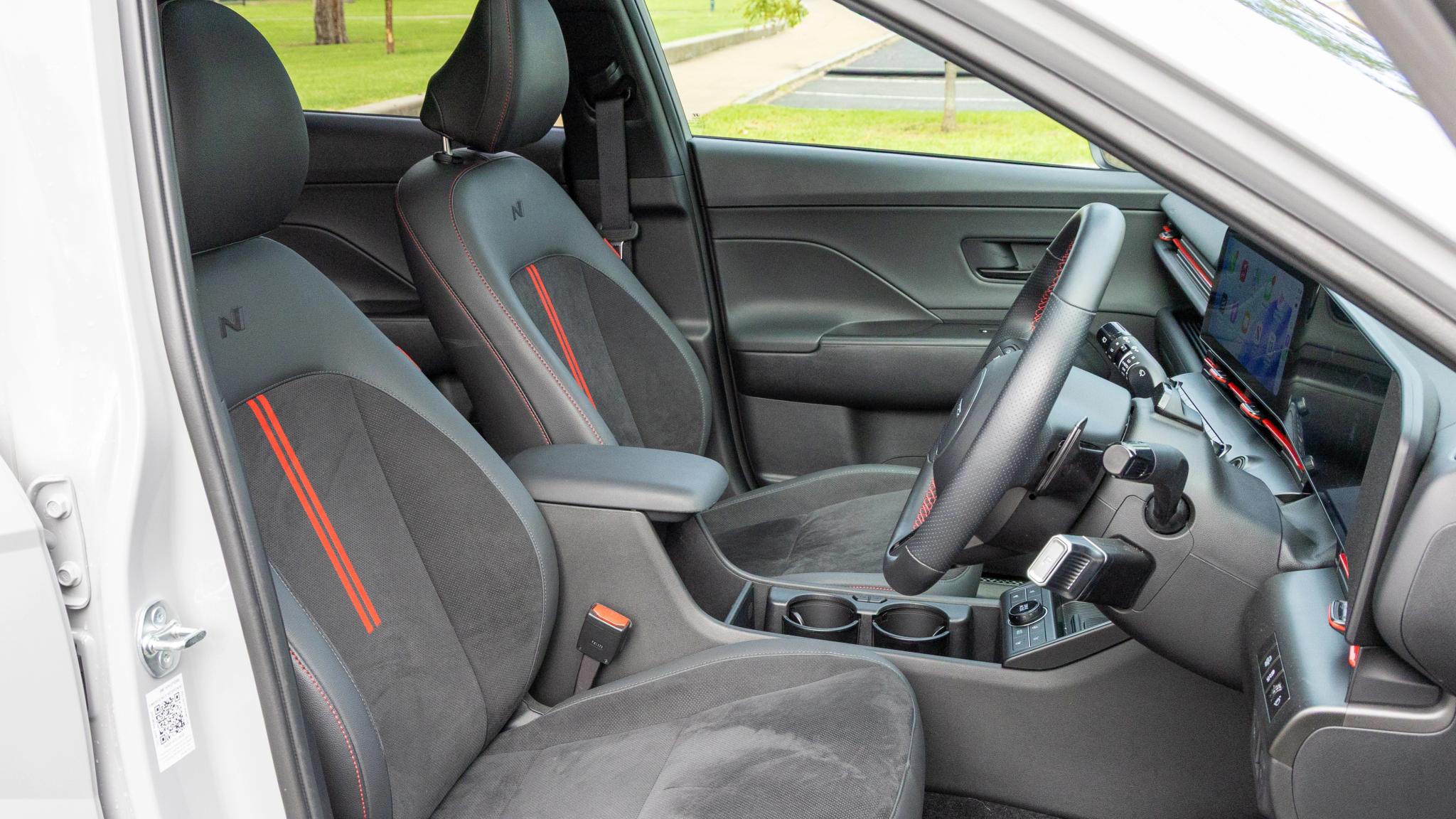
Material quality is solid for the class. It is not plush like a CX-30, and you will find hard plastics if you go looking, but everything is screwed together properly and the important touchpoints feel fine.
My gripe is with the dash - it’s busy. Hyundai has thrown physical buttons, dials, rocker switches and a column-mounted gear selector at you, and while real buttons beat burying everything in a menu, this is a lot. Even committed button fans will look at it and think Hyundai has overcooked it. You get used to it, but it takes a beat.
How practical is the Hyundai Kona?
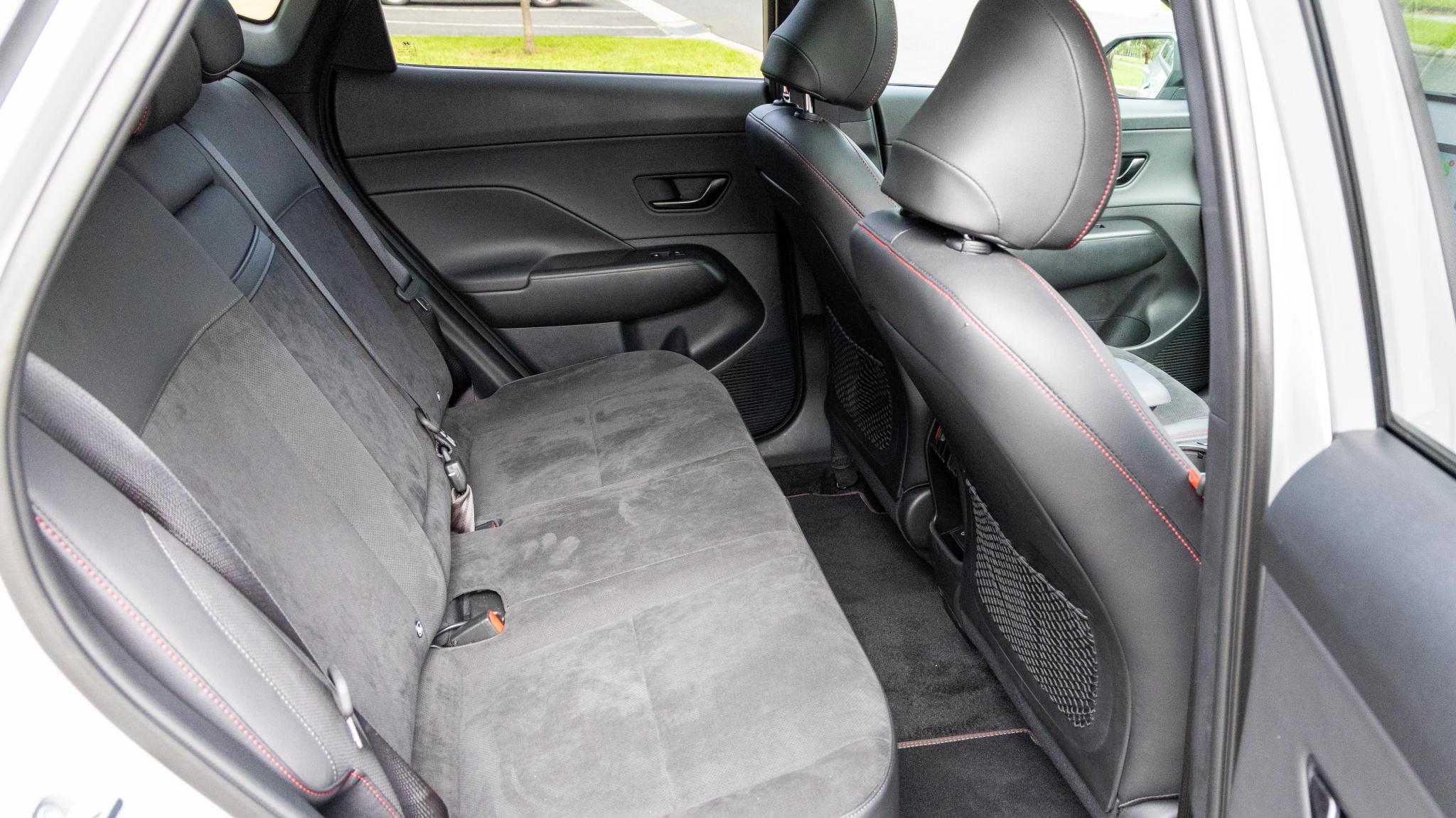
This is where the Kona quietly outperforms its footprint. Back-seat space is genuinely good, with enough room for a six-footer to sit behind a similarly tall driver. Three across is a squeeze on shoulder room, so think of it as a comfortable four-seater with occasional fifth duty.
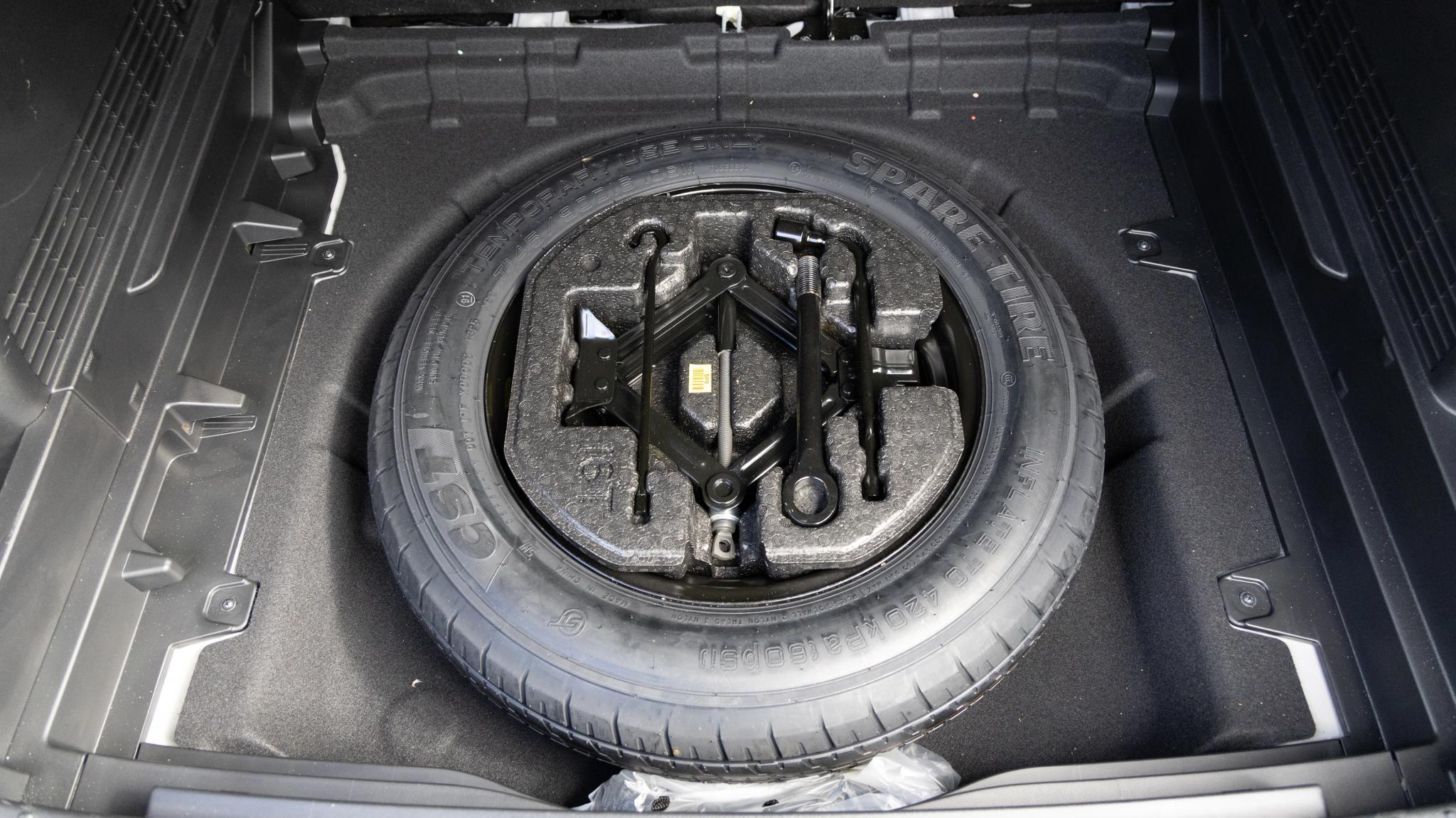
The 407-litre boot is competitive, expanding to 1,241 litres with the seats folded, and the adjustable floor lets you choose a flat load lip or extra depth. Best of all, there is a space-saver spare under there, not a tyre inflator kit. In a world drifting towards repair goo, that alone will win buyers over.
Up front there are sensible touches everywhere: adjustable cupholders, a deep console bin with a removable tray, decent door pockets and rear air vents with USB-C ports. For a small SUV, it punches well above its size on family usability.
What is the Hyundai Kona like to drive?
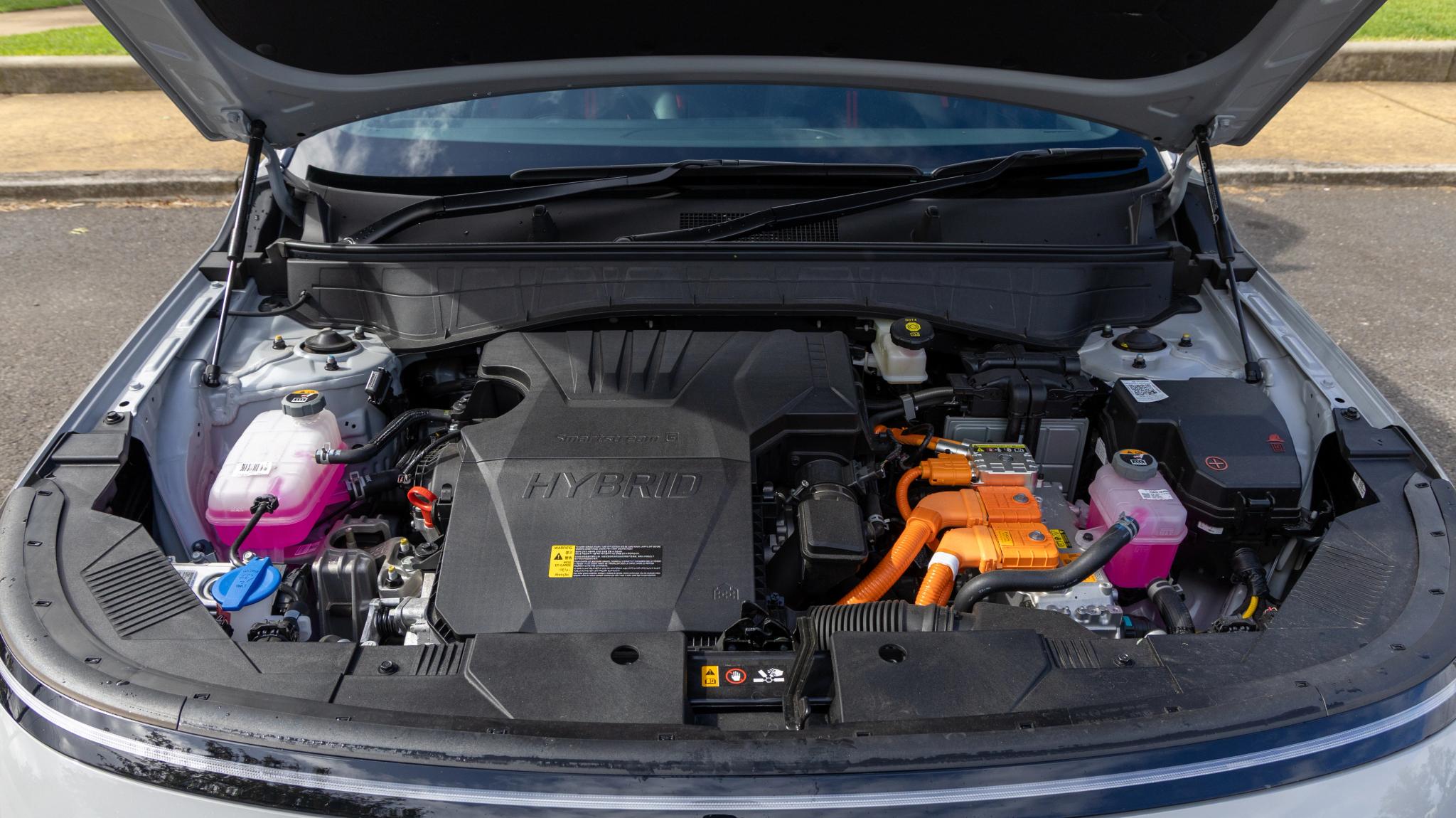
Do not come here for thrills. The 1.6-litre hybrid makes 104kW and 265Nm combined and it is not quick. What it is, is effortless. The electric motor does the heavy lifting at low speed, so around town it slips between petrol and electric so smoothly you rarely notice, and it will hum along silently in EV mode more often than you expect.
That makes the Kona Hybrid superb in the daily grind. It is quiet, calm and the kind of car that lowers your blood pressure in traffic. Get it onto the open road and the modest outputs show up a little when you overtake or climb a hill, but it never feels strained, just unhurried.
The chassis is the pleasant surprise. The hybrid runs a multi-link rear suspension the cheaper petrol misses out on, and it pays off in a ride that soaks up bumps and steering that actually has some honesty to it. It is no hot hatch, and Hyundai pretending otherwise with the N Line badge is a stretch, but it changes direction tidily and feels planted. There is also clever regenerative braking with paddle control, right down to single-pedal driving, which is unusually generous at this price.
The summary from behind the wheel: not exciting, very easy. For most buyers, that is exactly the right trade.
How efficient is the Hyundai Kona?
The headline is a claimed 3.9L/100km, the best figure of any non-plug-in in the class. In the real world you will land in the very low 5s across mixed driving, which is still excellent and, crucially, achieved on cheap 91-octane with no charging cable in sight.
Where the shine comes off is servicing. The Kona Hybrid needs attention every 12 months or 15,000km and the dealer bills add up fast.
| Service period | Capped-price cost |
| 3 years | $1,560 |
| 5 years | around $2,977 to $3,176 |
That five-year total is steep next to a Corolla Cross, which can be serviced for less than half as much. It stings more because you are effectively locked in: Hyundai's standard five-year, unlimited-kilometre warranty stretches to seven years only if you keep servicing within its network. The hybrid battery is covered for eight years or 160,000km.
Is the Hyundai Kona safe?
This is the Kona's weakest area on paper. It carries a four-star ANCAP rating from its 2023 test, where strong adult and child occupant scores were dragged down by vulnerable road user protection and the safety assist results. Newer rivals tested to tougher criteria can do better.
The kit list itself is solid. Every Kona gets autonomous emergency braking with pedestrian and cyclist detection, adaptive cruise, blind-spot assist, rear cross-traffic alert, lane-keep, seven airbags and a reversing camera. Premium grades add a 360-degree camera, blind-spot view monitor and remote parking.
The frustration is calibration. The speed-sign assist still pipes up too often and Hyundai has only half-fixed it: you can now mute the chime by holding a steering wheel button, but it resets every time you start the car. The driver-attention camera is similarly eager. Helpful in theory, irritating in practice, and very on-brand for Hyundai right now.
What are the main competitors to the Hyundai Kona?
The Toyota Corolla Cross is the obvious cross-shop. It matches the Kona for efficiency, gets closer to its claimed fuel figure in the real world, and is far cheaper to service. It is the safe, sensible choice if running costs top your list.
The Nissan Qashqai e-Power drives well and feels a touch more grown-up inside, with nicer materials in places. Its hybrid system runs differently to the Kona's, and like the Hyundai it leans on dealer servicing to unlock its longer warranty.
The Mazda CX-30 is the one to beat on cabin quality and feel, but it lacks a proper hybrid option, so the Kona claws back ground on efficiency and packaging.
The MG ZS Hybrid+ undercuts everything on price and is worth a look for value hunters, though it does not match the Kona's polish or driving manners.
The Honda HR-V rounds out the list as another roomy, easy-going hybrid small SUV, well worth a test drive if interior space is your priority.
Should I buy the Hyundai Kona?
If you want a small SUV that fits into your life without ever demanding attention, yes.
The Kona Hybrid is smooth, frugal, roomy and easy, and it is comfortably the pick of the range over the plain petrol. It is not fast and it is not thrilling, but it is the car you stop thinking about the moment you drive it, and there is real value in that.
Buy it sensibly. A mid-grade hybrid gives you the best of the car for sane money. Skip the N Line pack, because the wing and the bigger wheels add cost and attitude this car does not need. Go in with your eyes open about the nagging alerts, the four-star ANCAP and the dealer service bills, and the Kona Hybrid earns its place near the top of any small SUV shortlist.
Ready to buy the Hyundai Kona? Compare real prices and find the best deal.
VerdictThe Beep Verdict
Rob Leigh
Co-founder & Director
Rob Leigh is Co-founder and Director of The Beep based in Melbourne, Australia. He has 15+ years inside a major automotive OEM, specialising in product planning, pricing and vehicle strategy.
About Author