2026 Hyundai Elexio review
Hyundai's China-built electric SUV nails space, comfort and range for the money, then hands almost every control to a 27-inch screen that's fiddly, distracting and, in our case, unreliable.

Rob Leigh
Pros
- Roomy, well-finished cabin with genuinely clever storage
- Relaxed highway ride and strong real-world range
- Sharp driveaway pricing for the gear you get
Cons
- Almost every control lives in the 27-inch screen
- Tiny climate buttons and a centred CarPlay screen you have to lean across for
- Anonymous styling and modest performance
Our verdict
The Elexio is aimed at the family buyer who wants a genuine EV without stepping up to Ioniq money, and on space, comfort and range it delivers. What it does best is haul people and gear in quiet, well-built comfort. The catch is the screen, which swallows so many everyday functions that a fundamentally sound SUV ends up feeling like a chore to live with.
What does the Elexio cost in Australia?
Hyundai sells the Elexio in two grades, both front-wheel drive and both riding on the same 88.1kWh LFP battery.
The base car opens at $57,990 driveaway, with the better-equipped Elite at $60,990 driveaway. That undercuts the Ioniq 5 comfortably and lands the Elexio right in the thick of the mid-size EV fight, roughly level with a Tesla Model Y and the Kia EV5 it shares so much with.
| Specifications | Elexio | Elite |
| Driveaway price | $57,990 | $60,990 |
| Powertrain | Electric | Electric |
| Power | Torque | 160kW | 310Nm | 160kW | 310Nm |
| Transmission | 1 speed | 1 speed |
| Drivetrain | FWD | FWD |
| Electric range (WLTP) | 562km | 546km |
| Battery | DC charging | 88.1kWh | 120kW | 88.1kWh | 120kW |
| Braked towing | 1250kg | 1250kg |
| ANCAP | Five stars (2024) | Five stars (2024) |
| Warranty | 7 years | Unlimited km | 7 years | Unlimited km |
See Elexio driveaway pricing and specifications →
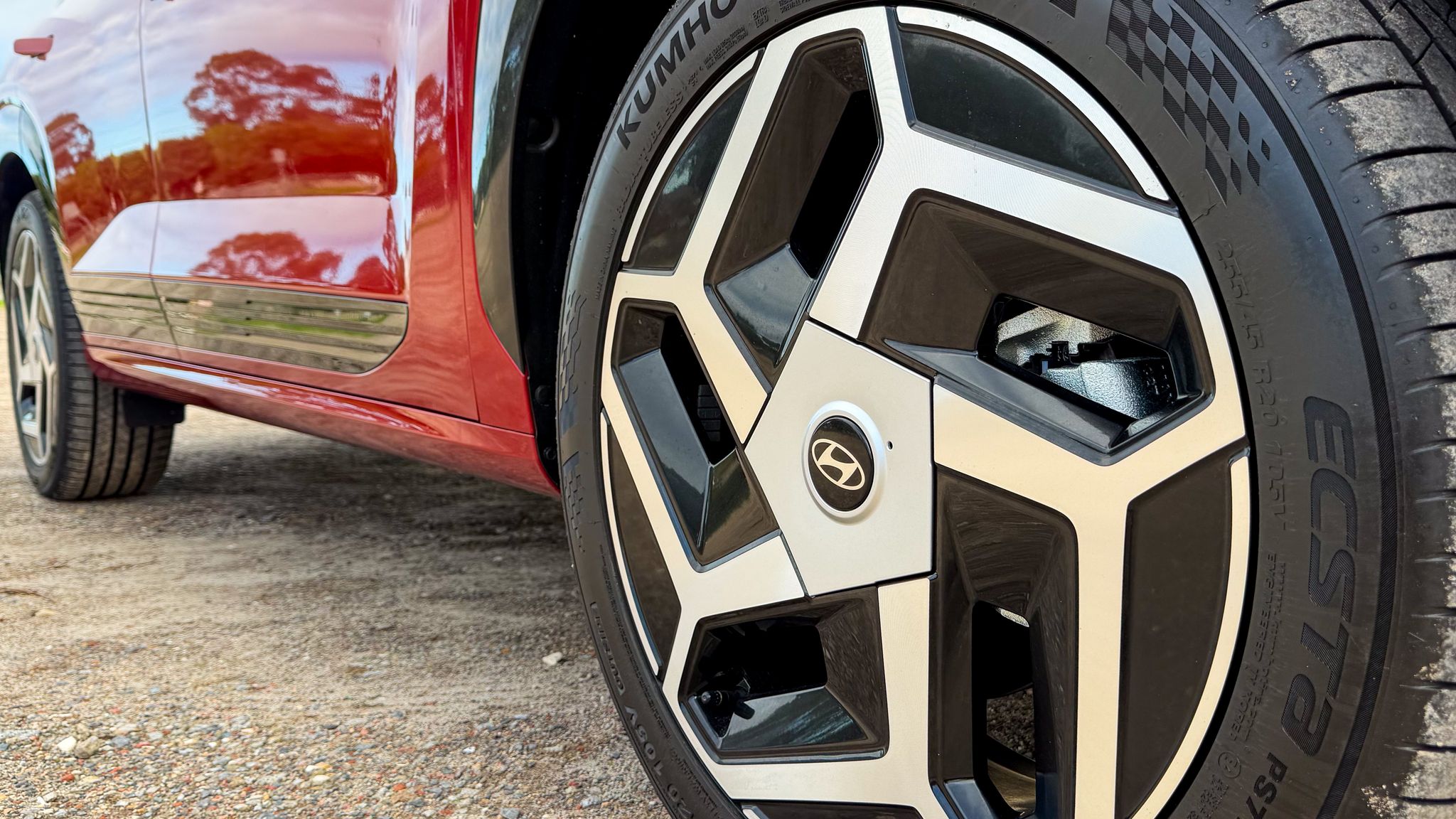
For your money the Elite adds 20-inch wheels, leather trim, heated and ventilated front seats, a heated wheel, a power tailgate, dual wireless chargers and a 14-way power driver’s seat with memory. The base car keeps most of the substance and drops the luxuries, running 18-inch wheels, cloth seats, a manual tailgate and a single charging pad. It also claims a little more range on those smaller wheels.
What does the Elexio look like?
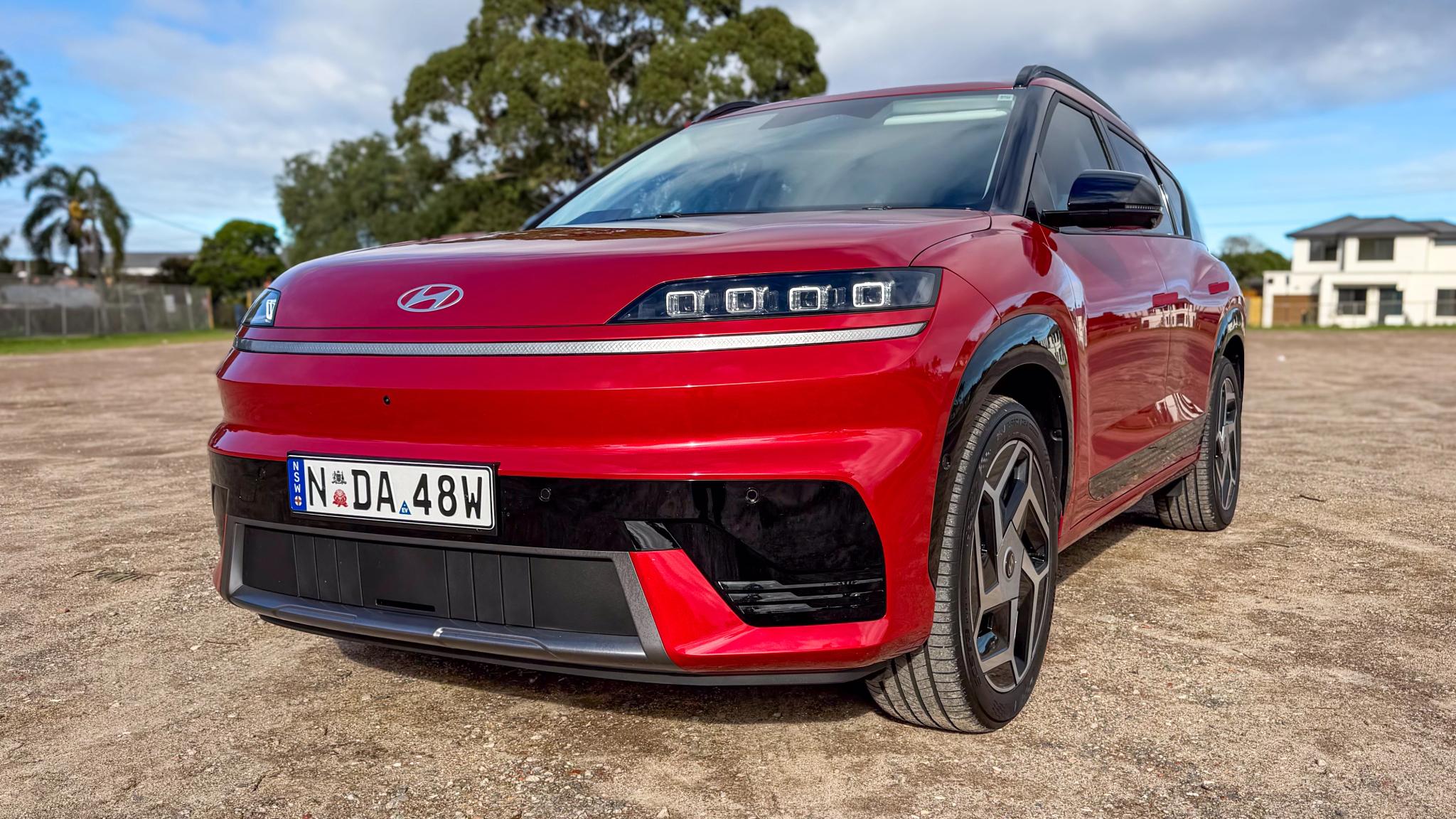
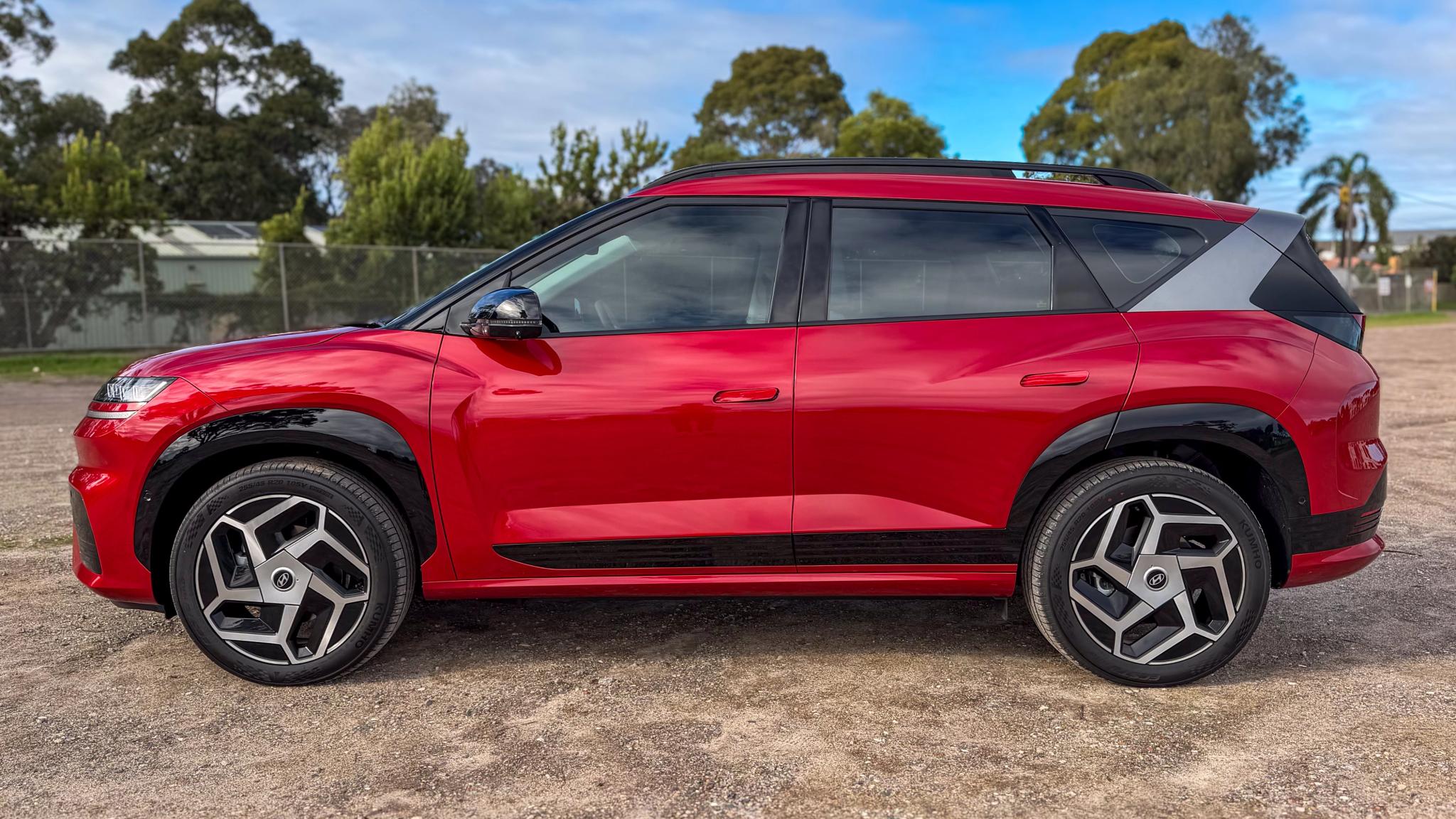
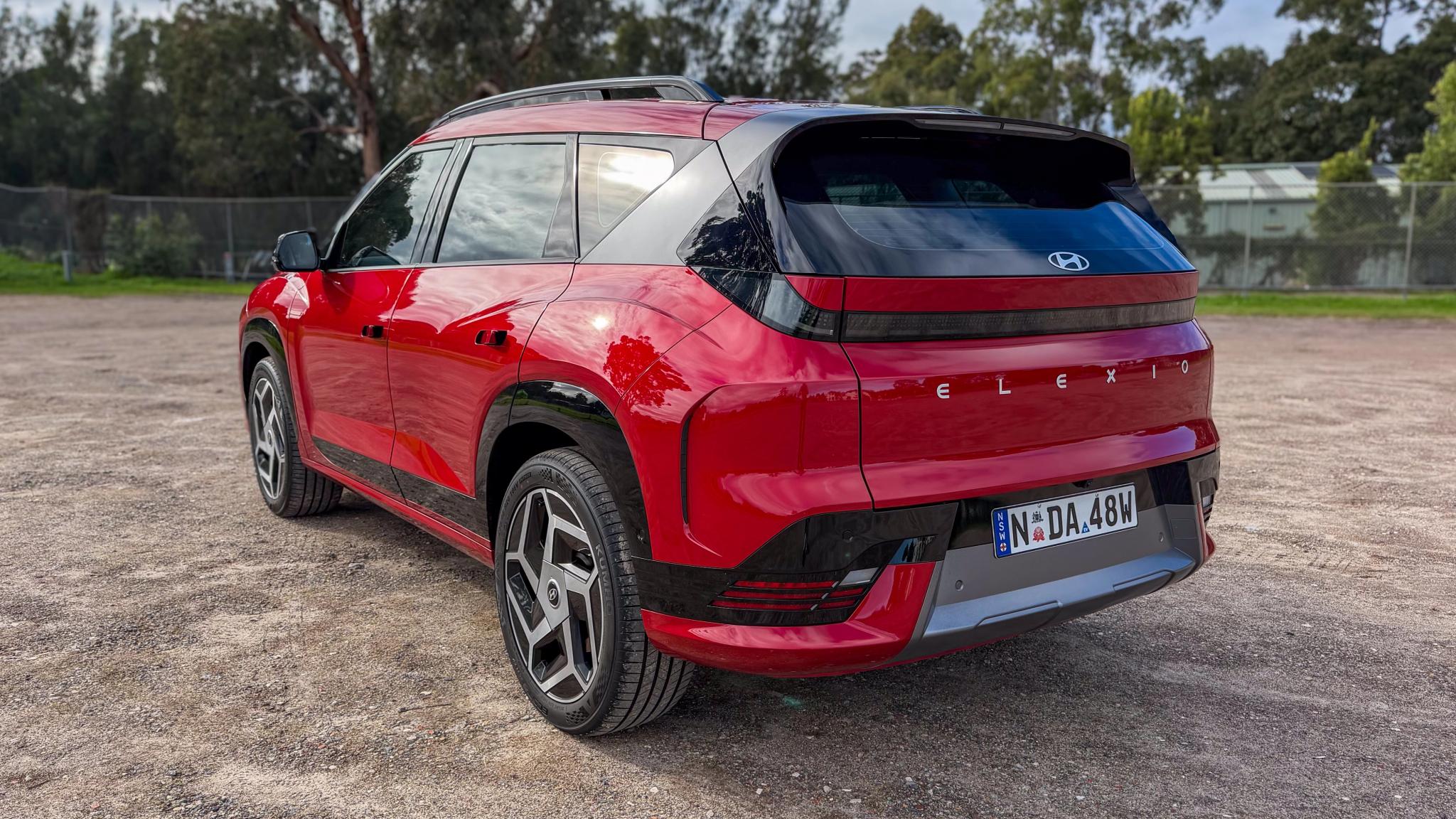
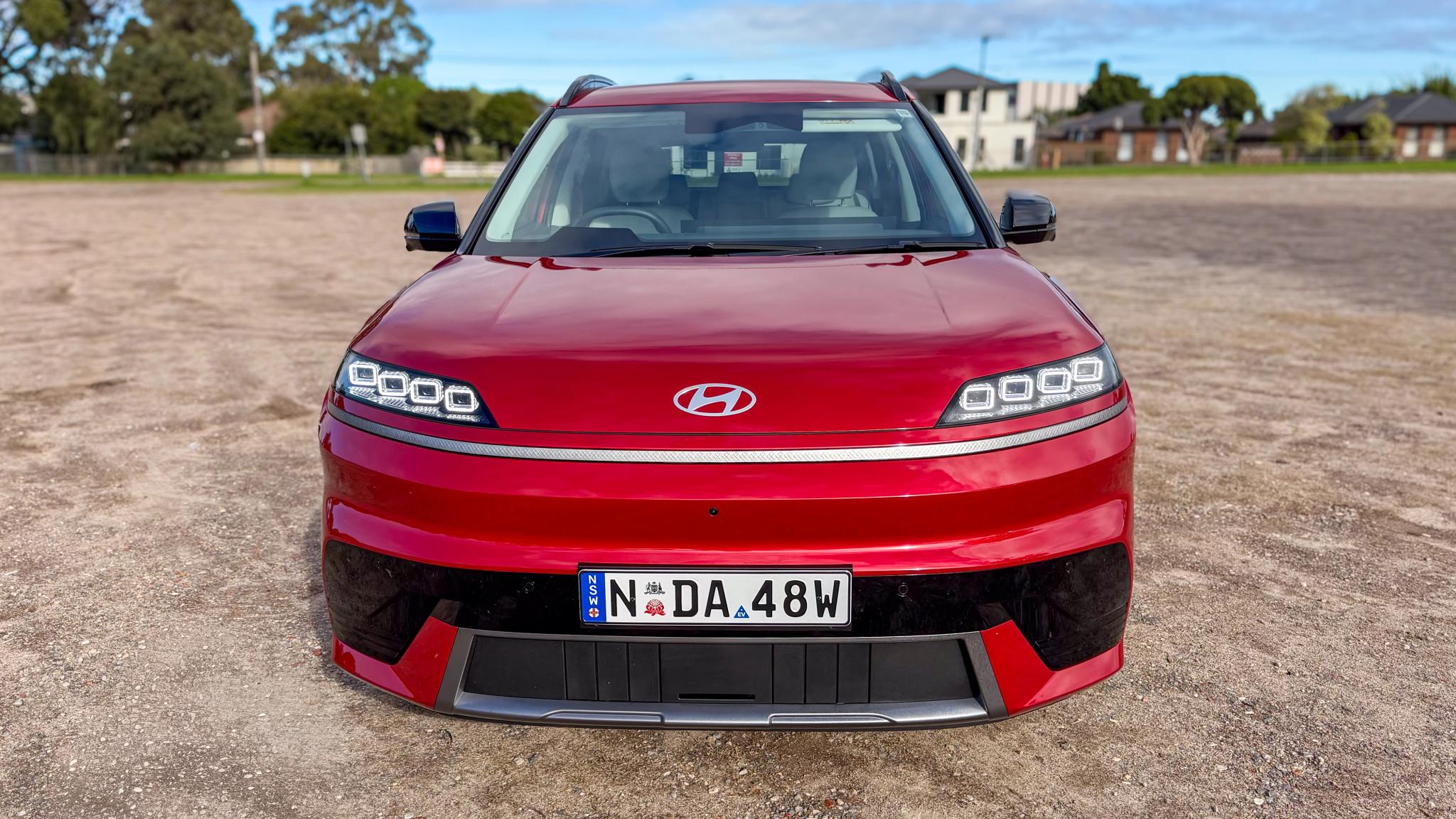
Let's be honest up front: the Elexio isn't the prettiest thing in the segment.
Hyundai has thrown a lot at it, the square LED daytime runners, the slim light bars front and rear, the flush door handles and the turbine-look alloys, but the elements never quite settle into a shape you'd call handsome.
From some angles it reads like a Kona, from others a Tucson, and the four-lamp face is a genuine talking point without ever being a genuine head-turner.
None of that will bother the target buyer much. This is a car built to blend into the school pickup line rather than stand out in it, and after the sci-fi drama of the Ioniq 5 that feels like a deliberate step back towards the mainstream. Just don't walk in expecting fireworks.
What is the Elexio like inside?
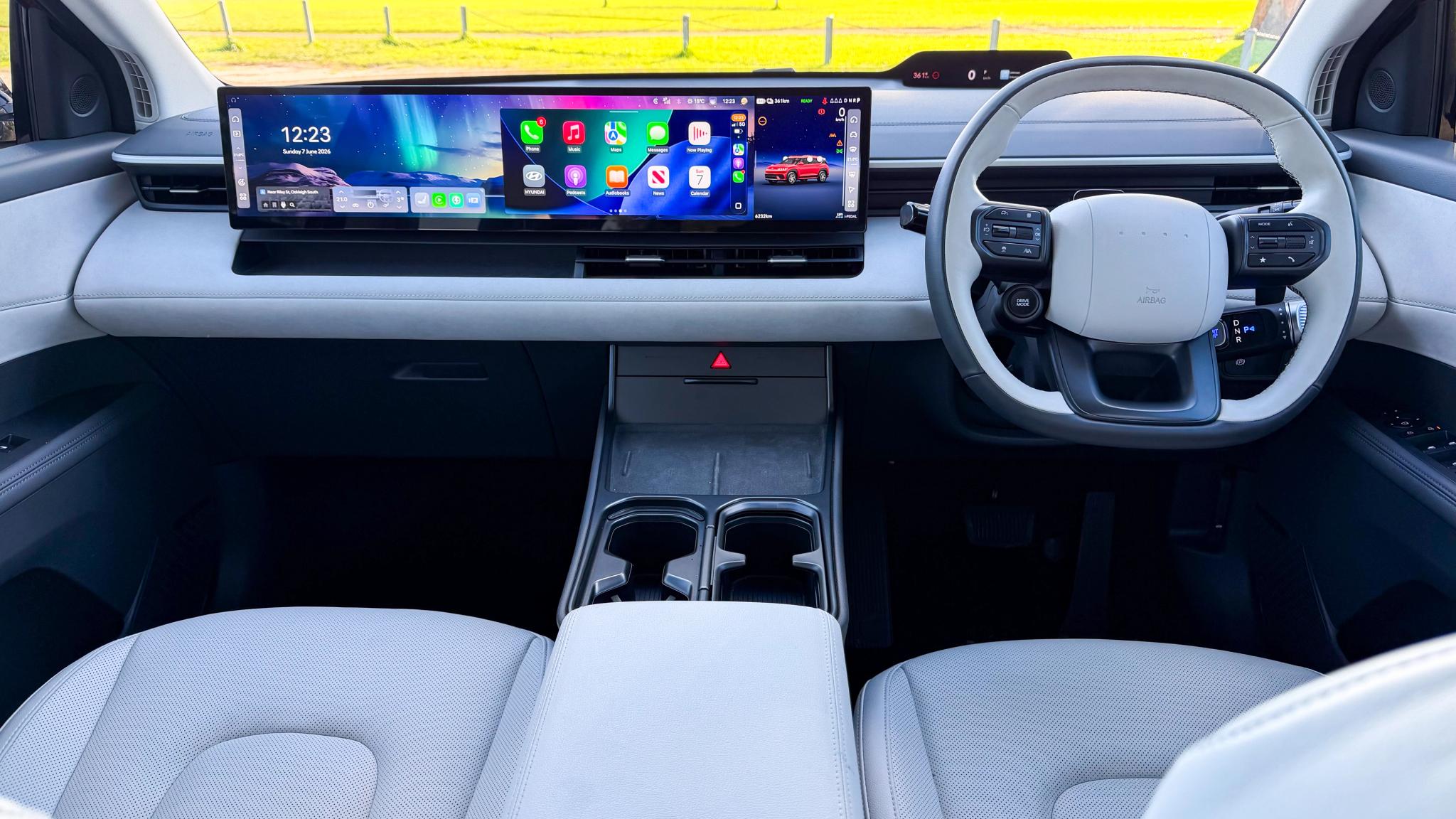
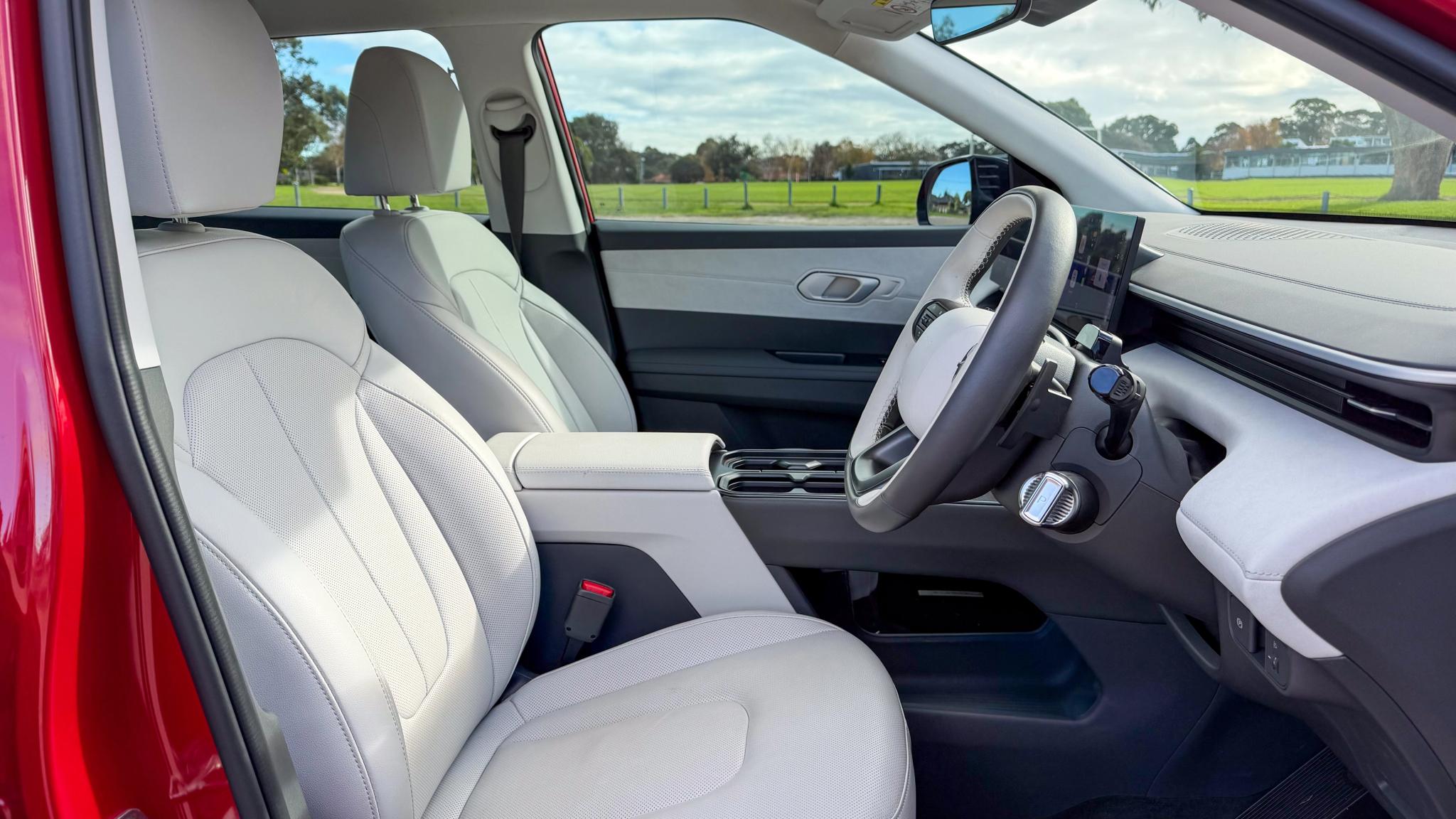
The cabin is plush, tightly assembled and a clear cut above what the "built in China" label might have you fear. Materials feel good under hand, the part-leather seats in the Elite are supportive without being over-stuffed, and there's a light, airy feel if you tick the optional Dove Grey trim over the standard black.
Then there's the screen. A single 27-inch panoramic display stretches most of the way across the dash, powered by a Snapdragon 8295 chip and running Hyundai's new Android-based Connect-C software. It's bright, sharp and quick, and it will happily run arcade games while you're parked. As a piece of hardware it's impressive.
As a way of actually operating a car, it's a headache. There are no physical climate or volume controls beyond the wheel, so adjusting the temperature means poking at on-screen buttons that are tiny and easy to miss, fiddly at a standstill and genuinely distracting on the move. Wireless CarPlay is stranded in the middle of the display rather than sitting in front of the driver, so you're leaning across the cabin every time you want to use it.
The whole concept feels like tech for its own sake rather than tech that helps you drive, and I'd go so far as to call it a safety issue.
The slim head-up-style instrument strip mounted high in your sightline is a nicer idea, crisp and easy to read, though it disappears behind polarised sunglasses. It's a smart piece of design let down by the sprawling screen sitting next to it.
How practical is the Elexio?
Practicality is where the Elexio genuinely shines.
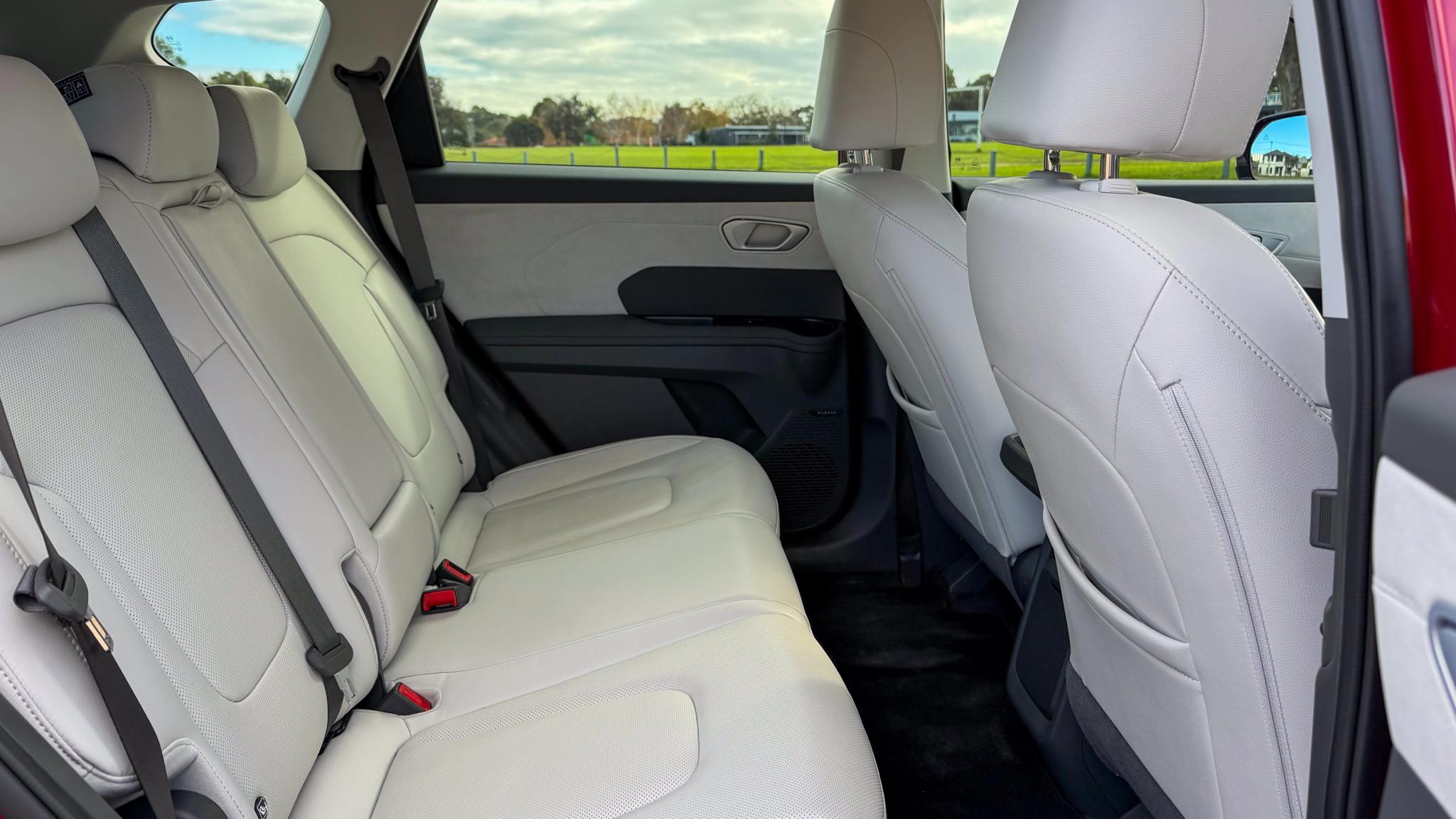
The 2750mm wheelbase liberates loads of rear leg and head room, and the flat floor makes three across the back a real proposition rather than a squeeze.
Storage is thought through with a nice touch, from the floating centre console and big armrest bin to felt-lined trays and a rear-facing shelf with a sliding drawer that extends from the back of the front console.
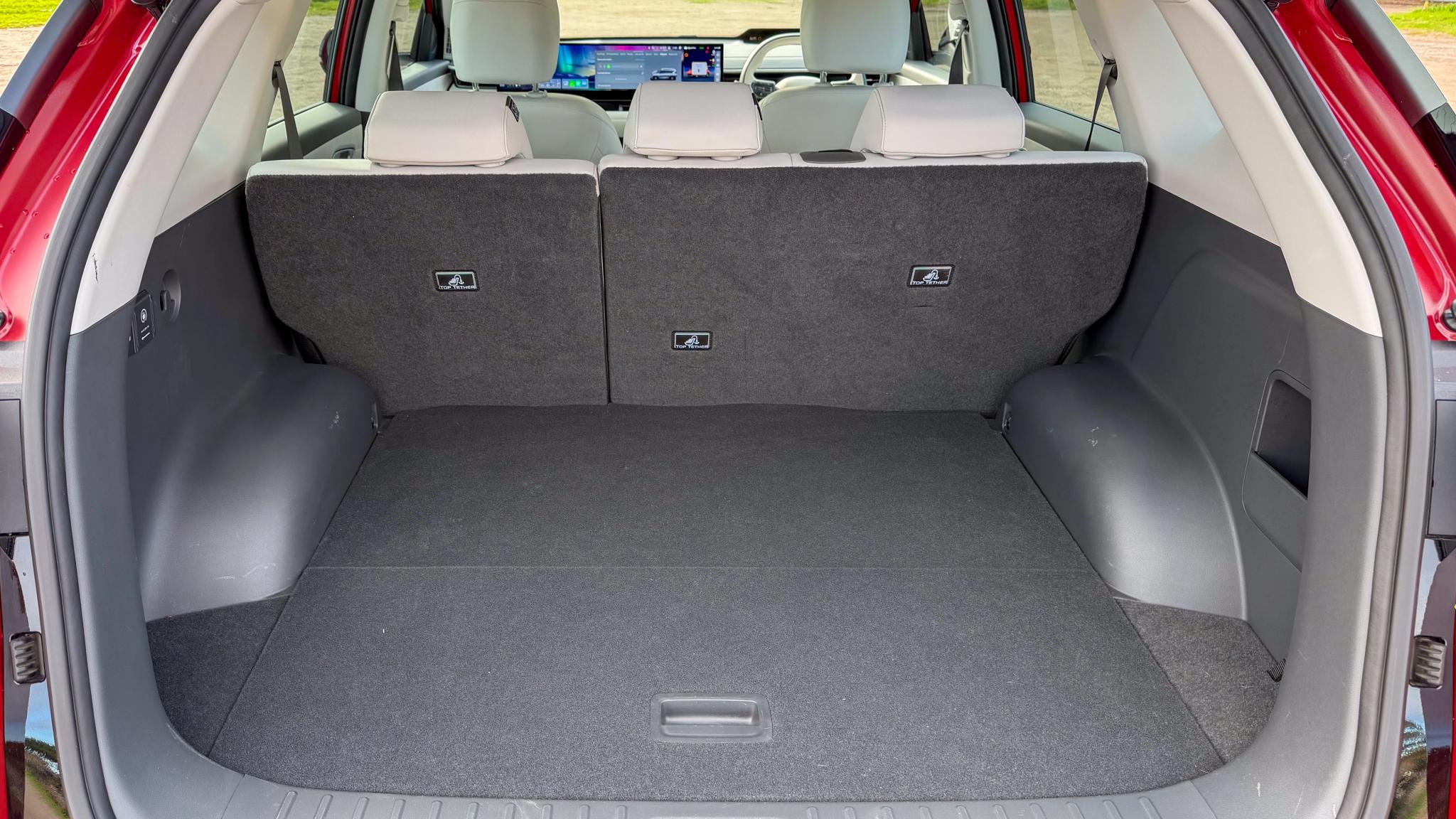
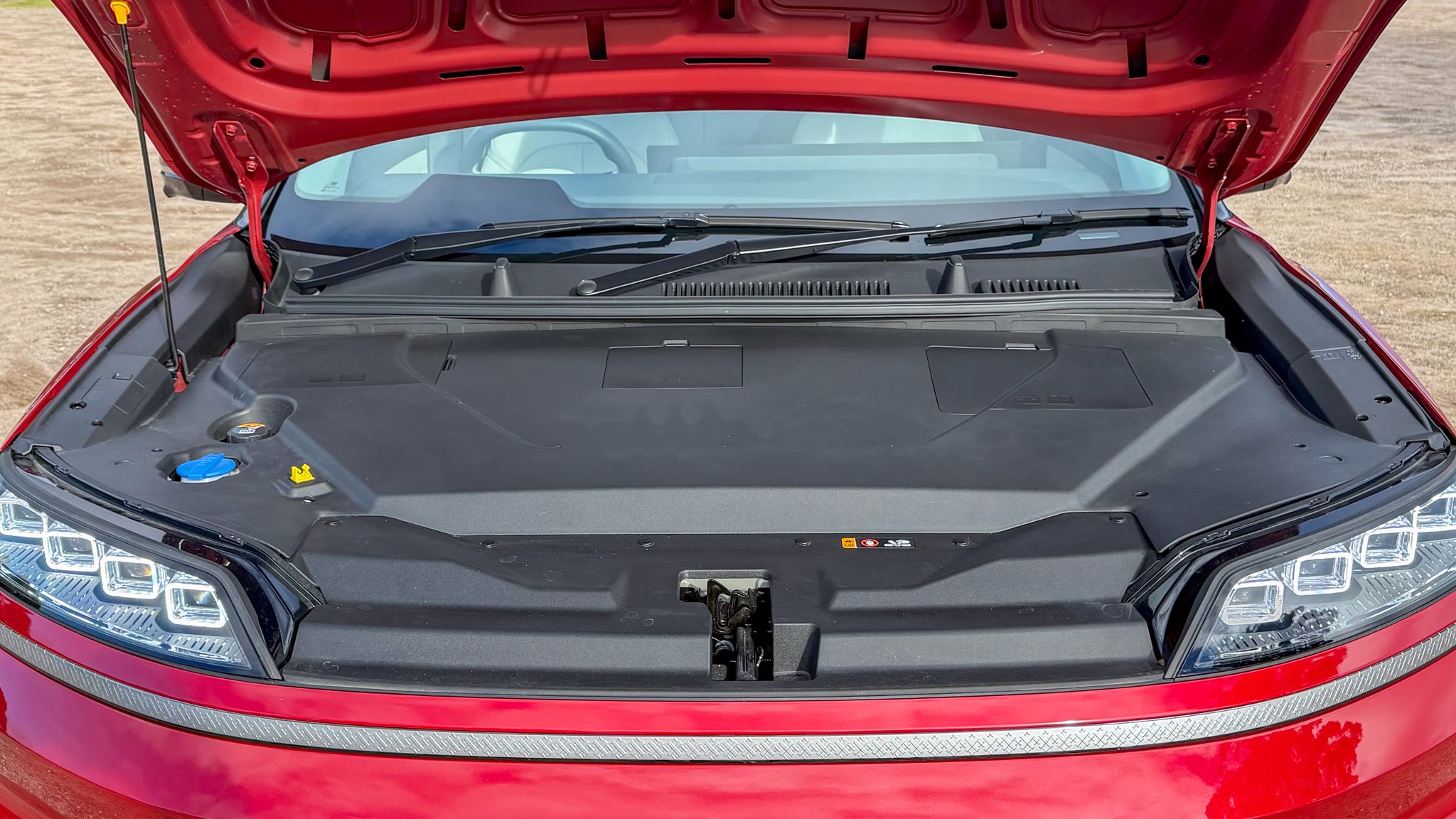
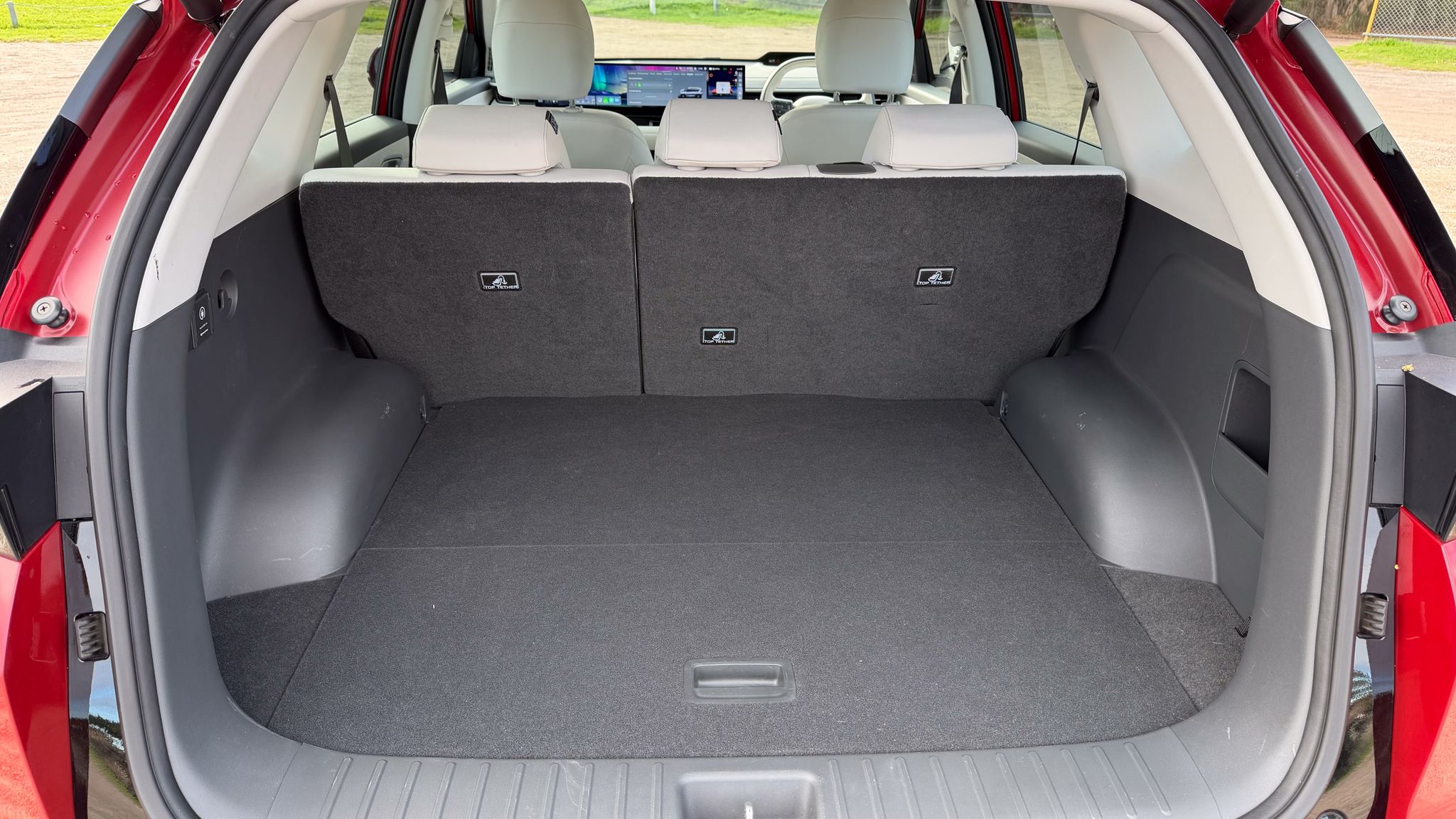
The 506-litre boot is competitive for the class and folds out to 1540 litres with the seats down. Two gripes: there's no frunk despite the related Kia offering one, and you get a tyre repair kit rather than a spare.
Families will also appreciate the ISOFIX points, the extra top-tether and rear USB-C ports. As a device for moving kids, dogs and the weekly shop, it's excellent.
What is the Elexio like to drive?
Set your expectations correctly and the Elexio is easy to like on the road. The 160kW/310Nm front motor won't pin you to the seat, and Hyundai doesn't even quote a 0-100km/h time, but there's enough instant torque to feel brisk around town and confident when you need to merge or overtake. This is a car about relaxed progress, not speed, and it's honest about that.
Hyundai Australia's local tuning team has done proper work here. Springs, dampers, anti-roll bars and the steering were all reworked for our roads, and the payoff is a composed, settled highway car. Cabin insulation is a standout, with very little road or wind noise creeping in at 100km/h, so long trips pass in genuine calm.
The trade-off is a ride that can turn busy over broken country surfaces, especially on the Elite's 20-inch wheels. The base car's 18s should smooth some of that out.
Steering is light but accurate, grip is fine rather than thrilling, and the regen paddles let you dial in the deceleration without menu-diving. The one persistent frustration beyond the screen is the lane-keep assist, which can tug at the wheel on narrower back roads and needs turning off to relax.
And I have to flag the elephant in the room: on my test car the screen glitched repeatedly, the volume jammed on full a few times, and eventually the whole display went completely flat and dead. Hyundai put it down to damaged wiring, so technically it isn't the car's fault, but when every control lives in that one panel, watching it die does nothing for your confidence.
How efficient is the Elexio?
Hyundai claims 18.2kWh/100km and up to 562km of WLTP range on the base car, dropping to 546km for the Elite on its larger wheels. In the real world expect closer to 20kWh/100km, which is fair rather than class-leading and still good for comfortably over 400km between charges.
Charging is the soft spot. The 400-volt architecture tops the battery from 10 to 80% in around 38 minutes on a 150kW DC charger, which is leisurely against the quickest rivals. The upside of the LFP chemistry is that you can charge to 100% regularly without fretting about degradation, and there's vehicle-to-load capability for running gear off the car.
Ownership costs are reasonable with one caveat. Servicing runs on long two-year/30,000km intervals, but the capped-price total is a touch steep for the segment.
| Item | Detail |
| Warranty | 7 years / unlimited km (conditional) |
| Battery warranty | 8 years / 160,000 km |
| Service intervals | 2 years / 30,000 km |
| Capped-price servicing | 4 years / 60,000 km |
| Total capped-price cost | $1,897 (2 services over 4 years) |
Is the Elexio safe?
The Elexio wears a five-star ANCAP rating, carried over from testing of the related Kia EV5, with ANCAP conducting its own pedestrian-impact and driver-assistance checks on the Hyundai. Scores land at 88% for adult occupant protection, 86% for child occupants, 77% for vulnerable road users and 85% for safety assist.
Standard kit is comprehensive with nine airbags, autonomous emergency braking, blind-spot assist and monitor, a surround-view camera, adaptive cruise with Highway Driving Assist and remote parking. The hardware is all there.
The calibration is where it wobbles, with an eager driver attention monitor and lane-keep that can nag on rural roads. Worth noting too, the attention warning flashes only on the screen rather than the head-up display, so half the time you're left guessing what the beeping is about.
The bigger safety story, though, is the one that doesn't show up on an ANCAP scorecard. Routing the climate, the media and half the car's functions through that central screen means your eyes leave the road far more often than they should, and no five-star rating undoes that. It's the main reason we've marked the Elexio down here.
What are the main competitors to the Elexio?
The Kia EV5 shares this car’s platform, motor and battery and starts at around $56,770 before on-roads. It’s the sharper deal on paper, but Hyundai’s local ride and handling work gives the Elexio the more resolved drive, and the cabin feels a step more premium.
The Tesla Model Y starts at around $58,900 before on-roads and brings more power, quicker charging and the best software and charging network in the business. The Elexio counters with a roomier, more conventional interior and a warranty most buyers will find more reassuring, but it can’t match the Tesla for pace or ease of living.
The BYD Sealion 7 is the curveball, undercutting on price from around $54,990 plus on-roads with strong equipment and genuinely quick performance. It feels less polished to drive than the locally tuned Elexio, which is where the Hyundai claws back ground for buyers who value composure over straight-line speed.
The Zeekr 7X starts at around $57,900 before on-roads and offers a cushier ride and dramatically faster claimed charging. The Elexio can’t touch it for charge speed, so its answer is an established dealer network and a familiar Hyundai ownership experience.
Cross-shop on price and you'll want the EV5 and Sealion 7 on your list. Cross-shop on tech and charging and it's the Model Y and Zeekr 7X that make the Elexio work harder.
Should I buy the Elexio?
If you can live with the screen, there's a lot to like here.
The Elexio is spacious, comfortable, quietly refined and priced right, and Hyundai's local tuning makes it one of the more resolved mid-size EVs to drive. For country and outer-suburban families who don't mind slower charging, it's a very sensible thing to own.
But the screen isn't a small footnote, it's the entire way you interact with the car, and right now it makes daily life harder than it should be. Add the plain styling, the modest performance and, in my case, a display that gave up entirely, and the Elexio lands as a genuinely good SUV undermined by the one part you touch most.
Hyundai has the makings of a class contender here. It just needs to give the driver back some control.
VerdictThe Beep Verdict
Rob Leigh
Co-founder & Director
Rob Leigh is Co-founder and Director of The Beep based in Melbourne, Australia. He has 15+ years inside a major automotive OEM, specialising in product planning, pricing and vehicle strategy.
About Author