2026 GWM Tank 300 Ultra Diesel review
Twin lockers, a proper diesel and a price tag that embarrasses the competition - but throttle lag and a firm ride are harder to forgive than they should be.

Rob Leigh
Pros
- Genuinely capable off-roader with twin locking differentials as standard
- Outstanding value for money at around $52K driveaway
- Diesel engine adds real towing muscle and keeps fuel costs in check
Cons
- Throttle lag is frustrating and kills confidence in everyday driving
- Firm ride that works off-road but wears thin on urban roads
- A few interior design choices that should have been caught earlier
The GWM Tank 300 Ultra Diesel sits in a genuinely interesting spot in the market - boxy, tough-looking, twin-locked and priced at $51,990 driveaway. It's built for people who want serious 4WD capability without the six-figure price tag and on that front it largely delivers. The catch is a powertrain that doesn't feel fully resolved and a ride tuned for the track rather than the trip to school.
What does the GWM Tank 300 cost in Australia?
The Tank 300 diesel is available in two grades. The Lux Diesel opens at $47,990 driveaway with the Ultra Diesel sitting at $51,990 driveaway - the variant tested here. A $595 premium applies for most paint colours beyond Fossil Grey.
For context the cheapest Jeep Wrangler is almost $30,000 more. A Toyota LandCruiser 76 Series will set you back significantly more again and offers far less in the way of creature comforts. The Tank 300 diesel lands between the two in terms of capability, and below both in price. That's a meaningful position to occupy.
The Ultra's standard kit is extensive: 18-inch alloys, heated and ventilated nappa-accented leather seats, wireless Apple CarPlay and Android Auto, a 12.3-inch infotainment display, a nine-speaker audio system, dual-zone climate control, a heated steering wheel, driver seat memory and massage, wireless phone charging, 360-degree cameras and a transparent underbody camera view. The Lux grade gets you most of this, minus a few driver seat luxuries.
Seven years of unlimited-kilometre warranty, seven years of roadside assistance and seven years of capped-price servicing round out the ownership package. It's hard to argue with any of that at this price.
What does the GWM Tank 300 look like?
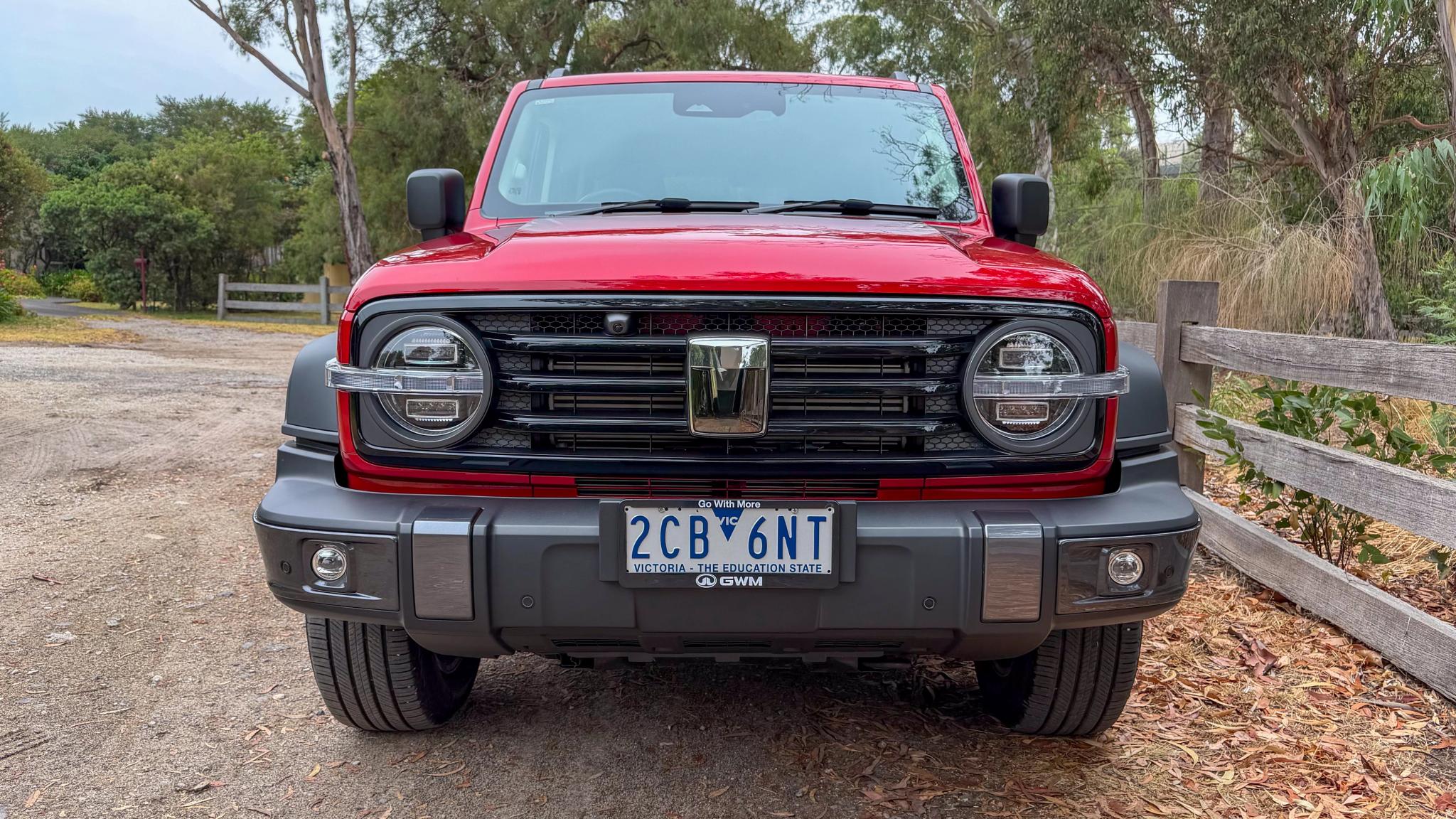
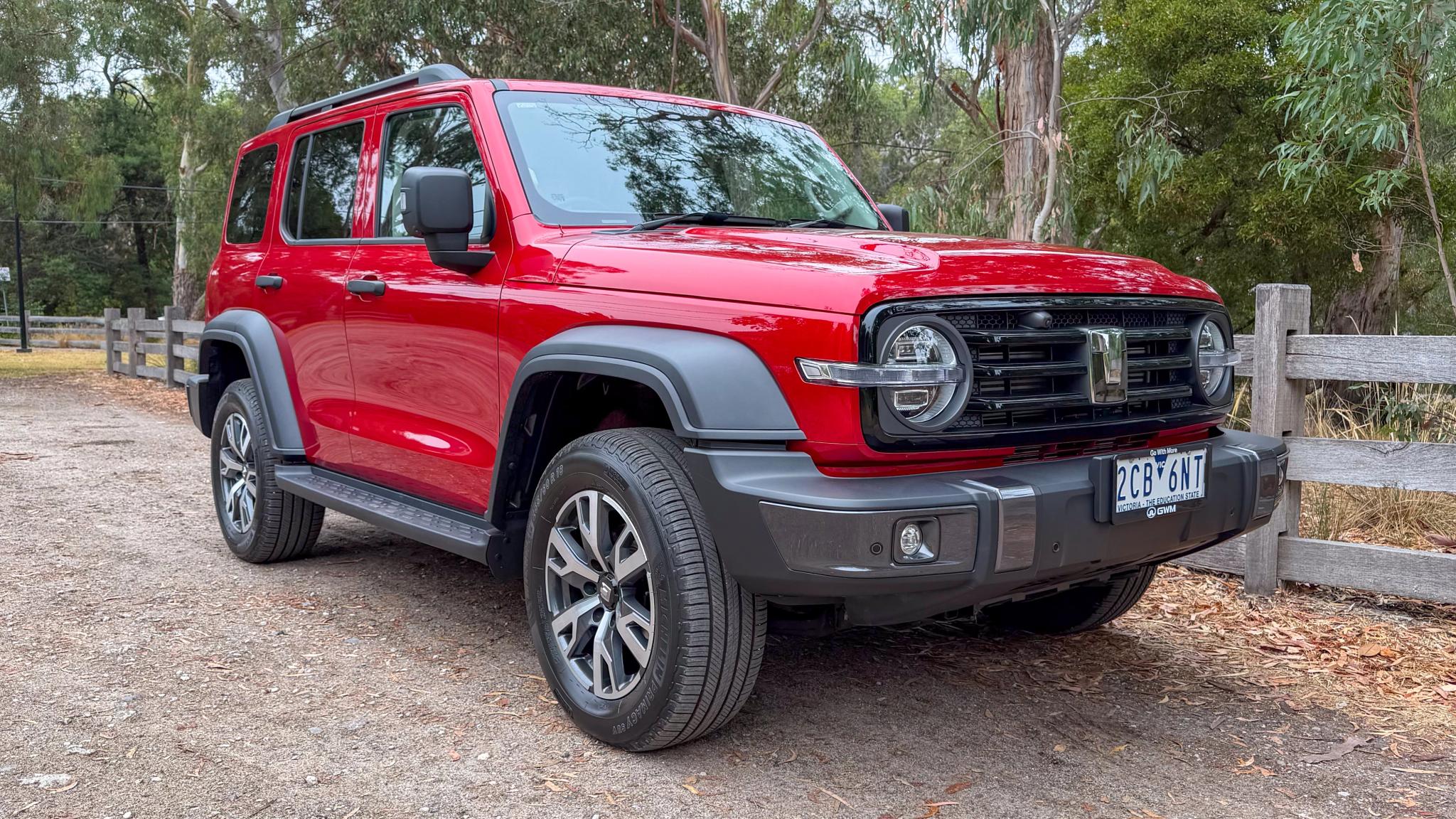
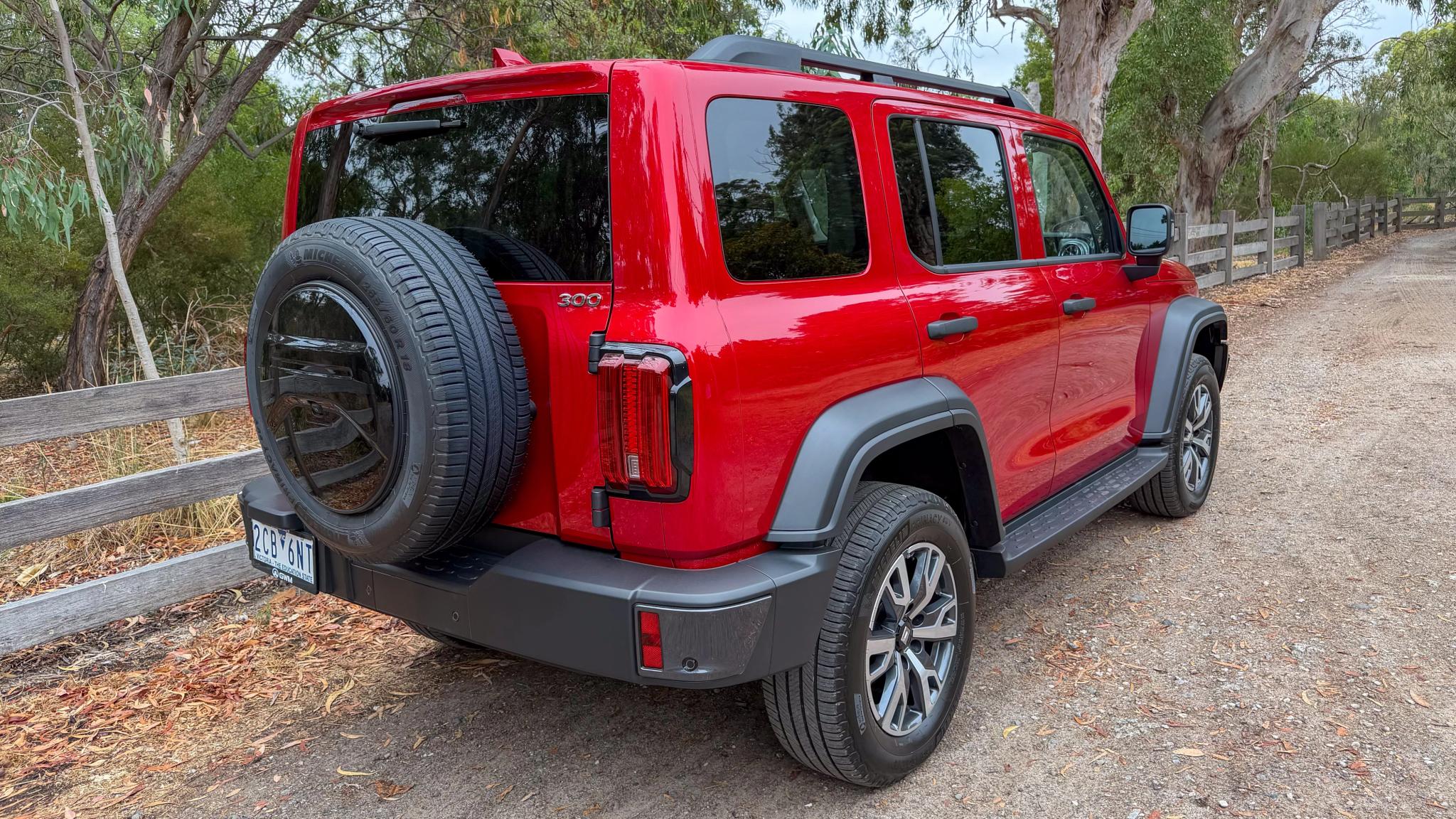
Honestly? It looks great. The Tank 300 has proper retro 4WD presence - boxy proportions, an upright stance and a face that means business. It wears its intentions clearly. This isn't trying to be a soft-roader in disguise. The 18-inch wheels on the Ultra fill the arches well and LED lighting front and rear lifts the overall quality of the exterior presentation.
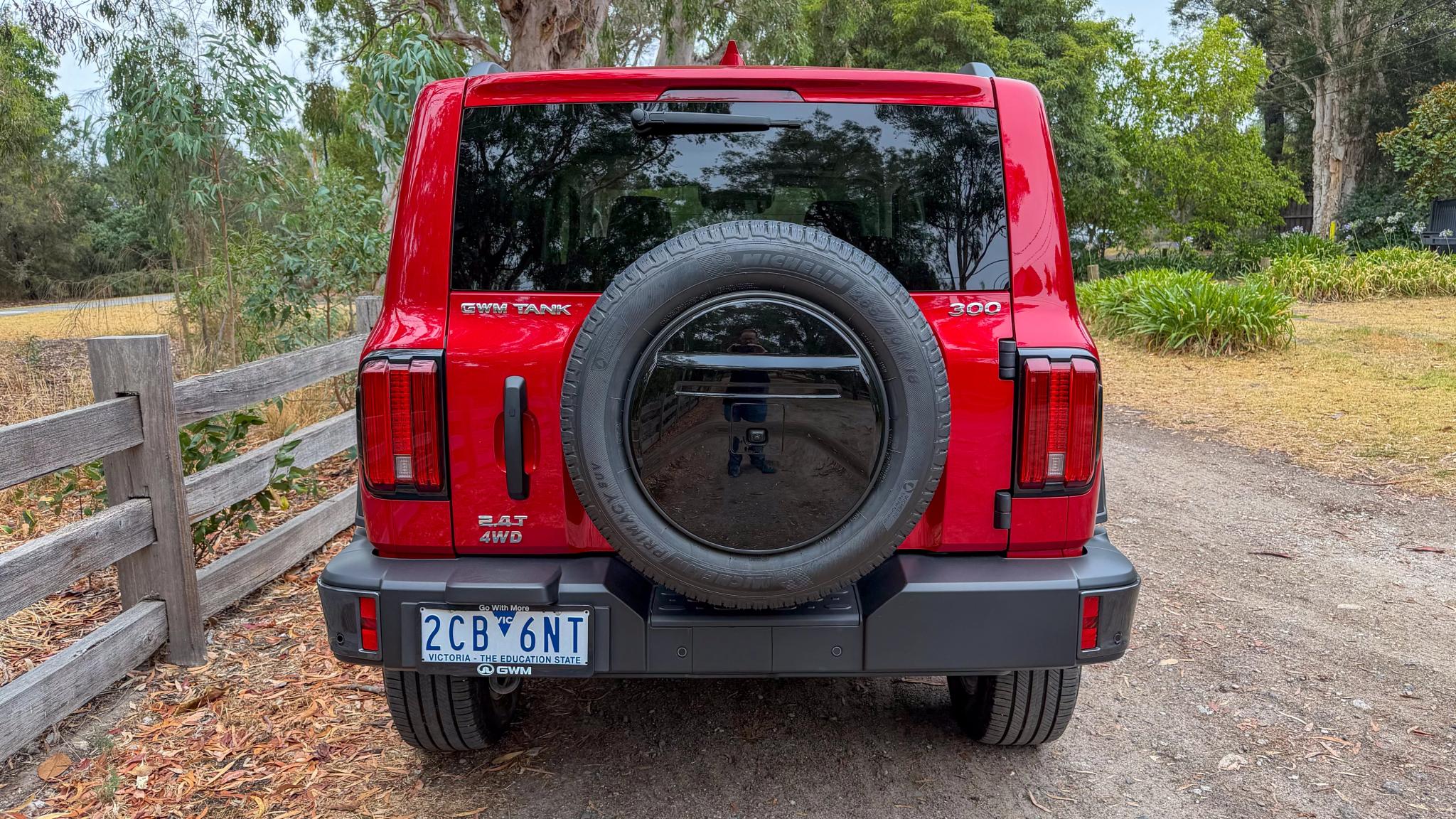
The rear-mounted spare wheel on the side-hinged tailgate contributes to the rugged aesthetic, though it does add weight to the door and creates real-world headaches when you've reverse-parked against a wall. A small price to pay for the look, perhaps - but it's worth knowing before you commit.
Build quality from the outside feels solid. Panels are well-aligned, the gaps are consistent and the whole thing has a purposeful density to it when you walk around it.
What is the GWM Tank 300 like inside?
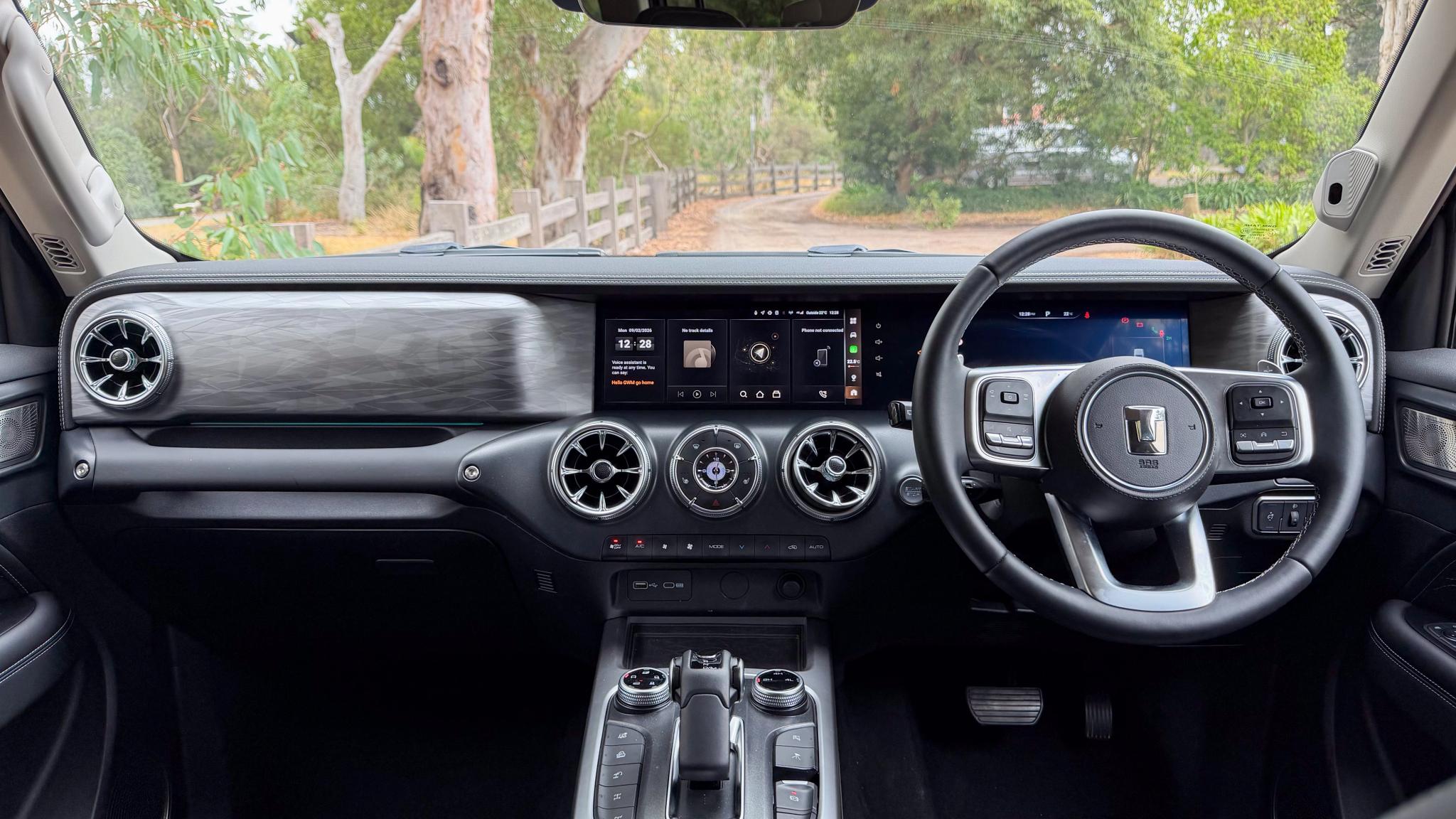
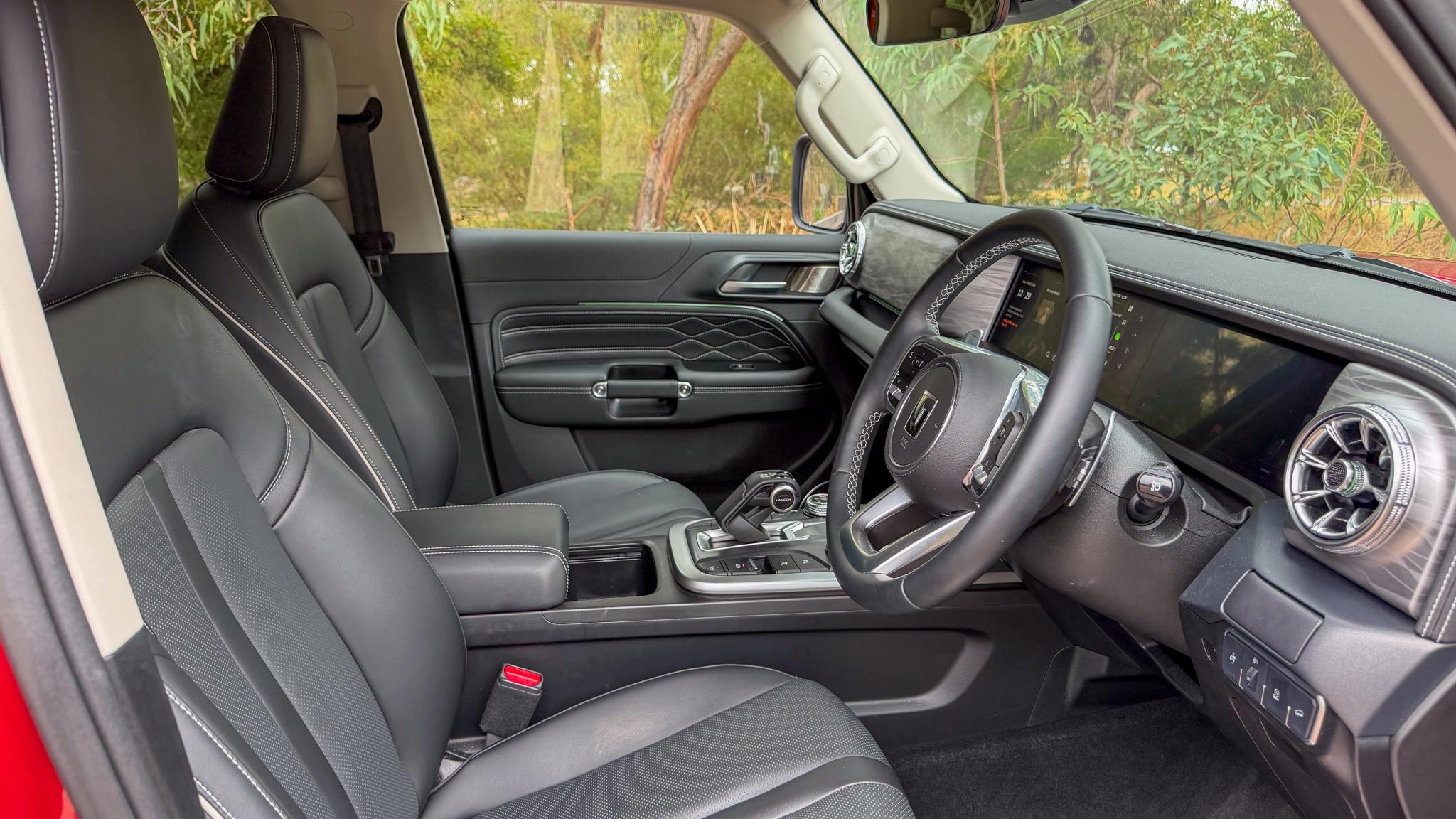
This is where things get more complicated. The cabin makes a strong first impression - wide and airy with twin 12.3-inch digital displays dominating the dashboard and physical shortcut buttons for the key off-road functions. That last point is worth appreciating; too many SUVs bury these controls in touchscreen menus where you absolutely do not want to be hunting when you're in a rocky creek bed.
Air conditioning controls are physical. The off-road drive mode selector is physical. Good decisions, both.
But then there are the air vents, which look like they've been lifted from a different car entirely - one with a much larger styling budget and a less coherent brief. There's an analogue clock positioned prominently in the centre stack that feels like a styling afterthought. And one particular trim piece that, diplomatically speaking, should have been reconsidered somewhere between the design studio and the production line.
Seat quality is genuinely good with supportive bolsters, plenty of adjustment and real long-distance comfort in the driver's chair. The pistol-grip gear selector is a novelty that draws comment but takes time to become intuitive. Park is tucked away at the top of the lever which you'll discover at the worst possible moment.
The turbine-style air vents are polarising but the cabin's overall width and glasshouse size make it feel bigger than it measures. Overall fit and finish is impressive for the price point - there are cheaper plastics here and there, but nothing that feels dishonest for a $52,000 vehicle.
How practical is the GWM Tank 300?
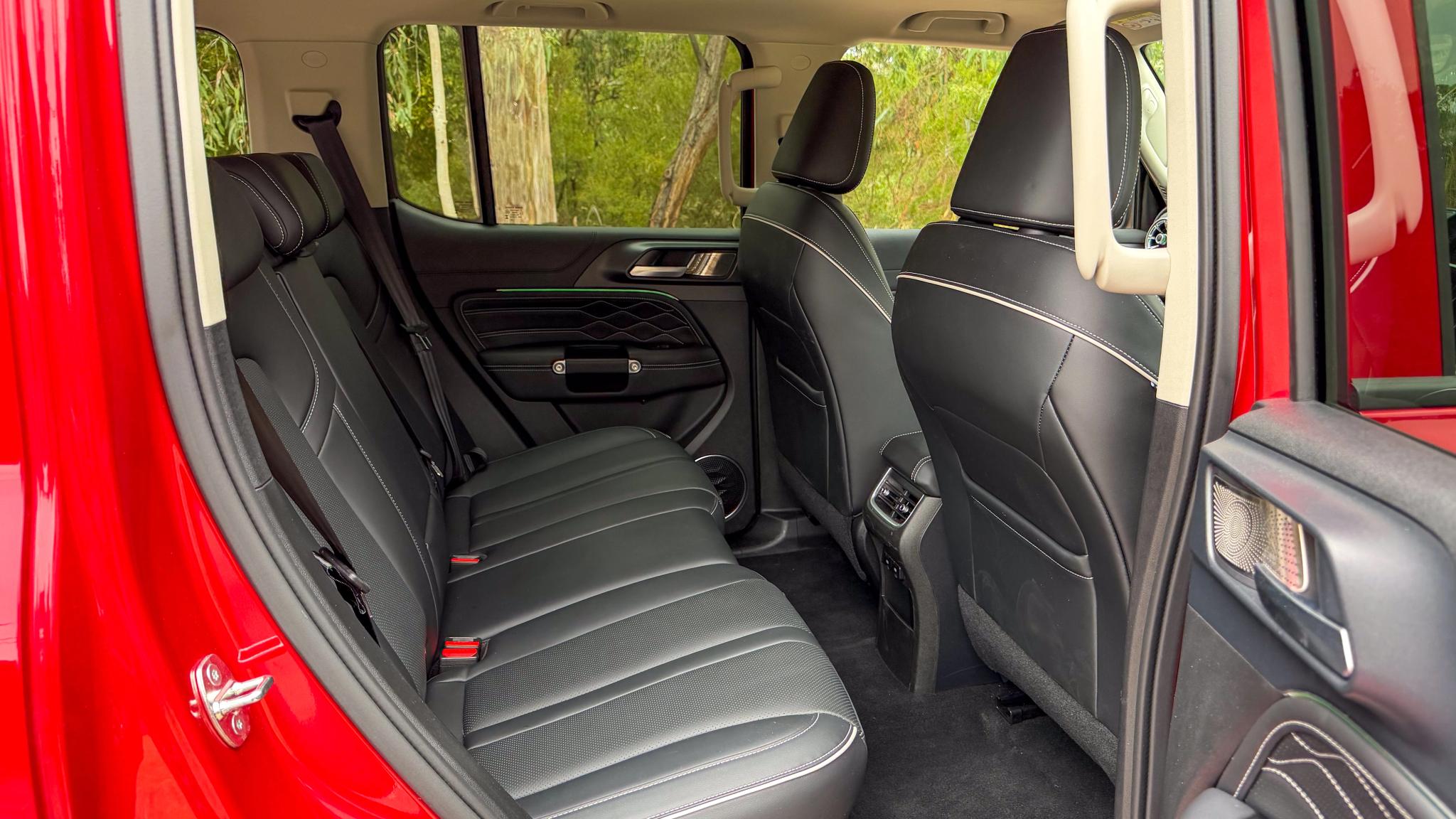
Five seats only - if you need a third row, the larger Tank 500 is the model to consider. Boot space is rated at 400 litres with all seats in use expanding to 1,636 litres with the second row folded flat. The load area is boxy and usable, though the side-hinged tailgate can become a real nuisance in tight car parks.
Rear passenger space is decent rather than generous. Legroom is adequate for adults, but this isn't a vehicle where rear occupants are pampered. Rear air vents, dual USB outlets and a fold-down armrest with cupholders show that GWM has thought about the back seat - it's more thoughtful than the numbers suggest.
Storage throughout the cabin is reasonable - door bins, a centre console bin, a small sliding tray for keys and wallets. It works for daily use. A family planning extended touring trips may want to consider a roof rack for the long haul.
What is the GWM Tank 300 like to drive?
Here's the tough part.
The 2.4-litre four-cylinder turbo diesel produces 135kW and 480Nm - good numbers on paper. The nine-speed automatic handles ratio selection across the range. And once the engine is in its torque band, there's real pull available. On the open road it's a composed highway cruiser with enough performance for confident overtaking.
The problem is getting there. Throttle response off the bottom is genuinely frustrating. There's a lag between input and reaction that's noticeable in traffic and unsettling when you need the car to move now. When it does respond, it can feel abrupt rather than progressive - a calibration issue, not a fundamental engine problem, but one that affects daily confidence more than the spec sheet would suggest. It's the single biggest complaint you'll have with this car and it comes up almost every time you're in slower-moving traffic.
Ride quality is the other area that needs an honest conversation. The diesel's suspension is tuned stiffer than the petrol variant - engineered to support the increased payload and towing capacity - and you feel it. Potholes and sharp urban bumps are dealt with adequately, but there's a firmness that wears on you over a daily commute. For a weekend touring vehicle that lives in the garage Monday to Friday, it's tolerable. For a primary family car covering urban ground daily, it asks more of the driver than it should.
Off-road, the story improves considerably. Twin electronic locking differentials, low-range transfer case, Crawl Control, Turn Assist and a suite of selectable terrain modes give the Tank 300 genuine all-terrain credibility. The underbody camera view is genuinely useful - not just a party trick - and approach and departure angles are respectable from the factory. It's a capable machine when the bitumen ends.
Steering is light, which aids low-speed off-road manoeuvring but feels a little disconnected on the highway. The combination of light steering and a firm ride makes it an unusual on-road character - purposeful rather than polished.
Driver assist systems have been improved in this diesel variant and the improvement is meaningful. Lane keeping and driver monitoring are less intrusive than in earlier iterations of the Tank 300. They're not perfect - lane centring will occasionally fight you - but the constant barrage of alerts that plagued earlier models has been significantly reduced.
How efficient is the GWM Tank 300?
GWM's claimed figure is 7.8L/100km. Real-world highway driving produced numbers around 8.6L/100km - include more stop-start and off-road use and you'll see over 9.0L/100km. By the standards of a 2,280kg 4WD, that's a respectable result.
A 75-litre tank gives a theoretical range approaching 950km in ideal conditions - somewhat optimistic, but a realistic 800km is achievable on a long highway run. That's genuinely useful for touring.
Servicing is capped-price across seven years. Indicative costs based on the Cannon ute schedule suggest roughly $2000 over five years - competitive for the segment.
Is the GWM Tank 300 safe?
The Tank 300 diesel carries a five-star ANCAP safety rating based on 2022 testing and valid until December 2028.
Seven airbags are fitted as standard along with a solid suite of active safety technology including autonomous emergency braking, lane-keep assist, blind spot monitoring, rear cross-traffic alert with braking, front cross-traffic alert, driver attention warning and a 360-degree camera system.
As noted in the driving section, the driver assist calibration is noticeably better in this diesel than in earlier Tank 300 variants - less intrusive, less prone to false alerts. The five-star result and the improved real-world behaviour make safety one of the stronger arguments for the Tank 300 at this price point.
What are the main rivals to the GWM Tank 300?
The Jeep Wrangler is the natural stylistic comparison - boxy, twin-locked and built for the rough stuff. But at $30,000-plus more, the Tank 300 makes it look poor value for most buyers.
The Ford Everest offers a more refined diesel experience and genuine seven-seat practicality. It's a better daily driver, but costs significantly more and doesn't match the Tank's off-road hardware at this price point.
The Isuzu MU-X is the closest on price and brings well-proven reliability credentials that GWM simply can't match yet. It's the safer long-term bet, but it can't match the Tank 300's off-road specification for the money.
Should I buy the GWM Tank 300 Ultra Diesel?
If your priority is off-road capability and value, few vehicles at this price point come close. Twin lockers, diesel economy, 3000kg towing, genuine all-terrain hardware and a well-equipped cabin for around $52,000 driveaway - that combination simply doesn't exist elsewhere in the Australian market.
The throttle calibration is a real issue that GWM needs to address and the ride quality will test your patience on a daily urban commute. These aren't minor quibbles - they affect how the car feels to drive every single day, and together they're enough to drag what could be a genuinely great 4WD down to a 6 out of 10.
The ingredients are all here. The value, the hardware, the looks. But a 4WD you're wrestling with in peak-hour traffic isn't one you'll love for long. Sort the throttle, GWM. Then we'll talk.
VerdictThe Beep Verdict
Rob Leigh
Co-founder & Director
Rob Leigh is Co-founder and Director of The Beep based in Melbourne, Australia. He has 15+ years inside a major automotive OEM, specialising in product planning, pricing and vehicle strategy.
About Author