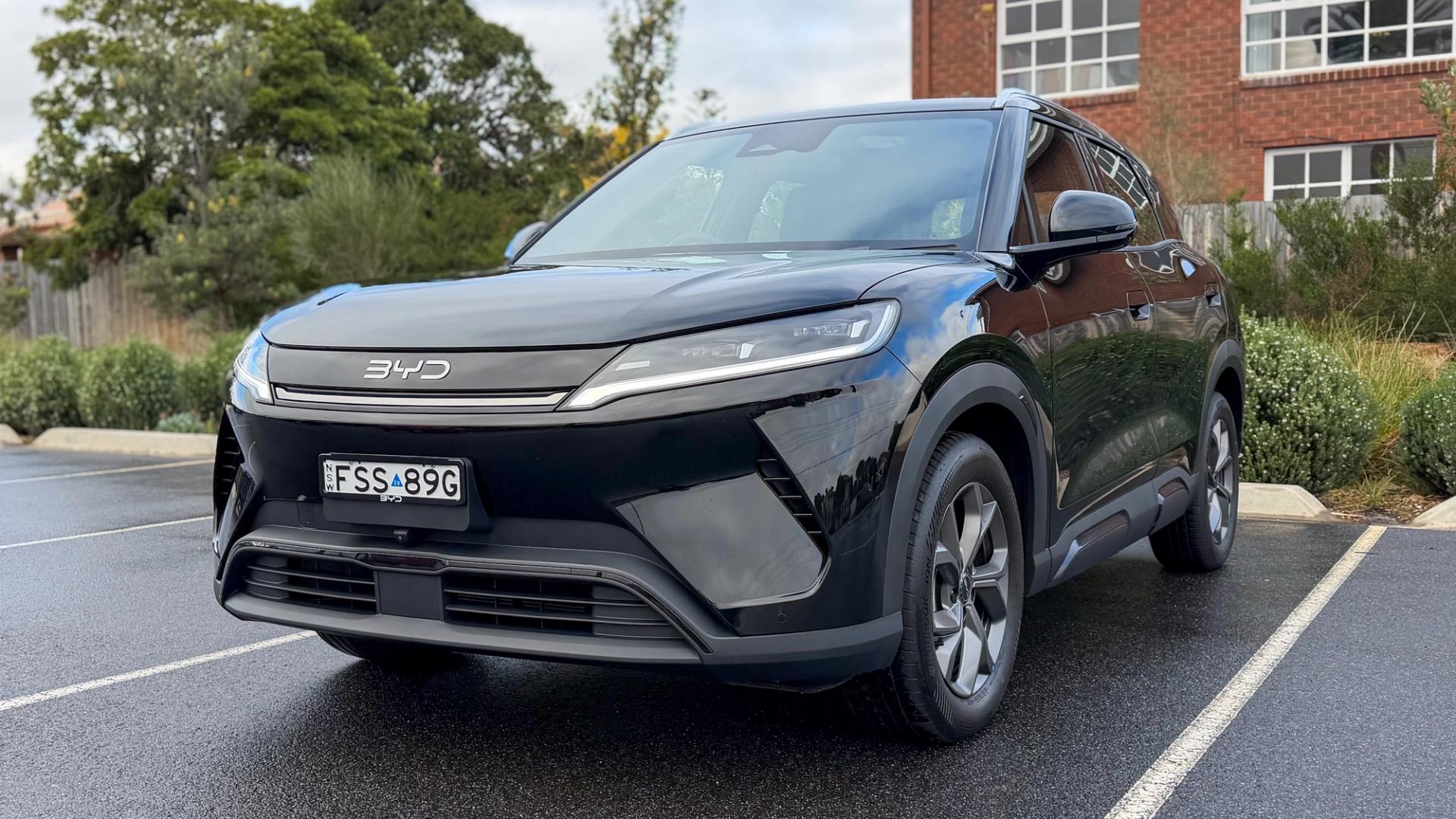
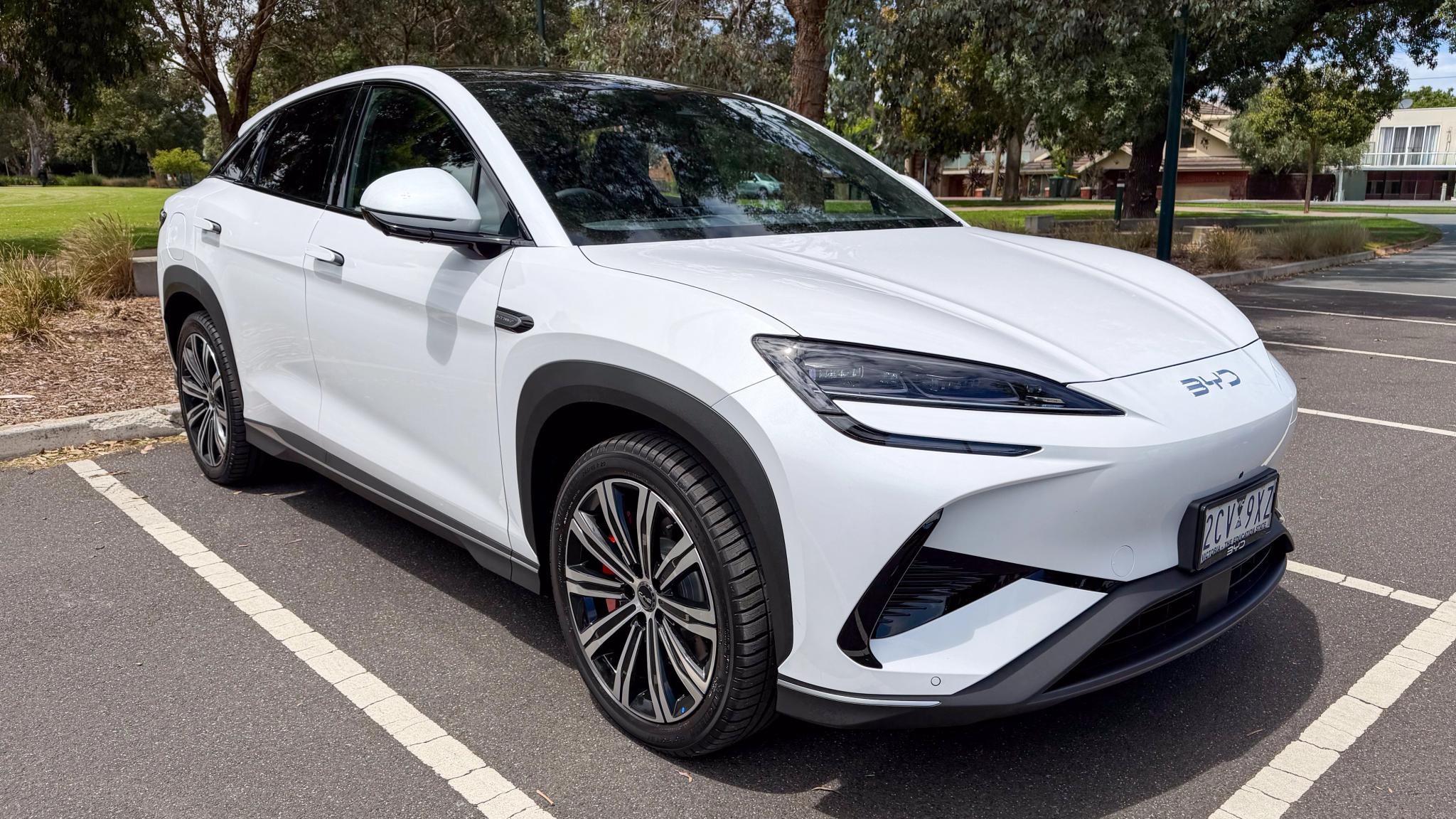
2026 BYD Sealion 7 review
The BYD Sealion 7 won't set your pulse racing - but it might be exactly the electric SUV most Australian families actually need.

Rob Leigh
Pros
- Genuinely competitive pricing with a long features list
- Comfortable, quiet and easy to live with every day
- Five-star ANCAP safety rating across the range
Cons
- Considerable weight dulls the driving experience
- Poor rearward visibility is a daily frustration
- Real-world range sits right at the acceptable minimum
By now the BYD Sealion 7 has well and truly proven itself on Australian roads - a practical, well-priced electric family SUV that prioritises comfort and value over driving excitement. If you want engagement, look elsewhere. If you want an honest, well-sorted EV that makes financial sense, this is genuinely hard to beat.
Interested in a Sealion 7? We can help you find a great deal, without stepping into a dealership. Free with no obligation.
What does the BYD Sealion 7 cost in Australia?
The Sealion 7 range opens at $54,990 before on-road costs for the Premium, with the Performance AWD stepping up to $63,990. At those prices, BYD is asking serious questions of the Tesla Model Y, the Kia EV5 and a growing pack of Chinese alternatives.
| Variant | Powertrain | Drivetrain | Price excluding on-roads |
| Sealion 7 Premium | Electric, 230kW | Rear-wheel drive | $54,990 |
| Sealion 7 Performance | Electric, 390kW | All-wheel drive | $63,990 |
See BYD Sealion 7 drive away pricing and specifications →
The Premium is the one to have. It's the better value proposition by some margin, offering 482km of WLTP range against the Performance's 456km, alongside a standard features list comprehensive enough to make the entry price feel surprisingly honest.
The Performance adds 390kW and all-wheel-drive traction, but the extra speed costs you both range and roughly $9,000, and unless you genuinely need 0-100km/h in 4.5 seconds you won't miss it.
What does the BYD Sealion 7 look like?
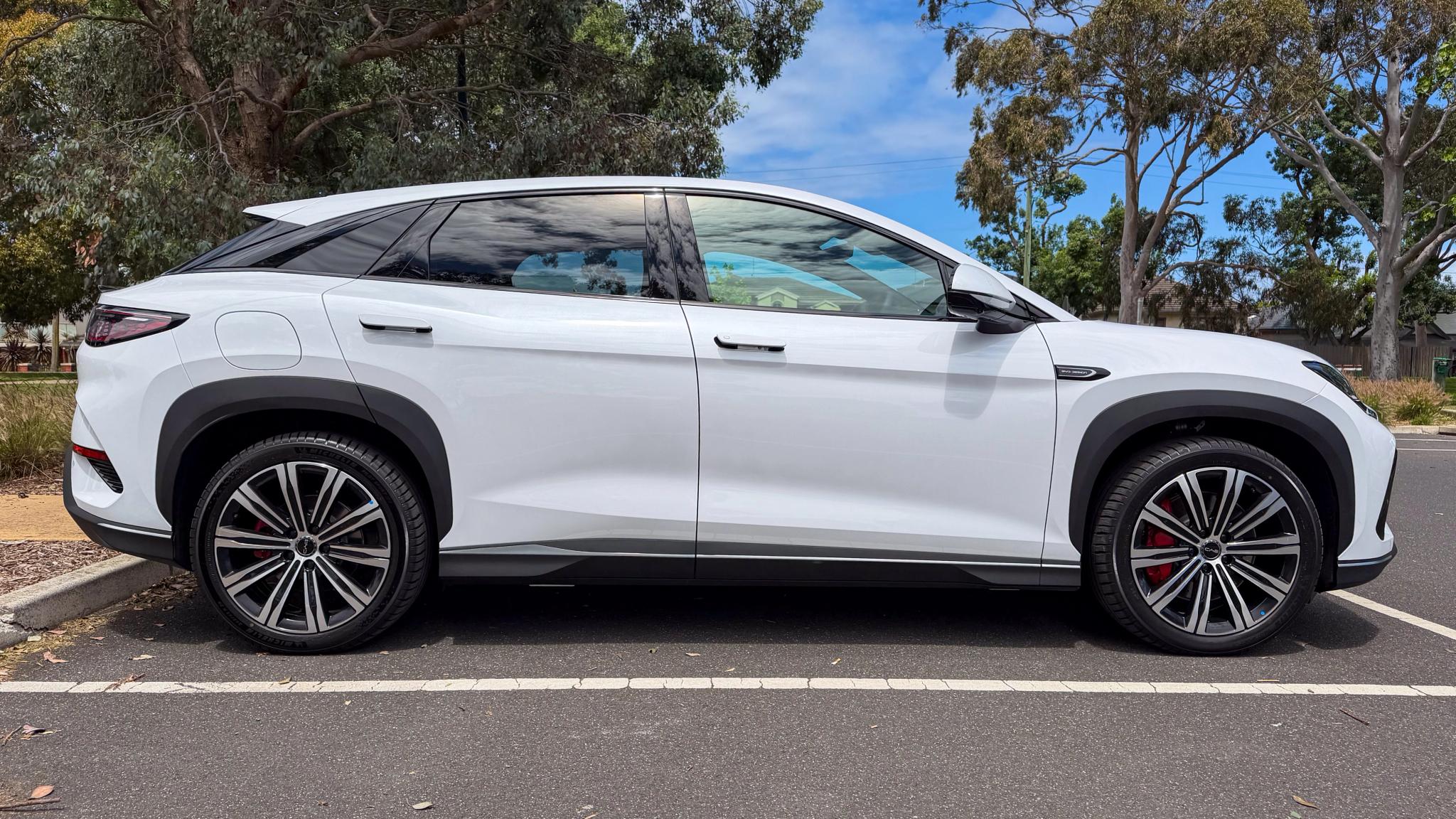
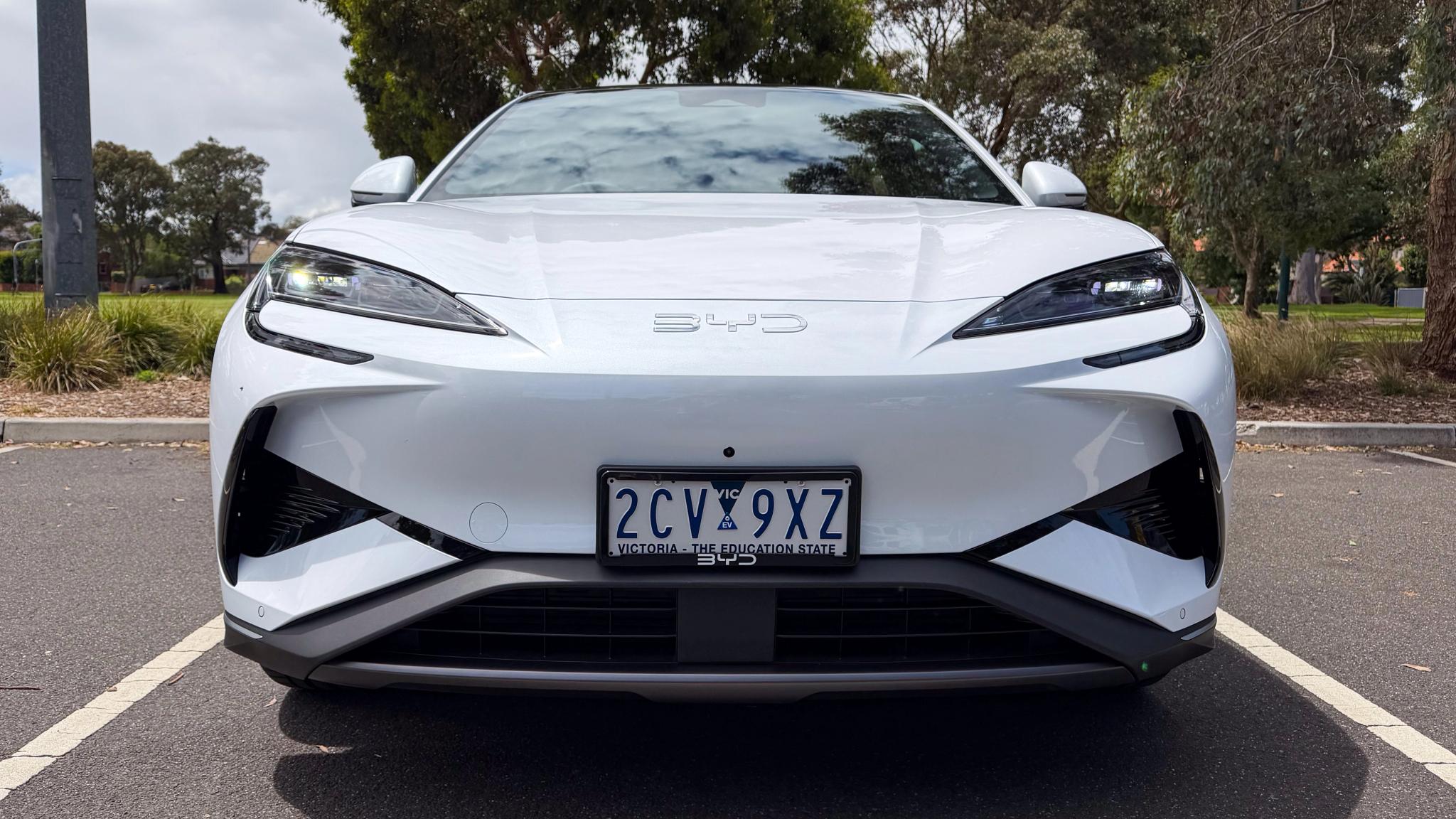
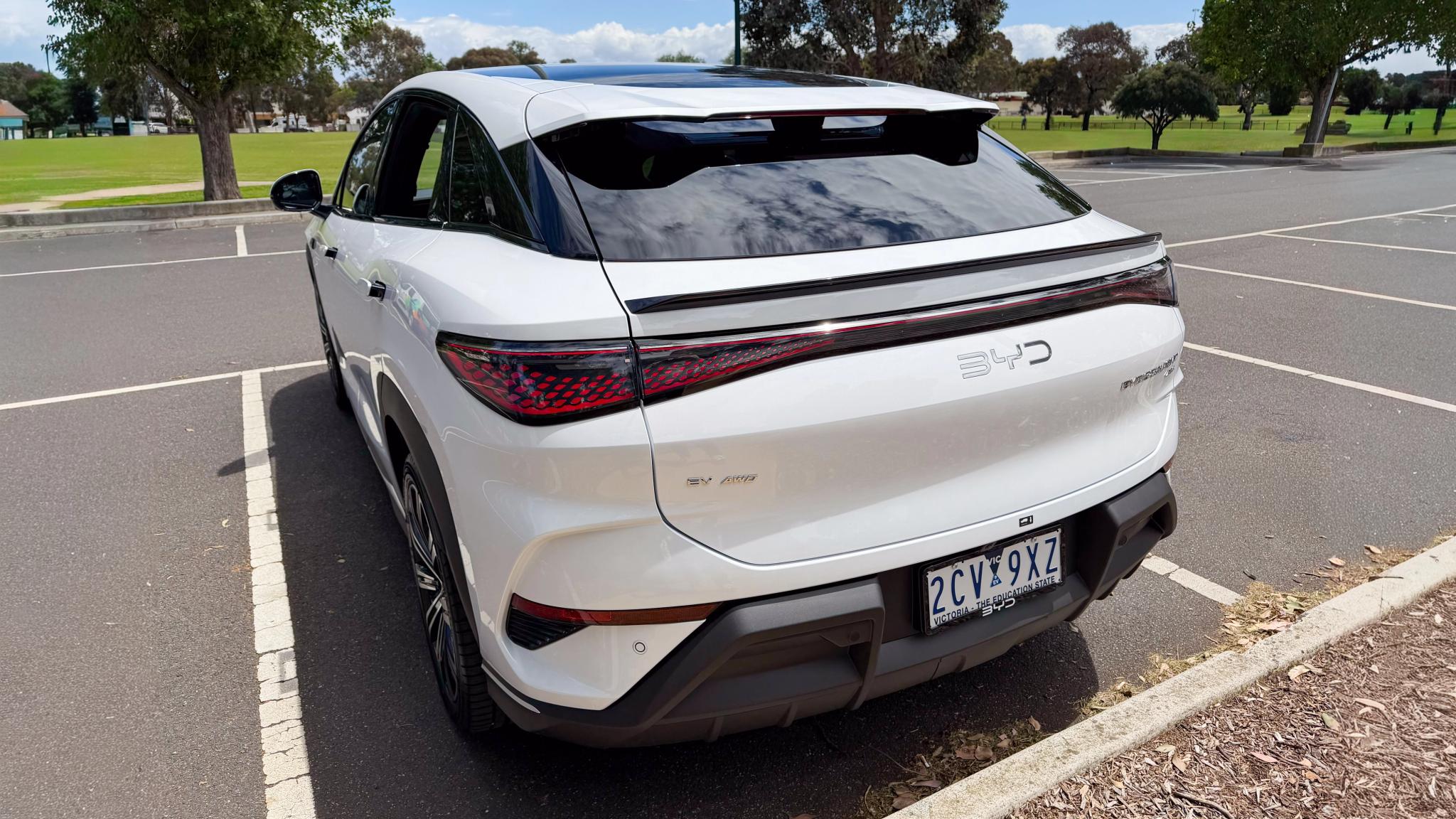
Describing the Sealion 7's styling requires a certain diplomatic touch. It's inoffensive. Considered. Safe. The body has a vaguely coupe-like profile, the proportions are tidy and there's just enough shoulder line and surface detail to prevent it from reading as purely anonymous - but it won't stop anyone in their tracks at the traffic lights either.
What it does do is avoid polarising anyone, which for a family SUV is arguably a feature rather than a flaw. 19-inch alloys on the Premium and 20-inch units on the Performance fill the guards well enough and the LED headlights are cleanly integrated. It's pleasant. It looks like a car.
What is the BYD Sealion 7 like inside?
This is where BYD makes a stronger argument. Conventional, functional, and better finished than the price suggests - the Sealion 7's cabin doesn't try to reinvent anything and that restraint mostly pays off.
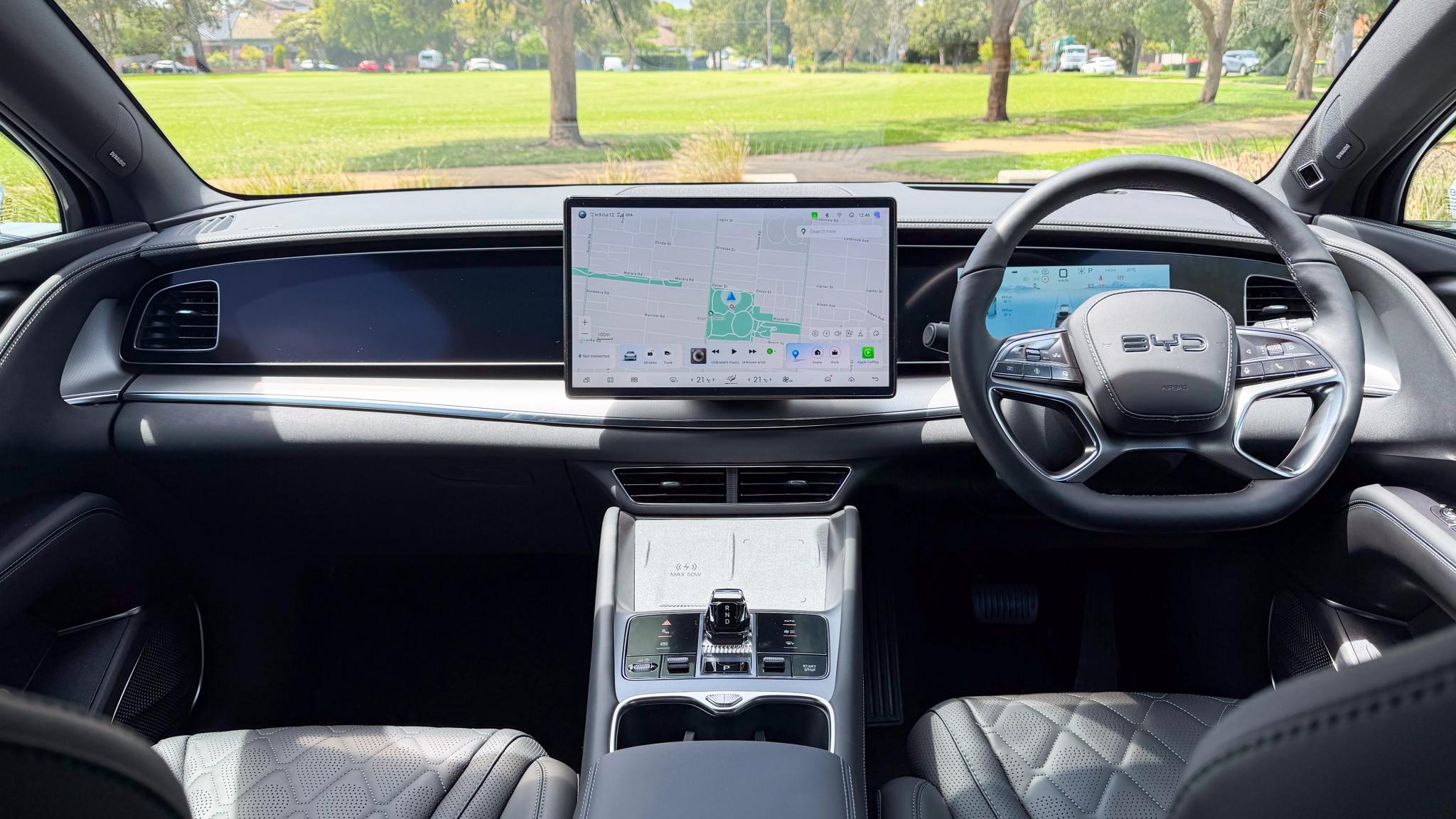
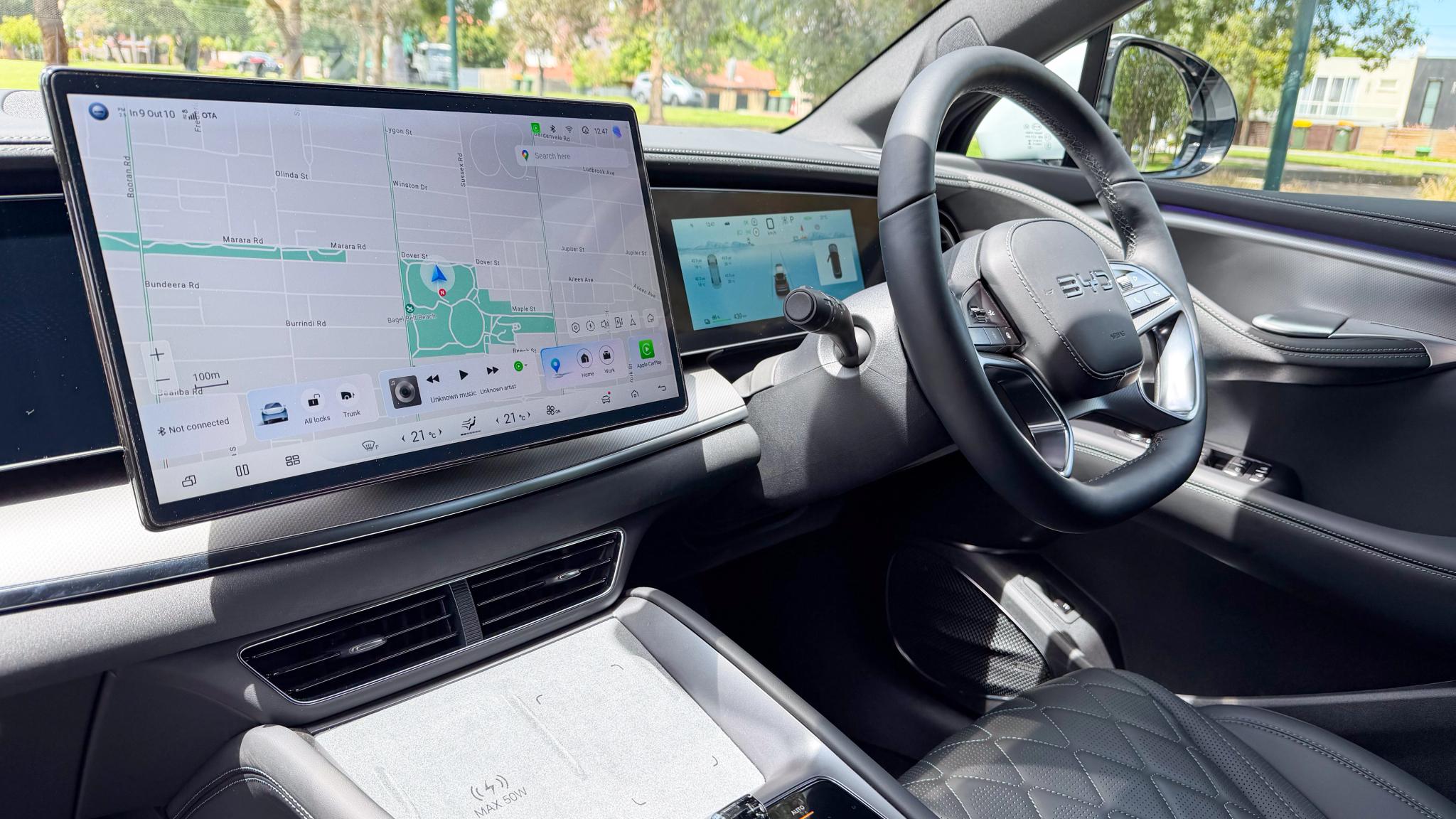
The headline feature is the 15.6-inch rotating touchscreen which handles most of the car's functions and rotates between landscape and portrait orientation. The party trick wears off quickly, but the interface itself is genuinely usable and BYD has retained a few physical controls for things like volume and drive modes. A start button and a physical gear selector are present - small details that many rivals have quietly deleted in the name of minimalism, and their inclusion here is genuinely appreciated.
The 10.25-inch digital instrument cluster is functional if unremarkable and a head-up display rounds out the driver-facing tech. Wireless Apple CarPlay works without fuss.
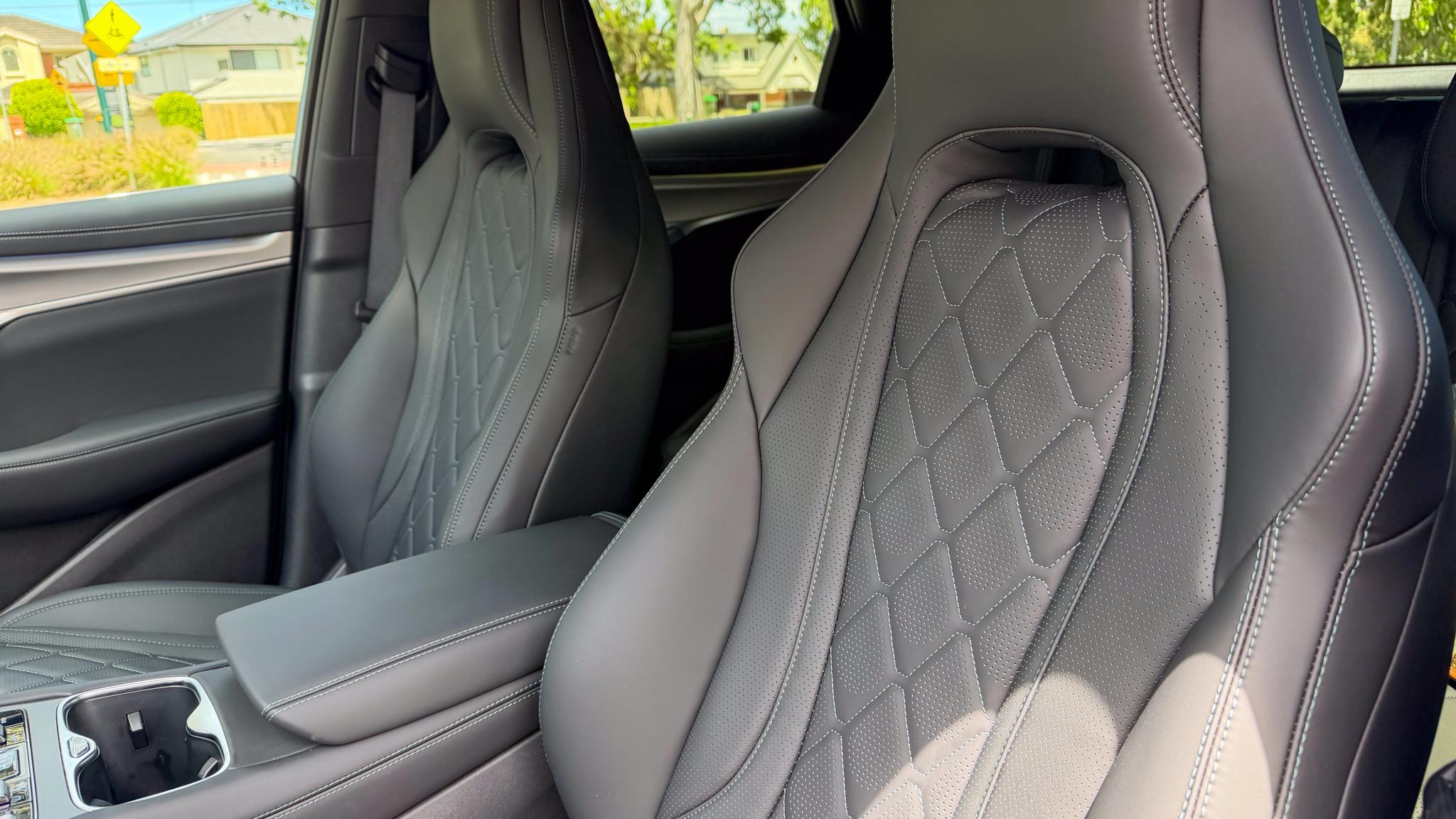
Materials quality reads above the price point. The leather upholstery feels like leather, the soft-touch surfaces crop up in the right places and the overall fit is tighter than you might expect from a brand that only landed in Australia three years ago. There's ambient lighting, dual-zone climate, and a 12-speaker Dynaudio sound system - the kind of equipment list that would have cost significantly more in 2020.
How practical is the BYD Sealion 7?
Generously so. The 4830mm body sits on a 2930mm wheelbase, which translates to excellent rear legroom - this is one of the roomier cabins in the mid-size segment. The boot offers 500 litres plus a 58-litre front compartment and the rear seats split 60:40 for added flexibility.
A powered tailgate is standard across the range, and the panoramic glass roof adds a sense of airiness to the second row. There's no spare wheel - a tyre repair kit only - which is common in this class but worth noting. Storage within the cabin is adequate rather than exceptional with the centre console doing the heavy lifting.
What is the BYD Sealion 7 like to drive?
Here's where the Sealion 7 makes a pragmatic case for itself rather than an exciting one.
At over 2,200kg, this is a heavy car - heavier than most of its electric rivals - and you feel that mass. The seating position and cabin proportions make it feel larger than its footprint suggests and together these elements ensure the Sealion 7 is never going to flatter an enthusiastic driver.
What it does instead is settle into a comfortable, relaxed cruising gait that suits Australian roads quite well. The suspension absorbs most of what our roads throw at it, the cabin is notably quiet on smooth surfaces, and the power delivery from the single rear motor in the Premium's 230kW setup is smooth and progressive rather than aggressive. You don't feel like you're being launched; you feel like you're being carried.
That said, rear visibility is genuinely poor. The letterbox rear window and thick rear pillars make reversing and changing lanes on instinct more difficult than they should be - the standard surround-view camera is welcome, but it's mitigation rather than a solution.
The Performance variant's 390kW is quick in a straight line, but the chassis is working hard to manage the weight at any pace and the additional speed doesn't reward drivers the way the price gap implies it should. The Premium is the driver's choice here - which is an unusual thing to write, but it's honest.
How efficient is the BYD Sealion 7?
The 82.5kWh lithium iron phosphate Blade battery is shared across both variants. WLTP-claimed range is 482km for the Premium and 456km for the Performance. Real-world urban consumption comes in around 18-19kWh/100km depending on conditions, with highway figures closer to 21-22kWh/100km - which is on the heavier side of what this class should deliver.
The 482km WLTP figure is right at the lower edge of what most buyers would consider acceptable for longer-distance use. It's workable, but the Sealion 7 is not the efficiency benchmark of its segment.
DC fast charging tops out at 150kW, getting the battery from 10 to 80 percent in around 32 minutes under ideal conditions. AC charging is 11kW. Servicing runs on 12-month/20,000km intervals, with capped-price servicing across 10 years and an average annual cost around $415 for the Premium. The vehicle warranty covers six years or 150,000km, and the battery is backed to eight years or 160,000km.
Is the BYD Sealion 7 safe?
Yes, and properly so. The Sealion 7 holds a five-star ANCAP rating under current standards with strong scores across adult and child occupant protection. All safety technology is standard across both variants, covering autonomous emergency braking, adaptive cruise, blind-spot monitoring, lane-keep assist, rear cross-traffic alert with braking and a 360-degree camera. Child presence detection is also included.
The lane-keeping system can be overzealous when combined with adaptive cruise, which is a common gripe in this class and calibration-fixable.
What are the main rivals to the BYD Sealion 7?
The Tesla Model Y is the most direct reference point. It's more expensive, more efficient and better to drive - but the interior is polarising and the brand carries its own complications right now. The Sealion 7 is a more conventional car in every sense.
The Kia EV5 offers excellent interior design and competitive pricing from $56,770 and deserves a place on any Sealion 7 shortlist. It's closer to the BYD than Tesla in terms of approach.
The Volkswagen ID.4 is similarly priced from $59,990 and offers a more polished European driving experience, though it has faced its own efficiency and technology criticisms.
Should I buy the BYD Sealion 7?
If your priority is value, comfort and a confidence-inspiring ownership package - yes, seriously consider it.
The Sealion 7 won't excite anyone who cares about driving. It's heavy, its range is adequate rather than impressive, and the rear visibility issue is an annoyance you'll encounter daily. These are real trade-offs.
But starting under $55,000 before on-roads, with genuine leather, a head-up display, panoramic roof, Dynaudio audio, a five-star safety rating and 10 years of capped-price servicing, it represents a calibre of inclusions that most buyers in this price bracket would have had to stretch significantly further to reach even a few years ago.
The Premium RWD is the pick of the range without question. More range, lower cost, simpler mechanicals. The Performance exists if you need the extra pace, but most buyers won't.
For the family EV buyer who wants something practical, presentable and straightforward to own - the Sealion 7 makes a compelling, sensible case. And in this segment, sensible is harder to pull off than it sounds.
Interested in a Sealion 7? We can help you find a great deal, without stepping into a dealership. Free with no obligation.
VerdictThe Beep Verdict
Rob Leigh
Co-founder & Director
Rob Leigh is Co-founder and Director of The Beep based in Melbourne, Australia. He has 15+ years inside a major automotive OEM, specialising in product planning, pricing and vehicle strategy.
About Author