2026 BMW M2 CS review
BMW's smallest M coupe gets the full CS treatment, delivering a rear-wheel-drive driver's car so engaging it might just be the most fun thing the M division builds today.

Rob Leigh
Pros
- Genuinely alive and unhinged when you want it to be
- S58 engine is a 390kW twin-turbo masterpiece
- Sharper, lighter and far more involving than its bigger CS siblings
Cons
- $172,900 puts it perilously close to proper M3 money
- Standard M2 already does 90% of this for much less
- No manual option offered, automatic only
Our verdict
The M2 CS is a driver's car in the purest sense. It rewards skill, punishes laziness and feels properly alive in a way very few modern performance cars manage. The catch is a price tag brushing uncomfortably close to M3 territory.
Find a deal on the BMW 2 SeriesWhat does the BMW M2 CS cost in Australia?
The M2 CS lands at $172,900 before on-road costs, a hefty $44,800 premium over the standard M2 manual or automatic, both of which sit at $128,100. The only meaningful option on the order sheet is carbon-ceramic brakes at $19,000 which is a serious ask unless you genuinely plan to live at racetracks.
For context, that pricing puts the M2 CS uncomfortably close to the bigger M3. A manual rear-drive M3 sedan can be had for less. Step up to the M3 Competition xDrive and you're spending $186,900 before on-roads, which is the comparison that really stings. The M4 CS coupe costs $254,900 before on-roads, so within the CS family the M2 CS is the value pick, but that's grading on a steep curve.
The previous-generation M2 CS launched at $147,400 back in 2020. Inflation, exchange rates and the broader rise in performance car pricing all play a part, but it's hard to escape the feeling that BMW is pushing its luck.
What does the BMW M2 CS look like?
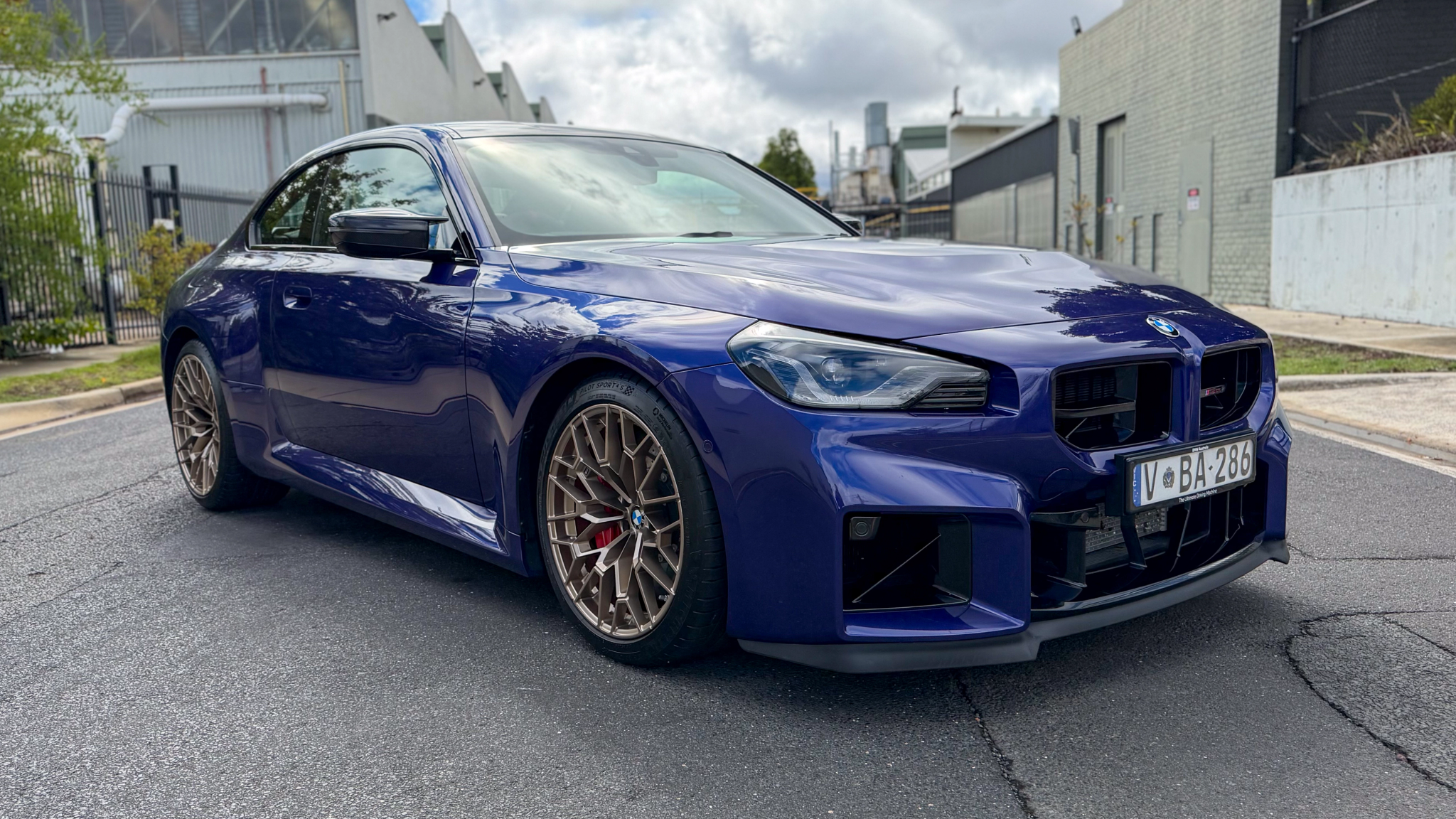
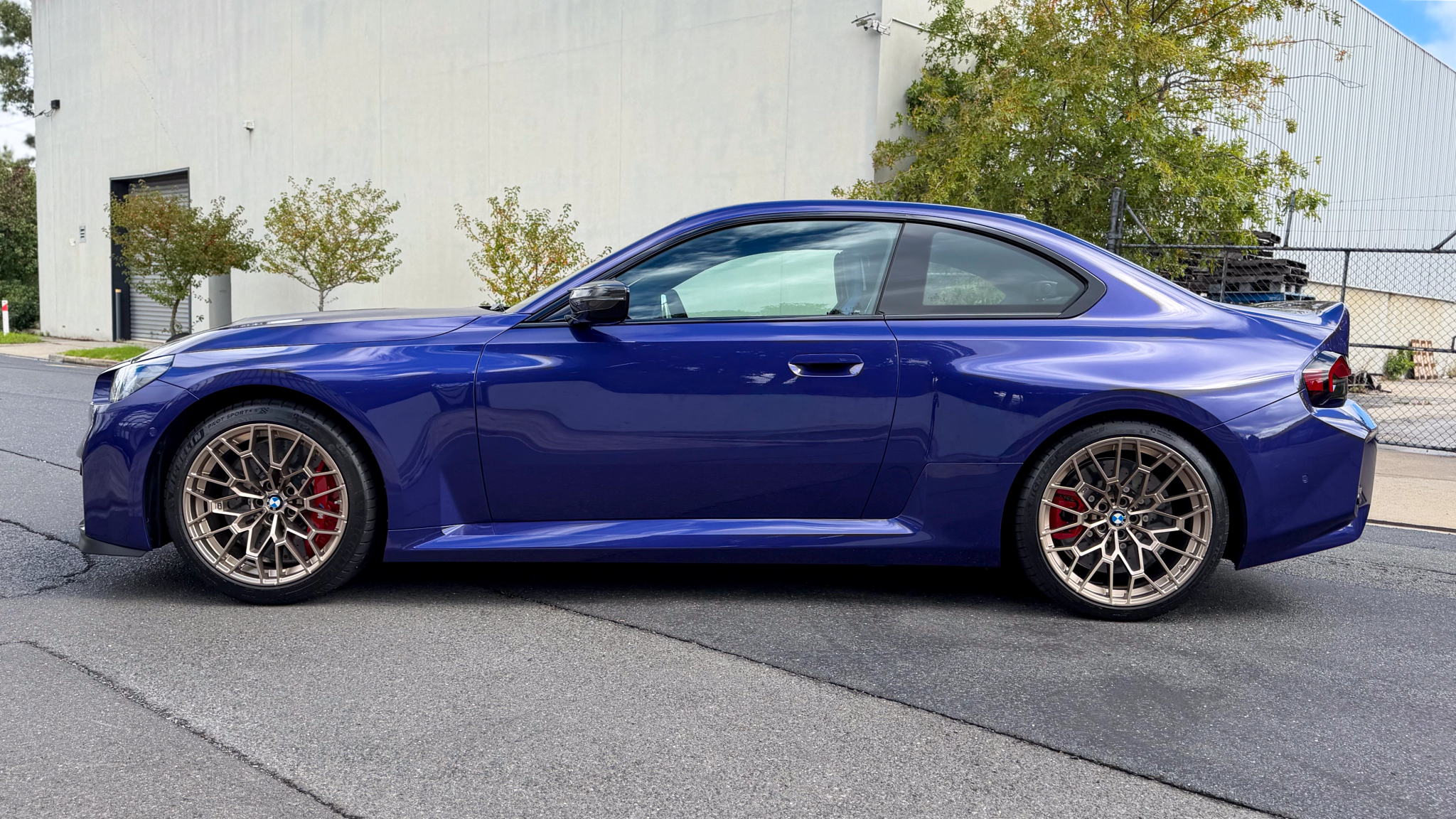
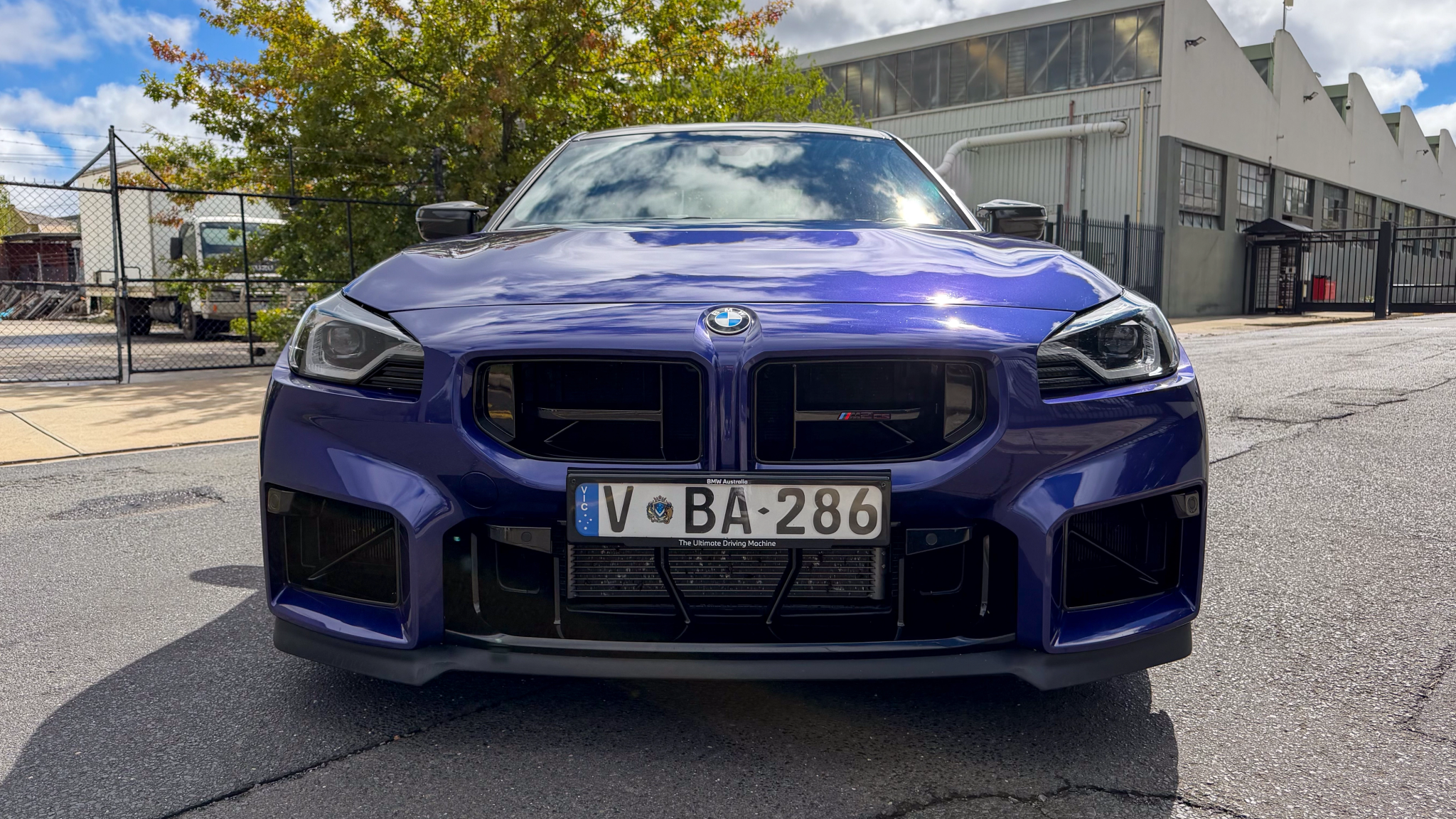
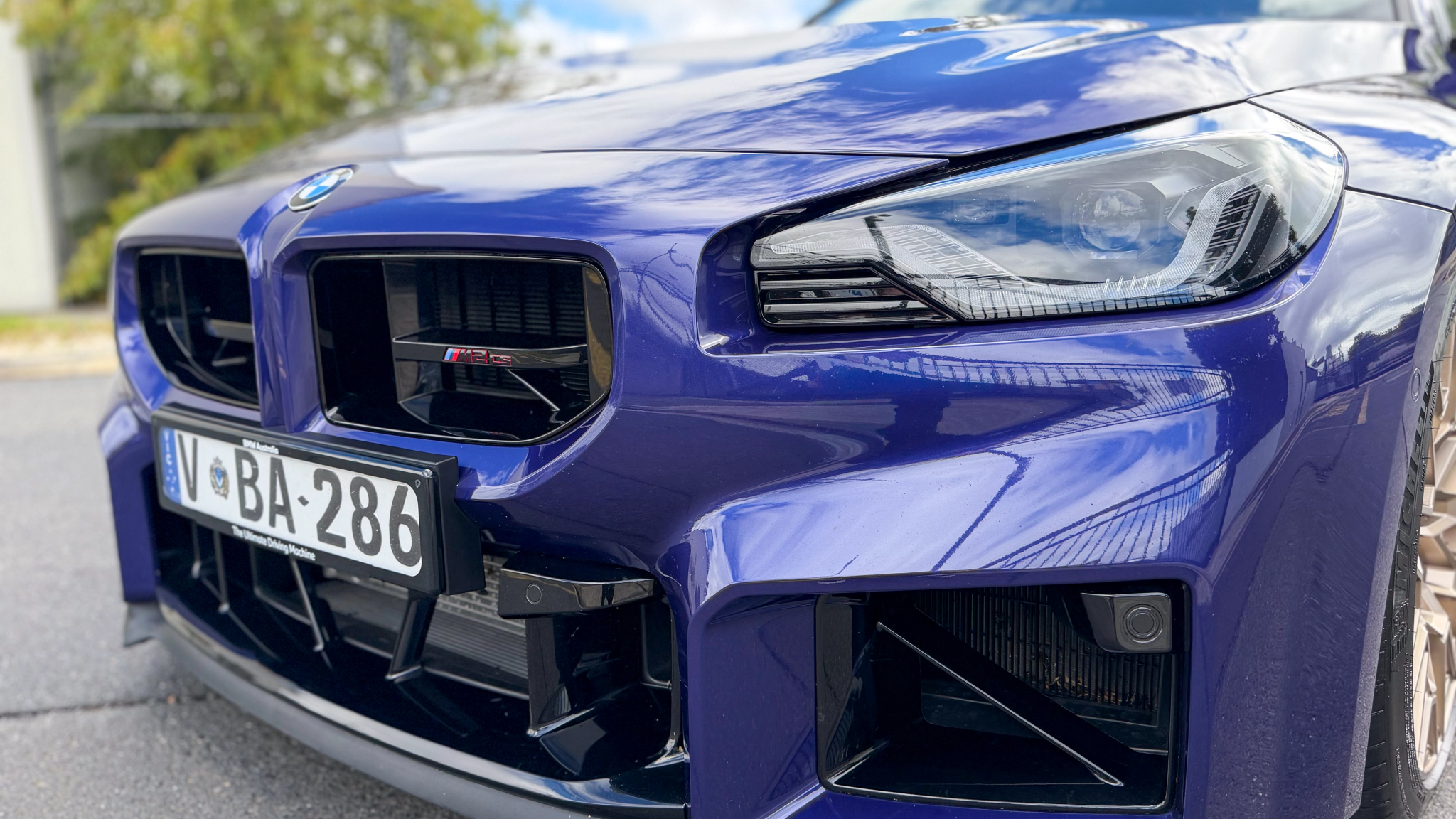
The G87 M2 was always a divisive shape. Boxy guards, heavy front end, slab-sided proportions. The CS doesn't soften any of that. If anything, it leans into the aggression and pulls it off.
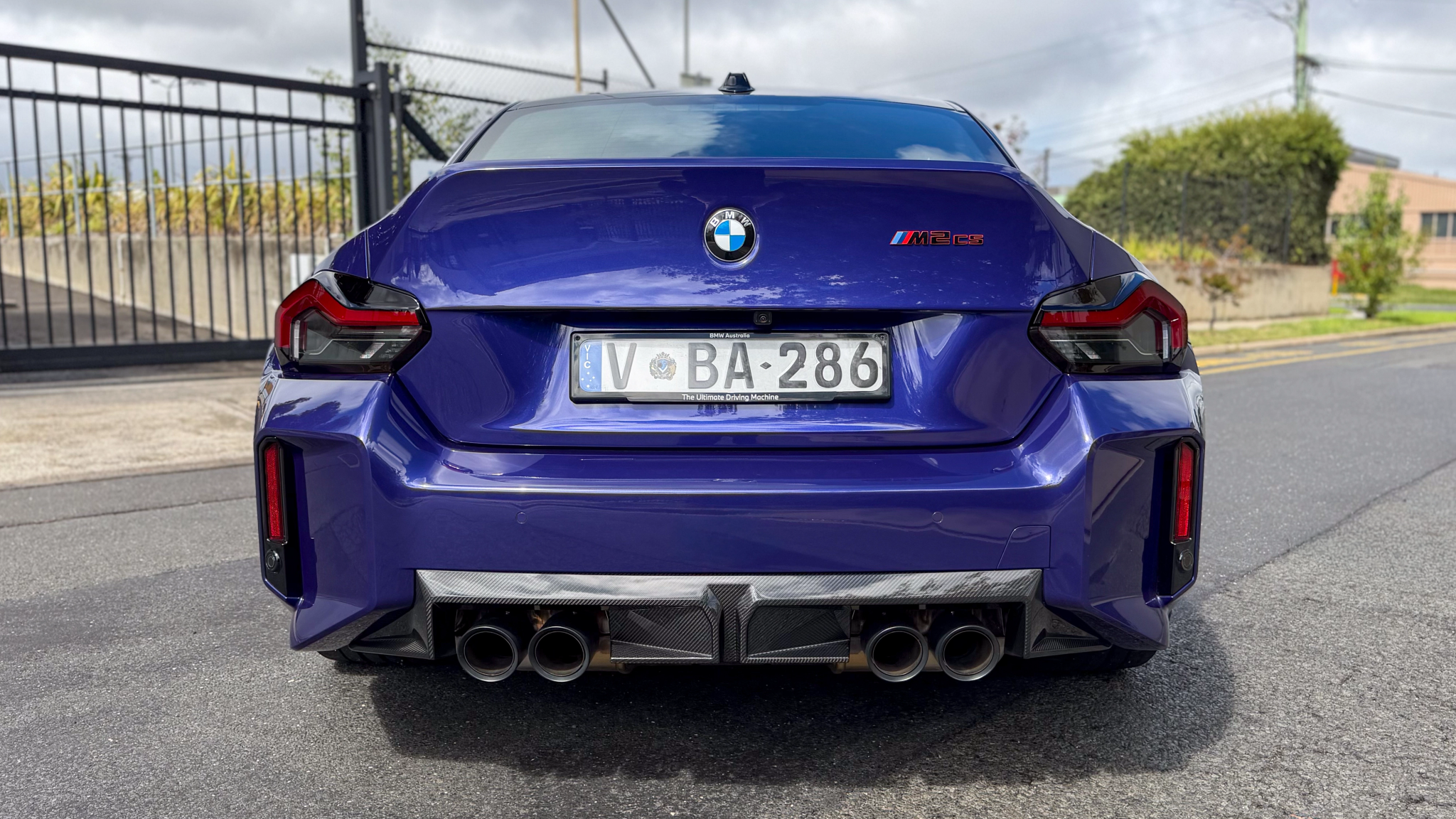
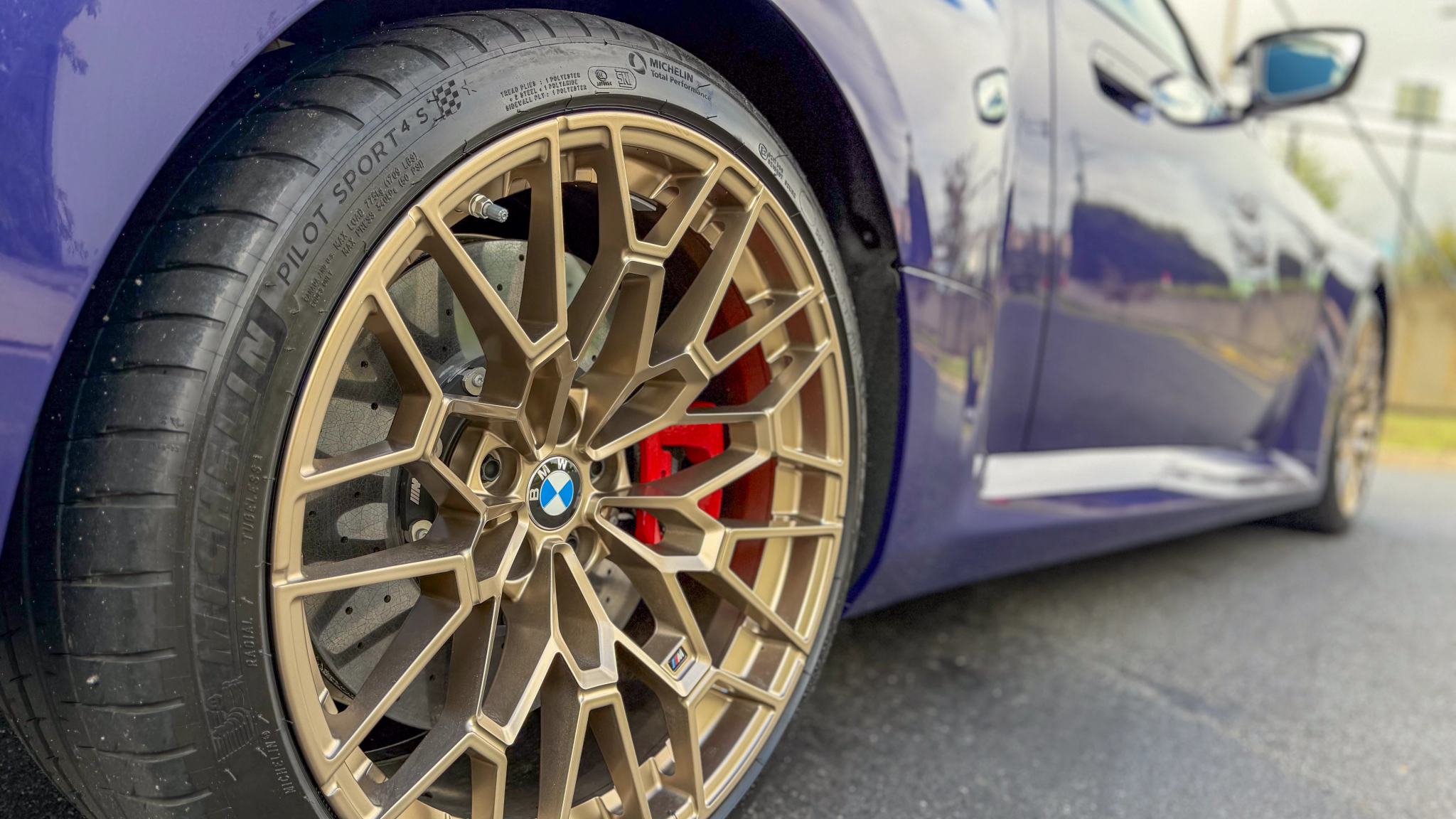
The standouts are the carbon fibre bonnet and roof, the integrated ducktail spoiler on the carbon bootlid, blacked-out kidney grilles outlined in red, and a quartet of titanium exhaust tips poking through a carbon rear diffuser. Sitting 8mm lower than the regular M2, on a staggered set of 19-inch front and 20-inch rear alloys in gold bronze, the stance is properly purposeful.
Four colours are offered: BMW Individual Velvet Blue metallic, Black Sapphire metallic, M Brooklyn Grey metallic and M Portimao Blue metallic. The Sapphire Black with gold wheels combo is the standout, evoking the JPS-era BMW touring cars without the cigarette baggage.
What is the BMW M2 CS like inside?
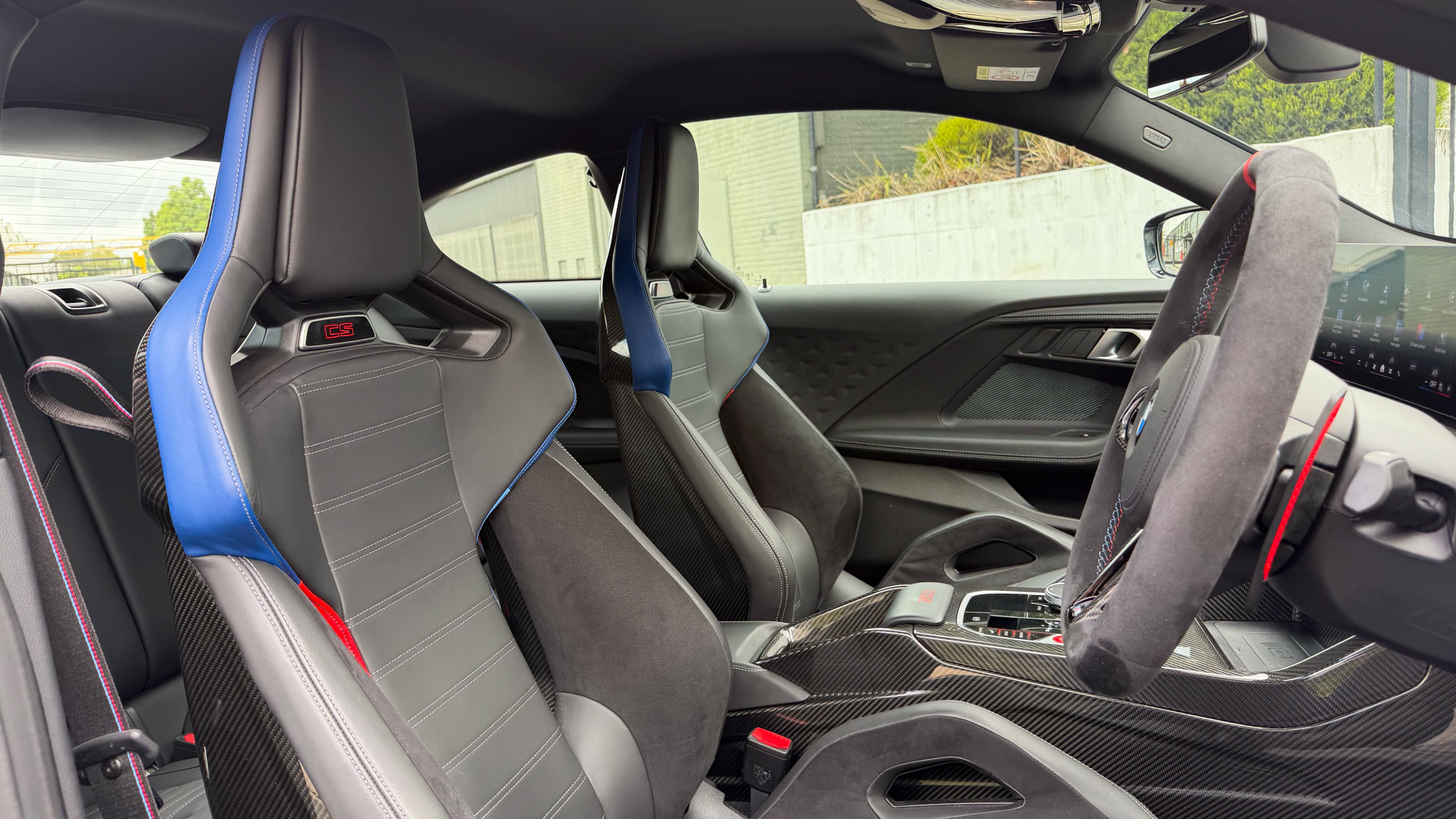
The cabin is where the CS earns part of its premium. M Carbon bucket seats, ordinarily a $9,231 option on the standard M2, come fitted as standard here. They're snug, properly bolstered, and feature illuminated CS logos in the backrests. The trade-off is access. If you're broad through the shoulders or wider through the hips, climbing in takes some practice.
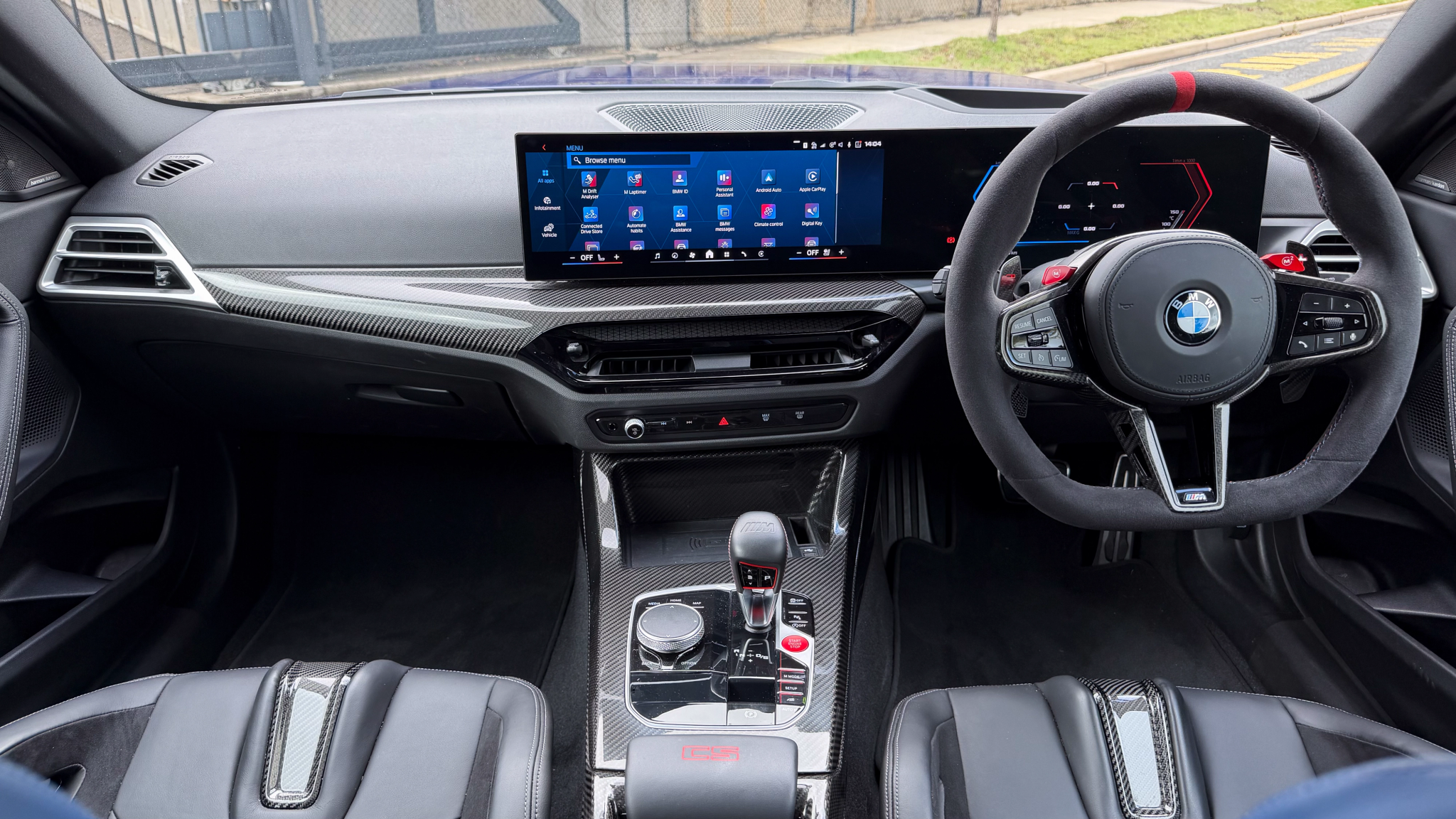
The Alcantara M steering wheel with red 12 o'clock marker is standard. So is the carbon centre console, which replaces the regular M2's centre bin entirely, and entry sill plates with M2 CS lettering. Light-up CS badging in the doors is a nice touch you only really notice at night.
The rest is familiar BMW M territory. A 14.9-inch curved touchscreen running BMW Operating System 8.5, a 12.3-inch digital instrument cluster, head-up display, wireless Apple CarPlay and Android Auto, a Harman Kardon sound system, and tri-zone climate control. The red M memory buttons on the wheel let you flick between two saved driving modes, which is the fastest way to switch from road to track without diving into menus.
Build quality is exactly what you'd expect from a German performance coupe at this price. Tight, considered, slightly cold. The lack of a centre armrest is a daily annoyance, and the steering wheel is thick enough that smaller hands will struggle.
How practical is the BMW M2 CS?
Realistic answer: it isn't.
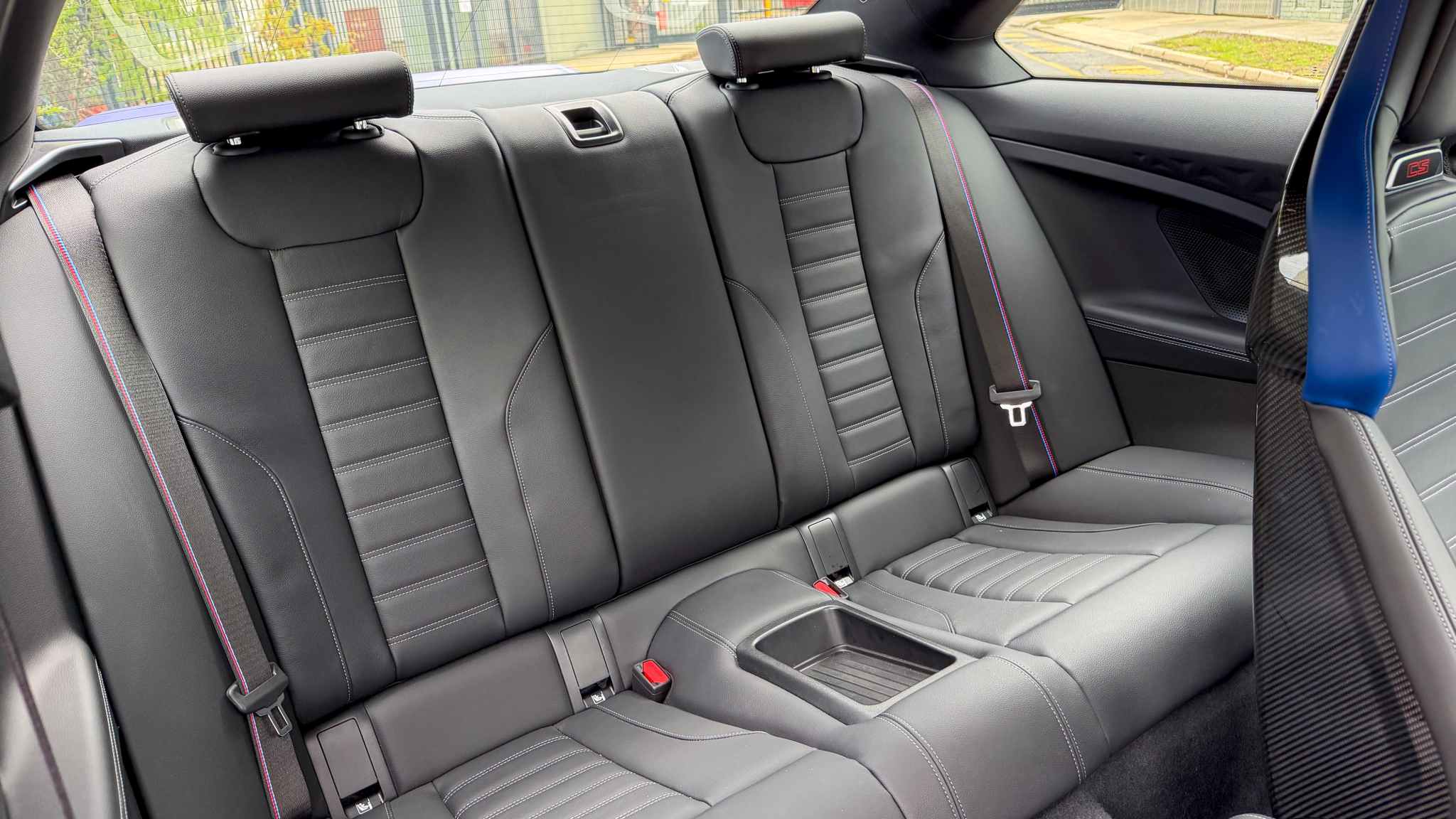
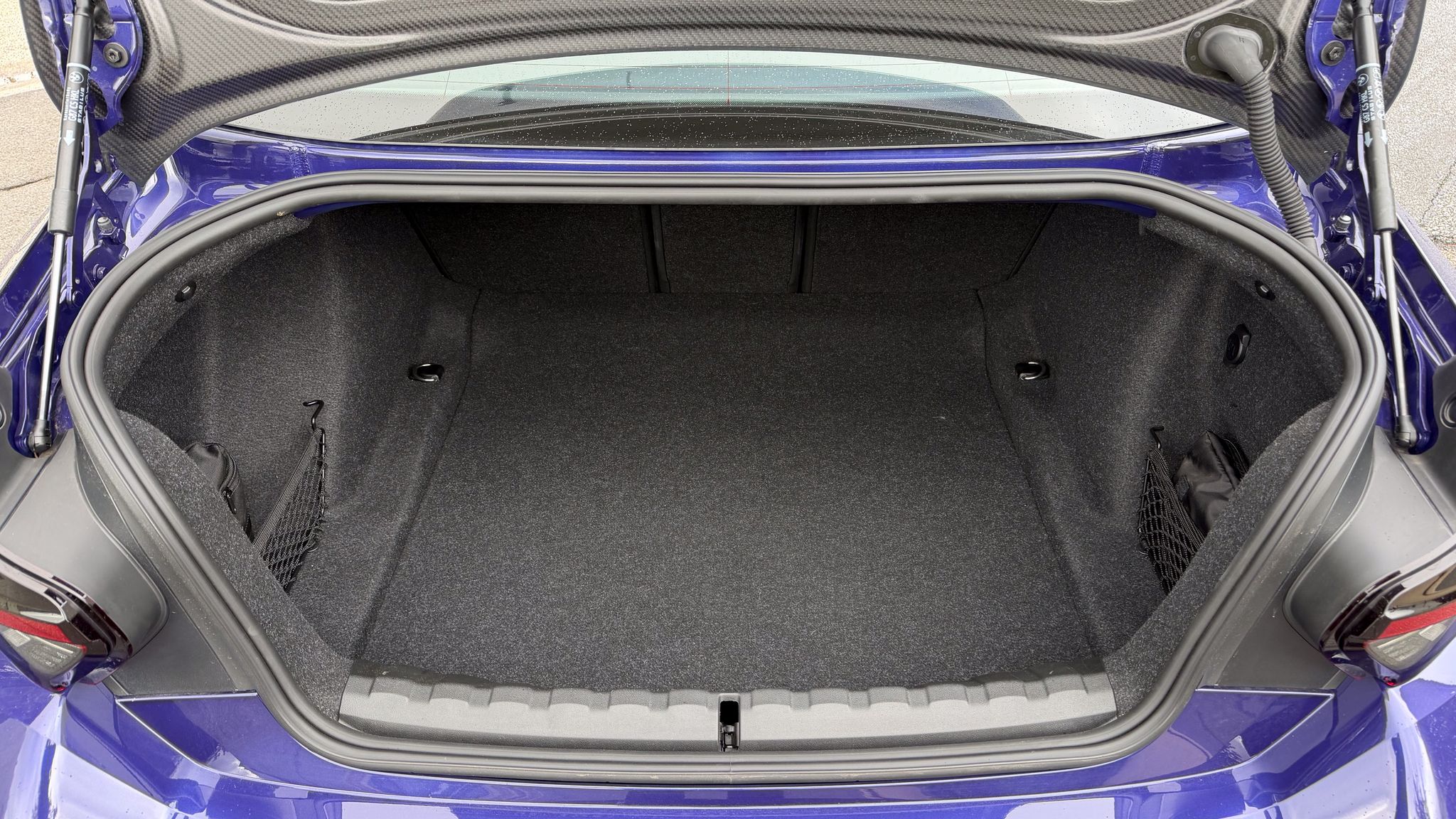
The boot measures 390 litres, which is reasonable for a small coupe and comfortably swallows a weekend bag for two. The back seats are token. Adults will not enjoy time spent there. Children up to primary-school age will be fine for short trips.
There's no front centre bin, only a small carbon shelf where cubbies usually live, so phone storage is via the wireless charging pad and not much else. Cupholders are small. Door pockets are narrow. This is a coupe built around the driver and everything else is an afterthought.
What is the BMW M2 CS like to drive?
This is where the CS justifies its existence.
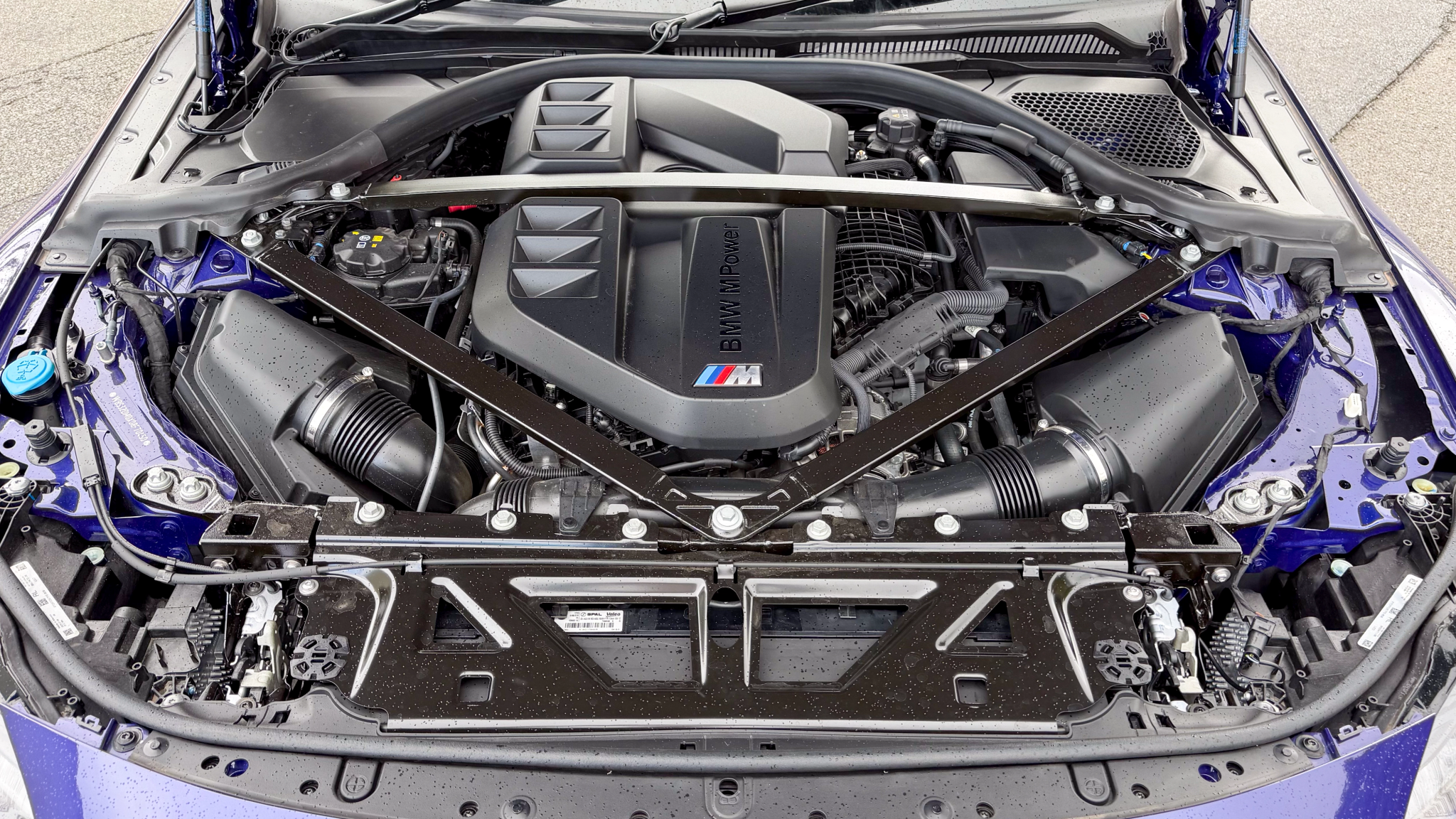
Twist the wheel-mounted starter and the S58 3.0-litre twin-turbo straight-six clears its throat with a baritone idle that immediately sets it apart from the regular M2. Power is up to 390kW at 6250rpm with 650Nm from 2750 to 5730rpm, matching the bigger M3 Competition sedan.
Zero to 100km/h takes 3.8 seconds. The 0 to 200km/h sprint takes 11.4 seconds. Top speed is 302km/h. And it feels every bit of that.
The first surprise is how liveable the CS is in normal driving. Adaptive dampers in Comfort take the edge off patchy tarmac, the eight-speed ZF auto is smooth in traffic, and the exhaust valve keeps the neighbours onside. It's not a car that punishes you for daily-driving it.
Lean on the throttle and it sharpens immediately. The S58 builds urgency through the mid-range with a clean, hard top end. Power delivery isn't violent. It's relentless. The ZF shifts so quickly under full throttle it feels like a dual-clutch, yet it stays civilised at parking speeds.
Find a proper road and the CS reveals what it's for. The chassis is taut without being brittle. Steering is heavily weighted in Sport Plus but communicative and the front end bites hard enough to let you adjust your line mid-corner. The electronic limited-slip diff and 10-stage M Traction Control let you run the rear progressively without the car snapping on you.
What separates it from the bigger CS models is character. The M3 CS Touring and M4 CS are quicker and more composed thanks to all-wheel drive. The M2 CS is rear-wheel drive only, has a shorter wheelbase and weighs just 1,700kg. It moves around more under power. It feels alive in a way the bigger cars don't.
Clean and precise when you ask it to be. Completely unhinged when you don't. This is the most engaging M car on sale right now. Full stop.
How efficient is the BMW M2 CS?
BMW claims 10.0L/100km combined for the CS, slightly up on the standard automatic M2 at 9.7L/100km. Real-world figures depend entirely on what you're doing. Sit on the highway and mid-tens are achievable. Use the engine the way it was designed to be used and the trip computer climbs quickly.
The 52-litre fuel tank demands 95 RON unleaded at minimum. Annual servicing is condition-based, with intervals typically falling at 12 months or 20,000km. A five-year, 80,000km capped-price service package costs $3,584 total, averaging $716.80 per year, which is reasonable for a high-performance coupe.
Warranty is five years and unlimited kilometres with three years of roadside assistance.
Is the BMW M2 CS safe?
There's no ANCAP rating specific to the M2 CS, but the broader 2 Series Coupe range carries a four-star Euro NCAP score. Standard safety kit includes autonomous emergency braking, lane departure warning, lane-keep assist, blind-spot monitoring, rear cross-traffic alert, active cruise control with stop and go, and a parking assistant. Front and side airbags are joined by full-length curtain airbags.
It's not a safety leader by any measure, but the active systems work without being intrusive, and the structural side is exactly what you'd expect from a recent BMW coupe.
What are the main competitors to the BMW M2 CS?
The standard BMW M2 is the elephant in the room. The standard car delivers 90% of the CS experience, still offers a manual and saves you $44,800. For road-only drivers, it's the smarter buy.
The BMW M3 Competition xDrive is only $14,000 more than the CS and brings four doors, all-wheel drive and a back seat that adults can actually use. It's quicker point-to-point but lacks the M2 CS's edge.
The Audi RS3 sedan is the more affordable five-cylinder alternative with similar straight-line pace and a more usable cabin, but it can't match the BMW for chassis feel or driver involvement.
The Lotus Emira is the theatrical mid-engined option for buyers who want their performance car to feel exotic. It's slower than the CS, less practical and harder to live with daily, but it's the one with genuine showstopper appeal.
Should I buy the BMW M2 CS?
If you want the most engaging car BMW’s M division currently makes, yes. The M2 CS does what a great M car should do. It rewards skill, it punishes laziness and it feels properly alive in a way that very few modern performance cars manage.
The catch is price. At $172,900 before on-roads, the CS sits a single rounding error away from M3 territory, and the standard M2 already delivers most of what makes the CS special. If you're a road-only driver, save the $44,800 and enjoy the manual.
But if you spend real time at racetracks or you simply want the sharpest, most distilled version of the current M2 formula, the CS earns the premium. It's one of the best BMWs in years.
Ready to buy the BMW M2? Compare real prices and find the best deal.
VerdictThe Beep Verdict
Rob Leigh
Co-founder & Director
Rob Leigh is Co-founder and Director of The Beep based in Melbourne, Australia. He has 15+ years inside a major automotive OEM, specialising in product planning, pricing and vehicle strategy.
About Author