2026 Toyota HiLux BEV review
Toyota has built a genuinely convincing electric ute, then priced it high, capped its range and pointed it straight at fleets, which leaves most tradies and private buyers out in the cold.

Rob Leigh
Pros
- Drives like a proper HiLux, only smoother and quieter
- Genuinely capable off-road with six-mode terrain select
- Five-star ANCAP and the usual Toyota toughness
Cons
- Range nowhere near enough for most real ute work
- Firm ride makes it hard work around town
- The power outlet lives in the console, not the tray
Our verdict
The HiLux BEV is the best-engineered electric ute on sale in Australia, and also one of the hardest to recommend. It makes real sense as a fleet tool for mines, councils and businesses running fixed routes that plug in every night. For almost everyone else, the 315km NEDC range and firm ride mean the diesel is still the smarter buy, and the BEV costs a lot more for the privilege.
What does the HiLux BEV cost in Australia?
Toyota is not shy about where this thing sits. At $74,990 before on-road costs for the entry SR cab-chassis, the HiLux BEV is the most expensive HiLux ever sold here, and it climbs from there. That is $17,000 to $18,000 more than the equivalent diesel double cab, which is a serious premium to pay for the pleasure of plugging in.
| Specifications | SR cab-chassis | SR pick-up | SR5 pick-up |
| Price excluding on-roads | $74,990 | $76,490 | $82,990 |
| Powertrain | Electric | Electric | Electric |
| Power | Torque | 144kW | 468Nm | 144kW | 468Nm | 144kW | 468Nm |
| Transmission | 1 speed | 1 speed | 1 speed |
| Drivetrain | AWD | AWD | AWD |
| Electric range (NEDC) | 245km | 315km | 315km |
| Battery | DC charging | 59.2kWh | 150kW | 59.2kWh | 150kW | 59.2kWh | 150kW |
| Braked towing | 2000kg | 2000kg | 2000kg |
| ANCAP | Five stars (2025) | Five stars (2025) | Five stars (2025) |
| Warranty | 5 years | Unlimited km | 5 years | Unlimited km | 5 years | Unlimited km |
View HiLux BEV drive away pricing and specifications →
You only get two grades, SR and SR5, both dual-motor all-wheel drive and both riding on a 59.2kWh lithium-ion battery. Premium paint is a $675 option, and the colour palette is deliberately dull, with Glacier White, Frosted White and Ash Slate the only choices. That is not an oversight. It is a fleet car, and fleets order white.
On value, the maths only works if you think in total cost of ownership rather than sticker price. Cheap electrons, no fuel bill and low scheduled maintenance can chip away at that gap over a few years of heavy use. Buy one with your own money for weekend duty and the sums never quite land.
What does the HiLux BEV look like?
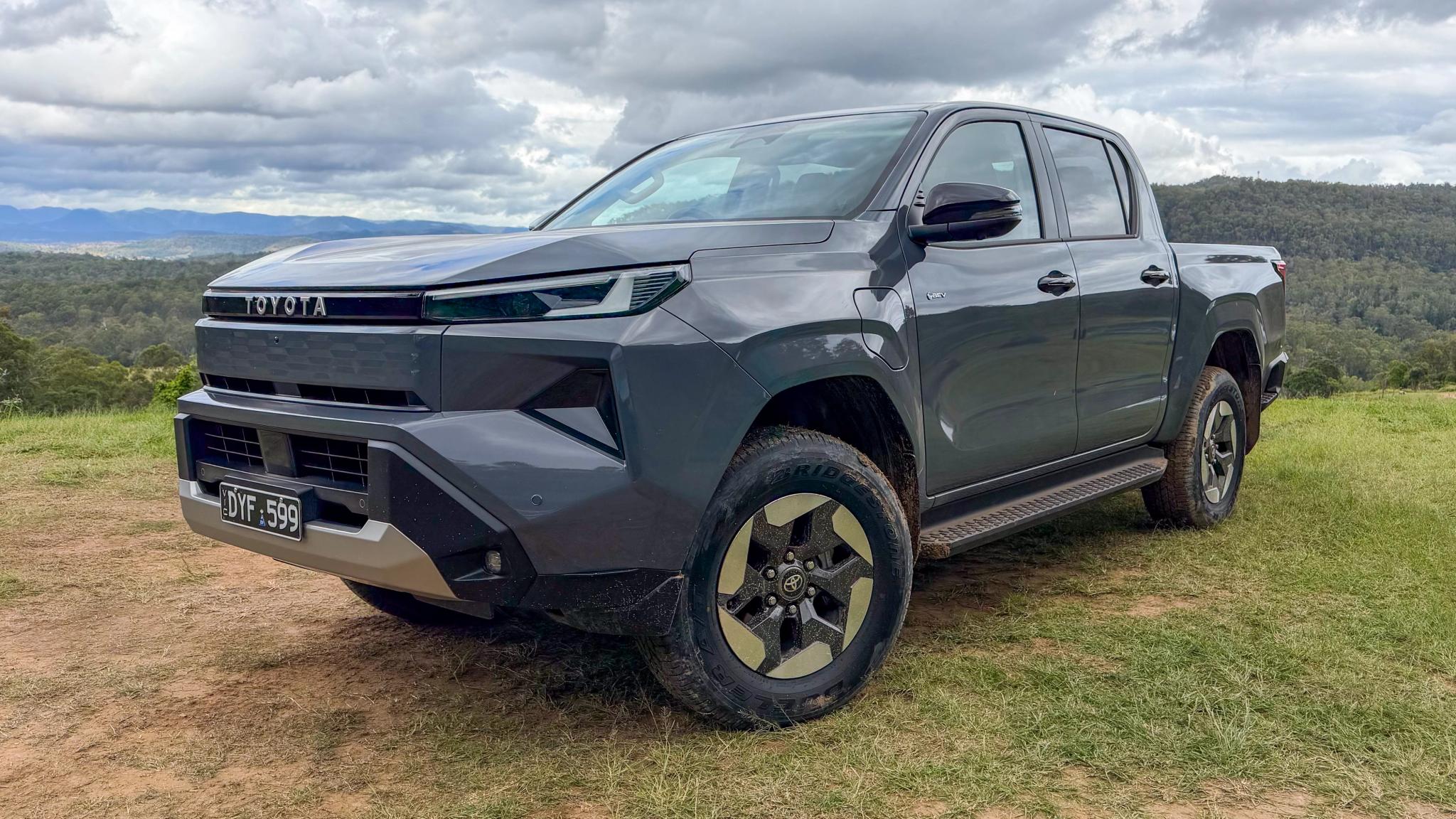
If you were expecting Toyota to shout about the electric bit, you will be disappointed, and that is a good thing.
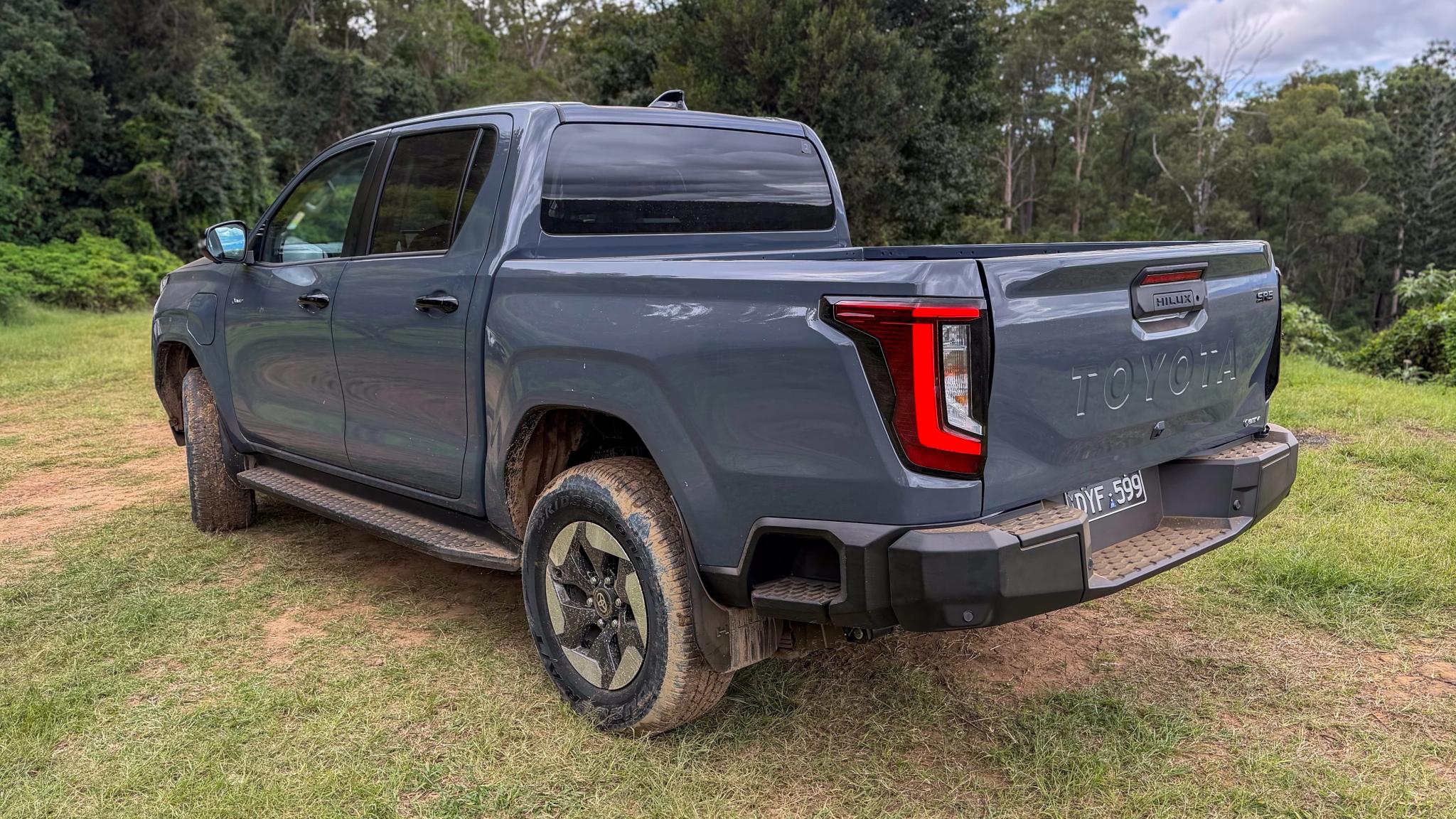
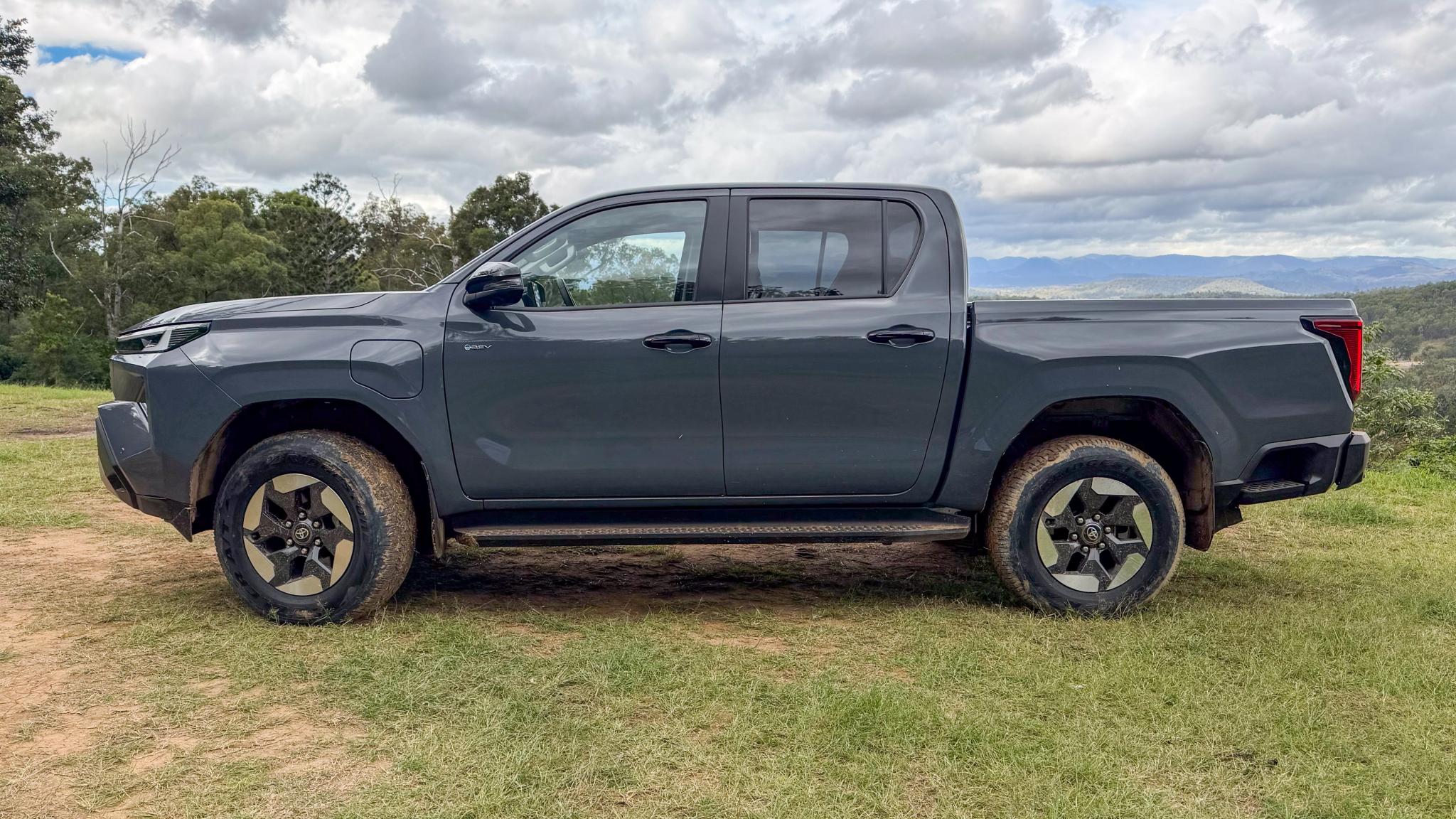
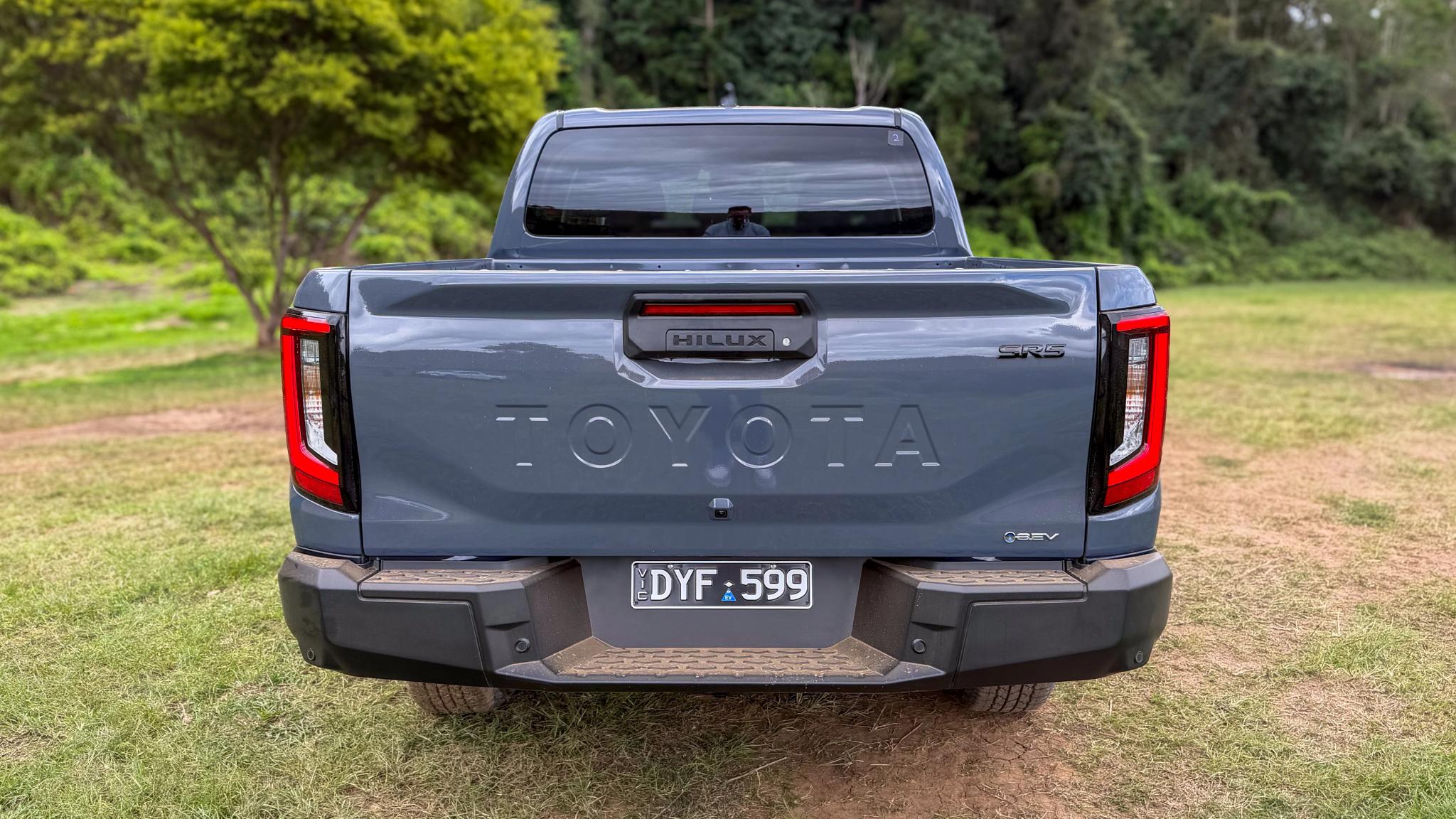
The BEV wears the same tough new-generation HiLux body as everything else in the range, with only a solid front grille, a charging flap on the front passenger side and a set of aero-tuned 17-inch alloys to give the game away.
Park it next to a diesel SR5 in a car park and most people would not pick the difference.
It looks purposeful rather than fashionable, which suits it. There is no attempt to dress this up as a lifestyle statement or a rolling tech demo. It is a work truck that happens to run on batteries, and it is honest about it.
What is the HiLux BEV like inside?
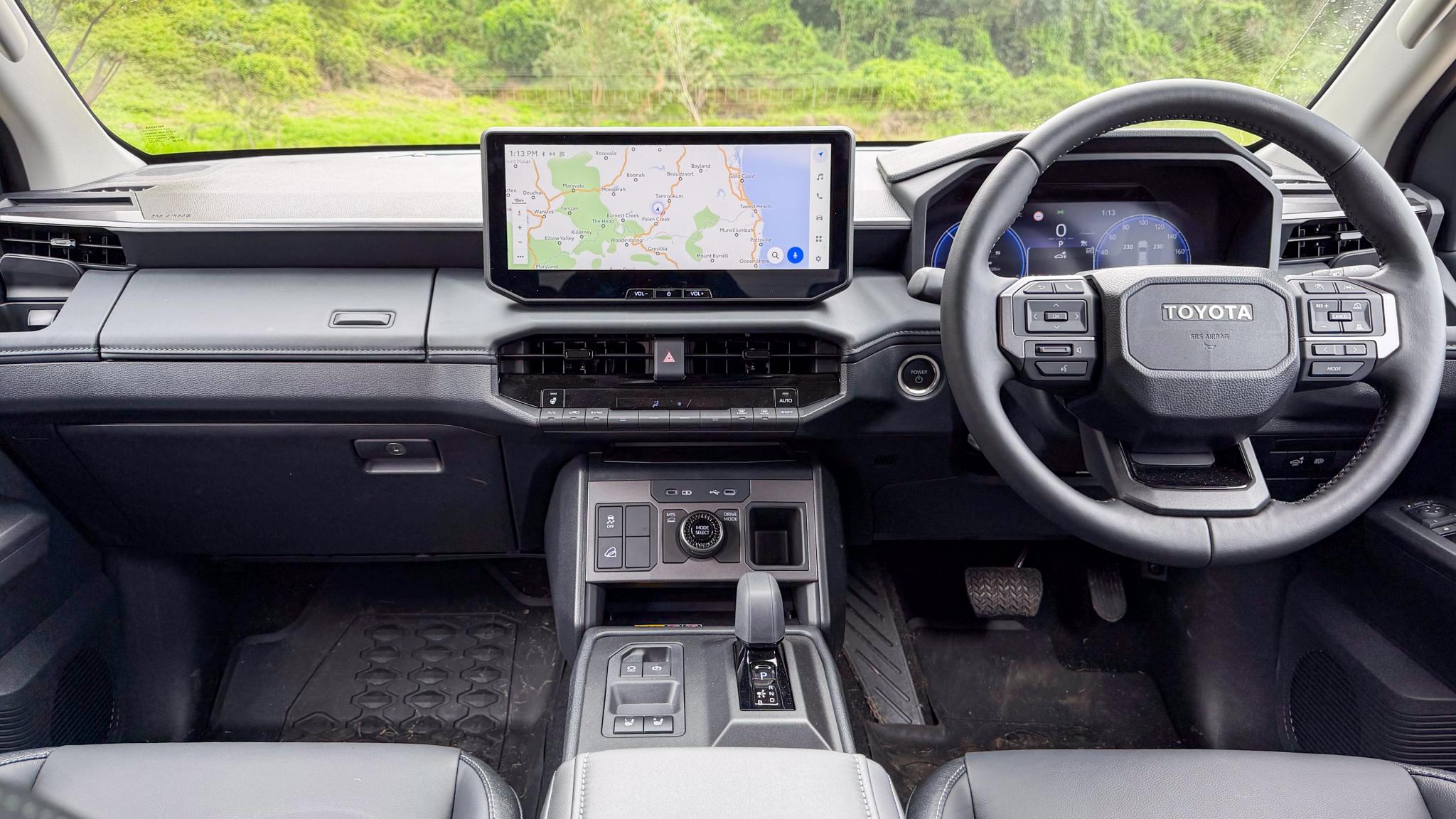
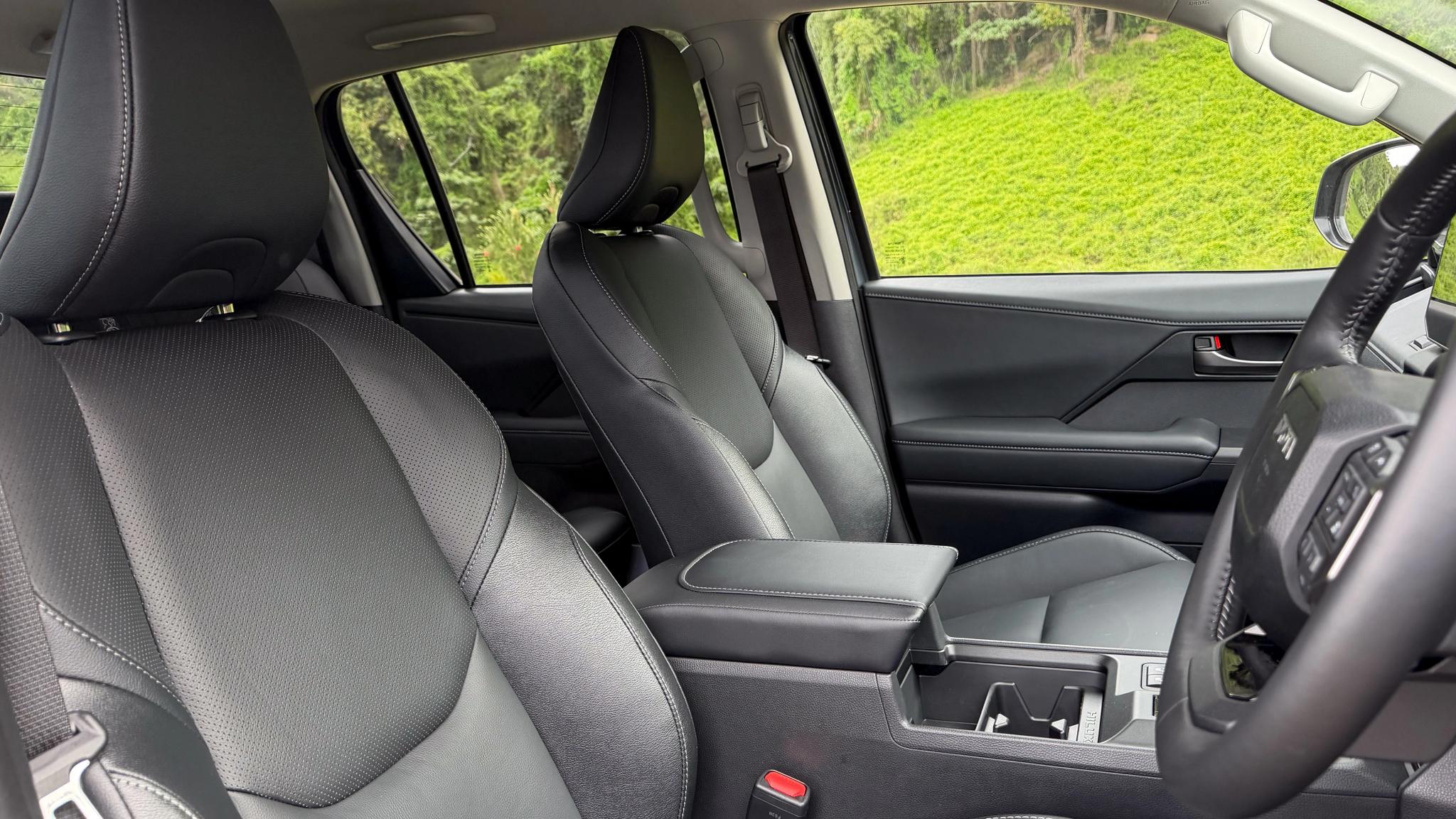
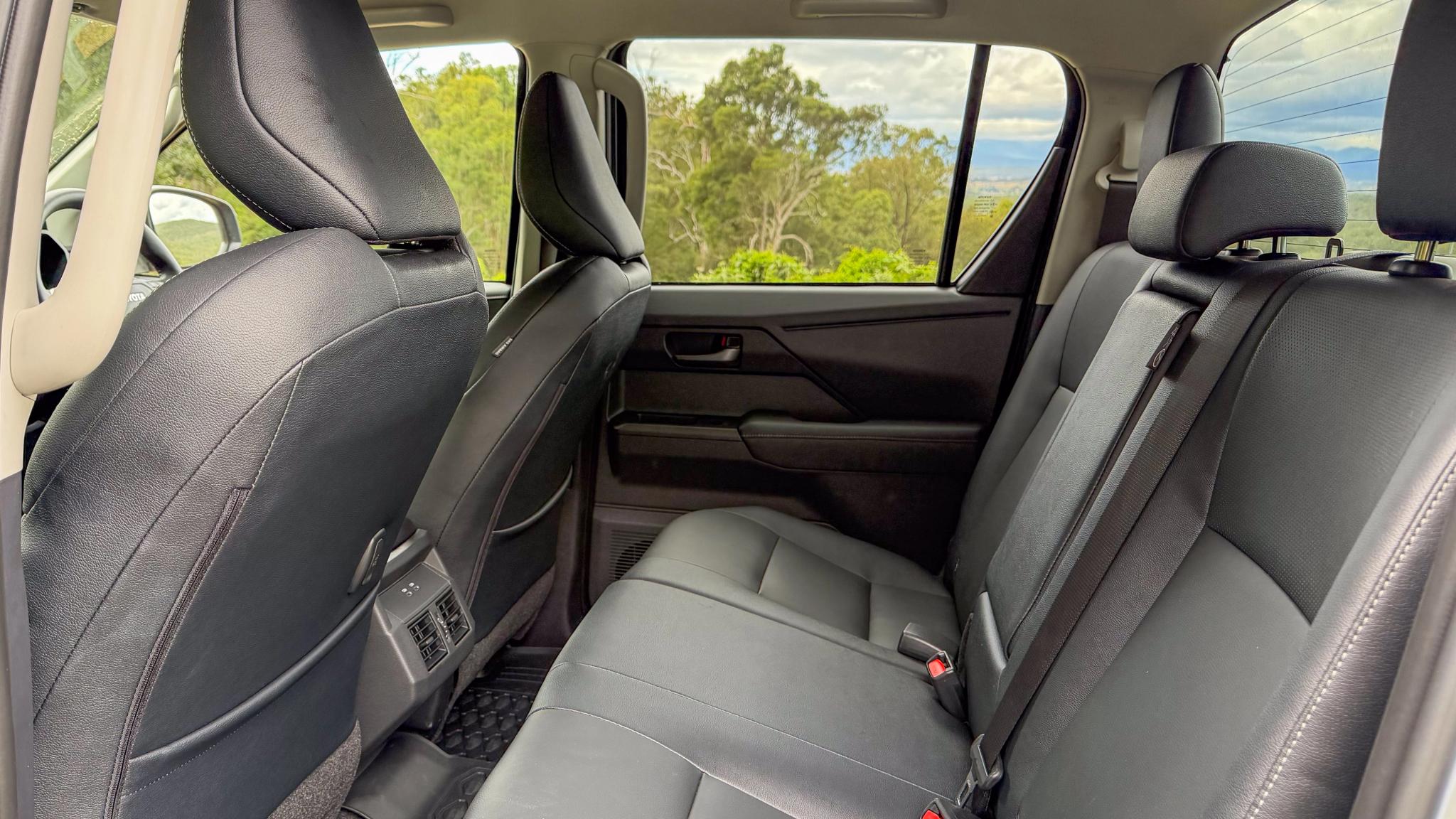
The cabin follows the same script. Basic but functional is the fairest summary, and for the intended buyer that is a feature, not a flaw.
You sit in front of a new 12.3-inch digital instrument cluster with EV-specific readouts, and Toyota has swapped in a fresh electronic shifter for the shift-by-wire system, moved closer to the driver so it falls naturally to hand.
There is none of the software-first faffing that plagues a lot of electric cars.
Climate controls are physical, the layout is logical, and everything is where a HiLux driver would expect it. Materials are hard-wearing rather than plush, which is exactly right for a vehicle destined to spend its life carrying gear and grime.
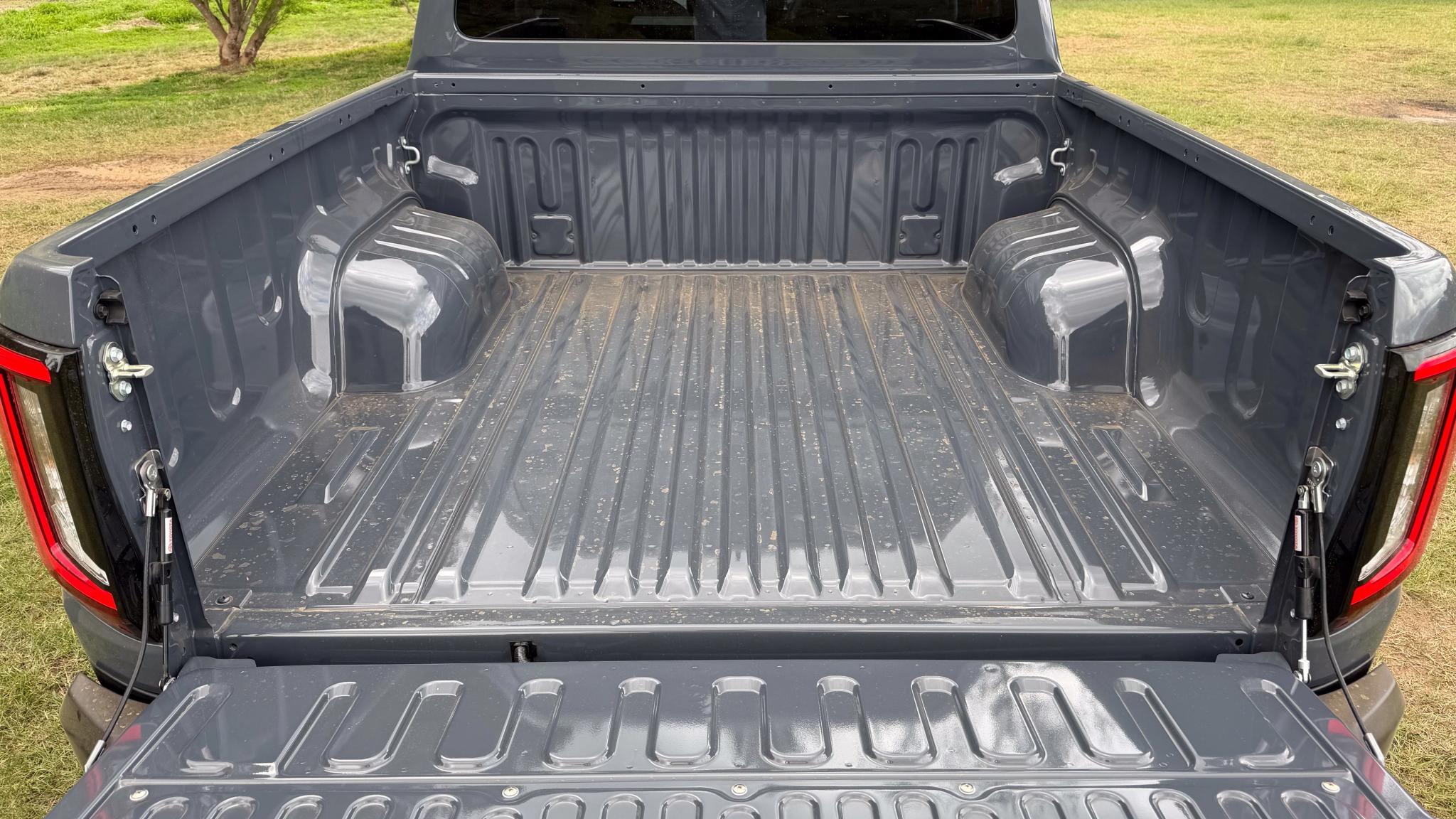
One genuine misstep: the three-pin AC outlet lives in the centre console, fed by a 220V/1500W inverter, rather than in the tray. For a truck pitched at trades and site work, a powered tray would have been an obvious win. Toyota missed it so there will a lot of aftermarket work going on in this space.
How practical is the HiLux BEV?
This is where the electric conversion starts costing you. The BEV keeps the full dual-cab body, a proper tray and, sensibly, a full-size spare tyre, so day-to-day it behaves like a HiLux.
But the numbers have shrunk. Braked towing drops to 2000kg across the range, well down on the 3500kg the diesel manages, and payload tops out at 725kg on the pick-up (855kg for the cab-chassis), which is also short of the load-lugging diesels.
For a mine or council fleet hauling crew and light gear around a site, those figures are fine. For a tradie who tows a plant trailer or a caravan on the weekend, the 2000kg limit is a hard stop.
This is the recurring theme with the HiLux BEV: capable enough for controlled fleet use, compromised the moment you ask it to do everything a diesel ute does.
What is the HiLux BEV like to drive?
It is the most effortless HiLux you can drive and it took me all of about five minutes to feel completely at home in it.
Toyota's approach was refreshingly simple: take the HiLux, electrify it, and make sure it still drives like a HiLux. Job done.
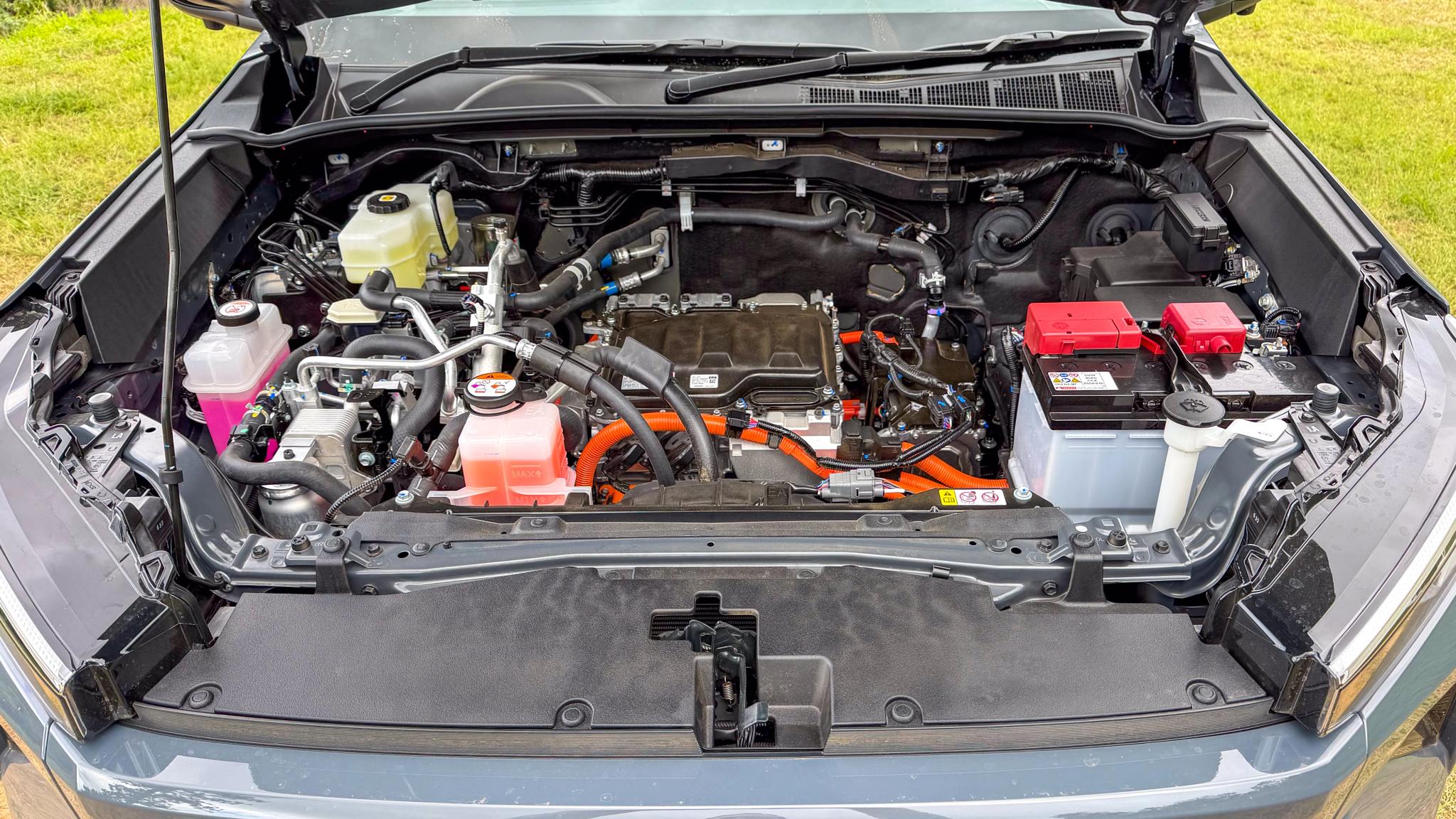
The 144kW dual-motor setup, made up of an 82.2kW front motor and a 129.3kW rear, delivers a clean, quiet shove off the line. There is no drama and no theatre. It gets up to speed with the easy shove you want from an electric drivetrain, then settles.
This is calibrated for a day's work, not for lighting up a drag strip, and it is better for it. Around town the silence and instant response make it easy.
Off-road it is the real deal. A full-time AWD system can send anywhere from 100 per cent of torque to the front axle to 100 per cent to the rear, and there is a six-mode Multi-Terrain Select setup, a first for a Toyota BEV, with Auto, Dirt, Sand, Mud, Mogul and Snow settings. It clambers over rough stuff with the sure-footedness you would hope for from a Toyota with a chassis frame under it.
The catch is the ride. It is firm, firmer than I expected, and the body can shimmy and judder over patchy surfaces in a way the smooth powertrain only makes more obvious. On a rutted track that hardly matters. On a pockmarked suburban road it does, and it takes some of the shine off the BEV as an easygoing daily. You would think the battery weight might have calmed things down. It has not.
How efficient is the HiLux BEV?
The headline is the range and it is the headline for the wrong reasons. Toyota quotes 315km on the NEDC cycle for the pick-up and 245km for the SR cab-chassis, and NEDC is an optimistic old yardstick.
In the real world, plan on low-to-mid 200s for the pick-up, and less if you are loaded or on the highway. That is fine for a vehicle that returns to a depot each night. It is nowhere near enough for long hauls or remote work.
Charging is at least quick when you find a decent plug. A 150kW DC charger will take it from 10 to 80 per cent in about half an hour, while a full AC top-up runs to roughly 6.5 hours, which is an overnight job. That charging profile is exactly why this is a fleet vehicle: back to base, plug in, ready by morning.
Servicing pricing had not been confirmed at launch, but running costs should be a strong point given the low electricity bill and reduced mechanical wear.
Warranty is where Toyota does the heavy lifting. You get the standard five-year, unlimited-kilometre cover, a five-year battery warranty that extends to ten with an annual Traction Battery Health Check, and a separate eight-year, 160,000km guarantee that the battery will not drop below 70 per cent capacity. For a fleet buyer weighing up battery risk, that is reassuring.
Is the HiLux BEV safe?
Yes, and it made history doing it. The HiLux BEV is the first electric ute in Australia to score a five-star ANCAP rating, tested under the outgoing 2023 to 2025 protocols.
It scored 84% for adult occupant protection, 89% for child occupant protection, and 82% for both vulnerable road user protection and safety assist.
Getting there took extra work, with ANCAP running specific checks on battery integrity and high-voltage safety in severe crashes, which the body-on-frame design, thicker rails and extra crossmembers are built to handle.
The usual suite of active safety kit is present and correct, so on this front there are no asterisks.
What are the main competitors to the HiLux BEV?
The diesel HiLux is the elephant in the room and the BEV's biggest rival. It is roughly $20,000 cheaper, tows 3500kg, refuels in minutes anywhere in the country and carries more. Unless zero tailpipe emissions is a hard requirement, it out-argues the electric version for the vast majority of buyers.
The Ford Ranger PHEV is the smarter electrified pick for most people who actually want a plug. It keeps a proper towing figure, adds electric-only running for (very) short trips, and never leaves you hunting for a charger on a long drive. For private buyers flirting with electrification, it makes far more sense than a pure BEV.
The BYD Shark 6 has rewritten the ute rulebook on price, pairing a plug-in hybrid drivetrain with sharp value and strong sales. It is not the hardcore off-road tool the HiLux is, but for suburban and light-duty buyers it delivers most of the electric appeal for a lot less money.
The KGM Musso EV is the other electric ute circling this space, pitched as the budget alternative. From the brand formerly known as SsangYong, it undercuts the Toyota on price but cannot match the HiLux BEV's proven off-road hardware or its five-star safety result.
Should I buy the HiLux BEV?
For most people, no.
If you tow, travel or work away from reliable charging, the range and 2000kg limit rule it out before the firm ride even gets a say, and a private lifestyle buyer will find more range, flexibility and towing elsewhere.
But that misses the point, because this was never built for you. Toyota expects to sell only a few hundred this year, each aimed at a mine, council or corporate fleet with fixed routes, overnight charging and emissions targets. For that buyer it is close to ideal: familiar to drive, tough as ever, cheap to run and warranty-backed against battery worry.
The nearest private buyer who fits is the farmer with overnight solar charging and days spent looping the property rather than hauling long distances, though even then the price bites.
That is the neat trick and the frustration of the HiLux BEV in one. It is a very good electric ute, engineered with real care, built for an audience most of us will never join.
Not the HiLux you want, then. Quite possibly the one your fleet manager has been waiting for.
VerdictThe Beep Verdict
Rob Leigh
Co-founder & Director
Rob Leigh is Co-founder and Director of The Beep based in Melbourne, Australia. He has 15+ years inside a major automotive OEM, specialising in product planning, pricing and vehicle strategy.
About Author