2026 Toyota bZ4X Touring review
An electric Toyota wagon with a 603-litre boot, roof rails rated for the family tent and 280kW of dual-motor shove is a genuinely strange proposition, and a surprisingly convincing one, right up until you look at the price.

Rob Leigh
Pros
- Huge, properly usable boot with a 1500W plug in it
- 280kW makes it seriously quick for a family car
- Rides and steers with real polish
Cons
- Expensive for a Toyota wagon
- Cockpit layout takes serious getting used to
- Performance-only launch means no cheaper, longer-range option
Our verdict
The bZ4X Touring is for the family that wants one car to do school run, campsite and back road, and wants it to be quick. It nails practicality and it drives beautifully. The catch is that Toyota has launched the niche version of a niche car at flagship money, and there is no cheaper variant to soften the blow.
What does the bZ4X Touring cost in Australia?
Toyota lists the Touring at $69,990 before on-road costs, which lands at roughly $76,000 driveaway on The Beep's pricing data. That is a $2,000 premium over the standard bZ4X AWD, and it makes the Touring the flagship of the range by some margin.
| Specifications | 2WD | AWD | Touring AWD (tested) |
| Price excluding on-roads | $55,990 | $67,990 | $69,990 |
| Powertrain | Electric | Electric | Electric |
| Power | Torque | 165kW | 268.6Nm | 252kW | 438.4Nm | 280kW | - |
| Transmission | 1 speed | 1 speed | 1 speed |
| Drivetrain | FWD | AWD | AWD |
| 0-100km/h | 7.4 sec | 5.1 sec | 4.5 sec |
| Electric range (claimed) | 591km | 517km | 488km |
| Battery | DC charging | 74.7kWh | 150kW | 74.7kWh | 150kW | 74.7kWh | 150kW |
| Braked towing | 750kg | 1500kg | 1500kg |
| ANCAP | Five stars (2025) | Five stars (2025) | Five stars (2025) |
| Warranty | 5 years | Unlimited km | 5 years | Unlimited km | 5 years | Unlimited km |
See Toyota bZ4X driveaway pricing and specifications →
If you don't need the wagon body, the standard bZ4X SUV starts $14,000 lower and goes more than 100km further on a charge in 2WD form. Read our full bZ4X review.
Metallic and pearlescent paint adds $575 and there are six colours including the new Daylight Bronze. Buyers can also choose between a Chargefox voucher (12 months or 625kWh, whichever comes first) or a complimentary 7kW home charger, though installation is on you.
Here is the problem. Seventy-six grand driveaway buys you a lot of electric SUV in 2026, and a wagon body with a slightly higher roofline is a small reason to pay it. Toyota has skipped the single-motor, longer-range Touring sold in Europe, which is the version that would have made the value case. Australia gets the fast one or nothing.
What does the bZ4X Touring look like?
Better. Much better, in fact, than the crossover SUV it is based on.
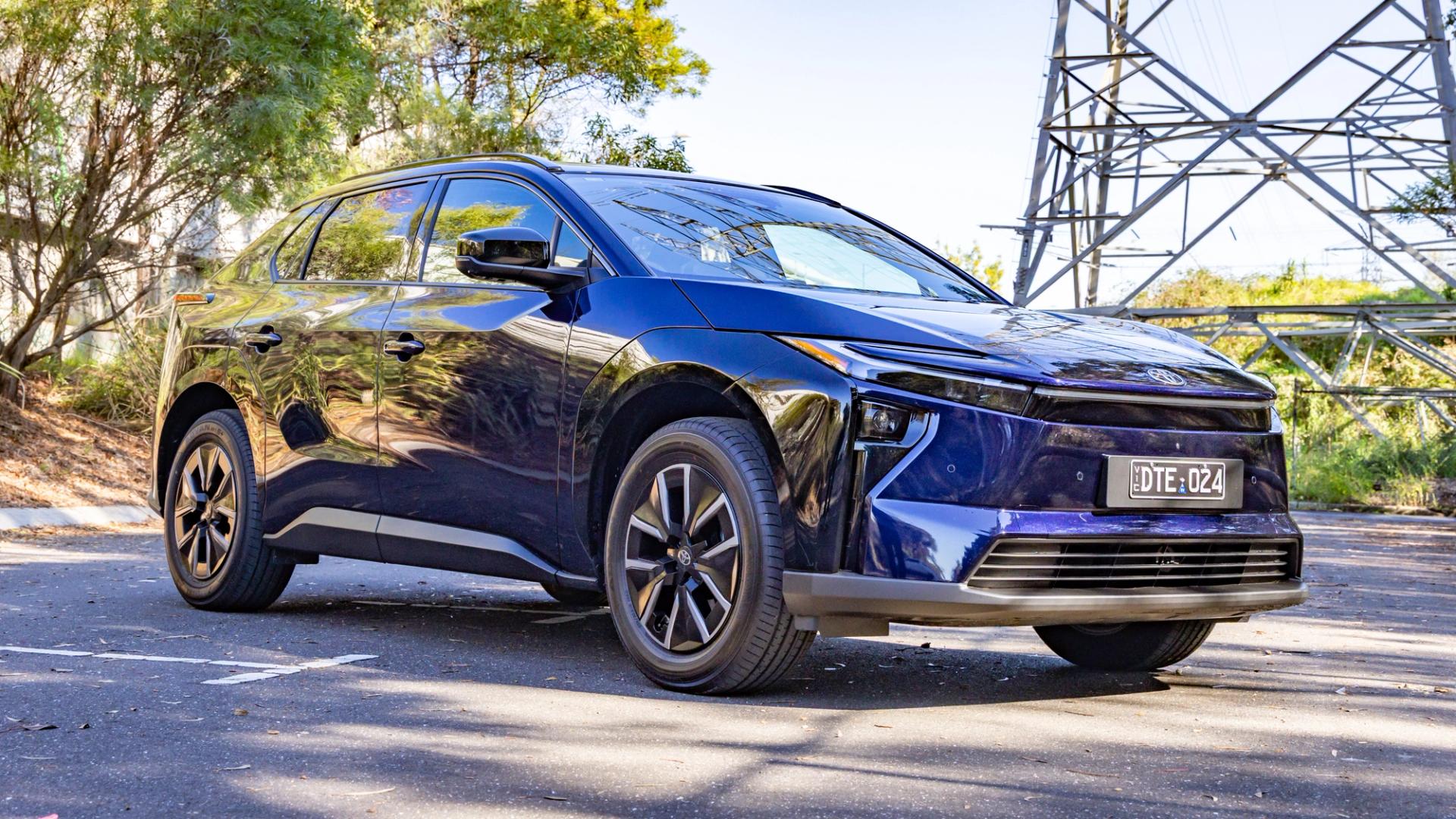
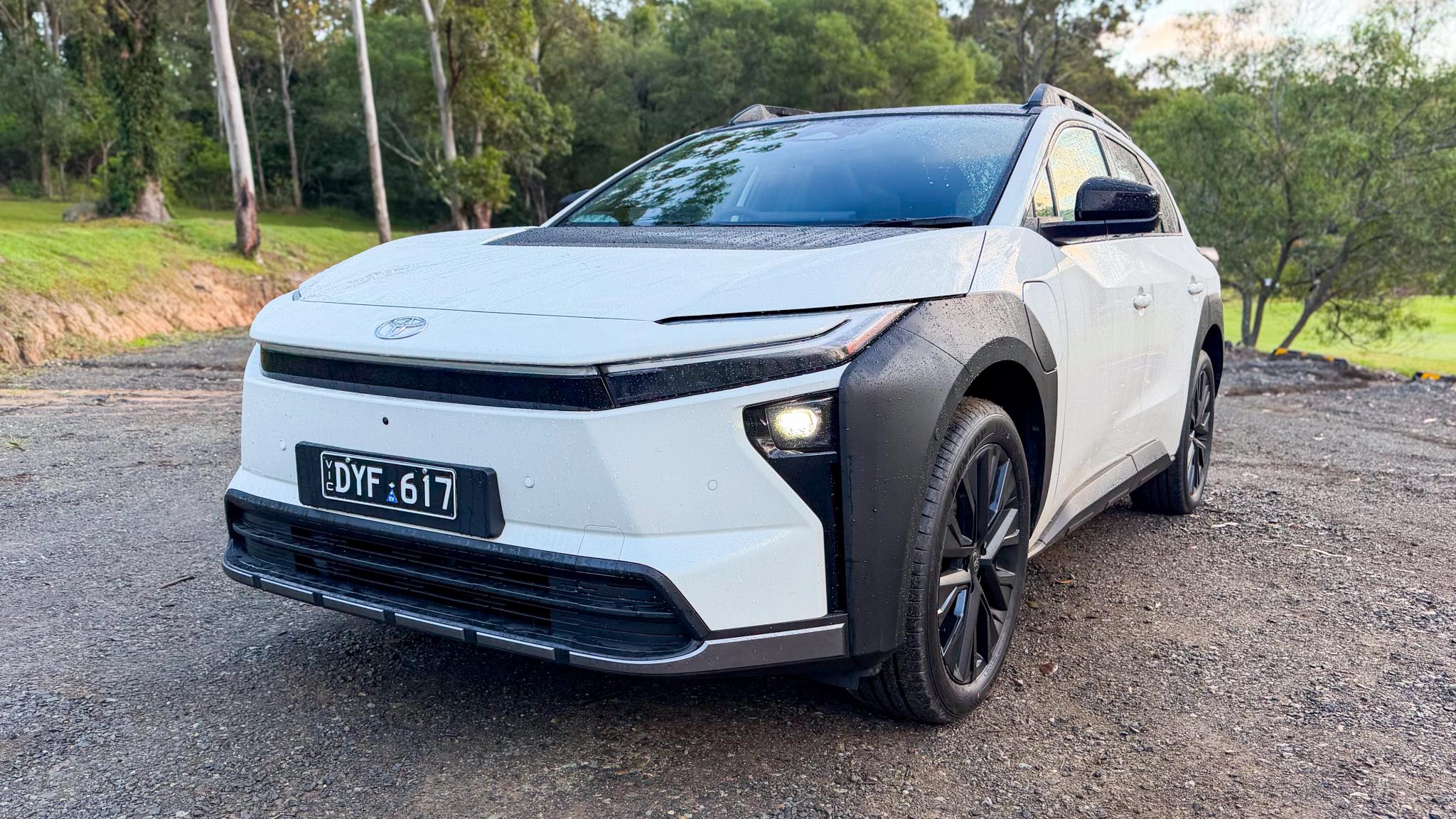
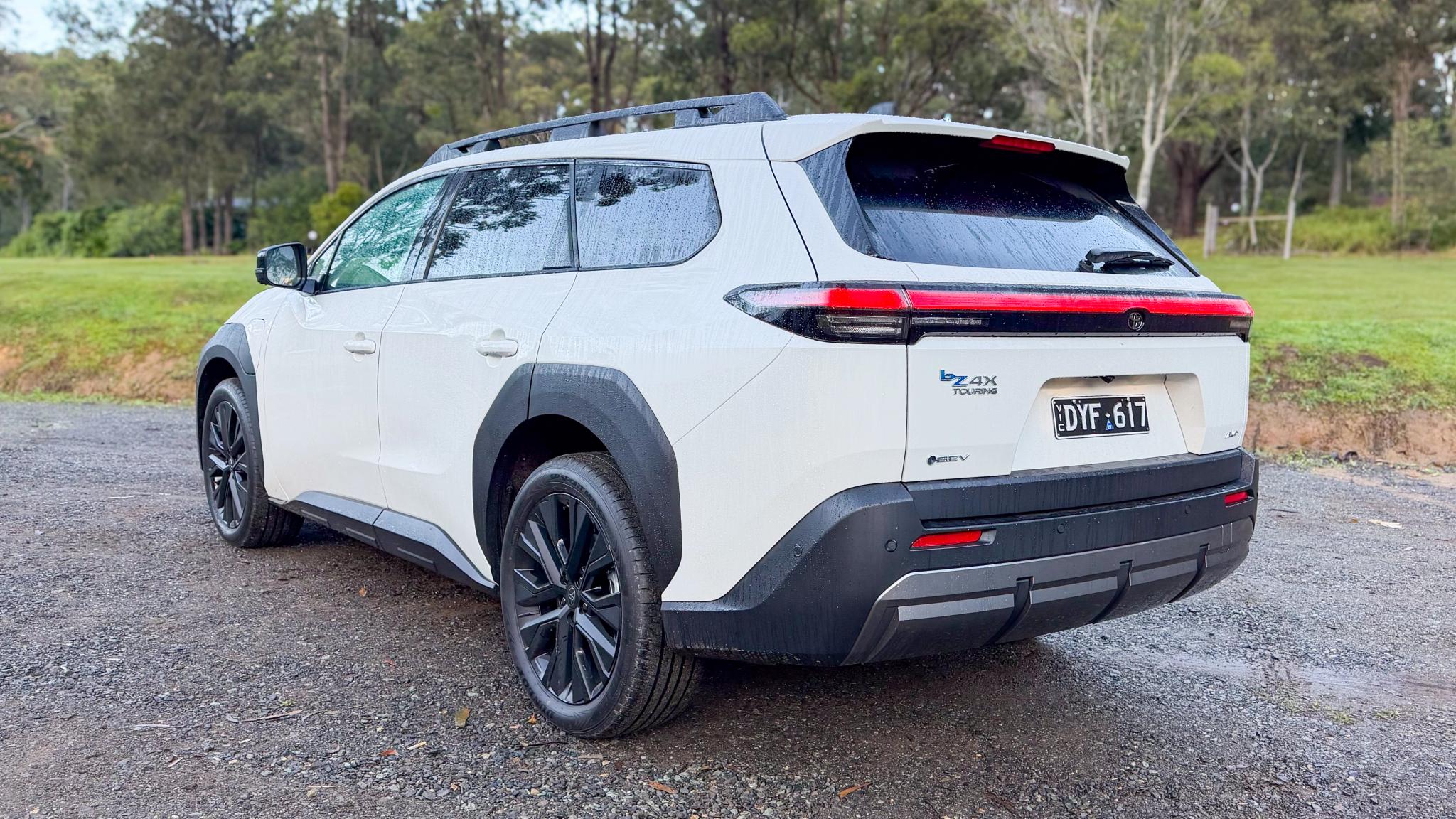
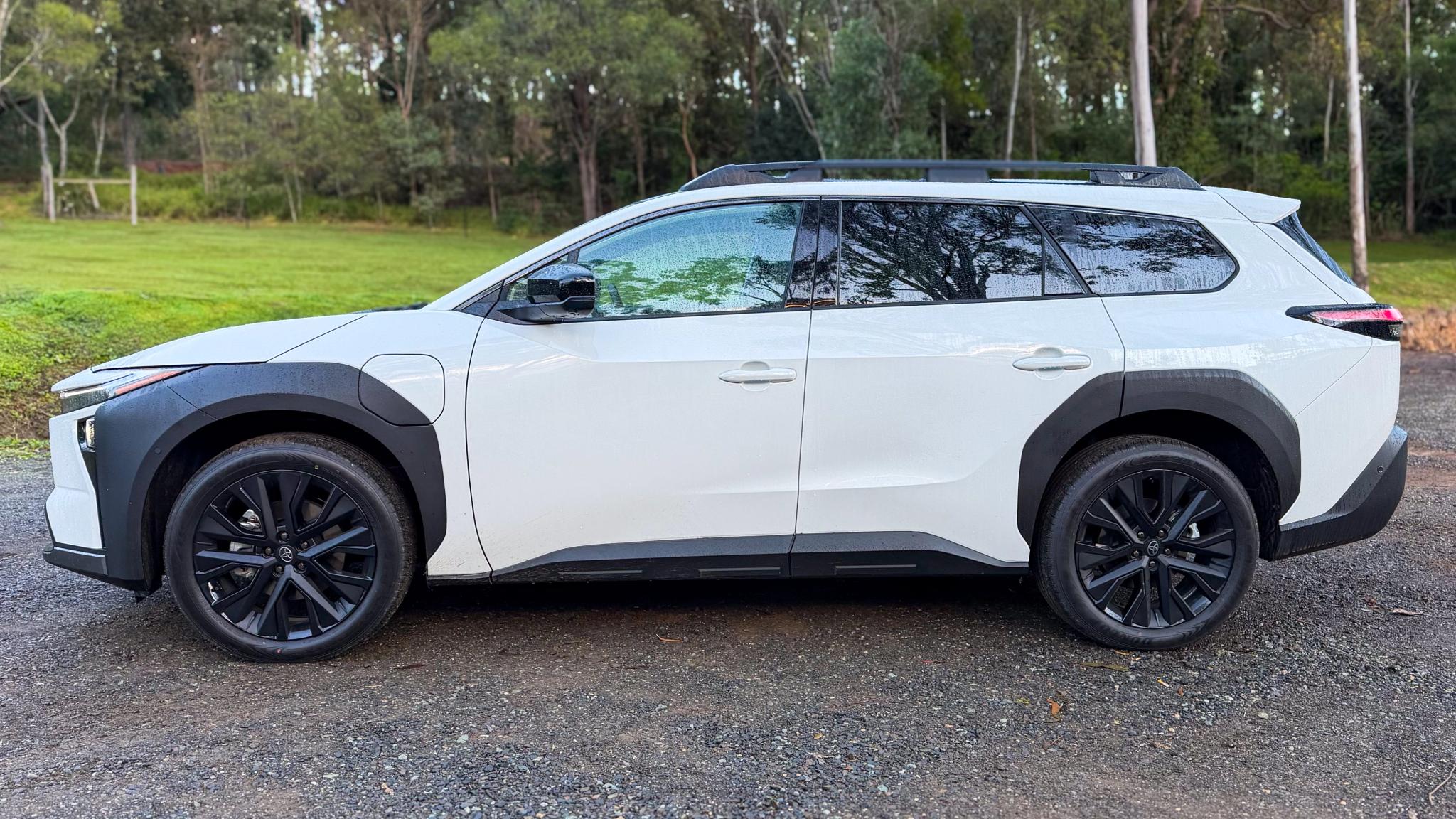
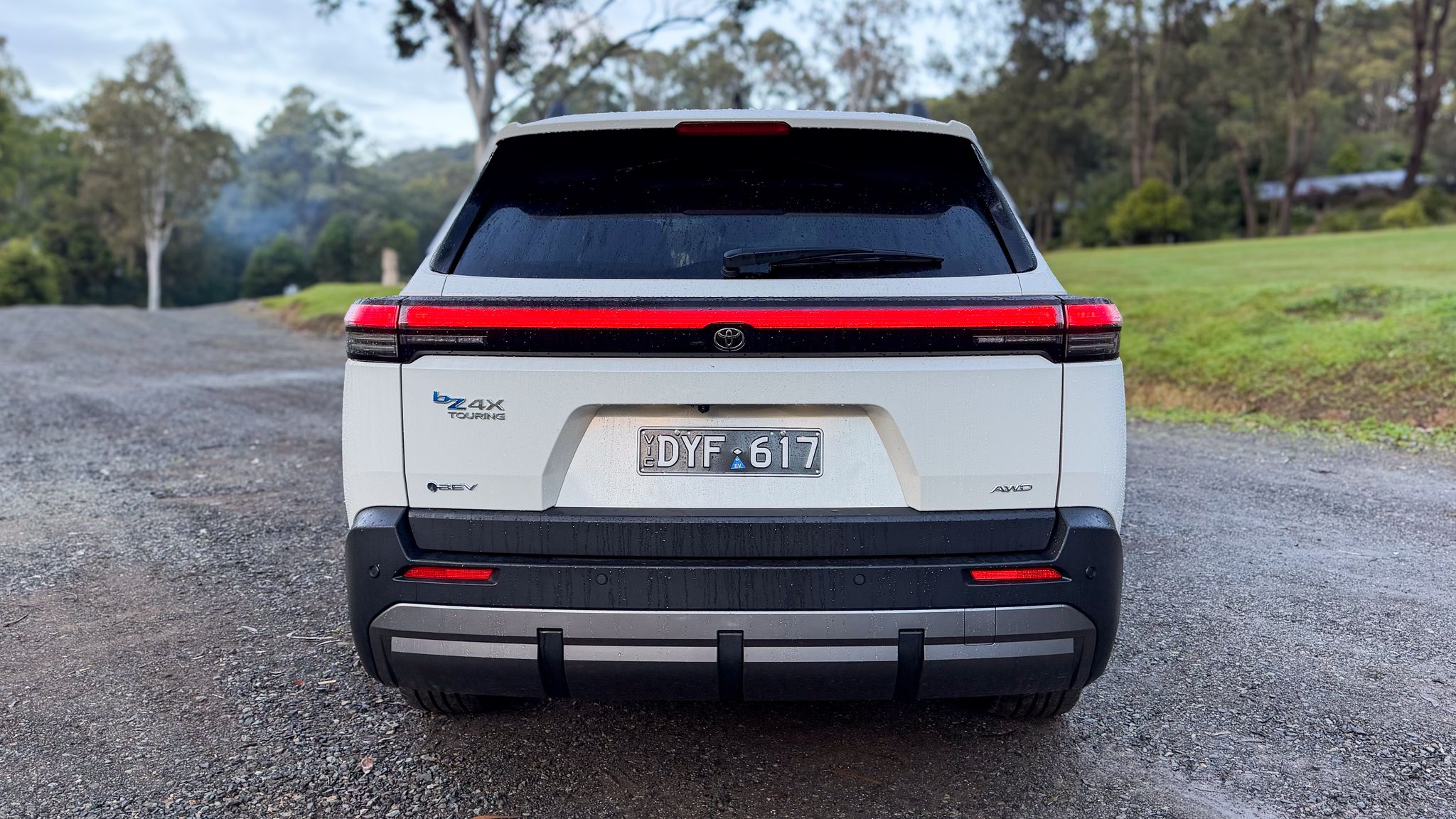
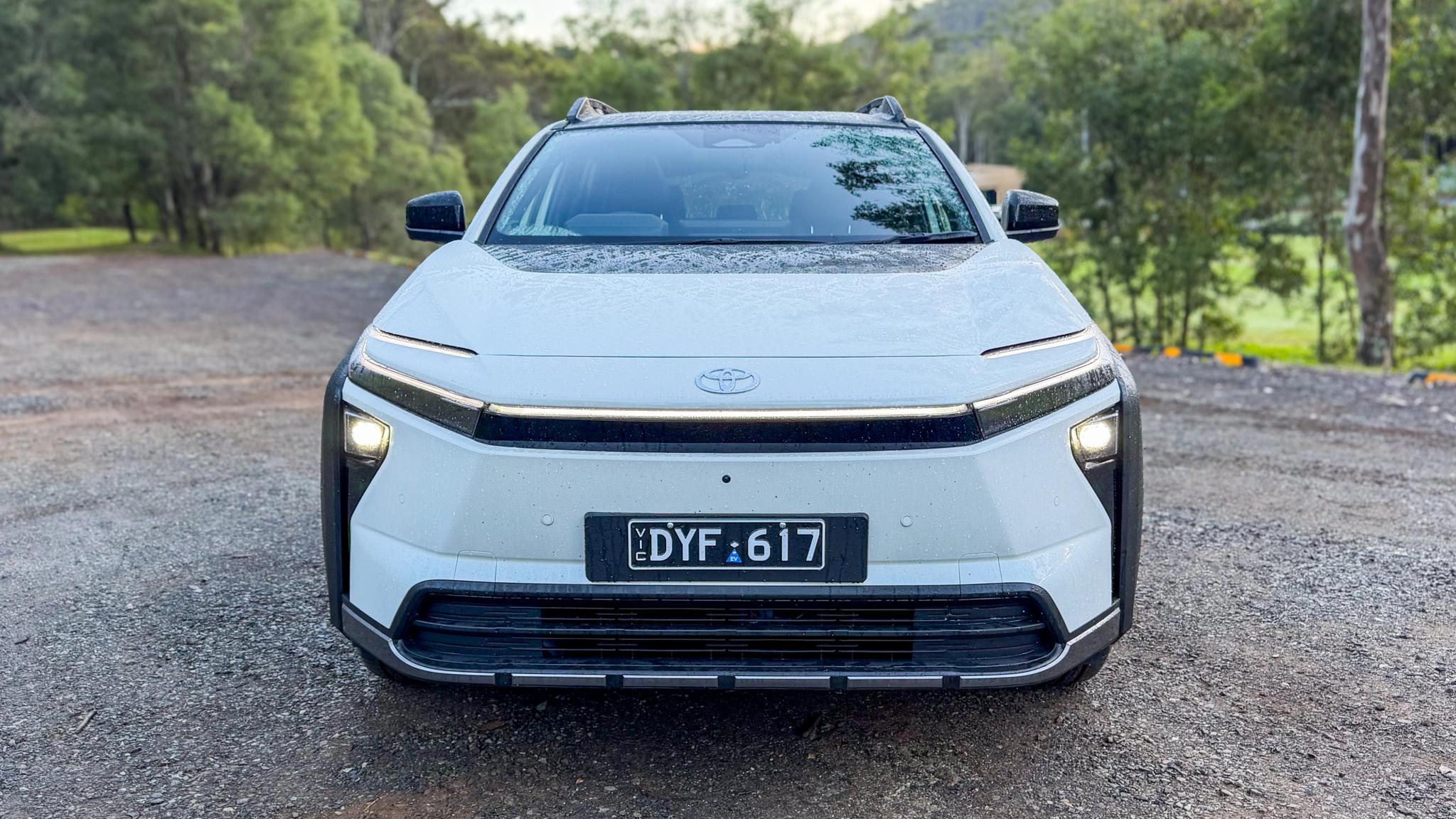
The standard bZ4X always looked like it was mid-argument with itself, all pinched surfaces and awkward proportions. Stretch it 140mm behind the rear axle, square off the tailgate, run the roofline flat to the back and suddenly the whole shape makes sense.
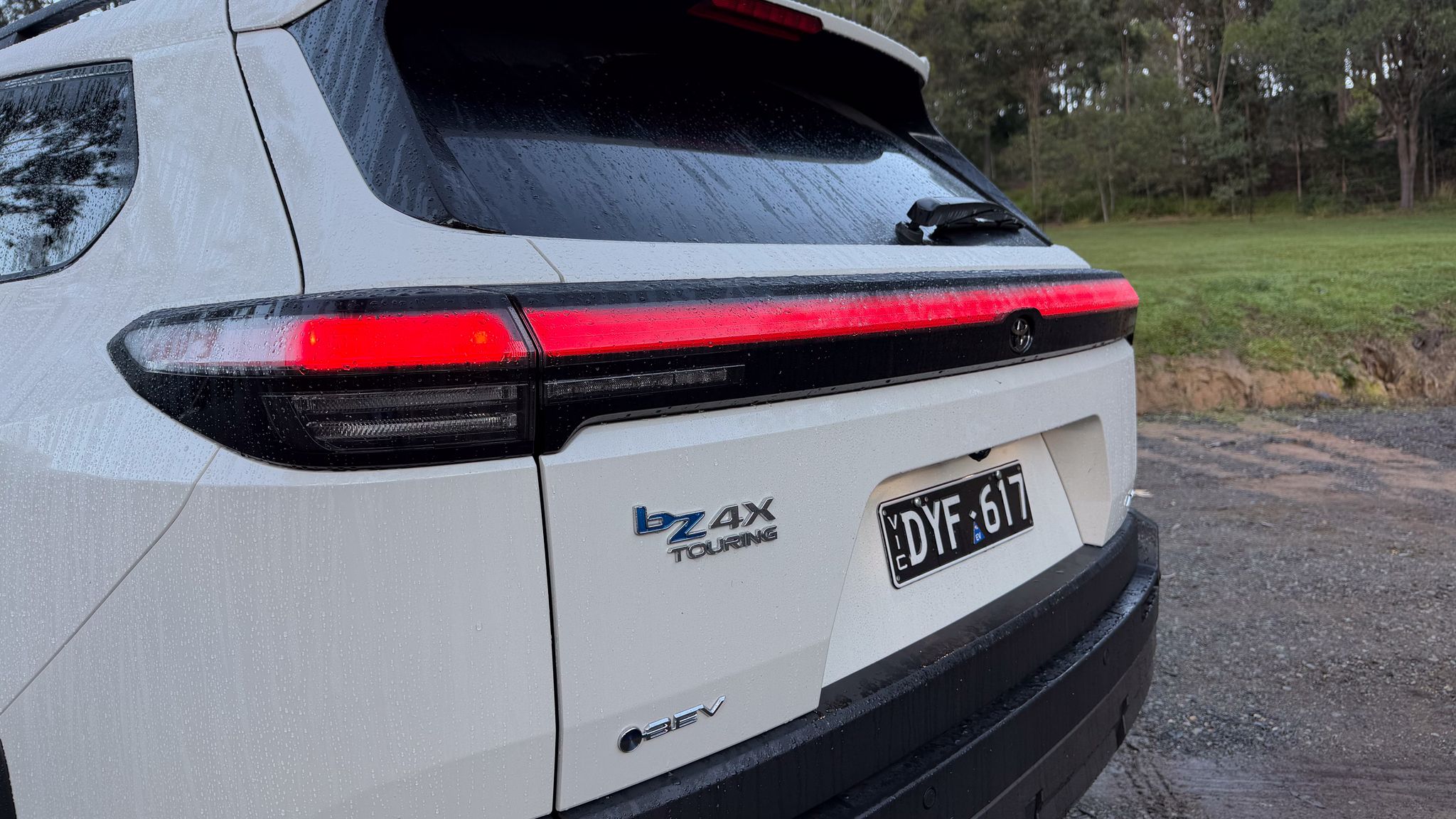
The details help. Twenty-inch black alloys, front and rear skid plates, ladder-style roof rails, black resin arches and a bonnet insert give it an outdoorsy, load-it-up look that feels honest rather than costumed. The rear light signature is cleaner than the SUV's, and in profile there is a hint of old-school Outback about it, which is no bad thing.
It is not beautiful. It is purposeful, and it wears that far more comfortably than the coupe-ish SUVs it now sits above.
What is the bZ4X Touring like inside?
Toyota's 2026 cabin update did the heavy lifting here, and the results are solid rather than spectacular.
Build quality is exactly what you expect: tight, rattle-free, with the cheap plastics pushed up under the windscreen where nobody touches them.
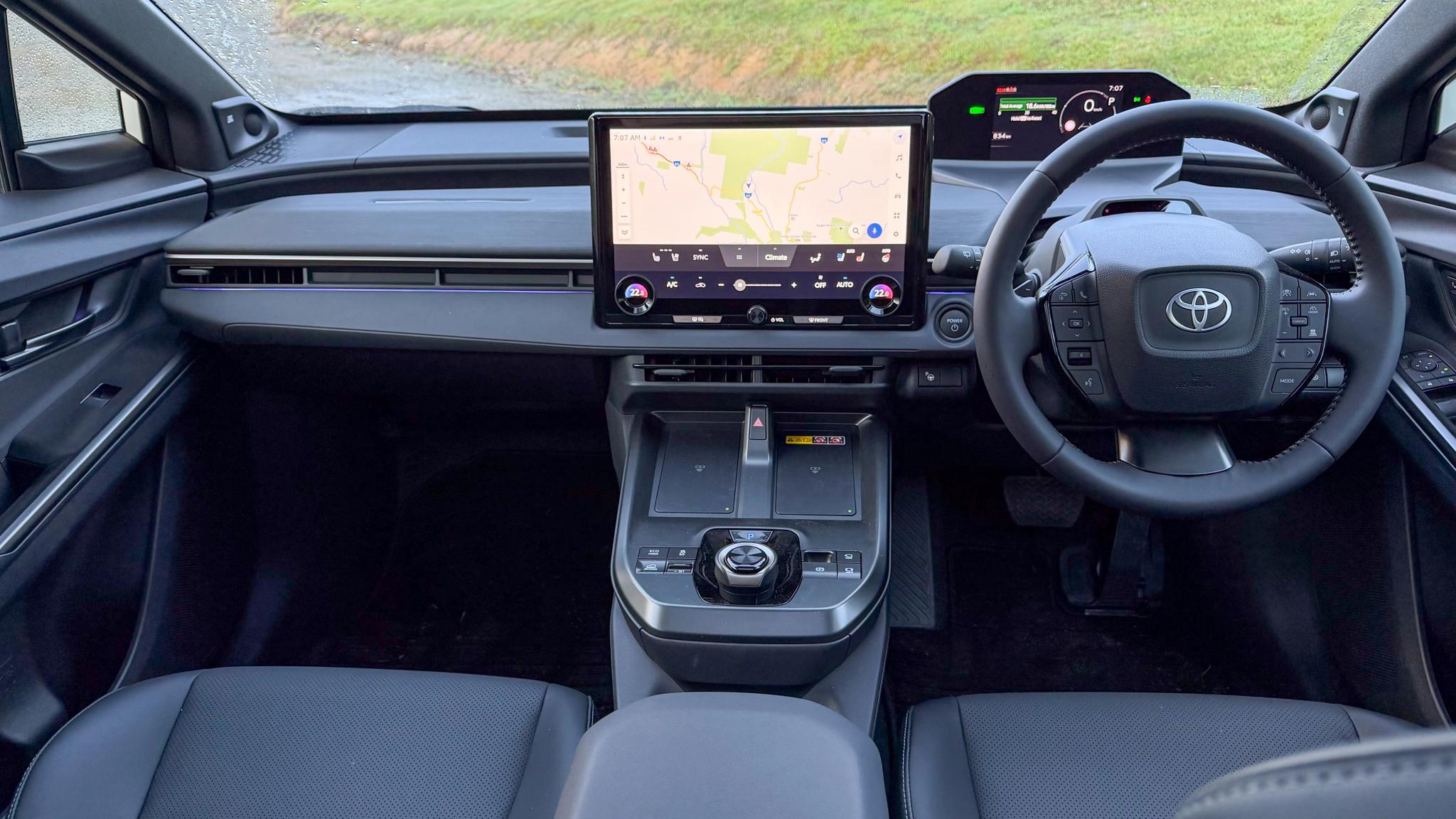
The 14-inch touchscreen is the highlight. It is quick, legible and refreshingly free of menu diving, and Toyota has kept physical climate controls and real switchgear rather than burying everything in software.
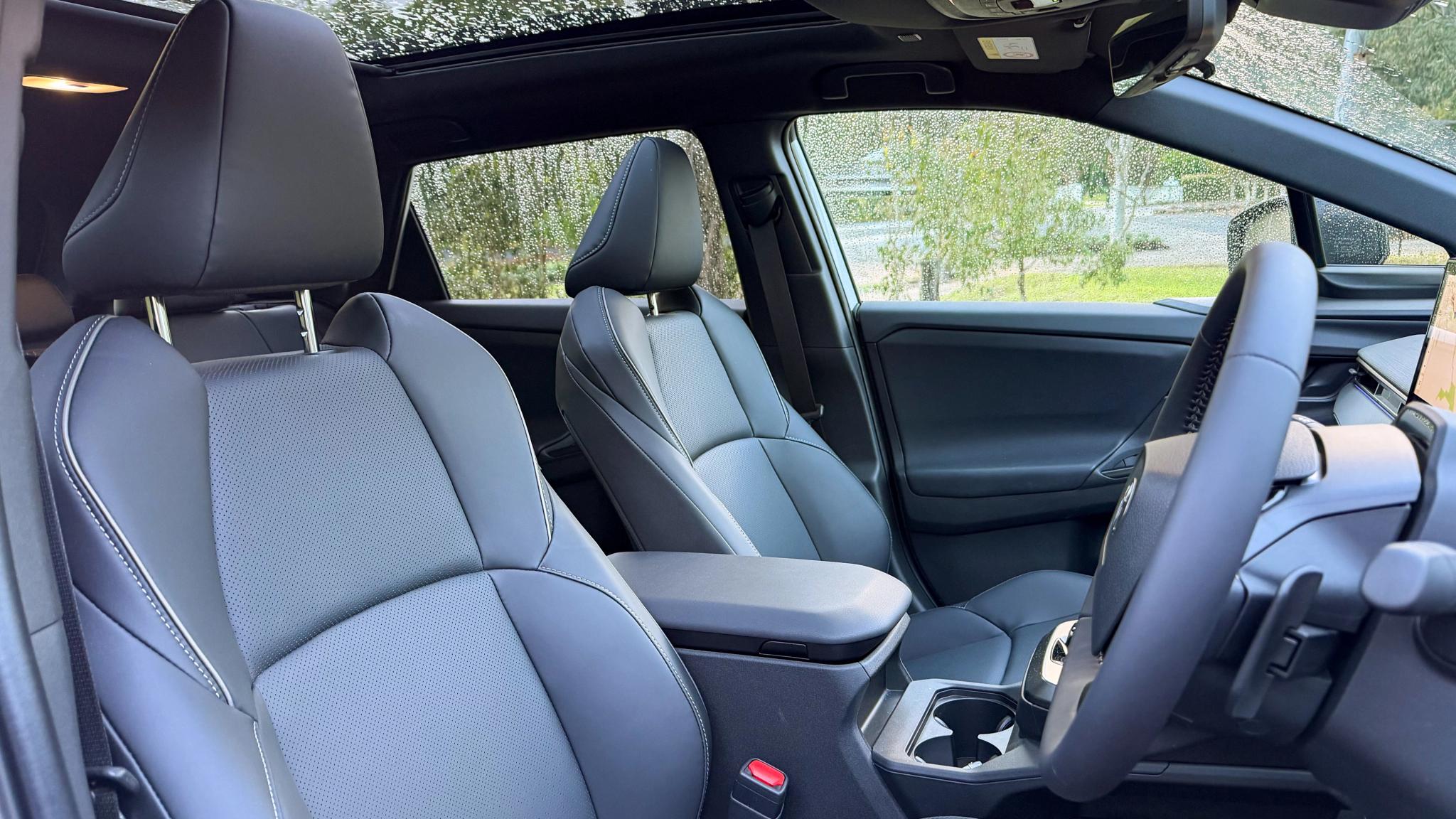
Wireless Apple CarPlay is standard, as are dual wireless charging pads, heated and ventilated eight-way powered front seats, a digital rear-view mirror, a fixed panoramic roof and a nine-speaker JBL system. The Touring also gets an exclusive khaki synthetic leather trim, which lifts a cabin that is otherwise fairly sombre in black.
Then there is the cockpit. The bZ4X's low-set, small-diameter wheel and high, distant instrument binnacle is an acquired taste, and no amount of familiarity fully makes peace with it. Some drivers will adjust quickly. Others will spend every drive fiddling with the seat height to stop the wheel rim cutting the display in half. Sit in one before you sign.
And there’s still no glovebox. Toyota blames the diffuse footwell heating system. It remains a peculiar thing to explain to a passenger.
How practical is the bZ4X Touring?
This is the whole point of the car, and it delivers.
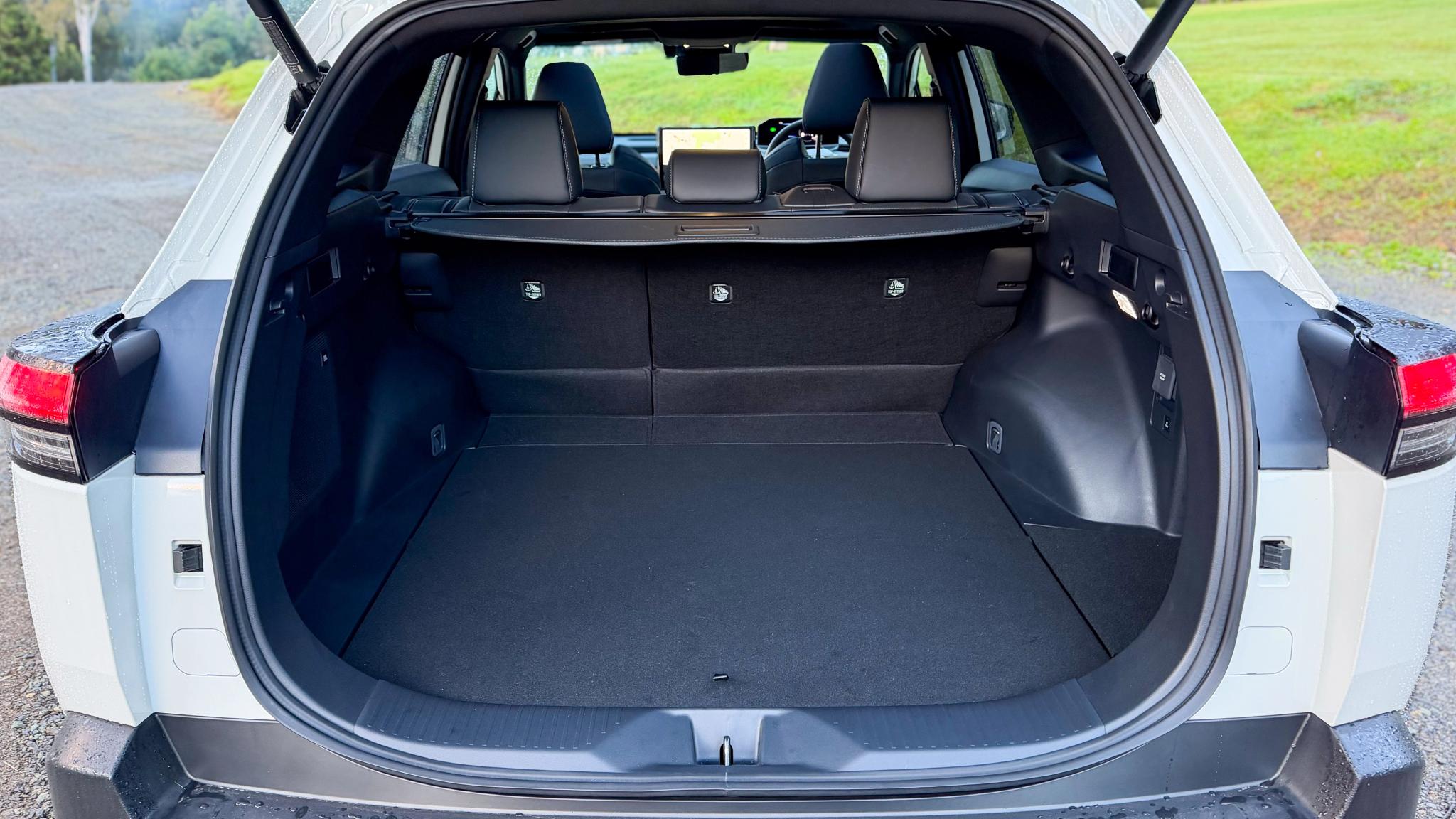
The boot grows to 603 litres in Australian measurement, up from 452L in the standard bZ4X, and the shape is what makes it useful. Flat floor, square walls, upright tailgate, no silly tapering. The 60:40 rear seats fold close to flat, there is underfloor storage for the tonneau and cables, and there are hooks and tie-down points where you would actually want them.
The genuinely clever bit is the 1500W inverter, with a three-pin socket in the boot. Run a fridge at the campsite, charge tools on a job site, plug in the coffee machine at the sideline of a Saturday morning game. It is the kind of feature you use once and then cannot live without.
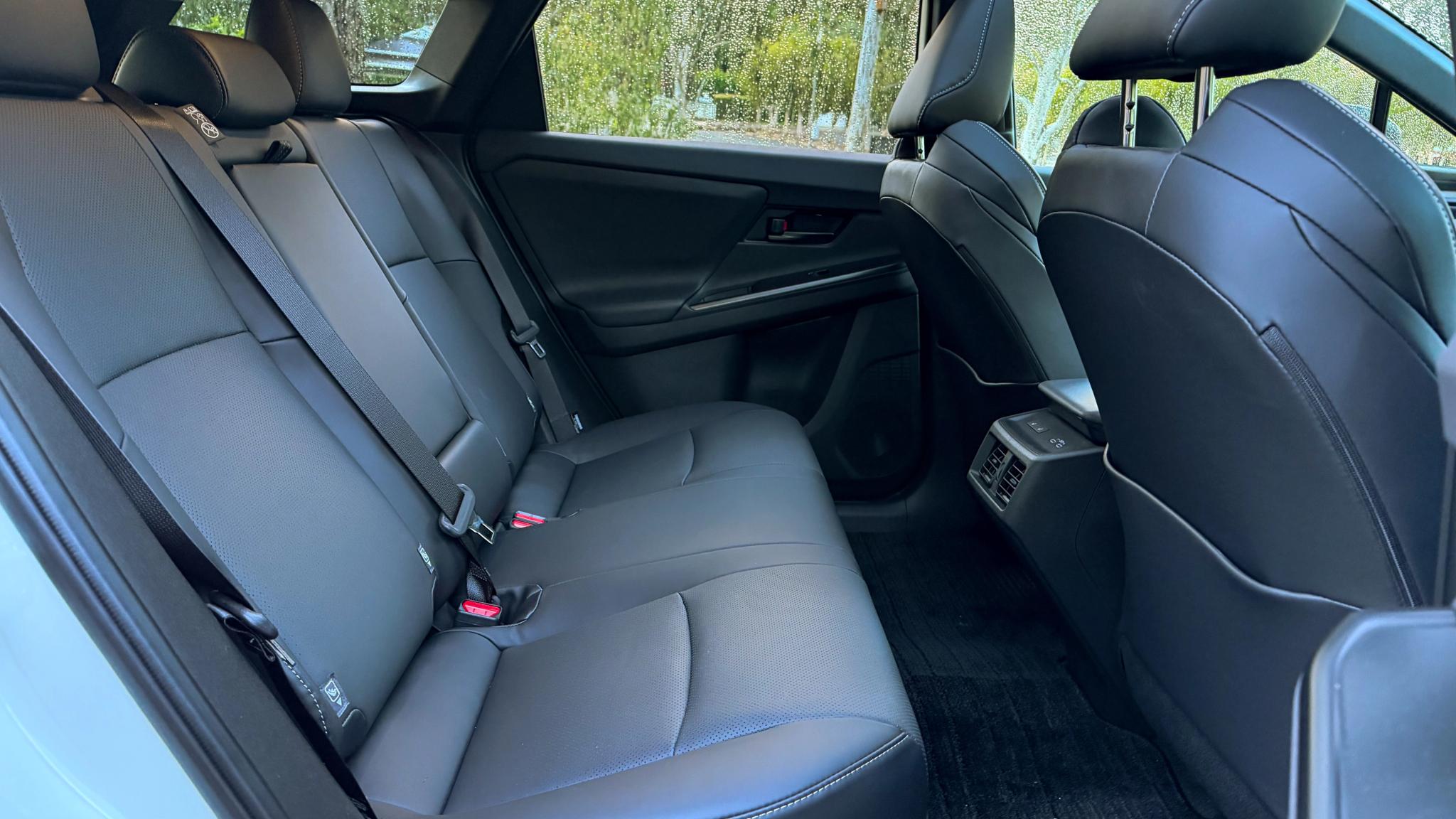
Rear seat space is excellent. The flat EV floor gives adults real legroom, headroom is up on the SUV thanks to the raised roof, and the outer seats recline slightly. The centre position is flat and firm and best kept for short trips.
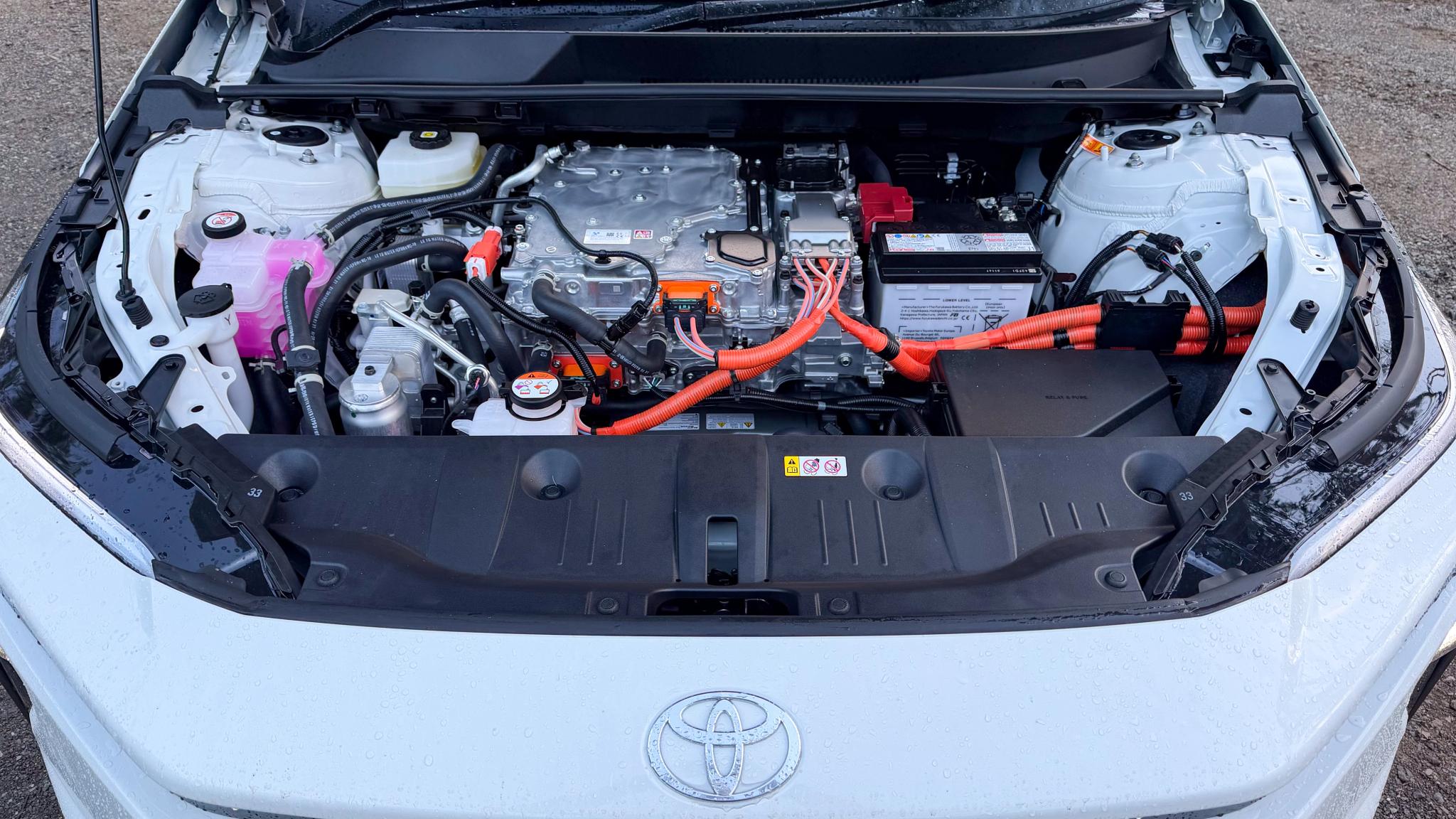
The roof rails carry 80kg on the move and 300kg stationary, which is rooftop tent territory, and the Touring will tow 1500kg braked, double the single-motor bZ4X sold overseas. There is no frunk, because the bonnet is stuffed with electrical hardware, and with no glovebox the cabin storage relies on a deep centre cubby and an under-dash shelf. It works, but the omissions are odd in a car built around practicality.
What is the bZ4X Touring like to drive?
This is the best-driving electric car Toyota has built and it is not close.
Two motors, 280kW, and a claimed 4.4 second 0-100km/h.
In practice you rarely go near full throttle, because the Touring surges forward on a third of it, quietly and without drama, in a way that makes overtaking on a country road a non-event. Toyota does not quote a combined torque figure, which is a bit coy, but the way this thing gathers pace with two adults and a boot full of gear on board tells you everything.
What makes it work is the polish underneath. Ride comfort is the standout. Despite the 20-inch wheels, the Touring absorbs broken bitumen and mid-corner ruts with a composure most rivals in this money cannot match. Only genuinely awful surfaces upset it. Refinement is right up there too, with very little wind or tyre roar at highway speed.
The handling is capable rather than joyful. There is a little body lean through faster corners, but grip and balance are good and the car never feels its considerable weight.
The steering is the weak point. It is accurate and consistent, so you always know where you are pointed, but it is light off centre and short on feel. You place the car precisely without ever quite enjoying the act.
Braking is well judged with four levels of regen on the paddles, though there is no one-pedal mode and no true coasting setting either. The pedal itself is a touch spongy at the top of its travel.
Off the sealed stuff, X-Mode and Grip Control mean the Touring is far more capable than owners will ever ask it to be. With 216mm of ground clearance and a 500mm wading depth, it will handle a rutted gravel track to a campsite comfortably. It is not a Prado. It does not need to be.
How efficient is the bZ4X Touring?
Toyota quotes 488km WLTP from the 74.7kWh battery, with claimed consumption in the mid 15kWh/100km range. Real-world driving on a mixed route of hills and back roads lands almost exactly on that claim, which is encouraging. Sustained freeway running will hurt it, as it hurts every EV, and a genuine 500km is fantasy. Plan on 400km to 430km of usable range in mixed driving and you will not be disappointed.
Charging is competent, not class-leading. 150kW DC gets you 10 to 80 per cent in around 28 minutes with pre-conditioning, and Toyota claims that time holds from -10°C, which matters more in Australia than people assume once you are up in the alpine country. The 22kW three-phase AC rate is genuinely useful if you have the supply, filling the battery in around 3.5 hours. On a standard 7kW home wallbox, budget 10 hours or more.
Servicing is where the sums get properly cheerful. Toyota's capped-price program charges a flat $190 per visit at 12-month or 15,000km intervals, which means $950 across five years. That is small change in this segment and it is the kind of number that quietly claws back some of the Touring's price premium over the life of the car.
Ownership backing is the usual Toyota fortress. You get a five-year, unlimited-kilometre warranty, 10 years of battery coverage provided you keep the annual battery health check up with a Toyota dealer, and eight years or 160,000km of protection against the battery dropping below 70% capacity. Stick to the schedule and there is very little to worry about here.
Is the bZ4X Touring safe?
The bZ4X carries a five-star ANCAP rating, and the Touring arrives with seven airbags and the full Toyota Safety Sense suite as standard. That means autonomous emergency braking with pedestrian and cyclist detection, adaptive cruise, lane trace assist, blind-spot monitoring, rear cross-traffic alert and a 360-degree camera.
Toyota's driver assists are among the better-calibrated systems on sale. The lane keeping nudges rather than fights, and the speed sign recognition chimes are less shrill than most. Nothing here will have you reaching for the settings menu in anger on day two, which is more than can be said for several rivals.
What are the main competitors to the bZ4X Touring?
The Subaru Trailseeker is the obvious one because it is the same car in a different suit. It was more expensive than the Toyota until Subaru's recent price adjustment and now sits line-ball. The decision comes down to which dealer network you trust and whether you want the Subaru's slightly more outdoorsy positioning.
The Tesla Model Y remains the volume benchmark with more range, a stronger charging network and lower pricing. It cannot match the Toyota's ride quality, its rear seat comfort or its ability to be genuinely useful on a dirt road.
The Kia EV5 is the value play. It gives you similar family space and a warmer, more conventional interior for meaningfully less money. It is nowhere near as quick and it does not drive with the same finesse, but for a lot of buyers that will be an easy trade.
The Skoda Enyaq is the one to drive if boot space and sensible European family engineering are your priorities. It is a more resolved everyday car in some ways, but it has none of the Toyota's off-road hardware and none of its outright pace.
Should I buy the bZ4X Touring?
If you want a fast, comfortable, hugely practical electric wagon that will handle a gravel track and run your camp fridge, there is almost nothing else on the market doing this job. The Touring drives with genuine polish, the boot is a triumph and Toyota's ownership backing is the best in the business.
But the price stings. Toyota has launched the fast, expensive version of a car that would sell far better as the sensible, longer-range one, and $76,000 driveaway is a big ask for a Toyota wagon in a segment full of cheaper, well-resolved EVs. Sit in it first, because the cockpit is polarising, and know that you are paying a performance premium you may never use.
Buy it because it is the only thing that does what it does. Just do not pretend it is good value.
VerdictThe Beep Verdict
Rob Leigh
Co-founder & Director
Rob Leigh is Co-founder and Director of The Beep based in Melbourne, Australia. He has 15+ years inside a major automotive OEM, specialising in product planning, pricing and vehicle strategy.
About Author