2026 Toyota Corolla ZR review
The Corolla doesn't ask for your admiration. It just quietly gets on with being one of the best small cars in Australia.

Rob Leigh
Pros
- Hybrid powertrain is smooth, efficient and genuinely impressive in real-world driving
- Build quality and long-term reliability credentials are class-leading
- Calm, composed road manners make it effortless to live with daily
Cons
- 8.0-inch infotainment screen looks increasingly dated at this price point
- ZR loses the spare wheel - a meaningful sacrifice for not enough gain
- ZR's 18-inch wheels and sportier seats compromise ride comfort over long distance
The 2026 Toyota Corolla ZR is a deeply competent small car that earns its sales figures the hard way - by being genuinely good to own rather than exciting to look at. It's built for commuters, families and pragmatic buyers who want reliability, efficiency and low stress. The catch? At close to $43,000 driveaway in ZR spec, you're paying a premium that the interior and tech struggle to fully justify. The SX is the smarter buy.
What does the Toyota Corolla cost in Australia?
The 2026 Corolla range opens at $32,110 before on-roads for the Ascent Sport Hybrid Hatch, steps up to $35,260 for the SX Hybrid Hatch, and tops out at $39,100 for the ZR Hybrid Hatch tested here. Add metallic paint ($575), a two-tone roof ($1,350), and on-road costs, and the ZR lands in the low-to-mid $40s in most states.
For that money, the ZR competes with the Mazda 3 G25 Astina at $43,310 before on-roads and the top-spec Hyundai i30 N Line Premium at $41,000. On paper, the Corolla is the cheaper option. Whether it's the better one depends entirely on what you value. The ZR also now sits uncomfortably close to the Corolla Cross GX, which will prompt some buyers to cross-shop upward into a small SUV rather than sideways into a hatch.
The ZR's price jump over the SX is about $3,800. What do you gain? Larger wheels, sports seats, a bigger digital instrument cluster, a head-up display and a JBL sound system. None of it is bad. None of it is essential either.
What does the Toyota Corolla look like?
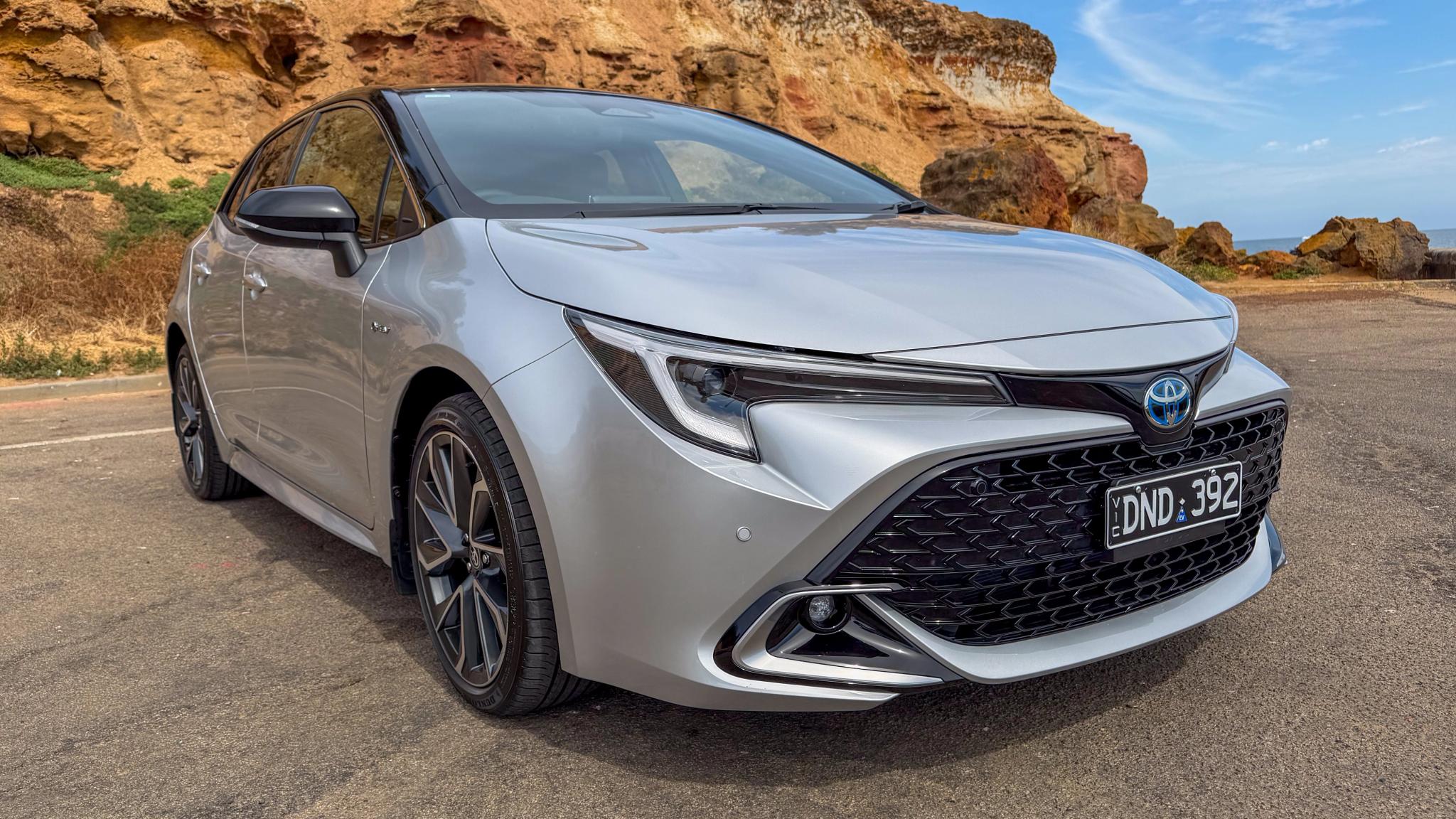
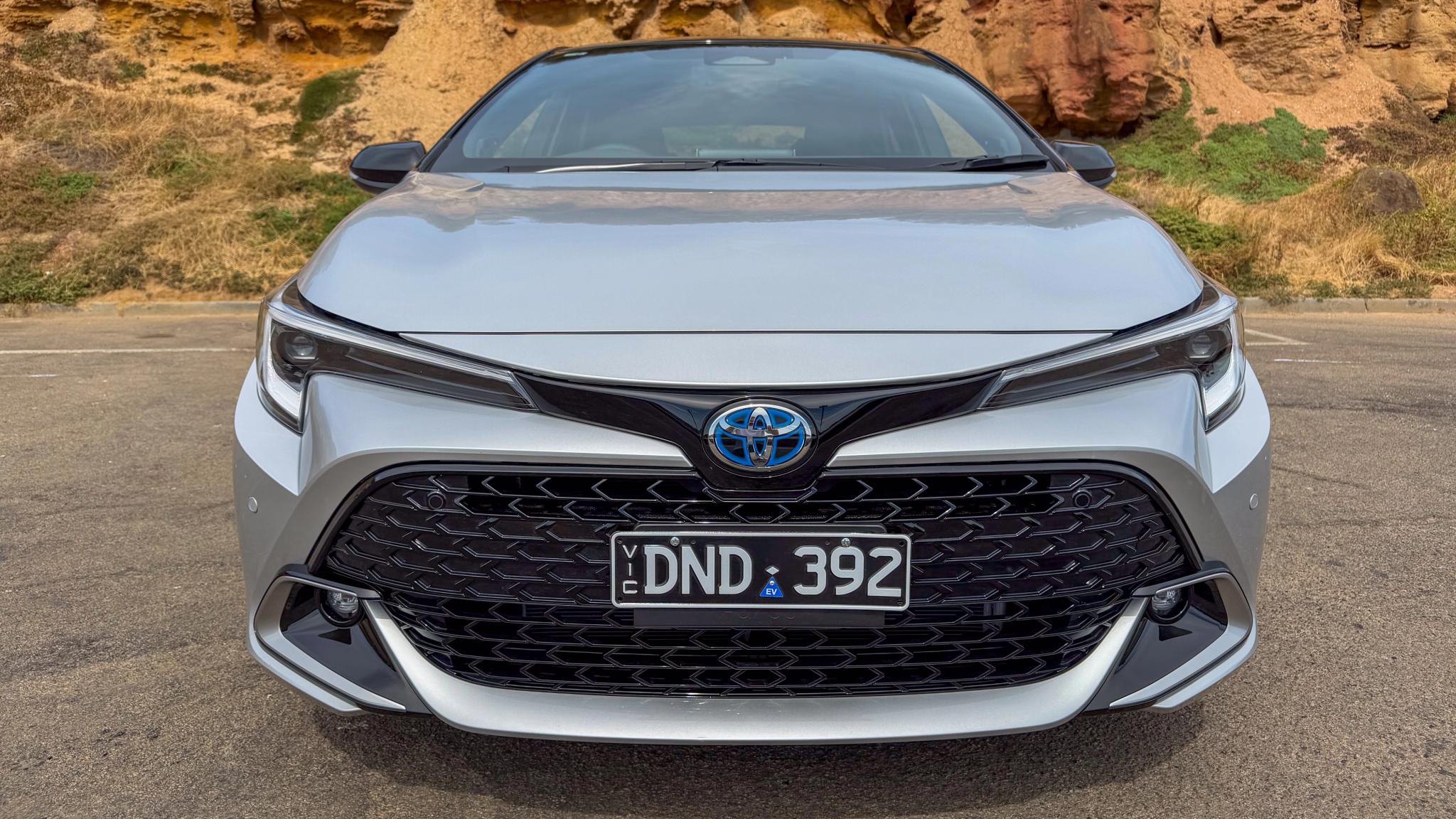
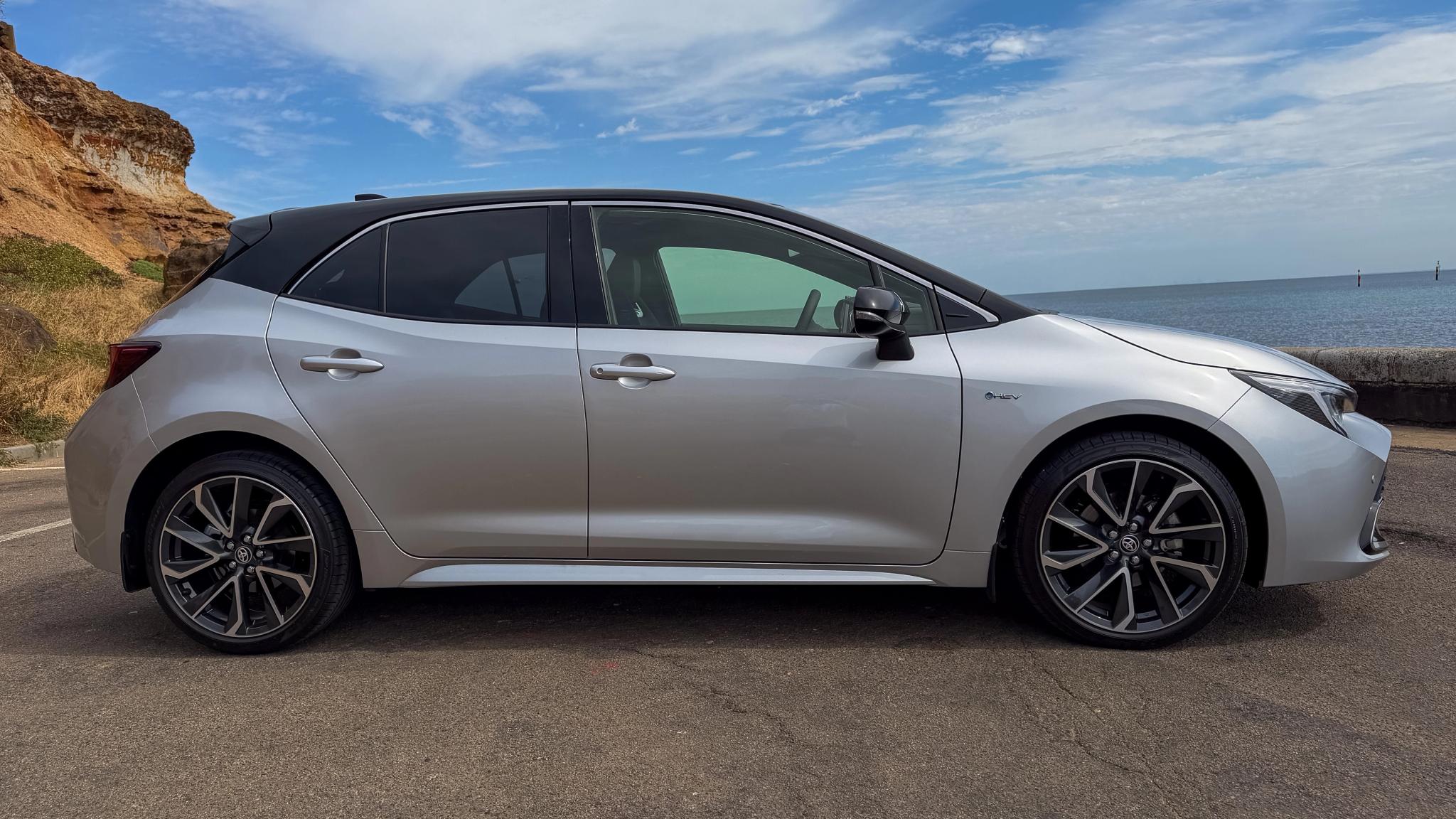
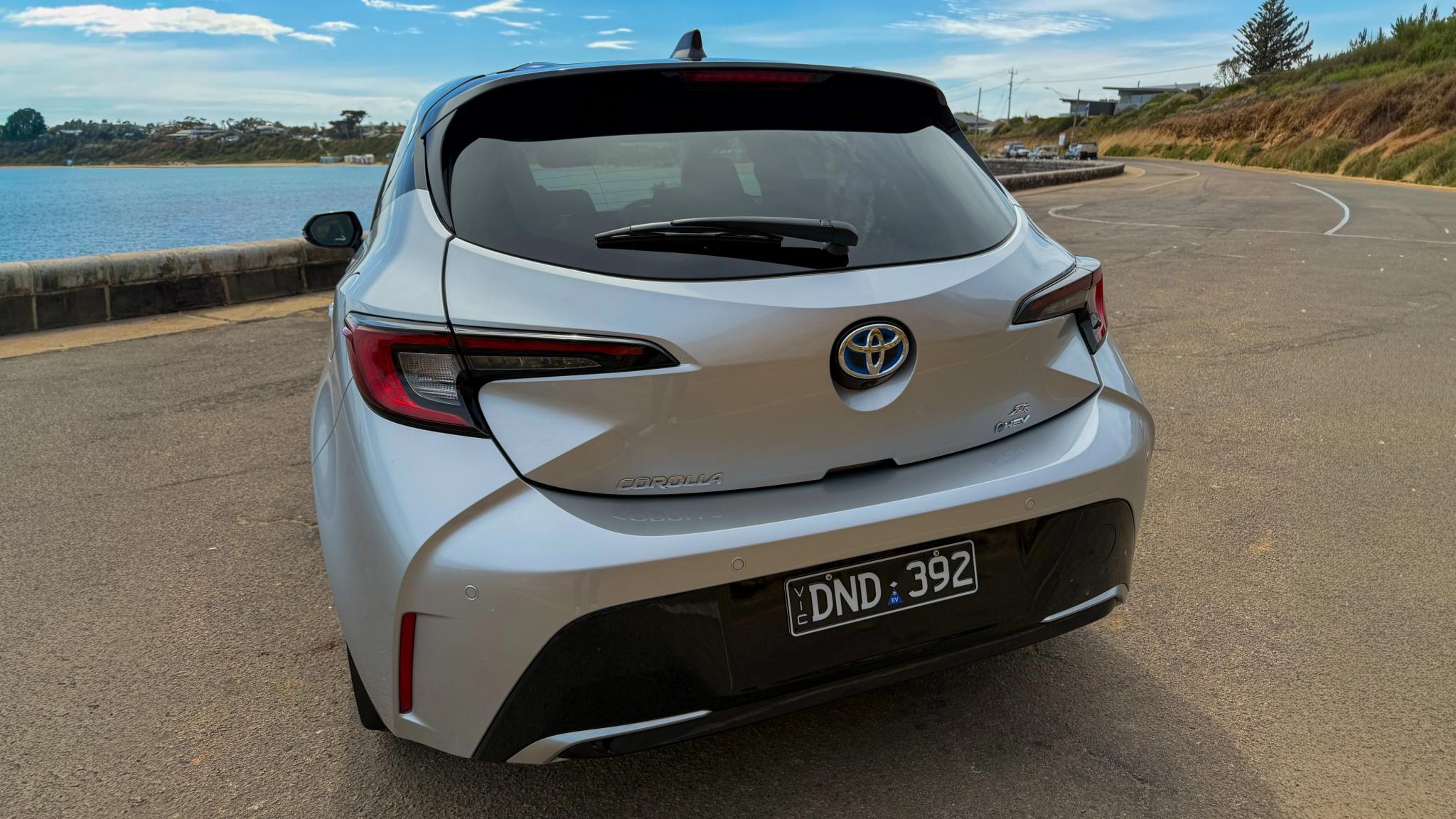
The Corolla's styling is honest and inoffensive - it's not trying to win any design awards, and it knows it. The ZR dresses things up with 18-inch alloy wheels, full LED lighting and two-tone paint options that do add a degree of visual interest. In Silver Pearl with a black roof, it looks genuinely sharp without being showy.
The proportions are clean and the silhouette has a subtle sportiness that suits the hatch format. But this is a car you stop noticing after about a week. That's not a criticism - it's just the Corolla's way. It wears its sensibility on the outside.
What is the Toyota Corolla like inside?
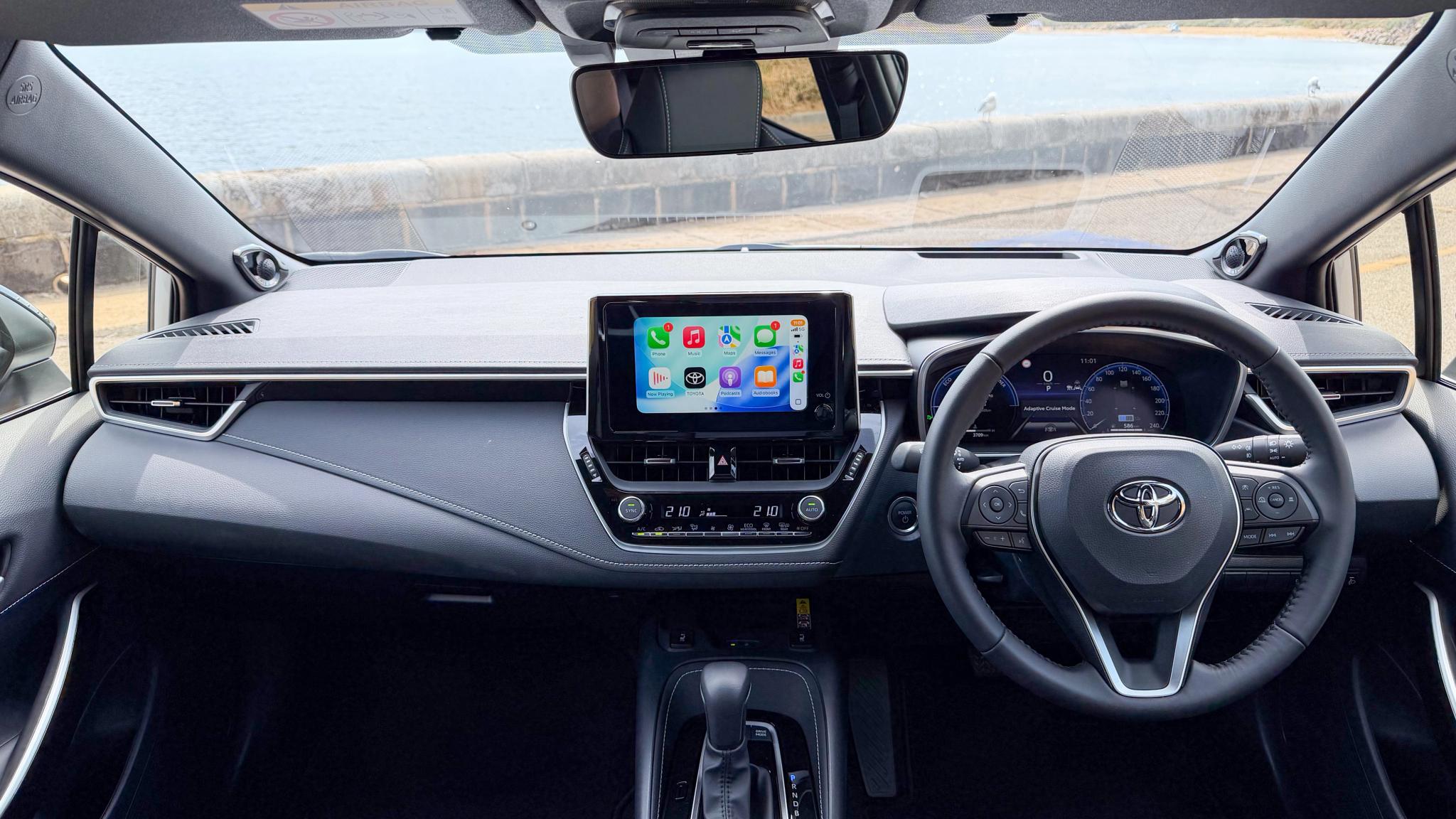
Spend time inside the ZR and a clear story emerges: solid, considered and starting to show its age.
Build quality is genuinely impressive. Everything feels like it was put together with care, the panel gaps are tight, and there's a satisfying consistency to the way it all fits. Toyota's durability reputation is easy to believe in here. The ZR-spec seats, which blend cloth and synthetic leather, look like they've been lifted from a slightly sportier sibling. They hold you well and look the part.
Then there's the infotainment. The 8.0-inch touchscreen is the same unit found in far cheaper Toyotas. It works fine - it's responsive, the interface is clean, and Apple CarPlay is wireless. But when Chinese EVs priced at $30,000 are running 15-inch displays, this setup reads as underwhelming at $40k-plus. The 12.3-inch digital instrument cluster on the ZR does help, and it looks genuinely premium, but it's buried in enough menus to keep you busy learning for weeks.
Physical climate controls are a genuine highlight. Buttons and dials you can operate by feel, without taking your eyes off the road. Simple. Correct.
The gloss black trim throughout the cabin will attract fingerprints from the moment you open the door and some of the plastics in the lower sections are scratchy. At this price, they shouldn't be. But the overall impression is still one of quality - just not luxury.
How practical is the Toyota Corolla?
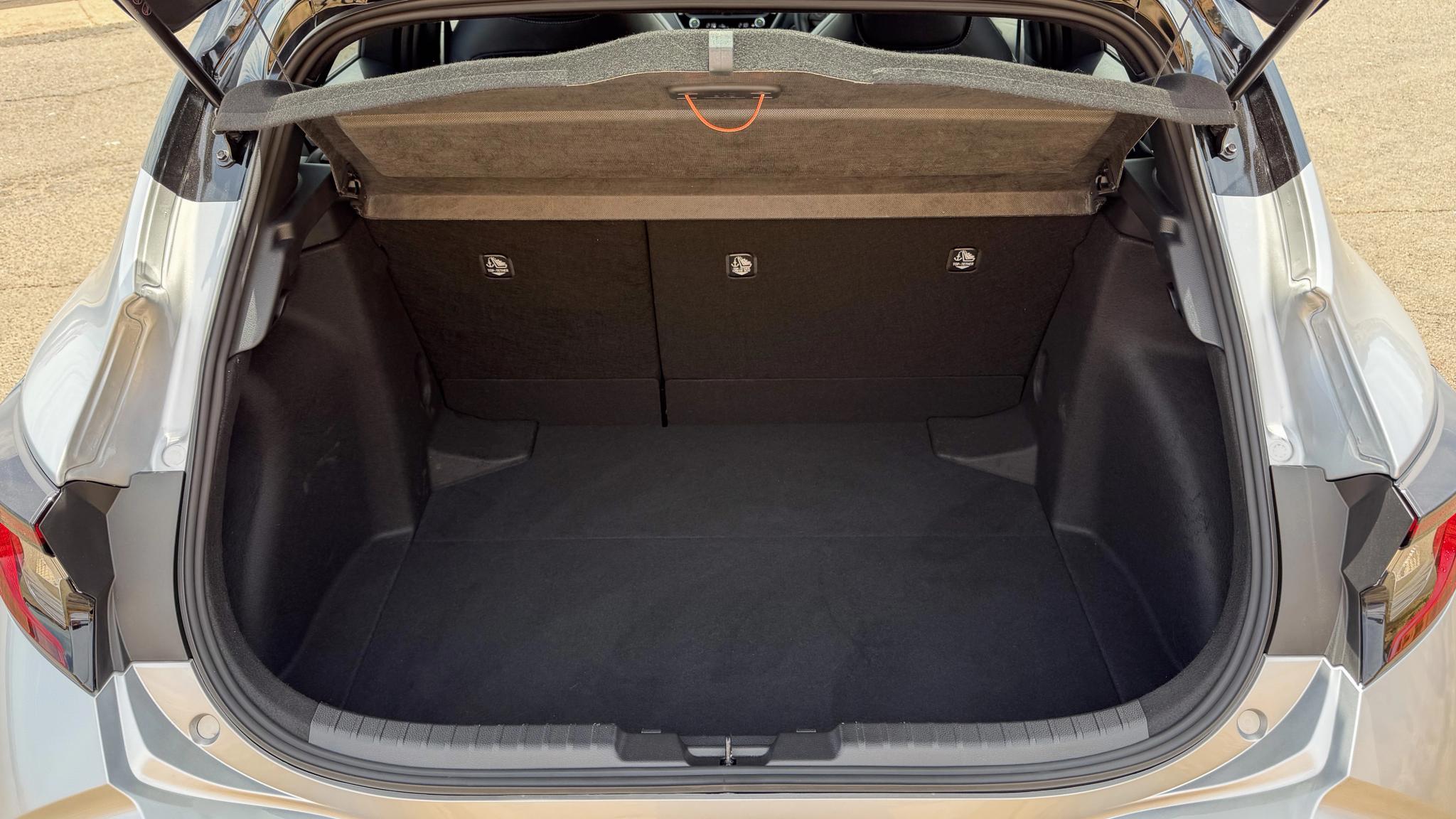
Here's where the ZR gives up some ground. The 217-litre boot is genuinely tight - smaller than the Mazda 3 hatch's 295 litres and well short of the i30's 395 litres. Loading it requires some creative thinking.
Rear seat space is adequate for two adults, tight for three. Headroom is the main constraint, particularly with the black headliner which makes the cabin feel more enclosed than it is. Legroom is acceptable as long as tall front passengers don't push their seats fully back.
The ZR also drops the spare wheel in favour of a tyre repair kit. On a flagship variant, that's a frustrating compromise.
Storage in the cabin is fine for daily use - two USB-C ports, a wireless charging pad, cup holders and a glovebox that does its job without drama.
What is the Toyota Corolla like to drive?
This is where the Corolla earns back considerable ground.
The first thing you notice is the quiet. The hybrid system operates with a smoothness that most petrol-only rivals simply can't match. At low speeds and through suburban traffic, the engine is often entirely absent from the experience. The car just moves, silently and without fuss. That quality wears well.
The ride is composed and well-judged - at least in lower-spec Corollas with 16-inch wheels. The ZR's 18-inch alloys sharpen the steering feel and add visual presence, but they also make the suspension more reactive to rough surfaces. On patchy highways, you feel it. On smooth bitumen, it's a non-issue. On longer drives over poor surfaces, it accumulates.
Handling is tighter than you'd expect for a car marketed almost entirely on efficiency. There's genuine balance in the chassis, and the steering has enough feedback to make a back road genuinely enjoyable. Not entertaining in a Mazda 3 sense - but capable and confidence-inspiring in a way that rewards a quick driver.
Push harder and the CVT becomes the car's loudest critic. Under sustained acceleration, the engine sits at a continuous drone that's the sonic equivalent of a fluorescent tube. It's a known hybrid CVT trait rather than a Corolla-specific fault, but it's there. Back off the throttle and all is forgiven immediately - the silence returns, the efficiency climbs and the Corolla resumes being a pleasure.
Radar cruise control works well on motorways, adaptive and smooth, though it takes a beat to respond when you change lanes to overtake. The lane-centring system is reliable on sweeping roads, less confident on tighter bends where it prefers to hand back to the driver.
How efficient is the Toyota Corolla?
The claimed figure is 4.0L/100km combined and you can get close to it in mixed driving. Real-world results in predominantly urban conditions hover around that mark comfortably. Factor in more highway driving and expect closer to 5.0–5.1L/100km - still among the best results available in the small car segment from any non-plug-in vehicle.
Servicing is capped at $250 per visit for the first five years, totalling $1,250 across that period. For context, the equivalent figure for a Mazda 3 is over $2,200. The saving is real and material. Toyota's warranty covers five years, unlimited kilometres, extending to seven for the engine and driveline if you service within the Toyota network.
Is the Toyota Corolla safe?
Toyota Safety Sense is standard across the range, covering autonomous emergency braking, adaptive cruise control, lane trace assist, blind-spot monitoring, rear cross-traffic alert, traffic sign recognition and seven airbags including a driver's knee bag.
Importantly, the Corolla's five-star ANCAP rating from 2018 has now expired. Vehicles produced from January 2025 onward are technically unrated under current standards. The underlying safety architecture hasn't changed - but buyers should be aware the certification doesn't reflect current test protocols.
What are the main rivals to the Toyota Corolla?
Mazda 3 G25 Astina ($43,310) - better interior quality, superior driving feel, less efficient, higher service costs. For drivers who care about the experience.
Hyundai i30 N Line Premium ($41,000) - larger boot, more modern infotainment, but lacks the Corolla's hybrid efficiency and long-term ownership story.
Subaru Impreza 2.0S ($38,990) - standard all-wheel drive is a meaningful point of difference, but the powertrain and interior lag behind.
If the SUV comparison is relevant, the Corolla Cross GX undercuts the ZR's drive-away price while offering more ride height and boot space. Worth a look if you're wavering.
Should I buy the Toyota Corolla ZR?
The 2026 Toyota Corolla is not a car that will make you feel anything particularly dramatic the first time you drive it. It will, however, make a lot of sense by the time you've owned it for six months.
The hybrid system is genuinely outstanding for real-world use. The build quality is the class benchmark. The running costs are among the lowest in the segment. These are qualities that compound over time.
The ZR specifically is harder to recommend outright. The premium over the SX buys you bigger wheels that compromise the ride, seats that are more stylish than they are comfortable on long drives, and the loss of a spare wheel. The head-up display and JBL audio are welcome additions, but they don't change the fundamental calculus.
Buy the SX. Same powertrain, same core engineering, same build quality - with better compliance, a full spare wheel, and $3,800 more in your pocket. The ZR is for buyers who want the flagship badge and can live with the trade-offs.
If you need a small car that you'll never worry about, that runs on very little fuel, costs almost nothing to service, and will probably still be perfectly fine in a decade - the Corolla is the answer. Nobody puts a poster of one on their wall. Nobody regrets buying one either.
VerdictThe Beep Verdict
Rob Leigh
Co-founder & Director
Rob Leigh is Co-founder and Director of The Beep based in Melbourne, Australia. He has 15+ years inside a major automotive OEM, specialising in product planning, pricing and vehicle strategy.
About Author