2026 Nissan Ariya review
Nissan took its time getting the Ariya to Australia and almost nobody noticed it land, which is a shame, because this is quietly one of the more likeable electric SUVs on sale.

Rob Leigh
Pros
- Genuinely futuristic styling that still looks fresh
- Quiet, relaxed, near-luxury refinement on the move
- Ten-year warranty and cheap capped-price servicing
Cons
- Infotainment looks dated and there's no companion app
- Rear ride turns firm and fidgety on rough roads
- The long-range battery is locked to the pricier grades
Our verdict
The Ariya is for families who want an EV that feels calm and grown-up rather than gimmicky, and who rate a long warranty over the newest software. It does refinement and real-world efficiency better than almost anything at the price. The catch is a firm rear end on choppy roads and cabin tech that already feels a generation behind.
What does the Ariya cost in Australia?
The Ariya lands as a four-grade range that spans a fair chunk of the mid-size EV market, opening at $49,990 driveaway for the Engage and topping out at $75,990 driveaway for the dual-motor Evolve e-4ORCE.
| Variant | Powertrain | Drivetrain | Driveaway price |
| Engage | Electric, 160kW, 385km | Front-wheel drive | $49,990 |
| Advance | Electric, 160kW, 385km | Front-wheel drive | $53,990 |
| Advance+ | Electric, 178kW, 504km | Front-wheel drive | $61,990 |
| Evolve e-4ORCE | Electric, 290kW, 487km | All-wheel drive | $75,990 |
See Ariya driveaway pricing and specifications →
Battery capacity does the heavy lifting here. Engage and Advance run a 63kWh pack, while Advance+ and Evolve step up to 87kWh. That is why the mid-spec Advance+ actually travels further than the pricier all-wheel-drive flagship.
On driveaway money the Ariya sits right in the fight with the Tesla Model Y, BYD Sealion 7 and Kia EV5, and it undercuts a fully specced Model Y comfortably. The value sweet spot is the Advance+ at $61,990, which pairs the big battery with the nicer kit without tipping past $70k.
What does the Ariya look like?
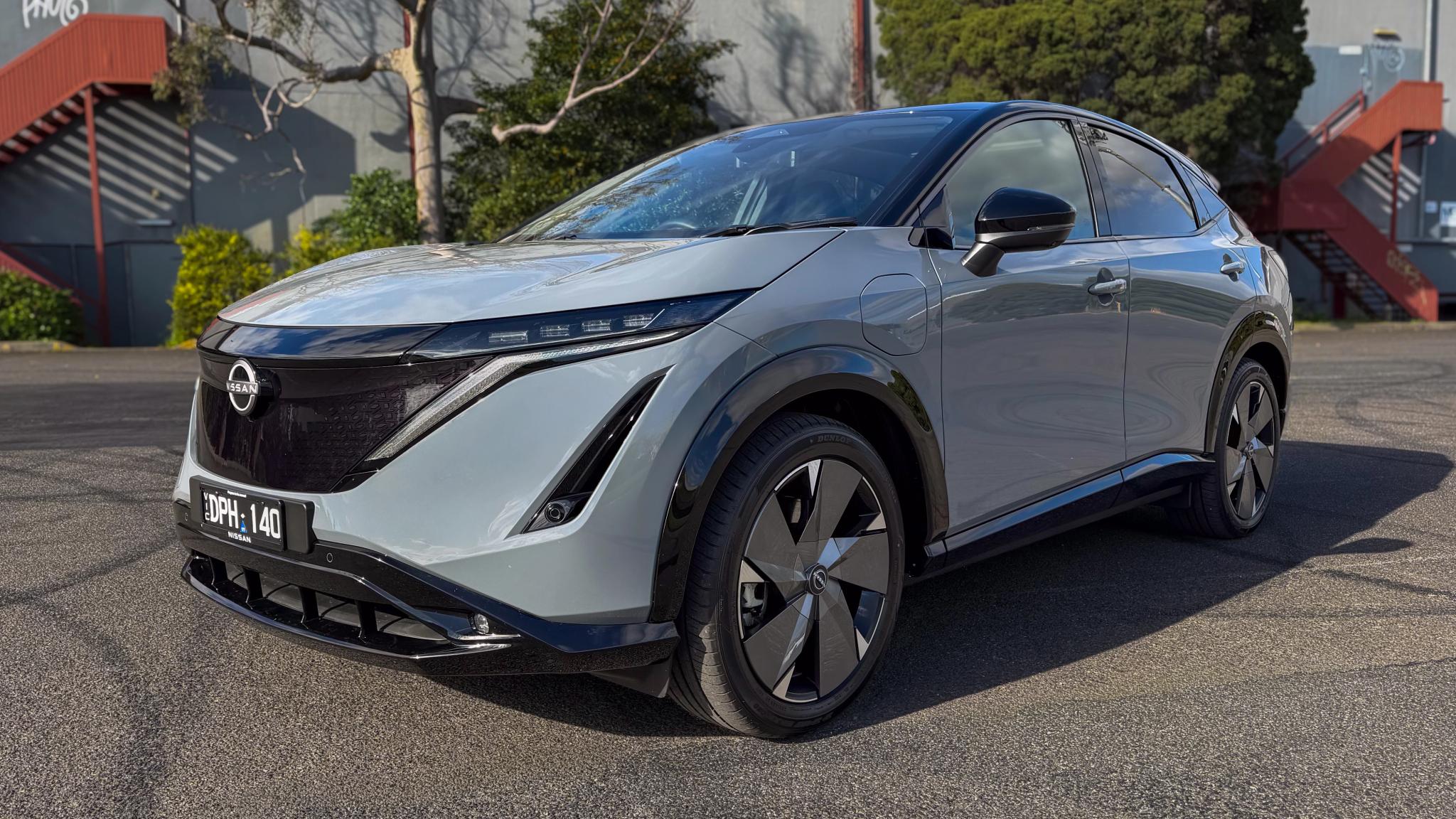
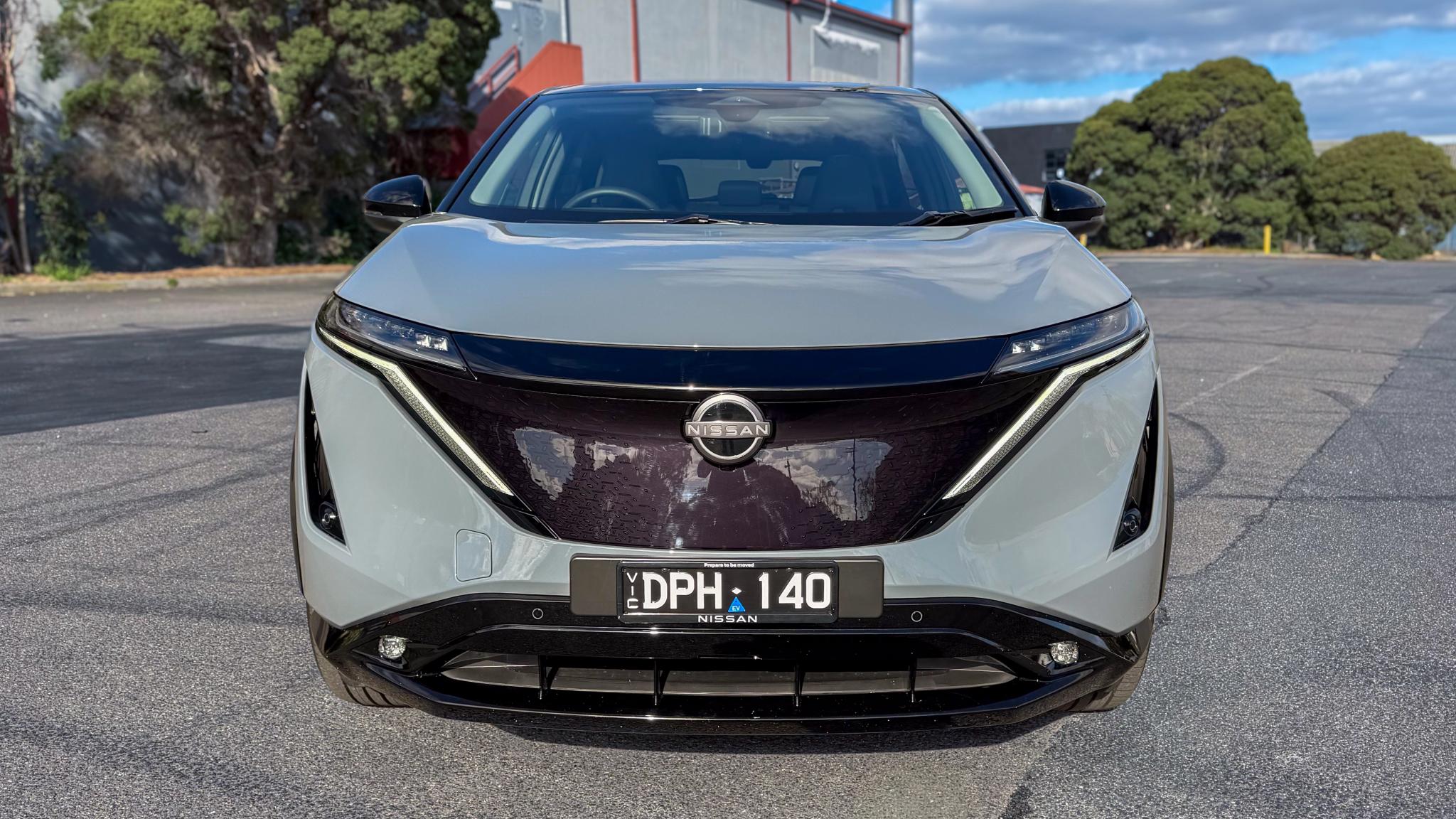
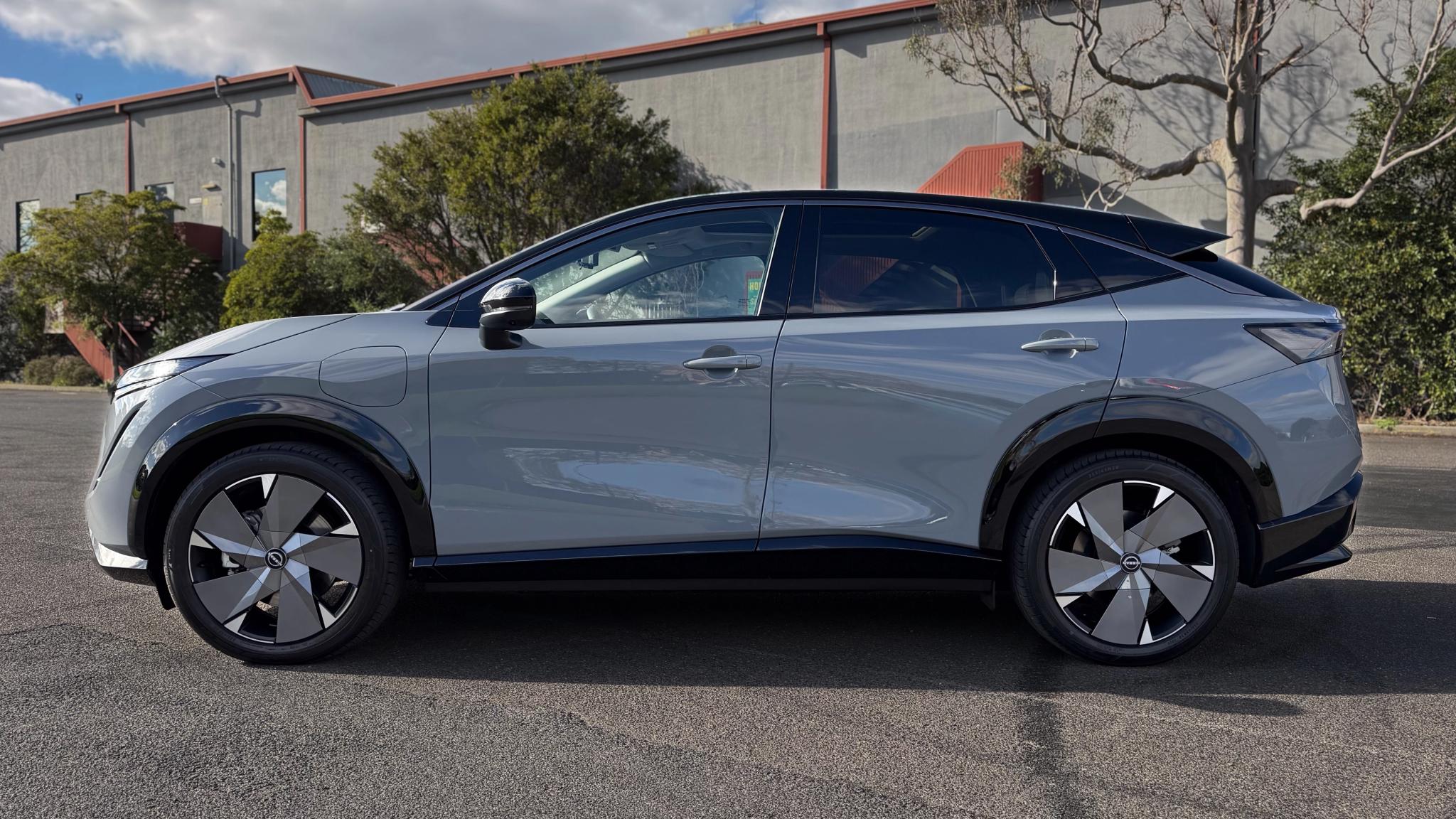
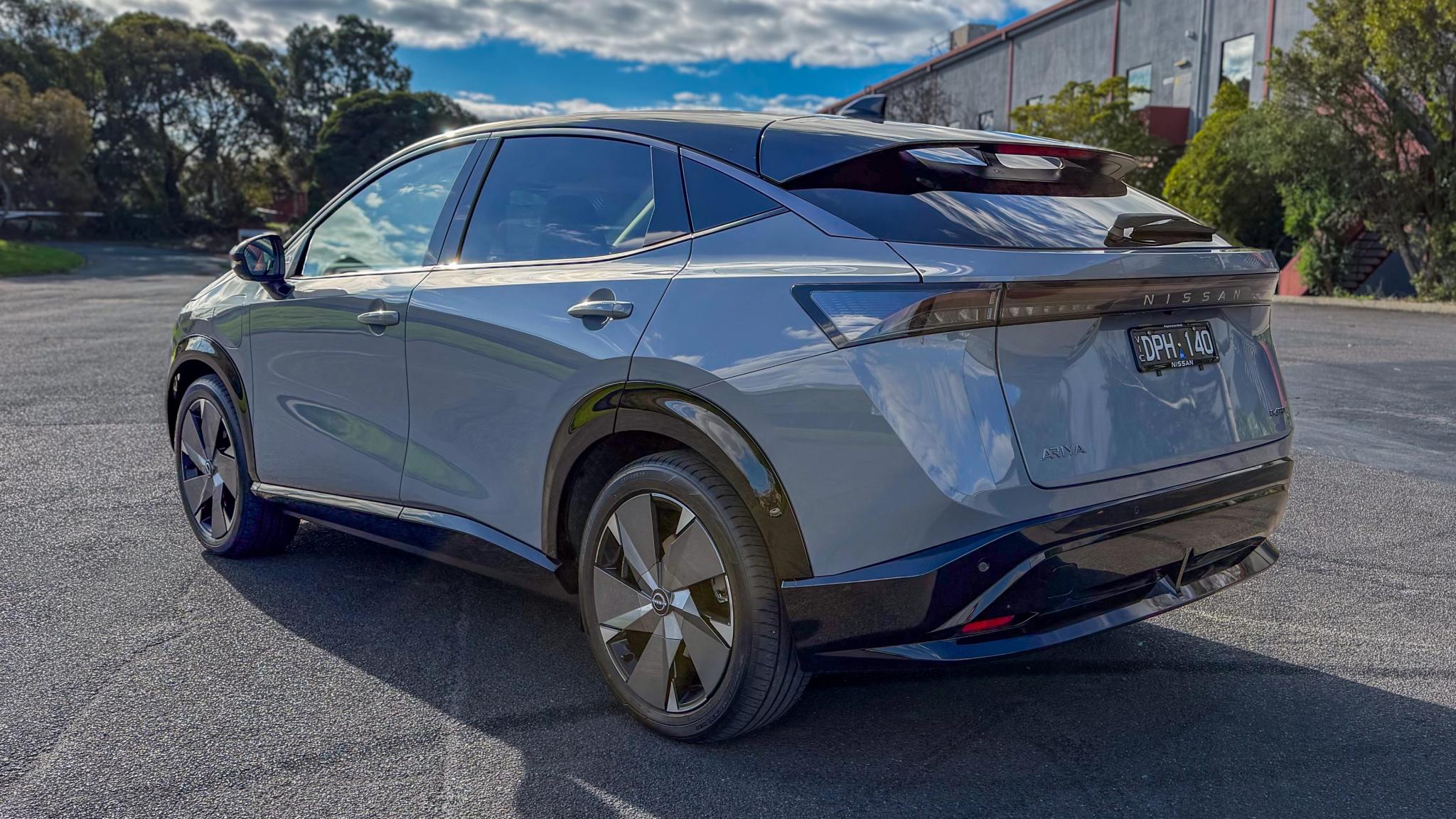
Three years on from its overseas debut, the Ariya still looks fresh, which tells you Nissan got the shape right the first time.
It reads as genuinely futuristic without trying too hard, all smooth surfacing, a blanked-out front panel where a grille used to be and a slim full-width light bar across the tail.
The sloping, coupe-flavoured roofline gives it more presence than the boxy X-Trail it sits alongside. Engage through Advance+ wear 19-inch wheels, while the Evolve gets 20s and a slightly meaner stance.
Park it next to the anonymous Chinese EVs it competes with and the Ariya has real character.
What is the Ariya like inside?
This is where the Ariya wins you over.
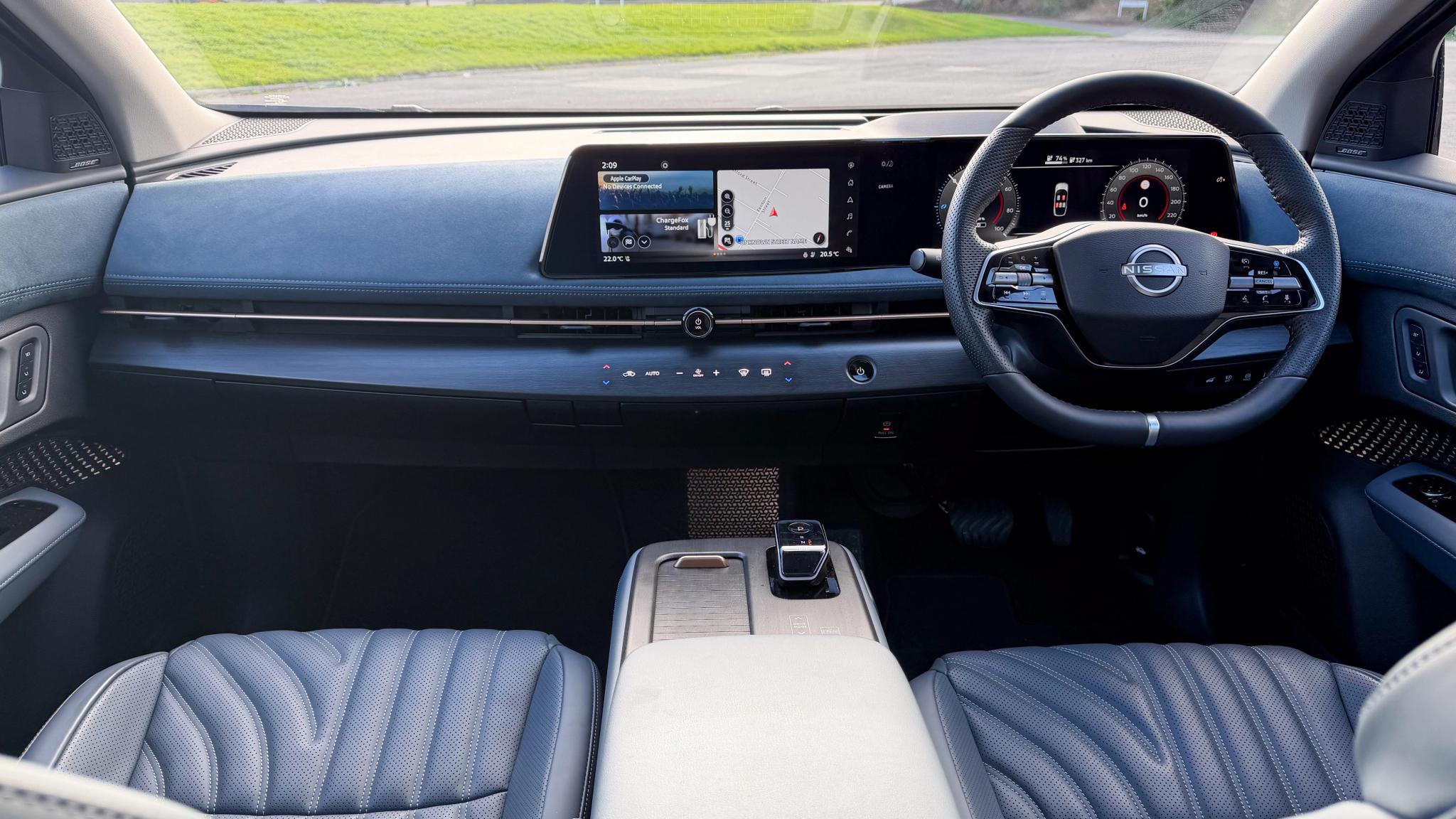
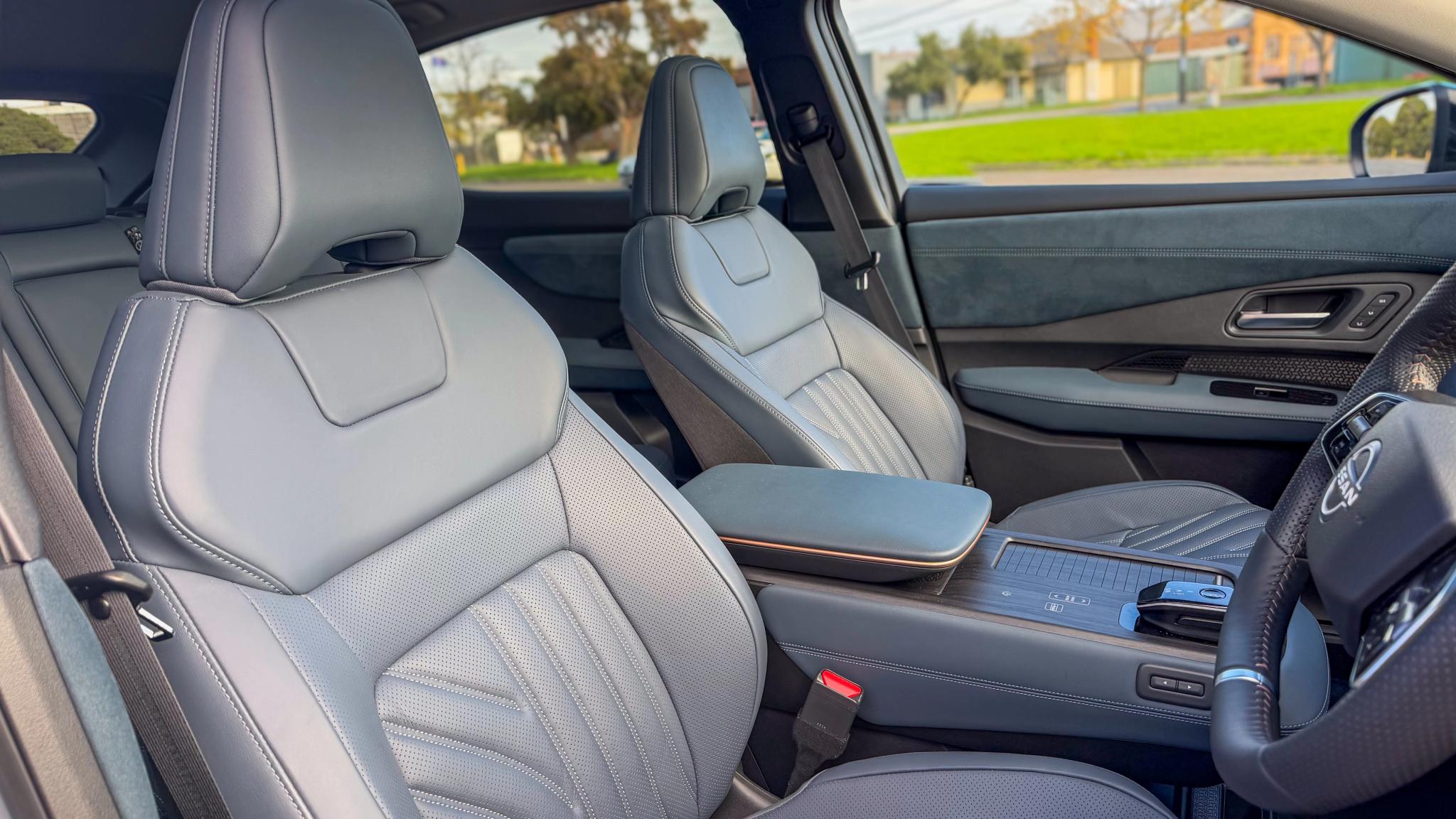
The cabin is clean, modern and airy, with soft-touch materials carried right through to the rear doors and a genuine sense that Nissan treated this as its flagship.
The party trick is the climate and drive-mode controls hidden as haptic icons in the wood-effect dash trim, which vanish into a seamless panel when the car is off. They look brilliant, though they can be a touch fiddly to hit on the move, so it is a design that photographs better than it presses.
Ahead of you sit dual 12.3-inch screens running familiar Nissan software, plus wireless Apple CarPlay, a wireless charger and a 10-speaker Bose system from Advance up.
The controls are refreshingly easy to use because they behave like proper Nissan switchgear rather than a puzzle. The power-sliding centre console is a clever touch too, freeing up space up front or for those in the back.
The one weak spot is the infotainment itself. It works fine and the menus make sense, but the graphics look dated against newer rivals, and there is no companion phone app for remote locking or charge scheduling, which is a strange omission in 2026.
How practical is the Ariya?
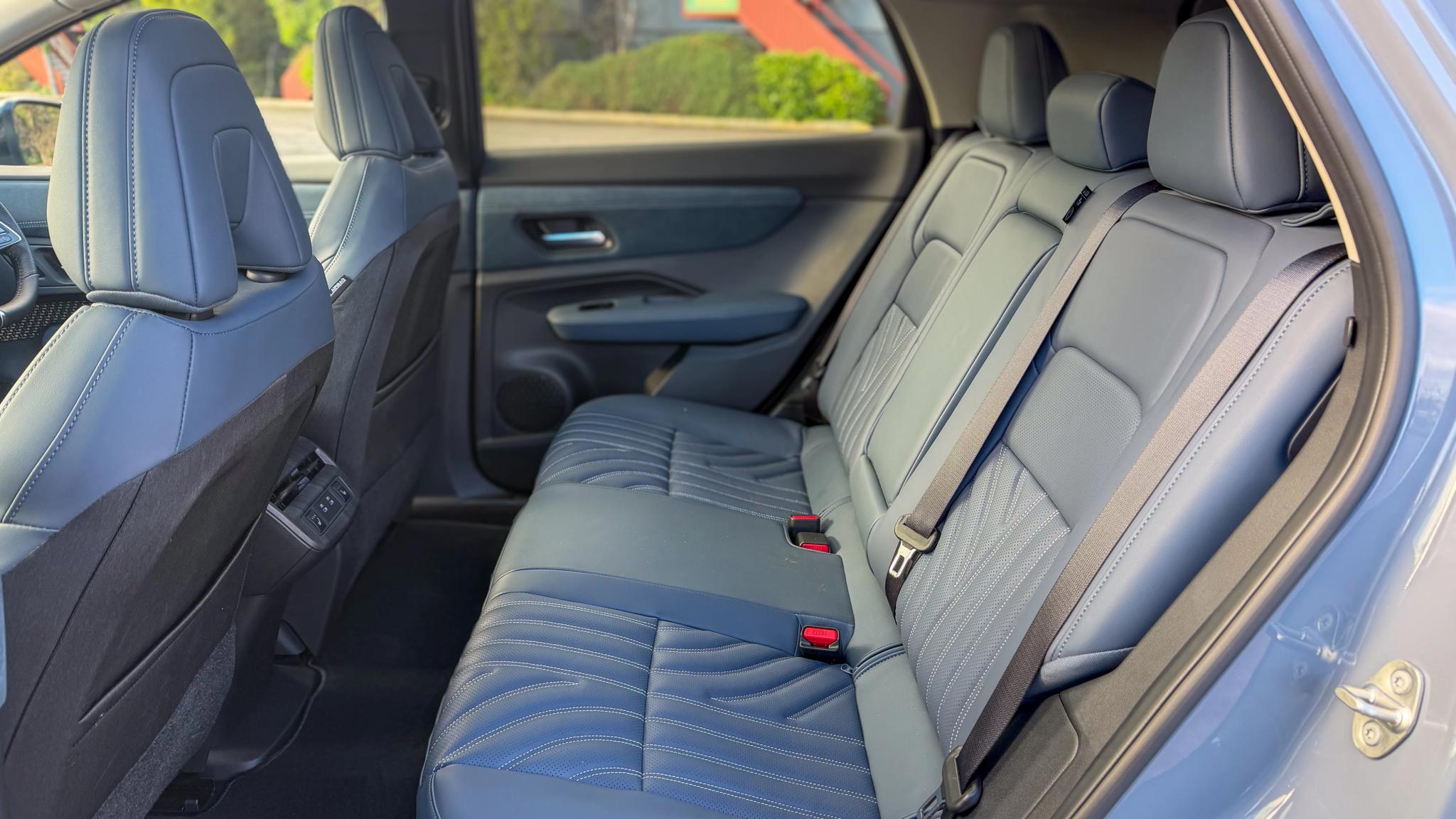
Space up front is excellent thanks to the flat floor and floating console, and rear legroom is generous. The trade-off is a fairly high rear floor that leaves taller passengers a little knees-up, and the panoramic roof on higher grades nibbles into headroom if you are much over 180cm.
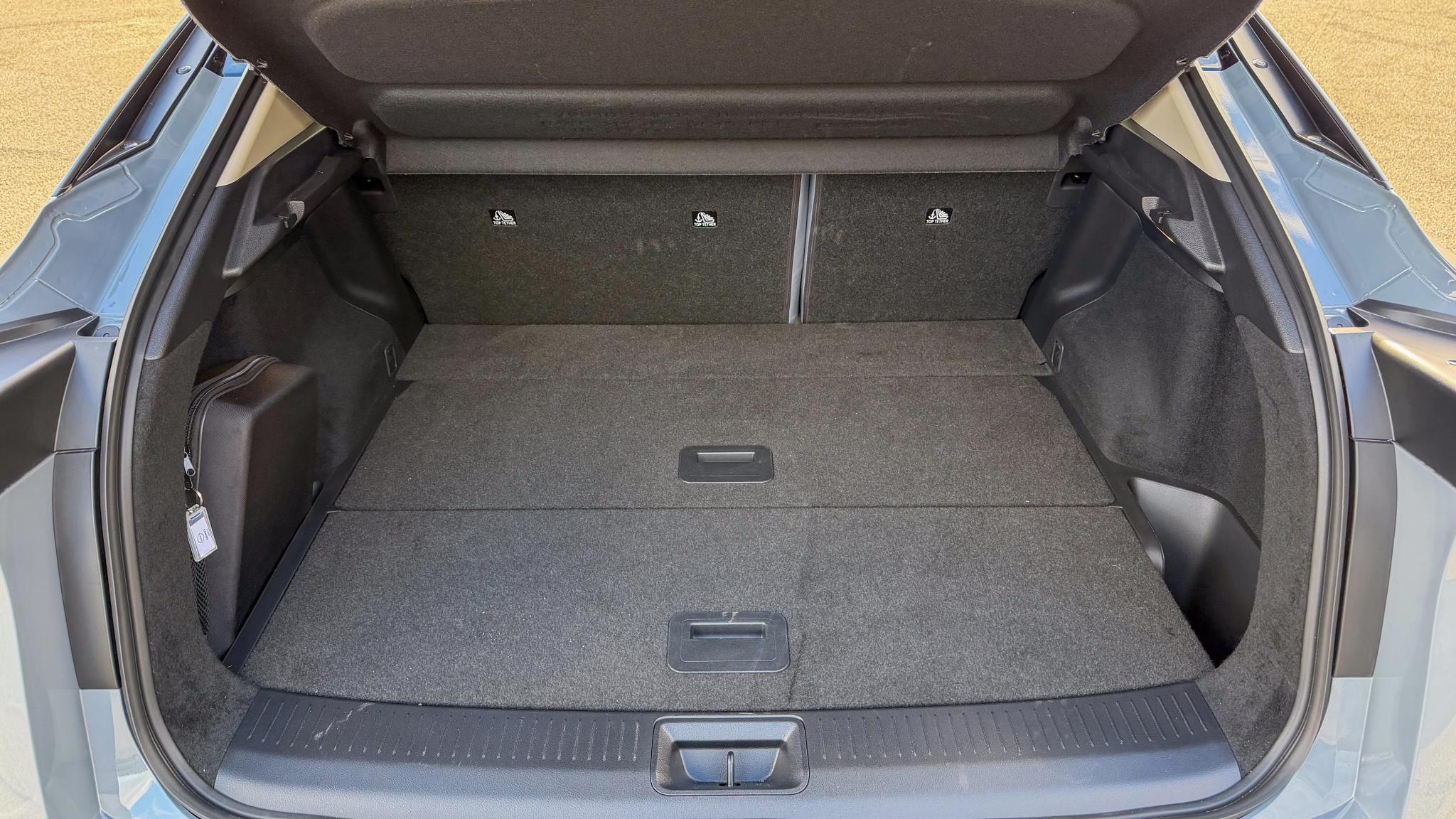
Boot space is the sticking point. You get 466 litres in the front-drive grades and 408 litres in the Evolve, expanding to around 1280 litres with the seats folded flat. That is usable rather than class-leading and there is no front boot on any variant to stash your charging cables.
Storage around the cabin is decent without being clever. The open tray between the seats looks great but lets loose items roll around, so you learn to use the covered cubby and the door bins instead.
Child-seat duties are well covered, with ISOFIX and top-tether points sorted for Australia.
What is the Ariya like to drive?
On the right road the Ariya feels like a car from a class above.
It is quiet, smooth and relaxing in a way most EVs still cannot manage, gliding along the freeway with hushed manners and effortless, linear acceleration.
The front-drive versions are not quick on paper with a claimed 8.0 to 8.1 seconds to 100km/h, but Nissan tunes the throttle so torque rolls on gently rather than lighting up the front tyres. It makes the car easy to drive smoothly. The Evolve e-4ORCE flips that character with 290kW, 600Nm and a 5.6 second sprint, though even then the delivery stays measured rather than neck-snapping.
The steering is a highlight, nicely weighted and consistent, with the kind of tied-down feel that a lot of rivals from China simply cannot match. Nissan's ProPILOT assist takes the strain out of longer freeway runs and the e-Pedal one-pedal mode is there if you want it.
Then you hit a rough back road and the shine dulls. The rear suspension gets firm and fidgety over broken surfaces, transmitting ripples into the cabin, and it gets busier again on the Evolve's 20-inch wheels. It never crashes through on big hits, but it does not breathe with the road either.
Know where you drive most: around town and on the highway the Ariya is lovely, but load it up and punt it down a pockmarked country road and it loses composure.
There is also a little wind rush at highway speed, a reminder the glass is not double-glazed.
The flagship Evolve carries one baffling flaw that overshadows all of this, though. It comes with a heated front windscreen and the embedded heating element scatters and blurs your view straight out the front of the car, particularly in low sun or at night. Nissan has fitted a defrosting feature Australia does not need and in doing so it has made the most expensive grade almost unsellable.
How efficient is the Ariya?
This is the Ariya's quiet superpower. The WLTP claims run 385km for the 63kWh grades, 504km for the Advance+ and 487km for the Evolve, but real-world testing lands well under the official energy figures, often in the mid-teens of kWh per 100km in mixed driving. In practice that means the big-battery cars comfortably crack their claimed range, which is the opposite of the usual EV experience.
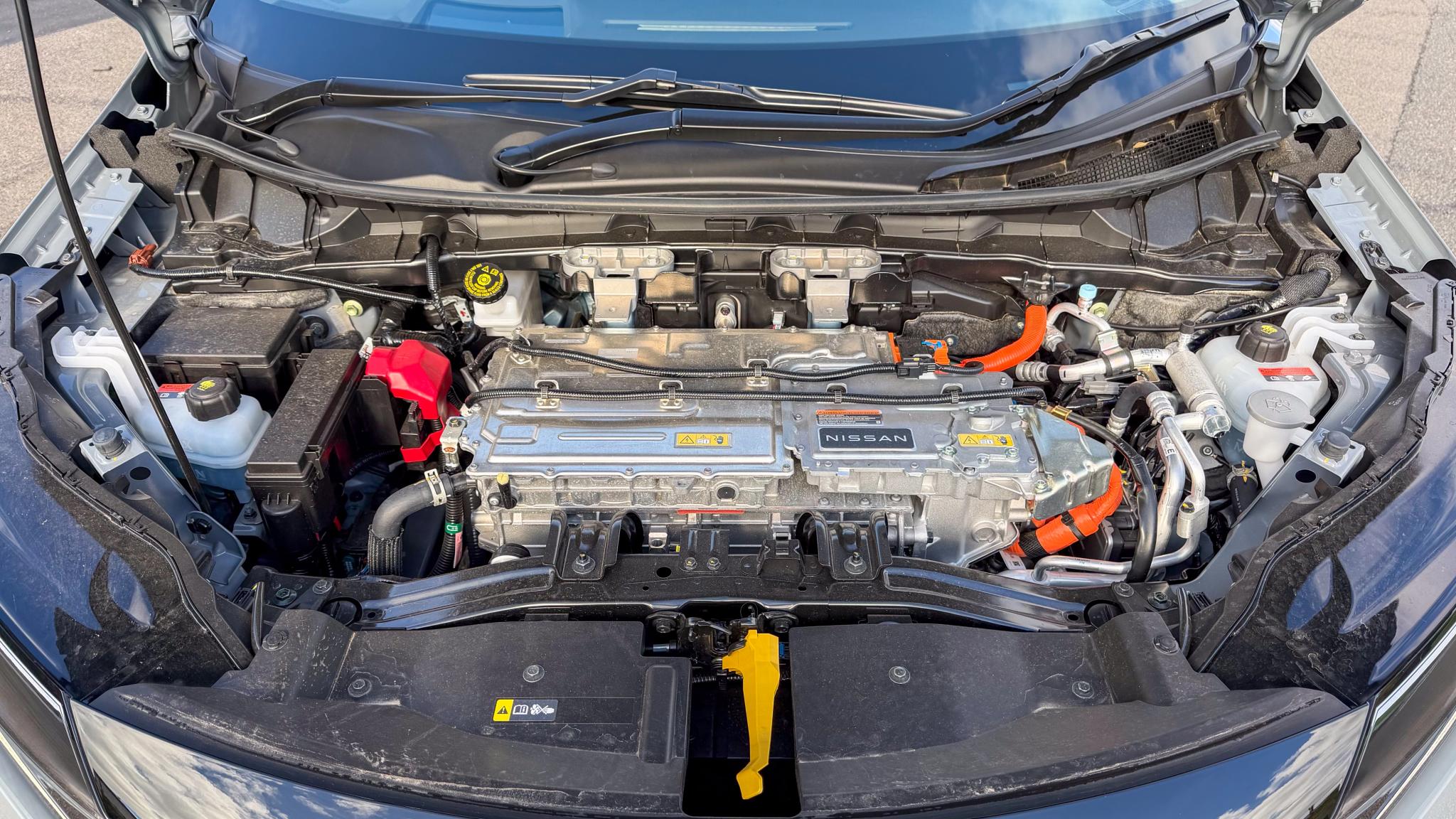
Charging is where the age shows. A 130kW DC peak gets you from 10 to 80% in roughly 35 to 40 minutes, which is fine rather than quick, and AC charging runs at 7.4kW on the base car and up to 22kW three-phase on higher grades.
Ownership is a genuine strong point. Nissan covers the Ariya with a conditional 10-year warranty if you service within its network, and capped-price servicing keeps running costs low.
| Servicing and warranty | Nissan Ariya |
| Warranty | 10 years / 300,000km (dealer serviced) |
| Battery warranty | 8 years / 160,000km |
| Service intervals | 12 months / 20,000km |
| Capped price per service | $299 |
| Five year service total | $1495 |
Service outside the Nissan network and the warranty reverts to five years and unlimited kilometres, so the decade of cover is a commitment, not a freebie.
Is the Ariya safe?
The Ariya carries a five-star ANCAP rating across the range, from testing dated 2022. It scored 86% for adult occupant protection, 89% for child occupant protection, 74% for vulnerable road users and 93% for safety assist.
Standard kit is thorough including autonomous emergency braking with pedestrian and cyclist detection, blind-spot assist, rear cross-traffic alert, lane-keep assist, adaptive cruise, traffic-sign recognition and a reversing camera, with a 360-degree camera from Advance up.
The assist systems are easy to adjust and switch off, though wound up to their highest settings the lane-keep can get assertive.
What are the main competitors to the Ariya?
The Tesla Model Y is the default, the refined all-rounder, from around $58,900 plus on-roads. It brings the slickest software, the strongest charging network and a sharper rear-drive base car, and it holds value well. The Ariya answers with a calmer cabin, a large dealer network and a warranty Tesla cannot get near.
The BYD Sealion 7 is the value choice from around $54,990 plus on-roads, undercutting the Nissan while throwing more power, more range and more screen at you. Where the Ariya hits back is feel: it drives with a consistency and finish the Sealion 7 cannot quite match.
The Kia EV5 is the clever-tech alternative from around $49,990 driveaway, roomy and well equipped with a seven year warranty. It shares the Ariya's slightly firm ride, so the Nissan wins on cabin ambience and, if you stay in-network, on warranty length.
The Geely EX5 is the curveball, from around $41,990 plus on-roads and wildly cheap for the space on offer. It cannot touch the Ariya for polish, refinement or that grown-up driving feel, but for buyers chasing the lowest price it is impossible to ignore.
Cross-shop on price and tech and the Sealion 7 or EX5 will tempt you away. Cross-shop on refinement and ownership peace of mind and the Ariya and EV5 make the stronger case.
Should I buy the Ariya?
Yes, if you buy the right one.
The Ariya is the rare EV that feels calm, premium and genuinely finished, and its warranty and cheap servicing make it a soothing long-term prospect rather than a gadget you will resent in three years.
The grade to buy is the Advance+ at $61,990 driveaway. It gives you the 87kWh battery, the real-world 500 plus kilometres of range, the panoramic roof and the head-up display, all without going near $70k.
Skip the base grades if you ever road-trip, because 385km fades fast on the highway. The Evolve is quick and nicely trimmed, but the firmer 20-inch ride and a windscreen heating element that smears your view when it kicks in take some of the gloss off for the extra spend.
Buy the Ariya if you want a quiet, refined family EV backed by a decade of warranty and a dealer you can walk into. Look elsewhere if you crave cutting-edge software or plush composure on rough roads. It deserves far more attention than it gets.
VerdictThe Beep Verdict
Rob Leigh
Co-founder & Director
Rob Leigh is Co-founder and Director of The Beep based in Melbourne, Australia. He has 15+ years inside a major automotive OEM, specialising in product planning, pricing and vehicle strategy.
About Author