2026 Mercedes-Benz GLA review
The facelifted GLA drives better than a small SUV has any right to, but the badge tax is real and the value case is the hardest part of the pitch.

Rob Leigh
Pros
- Genuinely fun to thread through traffic
- Cabin still feels properly Mercedes
- Wireless smartphone mirroring now standard
Cons
- Servicing is expensive and the upper variants get dear
- Touch-sensitive steering wheel controls are a fiddle
- Piano black coats half the interior
Our verdict
The GLA is for the buyer who wants a small, premium SUV that drives like a warm hatch and wears the three-pointed star without apology. It nails the badge, the cabin ambience and the way it moves down a road. The catch sits in the running costs, because servicing is pricey and the climb up the range gets expensive fast.
Find a deal on the Mercedes-Benz GLAWhat does the GLA cost in Australia?
Mercedes opens the GLA range at $63,600 for the GLA200 and runs it all the way to $99,000 for the AMG GLA35. That is a wide spread for one small SUV, and it tells you Mercedes wants the badge to do plenty of the selling.
| Variant | Engine | Drivetrain | Price |
| GLA200 | 1.3L turbo petrol, 48V mild hybrid | FWD | $63,600 |
| GLA250 e | 1.3L turbo plug-in hybrid, 160kW | FWD | $78,000 |
| GLA250 4MATIC | 2.0L turbo petrol, 48V mild hybrid | AWD | $80,500 |
| Mercedes-AMG GLA35 4MATIC | 2.0L turbo petrol, 48V mild hybrid | AWD | $99,000 |
*Price excluding on-roads.
Here is the reality check. The GLA200 sits right in the thick of the segment. A BMW X1 sDrive18i opens at $63,400, near enough identical, while an entry Audi Q3 slips in just below both at $61,600.
The GLA is not the cheapest, but it is no longer the pricey outlier it once was either. Where the value case wobbles is the climb upwards, because the $80,500 GLA250 4Matic and $99,000 AMG GLA35 ask serious money, and the servicing costs apply no matter which one you pick.
What does the GLA look like?
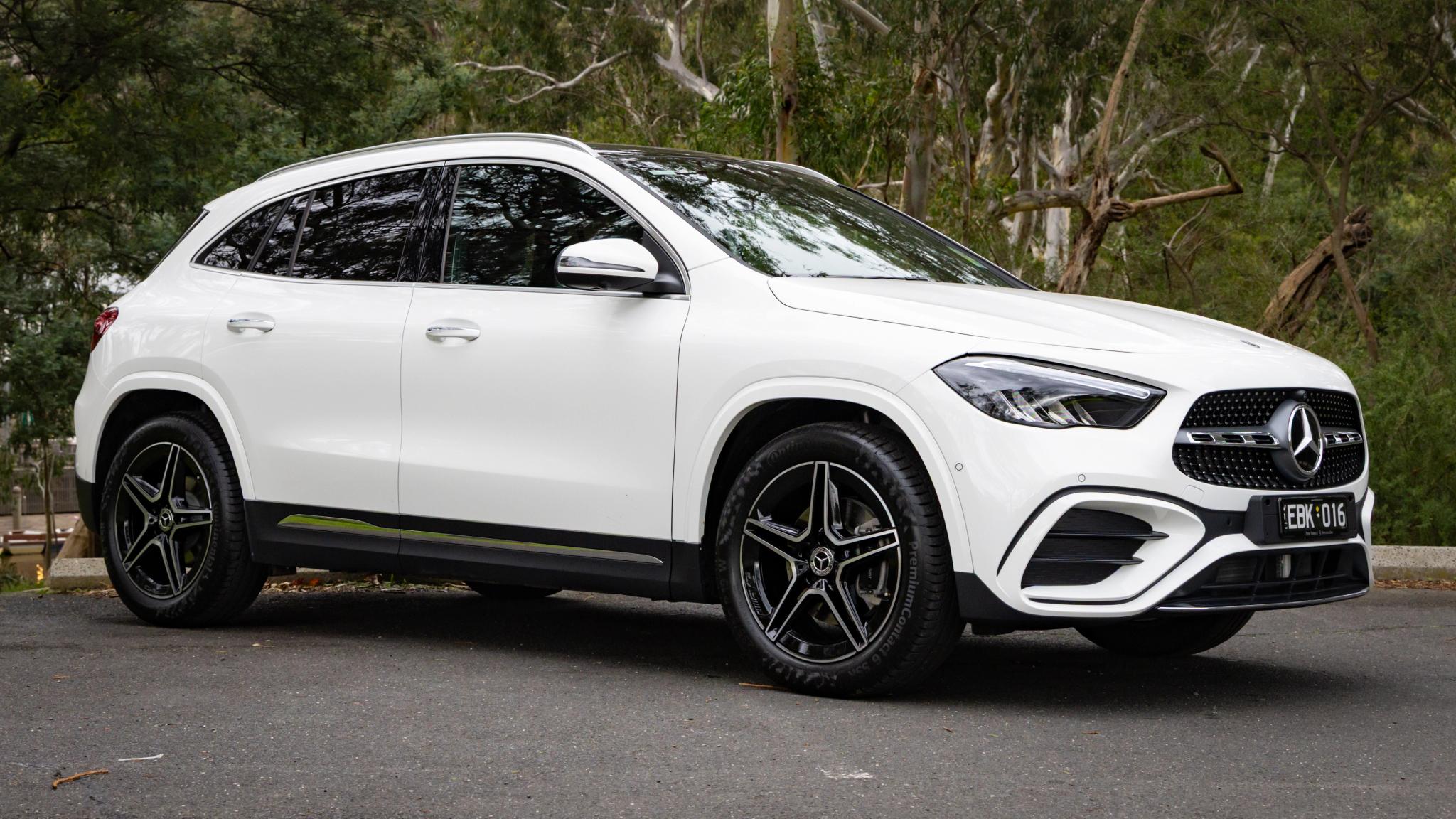
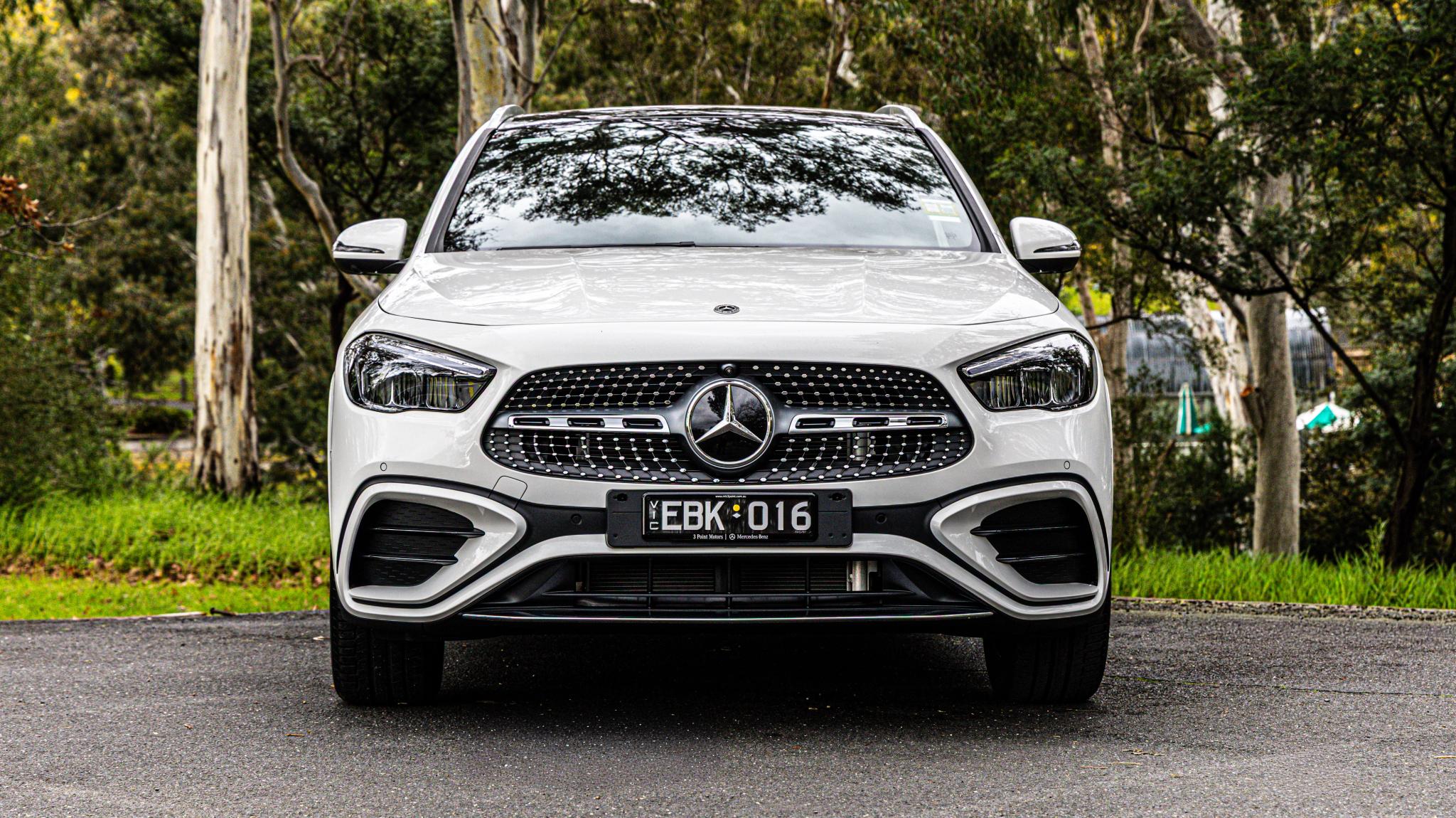
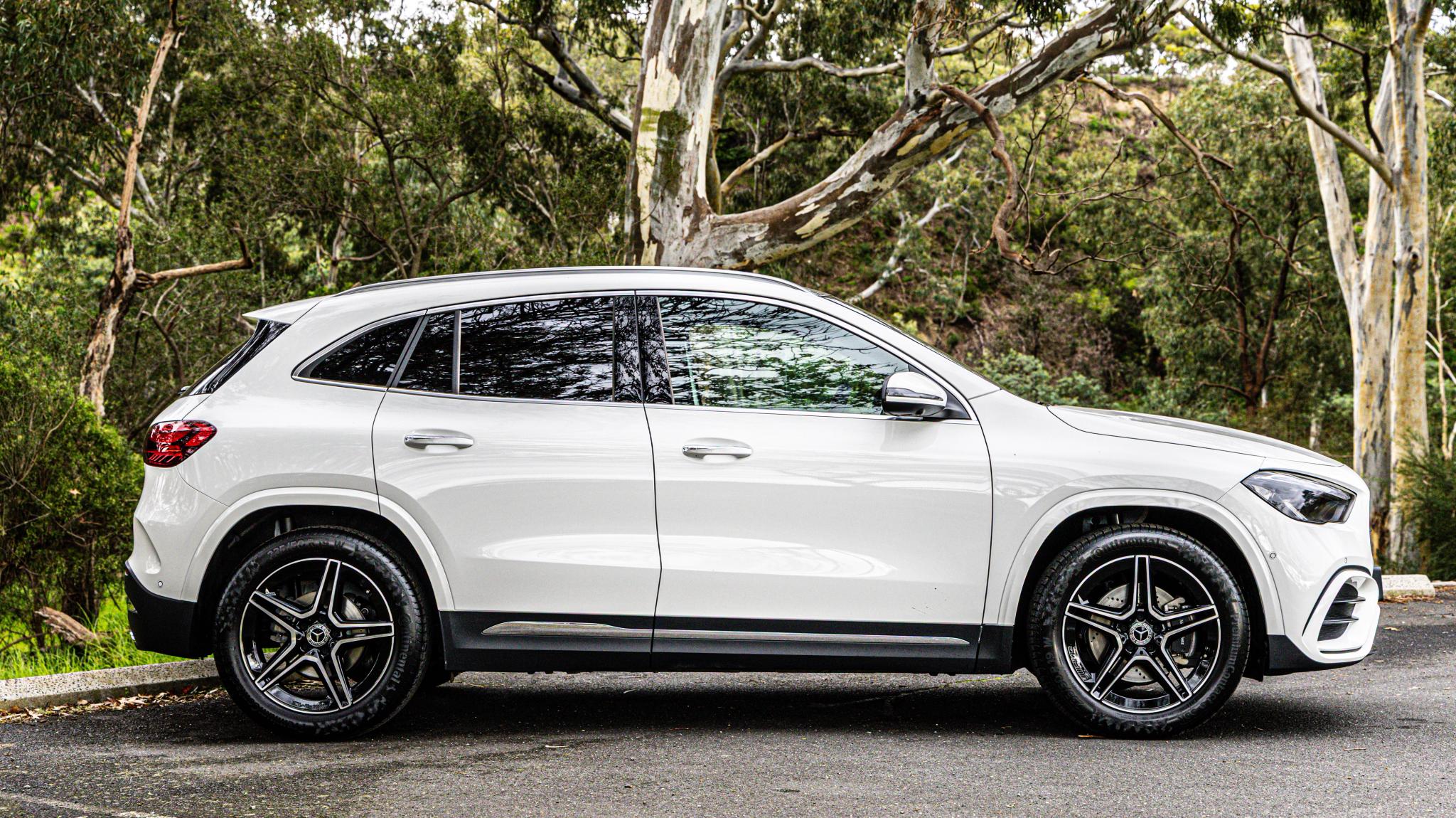
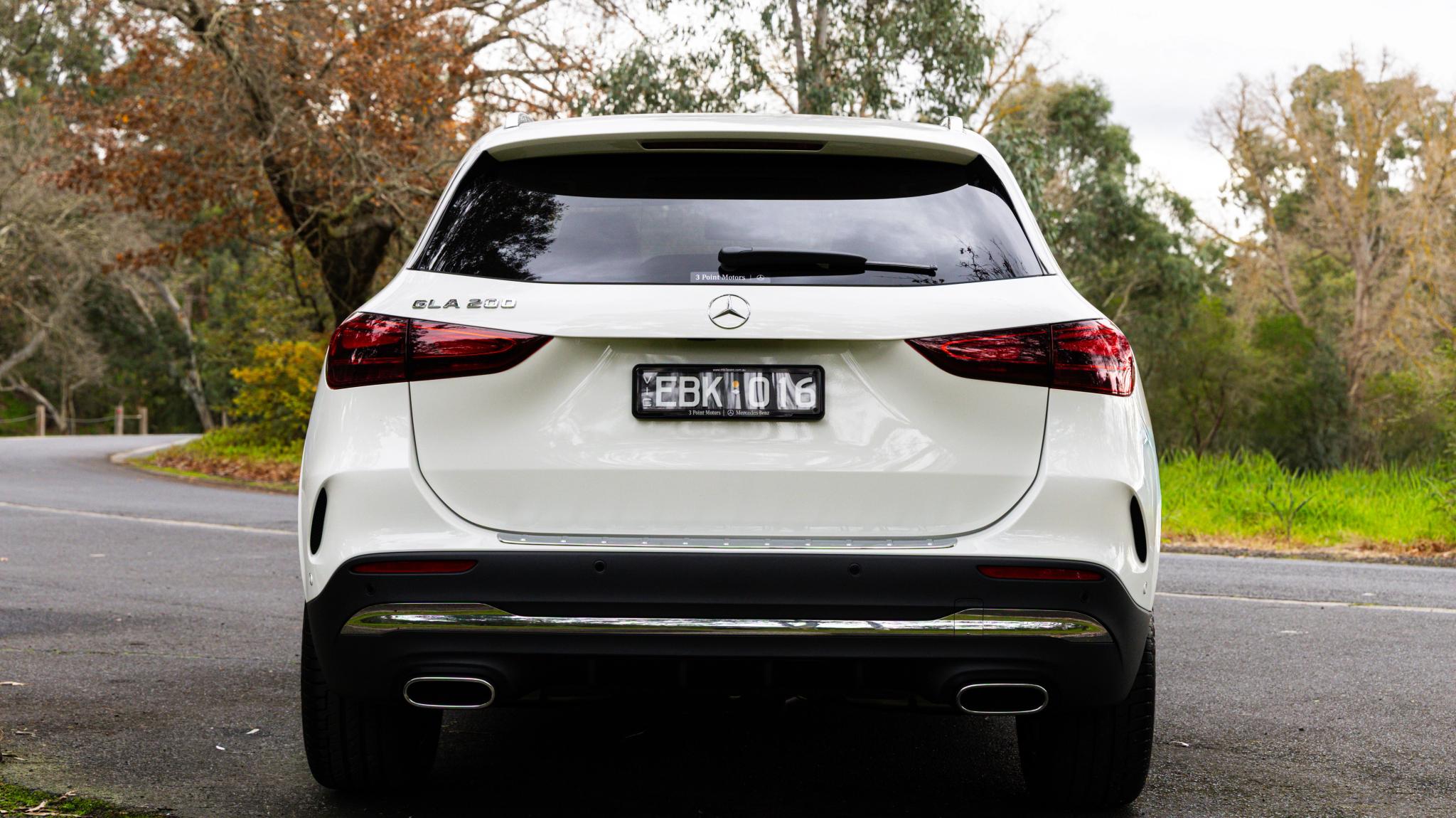
The mid-life update is the automotive equivalent of a fresh haircut. Mercedes has tidied the headlight and tail-light graphics, reworked the front bumper and grille, and left the rest largely alone. Park a new one next to the old one and you will spot the changes. Glance at it in a car park and you probably will not.
That is not a criticism so much as an observation. The GLA has always looked like an A-Class on a slightly taller ride height, and it still does. The black cladding around the sills and arches adds a hint of SUV ruggedness, the standard AMG Line exterior package sharpens the stance, and the alloys fill the arches nicely. It is handsome in a restrained, German way. Nobody will accuse it of being exciting, but nobody will think it looks cheap either, and in this segment that matters.
What is the GLA like inside?
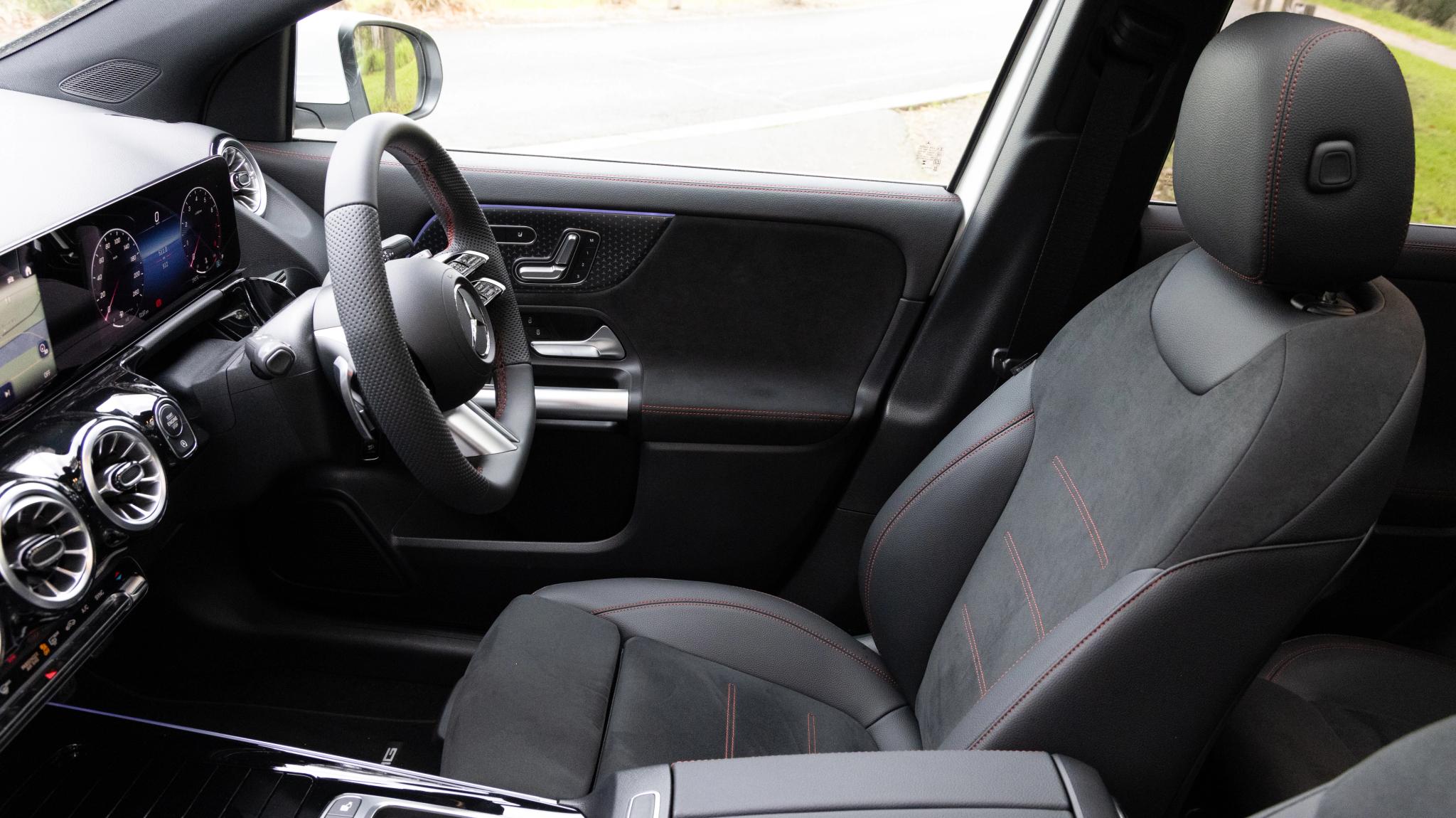
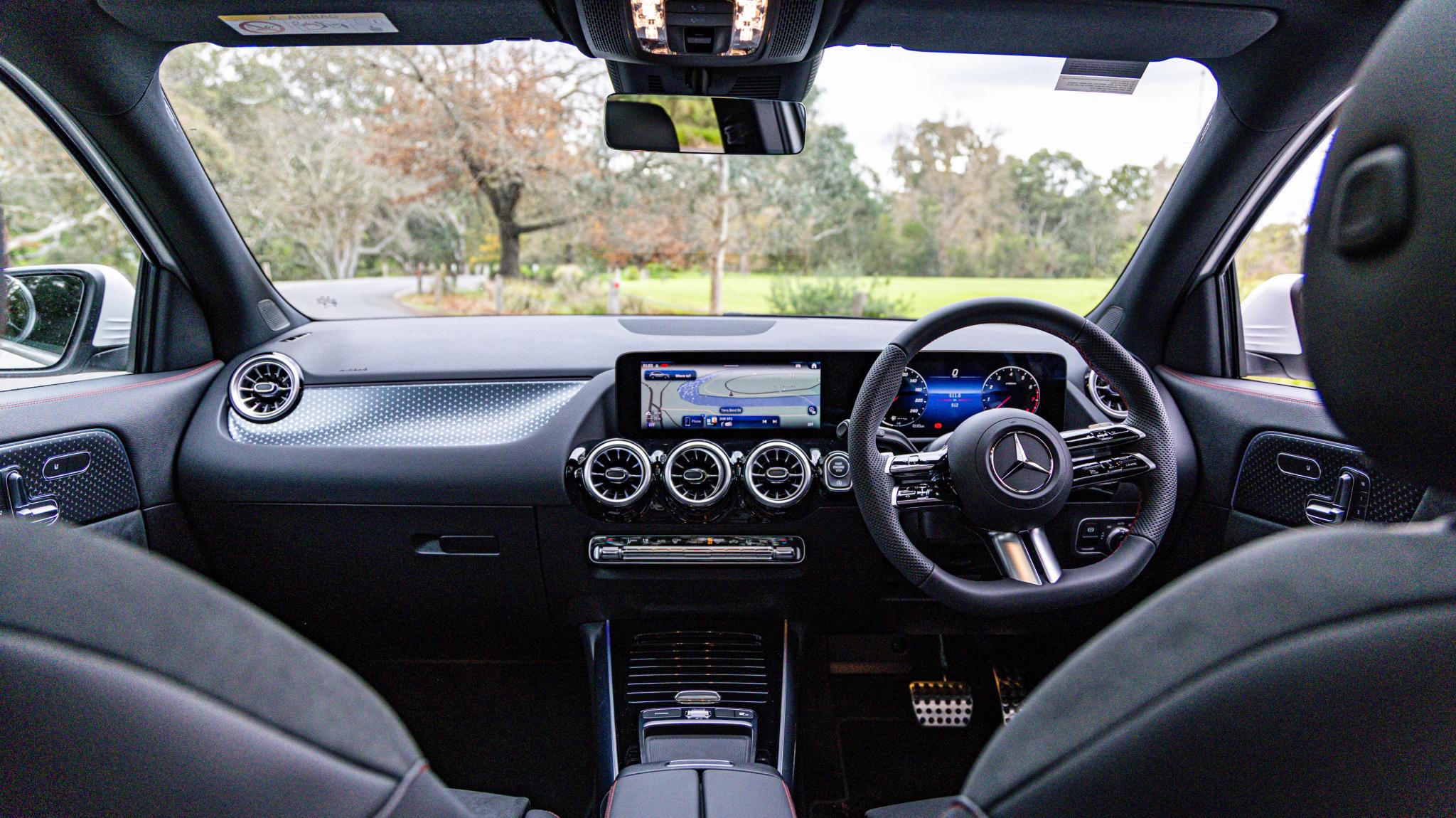
This is where the GLA earns a chunk of its price. Climb in and the small details land. The doors shut with that familiar weighty thunk, the sport seats offer loads of electric adjustment and extendable thigh support, and the standard microfibre and Artico trim feels upmarket without turning your back sweaty on a warm day.
Ahead of you sit twin 10.25-inch screens, one for the instruments and one for infotainment. The instrument cluster is crisp and endlessly configurable, and the touchscreen is quick and easy to read. Mercedes has finally added wireless Apple CarPlay and Android Auto, and the mirroring now fills the whole display rather than sitting in a little box. Good.
The wins stop at the steering wheel. The touch-sensitive sliders and buttons look slick and work poorly. They register inputs you did not mean to make, and there is no clean way to skip a track without diving into the screen. Physical buttons did this job better, and the GLA used to have them.
Then there is the piano black. It is everywhere, it collects fingerprints and dust within minutes, and it dulls the otherwise premium feel. Where the touchpad used to live on the centre console you now get an oddly shaped cubby that a large phone will not fit into. These are small gripes, but at this money small gripes count.
How practical is the GLA?
Decent, with caveats. At a touch over 180cm you can sit behind your own driving position in the rear and still have leg, head and shoulder room to spare. Two adults travel happily back there. Three is a squeeze, thanks to a sizeable transmission tunnel and the GLA's compact width.
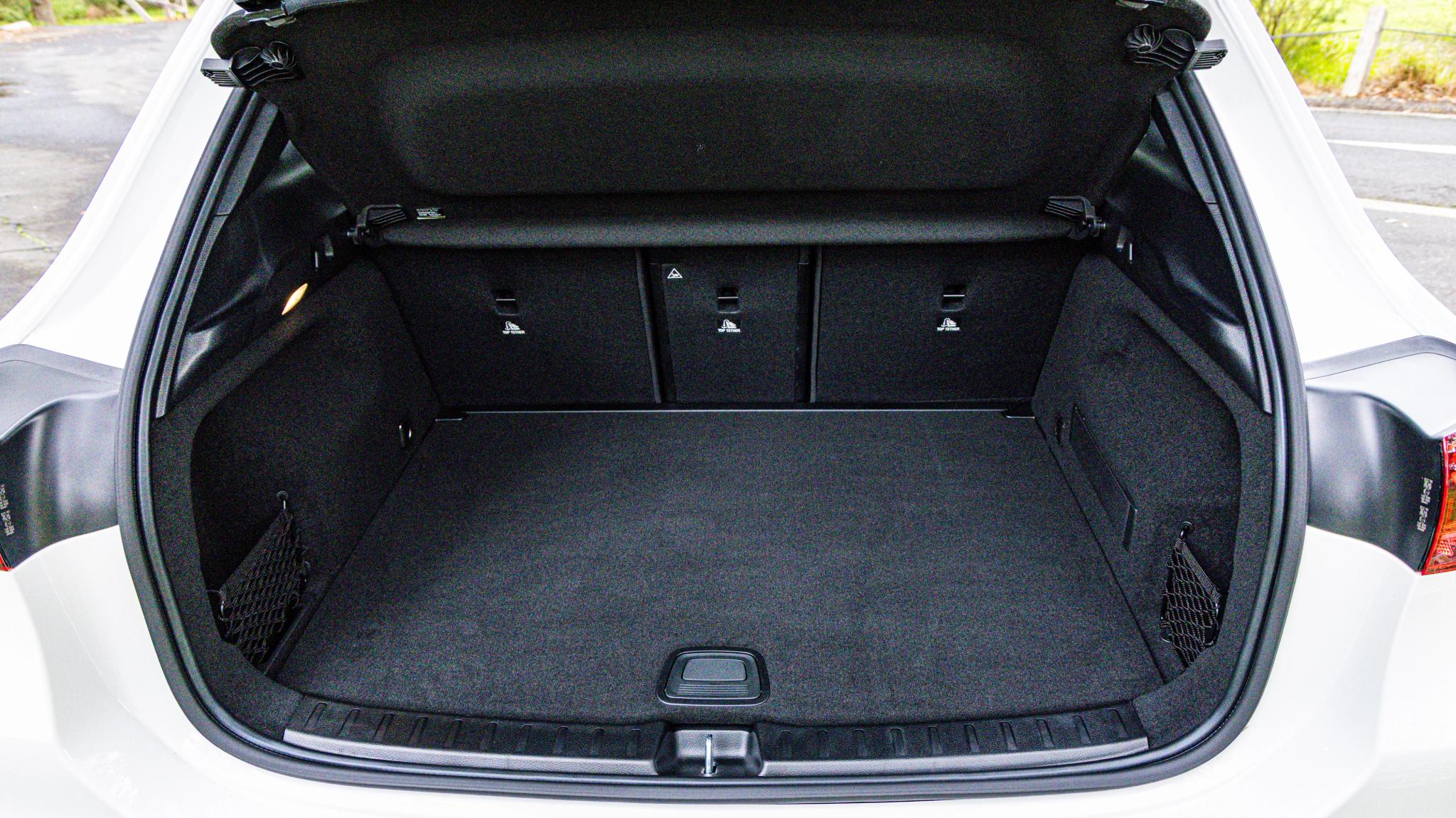
Rear amenities cover the basics with air vents, USB-C ports and a fold-down armrest with cupholders. Boot space runs to 425 litres with the seats up and 1,420 litres folded, which is fine rather than generous. A Volvo XC40 and an Audi Q3 both swallow more.
The bigger asterisk is the lack of a spare. The GLA rides on run-flat tyres, with a tyre repair kit available as a no-cost option. If you spend real time on country roads, that is worth thinking hard about before you sign.
What is the GLA like to drive?
We spent our time in the GLA200, the entry car, and it is a more convincing thing than the spec sheet suggests.
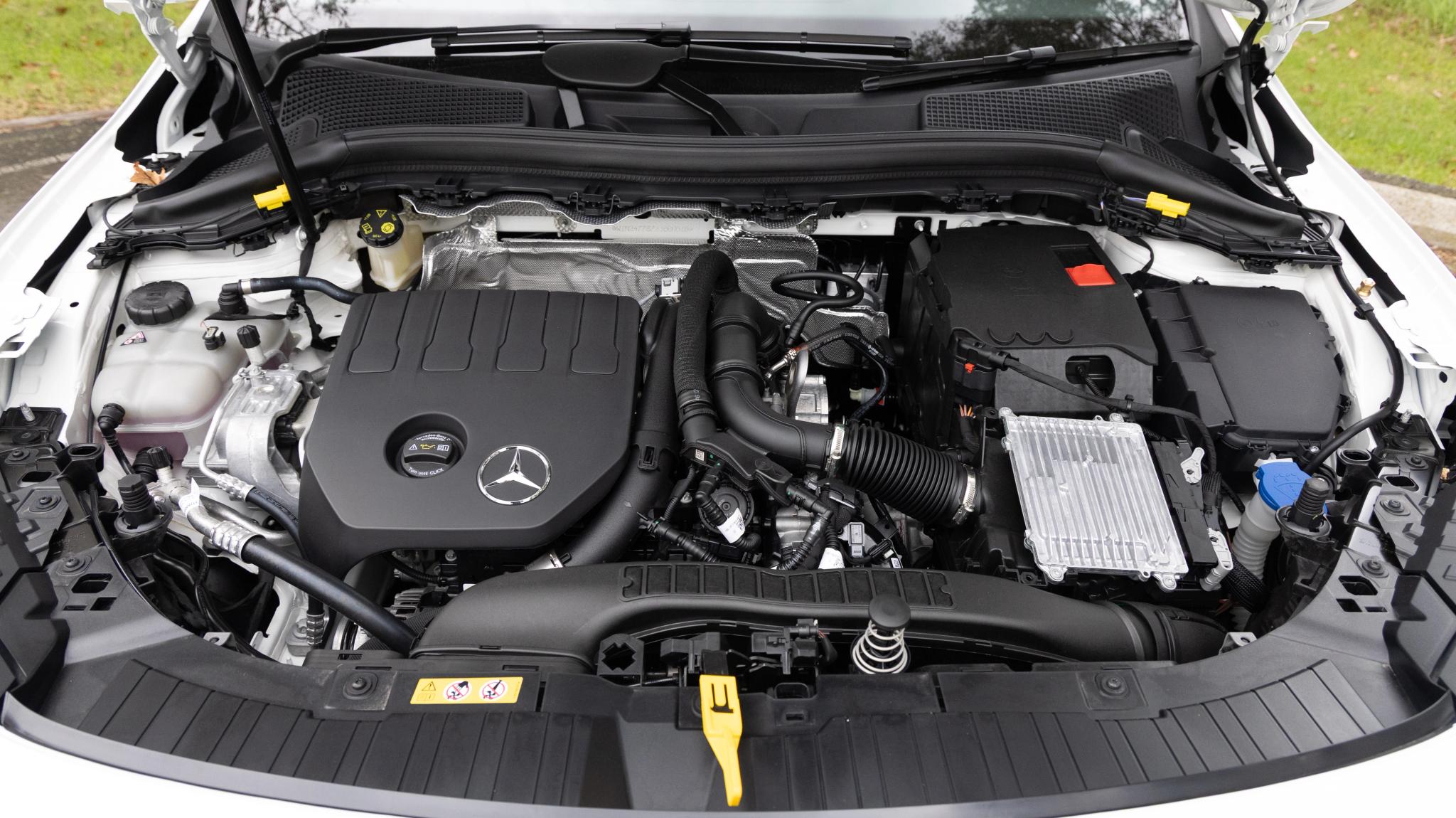
The 1.3-litre turbo four is never going to pin you to the seat, but it is willing around town. Off the line it feels keener than its modest outputs imply, and for the urban commute it has all the muscle you actually use.
The seven-speed dual-clutch is the usual story. Snappy and smooth once you are moving, occasionally dim-witted at crawling pace, with a beat of hesitation as it works out which gear it wants from a standstill. Roll backwards on a hill before it engages and you get a small jolt of doubt. Live with it for a week and you learn to feather it.
What lifts the GLA above the small-SUV norm is the way it changes direction. The steering is direct and nicely weighted, the nose tucks into corners with real eagerness, and you can hustle it down a twisty road and come away grinning. There is some body roll, because physics, but less than the tall-hatch shape leads you to expect. This is a car that wants to be driven, and that is rare down here.
The trade-off is the ride. The lowered comfort suspension copes well with general urban lumps, but a sharp, single hit can crack through to the cabin with a brittle edge, and the run-flat tyres add some road roar at highway pace. It is composed and settled most of the time. It just lets you know when the road turns nasty.
How efficient is the GLA?
The GLA200's 1.3 engine sips around 7.4L/100km on the combined claim, and it asks for 95-octane premium unleaded. Real-world numbers will sit a little higher in stop-start traffic, but it is an easy car to run gently.
Buyers chasing genuine electric running should look at the GLA250 e plug-in hybrid, which can cover everyday commutes on battery alone before the petrol engine wakes up.
Servicing is where Mercedes claws back some margin. Intervals are a generous 12 months or 25,000km, but the pre-paid plans are not cheap.
| Pre-paid service plan | Price |
| 3 years | $3,495 |
| 4 years | $4,650 |
| 5 years | $6,185 |
The warranty is competitive at five years and unlimited kilometres, with five years of roadside assistance to match. Just budget for the servicing, because it adds up over time.
Is the GLA safe?
The GLA carries a five-star ANCAP rating, though it is worth knowing that rating dates back to 2019 testing of the related B-Class. By 2026 that is getting long in the tooth, and it does not reflect the tougher criteria newer cars face.
The kit list is strong, mind you. Every GLA now gets adaptive cruise control as standard following the update, plus autonomous emergency braking, blind-spot monitoring, lane-keep assist, safe-exit warning, traffic sign recognition, a sharp surround-view camera and nine airbags. The adaptive cruise is calm and confident, and the lane-keep is relaxed rather than nannying. Active lane-centring, however, lives behind an optional package, which feels stingy at this price.
What are the main competitors to the GLA?
The BMW X1 is the natural cross-shop. It opens at $63,400, near enough to the GLA200, and counters with a roomier cabin, sharper technology and the same appetite for a good road. The entry car runs a 1.5-litre three-cylinder turbo, and the hot M35i sits at $93,900 if you want the quick one. Overall the X1 feels more modern.
The Audi Q3 plays the understated premium card and does it well, with a classy cabin and a comfortable, mature road manner. It is less playful than the GLA, and at $61,600 to start it slides in under the entry Mercedes, so the badge-neutral buyer gets a polished interior and an easygoing nature for a touch less money.
The Volvo XC40 brings a more polished interior, a bigger boot and proper electrified options including a plug-in hybrid and a fully electric sibling. For families who value space and calm over outright handling, it makes a strong case.
The Lexus UX is the left-field pick. It is down on outright pace and cabin space, but the hybrid efficiency, build quality and Lexus ownership experience win loyal buyers who simply want something that never misses a beat.
Should I buy the GLA?
If you want a small premium SUV that genuinely entertains, wears a desirable badge and feels special inside, the GLA delivers. The GLA200 in particular is the sweet spot of the range, with enough performance, sensible entry pricing and the same fun chassis as its pricier siblings.
The honest catch is the running costs and the upper rungs of the ladder. Servicing is dear, and the jump to the 250 4Matic or the AMG GLA35 demands real money against rivals like the BMW X1 M35i. But at the entry point the GLA200 holds its own, and it is genuinely good to drive. Die-hard Mercedes fans will be delighted. Everyone else should still sample an X1 or a Q3 first, because they are excellent, but the GLA no longer loses on price the moment you walk in the door.
Ready to buy the GLA? Compare real prices and find the best deal.
VerdictThe Beep Verdict
Rob Leigh
Co-founder & Director
Rob Leigh is Co-founder and Director of The Beep based in Melbourne, Australia. He has 15+ years inside a major automotive OEM, specialising in product planning, pricing and vehicle strategy.
About Author