2026 Honda Civic review
Honda asks luxury-hatch money for a small car, but the Civic hybrid answers with real refinement, a cracking drivetrain and a cabin that feels a class above.

Rob Leigh
Pros
- Superb hybrid: punchy off the line, smooth and genuinely frugal
- Fun to drive with a classy, solidly built cabin
- Refreshingly gimmick-free and cheap to service
Cons
- Fifty grand is a big ask for a Civic
- Light on kit next to rivals (no 360 camera or head-up on either grade)
- No spare wheel and short 10,000km service intervals
Our verdict
The 2026 Honda Civic is for buyers who care more about how a car feels than how it flexes. It gets the fundamentals right, pairs one of the best hybrid systems on sale with a chassis that actually makes you smile, and does the lot without burying you in touchscreens. The catch sits on the window sticker, because $49,900 driveaway is serious money for a small Honda.
What does the Civic cost in Australia?
The range is now hybrid only and it kicks off at $49,900 driveaway for the e:HEV L with the better-equipped e:HEV LX at $55,900 driveaway. Both prices are fixed, so there is no haggling to chip away at them.
| Variant | Powertrain | Drivetrain | Driveaway price |
| e:HEV L | 2.0L hybrid, 135kW | Front-wheel drive | $49,900 |
| e:HEV LX | 2.0L hybrid, 135kW | Front-wheel drive | $55,900 |
| Type R | 2.0L turbo petrol, 235kW | Front-wheel drive | $85,000 |
See Civic driveaway pricing and specifications →
That entry figure raised eyebrows when this generation landed, and it still does. The thing is, rivals have crept up to meet it. A top Toyota Corolla hybrid tops out around $43,000 driveaway, a Mazda 3 Astina or mid-spec VW Golf sits near $48,000, so the Civic is dearer than most, but no longer in a league of its own.
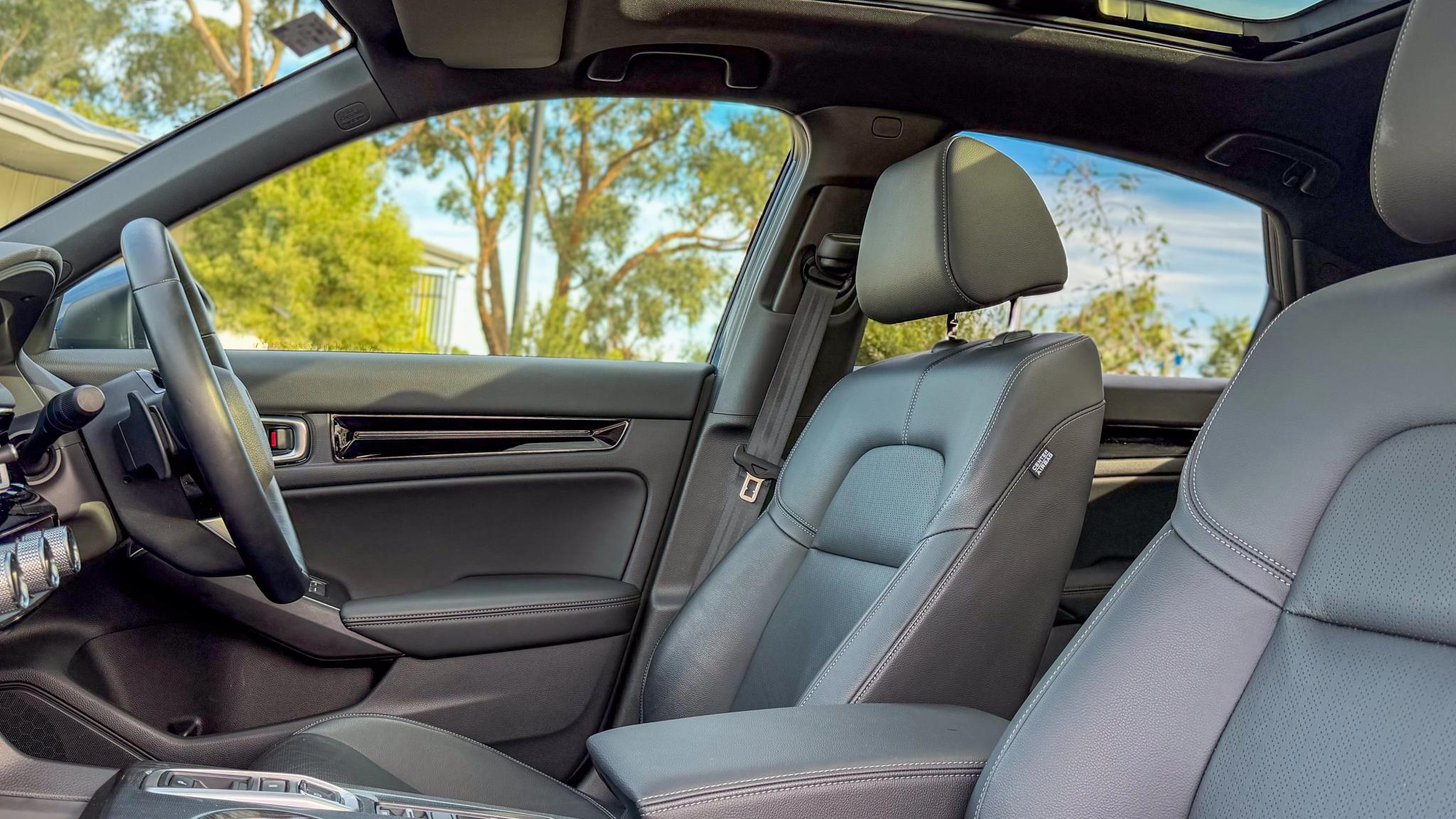
Step up to the LX and the extra $6,000 buys full leather trim, power-adjustable front seats, a panoramic sunroof, a wireless phone charger and an auto-dimming mirror. The L already covers the essentials, so the LX is more about indulgence than necessity.
For the record, the $85,000 Type R is still there if you want fireworks, but that is a very different car for a very different buyer.
What does the Civic look like?
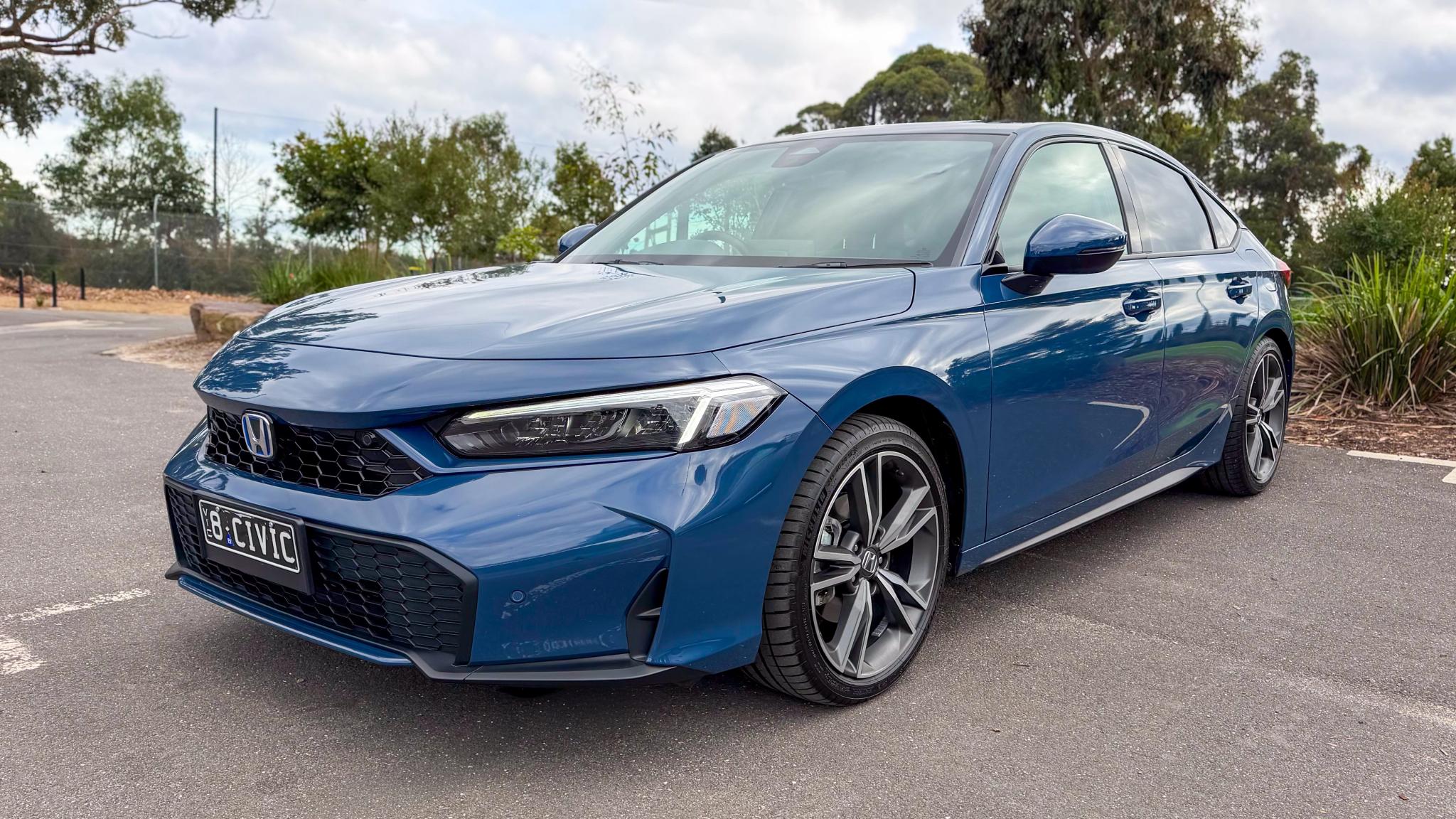
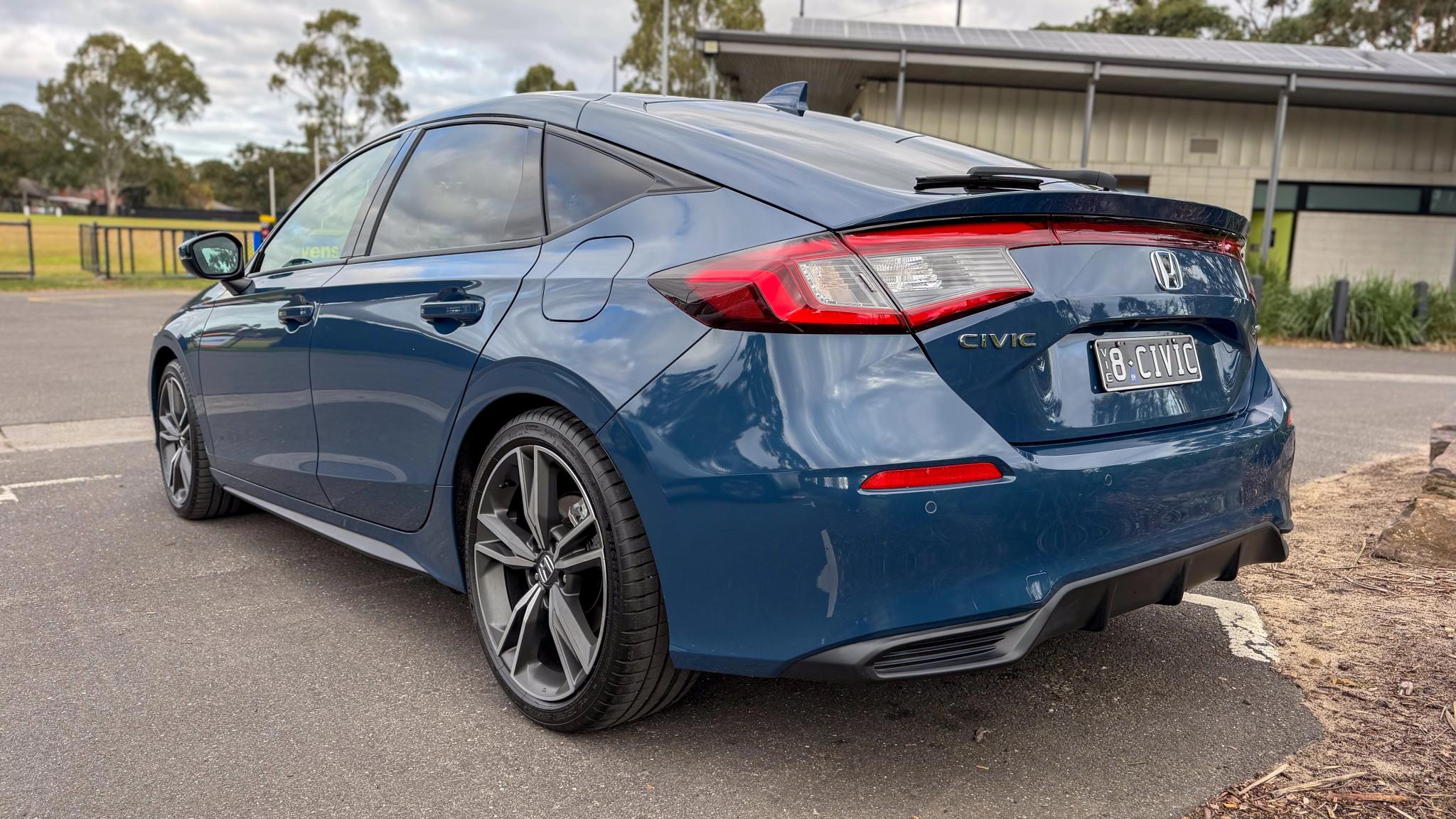
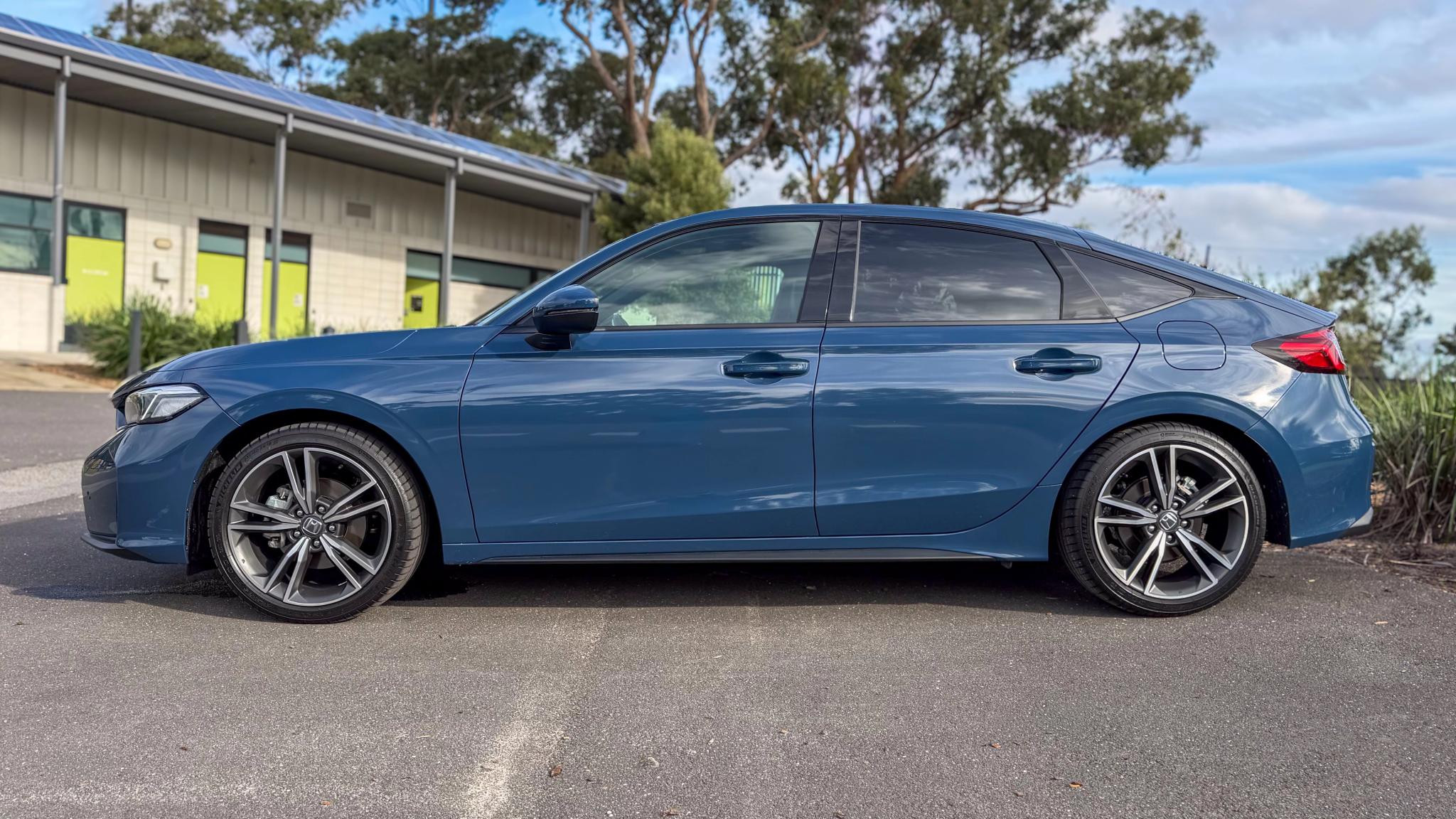
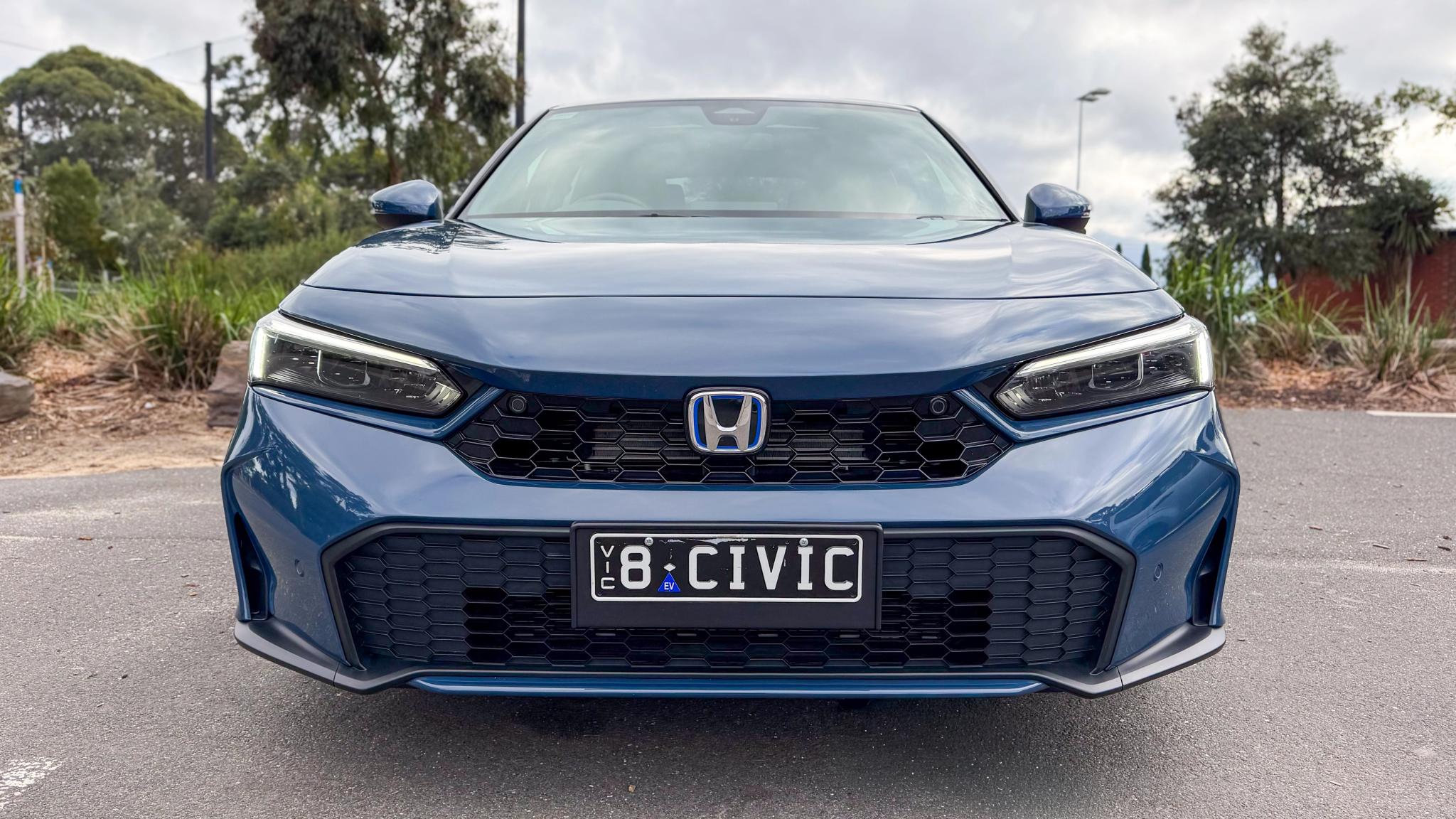
Gen-eleven Civic styling has grown up, and it suits it. Gone is the origami of the old car, replaced by clean surfacing, a long bonnet and a roofline that sits lower and sleeker than almost anything in the class.
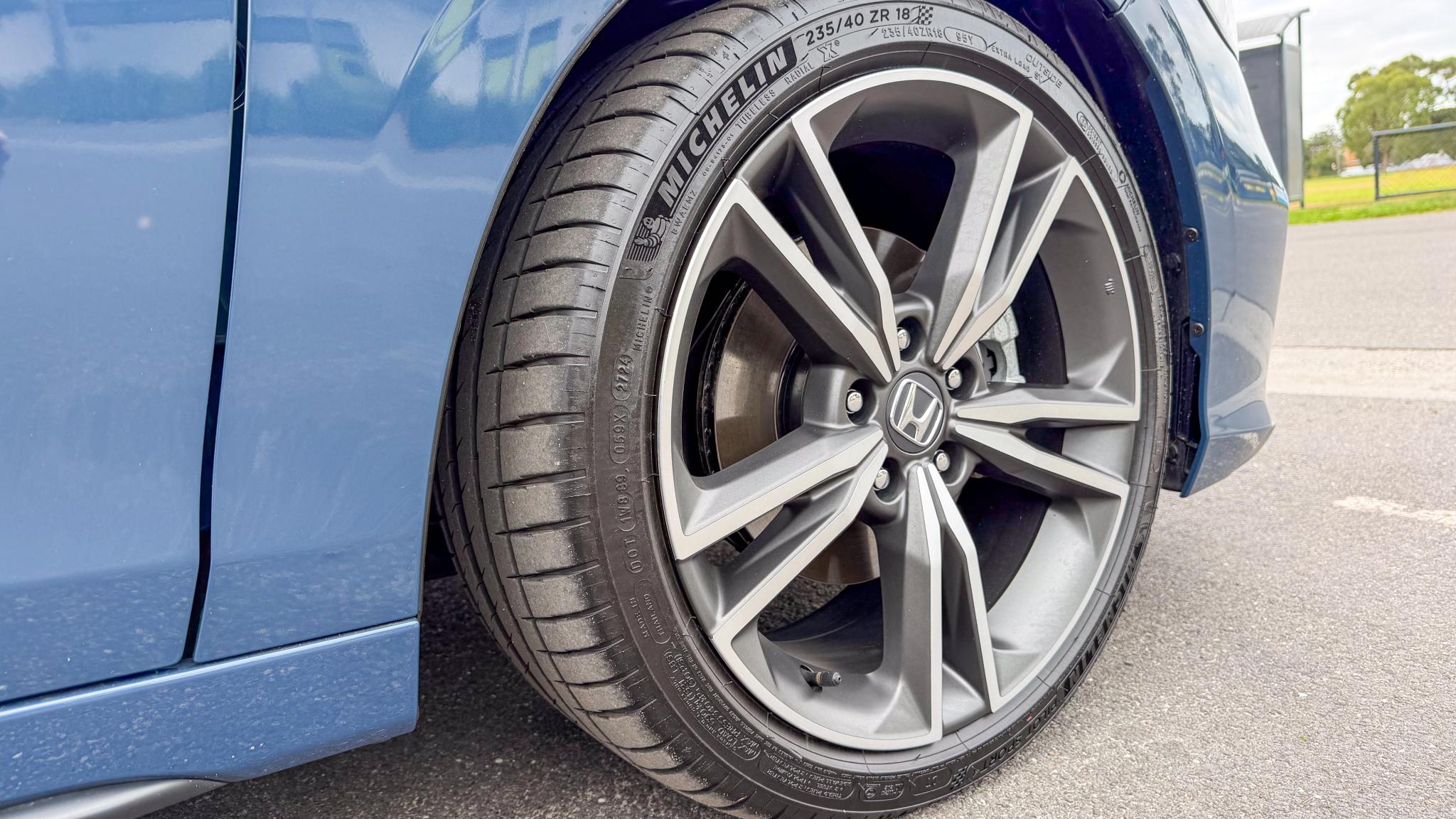
At 4569mm long it is one of the bigger small cars, roughly 30cm longer than a Corolla or Golf, yet the 1415mm height keeps it looking planted rather than tall. The 18-inch alloys and full LED headlights are standard even on the L.
The only real limitation is choice. The eHEV L offers just three colours (white, red and dark blue), though all three are included in the price.
What is the Civic like inside?
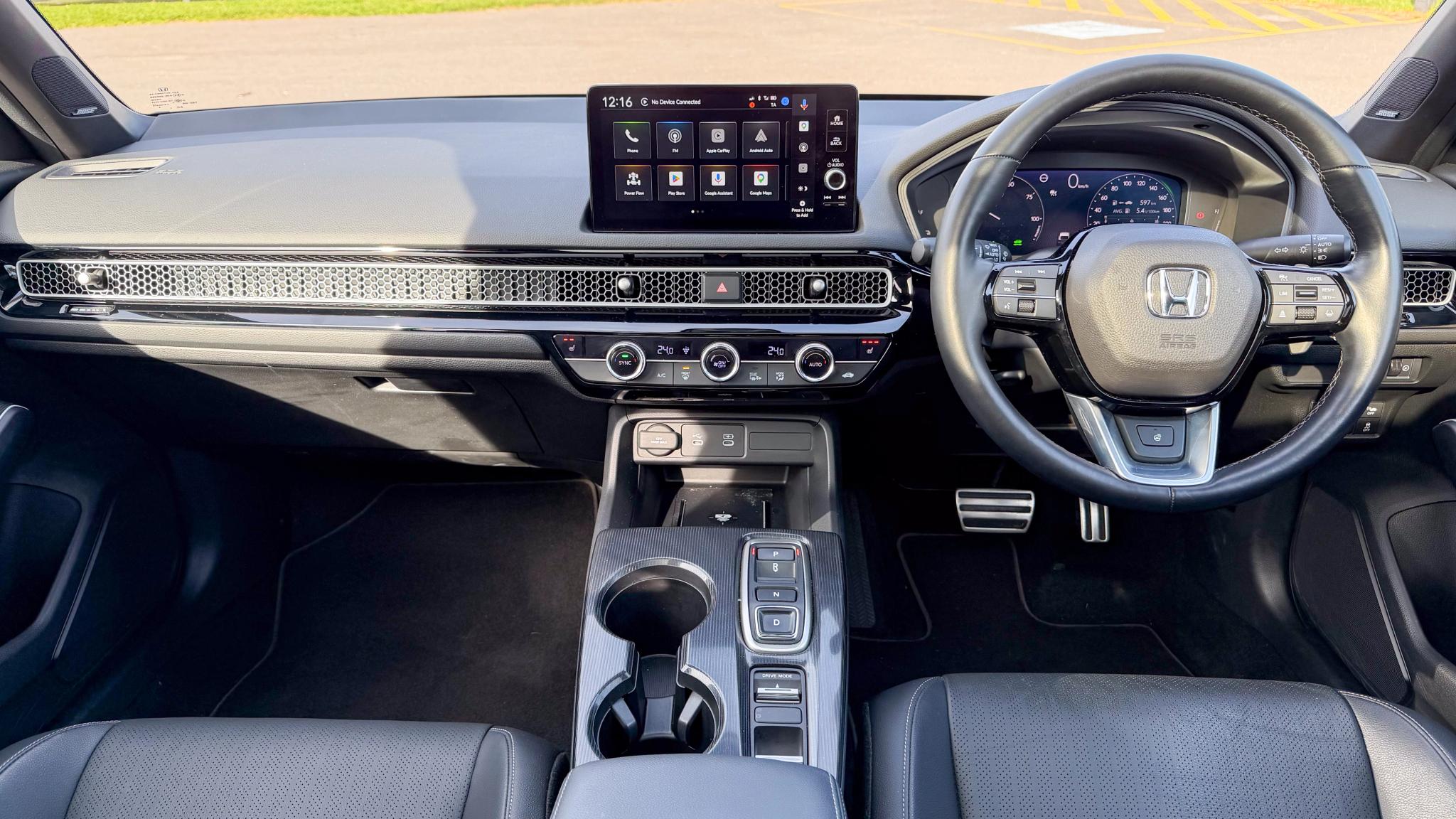
This is where the Civic quietly wins you over. The cabin is a mix of old-school and new-school, and it works: physical climate dials, a proper volume knob, and honeycomb vents with little joysticks that are oddly satisfying to nudge.
Material quality is a step above the price rivals. Soft-touch surfaces sit up top where your hands land, the switchgear has a reassuring click to it, and our test car had no squeaks or rattles. It gets scratchier plastic lower in the doors, and a knee pad on the console would be welcome, but the overall feel is properly solid.
The 9.0-inch touchscreen looks modest in 2026, and that is deliberate. It runs Google built-in (Maps, Assistant and the Play Store), responds quickly, and uses big, obvious icons you can hit without staring. Wireless Apple CarPlay and wired Android Auto are both included.
Ahead of the driver is a crisp 10.2-inch digital cluster, and the 12-speaker Bose stereo is a genuine step above class average. The L runs heated cloth and leather-look seats with manual adjustment, while the LX upgrades to full leather with power adjustment, but either way they are among the most comfortable in the segment.
How practical is the Civic?
More practical than the low roofline suggests. Rear legroom is generous for a small hatch, and six-footers will fit fine behind a similar-sized driver, though the sloping roof nibbles at head room for the very tall.
Back-seat passengers get air vents, two USB-C ports, a fold-down armrest and ISOFIX and top-tether points for child seats.
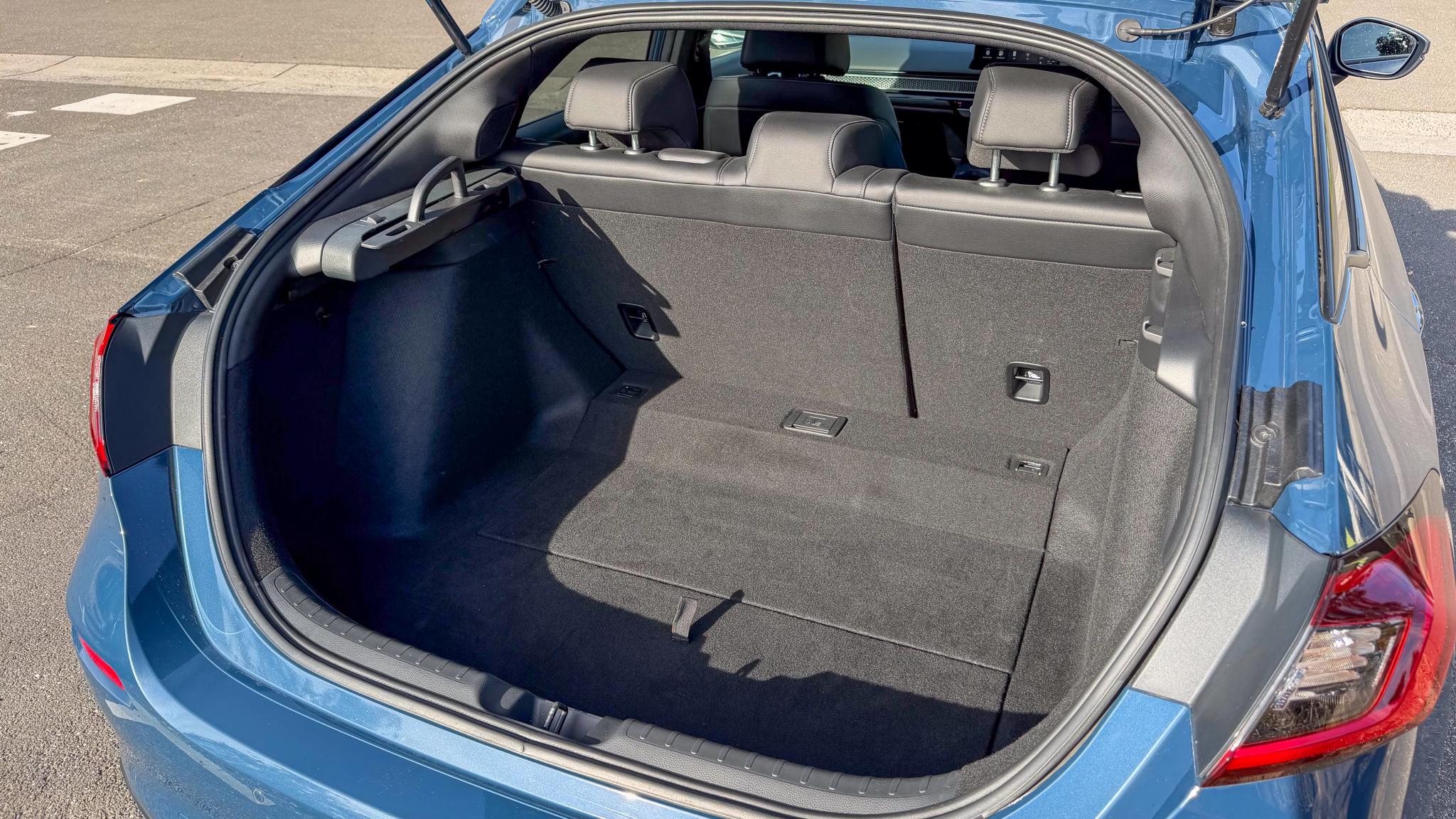
The 409-litre boot is one of the largest in the class and looks even bigger than the number reads, with a retractable cargo cover and underfloor storage.
Two catches. There is no spare wheel, just a repair kit, and the folded seats leave a small hump rather than a flat floor. Cabin storage is fine rather than clever, so the glovebox and console bin could both be roomier.
What is the Civic like to drive?
Getting into it feels like pulling on an old favourite jumper. Comfortable, familiar, no fuss, and then the hybrid system reminds you it is anything but ordinary.
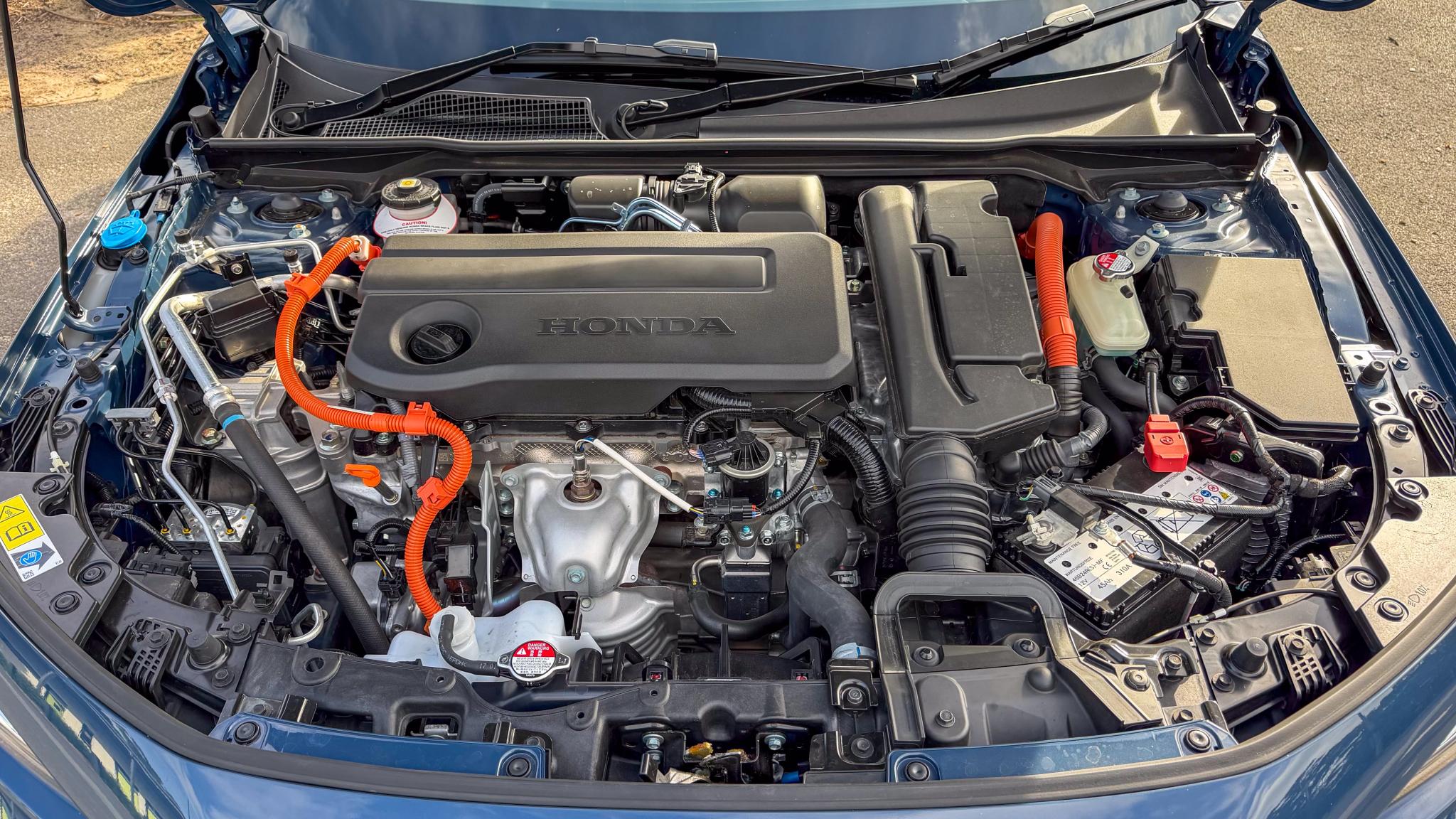
The 2.0-litre petrol-electric setup makes 135kW and 315Nm, and it is the hero here.
Around town it runs as an EV far more often than you would expect, pulling away on the electric motor with an instant, faintly hot-hatch shove before the petrol engine slips in.
The transitions are seamless. Lift off and the petrol motor simply vanishes, and only under hard throttle does the engine get a little vocal as it climbs for revs. It is still noticeably more refined than a Toyota hybrid doing the same job.
There is real pace in there too. With a full battery it feels genuinely quick, roughly seven seconds to 100km/h, which is more than enough to make merging and overtaking a non-event.
The chassis backs it up. The ride is taut but compliant, soaking up potholes and speed humps without ever feeling floaty, and the Michelin Pilot Sport 4 tyres serve up proper grip on a good road. The steering is light, direct and nicely judged, so a twisty back road becomes a reason to take the long way home.
It is not perfect. Those sporty tyres roar a bit on coarse-chip country roads, and the 12.0m turning circle is oddly wide for a car this size, more than a metre bigger than a Corolla. But as a daily driver that also entertains, the Civic is hard to beat.
How efficient is the Civic?
Frugal, and not in a way that punishes you.
Honda claims 4.2L/100km combined, and over a mix of city, suburb and highway, driving it harder than most owners ever will, we averaged an indicated 4.5L/100km.
That is close enough to the claim to trust it. It happily drinks 91-octane regular, and the 40-litre tank stretches towards a 950km theoretical range, so fill-ups are rare and cheap.
Running costs are a strength. The first five services are capped at $199 each, and the five-year warranty extends to eight if you service within Honda's network. The only asterisk is the interval: 12 months or 10,000km, shorter than the 15,000km many rivals allow, so high-kilometre drivers will visit more often.
| Servicing and warranty | Honda Civic e:HEV |
| Warranty | 5 years / unlimited km (extends to 8 with Honda servicing) |
| Battery warranty | 8 years / 160,000km |
| Service intervals | 12 months / 10,000km |
| Capped-price servicing | $199 per visit |
| 3 year total | $597 |
| 5 year total | $995 |
Is the Civic safe?
Yes and it wears its safety gear lightly. The Civic holds a five-star ANCAP rating from 2022 testing, with strong category scores of 89% for both adult and child occupant protection.
Standard kit runs to 11 airbags (including front-centre and rear-side units), autonomous emergency braking with pedestrian and cyclist detection, adaptive cruise with traffic jam assist, blind-spot monitoring, rear cross-traffic alert, lane-keep and lane-centring assist, and traffic sign recognition.
Better still, these systems are tuned to help rather than nag. The lane assist guides gently instead of tugging at the wheel, which is more than you can say for a lot of newer rivals. The main omission is a 360-degree camera, which some competitors now include.
What are the main competitors to the Civic?
The Toyota Corolla is the value play. From around $43,000 driveaway for the top hybrid hatch, it is cheaper to buy and nearly as efficient, but the ride is firmer, the cabin noisier and the finish a rung below the Honda's. The Civic answers with a plusher interior and a chassis that is simply more fun.
The Volkswagen Golf is the polished European. From around $48,000 driveaway it brings a classy cabin and slick tech, including a map in the driver's display, but its servicing bills run higher and it lacks the Civic's full-hybrid frugality around town. The Civic counters with lower running costs and that EV-in-traffic party trick.
The Mazda 3 is the style pick. From around $43,000 plus on-roads for the Astina, its cabin arguably feels the most upmarket of the lot, but the 295-litre boot is tiny by comparison and there is no hybrid on offer. The Civic hits back with far more space and much better economy.
The Kia K4 is the curveball, offered in both sedan and hatch. From around $46,990 driveaway for the GT-Line it brings more standard kit and a longer seven-year warranty, but it is not as resolved to drive or as thrifty at the pump, and there is no hybrid option. The Civic wins back ground on refinement and fuel use.
Cross-shop the Corolla if outright value and Toyota reliability sit at the top of your list. Cross-shop the Golf if you want the most polished European feel and can wear the higher servicing costs.
Should I buy the Civic?
If you can get past the price, absolutely.
The Civic is spacious, beautifully built, quiet, quick when you want it to be, and one of the most satisfying hybrids on the market to actually drive.
The sticking point is that $49,900 driveaway figure, and the fact you can find flashier feature lists elsewhere for the money. If giant screens and gadget count are what sway you, look elsewhere.
But if you value comfort, refinement and a hybrid system that just works over gimmicks you will use twice, the Civic is like a big hug from an old friend. Whichever grade you pick, pay the price of entry and you will not regret it.
VerdictThe Beep Verdict
Rob Leigh
Co-founder & Director
Rob Leigh is Co-founder and Director of The Beep based in Melbourne, Australia. He has 15+ years inside a major automotive OEM, specialising in product planning, pricing and vehicle strategy.
About Author