2026 Mazda CX-80 P50e PHEV review
The petrol plug-in hybrid CX-80 quietly solves most of the problems families actually care about - range anxiety, running costs and fitting everyone in - but it's not without compromise.

Rob Leigh
Pros
- Benchmark family practicality including seven seats that are actually usable
- Balanced, capable powertrain well-suited to family driving
- Impressive real-world fuel efficiency of 2.7L/100km
Cons
- Electric range is adequate but not generous - nightly charging is essential
- Gearbox can be hesitant under hard acceleration
- No spare wheel - just a tyre repair kit
The Mazda CX-80 P50e GT is a family SUV built around the actual demands of family life, not a spec sheet. Its practicality is class-leading, the powertrain is balanced and capable, and the running costs make a compelling argument - provided you plug it in every single night. Miss that habit and the PHEV case gets harder to justify. For the organised family with a home charger though, it's a strong package.
Find a deal on the Mazda CX-80
What does the Mazda CX-80 P50e cost in Australia?
The PHEV powertrain isn't available in the base CX-80 Pure - you'll need at least the Touring at $75,750 before on-road costs to get into the P50e. Step up to the GT at $82,750 and you add the full suite: panoramic sunroof, 12.3-inch screens, Bose audio, heated second-row seats and hands-free power tailgate. The top-tier Azami P50e sits at $87,950 adding Nappa leather and ventilated front seats.
The GT is the sweet spot. It's meaningfully better equipped than the Touring without crossing into Azami money and with dealer promotions a regular feature of the Mazda network, driveaway pricing on the GT can land in the mid-to-high $70,000s depending on colour and timing. It's worth shopping around.
Against the segment, that's competitive. A well-specced Kia Sorento PHEV asks similar money for less third-row space. If you're cross-shopping on pure value, the Mazda's case is stronger than many give it credit for.
What does the Mazda CX-80 P50e look like?
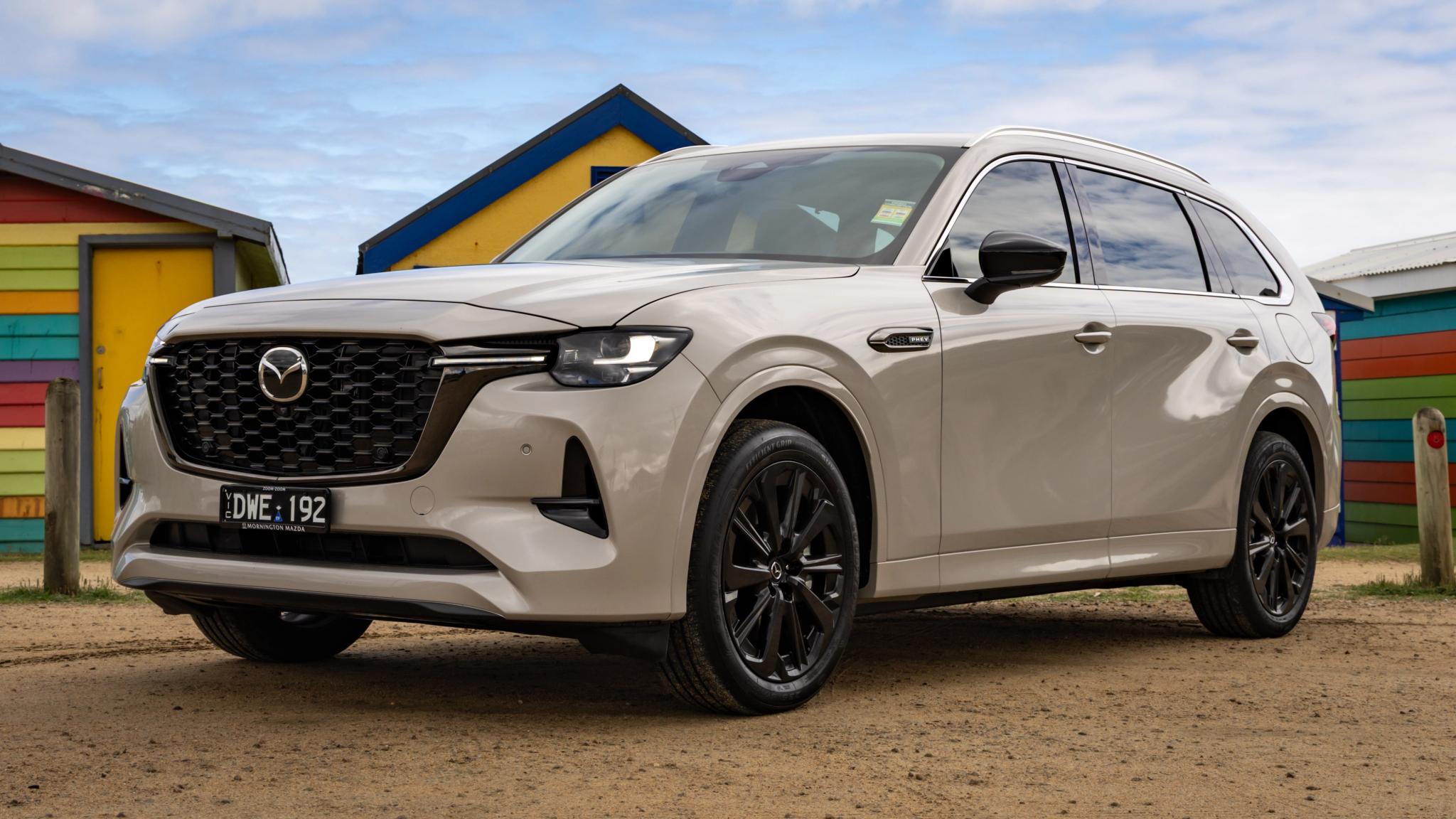
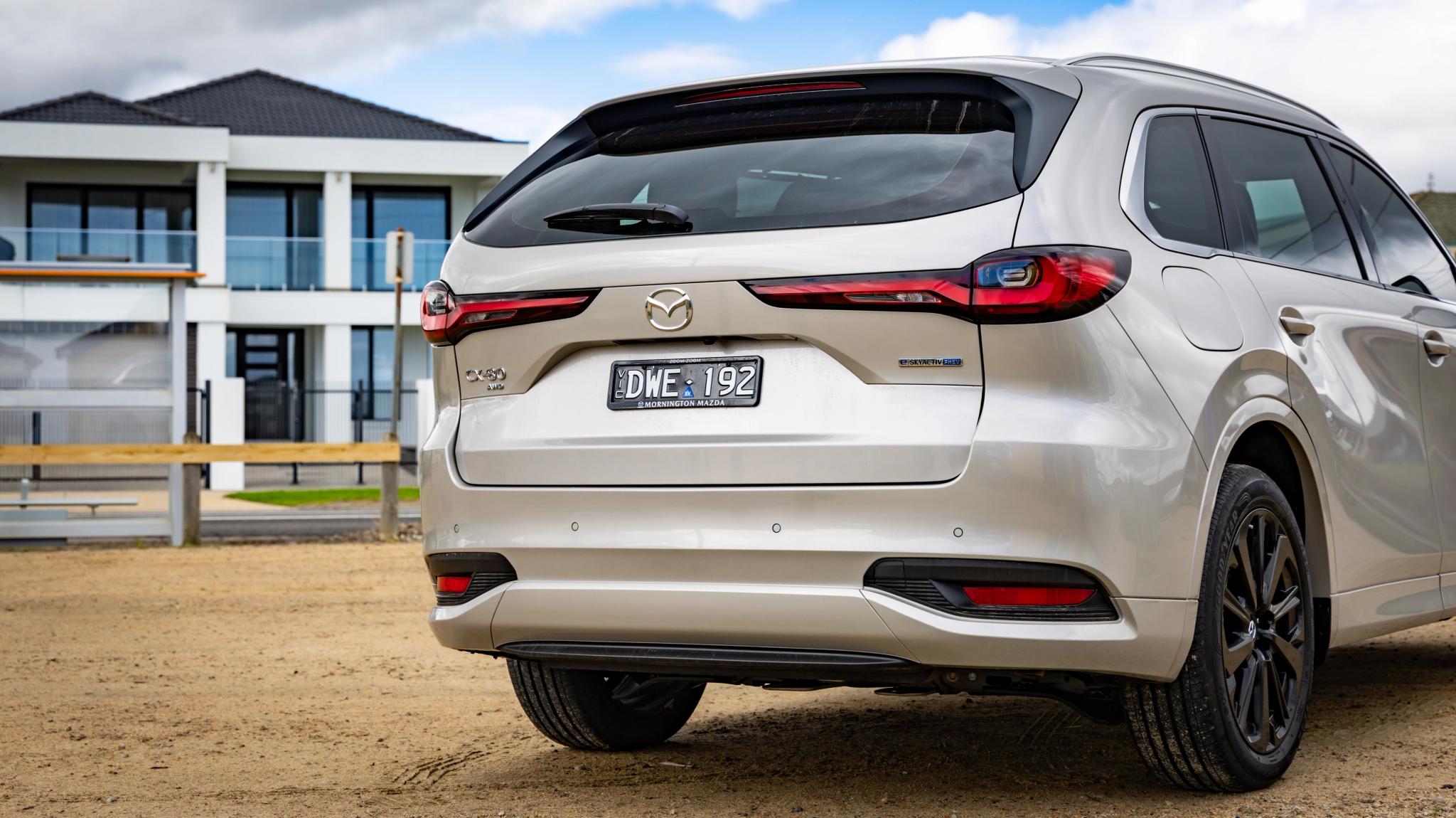
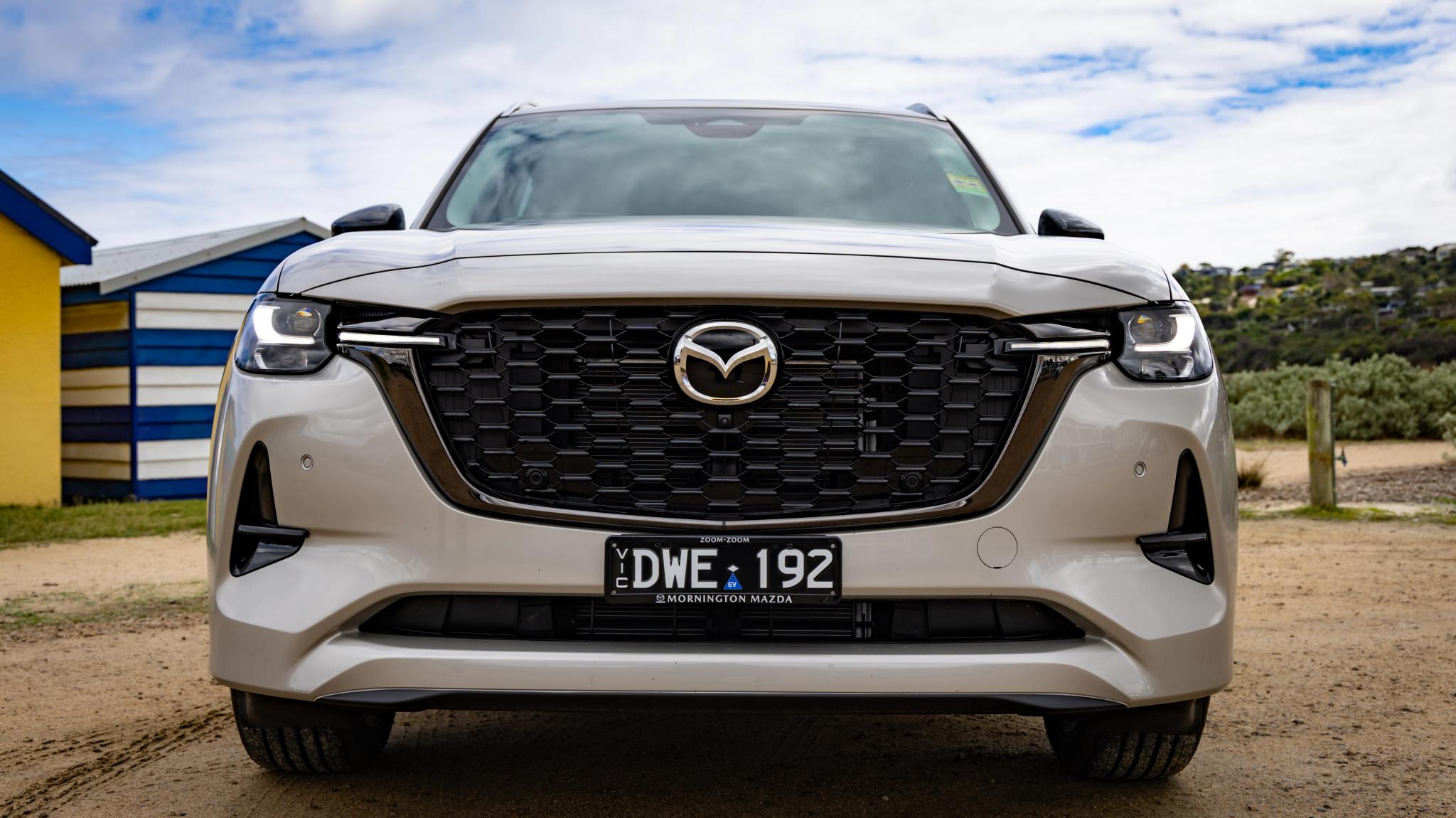
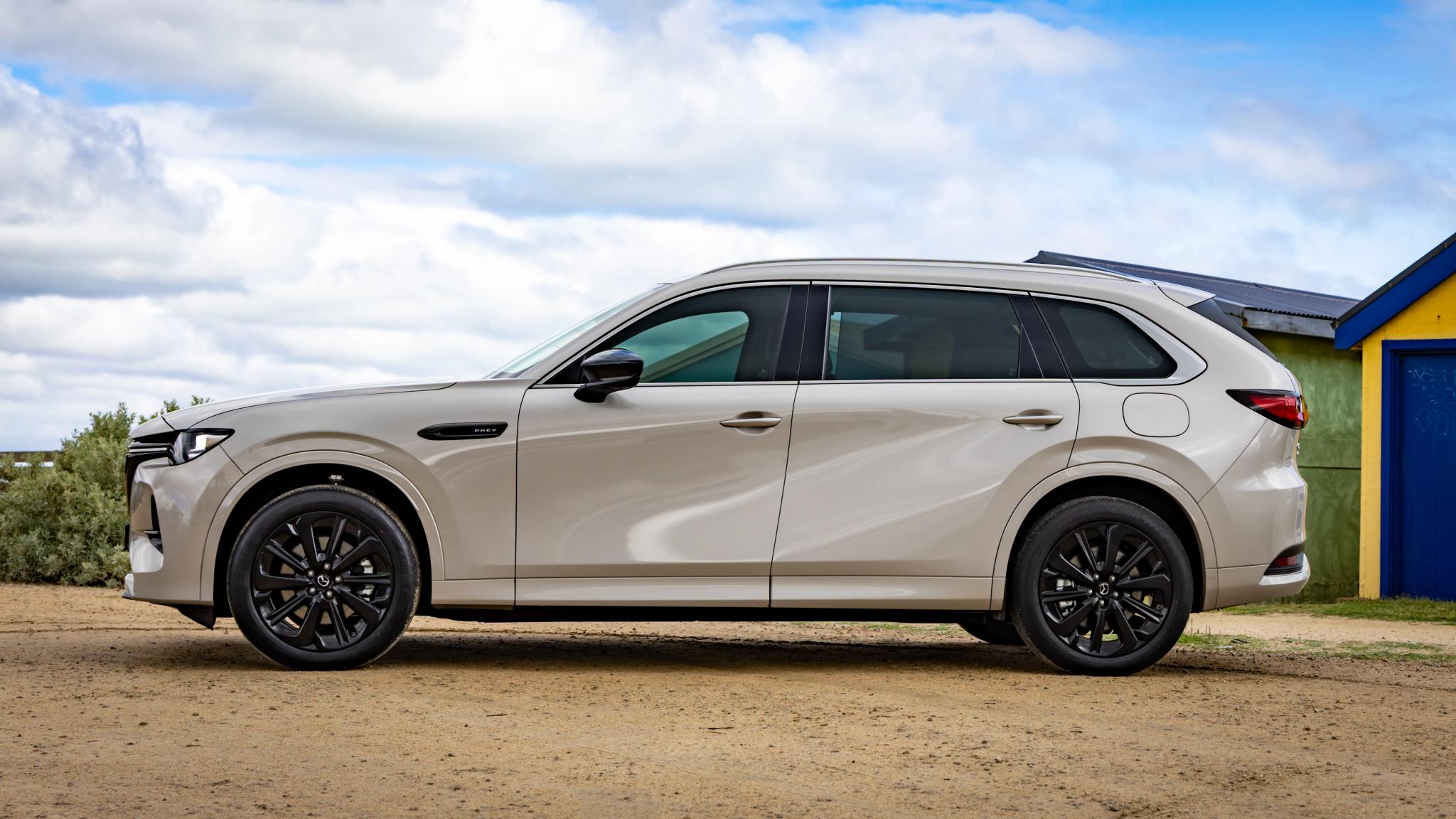
The CX-80 is a long car. At 4,990mm bumper to bumper, it has the footprint to match its seven-seat ambitions and the proportions are more upright and wagon-like than the sprawling CX-90. That reads as purposeful rather than bloated, and the long bonnet gives it genuine presence.
The GT rides on 20-inch black metallic alloy wheels with body-coloured wheel arches, which lifts it out of the workaday appearance of the smaller-wheeled Pure and Touring. Adaptive LED headlights are sharp and Mazda's restraint with exterior detailing keeps the whole thing looking mature rather than overwrought. No fake diffusers, no plastic chrome excess. It's a clean design that won't date quickly.
In a segment full of tall, boxy shapes competing for attention, the CX-80 takes a quieter road - and it works better in person than in photographs.
What is the Mazda CX-80 P50e like inside?
Climb aboard and the GT's interior is a well-assembled place to spend time. Soft-touch materials cover the upper dash and door tops, the leather seats are supportive and well-bolstered, and the general quality feel is a step above what the price might lead you to expect.
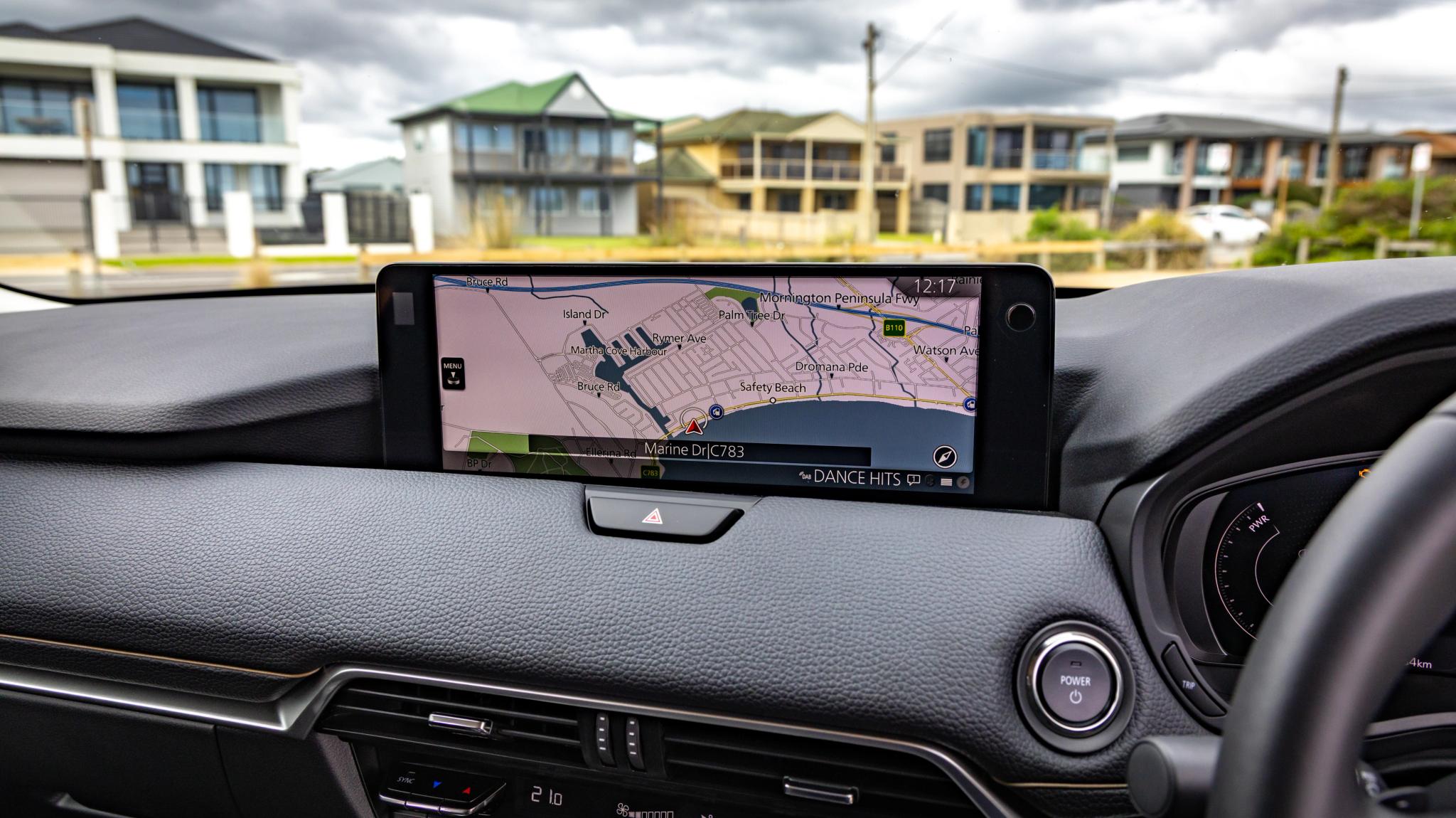
The centrepiece is a pair of 12.3-inch displays - one for the driver, one for infotainment. Both are clear and quick to respond. There's a wrinkle worth knowing: the infotainment screen only accepts touch input when Apple CarPlay or Android Auto is active. In Mazda's native interface, you're navigating via the rotary dial on the centre console. It's not a dealbreaker, but it will catch you off guard the first few times.
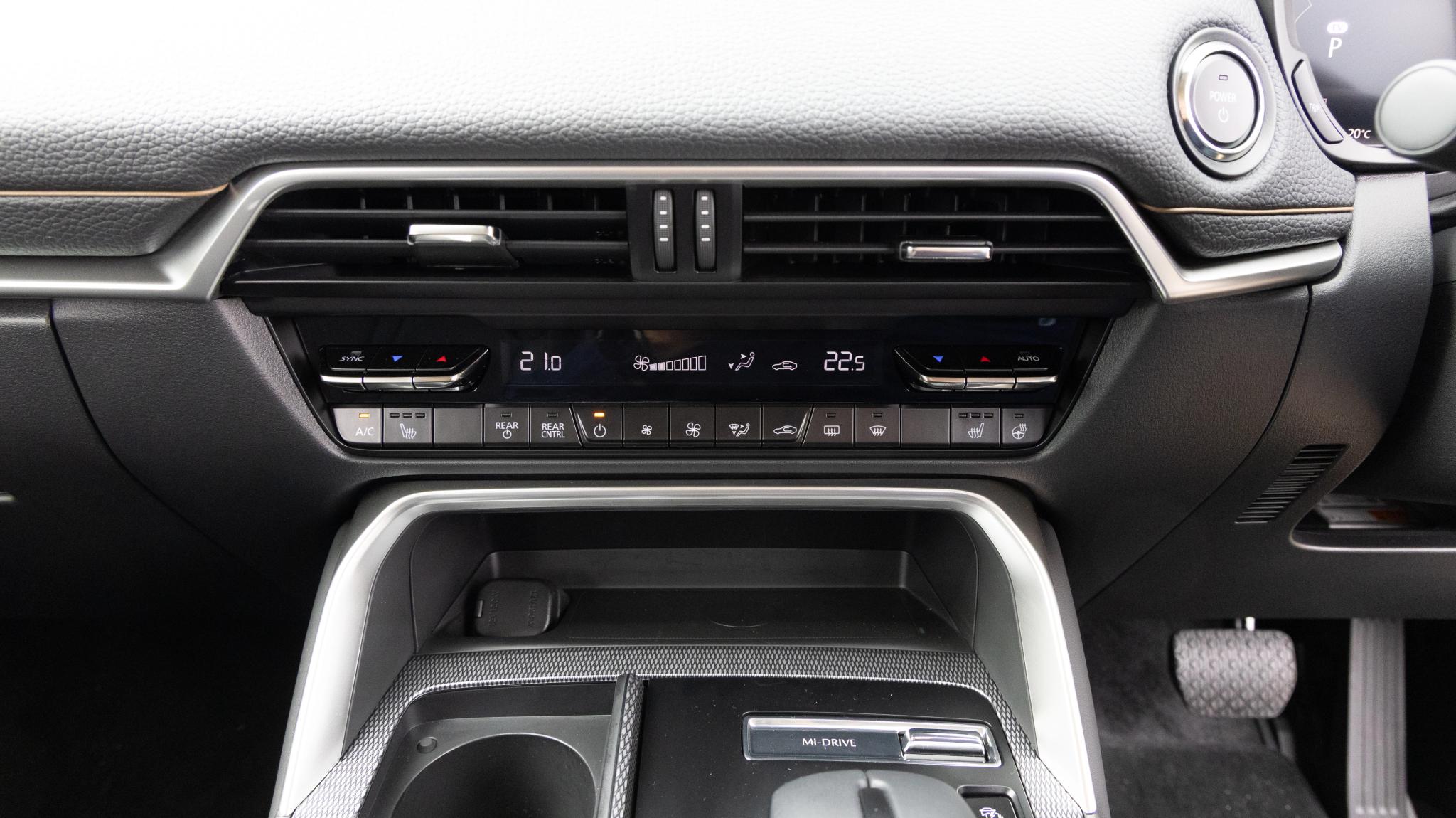
The Bose 12-speaker system sounds genuinely good, the heated steering wheel is a welcome addition and wireless phone charging is standard. HVAC is laid out logically and the GT includes rear climate control operable from the front - a detail that matters more than it sounds when you've got kids in row two. You can also monitor and adjust rear air con without reaching back mid-drive, which is one of those small things that improves daily life considerably.
Parking a nearly five-metre SUV in tight spots is where the surround-view camera earns its keep - the resolution is excellent and it's one of the better implementations in the segment.
The panoramic sunroof brightens the cabin noticeably, and the sense of space up front is generous. This is a comfortable place to spend a commute.
How practical is the Mazda CX-80 P50e?
This is where the CX-80 P50e makes its strongest case. The 90-degree rear door opening isn't something you think about until you've wrestled a toddler into a conventional SUV on a tight street and then it becomes the detail you tell people about.
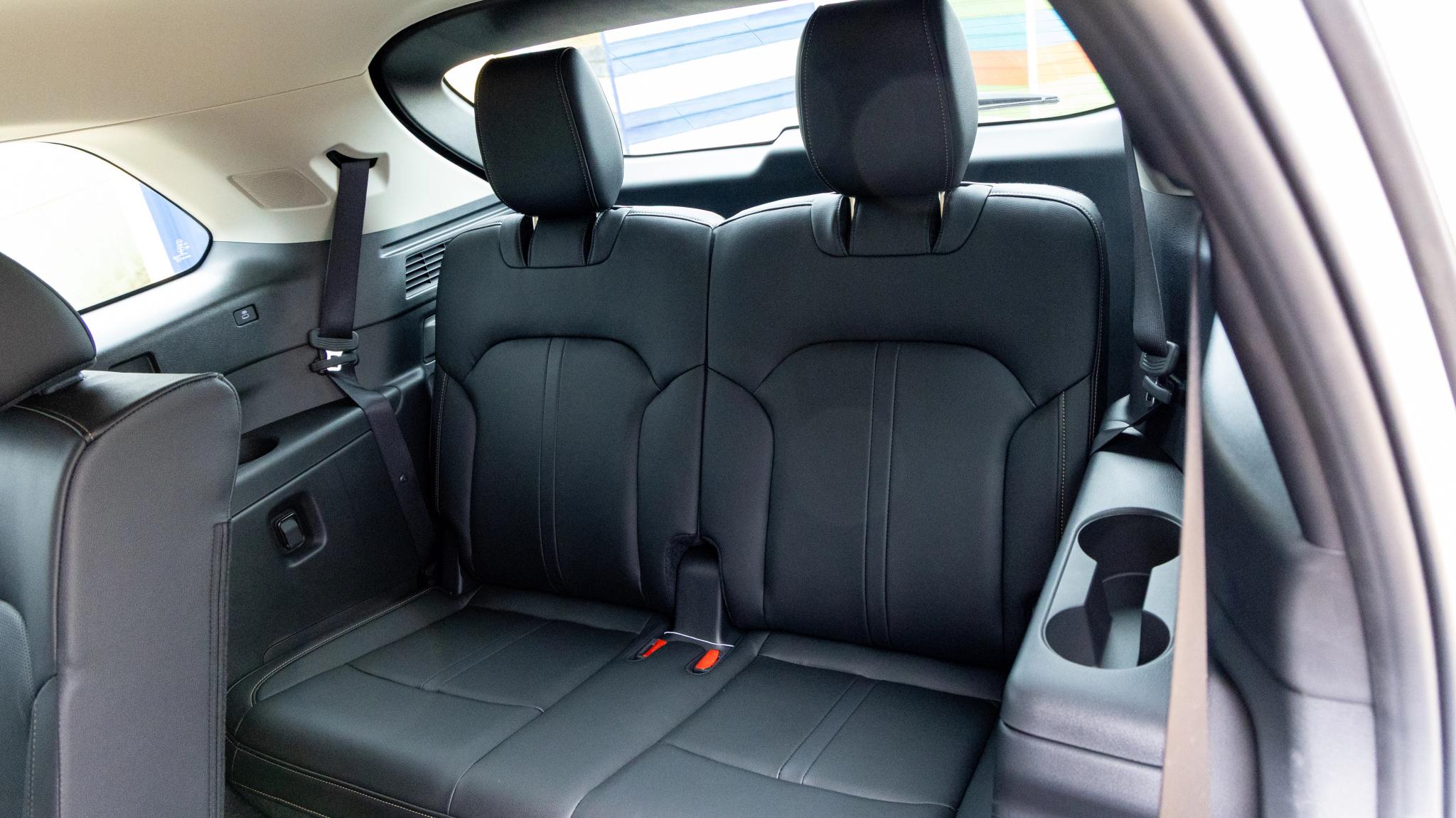
All seven seats are genuinely usable - not a claim every three-row SUV can honestly make. Row two is spacious with real headroom, real legroom and a sliding bench that gives genuine flexibility. ISOFIX points are fitted across all rear seats, not just the outer positions, which is both practical and unusual in this class. Rear sun blinds are standard on the GT.
Row three is honest about what it is. Adults will manage for shorter trips if row two shifts forward a little, but teens on a school run are fine and younger kids won't complain. USB-C ports, cupholders and air vents are back there too - it doesn't feel like an afterthought.
Boot space with all seven seats in use is 258 litres, which is adequate if not generous. Drop row three and that grows to 566 litres. Flatten both rear rows and you're at 1,971 litres. The PHEV's battery pack lives under the floor without penalising boot space compared with the petrol models, and underfloor storage is present. The 220V/150W power outlet in the boot is a genuinely clever addition for camping, sport, or keeping gear charged on longer trips.
One thing worth flagging: there is no spare wheel - just a tyre repair kit. For a car this size, that will bother some buyers and it's worth factoring in if you do any regional driving.
What is the Mazda CX-80 P50e like to drive?
The P50e's 2.5-litre four-cylinder petrol engine paired with an electric motor produces a combined 241kW and 500Nm and in everyday driving, it delivers. The powertrain feels balanced and well-suited to the car's purpose - there's enough grunt for confident highway merges, relaxed overtaking and the kind of loaded-family driving that exposes weak powertrains quickly. It's not a car that makes you feel things behind the wheel, but it is a car that quietly does everything you ask of it.
In EV mode, the CX-80 is at its best - smooth, hushed and responsive through traffic. When the engine does kick in, the transition is generally seamless. The eight-speed automatic can occasionally be caught mid-thought under hard acceleration and Sport mode tightens things up meaningfully if you want a more decisive response - worth using more often than you might expect from a family SUV. In Normal mode day-to-day, the transmission does its job without drawing attention to itself.
Ride quality sits firmer than a Santa Fe or Kluger, and low-speed surfaces will occasionally remind you of that. On a highway the CX-80 is settled and impressively quiet. The steering is naturally weighted and accurate, body roll is controlled for a car of this size and the whole thing feels properly engineered rather than just assembled.
How efficient is the Mazda CX-80 P50e?
The claimed electric range sits at 65km - but in real-world conditions, expect something closer to 55-60km depending on load, climate control use and driving style. That's enough to cover a typical daily commute, but only just.
To consistently run in electric mode and justify the premium over the petrol variants, nightly charging is essentially mandatory. Miss a few nights and you're driving a heavy, expensive petrol SUV with a complicated drivetrain.
The good news is that the charging setup is straightforward. The P50e accepts up to 7.2kW via a standard AC connection, taking around two hours from flat to full on a home wall charger. You can also use the petrol engine to top up the battery while driving, which gives flexibility on longer trips. The claimed combined consumption of 2.7L/100km is genuinely achievable for disciplined chargers - let the battery run flat consistently and real-world numbers will look considerably less flattering.
For buyers without a home charger or those who regularly drive beyond 60km in a day, the petrol inline-six variants may be a more honest choice.
The CX-80 is covered by Mazda's five-year, unlimited-kilometre warranty and five years of roadside assistance. Capped-price servicing runs for seven years, with intervals at 12 months or 15,000km. Annual service costs sit around $620-$700 - not cheap, but the certainty of fixed pricing is worth something over a long ownership period.
Is the Mazda CX-80 P50e safe?
The CX-80 holds a five-star ANCAP safety rating earned in 2024 with strong results across all categories: 92% adult occupant protection, 87% child protection, 84% vulnerable road user protection and 83% safety assist.
Standard safety equipment on the GT is comprehensive: autonomous emergency braking with pedestrian and cyclist detection, adaptive cruise control with stop-and-go, lane-keep assist, blind-spot monitoring, front and rear cross-traffic alert, driver attention monitoring, surround-view camera, and front and rear parking sensors. Traffic sign recognition is included.
The active safety suite is mature and well-calibrated. Lane assist in particular is confidence-inspiring on the highway - neither intrusive nor absent.
What are the main rivals to the Mazda CX-80 P50e?
Hyundai Santa Fe is the most natural comparison. It's softer to drive, offers a more spacious third row and its hybrid powertrain sits at a similar price point - though unlike the Mazda, there's no plug-in option. If ride comfort is the priority, it's the one to beat.
Kia Sorento PHEV is slightly smaller inside but priced keenly and backed by Kia's seven-year warranty. It's a proven package and worth a back-to-back drive before deciding.
Toyota Kluger Hybrid doesn't offer a plug-in option but is widely regarded for refinement and long-term reliability. If you're not committed to PHEV ownership and nightly charging routines, it remains a serious alternative.
Mitsubishi Outlander PHEV comes in at a lower price point and is an alternative worth considering, but third-row space and overall family practicality don't quite match the Mazda.
Should I buy the Mazda CX-80 P50e GT?
The CX-80 P50e GT is a smart family SUV choice - practical in ways that matter, comfortable over distance and well-equipped at the price. The all-row ISOFIX, 90-degree door openings and seven seats that actually work are real-world advantages over much of the competition.
The PHEV powertrain comes with a condition attached. The EV range is adequate rather than impressive, and the efficiency numbers only fully stack up if you plug in every night. But that's not the whole story - even on longer trips where the battery plays a supporting role, the P50e returns genuinely impressive fuel consumption for something this size. It's a powertrain that rewards the organised family and punishes nobody.
For a family with a home charger and a predictable daily routine, this is a very easy car to recommend. For everyone else, the petrol inline-six variants offer more character and a simpler ownership proposition.
Either way, the CX-80 deserves more attention than it gets.
Ready to buy the CX-80? Compare real prices and find the best deal.
VerdictThe Beep Verdict
Rob Leigh
Co-founder & Director
Rob Leigh is Co-founder and Director of The Beep based in Melbourne, Australia. He has 15+ years inside a major automotive OEM, specialising in product planning, pricing and vehicle strategy.
About Author