2026 Lotus Emira Turbo SE review
Supercar looks, sports car roots and a driving experience that reminds you why analogue still matters - the Emira makes a compelling case at almost any price.

Rob Leigh
Pros
- Stunning proportions that stop people dead
- AMG turbo four delivers genuine excitement with a soundtrack to match
- Steering and chassis feedback that few cars at this price can touch
Cons
- Price has crept into uncomfortable territory for the segment
- Media system lags behind the rest of the package
- No manual option on the four-cylinder
There's a melancholy to driving the Lotus Emira that no spec sheet can capture. It's a last-of-the-breed sports car - analogue, rear-mid-engined, built in the UK and increasingly rare in a world rushing headlong toward touchscreen EVs and homogenised crossovers. The Turbo SE is the pick of the range for most buyers: sharp, well-equipped and punchy enough to make the V6 feel like an interesting footnote rather than the obvious choice. The catch? You'll need to make peace with the price, and the occasional realisation that you're driving something that simply won't exist in this form much longer.
What does the Lotus Emira cost in Australia?
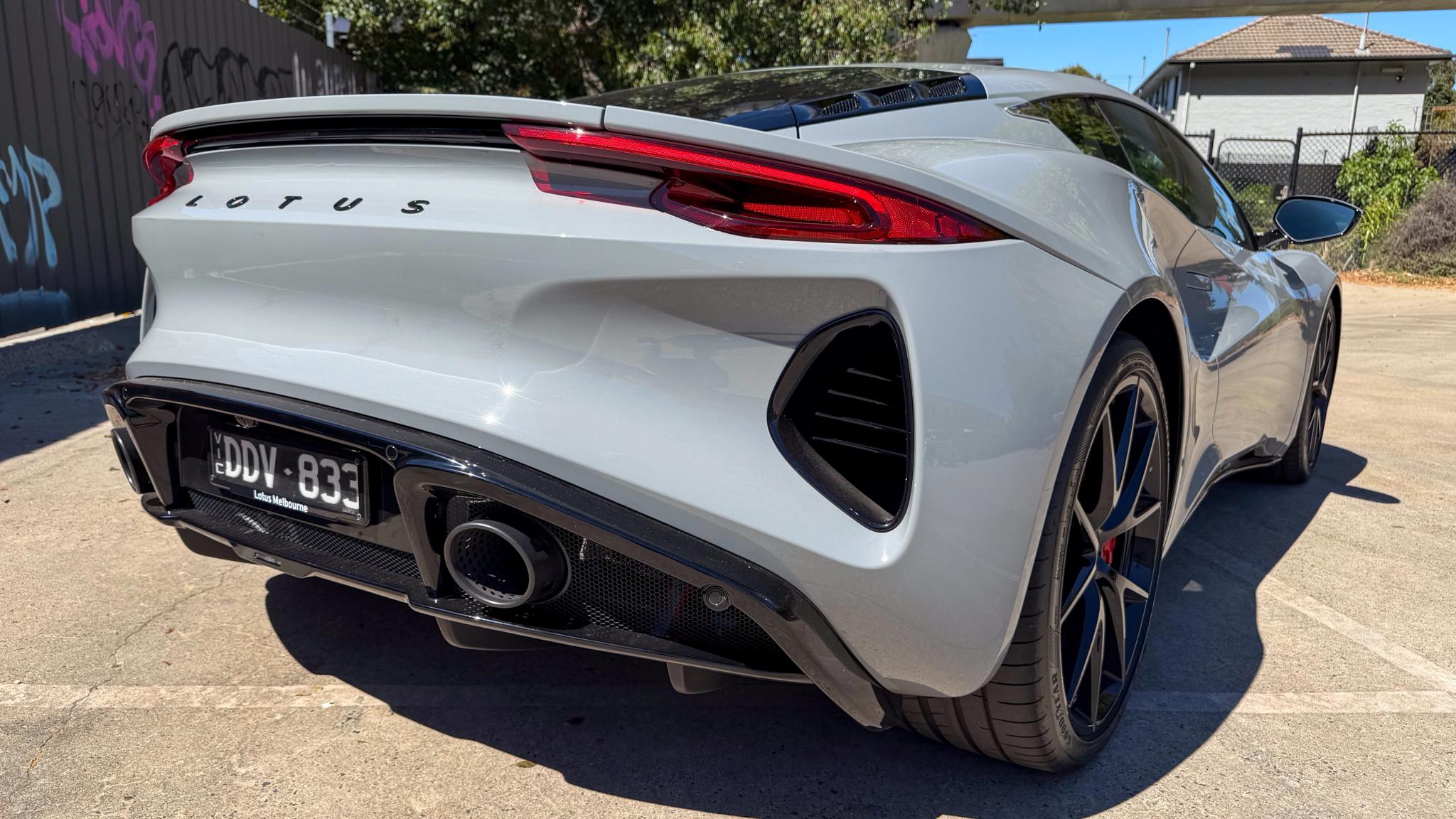
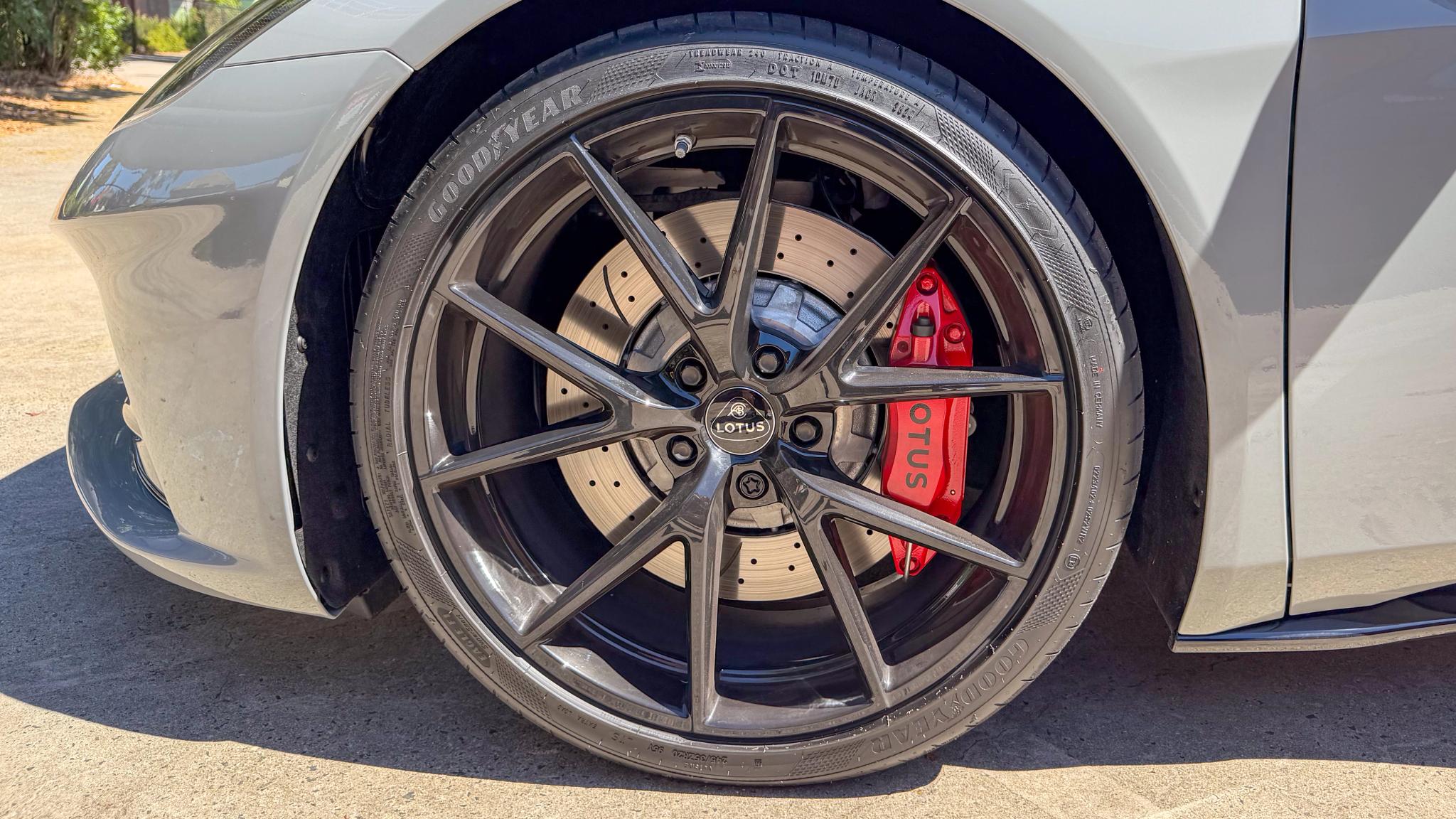
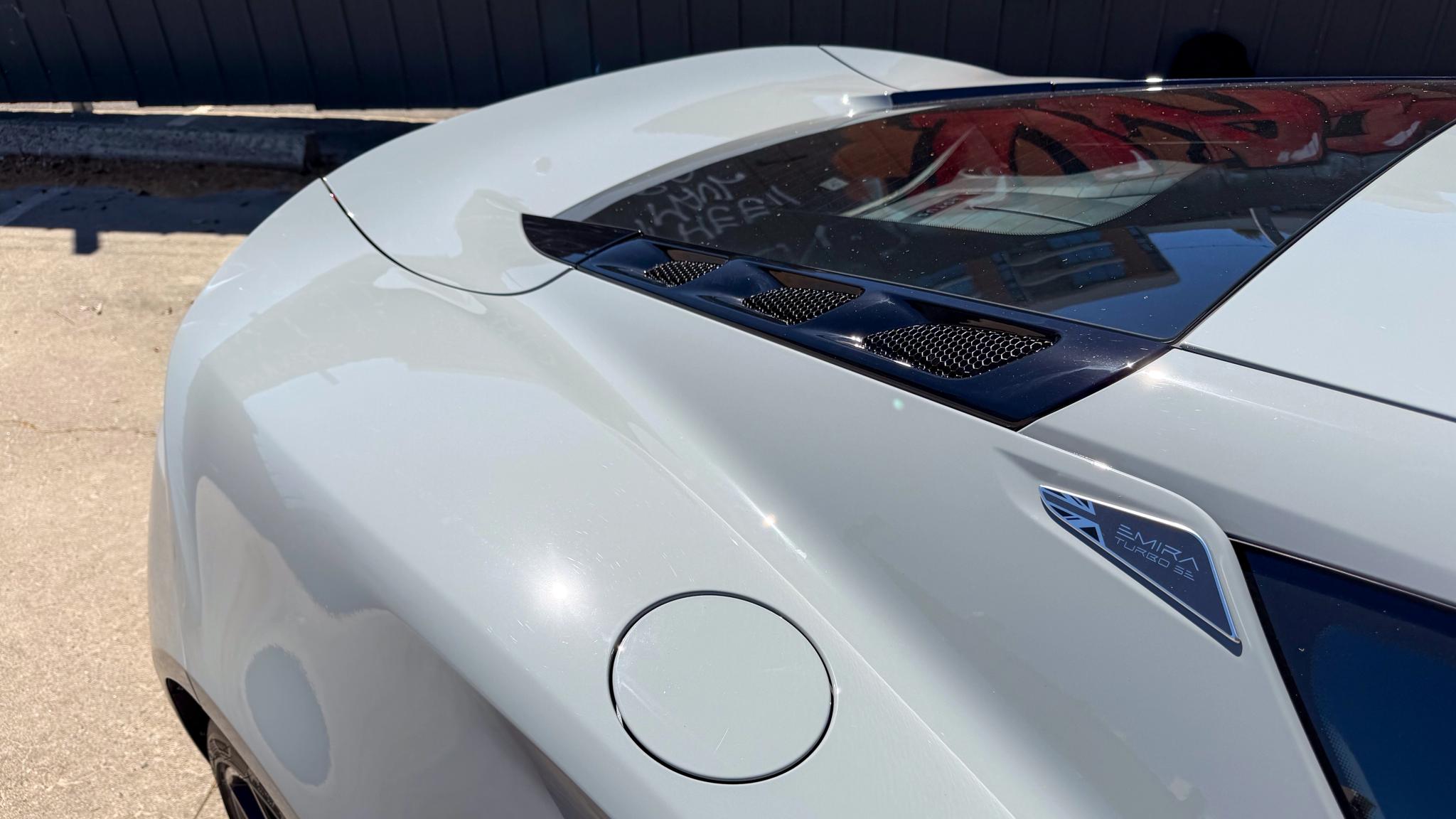
The 2026 Lotus Emira Turbo is priced from $207,990 MRLP and up to $223,990 MRLP for the SE which brings a power increase, 20-inch forged alloy wheels, red brake calipers, the Lower Black Pack and exclusive "SE" badging.
The supercharged V6 variant is also available at $252,990 MRLP for those who want six cylinders and a proper six-speed manual gearbox - though that transmission pairing is exclusive to the V6, so if three pedals matter to you, the decision largely makes itself.
At that price point, the Emira is fighting the Porsche 718 Cayman GTS and the BMW M4. That's tough company. The Emira's trump cards are its rarity, its visual theatre and a driving experience you can't replicate with German money alone.
What does the Lotus Emira look like?
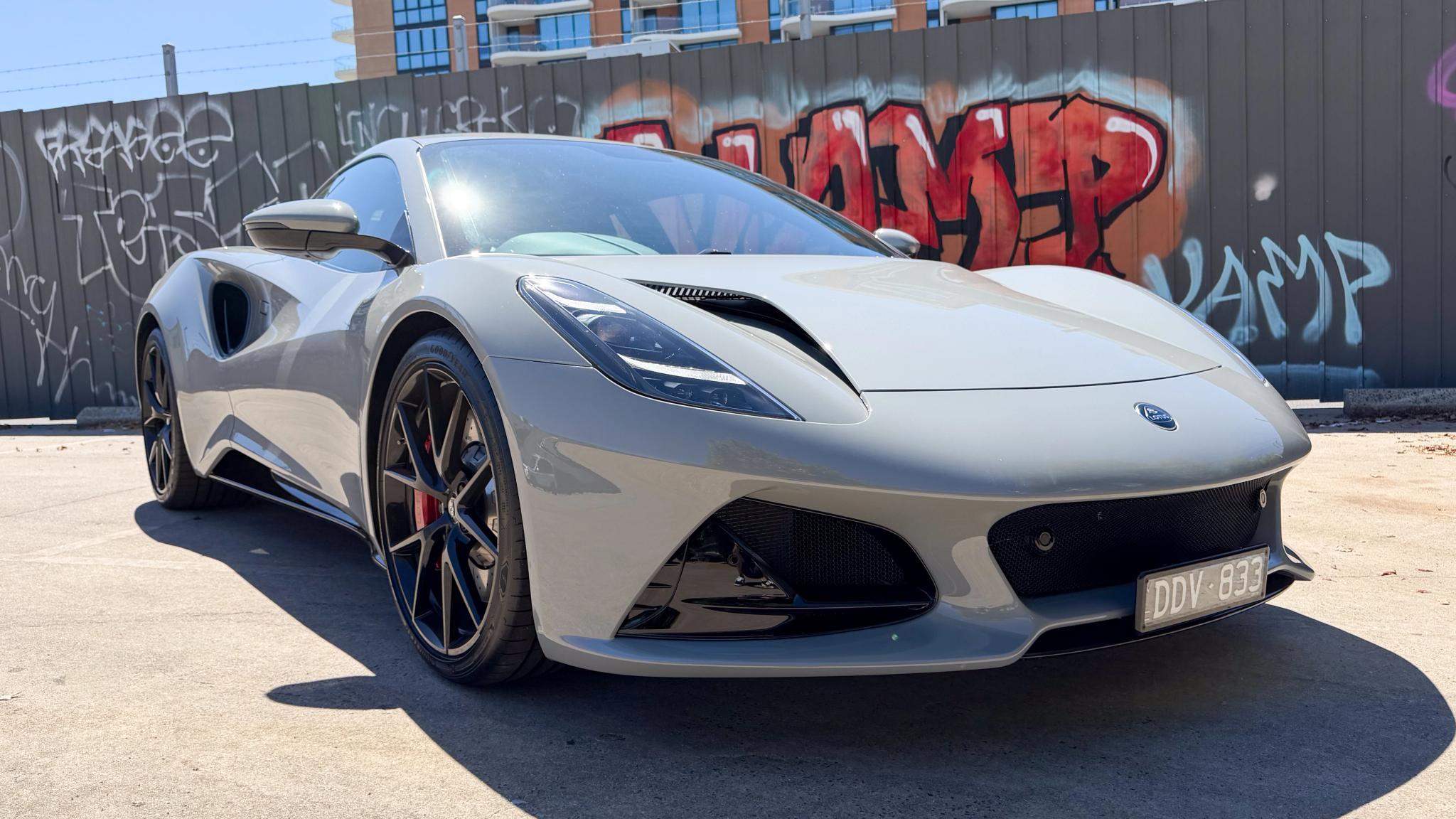
Tell me this isn't the best-looking Lotus ever. Go on - try.
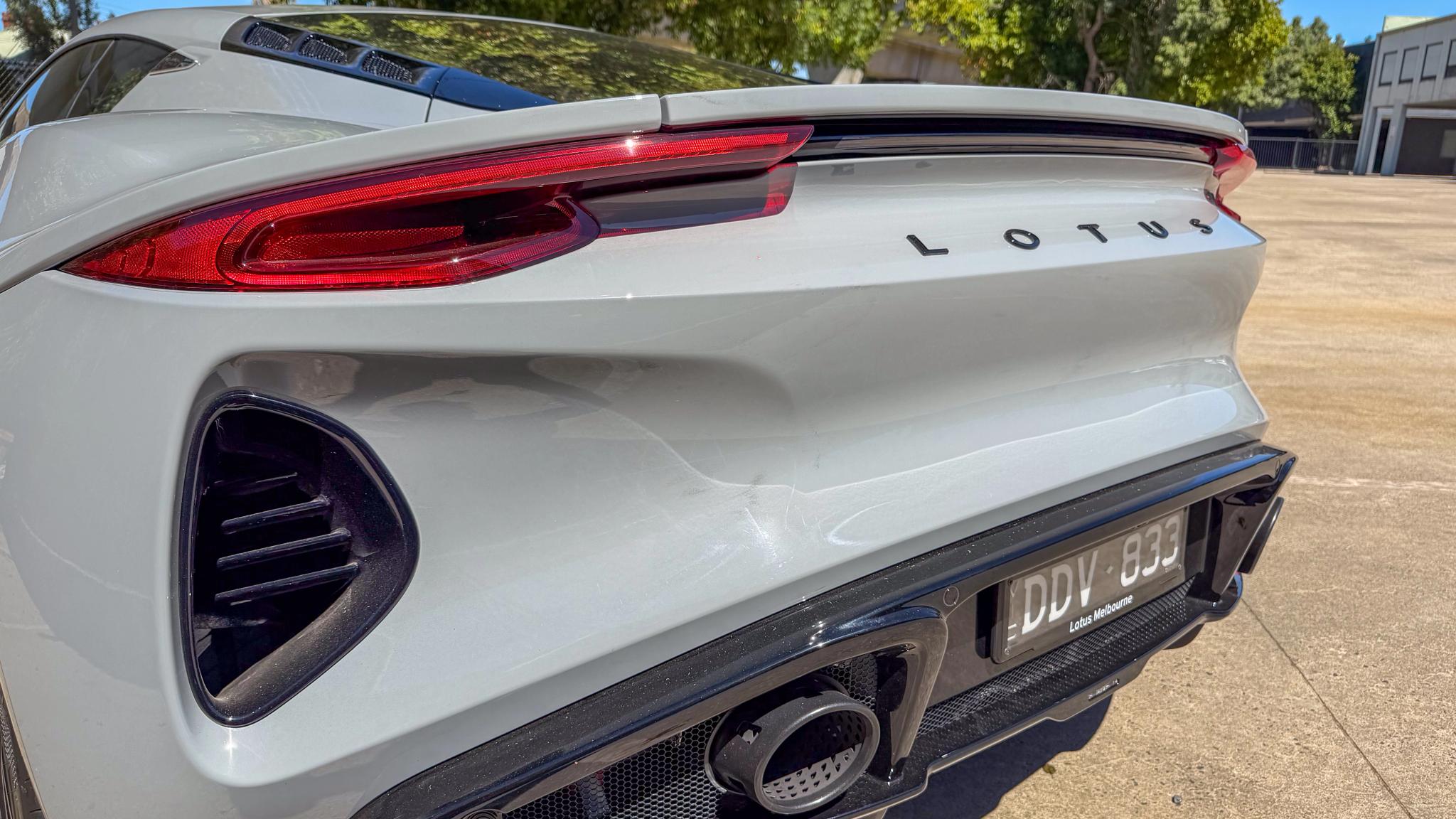
The Emira has supercar proportions: low, wide hips, deep intakes carved into the flanks and a rear end with genuine visual drama. Parked next to a Cayman, which is a handsome car in its own right, the Lotus reads as something altogether more exotic. Bystanders routinely guess six figures before you've told them a thing about it.
The bonded aluminium construction gives it the kind of taut, purposeful stance you can't fake. Nothing feels borrowed or accidental. The detailing - the vented bodywork, the quad tail-lights, the way the glasshouse flows into the rear haunches - has been considered from every angle. It looks quick standing still, and it looks even better in motion.
For a car built by a relatively small British manufacturer, the surface quality and panel consistency are genuinely impressive.
What is the Lotus Emira like inside?
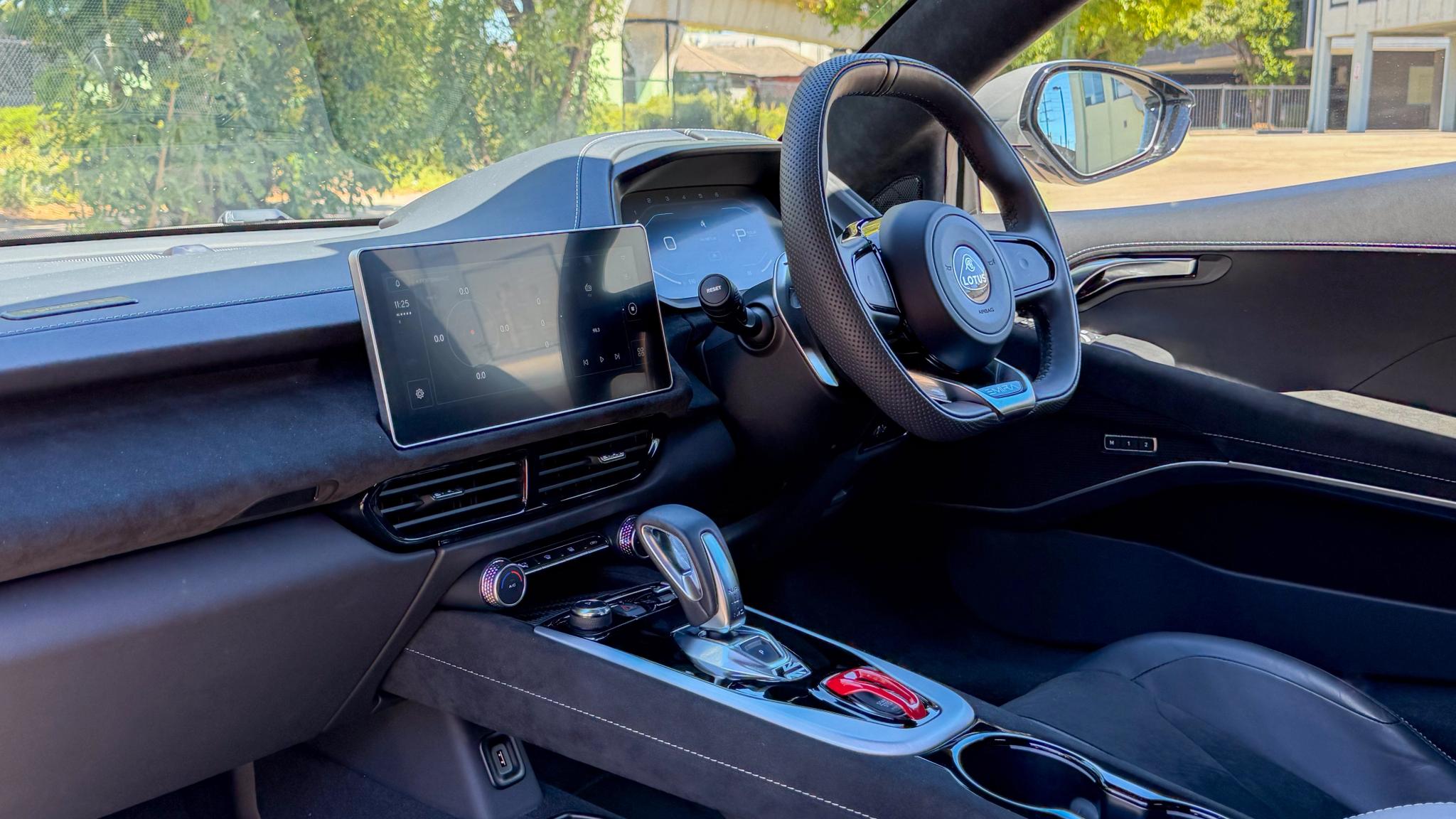
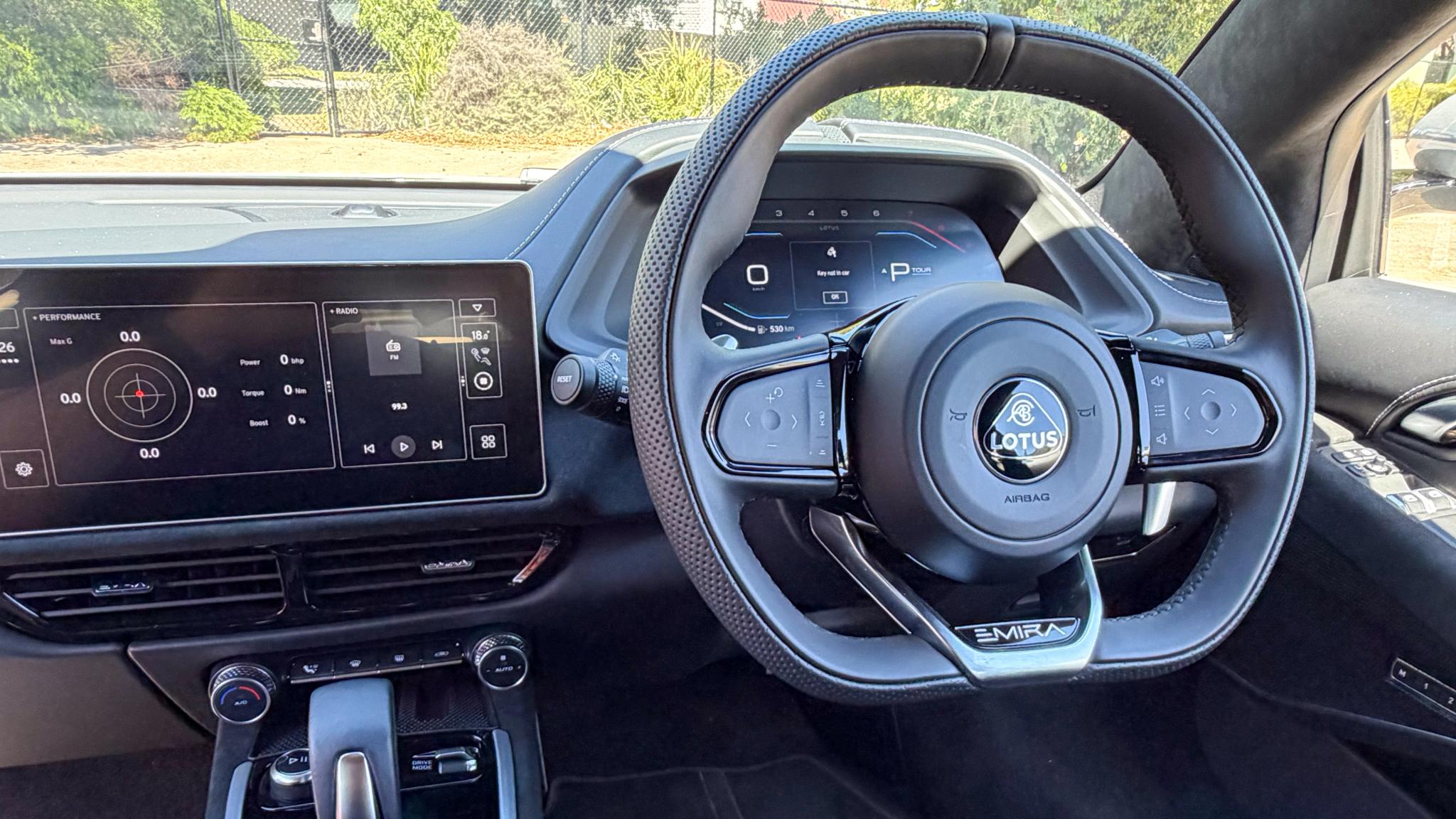
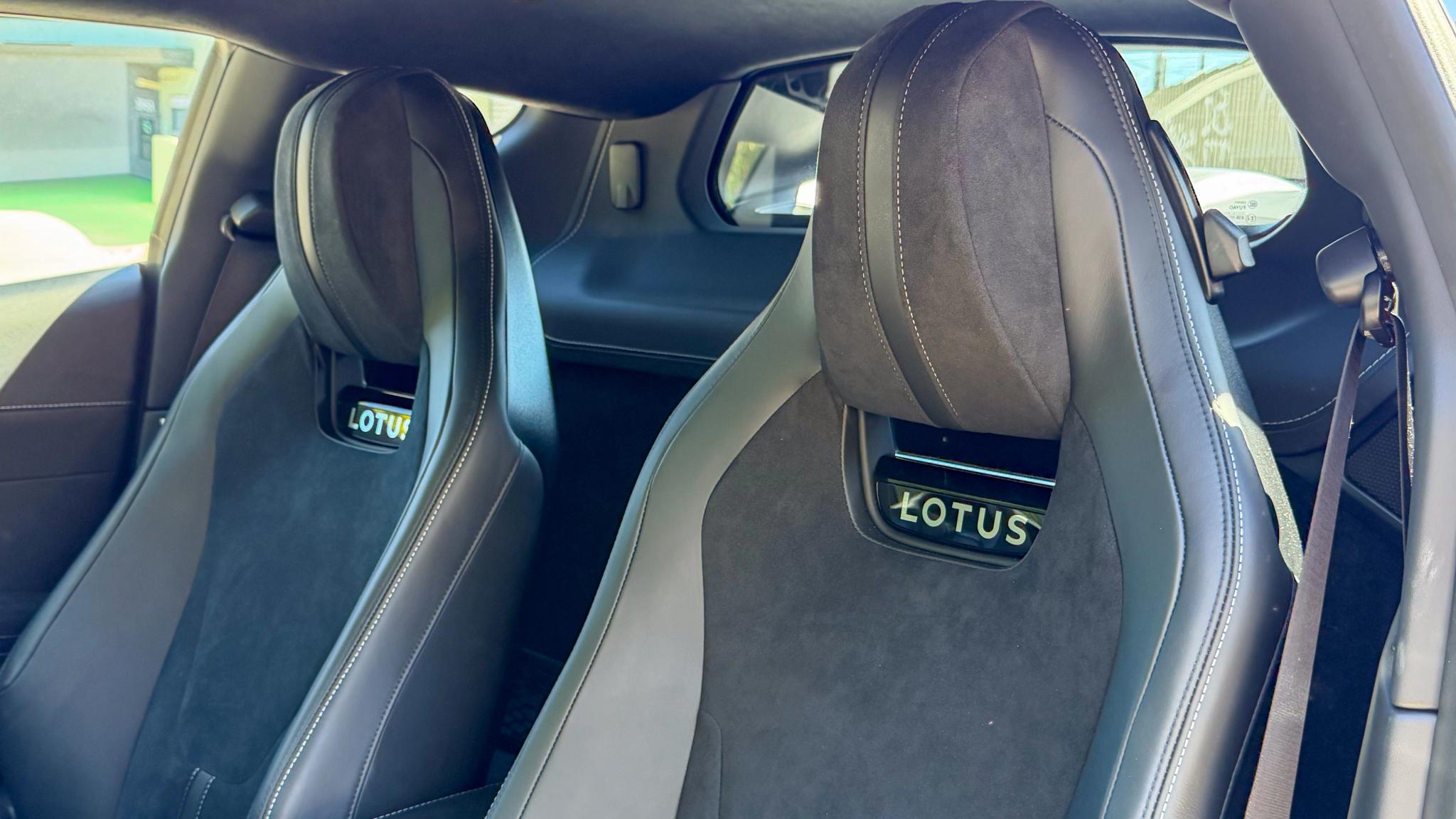
Previous Lotus owners will feel like they've walked into the wrong car. The Emira's cabin is several significant leagues ahead of anything that came before it - tightly stitched leather and Alcantara, a 12.3-inch digital instrument cluster, a 10.25-inch central touchscreen and materials that wouldn't embarrass a Porsche. It's premium in a way Hethel has never really managed before.
The driving position is excellent: low, supportive, and framed by a steering wheel that sits just right in your hands. The powered and heated seats are comfortable over distance, which is more than you could say for earlier Lotuses that seemed designed to punish anything beyond a spirited Sunday morning.
The one gripe is the infotainment which isn't as intuitive as you'd hope at this price. Give it a few sessions and it becomes second nature - it's not a dealbreaker, just an area where the Emira's German rivals have a clear edge.
How practical is the Lotus Emira?
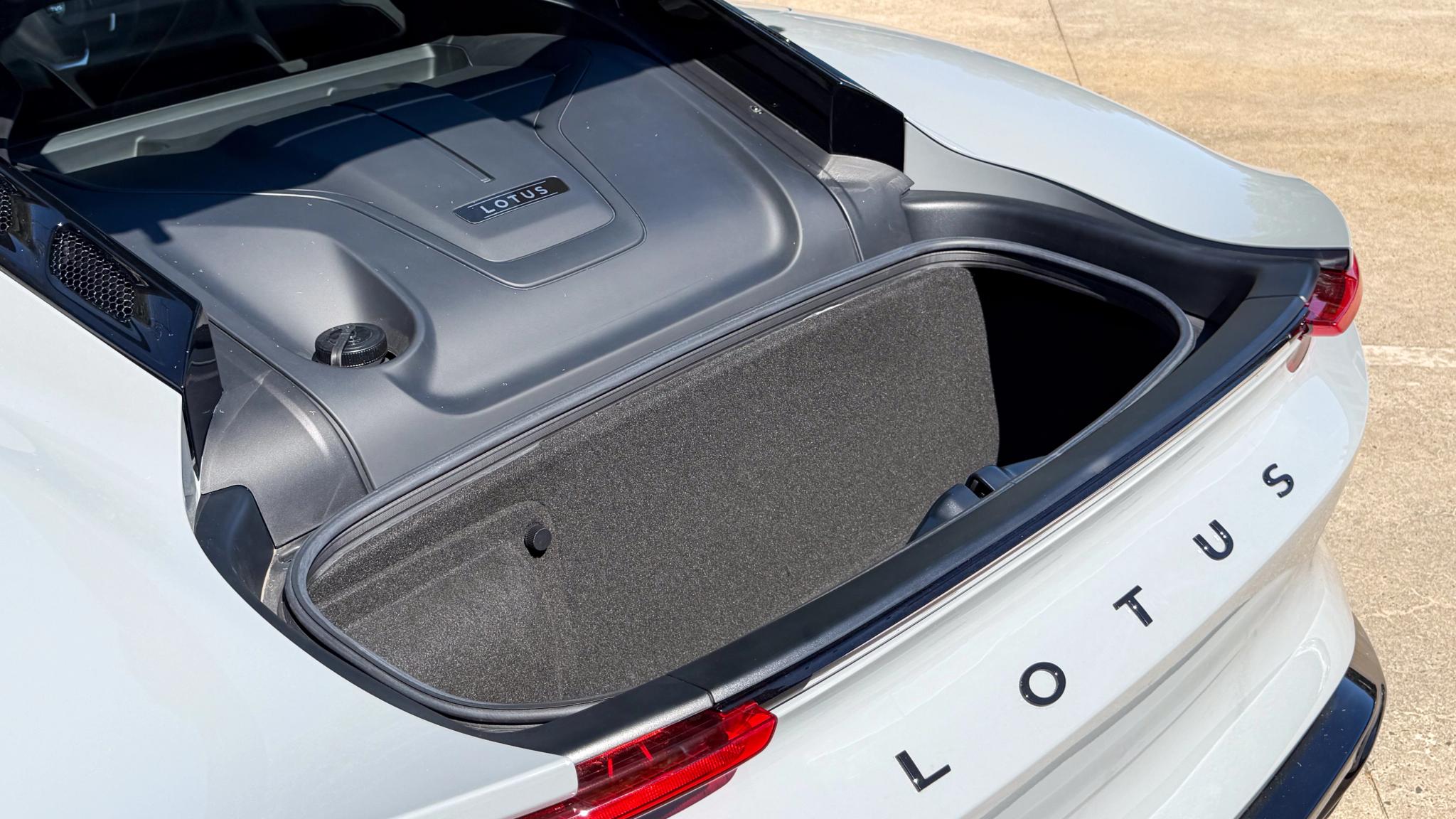
Storage is limited by design. 208 litres behind the seats and 151 litres behind the engine is not a lot, but this is a mid-engined sports car - not a crossover with sporting pretensions. You know what you're signing up for. Pack smart, accept the trade-off, and get on with enjoying the thing. The same logic applies to the two-seat cabin. It's a sports car. Act accordingly.
Worth noting: everything stored near the engine bay gets warm during spirited driving, so keep that in mind if you're loading anything temperature-sensitive.
What is the Lotus Emira like to drive?
This is where the Emira justifies everything.
The Turbo SE's AMG-sourced 2.0-litre four-cylinder produces 298kW and 480Nm, channelled through an eight-speed twin-clutch gearbox to the rear wheels. Zero to 100km/h in 4.0 seconds, top speed 291km/h. Figures that look fine on paper but feel considerably more involving in practice, because the chassis around that engine is built with a level of intent you rarely encounter.
Push the start button with the windows down. The air intakes sit roughly level with your ears, and the engine fires into a genuine mechanical event - turbo whistle, wastegate chuff, a baritone growl building beneath. This is not a car that hides its turbocharged nature. It celebrates it. At higher revs it becomes genuinely raucous and the whole experience rewards commitment in a way that AMG-sourced engines in heavier, softer cars simply can't replicate.
The steering is where Lotus earns its reputation. Electro-hydraulically assisted, it delivers direct, nuanced feedback that shrinks the car around you within a few corners. You know exactly what the front tyres are doing. On a well-surfaced road, the Emira turns from pointed instrument to trusted partner with surprising speed. There's a natural balance to the chassis - double wishbones all round, Eibach springs, Bilstein dampers - that doesn't demand attention so much as reward it.
The ride quality is remarkable for a car this low. Australian road surfaces can be genuinely brutal, and the Emira processes rough tarmac and patchy bitumen with composure that feels over-engineered in the best way. It floats when it should and loads up properly when you ask it to work.
At moderate pace, this feels like the sort of sports car that's fast becoming a protected species: one that actually communicates. On the right road, it's properly brilliant.
For those willing to row their own gears, the V6 with six-speed manual remains an enticing proposition. The supercharged 3.5-litre Toyota-derived engine produces around 298kW and the manual gearbox adds an entirely different dimension to the ownership experience. It requires more of you and gives more back in return. If three pedals matter to your idea of a sports car, the V6 route is worth the extra cost.
How efficient is the Lotus Emira?
The Turbo SE's four-cylinder is the more frugal option between the two powerplants. In the upper gears on a highway cruise, genuine efficiency in the low-to-mid single digits per 100km is achievable. Push it and that changes quickly - this is not a car you buy for fuel economy - but the engine's flexibility means real-world figures won't be as savage as you might expect.
Warranty and servicing operate through the local importer. Given the Emira's exotic status in Australia, it's worth confirming service intervals and parts availability before committing. The fundamentals are solid, but ownership infrastructure matters when you're this far from Hethel.
Is the Lotus Emira safe?
The Emira hasn't been subjected to ANCAP testing and carries no star rating. It comes equipped with the safety hardware you'd expect from a performance car of this type - stability control, ABS, and the appropriate driver aids - but it isn't loaded with the autonomous systems common to mainstream vehicles. That's broadly in keeping with the segment. Buyers cross-shopping sports cars at this price aren't typically leading with safety ratings, but it's worth knowing.
What are the main rivals to the Lotus Emira?
Porsche 718 Cayman - The reference point for this class. Slightly more polished at the limit and more refined on the motorway. Significantly more common, which matters if exclusivity is part of what you're paying for.
BMW M4 - More powerful and more practical as a daily proposition. Less exotic, less focused and a fundamentally different kind of car. But if you need a sports car that doubles as a genuine daily driver, it makes a strong case.
The Emira's strongest argument is one neither rival can fully counter: it's one of the last mid-engined, combustion-powered, European-built sports cars at this price. When Lotus completes its transition to EVs and the Cayman goes electric, this segment effectively ceases to exist.
Should I buy the Lotus Emira?
The Emira is built for drivers who will notice what it does well and forgive what it doesn't. It is not a practical daily driver in the traditional sense and at nearly $223,990 it demands a serious conversation with your accountant.
But it is one of the most visually striking cars at any price, one of the most communicative sports cars you can buy right now and it is genuinely finite. Lotus is moving to an electric future. The V6 manual variant is a direct line back to what sports cars were before driving became increasingly delegated to software. The Turbo SE is sharper, more accessible and arguably the better everyday performer of the two.
Buy this because you love driving. Buy it because you want something that makes you feel something every time you press start. Buy it because in a few years, someone will tell a younger person about the last generation of analogue Lotuses and you'll want to have been there.
They really don't make them like this anymore. They soon won't at all.
VerdictThe Beep Verdict
Rob Leigh
Co-founder & Director
Rob Leigh is Co-founder and Director of The Beep based in Melbourne, Australia. He has 15+ years inside a major automotive OEM, specialising in product planning, pricing and vehicle strategy.
About Author