2026 Honda Prelude review
The reborn Prelude isn't fast and it isn't cheap, but spend a proper day behind the wheel on a good stretch of road with one and the numbers stop mattering quite so much.

Rob Leigh
Pros
- Genuinely engaging chassis, light and alive
- Hybrid SUV economy in a proper coupe body
- Cheap to own, easy to live with
Cons
- 147kW won't worry anyone in a straight line
- Hybrid soundtrack lacks the character of a proper petrol coupe
- No spare wheel, no manual, no sunroof
Our verdict
The 2026 Honda Prelude is a sweet-handling hybrid coupe built for drivers who care more about flow than 0-100 times. It rewards smooth inputs, sips fuel like a small SUV and reminds you why two-door cars used to matter. The catch is the price tag and the modest power, both of which will scare off buyers who haven't driven one.
What does the Honda Prelude cost in Australia?
The Prelude lands as a single, fully-loaded e:HEV grade at $65,000 driveaway. That's it. No options shopping, no premium paint, no decisions beyond colour and accessories.
| Variant | Powertrain | Drivetrain | Driveaway price |
| e:HEV | 2.0L hybrid, 135kW | FWD | $65,000 |
See Honda Prelude driveaway pricing and specifications →
The internet's first reaction has been predictable. Sixty-five grand for 135kW sounds rich when a Toyota GR86 GTS sits around $52,000, a Subaru BRZ tS tops out near $57,000, and a Mazda MX-5 RF in GT trim is about $62,000.
Climb the ladder and a Nissan Z starts near $83,000, a Ford Mustang EcoBoost lands close to $81,000 and a BMW 230i clears $92,000 before you've added a single option.
So the Prelude sits in the middle of a thin field, equipped to a level that genuinely embarrasses anything cheaper.
What does the Honda Prelude look like?
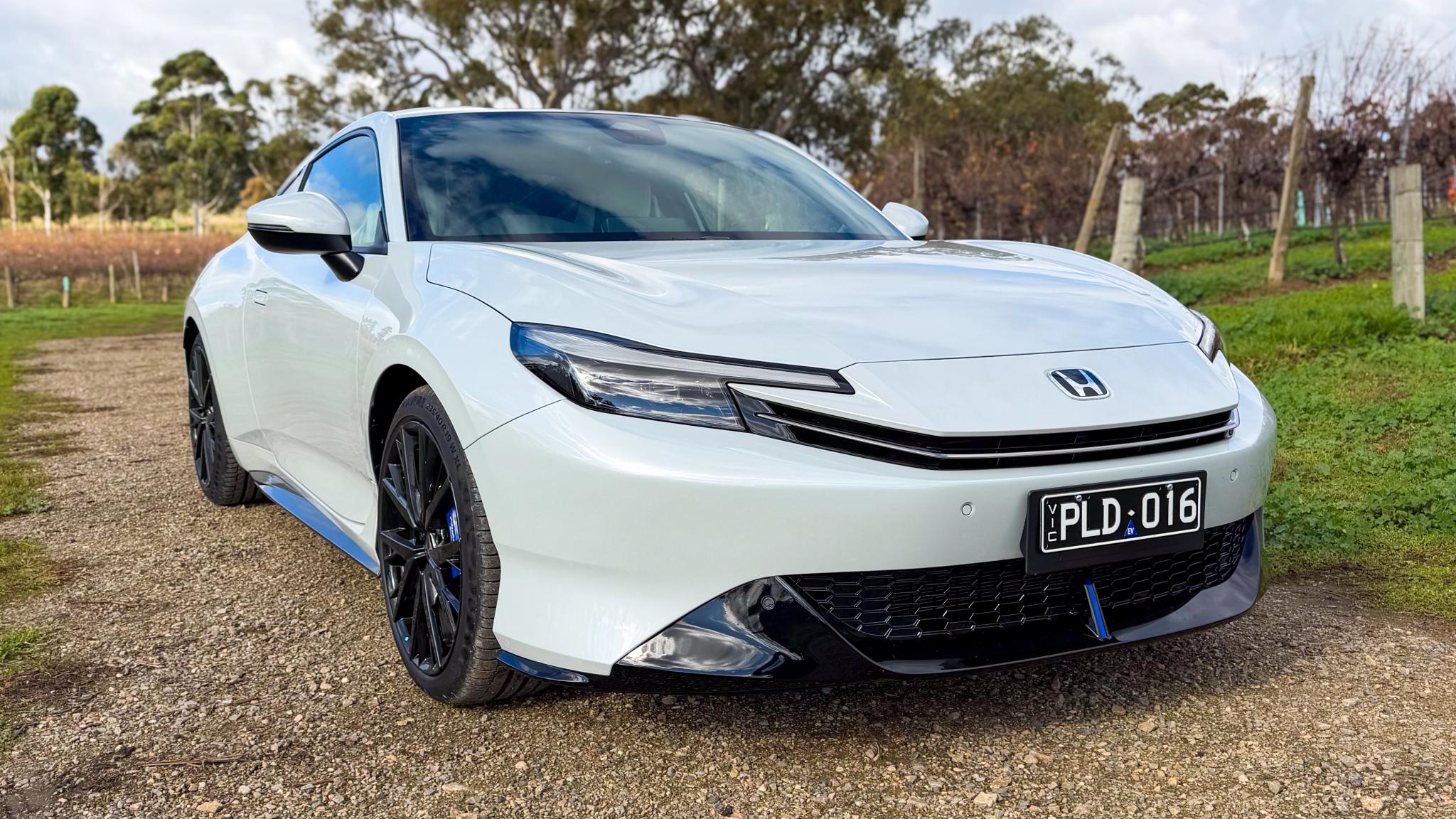
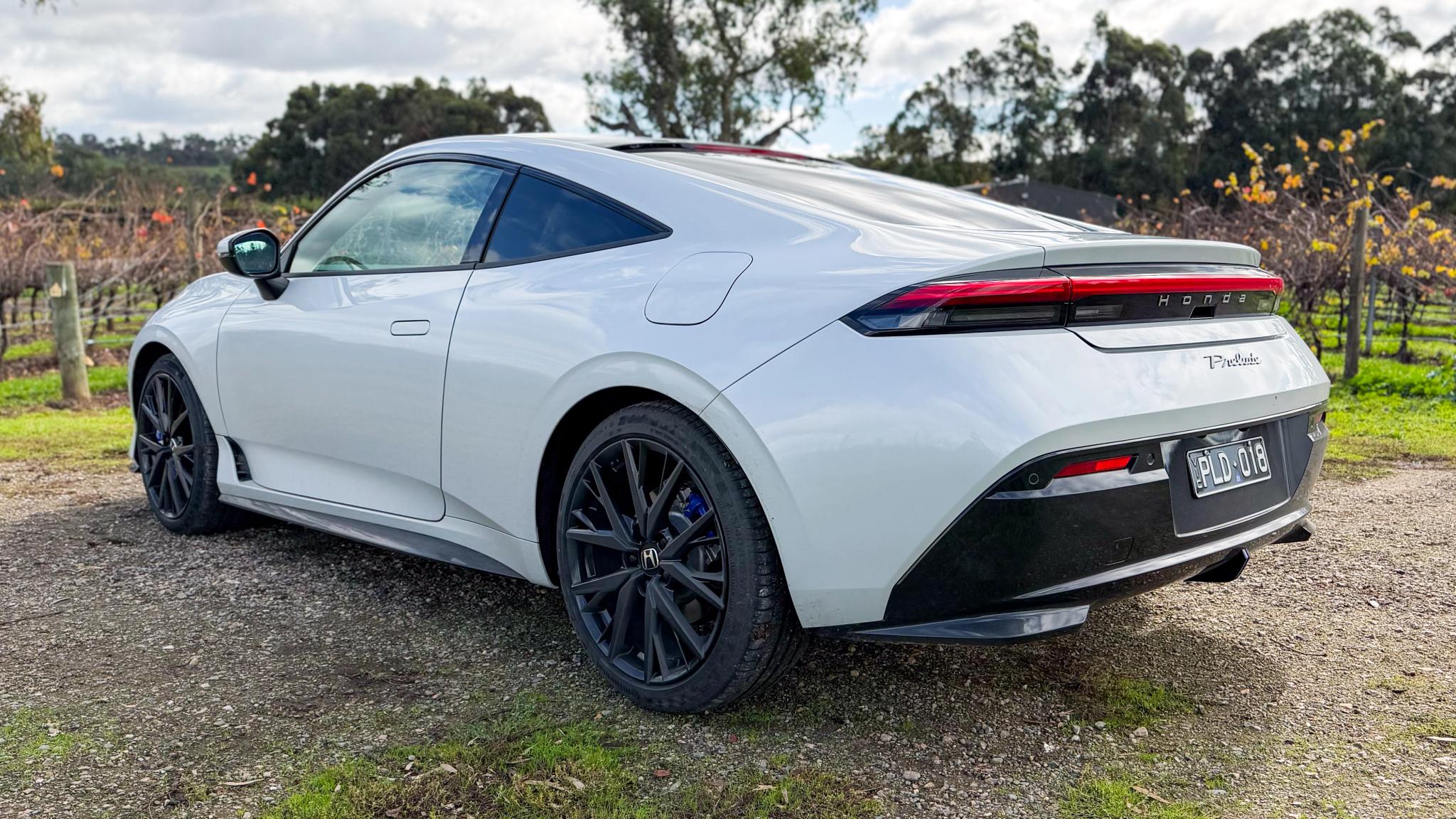
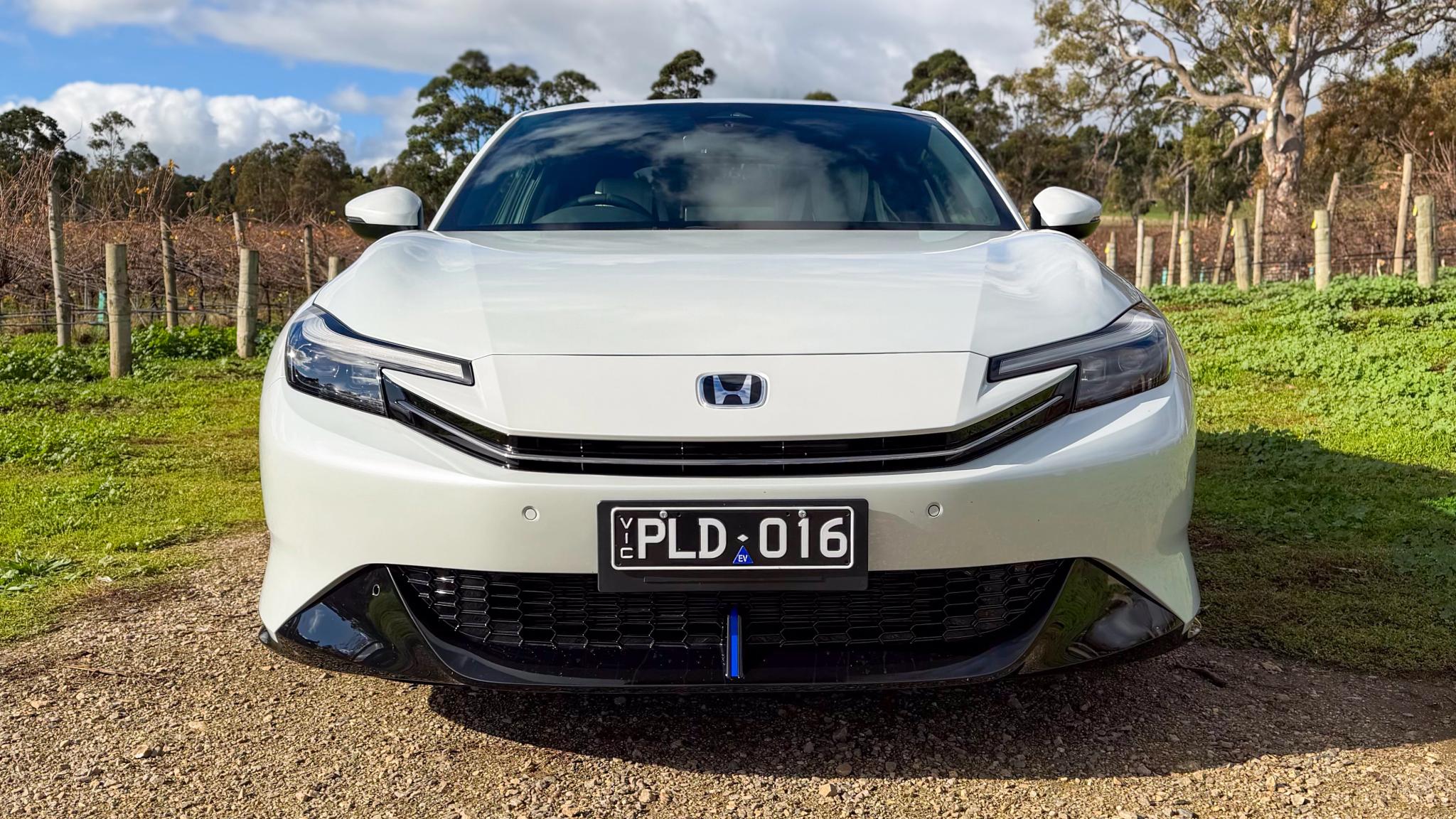
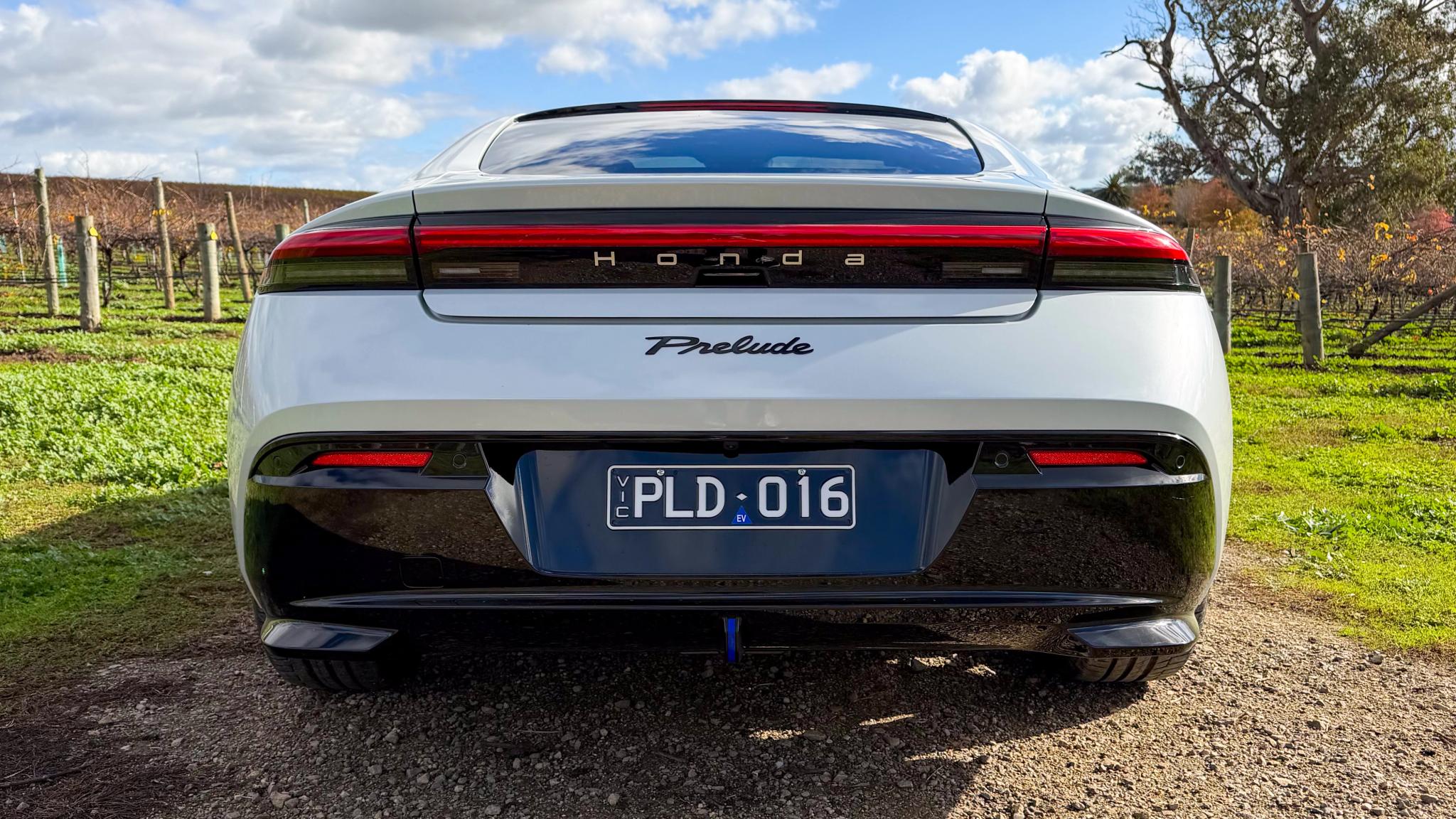
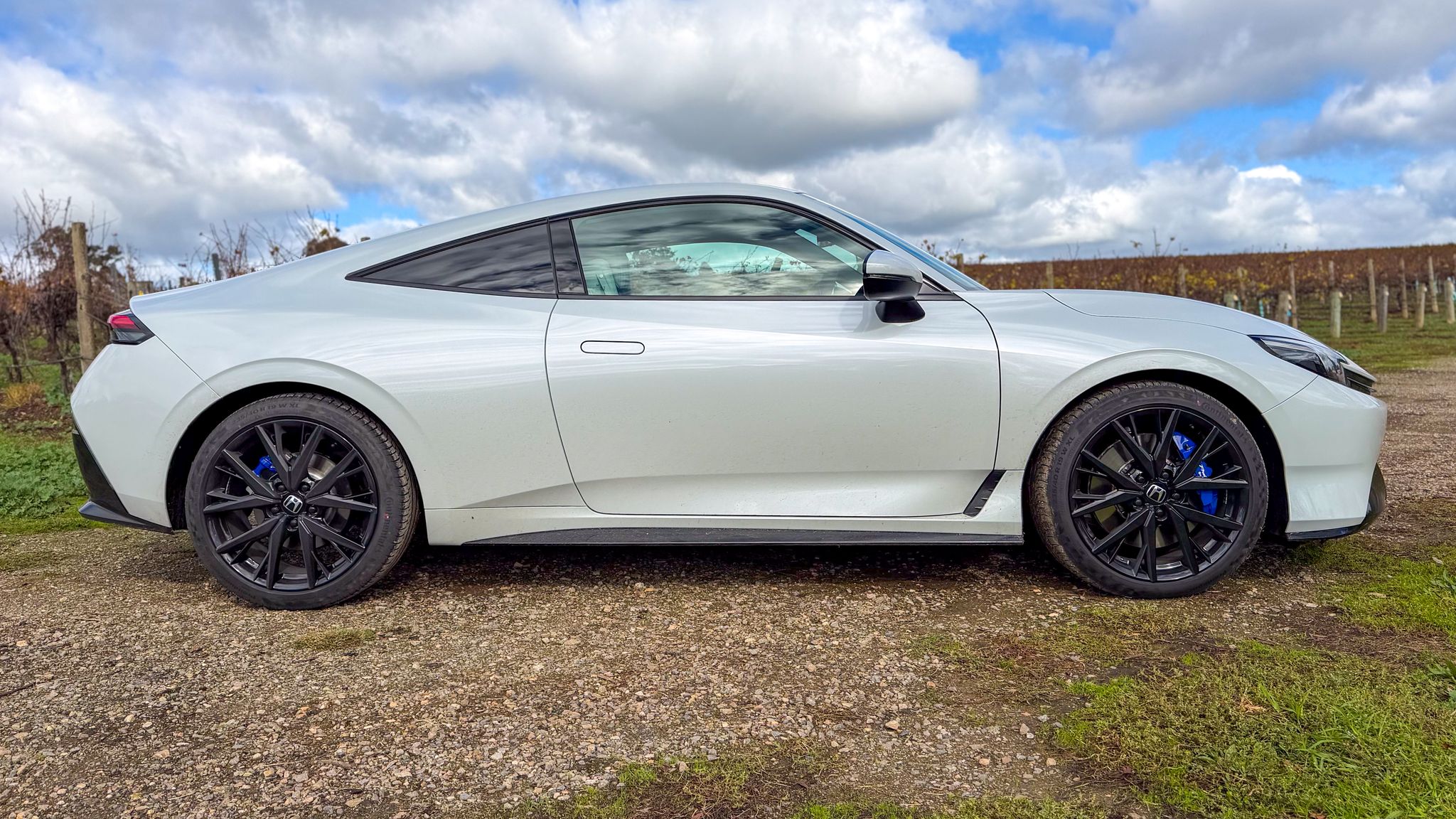
This is one of those cars that grows on you fast. Early press shots didn't quite land for everyone, but in the metal it's properly resolved. Long bonnet, low cabin, a roof Honda calls "double-bubble" that adds rigidity without obvious bling and a full-width LED light bar at the rear that nods unapologetically toward Porsche.
There are no chrome strips along the flanks, the door mirrors are mounted on the doors rather than the A-pillars to keep wind noise down and the 19-inch black alloys wrap around blue-finished Brembo front calipers. The flush door handles are pretty but fiddly in real use and the lack of frameless windows is a small heartbreak. Honda chose rigidity over romance there and once you drive it, you understand why.
Five colours are offered including Moonlit White Pearl, Racing Blue Pearl and Rallye Red, and none of them attract a premium charge. Refreshing.
What is the Honda Prelude like inside?
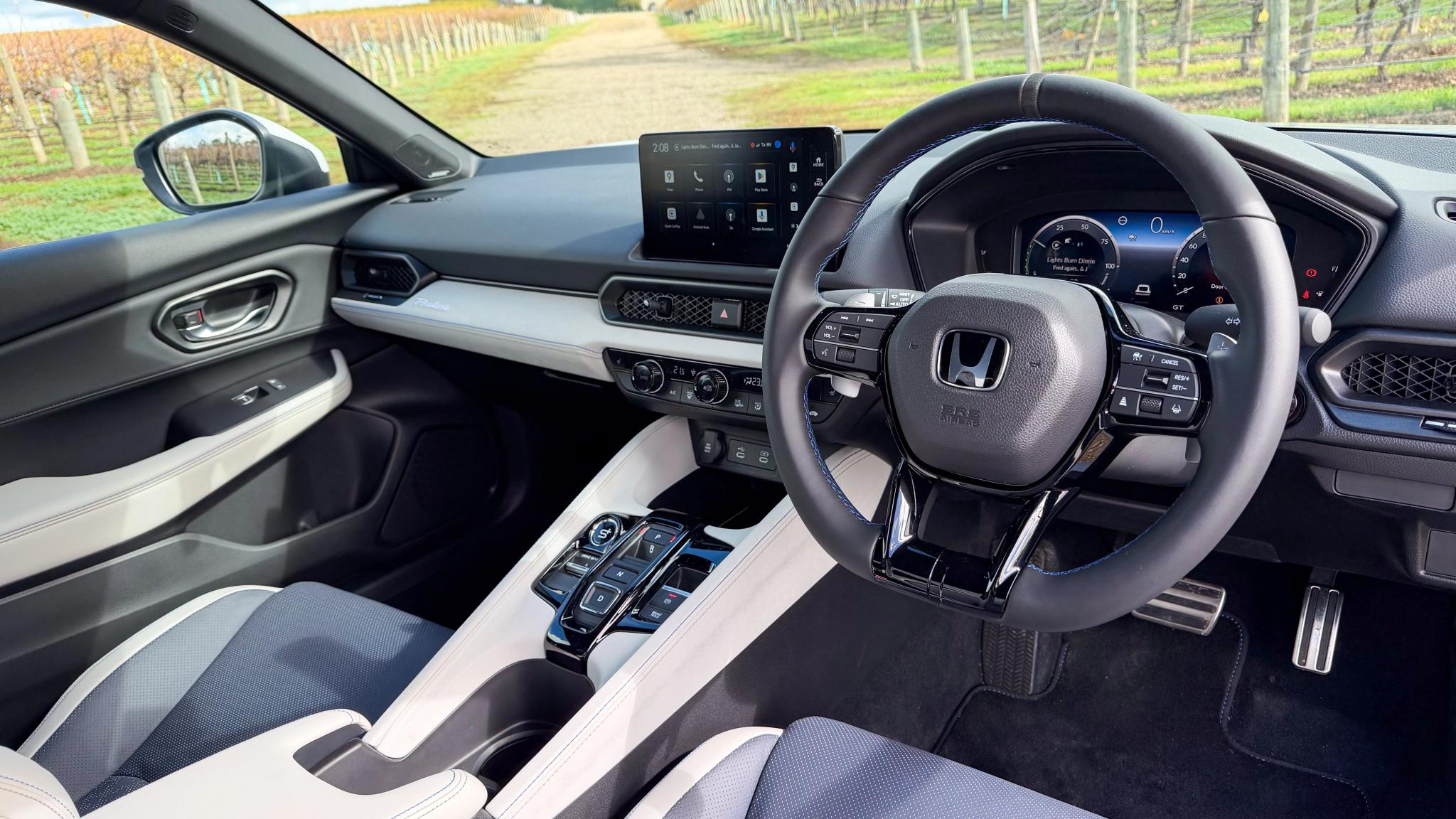
Slide down into the driver's seat and the cabin gives off a clear "tuned Civic" vibe, which is no bad thing. The dash architecture is shared, the steering wheel is shared, the climate dials are shared. What's been changed is the stuff that matters at eye level.
The 9.0-inch touchscreen isn't huge by modern standards but it's quick, clear, and runs wireless Apple CarPlay and Android Auto without dropouts. Google Built-in comes standard with a three-year subscription, the 10.2-inch digital cluster reconfigures intelligently depending on drive mode and the Bose eight-speaker stereo punches above its size.
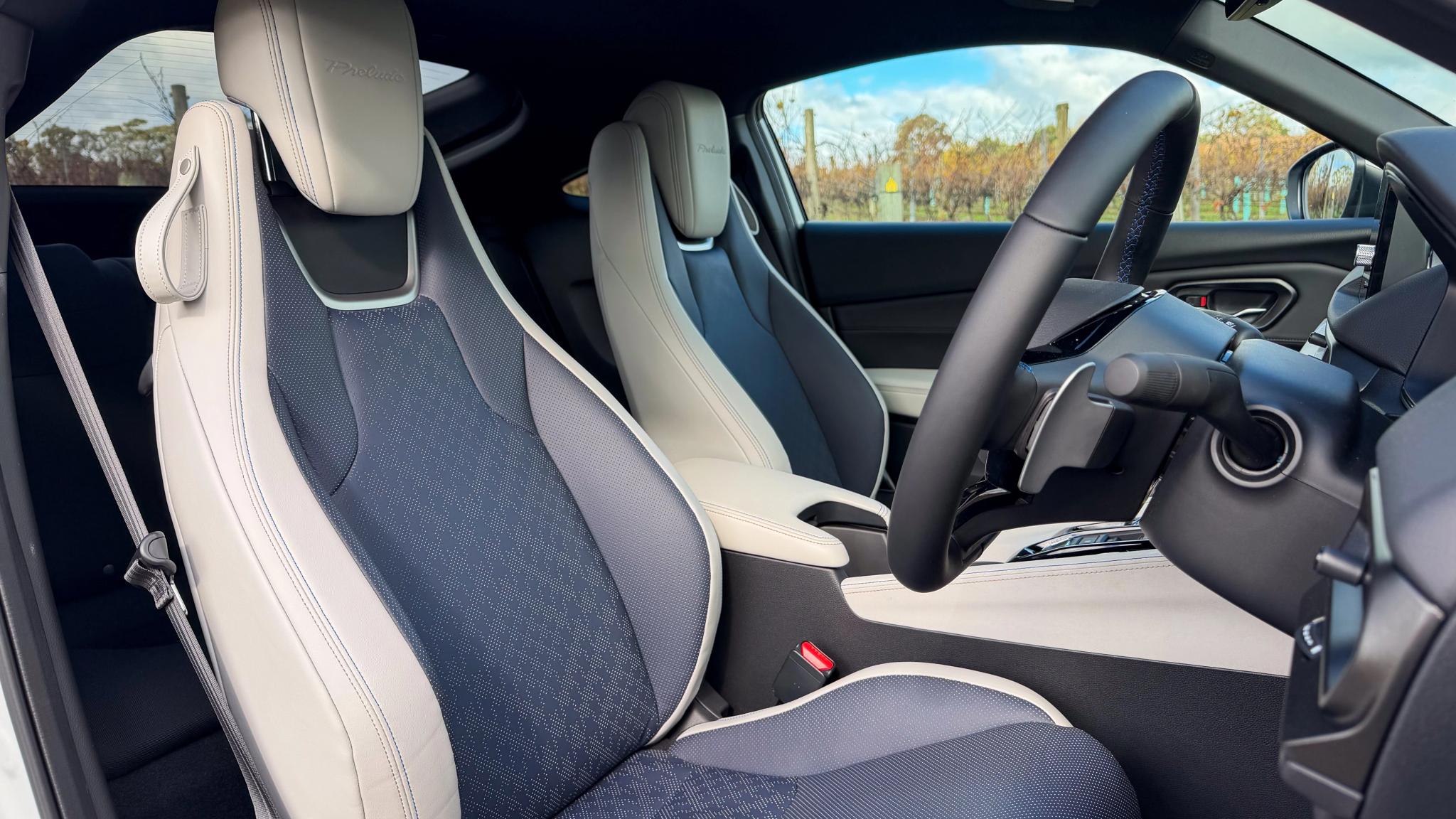
The asymmetric front sports seats are the highlight. Driver's side is firmer and more aggressively bolstered, passenger's side is softer and easier to drop into. Both are heated, both are trimmed in a navy and white leather combination that looks great on day one but might prove fussy over time. They're manually adjusted, which Honda says is about saving weight, and the driving position is excellent. Low, planted, with the wheel where it should be.
Material quality is mostly very good. The padded surfaces, knurled rollers and metallic accents feel a tier above what you get in a GR86 or BRZ. The only sour note is some patchy leather-look trim on the dash and console that already looks a bit grubby in showroom cars. A single grade of upholstery throughout would have lifted the whole interior.
How practical is the Honda Prelude?
For a two-door coupe, surprisingly so.
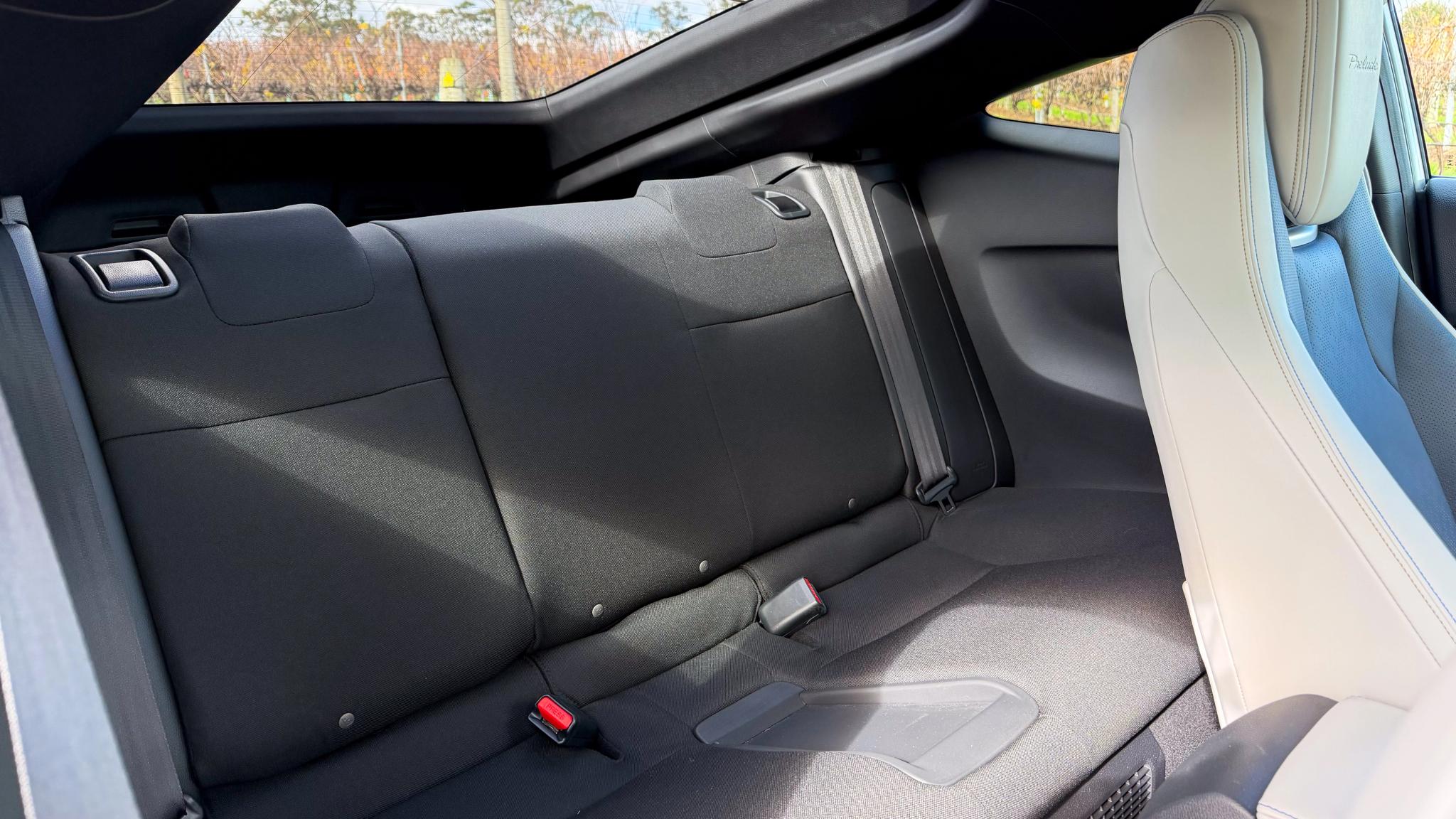
The rear seats exist, technically. Adults won't last more than ten minutes back there thanks to a sloping roofline that punishes anyone over 160cm, and the plain black cloth trim looks like it belongs in a different car. Treat them as a parcel shelf with seatbelts.
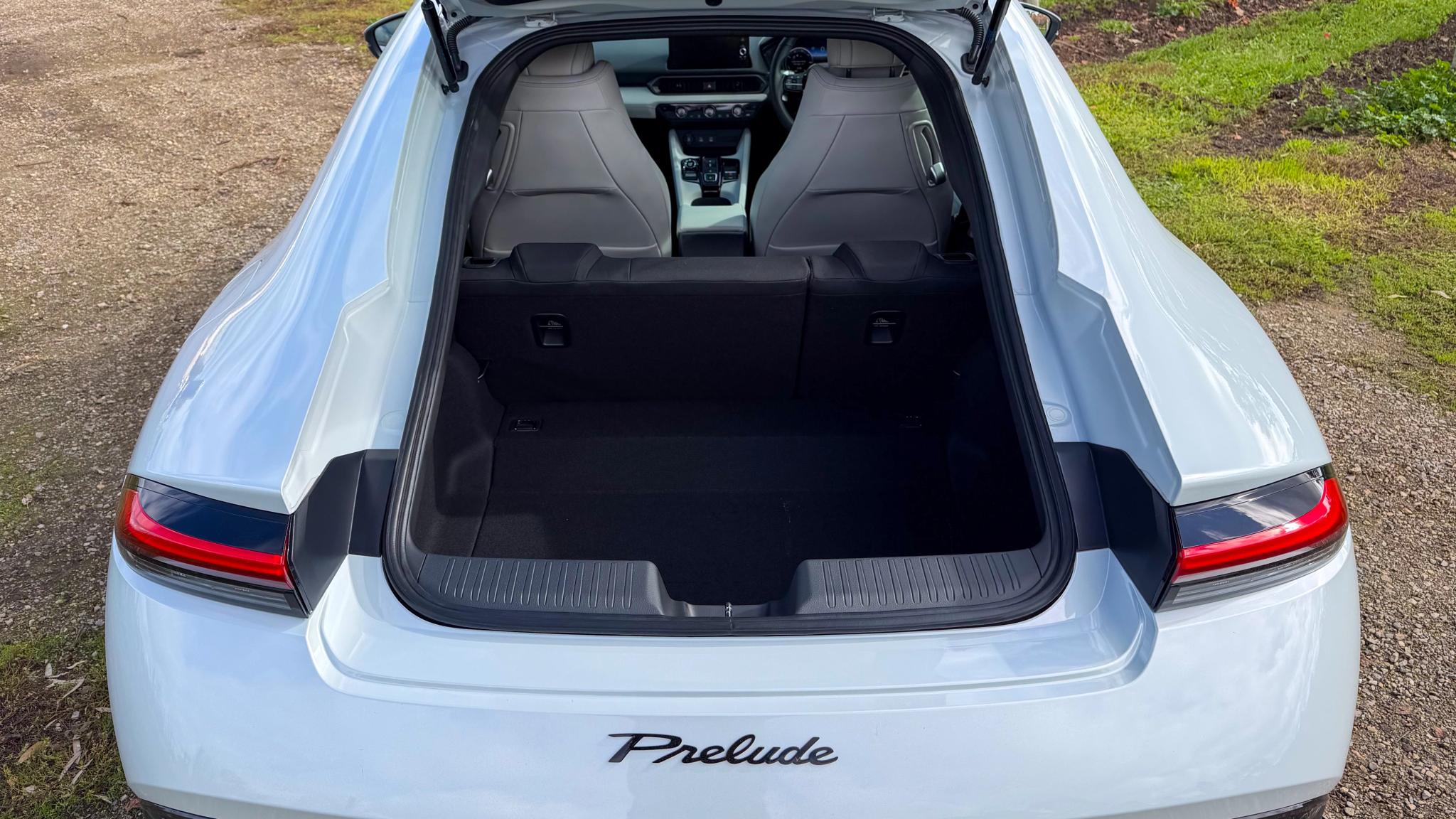
Where the Prelude claws back ground is the liftback design. Boot space measures 264 litres with rear seats up and expands to a properly useful 760 litres with them folded. That's more than a few small SUVs and a real point of difference against rivals like the MX-5 and Z, neither of which can swallow a road bike with the front wheel off.
Storage up front is decent too with deep door bins, a proper armrest cubby, an overhead sunglasses tray and a wireless phone pad. The only practicality fail is the absence of a spare wheel. You get a tyre repair kit, which is fine for a nail and useless for a sidewall.
What is the Honda Prelude like to drive?
This is where the price tag stops being a problem.
The Prelude borrows its hardware playbook from the Civic Type R. Dual-axis MacPherson strut front suspension, multi-link rear, four-piston Brembos and adaptive dampers, all retuned for this application. At 1468kg it's hot-hatch light.
Drop it into Comfort and the Prelude is softer and quieter than a standard Civic. Click GT and the dampers firm up, the steering gains weight and the active sound system pipes a more energetic note through the speakers. Sport probably goes too hard for most Australian roads. Individual mode is there so you can select the best from both worlds.
The chassis is the surprise. The front end is alert without being twitchy, the body stays composed through quick direction changes and there's no torque steer to speak of despite 315Nm through the front wheels. The Brembos are strong, progressive and easy to modulate. Steering is quick and accurate but light on feedback, very much a modern EPS system.
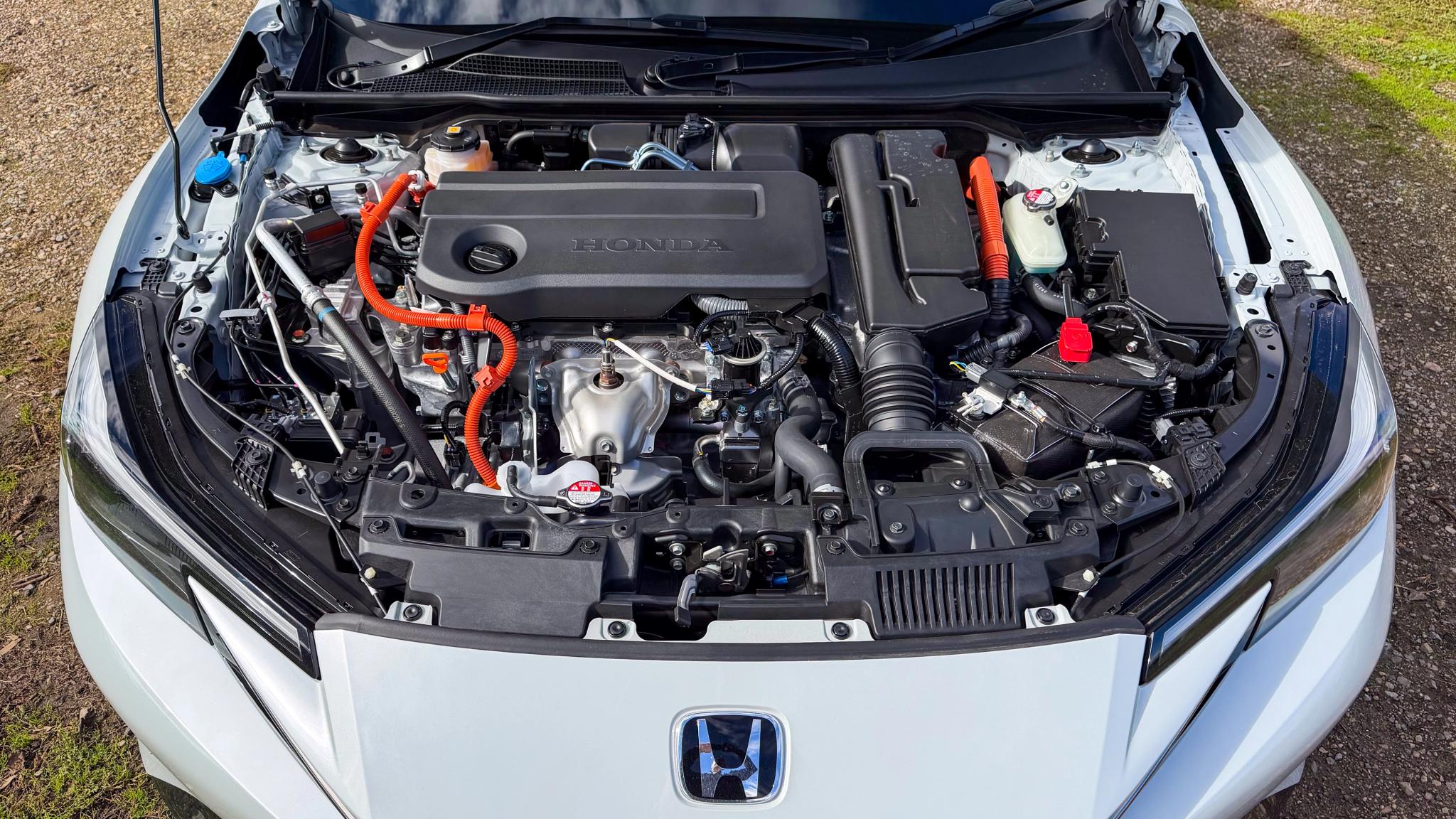
Performance is the part you have to come to terms with. The 2.0-litre Atkinson-cycle four-cylinder works with two electric motors and a 1.06kWh battery, producing a combined 147kW and 315Nm through an e-CVT. Honda quotes roughly mid-7 seconds to 100km/h, conservative in the real world but no threat to a Mustang GT.
What you get instead is a creamy, instant low-down shove that makes overtaking effortless and town driving genuinely entertaining. The S+ Shift system turns the paddles into pretend gear shifters and fakes an eight-speed sequential. Gimmick on paper, great laugh in practice. Just don't expect it to replace a proper manual.
One thing to come to terms with is how quiet it is. The hybrid system slips between electric and petrol propulsion so smoothly that you barely notice, and the synthesised engine note only fills in part of the gap. Coming from a traditional petrol coupe, it can feel a touch disengaging at times.
How efficient is the Honda Prelude?
Genuinely impressive. Honda claims 4.3L/100km combined, and even after a day of enthusiastic hill-road driving the trip computer reported around 7.0L/100km. That's hot-hatch performance for hybrid SUV money at the pump.
The Prelude runs on 91 RON regular unleaded and the 40-litre tank should deliver close to 930km of theoretical range. This side of an EV, no other sports car comes close.
Servicing is $199 per visit at capped-price intervals of 12 months or 10,000km, and Honda's standard five-year unlimited-kilometre warranty can be extended to eight years if you service exclusively through the dealer network. The hybrid battery carries its own eight-year warranty either way.
Is the Honda Prelude safe?
The Prelude hasn't been crash-tested by ANCAP and probably won't be given low expected volumes. Honda says the body structure has been engineered to exceed the five-star Civic's rating with additional bracing around the liftback aperture and sills.
Standard kit includes 10 airbags, autonomous emergency braking, adaptive cruise with traffic jam assist, blind spot monitoring, rear cross-traffic alert, lane keep assist, traffic sign recognition, and a road departure mitigation system. There are two ISOFIX points and two top tether anchors for the rear seats. The driver assist calibration is sensible for Australian conditions and rarely intrudes, which is more than can be said for many recent launches.
What are the main competitors to the Honda Prelude?
The Toyota GR86 and Subaru BRZ twins are the most direct rivals starting from around $48,000 plus on-roads and offering purer rear-wheel-drive thrills for less money. They're louder, more raw and more engaging at the limit, but feel a generation behind on tech and refinement.
The Mazda MX-5 RF is the segment's playful benchmark with a folding hardtop and a chassis that still sets the standard for feel. It's a two-seater though, costs from around $59,000 plus on-roads and lacks the Prelude's interior tech and daily usability.
The BMW 230i is the premium step up, with rear-wheel drive, a turbo four delivering proper pace, and a badge that holds its value. The catch is the price, which pushes close to $90,000 drive-away once you tick the right options.
The Nissan Z brings twin-turbo V6 muscle and old-school coupe theatre from around $83,000 plus on-roads, but drinks more, costs more to run and feels heavy next to the Honda.
The Ford Mustang EcoBoost is the cheapest way into a proper muscle coupe at around $81,000 plus on-roads, but it's a very different car. More cruiser than carver, and a long way off the Prelude's efficiency.
Should I buy the Honda Prelude?
If you're cross-shopping it against a Mustang GT or a Z, probably not. The Prelude doesn't trade in straight-line thrills or muscle-car drama.
But if you've ever owned a Civic Type R, an MX-5, an Integra or an old S2000 and you want something engaging, efficient, beautifully built and quietly different, this is the most rewarding new Honda you can buy short of the Type R.
It does the boring stuff brilliantly, the fun stuff with real flair and costs less to feed than most small SUVs.
A proper coupe, built with care, in a market that barely makes them anymore. That counts for something.
VerdictThe Beep Verdict
Rob Leigh
Co-founder & Director
Rob Leigh is Co-founder and Director of The Beep based in Melbourne, Australia. He has 15+ years inside a major automotive OEM, specialising in product planning, pricing and vehicle strategy.
About Author