2026 Chery Tiggo 7 Super Hybrid review
The cheapest plug-in hybrid SUV in the country delivers most of what the badge promises, but the driving experience reminds you exactly where the money was saved.

Rob Leigh
Pros
- Genuinely affordable plug-in hybrid pricing
- Strong electric-only punch and real-world EV range
- Long warranty and cheap routine servicing
Cons
- Vague steering and lazy throttle response
- Cramped, awkward driving position
- Fiddly start procedure and gimmicky control logic
Our verdict
The Chery Tiggo 7 Super Hybrid is for the buyer who runs the numbers, charges at home and wants plug-in hybrid running costs without plug-in hybrid pricing. It does the efficiency part brilliantly and presents far above its price point inside. The catch is the way it drives, which never quite shakes off the feeling that you bought the cheap one.
What does the Chery Tiggo 7 Super Hybrid cost in Australia?
This is where the Tiggo 7 makes its loudest argument. The Urban Super Hybrid starts at $34,990 drive away, which makes it the most affordable plug-in hybrid SUV on sale in Australia right now. Step up to the Ultimate Super Hybrid at $38,990 drive away and you add a panoramic sunroof, heated and ventilated front seats, ambient lighting, an eight-speaker Sony stereo, a wireless phone charger and a 360-degree camera.
That $4,000 walk-up is worth thinking about. The Urban already covers the essentials most families care about, so the Ultimate is more of a treat-yourself proposition than a must-have. Either way, you are paying petrol-SUV money for a PHEV, and that framing is the whole point.
| Variant | Powertrain | Drivetrain | Driveaway price |
| Urban | 1.5L turbo petrol, 108kW | Front-wheel drive | $29,990 |
| Ultimate | 1.5L turbo petrol, 108kW | Front-wheel drive | $33,990 |
| Urban Super Hybrid | 1.5L turbo PHEV, 105kW | Front-wheel drive | $34,990 |
| Ultimate Super Hybrid | 1.5L turbo PHEV, 105kW | Front-wheel drive | $38,990 |
See Chery Tiggo 7 Super Hybrid driveaway pricing and specifications →
Against rivals, the maths stays friendly. A BYD Sealion 6 asks more before on-road costs, and a Mitsubishi Outlander PHEV lives in a different price bracket entirely. The only thing nipping at the Tiggo's heels is BYD's newer, smaller Sealion 5. On price for a properly sized medium SUV with a plug, the Chery is hard to argue with.
What does the Chery Tiggo 7 Super Hybrid look like?
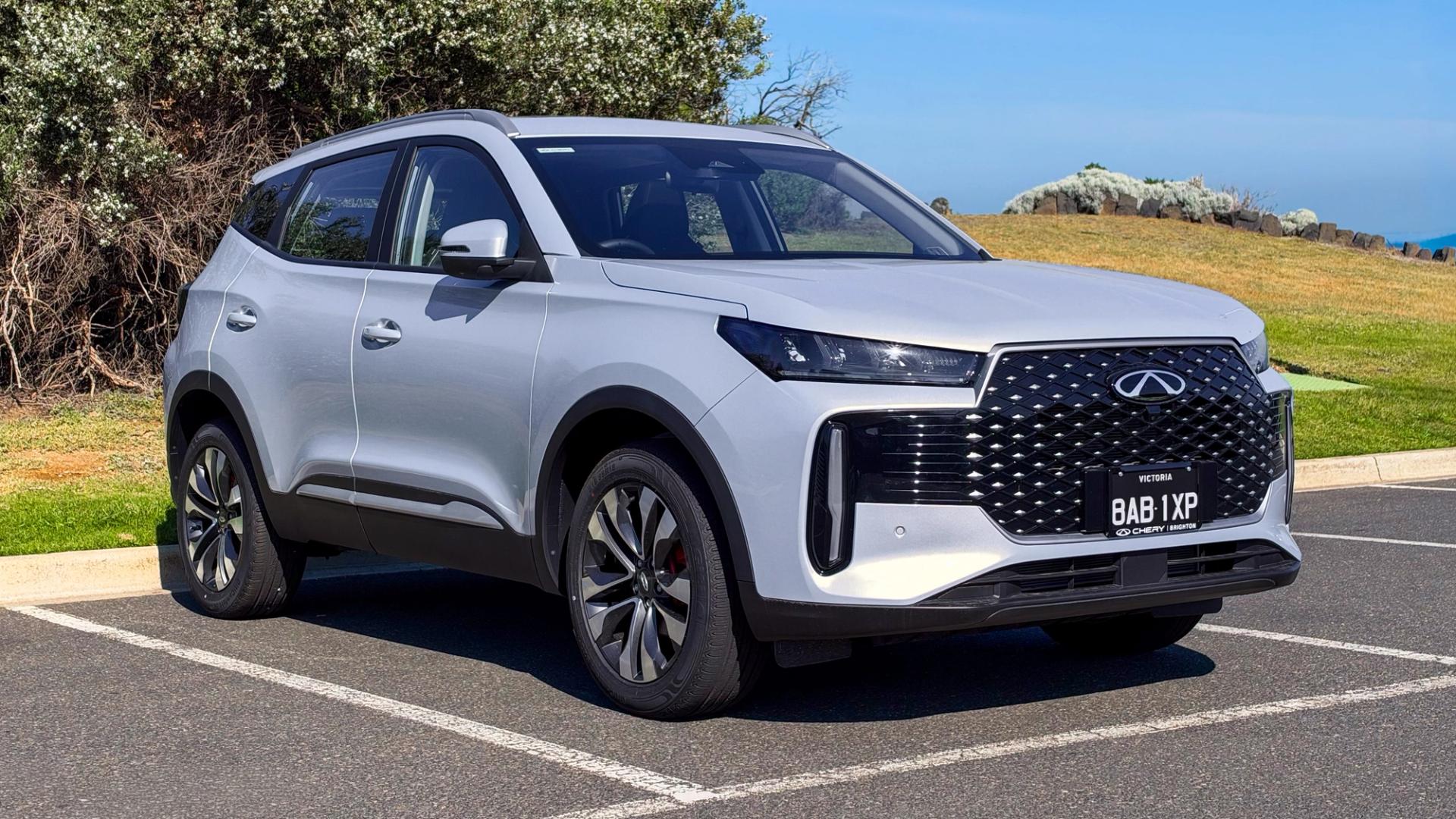
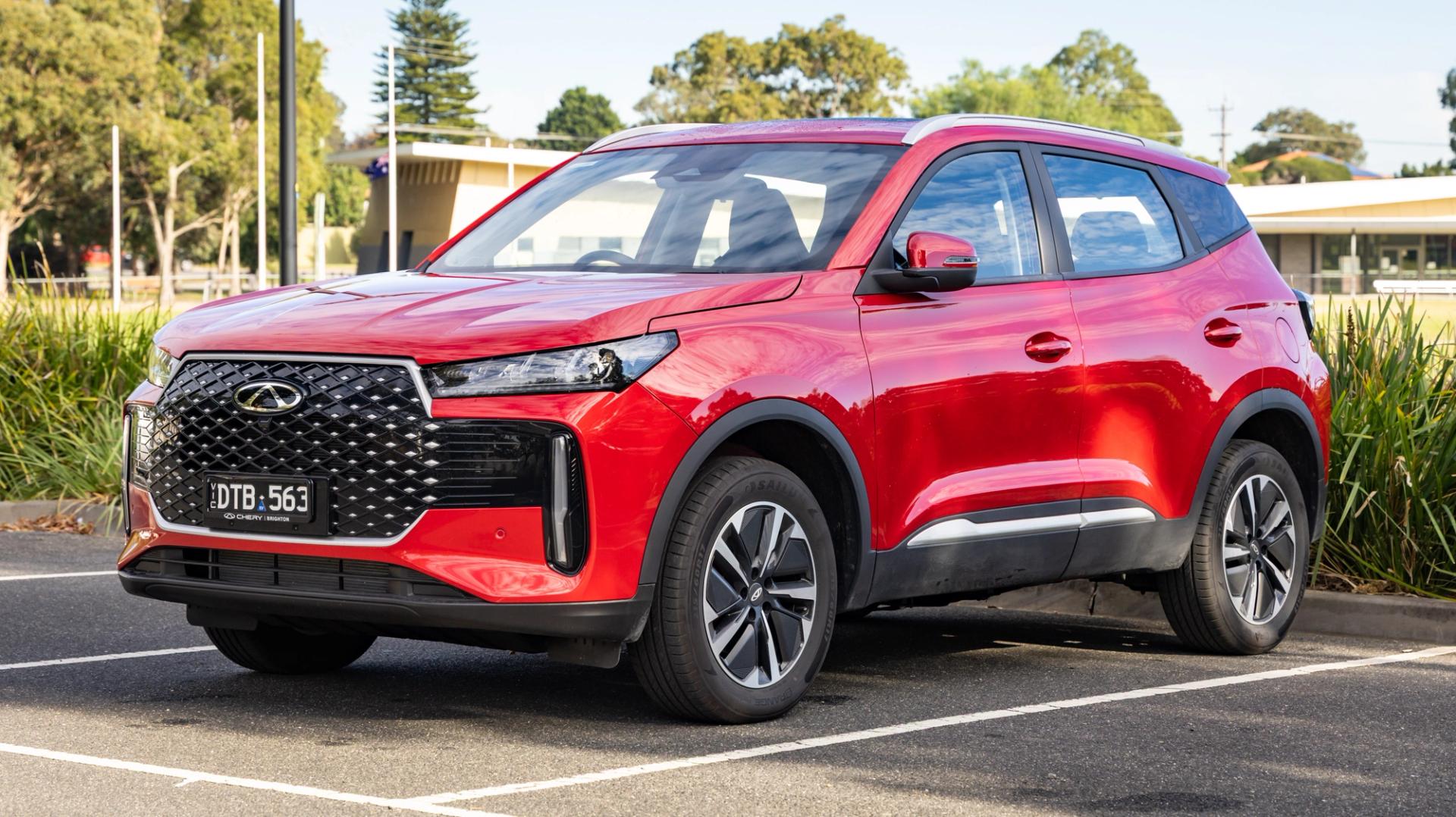
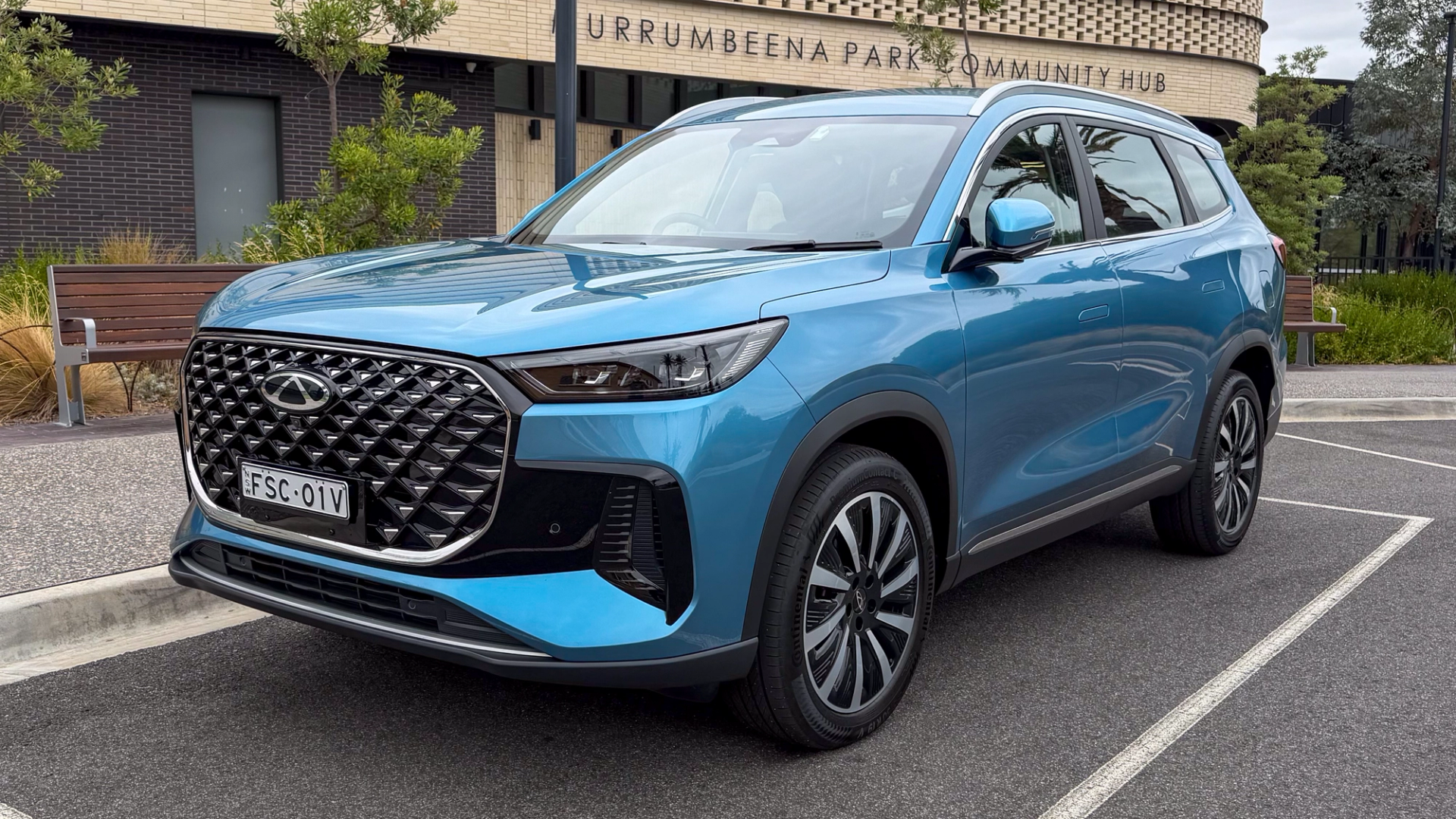
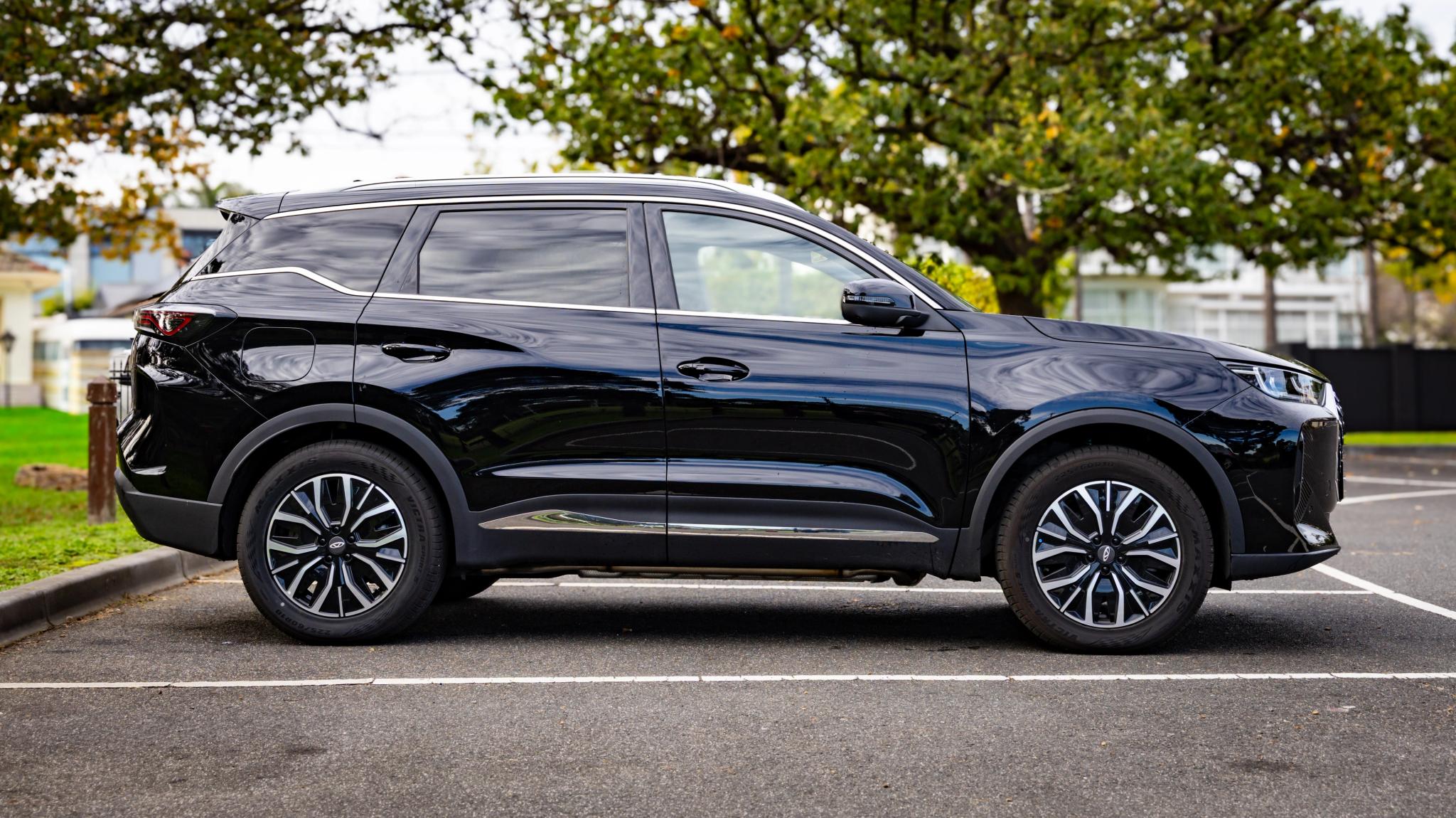
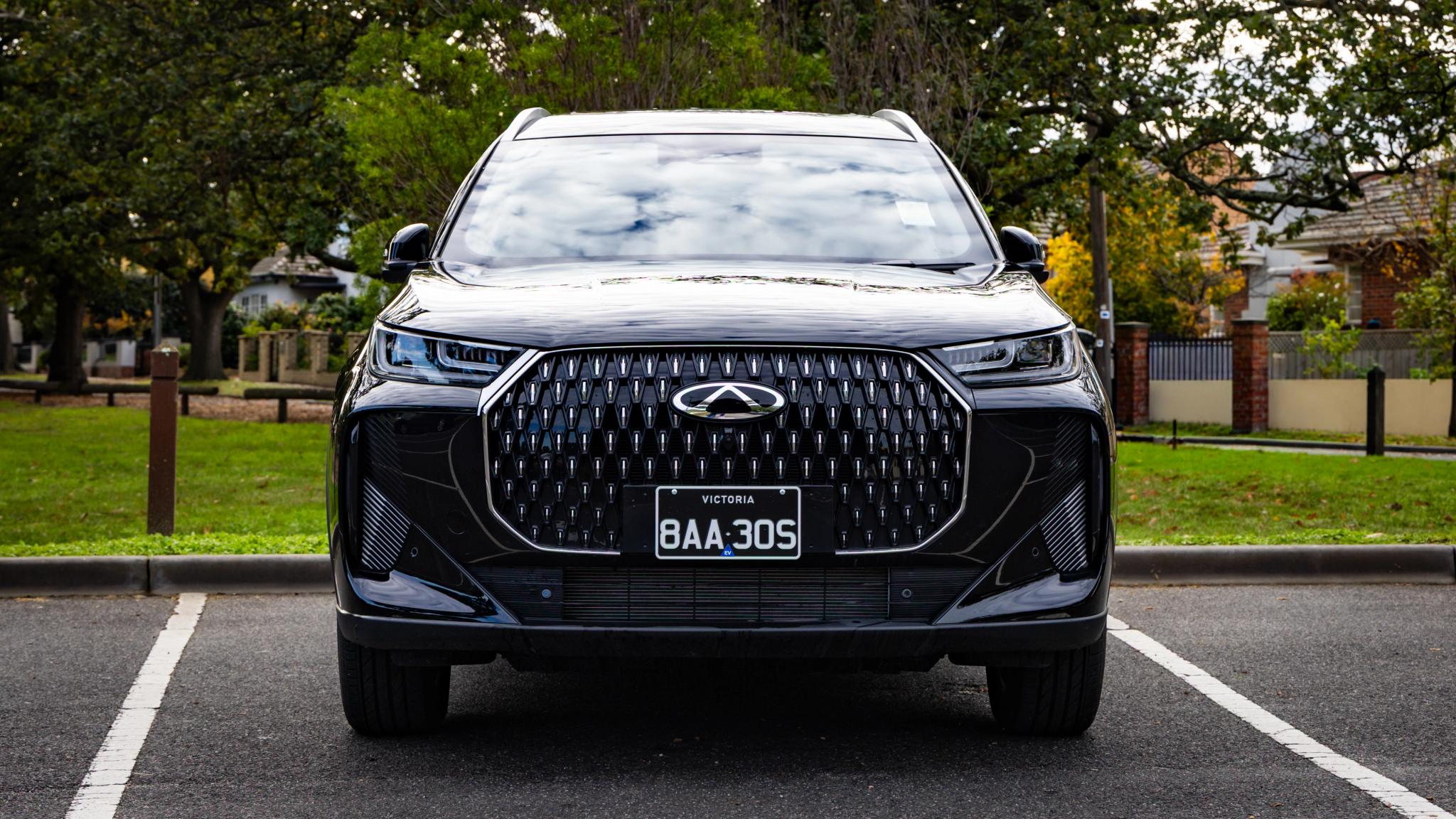
The Tiggo 7 plays it safe and gets away with it. At 4540mm long and 1870mm wide it sits dead centre of the medium-SUV class, with a clean, slightly anonymous shape that will not offend anyone and will not turn many heads either. There is no signature design flourish, no party trick at the front. It just looks like a tidy, modern SUV, which at this price is no bad thing.
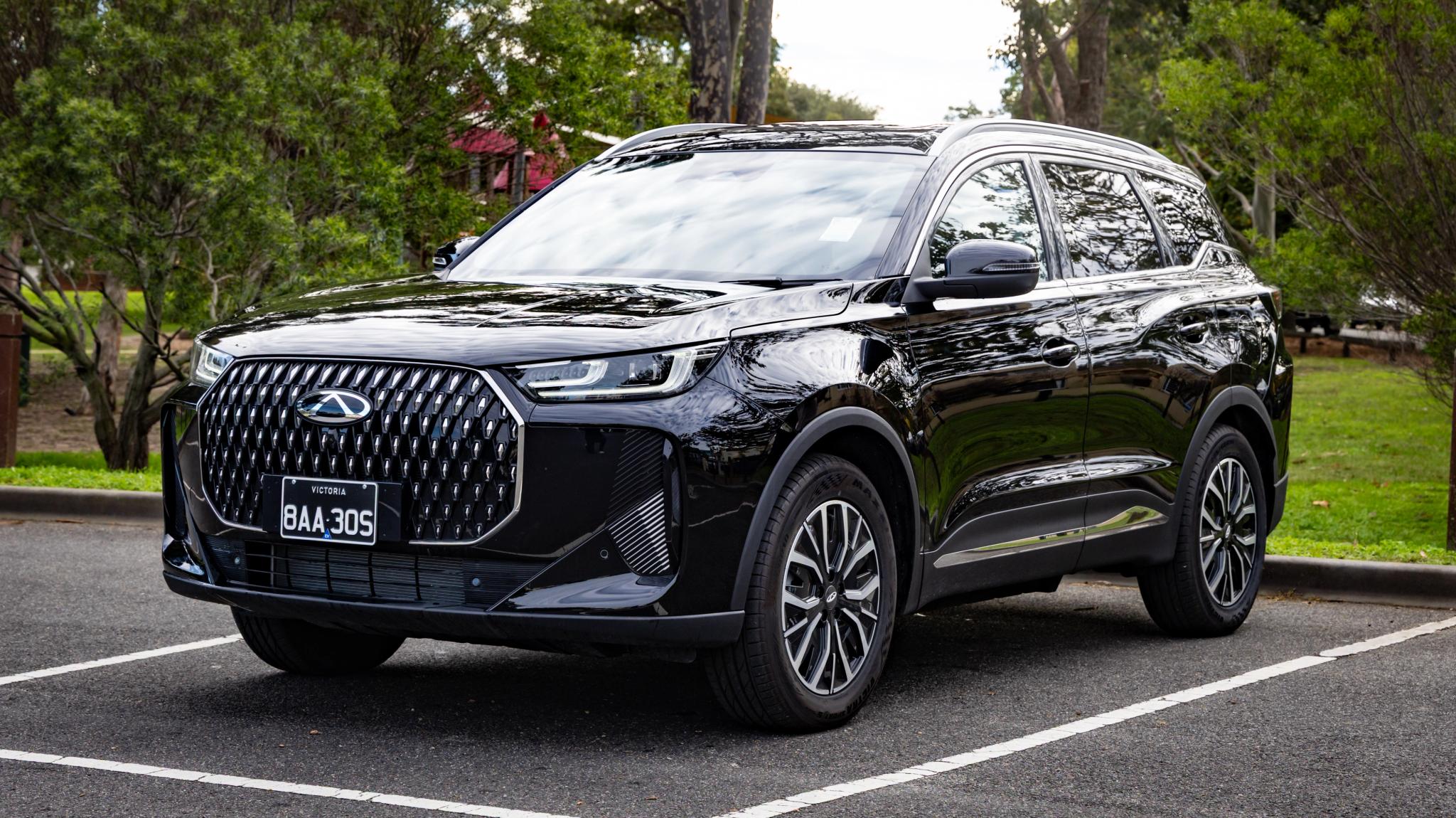
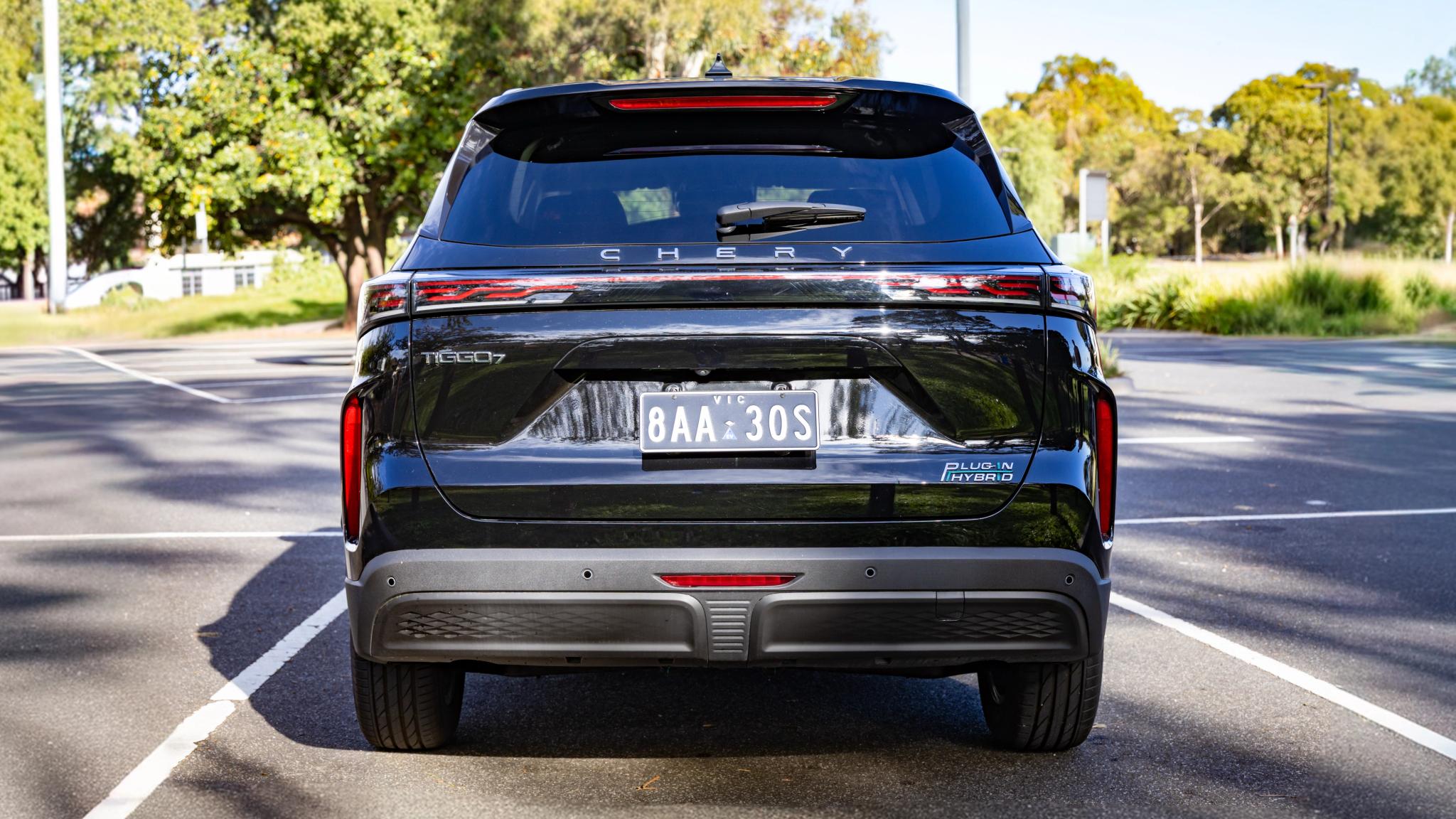
The detailing is where it wins. LED lighting front and rear, a large grille, body-coloured panels broken up by black trim, and 18-inch alloys that look the part even if they read a touch hub-cap from certain angles. The Ultimate's Star Silver and the various premium paints add some interest. Parked outside a school pickup line, nobody is going to guess it cost less than forty grand.
What is the Chery Tiggo 7 Super Hybrid like inside?
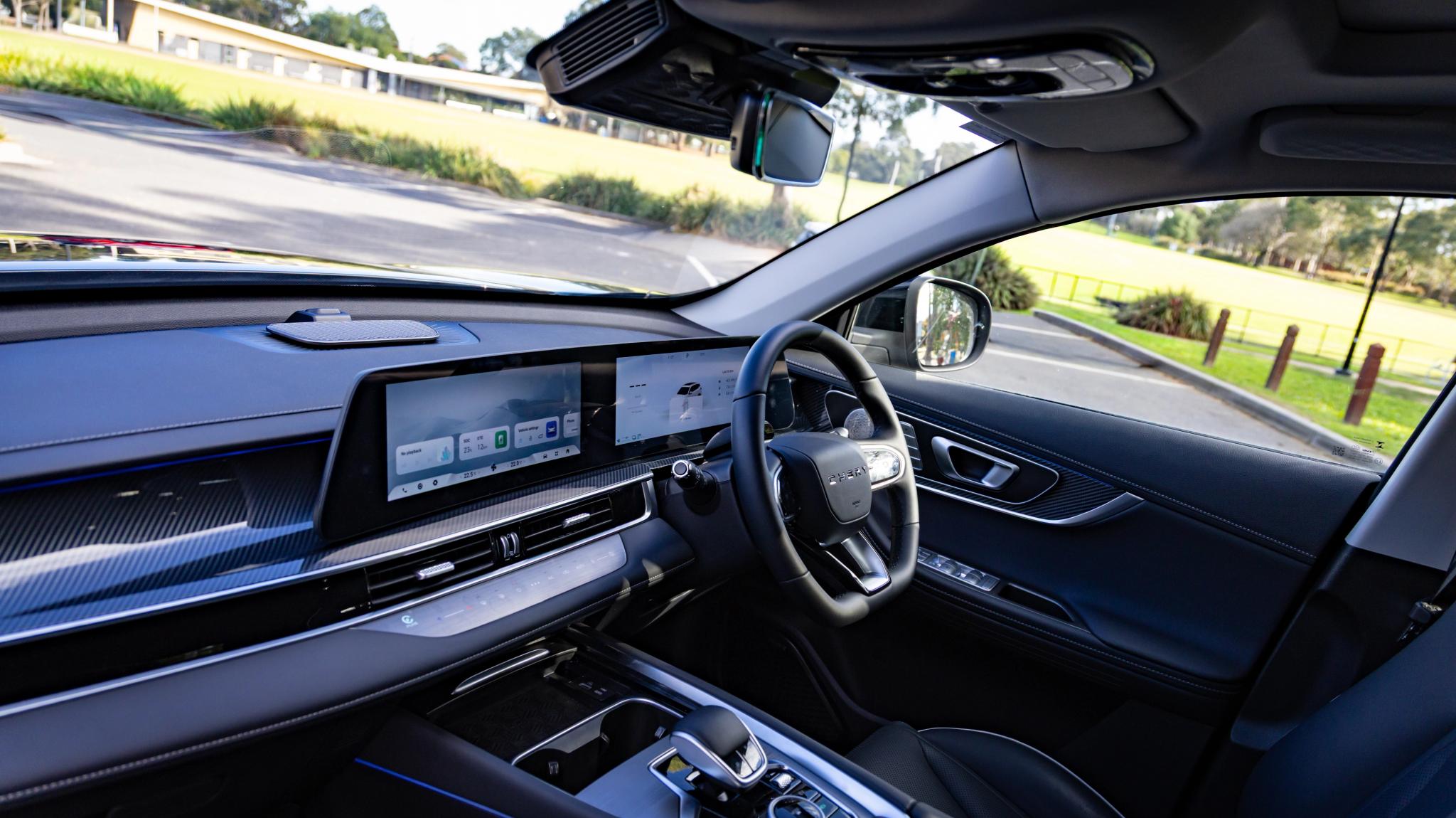
Step in and the value story gets stronger. Twin 12.3-inch displays dominate the dash, the synthetic leather looks convincing, and there is a clear Mercedes-Benz influence in the switchgear and speaker grilles. From the driver's seat at a standstill, you would happily believe this was a more expensive car.
Spend longer in it and the cracks show. There are hollow-feeling plastics lower in the cabin, and some of the trim choices, like the carbon-look inserts, try a little too hard. The bigger issue is the driving position. The transmission tunnel crowds your left knee, the footwell feels pinched, and the steering wheel does not rise as far as taller drivers will want. The seats look good but the base is firm and the bolsters can nag on a longer run. None of this is a deal-breaker, but it stops the cabin feeling as resolved as it first appears.
Ergonomically it is a mixed bag. The physical climate panel below the screen is a welcome idea, though it washes out in direct sun to the point where you cannot read it. There is wireless Apple CarPlay and Android Auto, but no native satellite navigation, so you are leaning on your phone for maps. The Chery companion app does not function locally either, so remote preconditioning is off the table.
How practical is the Chery Tiggo 7 Super Hybrid?
Better than the driving position suggests. The back seat is the Tiggo's strong suit, with real head and leg room, a long enough seat base to support adult thighs, a centre armrest with cupholders, map pockets and a USB port. Three across for the school run is genuinely fine.
Storage up front is plentiful with a deep centre console bin, dual cupholders and a useful tray, although Chery has parked the emergency window-break hammer right in the middle of that tray, which eats into space you would rather use for a phone and wallet. Odd packaging call.
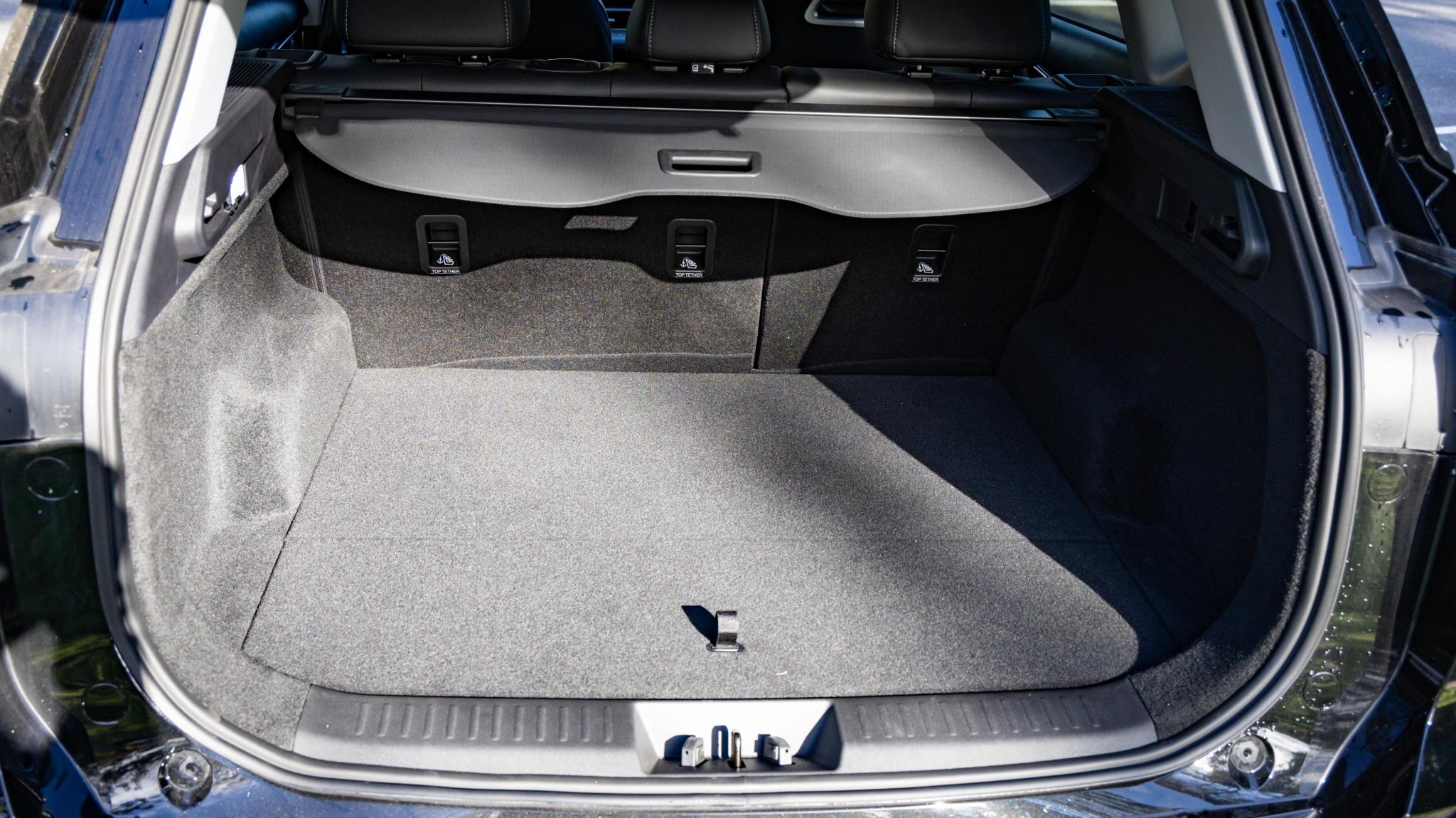
Boot space is sensible for the class. Chery does not quote a hybrid-specific figure, but the related petrol car offers 356 litres with the seats up and 1676 litres folded, which is competitive. The trade-offs are familiar cost-saving ones: the Urban makes do with a manual tailgate, and there is no spare wheel anywhere in the range, just a tyre repair kit. For most suburban buyers that is liveable. For regional drivers, less so.
What is the Chery Tiggo 7 Super Hybrid like to drive?
The Tiggo 7 Super Hybrid is easy to live with and frustrating to enjoy.
Start with the good. The 150kW electric motor gives the car a genuinely lively step off the line. In town, on electric power alone, it feels brisk and effortless, slotting into traffic gaps and merging onto a freeway with more urgency than the price tag implies. The single-speed hybrid transmission keeps everything smooth and when the 105kW 1.5-litre turbo petrol engine joins in, it does so quietly. As a relaxed urban runabout, it works.
Push past that and the polish runs thin. The steering is light to the point of feeling disconnected, with a slightly synthetic, wriggly quality just off centre that makes the car feel busier than it should. The throttle is the bigger annoyance, hanging for a beat before it responds, so you learn to lean on it early. The drive modes promise to fix this and largely do not. Sport adds a little weight to the wheel and not much else.
Body control is ordinary. There is noticeable roll and pitch when you press on through corners, yet the ride is firm enough over sharp edges to keep reminding you this is a budget build. The flip side is that it soaks up speed humps and broken surfaces with surprising composure, so around the suburbs it rides acceptably.
Then there is the start-up theatre. There is no on-off button. To get going you sit down, buckle up, press the brake and select a gear, at which point the car decides it is ready. It is the sort of thing you adapt to within a week, but it is needlessly fiddly, and you will catch yourself wondering whether the car is actually on. The system also refuses to swap between drive and reverse unless you are completely stationary, which turns a quick three-point shuffle into a test of patience.
How efficient is the Chery Tiggo 7 Super Hybrid?
This is the reason the car exists, and it largely delivers. Chery claims 1.4L/100km on the combined cycle, which is a laboratory fairytale you should ignore. What matters is the real world, and the real world is genuinely good.
The 18.4kWh lithium iron phosphate battery is rated at 93km of electric range on the lenient NEDC cycle. Expect a true 70 to 80km in mixed driving, which is more than enough to cover most daily commutes on electrons alone. Charge at home overnight and you can go weeks barely touching the 60-litre fuel tank. Let the battery run flat and the system holds back roughly 20% of charge to keep operating as a regular series-parallel hybrid, at which point you will see figures in the 4L/100km range. That is excellent for a medium SUV, and it is the number that should anchor your buying decision.
Charging is straightforward through Type 2 AC or CCS2 DC, with a fast charger able to take the battery from 30 to 80 per cent in around 20 minutes.
Ownership costs are another tick. The seven-year, unlimited-kilometre warranty is matched by seven years of roadside assistance and capped-price servicing, plus a separate eight-year battery warranty. Intervals are every 12 months or 15,000km, and the capped pricing is mostly very cheap, with one notable lump at the 90,000km mark.
| Service | Interval | Price |
| First service | 1,000km / 1 month | Free |
| A | 15,000km / 12 months | $299.00 |
| B | 30,000km / 24 months | $349.00 |
| C | 45,000km / 36 months | $299.00 |
| D | 60,000km / 48 months | $349.00 |
| E | 75,000km / 60 months | $299.00 |
| F | 90,000km / 72 months | $1291.31 |
| G | 105,000km / 84 months | $287.84 |
Three years of servicing lands at $947 and five years at $1595. That sixth visit aside, this is cheap car to keep on the road.
Is the Chery Tiggo 7 Super Hybrid safe?
The Super Hybrid carries a five-star ANCAP rating, awarded under the 2023-25 protocols and applying to Tiggo 7s built from 30 June 2025.
The standard safety kit is generous for the money: autonomous emergency braking, adaptive cruise control with stop-and-go, blind-spot monitoring, rear cross-traffic alert, lane-keep and lane-departure assist, speed-sign recognition and driver attention monitoring. A reversing camera is standard, with the full 360-degree system reserved for the Ultimate.
It is not flawless. The driver monitoring is over-eager and will beep at you for glancing at the screen, and there is no lane-centring function to pair with the adaptive cruise. ANCAP's latest assessment also marked down the emergency lane-keep and noted the child presence detection system fell short. Five stars, then, but with the usual fine print.
What are the main competitors to the Chery Tiggo 7 Super Hybrid?
The BYD Sealion 6 is the obvious cross-shop and the Tiggo's most direct threat. It costs a little more, but it brings a polished plug-in hybrid system and a strong reputation, and many buyers will happily pay the premium for the badge confidence. If your budget can stretch, drive both back to back.
The BYD Sealion 5 is the newer wildcard. The two are closely matched on size. Cross-shop it for BYD's Blade battery and brand momentum rather than for a lower out-the-door figure.
The MG HS Super Hybrid has emerged as a serious value rival, pairing smooth hybrid performance with a more resolved on-road feel than the Chery manages. Buyers prioritising the way a car drives over raw equipment count should put it on the list.
The Mitsubishi Outlander PHEV plays in a much higher price bracket, but it remains the benchmark for polish, all-wheel-drive capability and ownership reassurance. Cross-shop it only if your budget has genuinely moved beyond the Tiggo's, because the gap in price is real.
The Jaecoo J7 SHS is Chery's own sibling under the Omoda Jaecoo umbrella, offering a similar plug-in hybrid concept with a more premium finish for more money. If you like the Tiggo's idea but want the cabin to feel a notch above, it is the in-house upgrade.
Should I buy the Chery Tiggo 7 Super Hybrid?
Buy it with your head, not your heart, and you will be very happy.
If you charge at home, do most of your driving around town, and want plug-in hybrid economy for the price of an ordinary petrol SUV, nothing else gets close on value. The cabin punches above its price, the safety credentials are sorted, the running costs are low, and the EV range covers real commutes.
Just go in clear-eyed about the trade. The steering, the throttle and the cramped driving position mean this is a car you tolerate rather than relish on the move, and keen drivers should spend the extra on a Sealion 6 or an MG HS. But that is not who this car is for. For the value-first family buyer doing the sums, the Tiggo 7 Super Hybrid is one of the smartest cheap PHEV plays on the market.
VerdictThe Beep Verdict
Rob Leigh
Co-founder & Director
Rob Leigh is Co-founder and Director of The Beep based in Melbourne, Australia. He has 15+ years inside a major automotive OEM, specialising in product planning, pricing and vehicle strategy.
About Author