2027 Ford Everest Active 2.0L review
The Everest Active swaps the old bi-turbo for a less powerful single-turbo diesel, but at $60,000 driveaway, it’s a lot of car for the money and might just be the best buy in the range.

Rob Leigh
Pros
- A lot of car for $60,000 driveaway
- Single-turbo diesel feels stronger than its numbers
- Diff lock, full-size spare and 3500kg towing
Cons
- No 360-degree camera on a near five-metre SUV
- Third row is a $1350 option
- Rear-drive only on sealed roads
Our verdict
The Active is the Everest for families who want proper four-wheel drive hardware without paying Prado money. The new single-turbo diesel makes less power and torque, but it rarely feels underpowered and the Active is surprisingly well equipped. Our biggest complaint is the lack of a 360-degree camera. On a car this size, it really should be standard.
What does the Ford Everest Active cost in Australia?
The Active replaces both the Ambiente and Trend, and its arrival has made the Everest cheaper to get into. List price is $58,990 before on-roads, but Ford is currently selling it for $60,000 driveaway.
That buys four-wheel drive with low range, a locking rear differential, 18-inch alloys, LED headlights, a 12-inch touchscreen with wireless Apple CarPlay and Android Auto, dual-zone climate control and a wireless phone charger. It doesn’t feel like a stripped-out base model. It’s a lot of car for the money.
Five seats are standard. A third row adds $1400, while the $2000 tow pack brings a towbar, an integrated brake controller and blind-spot monitoring that covers the trailer.
The bigger decision is the engine. The same Active is available with Ford’s 3.0-litre V6 for $66,990, which adds 59kW, 195Nm and full-time four-wheel drive.
Alternatively, the Sport 2.0L costs $10,000 more than the Active but uses exactly the same engine, transmission and part-time four-wheel drive system. The extra money buys seven seats as standard, 20-inch alloys, heated and ventilated front seats, a power tailgate, a 400W inverter and a 360-degree camera.
Add the Active’s $1400 third row and the gap to the Sport closes to $8650. That’s a lot to pay for comfort and convenience features when the drivetrain is identical, and we’d be more inclined to spend $8000 on the Active V6.
Against its rivals, the Active undercuts the Toyota LandCruiser Prado GX by more than $14,000 on list price and the new Mitsubishi Pajero by $9500. The Isuzu MU-X LS-M 4x4 is cheaper on list price, but at around $61,000 driveaway, it ends up costing more than the Active.
Our test car was a 2026-build, MY26.5 example. The MY27 Everest now in showrooms is mechanically identical and priced the same, though the Active’s seats switch from leather-accented trim to leatherette (cloth is a no-cost option on five-seaters) and the second row gets two USB-C ports.
| Specifications | Active 2.0L (tested) | Active V6 | Sport 2.0L |
|---|---|---|---|
| Price excluding on-roads | $58,990 | $66,990 | $68,990 |
| Powertrain | 2.0L turbo diesel | 3.0L V6 turbo diesel | 2.0L turbo diesel |
| Power | Torque | 125kW | 405Nm | 184kW | 600Nm | 125kW | 405Nm |
| Transmission | 10 speed auto | 10 speed auto | 10 speed auto |
| Drivetrain | 4WD (part-time) | 4WD (full-time) | 4WD (part-time) |
| Fuel use (claimed) | 7.1L/100km | 8.5L/100km | 7.1L/100km |
| Braked towing | 3500kg | 3500kg | 3500kg |
| ANCAP | Five stars (2022) | Five stars (2022) | Five stars (2022) |
| Warranty | 7 years | Unlimited km | 7 years | Unlimited km | 7 years | Unlimited km |
View Ford Everest driveaway pricing and specifications →
What does the Ford Everest Active look like?
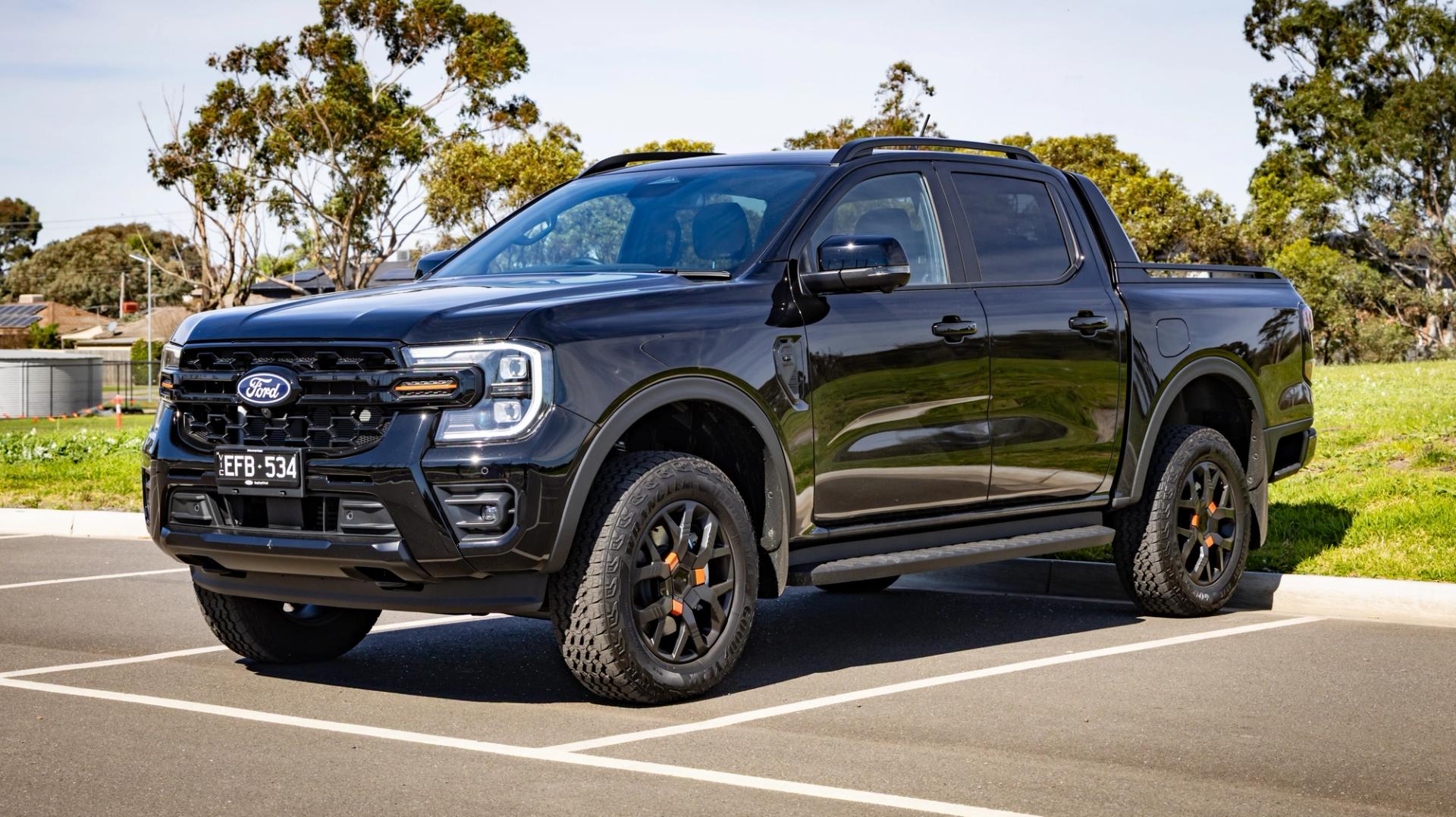
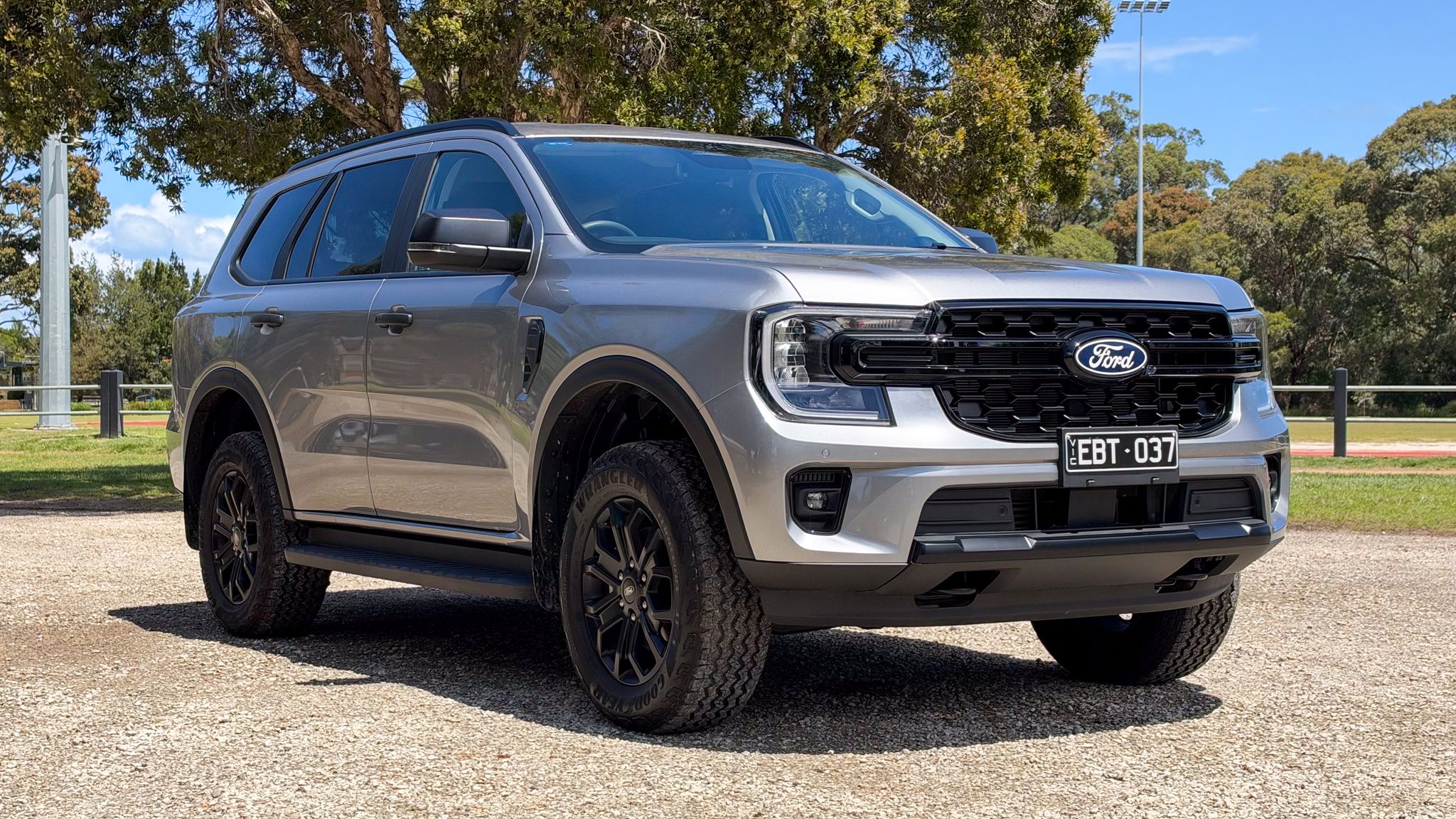
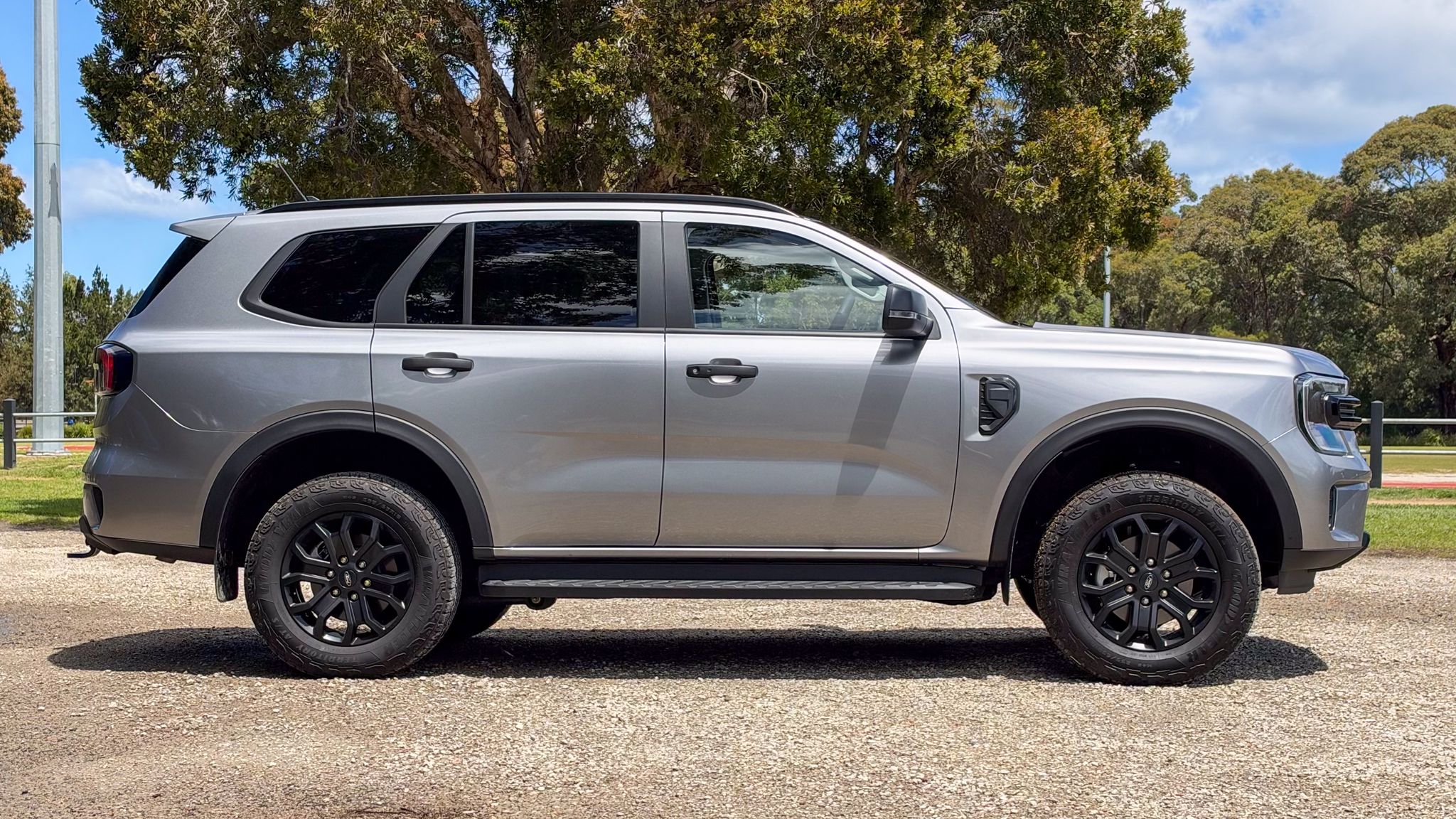
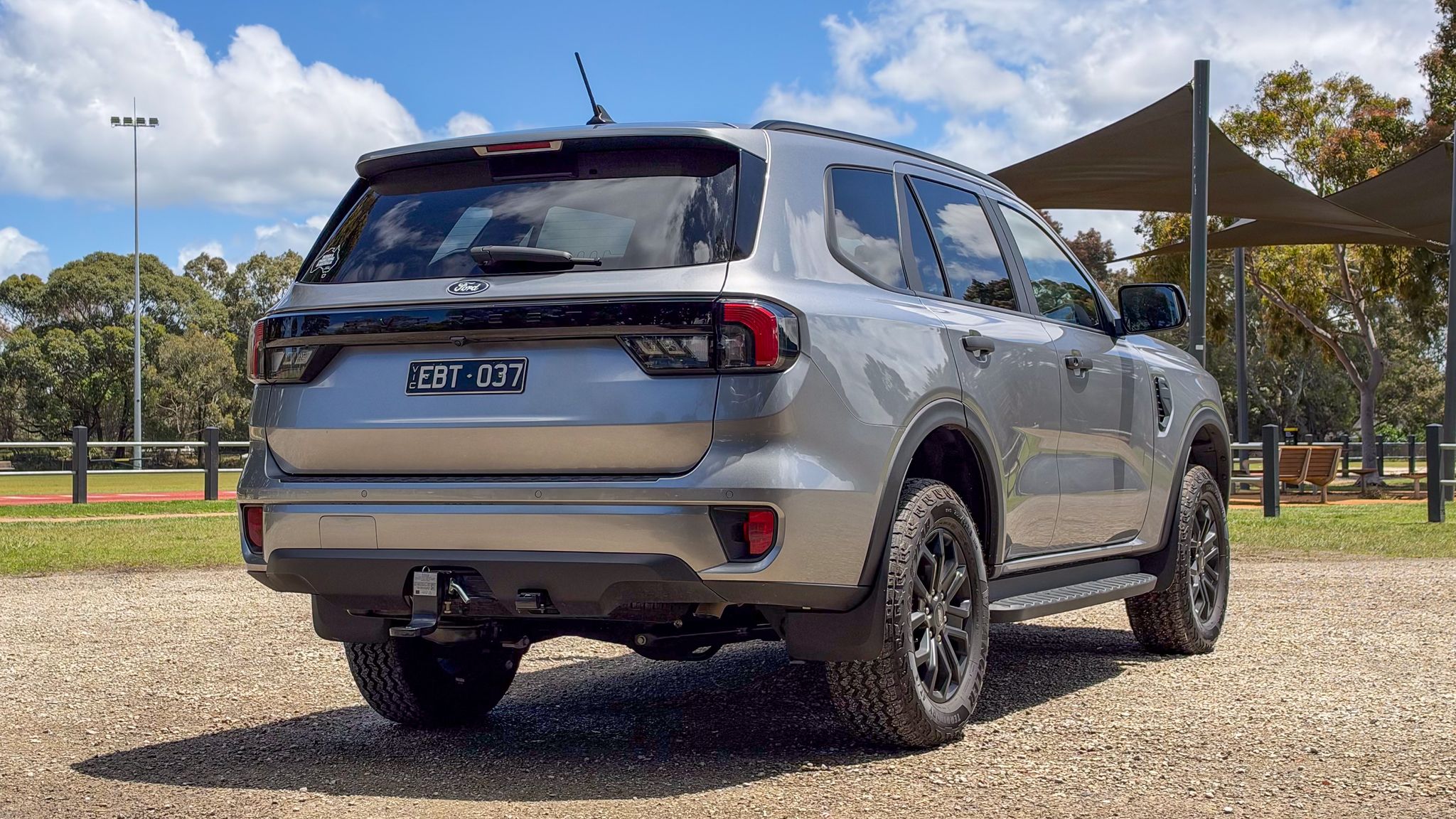
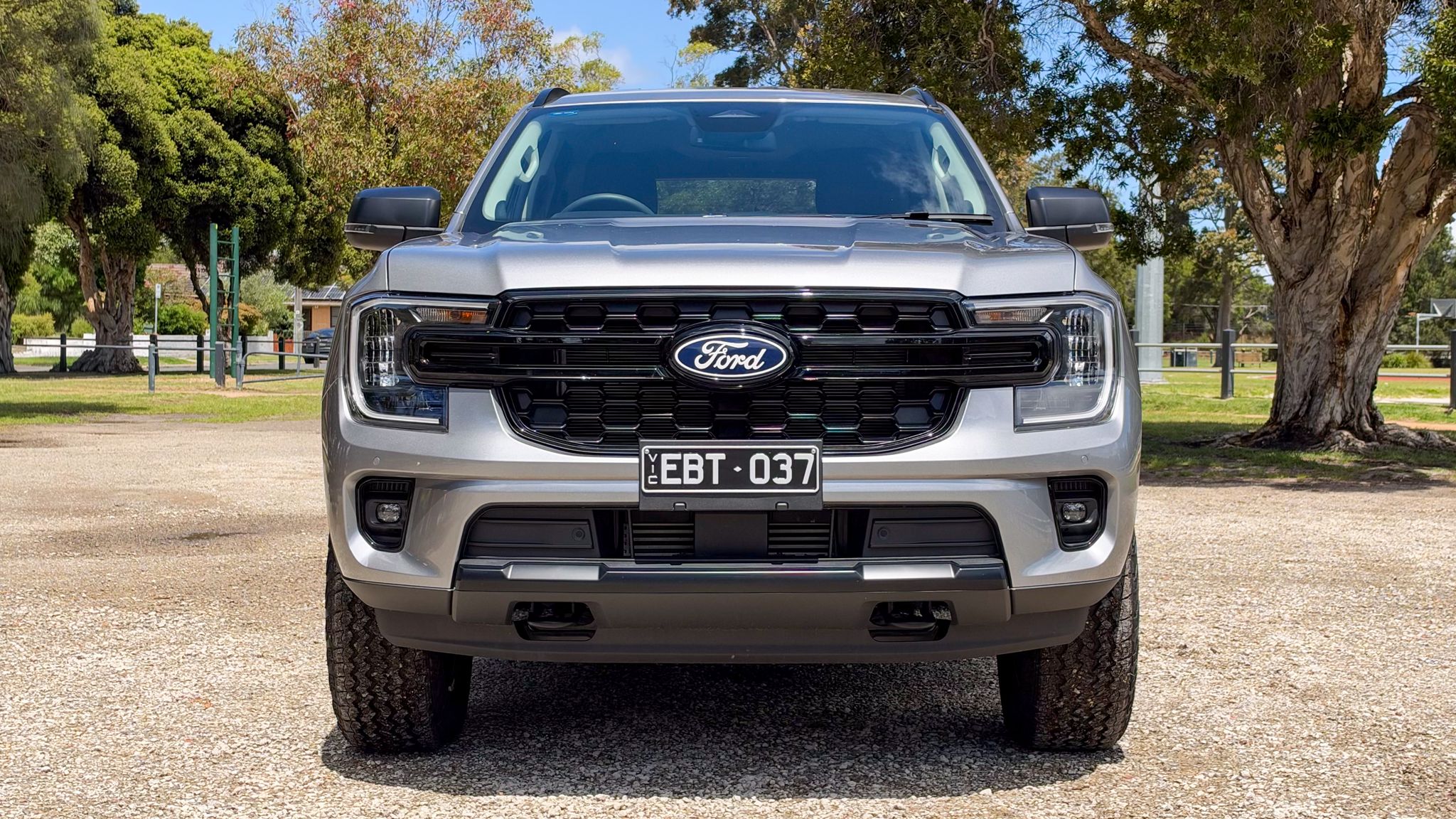
Ford hasn’t dumbed down the Everest’s styling for the Active and that works in its favour. Park it next to an Everest Platinum and there’s surprisingly little to give away that you’ve bought the cheapest model.
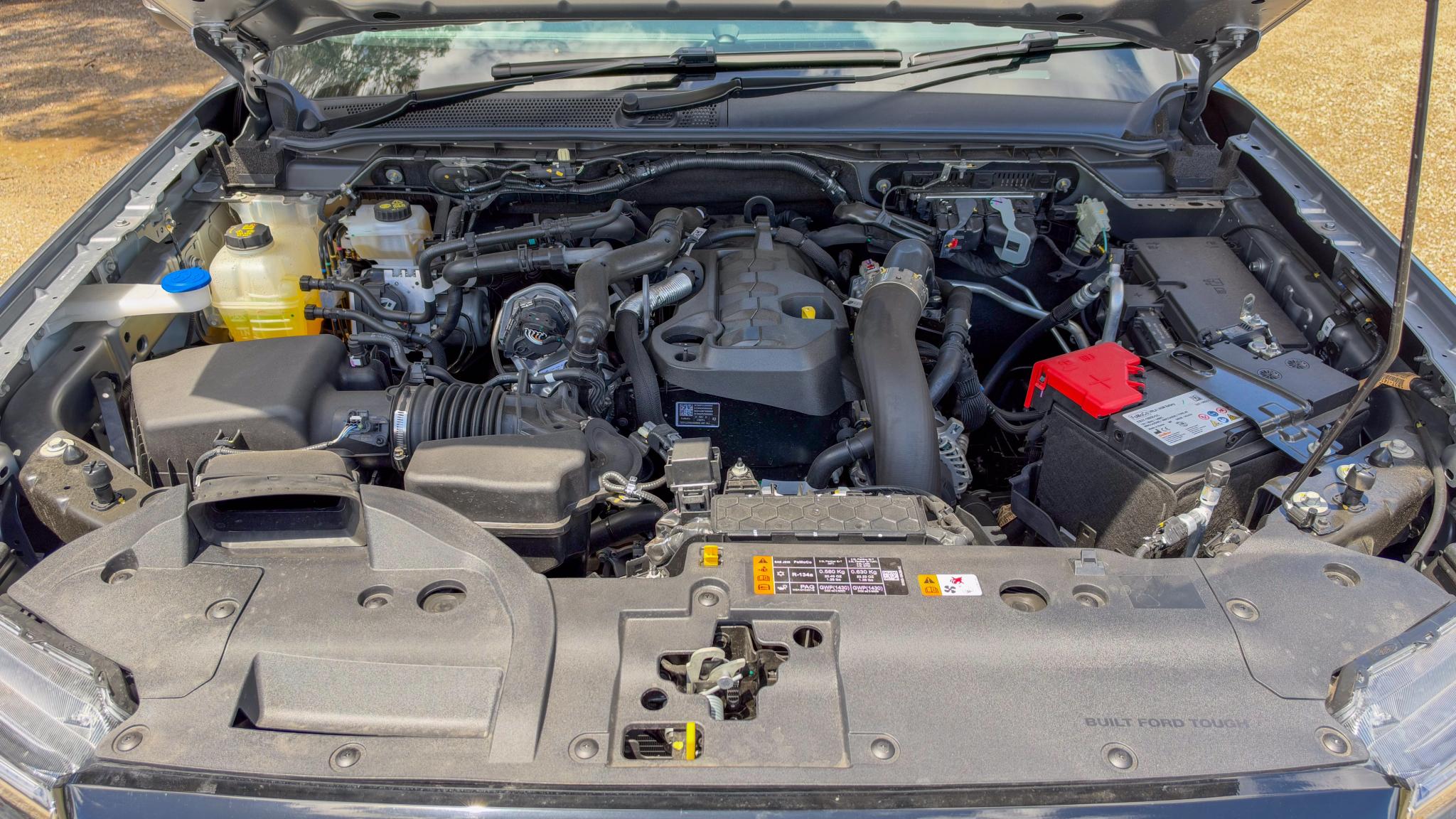
The most obvious difference is the wheels. It rides on 18-inch alloys instead of the Sport’s 20s, and the smaller wheels arguably suit the Everest’s purpose better, with more tyre sidewall for gravel roads and corrugations.
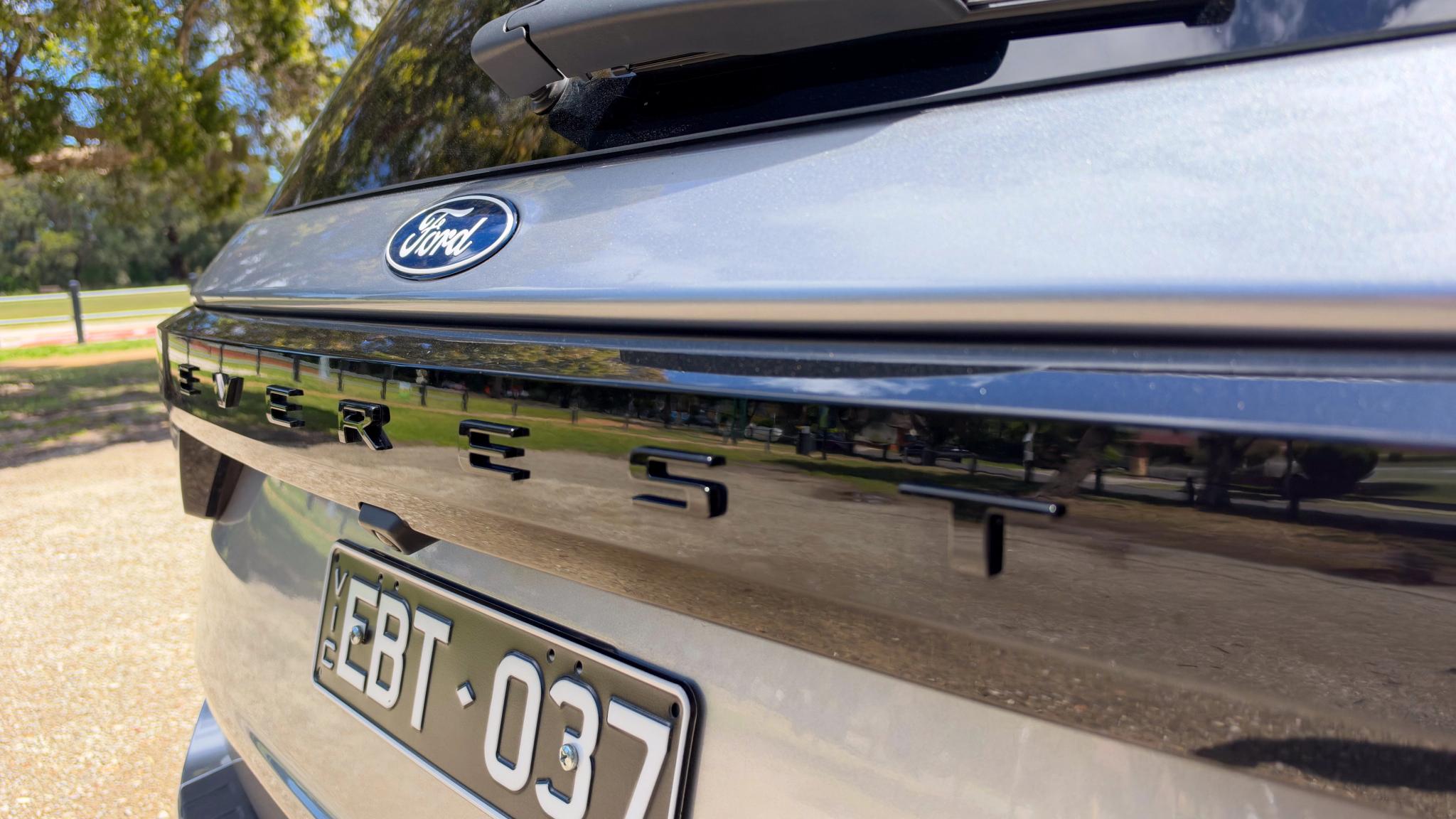
Our car wore Aluminium, one of three $790 prestige colours alongside Meteor Grey and Shadow Black, with Arctic White the no-cost choice. At 4914mm long and 1876mm tall, there’s nothing small about the entry-level Everest.
What is the Ford Everest Active like inside?
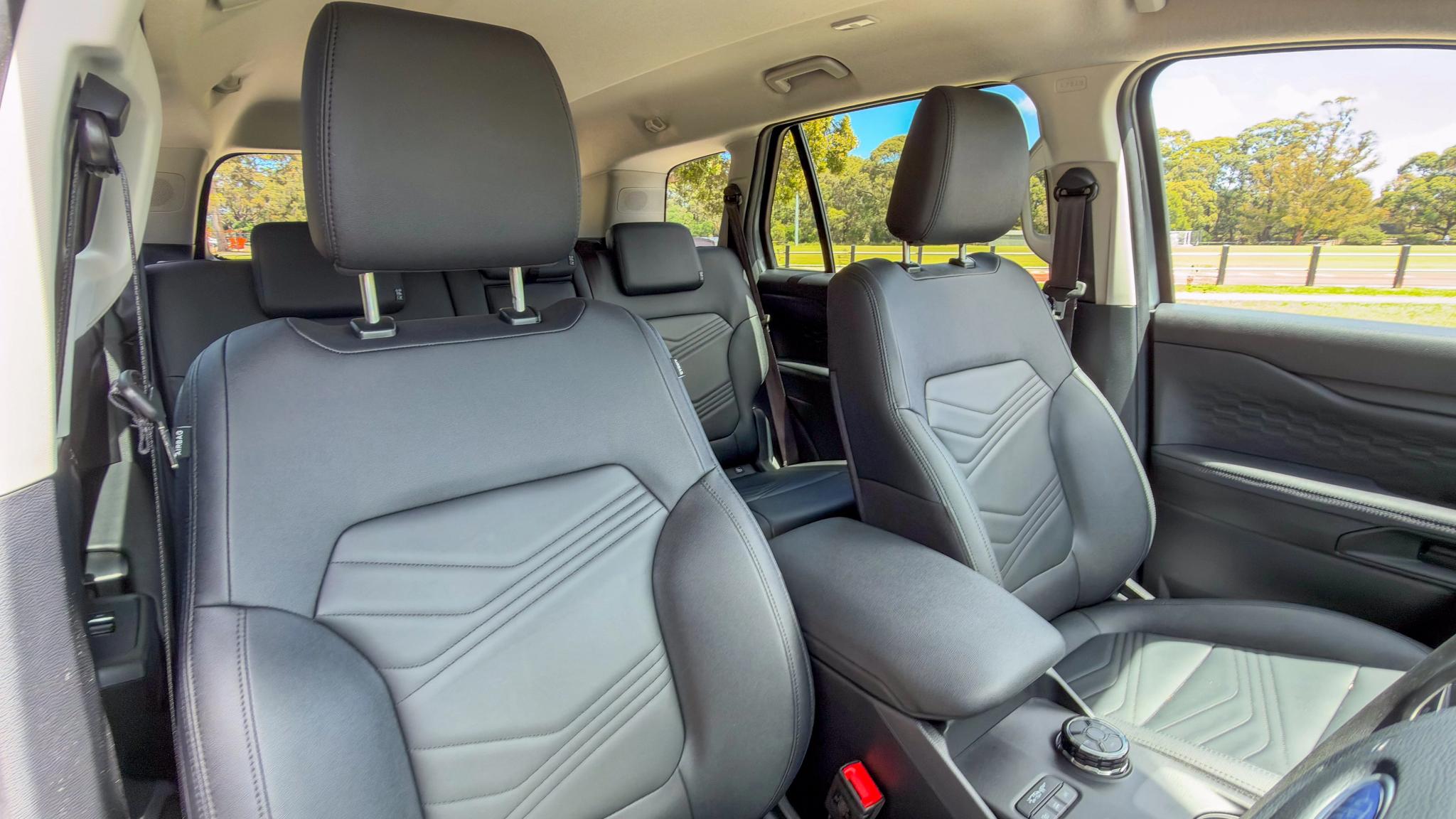
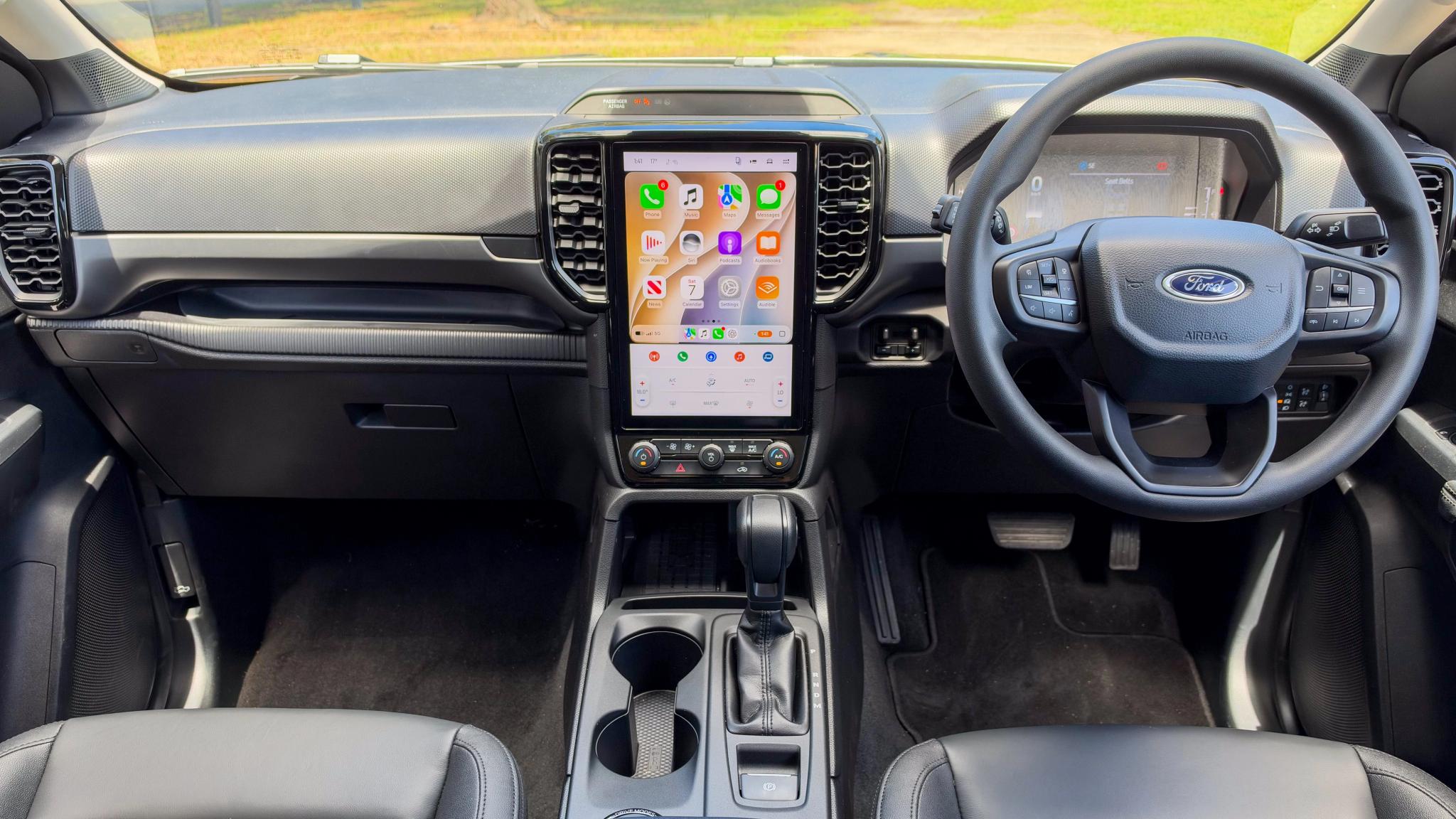
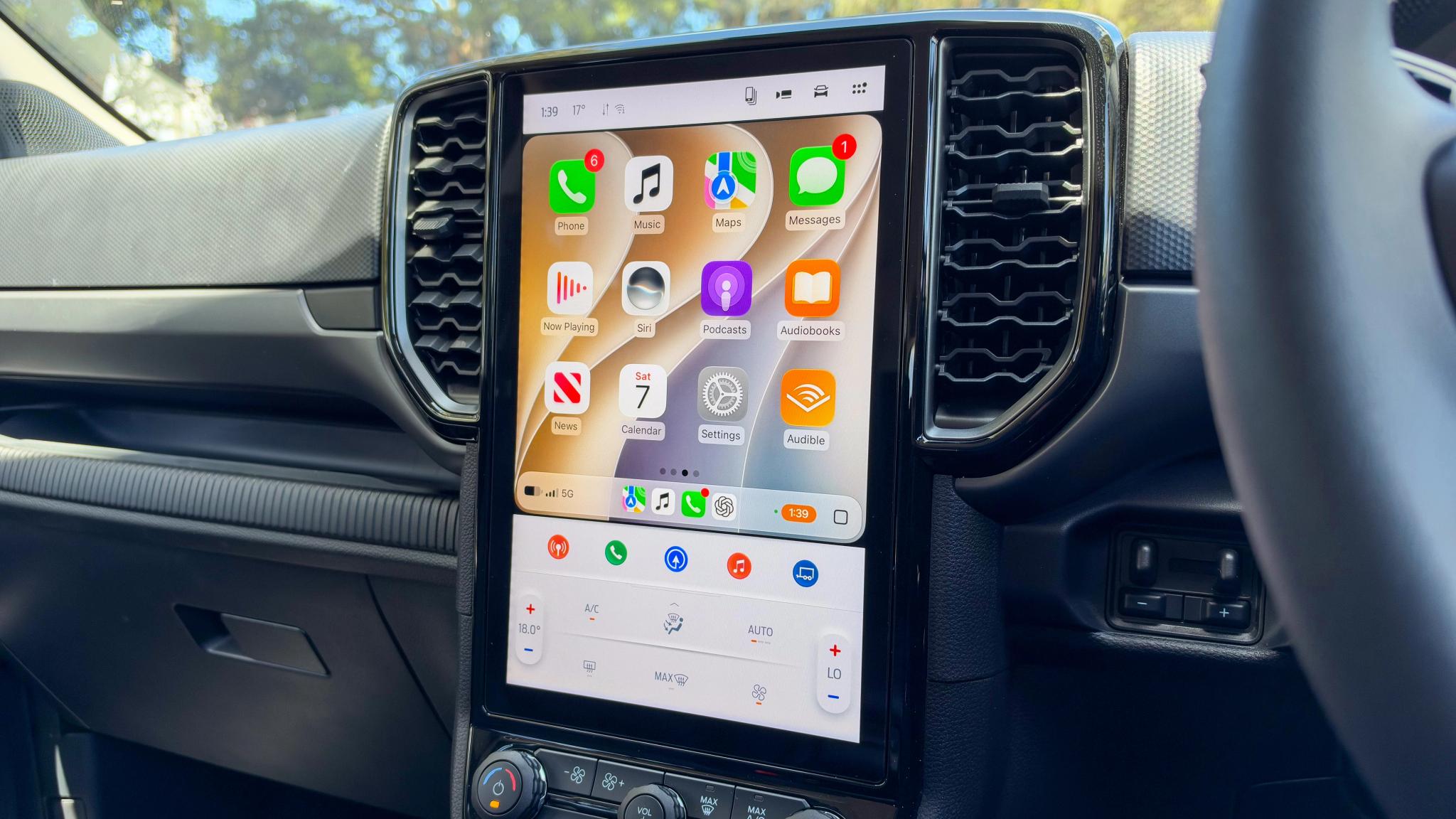
Anyone familiar with the Ford Ranger will feel right at home inside the Everest. The centrepiece is the portrait 12-inch touchscreen, now standard across the range and still one of the better systems in the segment.
Ford has kept physical controls for temperature, fan speed and volume beneath the screen. That’s a real help when you’re adjusting the air-con on a corrugated road.
Materials are the weak spot. Hard plastics dominate below the dash top and the Active’s steering wheel is urethane rather than leather, so the finish never quite matches the price.
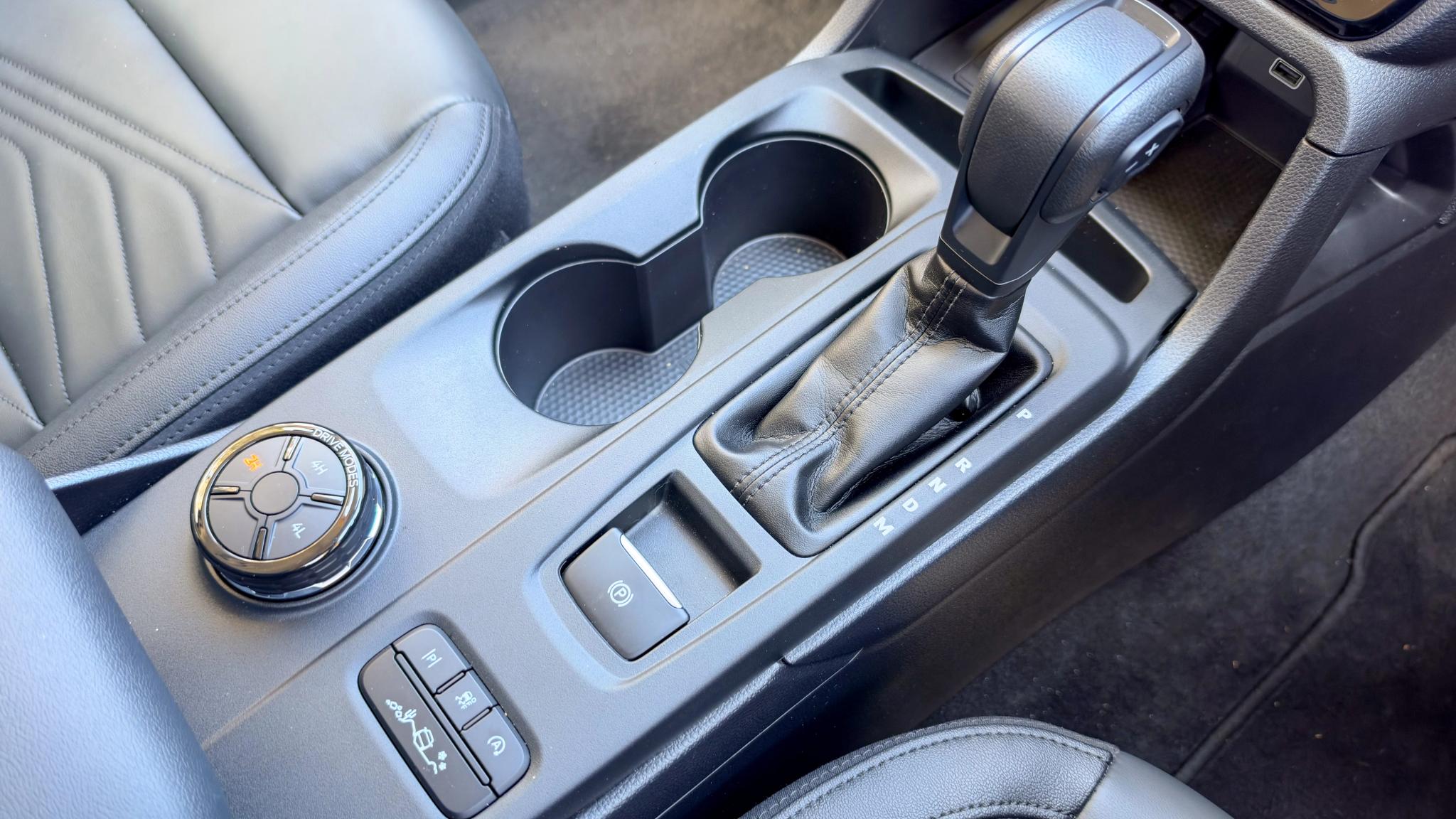
Still, the cabin is genuinely comfortable and everything sits where you expect it to. The 2.0-litre Active also keeps a conventional gear lever rather than the V6’s e-shifter, which is simpler to use when manoeuvring a trailer.
Missing are heated and ventilated front seats, a power tailgate and a 400W inverter. All three arrive in the Sport.
How practical is the Ford Everest Active?
The Everest has plenty of room for a growing family. The second row has real room for three adults across, and rear passengers get their own roof-mounted air vents and charging.
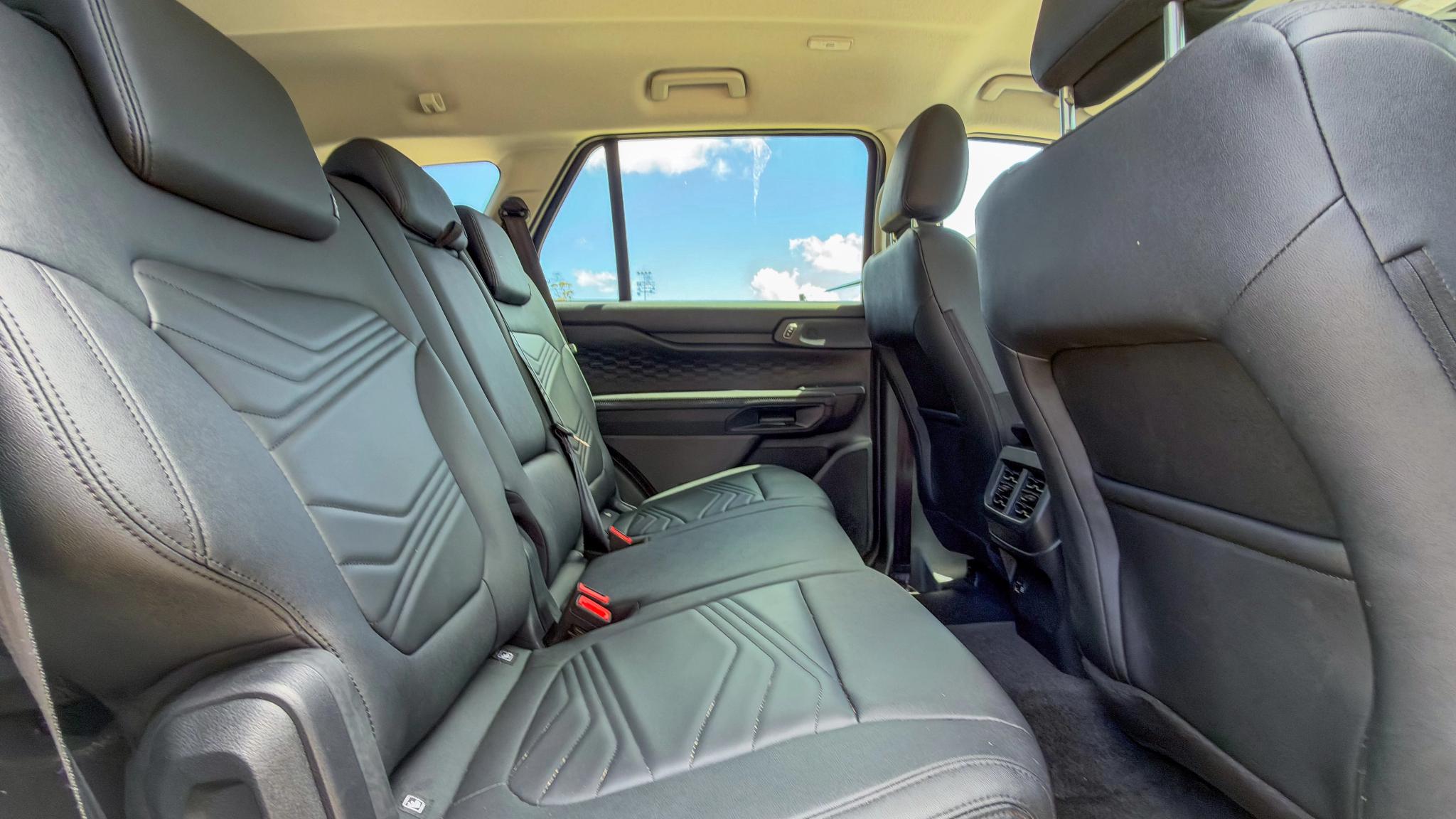
For child seats, there are ISOFIX points on the two outer positions and top tethers across all three. Up front, there are two gloveboxes, a deep centre console bin and door pockets that swallow big bottles.
Boot space is 898 litres measured to the roof with the second row in place, growing to 1823 litres with it folded. Seven-seat versions offer 259 litres with every seat in use, which is enough for school bags and not a lot more.
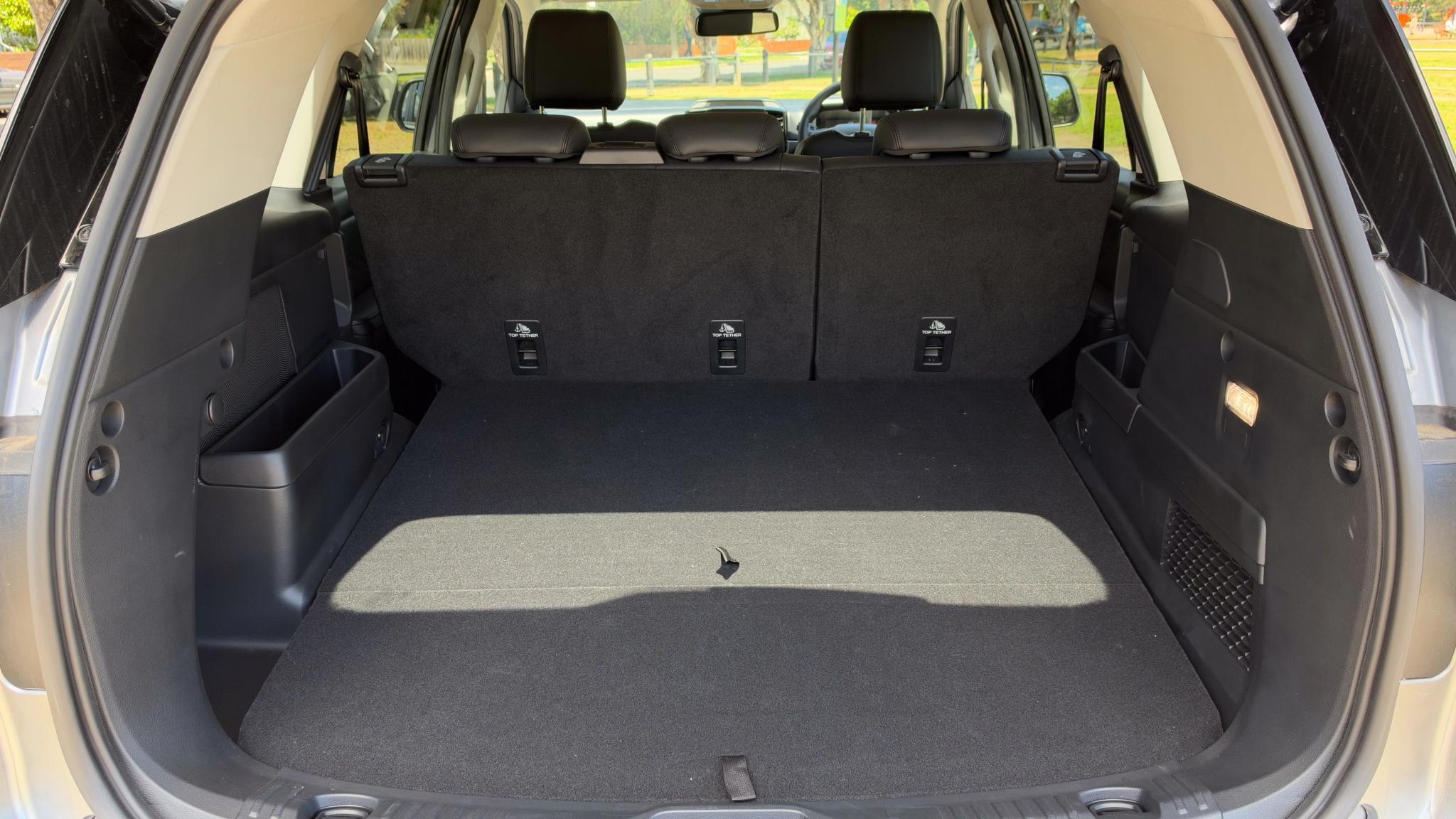
The Active also has the highest payload in the Everest range at 855kg, which is worth considering if you’re planning to tow or fit touring accessories. There’s also a full-size alloy spare wheel mounted underneath the rear of the car.
What is the Ford Everest Active like to drive?
On paper, the new engine looks like a considerable downgrade. At 125kW and 405Nm, it’s down 29kW and 95Nm on the bi-turbo it replaces and it has 2245kg to move.
On the road, it’s far better than that suggests. There’s a brief pause when you pull away from the lights, but once the turbo is spinning there’s solid low-down pull, and the engine never felt overworked in traffic or at 110km/h.
The 10-speed auto is a big part of that. Gear changes are smooth and the transmission is rarely caught in the wrong gear.
You can hear the diesel engine when accelerating hard, but it’s impressively quiet at highway speeds. Wind and tyre noise are also well contained for a body-on-frame SUV.
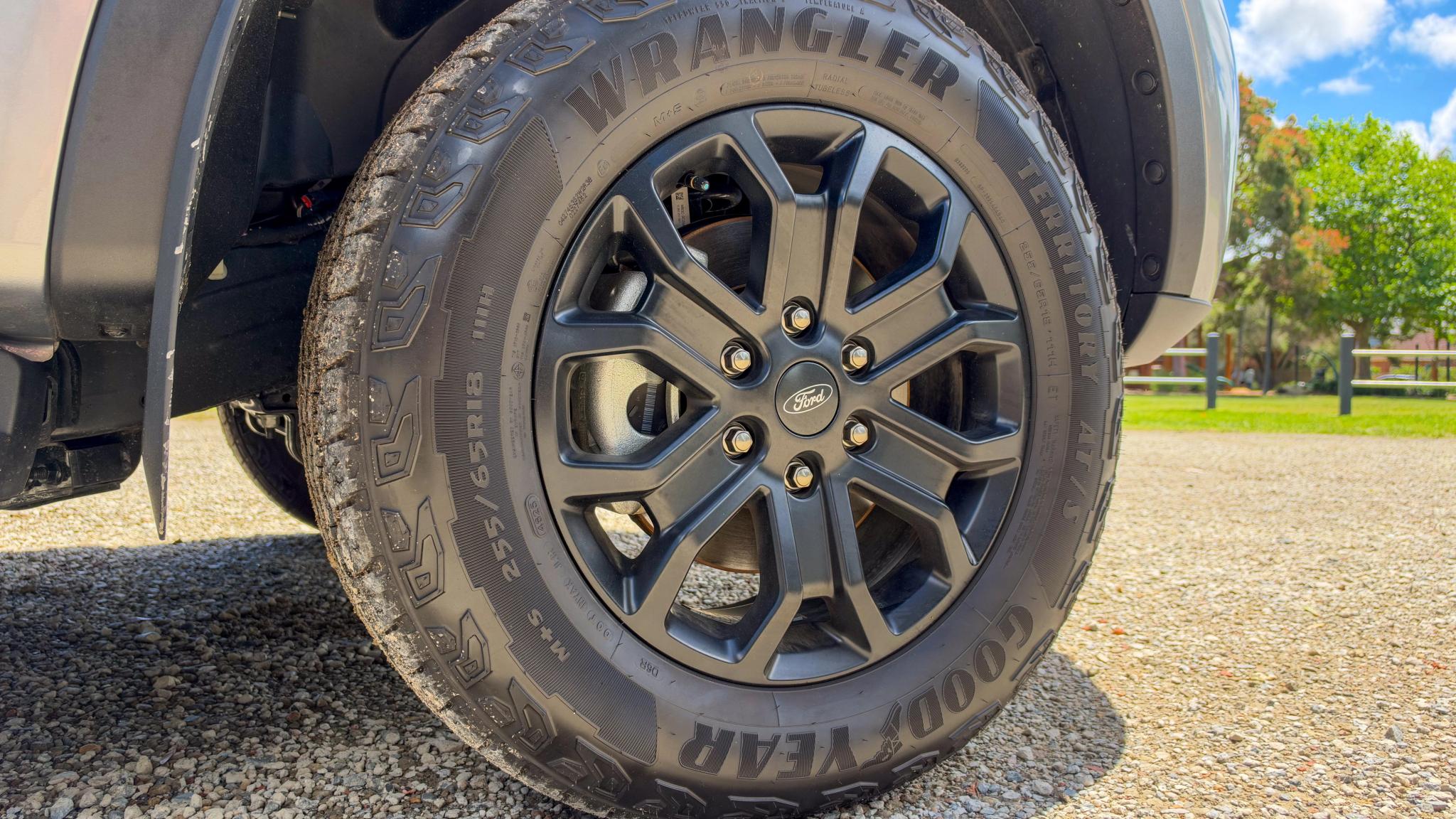
Did we miss the bi-turbo? Only when we really leant on it, such as overtaking on a country road. That gap is likely to grow with seven people aboard or a heavy van on the hitch, and if that’s how you’ll use it, we’d recommend spending the extra money on the V6.
Ride comfort remains one of the Everest’s biggest strengths. It takes the edge off speed humps and patchy suburban roads without the jiggle and shudder common to ladder-frame SUVs, and it stays settled on gravel.
The steering is light enough for car parks yet nicely weighted at speed, and the Everest feels more nimble than its size suggests. It’s still close to five metres long, though, and in a tight multi-level car park, you’ll wish for that missing 360-degree camera.
Four-wheel drive in the 2.0-litre is part-time, so there’s no 4Auto mode to engage on slippery bitumen. Unlike the V6, you can’t use four-wheel drive on wet sealed roads.
The off-road hardware is all there: low range, a locking rear differential, 229mm of ground clearance and 800mm wading depth. On paper, it’s every bit as capable as you’d expect an Everest to be.
Adaptive cruise control is standard, but it lacks stop-and-go and there’s no lane-centring. Both are reserved for grades further up the range.
How efficient is the Ford Everest Active?
Ford claims 7.1L/100km, unchanged from the outgoing bi-turbo despite the reduction in power and torque. The key change is a timing chain in place of the oil-bathed belt that caused headaches for some earlier owners.
We averaged 8.5L/100km, which is a good result for something this big and heavy. For context, that’s the same as the V6’s official claim.
At that rate, the 80-litre tank is good for more than 900km between fills. You’ll need to top up the AdBlue every few thousand kilometres.
Servicing is due every 12 months or 15,000km and Ford caps the price of the first five visits for MY26 and later Everests. Better still, a pre-paid plan covers those five services plus the year-three brake fluid change for $1596, which is how we’d do it. The Prado, by contrast, needs a dealer visit every six months or 10,000km.
Ford’s warranty now runs to seven years with unlimited kilometres, provided every service is done at a Ford dealer. Otherwise, it reverts to five years. Roadside assistance starts at 12 months and extends with each dealer service, up to seven years.
| Servicing and Warranty | Ford Everest Active 2.0L |
|---|---|
| Service interval | 12 months | 15,000km |
| Servicing cost (5 years) | $1995 |
| Average annual cost | $399 |
| Vehicle warranty | 7 years | Unlimited km |
Is the Ford Everest Active safe?
The Everest carries a five-star ANCAP rating from 2022, based on testing of the related Ranger. It scored 86% for adult occupant protection and 93% for child occupant protection.
Standard equipment includes nine airbags, among them a front-centre airbag and curtains covering all three rows. There’s also AEB with junction assist, blind-spot monitoring, rear cross-traffic alert, evasive steering assist, lane-keep assist and front and rear parking sensors.
Then there’s the camera. The Active gets a reversing camera only, which is a frustrating omission on a vehicle this size. A 360-degree view is standard from the Sport up, and Ford should have found room for it here.
What are the main competitors to the Ford Everest Active?
The Toyota LandCruiser Prado is the Everest’s closest rival, but the cheapest GX costs $73,200 before on-roads. You get Toyota’s reputation and resale strength, plus a 48V-assisted 2.8-litre diesel, but it’s considerably more expensive and needs servicing twice as often.
The Mitsubishi Pajero returns in December from $68,490 for the five-seat GLS. Its 2.4-litre diesel makes 150kW and 480Nm, comfortably more than the Active, but it’s unproven here and costs $9500 more on list price.
The Isuzu MU-X LS-M 4x4 2.2L looks cheaper at $55,900 before on-roads, but at around $61,000 driveaway, it costs more than the Active. The base grade’s cloth trim, 8-inch screen and four-speaker audio also make the Active feel a class above.
The GWM Tank 500 Lux diesel costs $65,990 driveaway with seven seats as standard, a 170kW/620Nm 3.0-litre diesel and a seven-year warranty. It’s the strongest challenger on paper, though it doesn’t yet have the Everest’s track record or dealer reach.
Should I buy the Ford Everest Active?
Yes. For most families, the Active 2.0L is the smartest Everest you can buy and one of the best-value large four-wheel drives on sale.
We expected to miss the extra power of the old bi-turbo diesel more than we did. What you do get is a roomy, comfortable SUV that’s rated to tow 3.5 tonnes and has the hardware to head bush, all for $60,000 driveaway.
Buy the V6 if you tow heavy or travel fully loaded often. Otherwise, put some of that money towards the third row and tow pack, and you’ll still be well short of the price of a Sport.
Our one request to Ford: fit the 360-degree camera. On something this size, it shouldn’t be the reason to step up a grade.
VerdictThe Beep Verdict
Rob Leigh
Co-founder & Director
Rob Leigh is Co-founder and Director of The Beep based in Melbourne, Australia. He has 15+ years inside a major automotive OEM, specialising in product planning, pricing and vehicle strategy.
About Author