2026 Volkswagen Tiguan eHybrid review
Volkswagen’s first plug-in Tiguan is quiet, practical and lets you run on electricity most of the week, but now that the launch deal is gone, you’ll need to negotiate hard.

Rob Leigh
Pros
- Over 100km of electric range covers the weekly routine
- Quiet, composed and solidly built
- Loaded with kit including massage seats and a head-up display
Cons
- Launch deal is gone, now over $70,000 driveaway
- Smaller boot than the petrol Tiguan and no spare
- Climate controls live in the touchscreen
Our verdict
The Tiguan eHybrid makes a lot of sense if you can charge at home. You can do most of your daily driving on electricity and it still feels every bit as good as the petrol Tiguan. The petrol engine and electric motor work together almost seamlessly, and very little noise makes it into the cabin. But the launch deal is over. At more than $70,000 driveaway, I’d be negotiating hard.
What does the Tiguan eHybrid cost in Australia?
The eHybrid adds two plug-in grades to the top of the seven-model Tiguan range: the 150TSI eHybrid Elegance at $64,590 before on-roads and the 200TSI eHybrid R-Line at $74,550. Both are just $3000 more than their petrol equivalents, which makes the plug-in versions pretty tempting. Remember you’re giving up all-wheel drive, though.
At launch Volkswagen ran national driveaway offers of $63,990 for the Elegance and $73,990 for the R-Line, and I thought that was bloody good value. Those deals ended on June 30 2026. The Elegance now lands a tad over $70,000 on the road, with the R-Line pushing towards $80,000.
That puts the Elegance up against the Toyota RAV4 PHEV and Mitsubishi Outlander PHEV, while Chinese plug-ins like the BYD Sealion 6 sit well under it. My advice is to shop it around. Dealers have room to move and the closer you get to that launch price, the better this car looks.
Volkswagen hasn’t held much back on standard equipment. Both grades get adaptive dampers, HD matrix LED headlights, a 15-inch touchscreen, head-up display, a 700W Harman Kardon stereo, heated, ventilated and massaging front seats, a heated steering wheel, two wireless phone chargers and a power tailgate.
The R-Line adds 20-inch wheels, R-Line styling inside and out, sports front seats and progressive steering, along with the extra 50kW. Options are limited to metallic paint ($800 to $1100), a $2100 panoramic sunroof and a $1500 Black Style Package on the R-Line.
| Specifications | 150TSI eHybrid Elegance | 200TSI eHybrid R-Line |
| Price excluding on-roads | $64,590 | $74,550 |
| Powertrain | 1.5L turbo PHEV | 1.5L turbo PHEV |
| Power | Torque | 150kW | 350Nm | 200kW | 400Nm |
| Transmission | 6 speed DSG | 6 speed DSG |
| Drivetrain | FWD | FWD |
| 0-100km/h | 8.2 sec | 7.2 sec |
| Fuel use (claimed) | 1.6L/100km | 1.7L/100km |
| Electric range (claimed) | 117km | 115km |
| Battery | DC charging | 19.7kWh | 40kW | 19.7kWh | 40kW |
| Braked towing | 1800kg | 2000kg |
| ANCAP | Five stars (2024) | Five stars (2024) |
| Warranty | 5 years | Unlimited km | 5 years | Unlimited km |
View Volkswagen Tiguan driveaway pricing and specifications →
What does the Tiguan eHybrid look like?
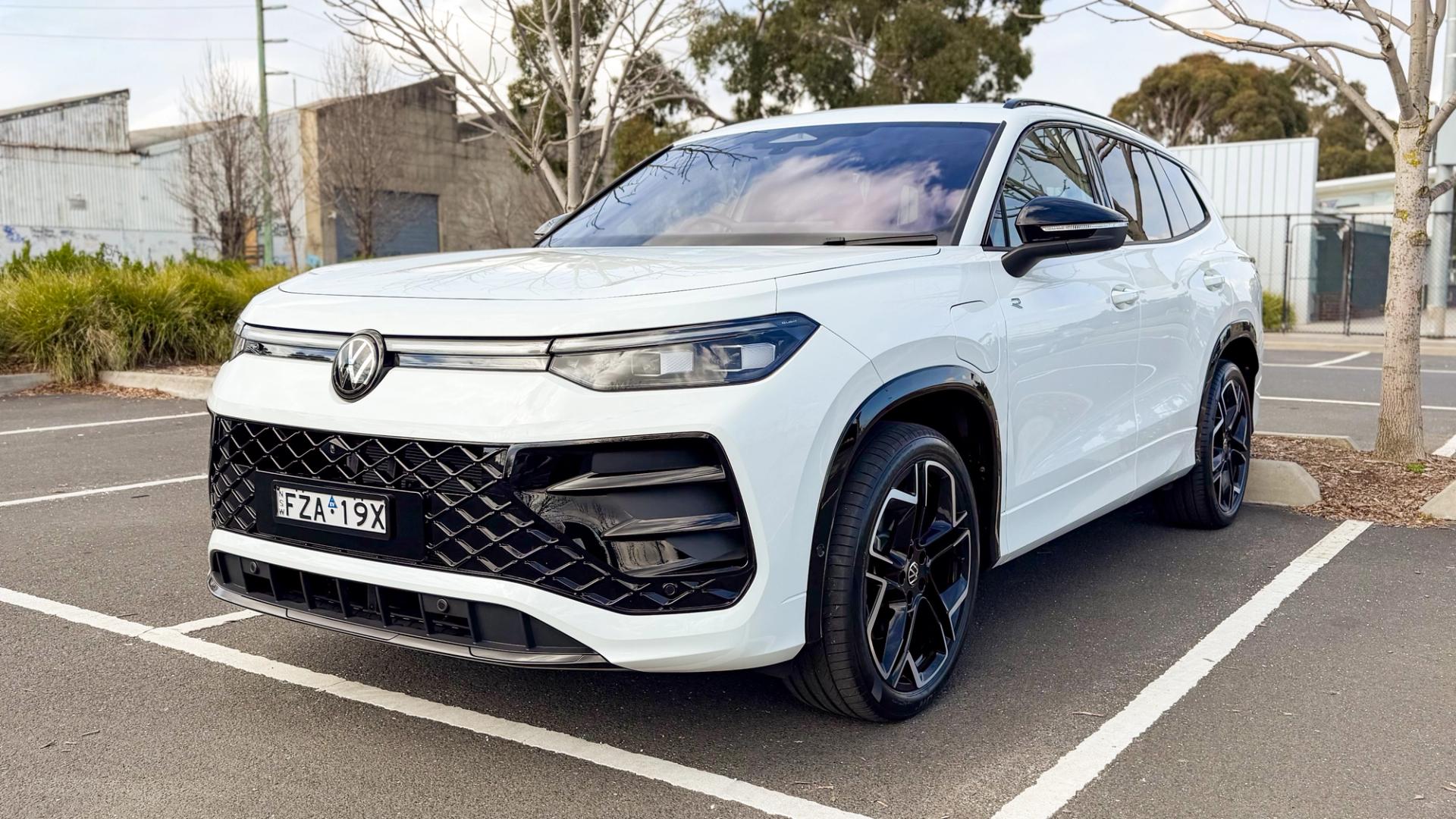
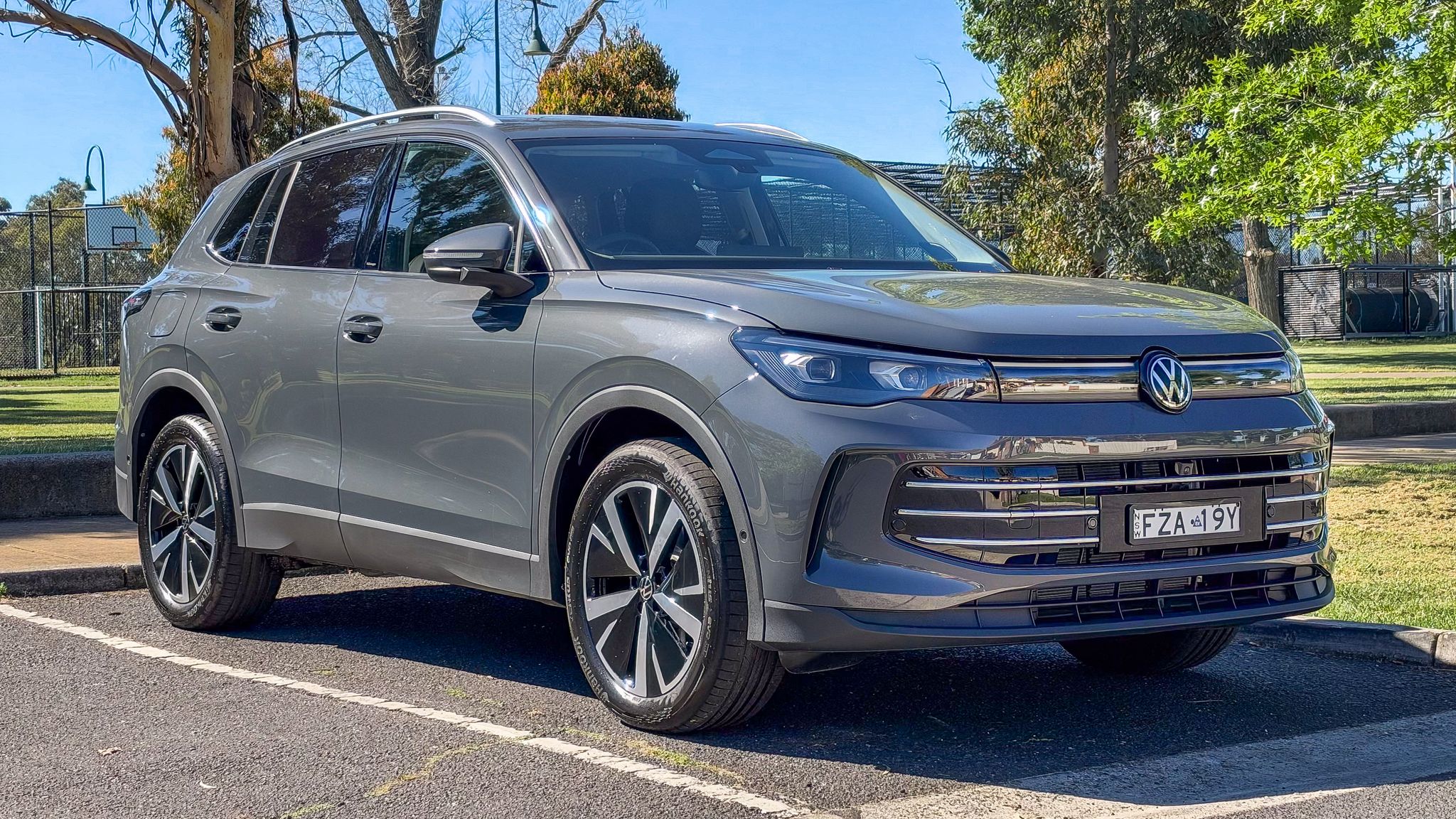
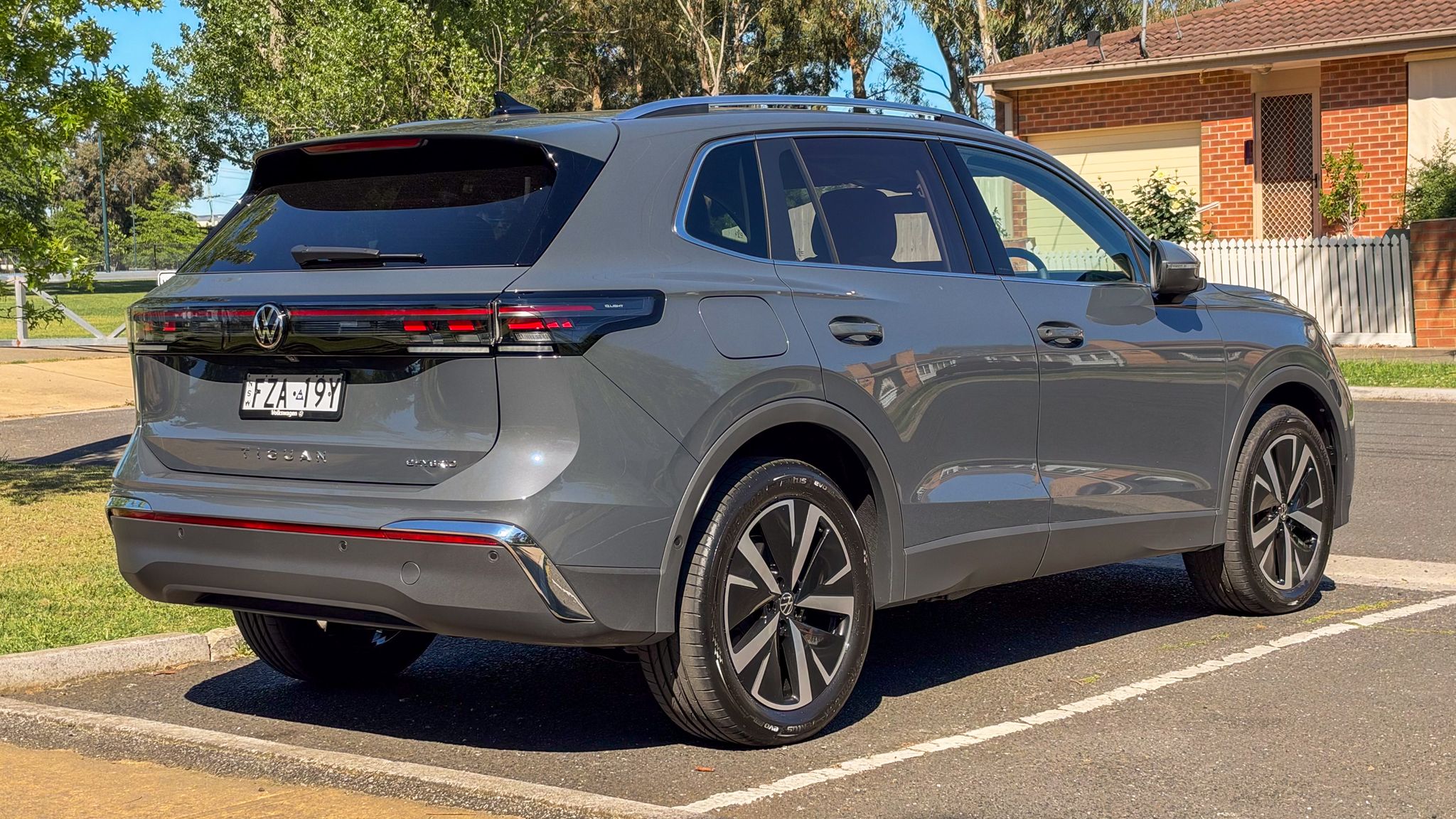
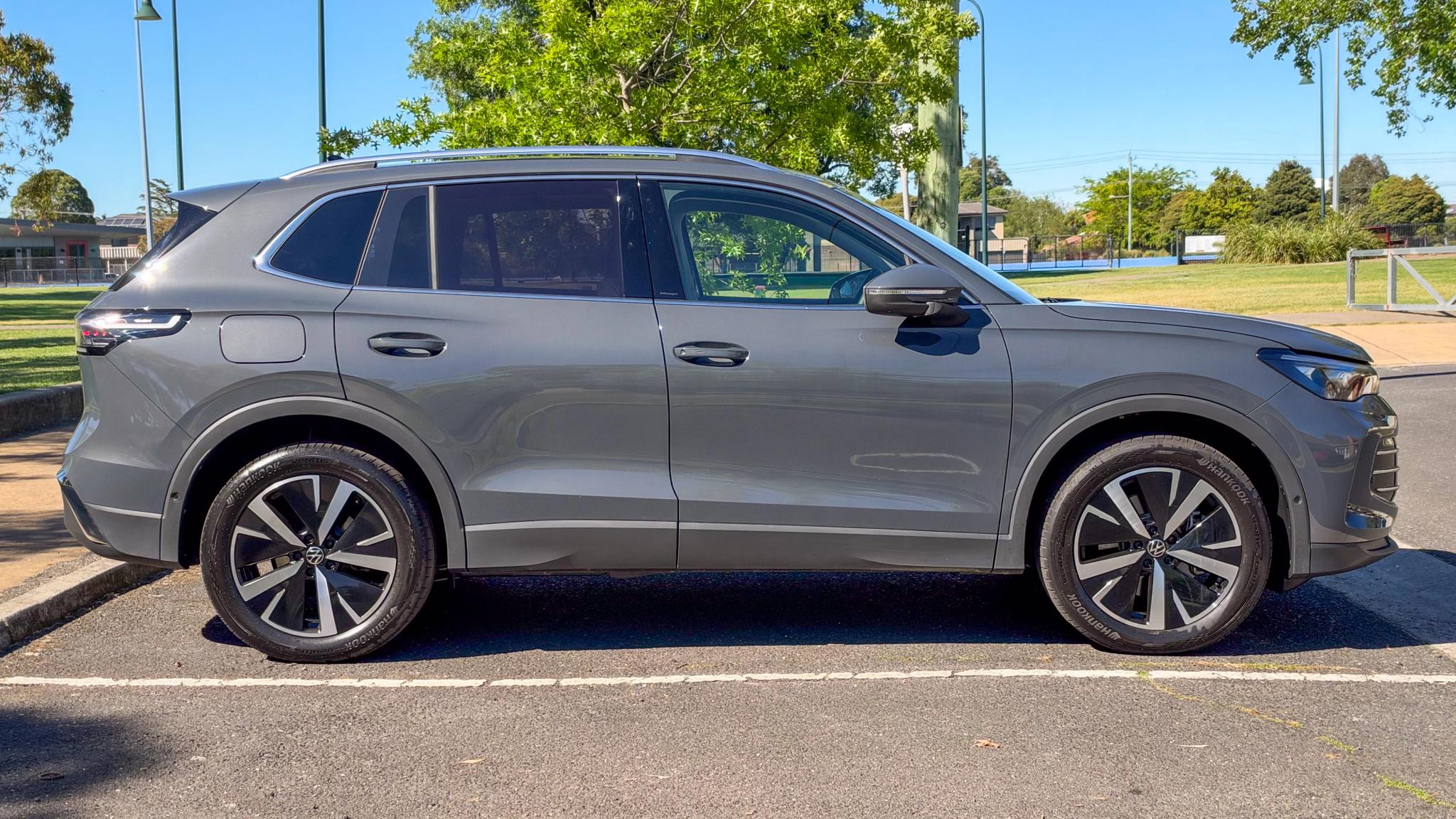
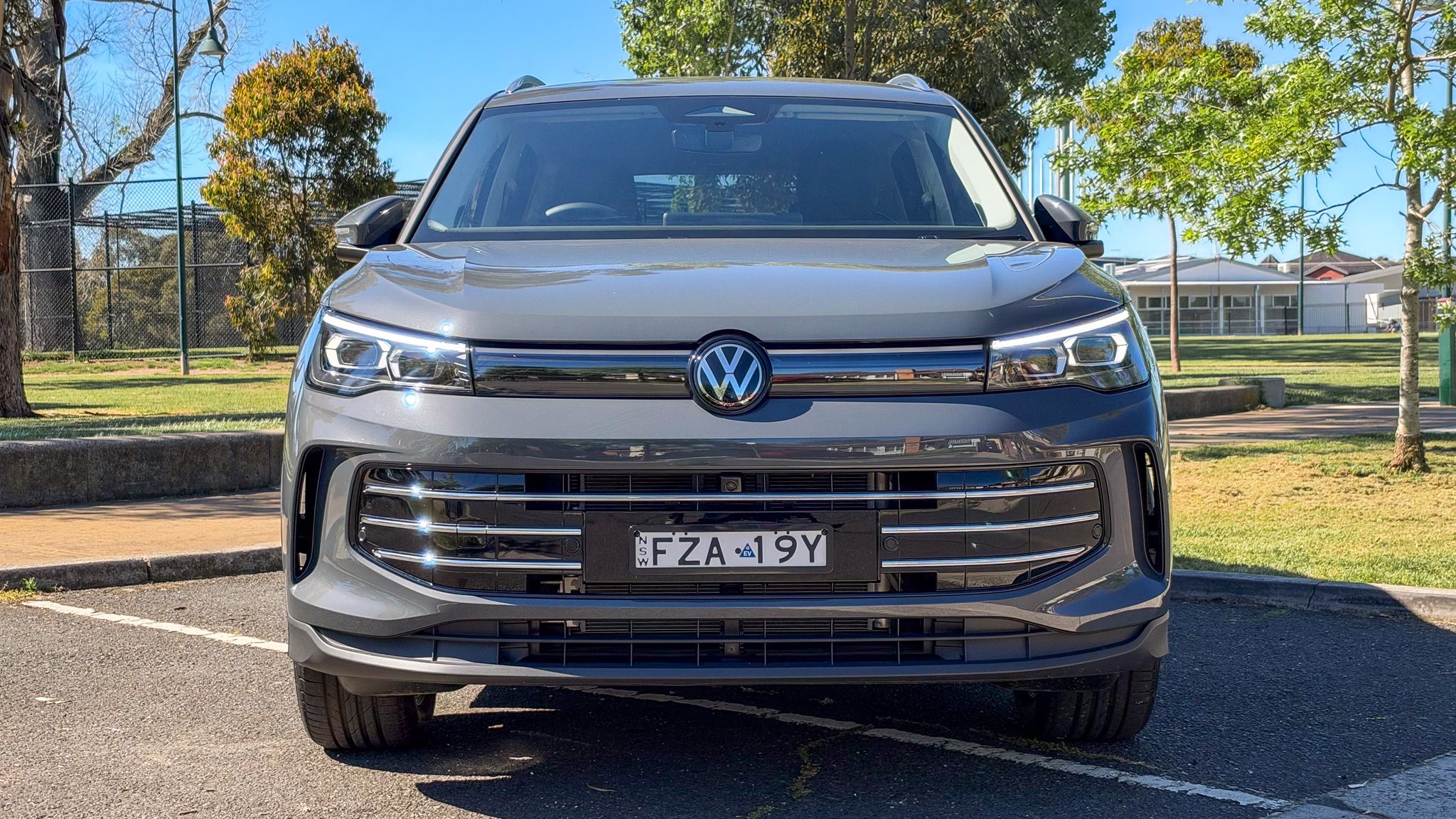
This third-generation Tiguan is softer and rounder than the sharp-edged model it replaced, and I think it looks good. Full-width light bars and illuminated VW badges at both ends give it real presence at night. It’s one of the few mid-size SUVs you can pick out in a dark car park.
The Elegance gets 19-inch wheels and some chrome detailing, and it’s the more understated of the two. The R-Line goes sportier with its own bumpers, gloss black trim, a rear diffuser and 20-inch wheels, and the Black Style Package removes what brightwork is left.
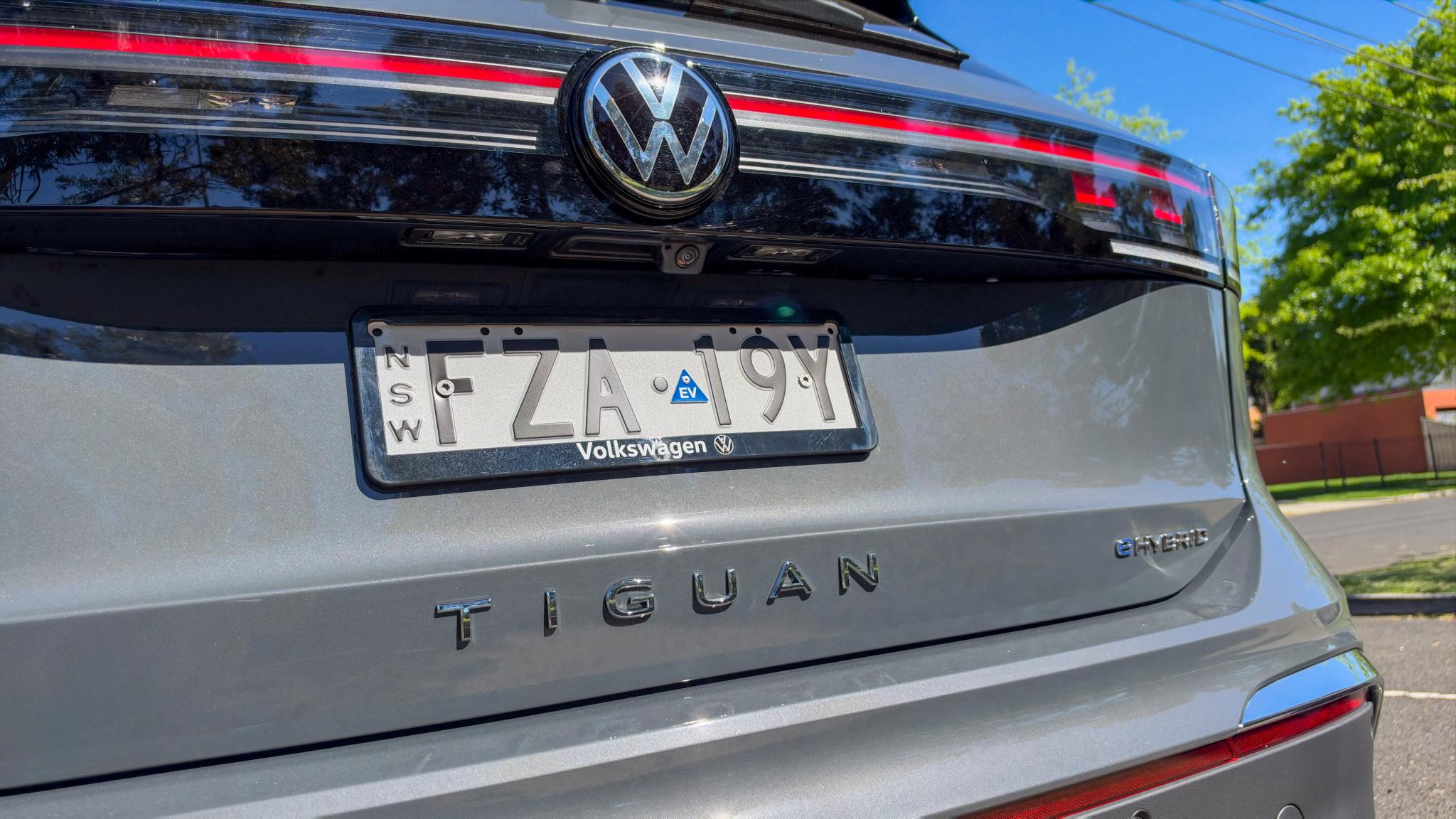
Nothing shouts plug-in hybrid from the outside. At around 4.54m long it’s compact for the segment, which helps in shopping centre car parks.
What is the Tiguan eHybrid like inside?
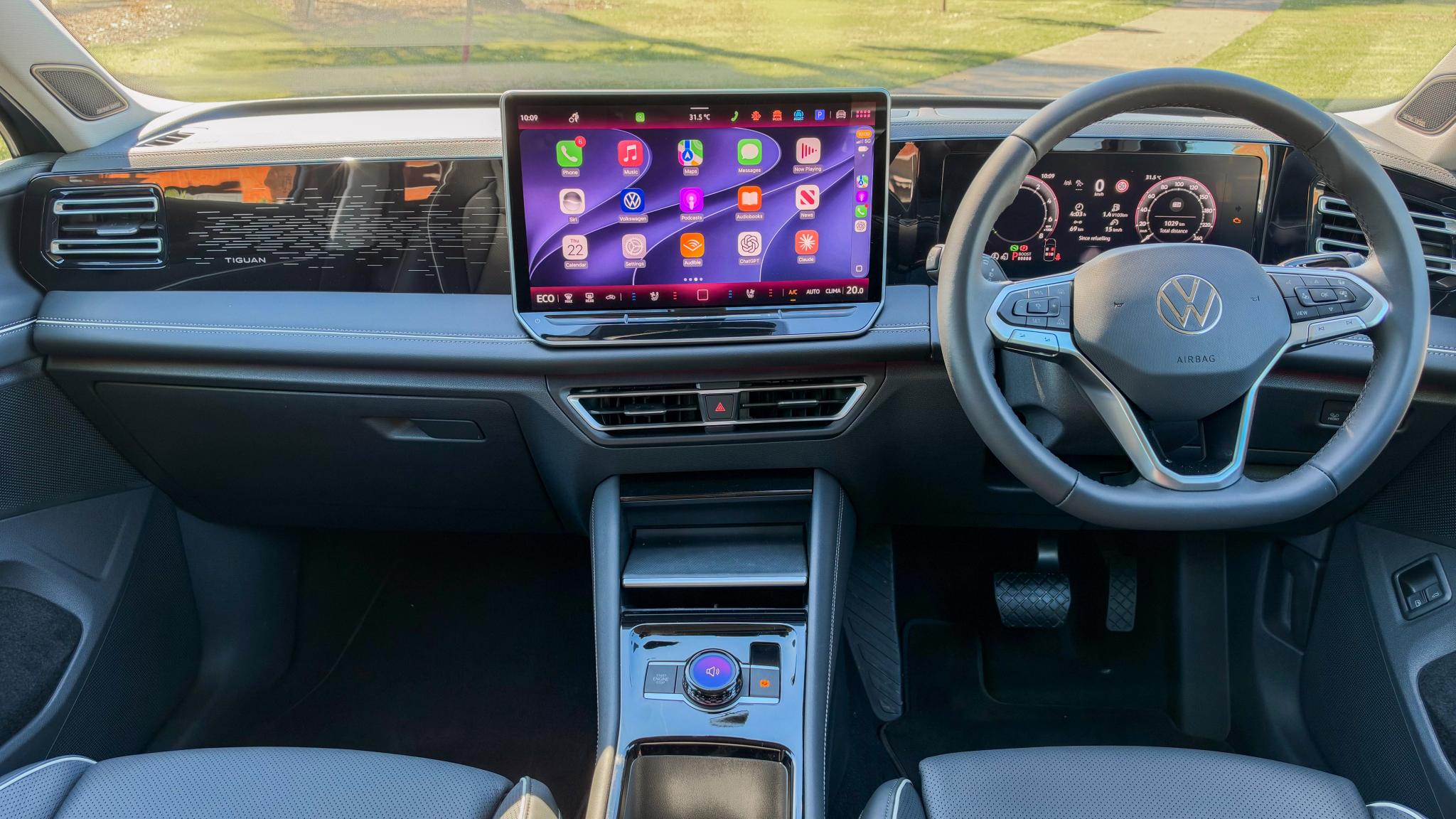
Step inside and you start to understand why Volkswagen charges more for the Tiguan. The dash, doors and main touch points are soft and nicely stitched, and only a few hard plastics around the centre console let the side down.
The 15-inch screen dominates, sitting slightly angled towards the driver alongside a 10.25-inch digital cluster. The software is quick and the menus are logical, and the eHybrid adds charge status and energy flow displays for those who like watching electrons move around.
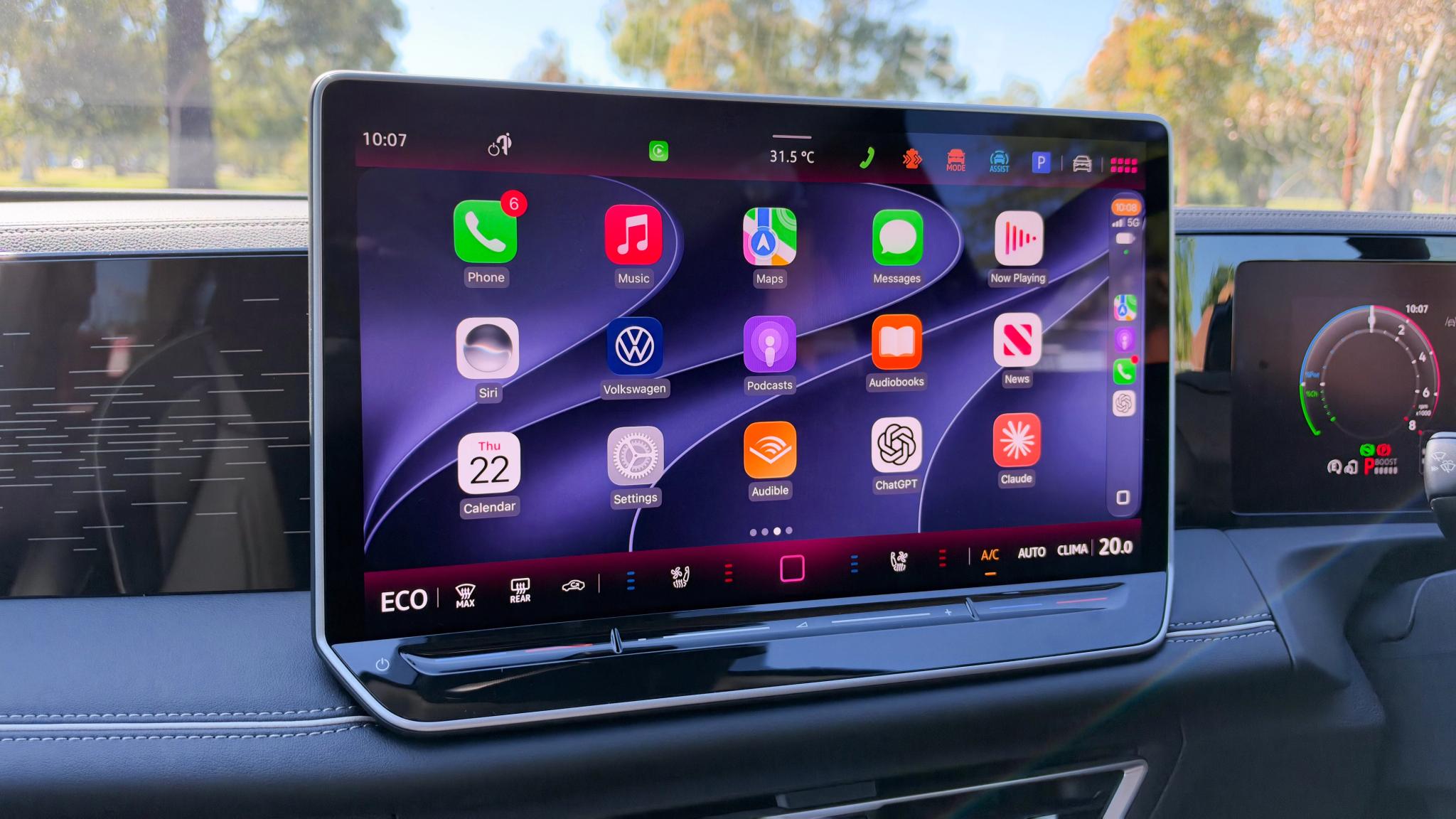
Volkswagen has also brought back physical buttons on the steering wheel, and a configurable rotary dial on the console handles volume and drive modes. Climate control is the sore point. The temperature and fan sliders sit in the touchscreen and are fiddly on the move, especially on a bumpy road.
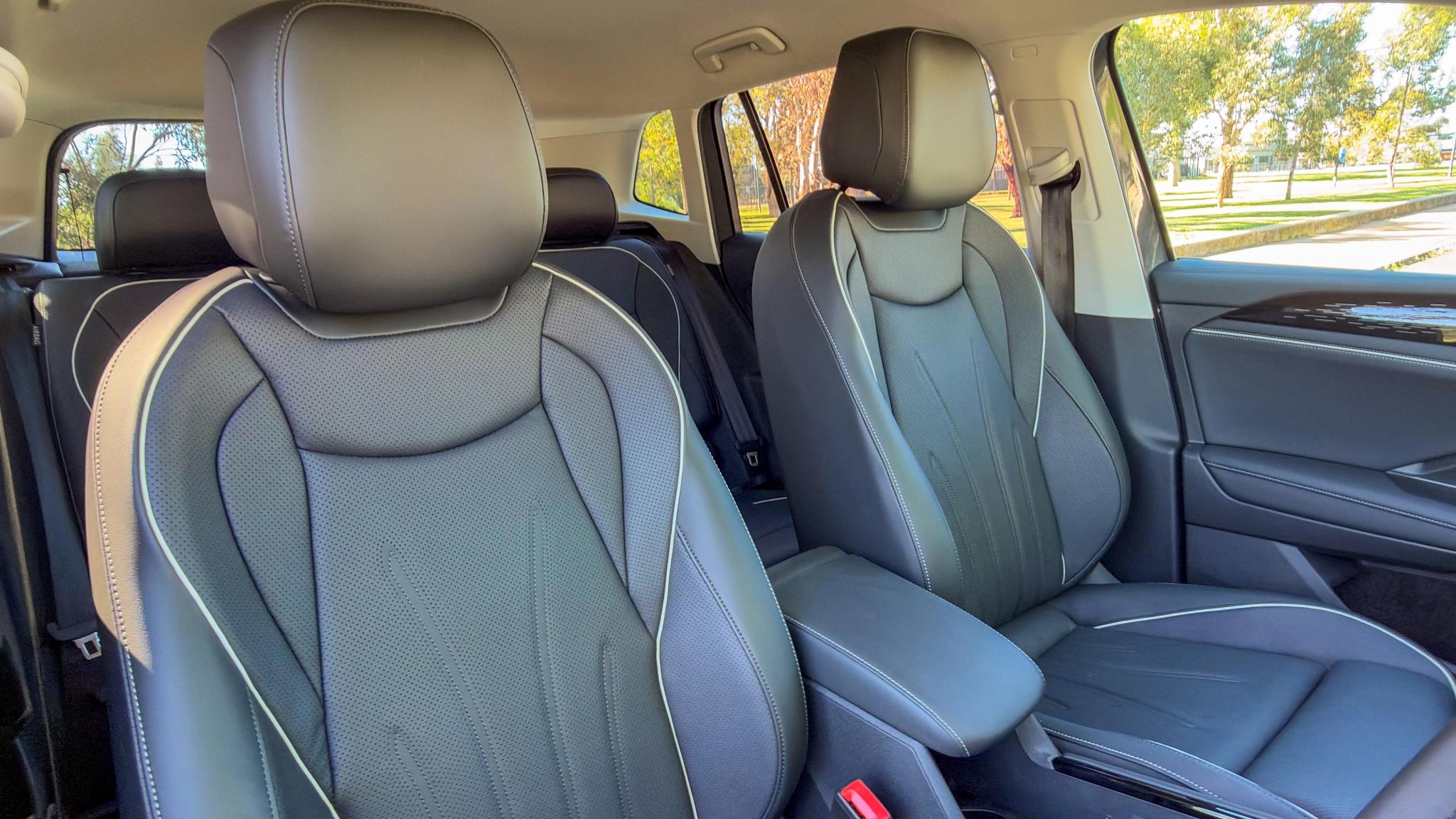
The front seats are comfortable and easy to set up. You get 12-way power adjustment, memory, heating, ventilation and a massage function that I’d happily use every day. The Elegance gets leather and 30-colour ambient lighting, while the R-Line’s sports seats and black headliner give it a darker, sportier feel.
The Harman Kardon stereo is punchy and clear. I also like the phone tray under a flip lid, which holds two phones on wireless chargers and stops them sliding around. The downside is you’ll probably leave your phone in there at least once.
How practical is the Tiguan eHybrid?
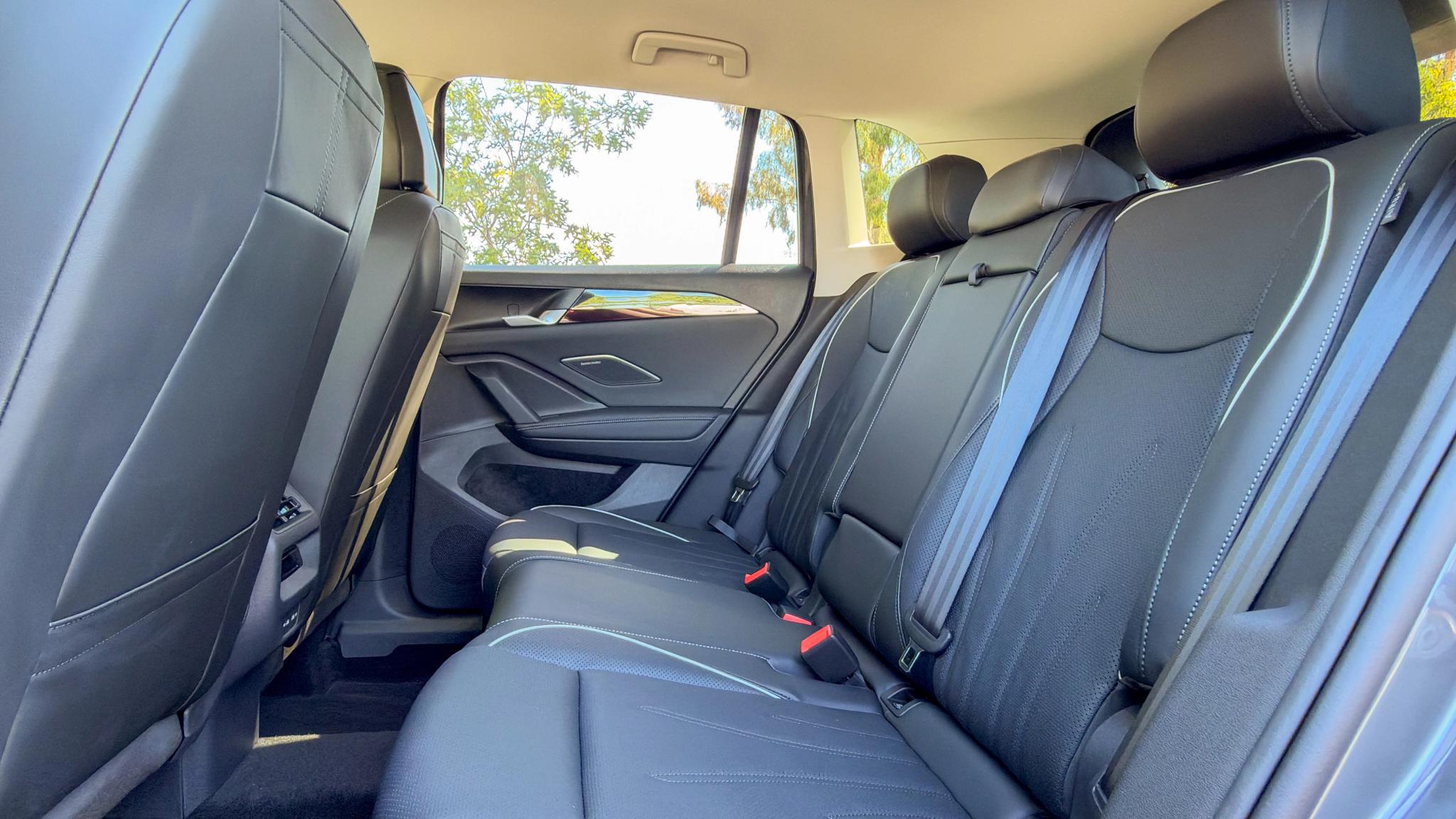
There’s plenty of space inside, although the plug-in battery does take a decent chunk out of the boot. Two adults will be comfortable in the back, with a third manageable on shorter trips, and you get your own climate zone, air vents and USB-C ports in the back.
The rear bench slides and reclines in a 60:40 split, while the backrests fold 40:20:40. That means you can carry skis or a long flat-pack box through the middle and still seat four.
With the battery under the boot floor, boot space is 490L, down about 160L on the petrol Tiguan, growing to 1486L with the rear seats folded. It’s still a usable family boot, but the petrol model is the better choice if you regularly fill it to the roof.
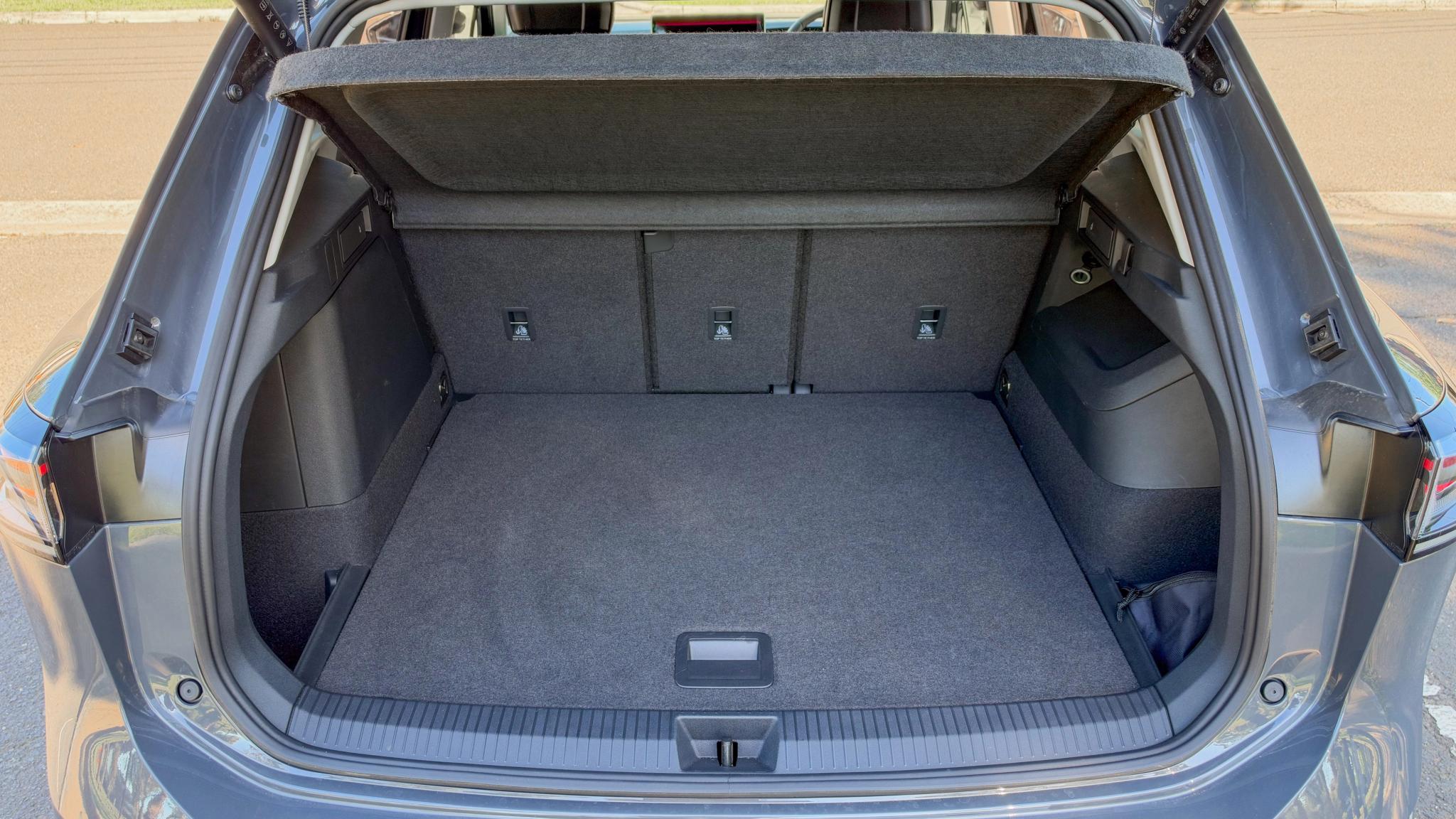
There’s no spare wheel either, just a repair kit which is a let down for a family SUV. Elsewhere, the felt-lined door bins are big enough for drink bottles and more, and braked towing drops to 1800kg for the Elegance and 2000kg for the R-Line.
What is the Tiguan eHybrid like to drive?
With charge in the battery, the Tiguan behaves like an EV around town. The 85kW electric motor gets it moving quickly and quietly, and when the petrol engine does join in, the changeover is smooth enough that most passengers won’t notice.
What impressed me most was how quiet it is. There’s very little road or wind noise, and you barely hear the petrol engine unless you put your foot down. Most of the time, you can’t tell whether it’s running on petrol or electricity.
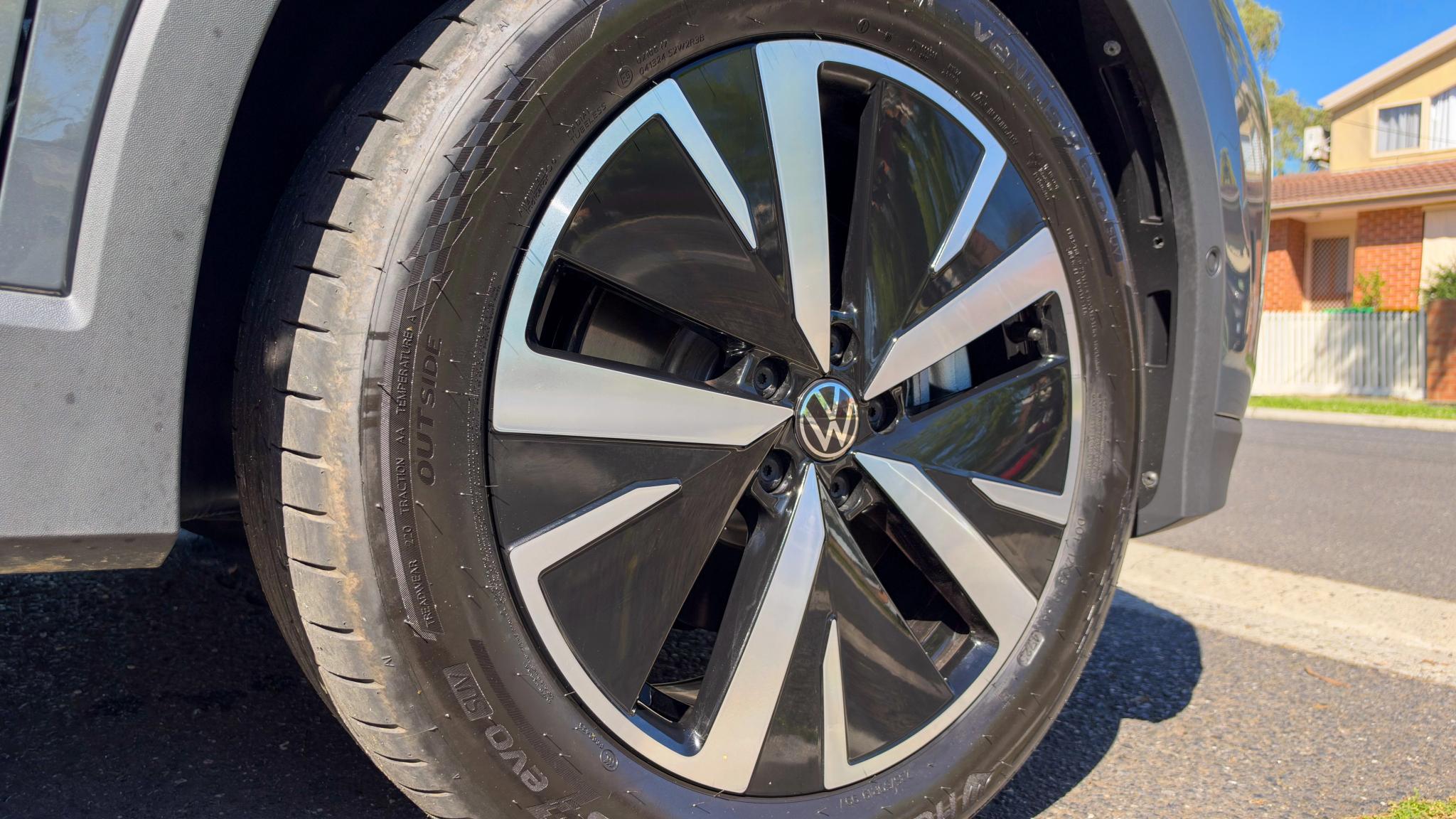
Comfort mode takes the edge off bumps without making the Tiguan feel too soft. Sport firms things up, but doesn’t ruin the ride. The body stays well controlled through corners and the steering is quick and accurate, if a little light.
There are a couple of things to watch. All the drive goes through the front wheels, so pulling out of a side street with a heavy right foot will spin the tyres, especially in the wet. Once the battery is empty, the engine has to work harder and the gearbox can be slow to kick down, so keeping it charged makes for a much nicer drive.
The R-Line is quicker, and its 20-inch wheels and progressive steering make it feel a bit sharper. It’s also slightly firmer over sharp bumps and a little noisier at highway speeds. I’d take the Elegance. It rides more comfortably, and I don’t think the R-Line’s extra performance makes up for the firmer suspension.
How efficient is the Tiguan eHybrid?
The electric range is the biggest selling point. Volkswagen claims 117km for the Elegance and 115km for the R-Line, and in real-world driving we saw around 100km. That covers most families’ weekday driving, so plug it in each night and you could go weeks between servo visits.
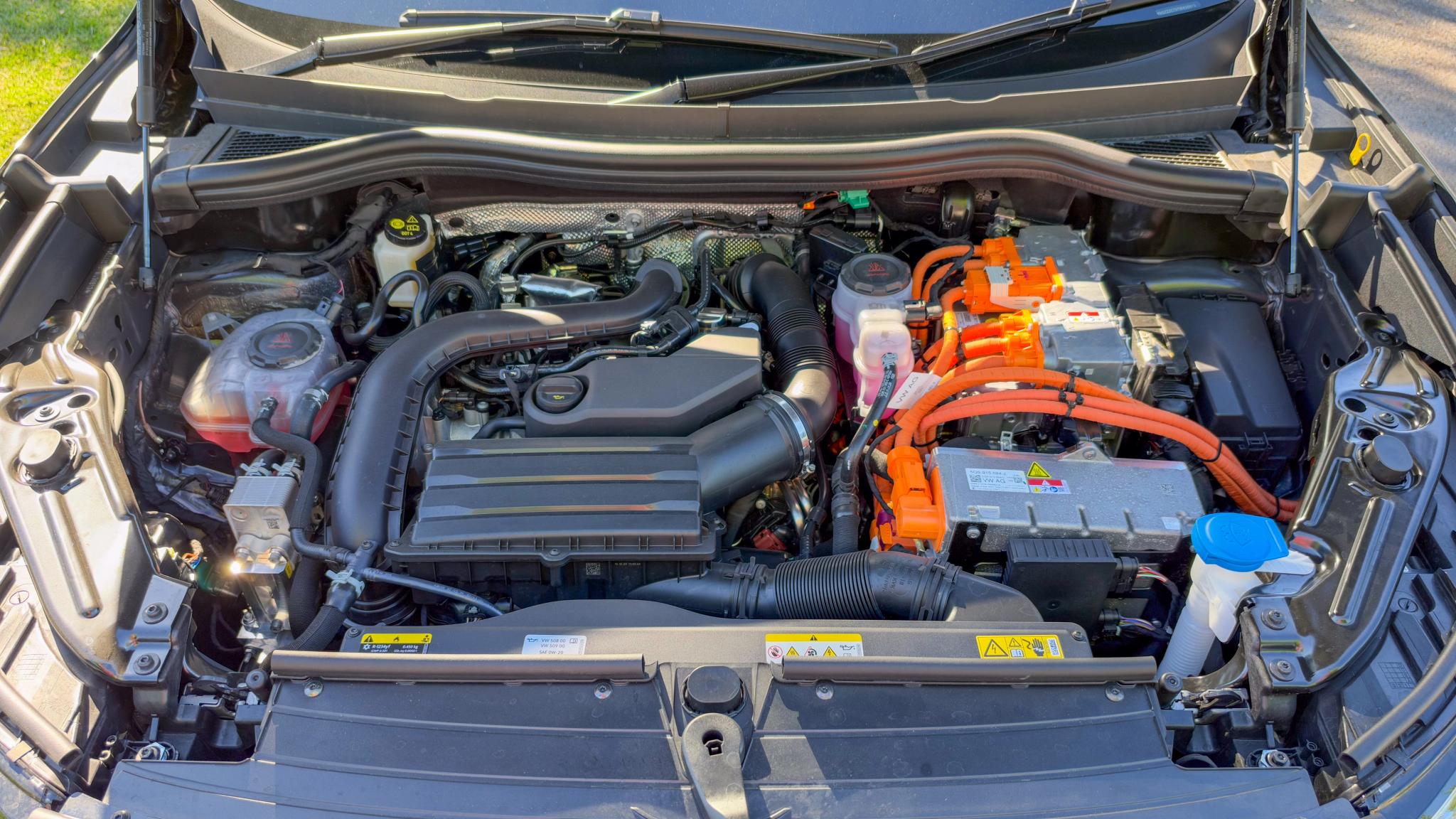
The official 1.6L/100km and 1.7L/100km figures assume regular charging. Once the battery is flat, expect consumption to rise to around 5L/100km, still respectable for a mid-size SUV but not what you bought it for. The fuel tank holds 45L and requires 95 RON premium unleaded.
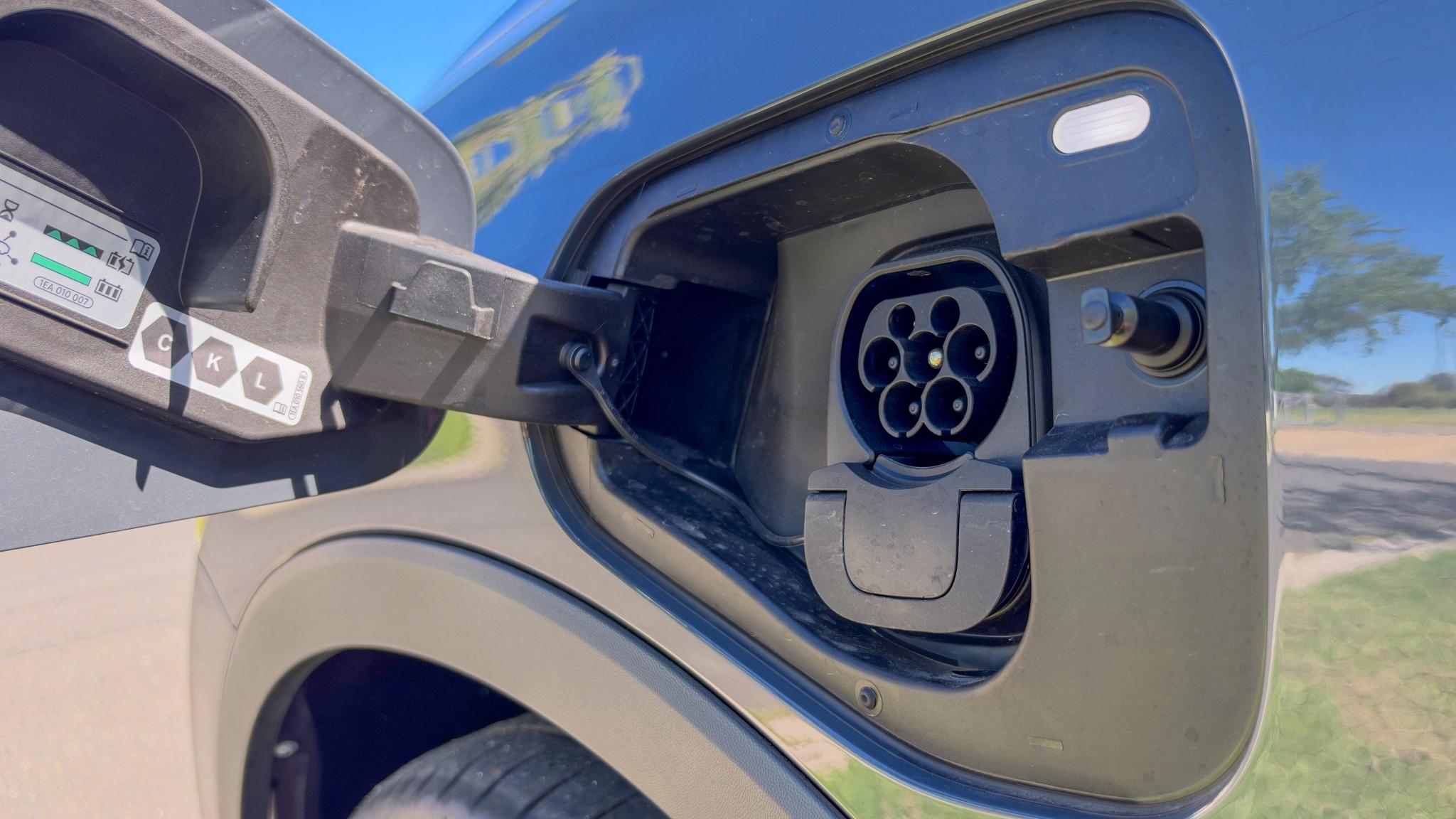
Volkswagen has also given it decent charging speeds for a plug-in hybrid. A full charge on an 11kW wallbox takes about two and a half hours, and DC fast charging at up to 40kW gets you from 10 to 80% in about 26 minutes. Both charging cables come standard, and vehicle-to-load lets you run appliances from the car.
Servicing is the weak point. Volkswagen’s prepaid five-year Care Plan is the way to go, as paying as you go costs more and includes an expensive fourth-year service of around $1500. Plug-in Volkswagens can only be serviced at EV-certified dealers, so check your local dealer qualifies, and roadside assistance renews each year when you service through the network.
| Servicing and Warranty | Tiguan eHybrid |
| Service interval | 12 months | 15,000km |
| Servicing cost (5 years) | $3391 |
| Average annual cost | $678 |
| Vehicle warranty | 5 years | Unlimited km |
| Battery warranty | 8 years | 160,000km |
Is the Tiguan eHybrid safe?
The Tiguan has a five-star ANCAP rating from 2024 that covers the eHybrid models, with scores of 83% for adult occupant protection, 88% for child occupant protection, 84% for vulnerable road users and 78% for safety assist.
There are nine airbags, including a front-centre airbag between the front seats. Autonomous emergency braking covers pedestrians, cyclists, junctions and oncoming traffic, and it’s joined by blind-spot monitoring, front and rear cross-traffic alert, safe exit warning and a 360-degree camera.
Travel Assist combines adaptive cruise control with lane centring, and it keeps the car centred smoothly without constant small corrections. The speed warning chime is gentle rather than nagging. My one complaint is camera quality, which looks dated next to that crisp 15-inch screen.
What are the main competitors to the Tiguan eHybrid?
The Toyota RAV4 PHEV starts at around $58,840 before on-roads for the XSE 2WD, rising to $63,340 for the 227kW AWD. It offers similar electric range, the option of AWD and much cheaper servicing. The Tiguan has the nicer cabin, a quieter drive and more standard equipment for the money.
The Mitsubishi Outlander PHEV starts at around $58,990 before on-roads, comes with AWD as standard, offers a seven-seat option and carries Mitsubishi’s 10-year conditional warranty. The Tiguan is quieter, rides better and has a noticeably nicer interior.
The BYD Sealion 6 costs from $42,990 to $52,990 before on-roads, significantly undercutting the Tiguan while offering more power in AWD form. The Sealion 6 makes a lot more sense financially, but the Tiguan rides better, steers more accurately and feels better put together.
The Volkswagen Tayron eHybrid is the bigger Tiguan alternative from $62,390 before on-roads. It looks cheaper on paper, but you’ll need the $4200 Sound & Vision package to match the Tiguan Elegance’s kit, so unless you need the extra length, I’d stick with the Tiguan.
If you’re buying a plug-in family SUV under $80,000, this and the RAv4 are the ones I’d test drive first.
Should I buy the Tiguan eHybrid?
Yes, provided you can charge at home and negotiate a decent price. The Tiguan eHybrid is comfortable, practical and genuinely enjoyable to drive. It’s one of those cars that gets most things right, even if Volkswagen is asking a lot of money for it.
For most buyers, the Elegance makes the most sense. It costs $10,000 less, has almost the same equipment and its softer suspension suits the car well. The R-Line is worth it if you want the extra power, the sportier look or the higher 2000kg towing capacity.
The price is what stops me recommending it outright. At $63,990 driveaway, the Elegance was a bargain. At more than $70,000, it’s a harder sell. But get it somewhere near that original deal and I’d have no hesitation recommending it.
VerdictThe Beep Verdict
Rob Leigh
Co-founder & Director
Rob Leigh is Co-founder and Director of The Beep based in Melbourne, Australia. He has 15+ years inside a major automotive OEM, specialising in product planning, pricing and vehicle strategy.
About Author