2026 Volkswagen ID.4 Pro review
Volkswagen's electric family SUV is a comfortable, long-range, quietly excellent thing that charges a premium over the Chinese pack and mostly justifies it, provided you can live without a few basics.

Rob Leigh
Pros
- 544km WLTP range and the efficiency to back it up
- Adaptive dampers give it the best ride in the class
- Nothing is optional except paint and a styling pack
Cons
- Touch-sensitive steering wheel buttons are too easy to nudge
- Vague brake pedal and no spare wheel
- Chinese rivals cost thousands less
Our verdict
The ID.4 is for buyers who want an electric family SUV that behaves like a real car rather than a rolling tech demo. It rides comfortably, goes a long way on a charge and feels finished in a way plenty of newer rivals do not. The catch is that there are cheaper alternatives that will save you real money, and the Volkswagen's cabin tech is a step behind them.
What does the ID.4 Pro cost in Australia?
The ID.4 range is two variants deep. The rear-drive Pro costs $60,990 and the dual-motor GTX costs $70,990, both before on-road costs, which is restrained pricing for a German-built EV. The Pro is the one most buyers will choose.
| Variant | Powertrain | Drivetrain | Price excluding on-roads |
| ID.4 Pro | Electric, 210kW | RWD | $60,990 |
| ID.4 GTX | Electric, 250kW | AWD | $70,990 |
View ID.4 Pro driveaway pricing and specifications →
Options are refreshingly short. Metallic paint is $1,000, an exterior styling pack with a black roof and silver trim is $900, and that is the entire list. Both charging cables come in the box, which is not a given at this end of the market. The sleeker ID.5 liftback mirrors the two-variant line-up for a few thousand dollars more.
Value depends on which direction you look. Against a Tesla Model Y or Hyundai Ioniq 5 the Pro is priced right on the money and carries more standard kit. Against the BYD Sealion 7, Kia EV5 and Geely EX5 it asks a premium, and you need to decide whether adaptive suspension, a German build plate and a brand that has been doing this for a while are worth it to you.
What does the ID.4 Pro look like?
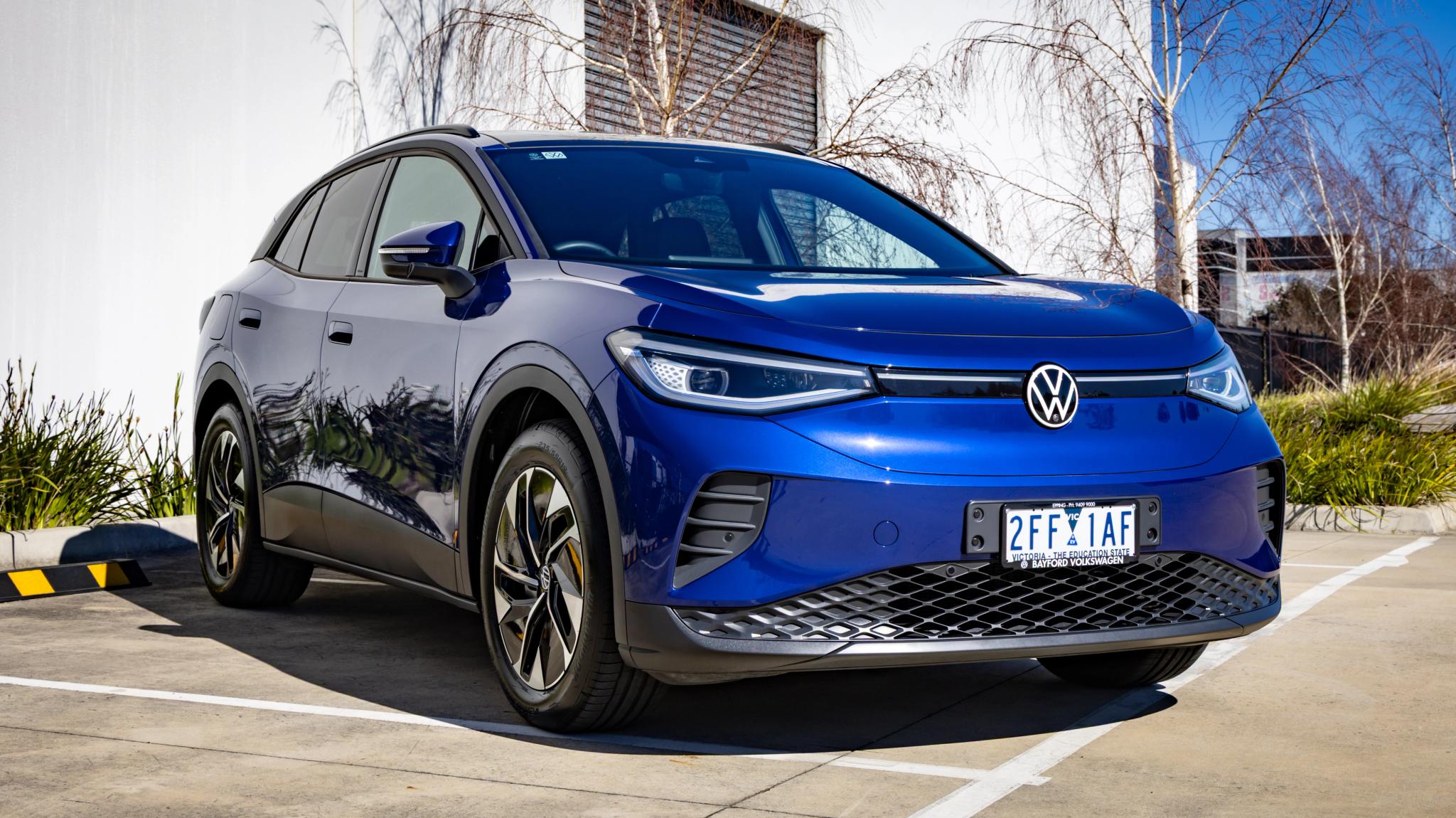
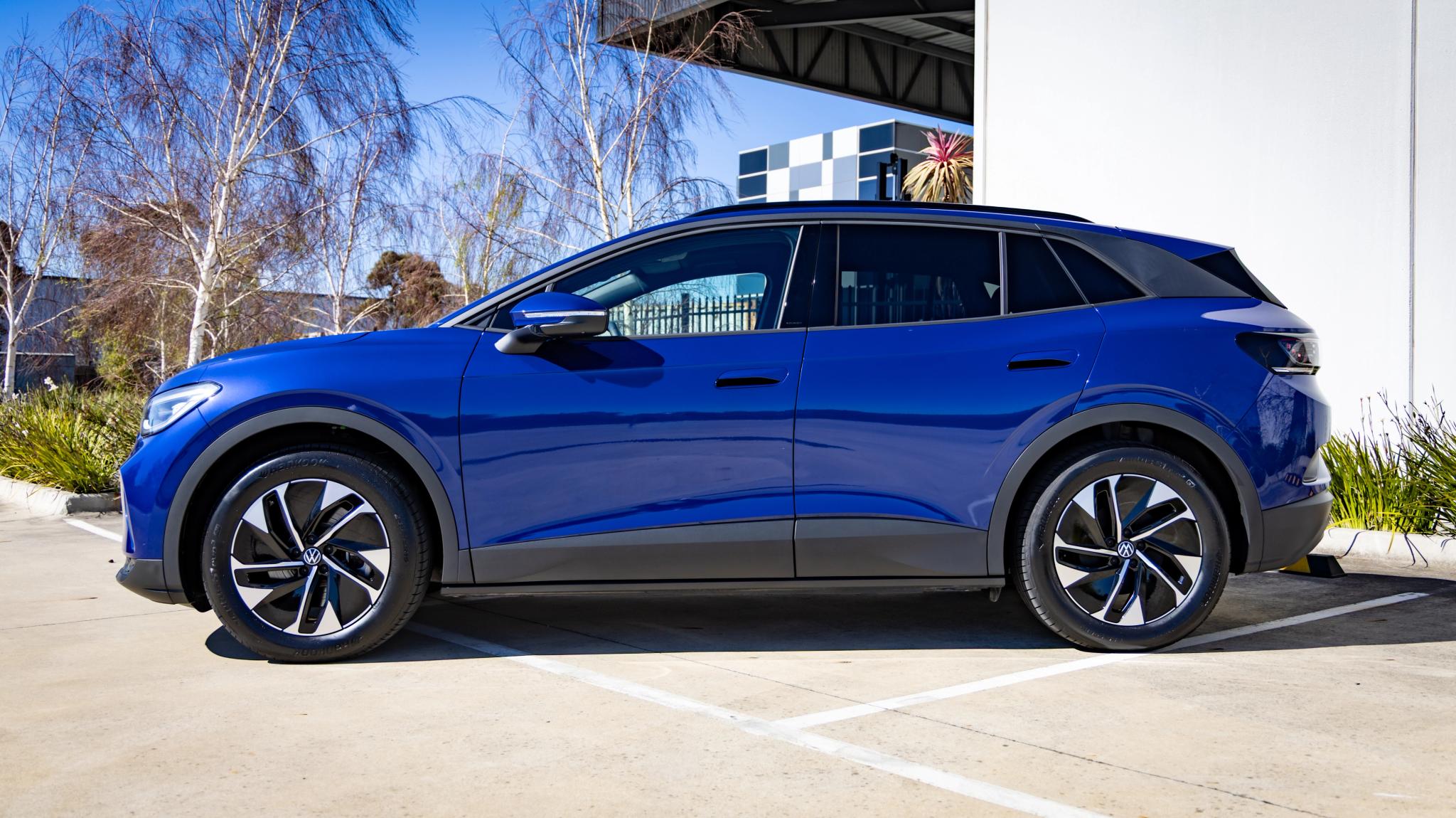
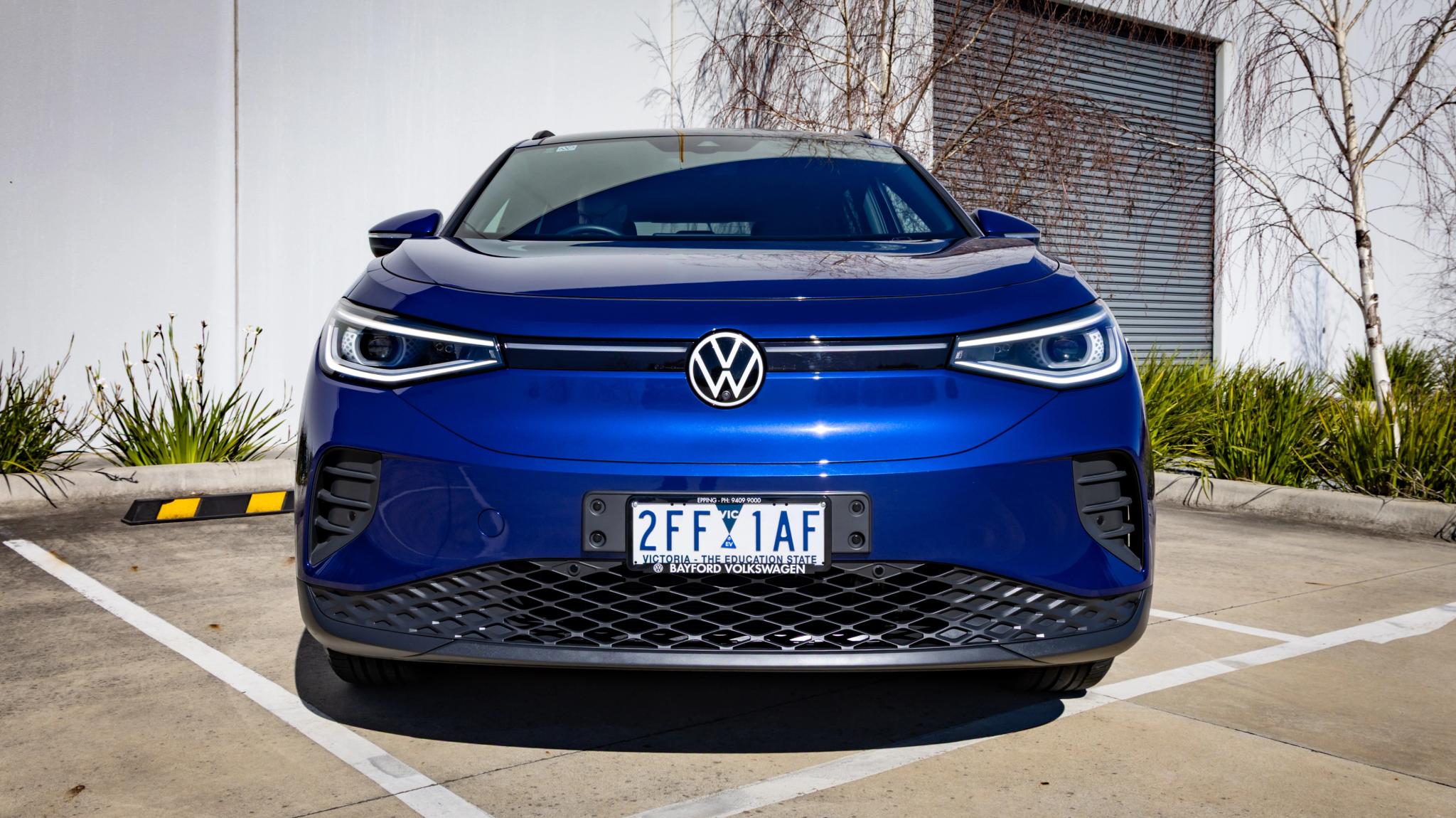
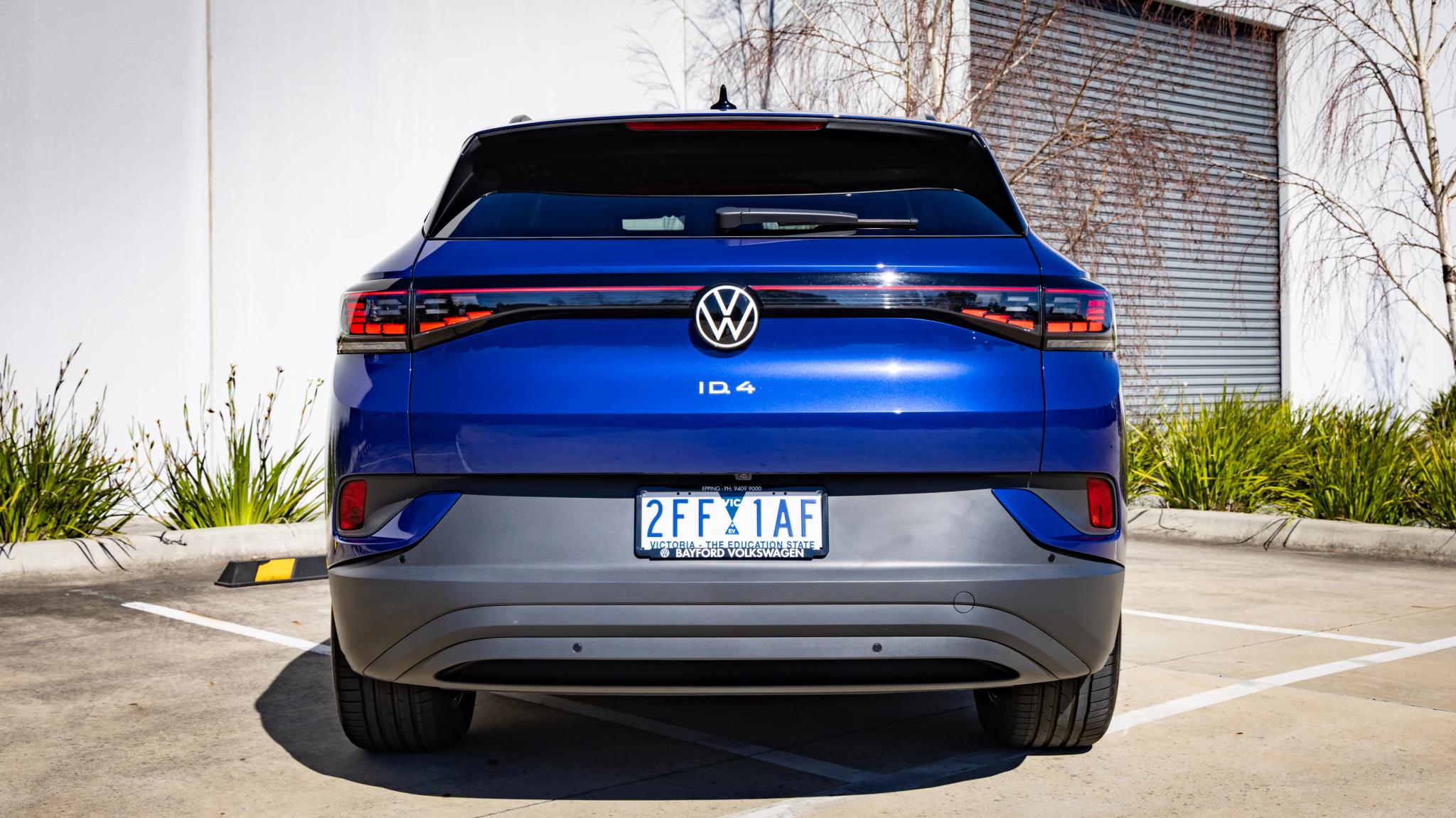
Volkswagen has not chased attention with the ID.4 and that is either its best styling trait or its worst depending on your taste. The surfacing is smooth and largely unadorned, the roofline is conventional wagon rather than coupe. It looks a little like a softer, more rounded Tiguan.
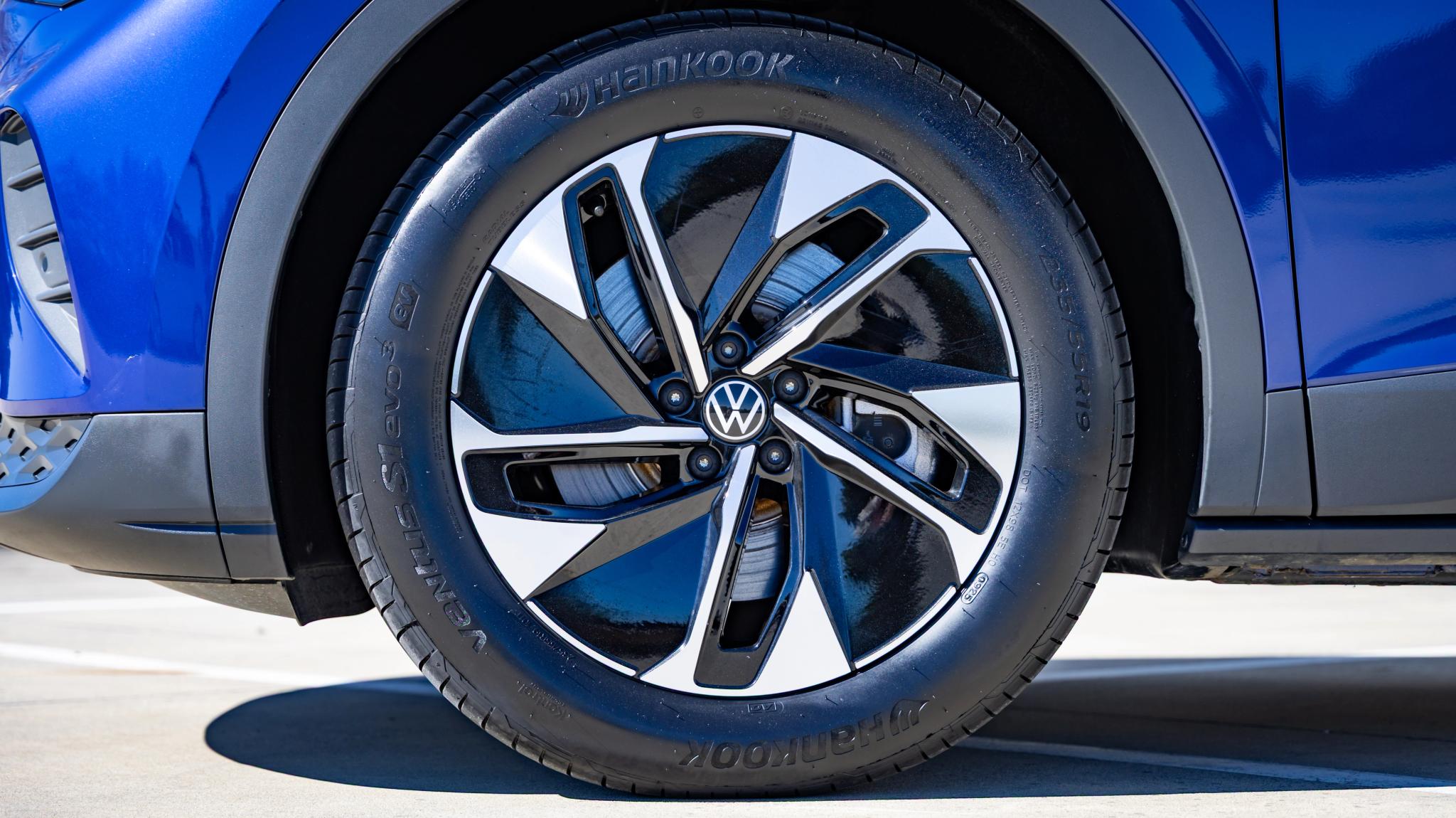
The details do the heavy lifting. Full-width light bars front and rear give it presence at night, the IQ.Light matrix LED headlights are standard on the Pro, and the 3D taillights with sequential indicators are a nice touch on a base variant. Standard 19-inch Hamar alloys sit on tyres with proper sidewall, which matters more for ride than for looks.
The design holds up well, mostly because it never leaned on a fad. If you want the same underpinnings with more drama, Cupra will sell you a Tavascan. The ID.4 takes a much more understated approach.
What is the ID.4 Pro like inside?
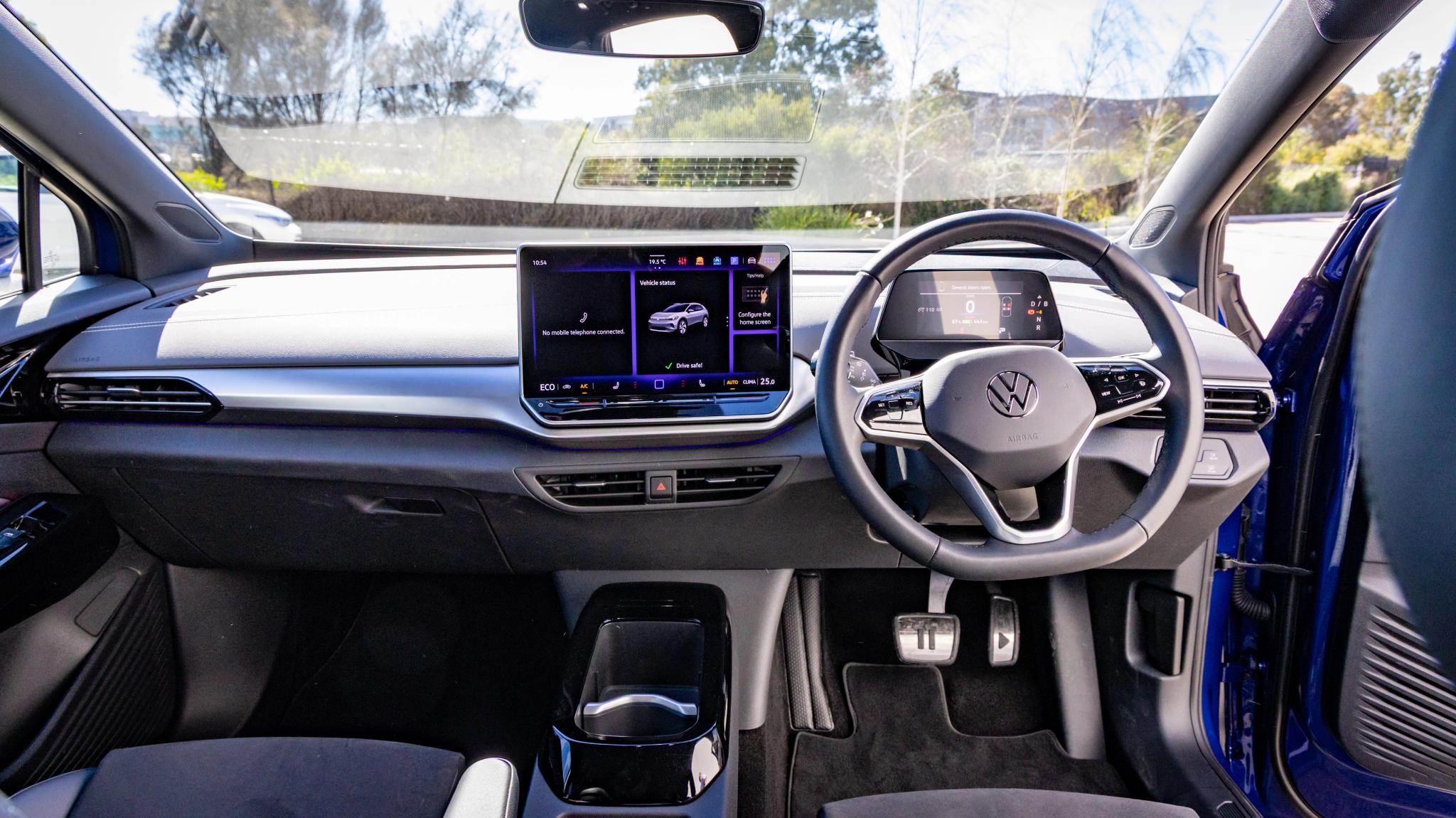
The cabin is minimalist without being empty.
The mid-life update brought soft-touch door tops and a stitched dashboard, and the standard black and grey scheme can be swapped for a no-cost Florence Brown interior that lifts the mood considerably. Doors shut with the solid thunk Volkswagen has traded on for decades, and the electric releases still give you a proper handle to pull.
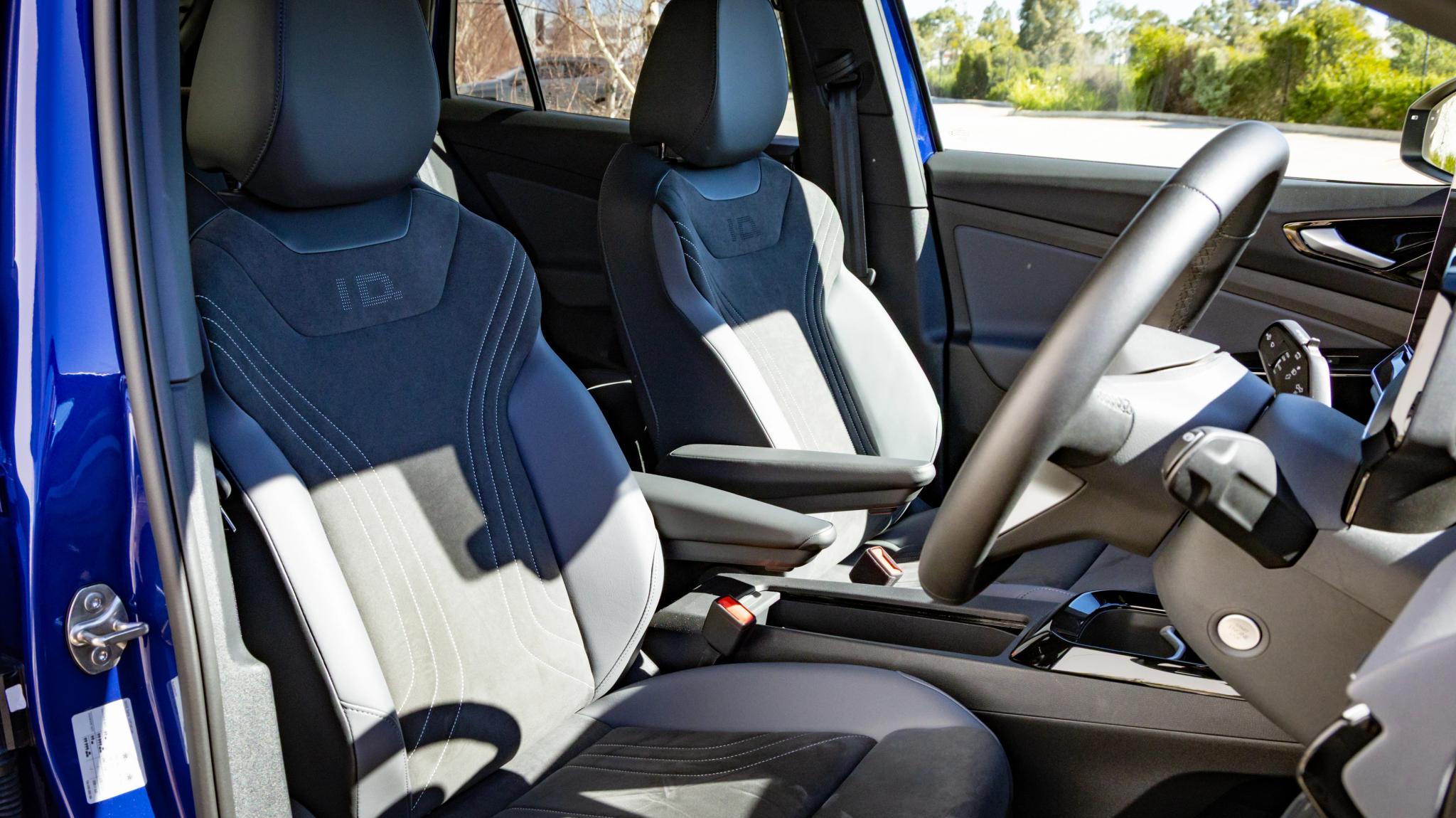
The seats are the highlight. Both front chairs are ErgoActive units with full electric adjustment, heating, two-position memory and a massage function, trimmed in a microfleece that feels more expensive than it should. Fold-down inner armrests on each seat are a small luxury you will miss in anything else.
The screen arrangement is sensible. A 12.9-inch central touchscreen runs an interface that is quick, logically laid out and keeps climate controls visible even when your phone is mirrored. The 5.3-inch driver display mounted on the steering column looks small but tells you everything you need, and its position does most of the work a head-up display would.
There is no built-in navigation and Volkswagen is right not to bother: wireless Apple CarPlay and Android Auto are standard and almost everyone runs their phone's maps anyway.
The annoyances are smaller. The steering wheel's touch-sensitive buttons are easy to nudge by mistake and the glovebox is half the size it should be.
Rear door plastics are harder than the front, a leftover from Volkswagen's cost-cutting era that the update did not fully erase. It is the one place the cabin feels its age.
How practical is the ID.4 Pro?
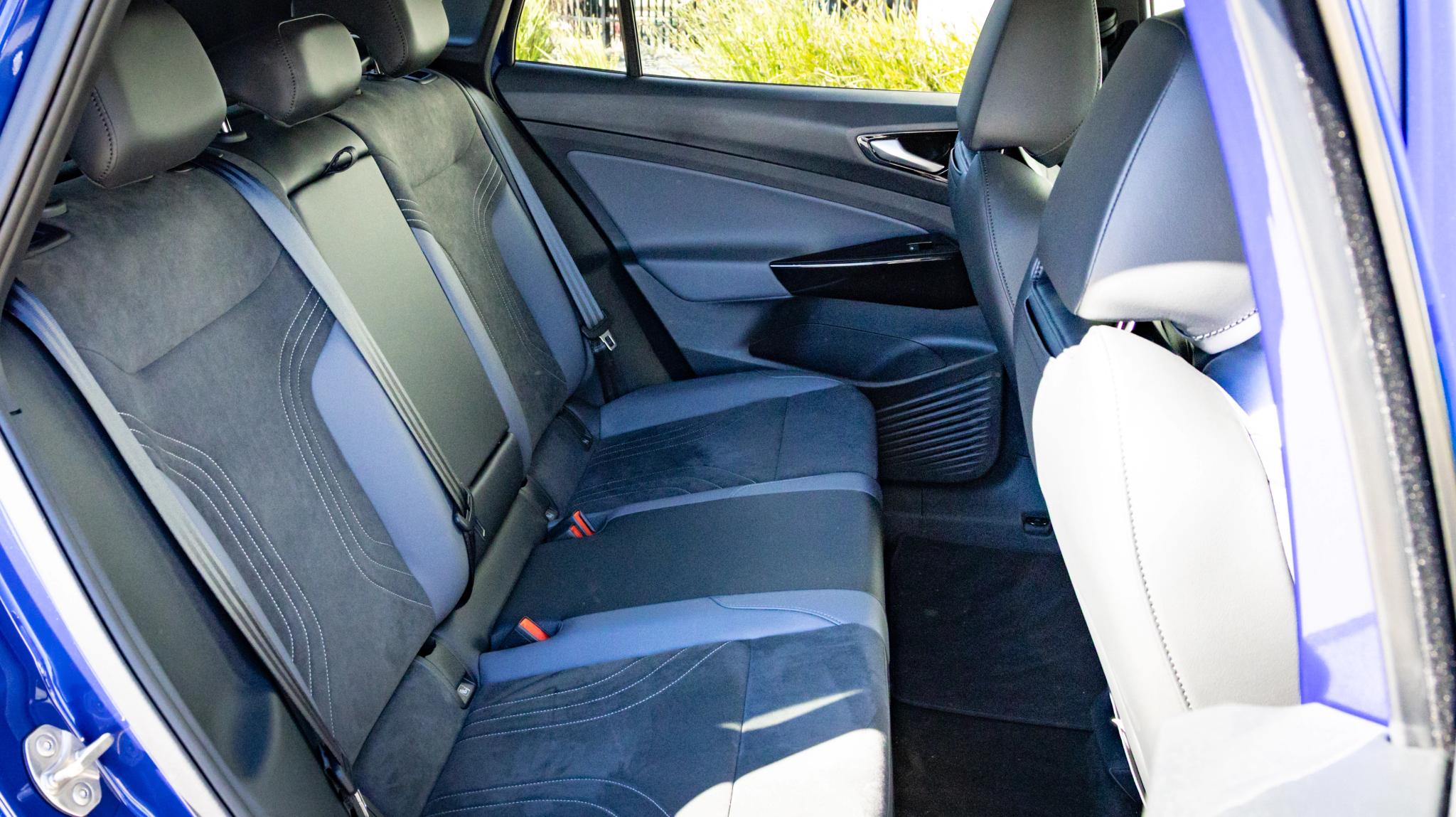
The MEB platform's long 2,766mm wheelbase and flat floor make the back seat one of the roomiest in the class. Tall adults sit behind tall adults with room to spare, the middle seat is actually usable for an adult, and the rear gets its own third climate zone, directional vents, USB-C ports and phone pockets in the seatbacks.
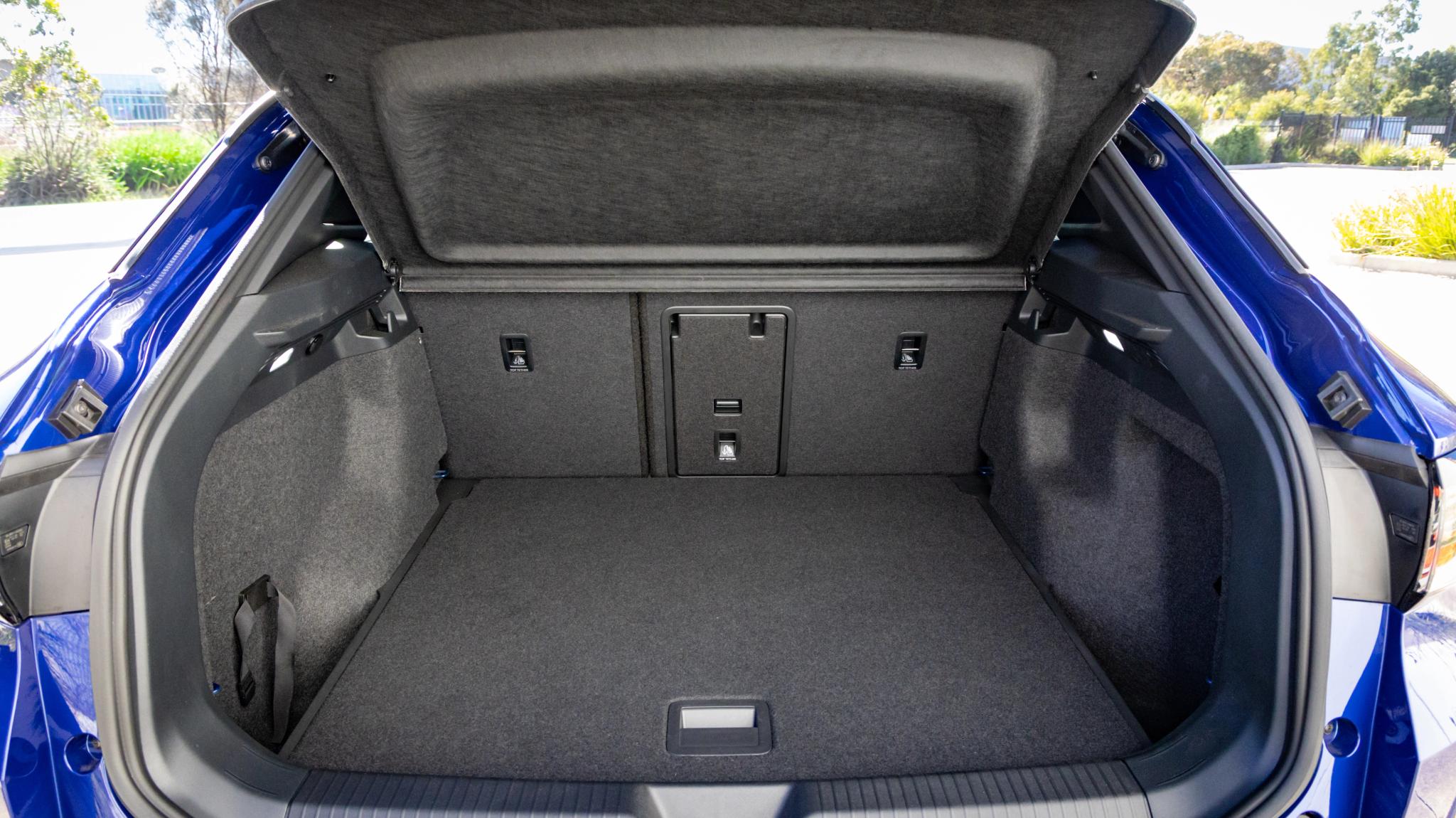
Boot space is 543 litres with the seats up and 1,575 litres folded, with a ski port for long loads and a hidden compartment under the floor. Both figures are competitive rather than class-leading, and the load lip is also low enough to make loading a pram easy.
Two omissions. There is no front boot, so the charging cables live in the underfloor space, and there is no spare wheel, only a repair kit. If your weekends involve gravel roads, factor that in. The panoramic glass roof does at least come with a proper electric blind, which anyone who has cooked under an unshaded EV roof will appreciate.
What is the ID.4 Pro like to drive?
The Pro comes standard with Dynamic Chassis Control Plus, adaptive dampers with 15 settings, which is rare kit at this price. Leave it in Comfort and the car does a decent job of smoothing broken suburban bitumen, without ever quite reaching the plushness the spec sheet promises.
Dial the damping to the middle of its range and you get the sweet spot: composed body control, a slight edge over sharp expansion joints, and a level of calm that makes 200km of freeway feel like 100. Sport is too firm for most Australian roads, so Individual mode is the one to set and forget.
The 210kW and 545Nm rear-drive motor is quick enough for anyone, with a 6.7-second 0 to 100km/h time that arrives with an unhurried, linear shove rather than a neck snap. It never feels short of torque, even loaded with people, and the rear-drive balance gives it a natural rotation through corners that front-drive rivals cannot match. Switch the stability control to Sport and there is more fun here than the styling suggests.
The steering is accurate and nicely weighted, but there isn’t much feedback through the wheel.
The brake pedal is the weaker point. Regenerative braking handles most stops, and the transition to the friction brakes gives the pedal a long, slightly inconsistent feel that takes a few days to trust. Volkswagen also uses rear drums, which sounds worse than it is in practice.
There is no true one-pedal mode. D coasts, B adds moderate regen, and neither will bring you to a complete stop. It behaves like a normal car, which is exactly the point.
The cabin is hushed on smooth surfaces and shows some coarse-chip tyre roar on rural highways. The driver assistance systems deserve special mention for being competent without being annoying. Travel Assist holds a lane centre without wrestling you and the attention monitor does not scold you for glancing at the screen.
How efficient is the ID.4 Pro?
The Pro carries an 82kWh battery (77kWh usable) and an official range of 544km WLTP at 16.7kWh/100km. That claim is unusually real. Across mixed driving expect to see figures in the 16 to 18kWh/100km band, which translates to a genuine 450 to 500km between charges. Heavy highway driving pushes consumption toward the upper end; urban running pulls it below the claim.
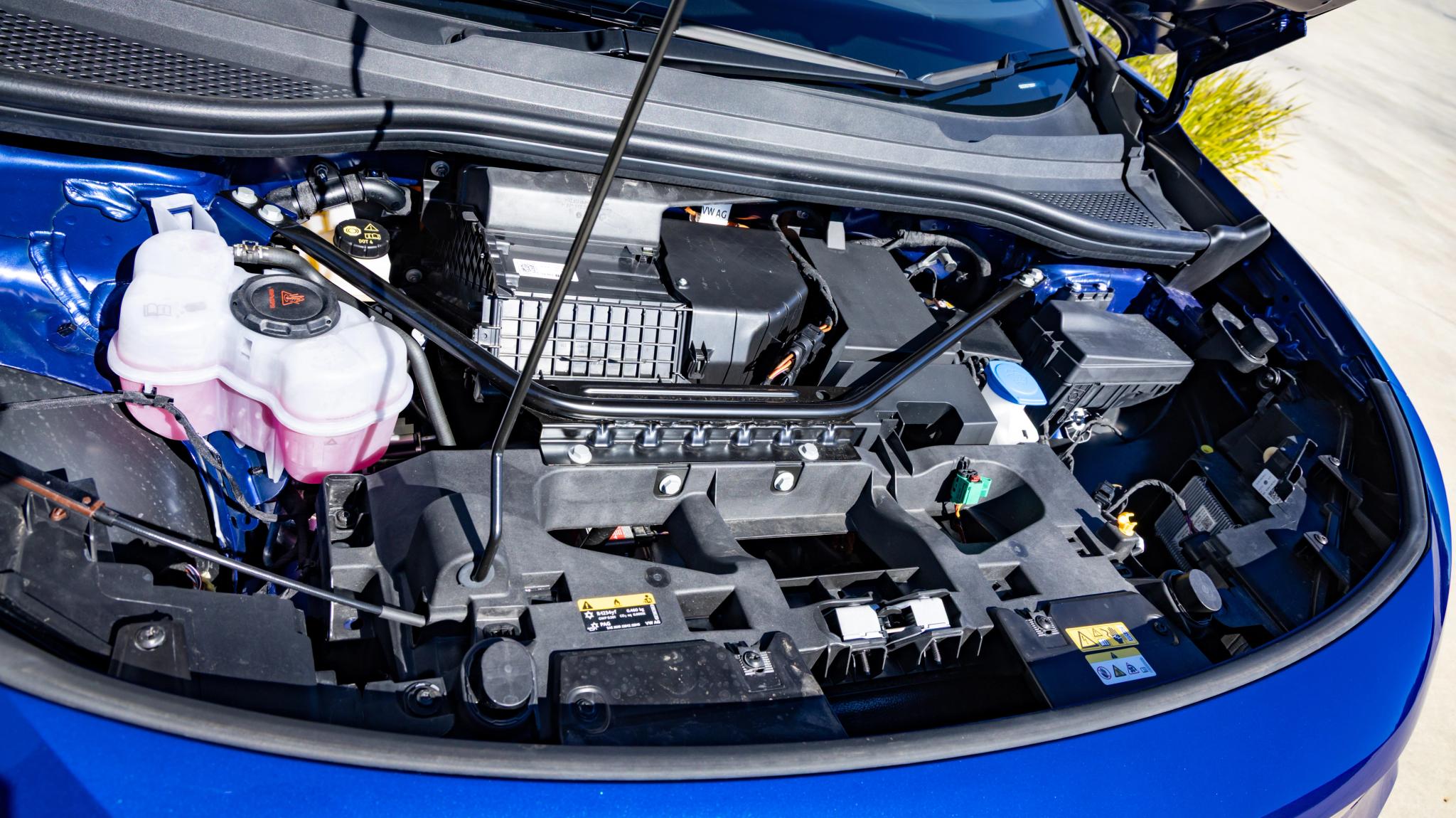
The GTX trades range for pace, with 250kW and 679Nm, all-wheel drive and a 5.4-second sprint, but the Pro's balance of range, price and rear-drive character is the harder one to argue with.
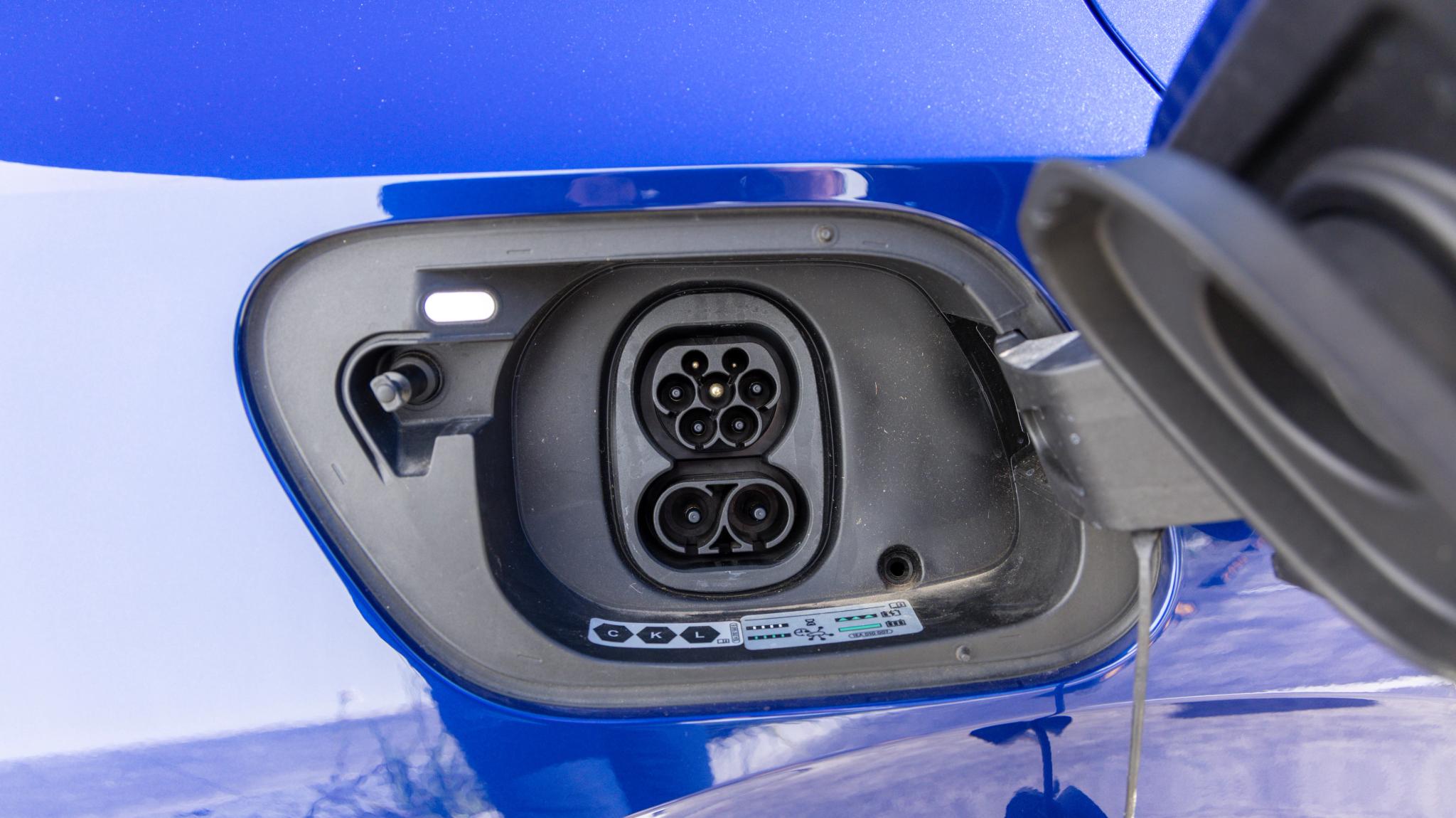
Charging tops out at 175kW DC, good for a 10 to 80% top-up in around 28 minutes. Home charging runs at 11kW AC for a roughly eight-hour full charge on a three-phase wallbox.
Servicing intervals are a long two years or 30,000km and capped pricing runs out to 10 years.
| Plan | Cost |
| 6 years / 90,000km | $1,785 |
| 8 years / 120,000km | $2,350 |
| 10 years / 150,000km | $2,890 |
The five-year, unlimited-kilometre warranty is standard Volkswagen fare, with the high-voltage battery covered for eight years or 160,000km. Each dealer service also renews 12 months of roadside assistance.
Is the ID.4 Pro safe?
The ID.4 carries a five-star ANCAP rating, though it is based on 2021 testing, so newer rivals were assessed against a tougher protocol. Six airbags, dual ISOFIX points and three top tethers cover the basics.
The IQ.Drive suite bundles autonomous emergency braking with pedestrian and cyclist detection, adaptive cruise control with stop-and-go, lane keeping, blind-spot monitoring, rear cross-traffic alert and a 360-degree camera. Front and rear parking sensors are standard. The camera resolution is ordinary and traffic sign recognition is missing, which is an odd gap at this price.
What the ID.4 does better than almost anything from China is calibration. The systems intervene when they should and stay quiet when they should not, and that makes the safety kit something you keep switched on rather than something you dig through menus to disable.
What are the main competitors to the ID.4 Pro?
The Tesla Model Y is the benchmark from $58,900 plus on-roads for the rear-drive Premium. It charges faster, its software is untouchable and its efficiency is class-leading, and Tesla now backs it with a five-year warranty. The ID.4 counters with a more comfortable ride, a driver display, physical door handles and a cabin that does not treat you like a beta tester.
The BYD Sealion 7 is the value choice from $54,990 before on-roads for the Premium, and BYD regularly runs driveaway deals at that figure. It is bigger, better equipped and thousands cheaper, and it sells accordingly. The ID.4 answers with 60km more range, a sharper chassis, quicker charging and driver aids that do not nag.
The Kia EV5 is the family choice from around $49,990 driveaway for the Air. It has a seven-year warranty, a front boot, vehicle-to-load power and a cabin full of proper buttons. It is also slower, charges slowly and rides on a chassis with none of the ID.4's polish.
The Cupra Tavascan is the same car in a louder outfit, from around $60,990 before on-roads. Same MEB platform, same battery, same motor, wrapped in a design that turns heads and a coupe roofline that eats into rear space. Choose the Tavascan if you want to be noticed, the ID.4 if you want to be comfortable.
Cross-shop on price and the Sealion 7 and EV5 make the ID.4 look expensive. Cross-shop on how the car feels after a year of ownership and the Volkswagen starts to look like the bargain.
Should I buy the ID.4 Pro?
If you want an electric SUV that is comfortable, spacious, easy to drive and can realistically cover close to 500km between charges, the ID.4 Pro makes a lot of sense.
We’d stick with the Pro. The GTX is considerably quicker, but the extra $10,000 is hard to justify when the rear-wheel-drive car already has plenty of performance.
There are compromises. There’s no spare wheel or front boot, and the brake pedal takes some getting used to. But none would stop us buying one.
The ID.4 isn’t the cheapest EV in the class, but it feels mature, well engineered and properly finished. For some buyers, that will be worth paying extra for.
VerdictThe Beep Verdict
Rob Leigh
Co-founder & Director
Rob Leigh is Co-founder and Director of The Beep based in Melbourne, Australia. He has 15+ years inside a major automotive OEM, specialising in product planning, pricing and vehicle strategy.
About Author