2026 Porsche 911 Turbo S review
Two electric turbos and 523kW make this the quickest and most usable 911 Turbo yet, but at $577,300 before on-roads it asks you to value breadth of talent over theatre.

Rob Leigh
Pros
- Instant, lag-free response from the new hybrid twin-turbo engine
- Easy enough to drive every day without complaint
- Unshakeable grip and composure in any weather
Cons
- Priced against Ferraris and the options list has the same appetite
- The flat-six sounds purposeful rather than special
- Front axle lift, ventilated seats and adaptive cruise all cost extra
Our verdict
The 911 Turbo S is for the buyer who wants supercar pace without supercar tantrums. Few cars cover ground this quickly in so many conditions and none of its rivals are this easy to live with. The catch is a price that is well clear of the rest of the 911 range, and a character that impresses more than it thrills.
What does the 911 Turbo S cost in Australia?
There is no longer a regular 911 Turbo. The Turbo S is the only Turbo-badged 911 on sale, offered as a coupe or a cabriolet with the same hybrid powertrain.
| Variant | Powertrain | Drivetrain | Price excluding on-roads |
| 911 Turbo S Coupe | 3.6L twin-turbo hybrid, 523kW | AWD | $577,300 |
| 911 Turbo S Cabriolet | 3.6L twin-turbo hybrid, 523kW | AWD | $598,000 |
View Porsche 911 driveaway pricing and specifications →
To put that in context, a base 911 Carrera coupe starts at $296,700 and a Carrera GTS is $392,200. The Turbo S costs almost twice as much as the entry car and $185,100 more than the GTS, which already has a version of this hybrid tech.
Then there's the options list. The front axle lift is around $4950, ventilated front seats are $2220 and adaptive cruise control is bundled into a $2190 package. Those should all be standard at this money, particularly the lift, which you will want the first time you meet a steep driveway.
Turbo S models have traditionally held their value well, which takes some of the pain out of that purchase price if you sell after a few years.
What does the 911 Turbo S look like?
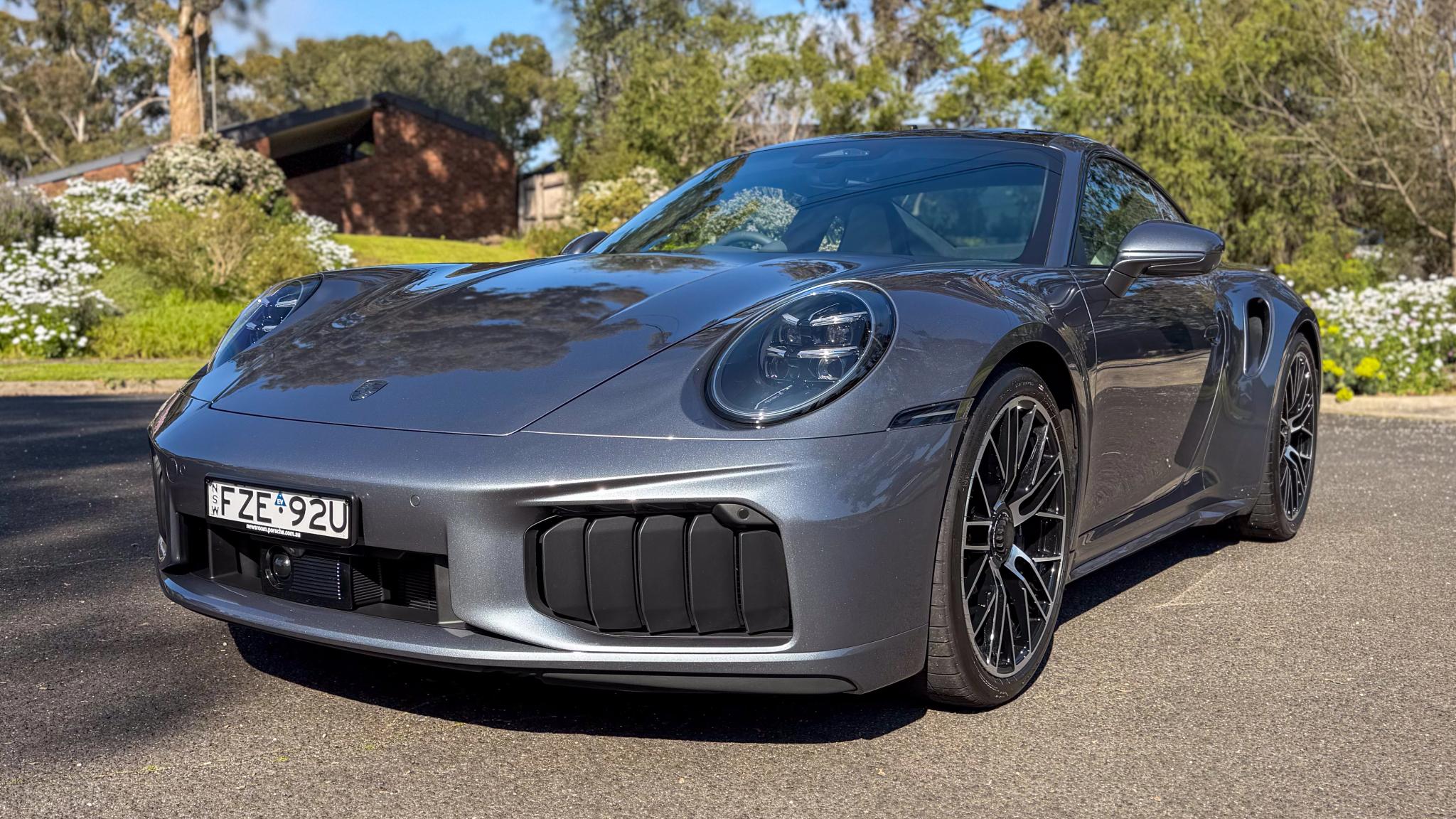
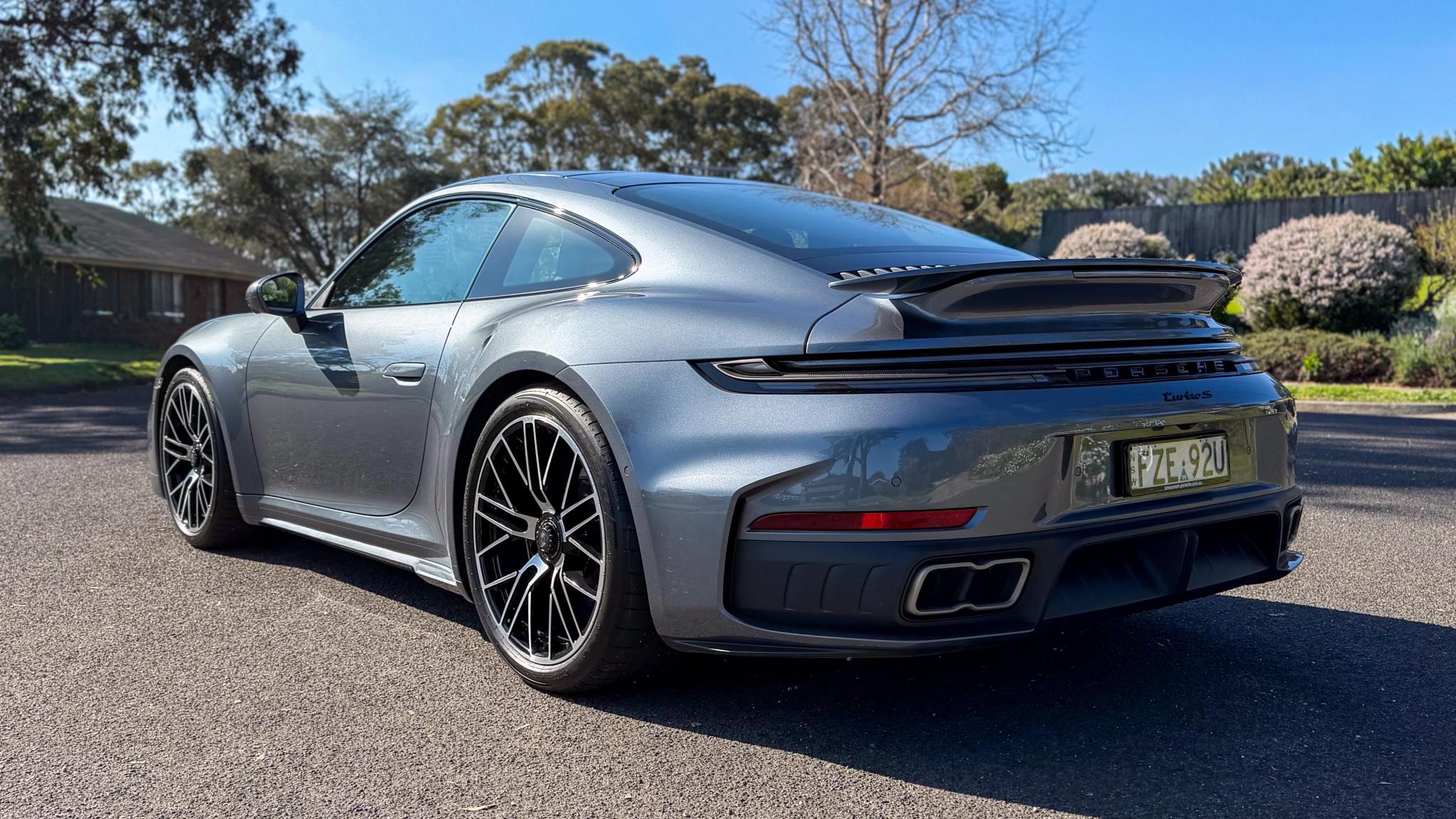
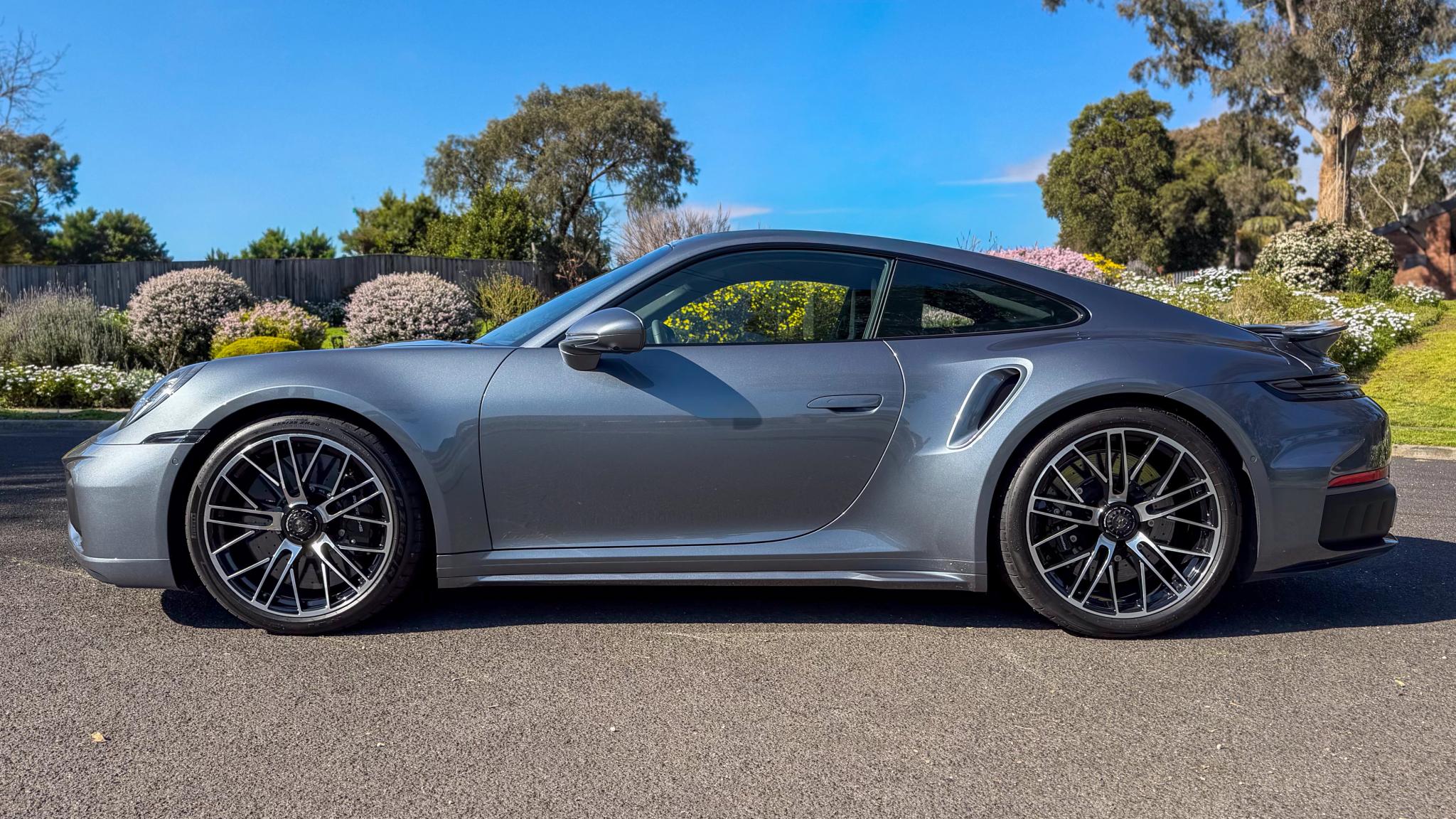
There's no giant wing or shouty aero kit, just the wide rear haunches and fat tyres that have signalled a 911 Turbo for five decades.
The differences are easier to spot once you get closer.
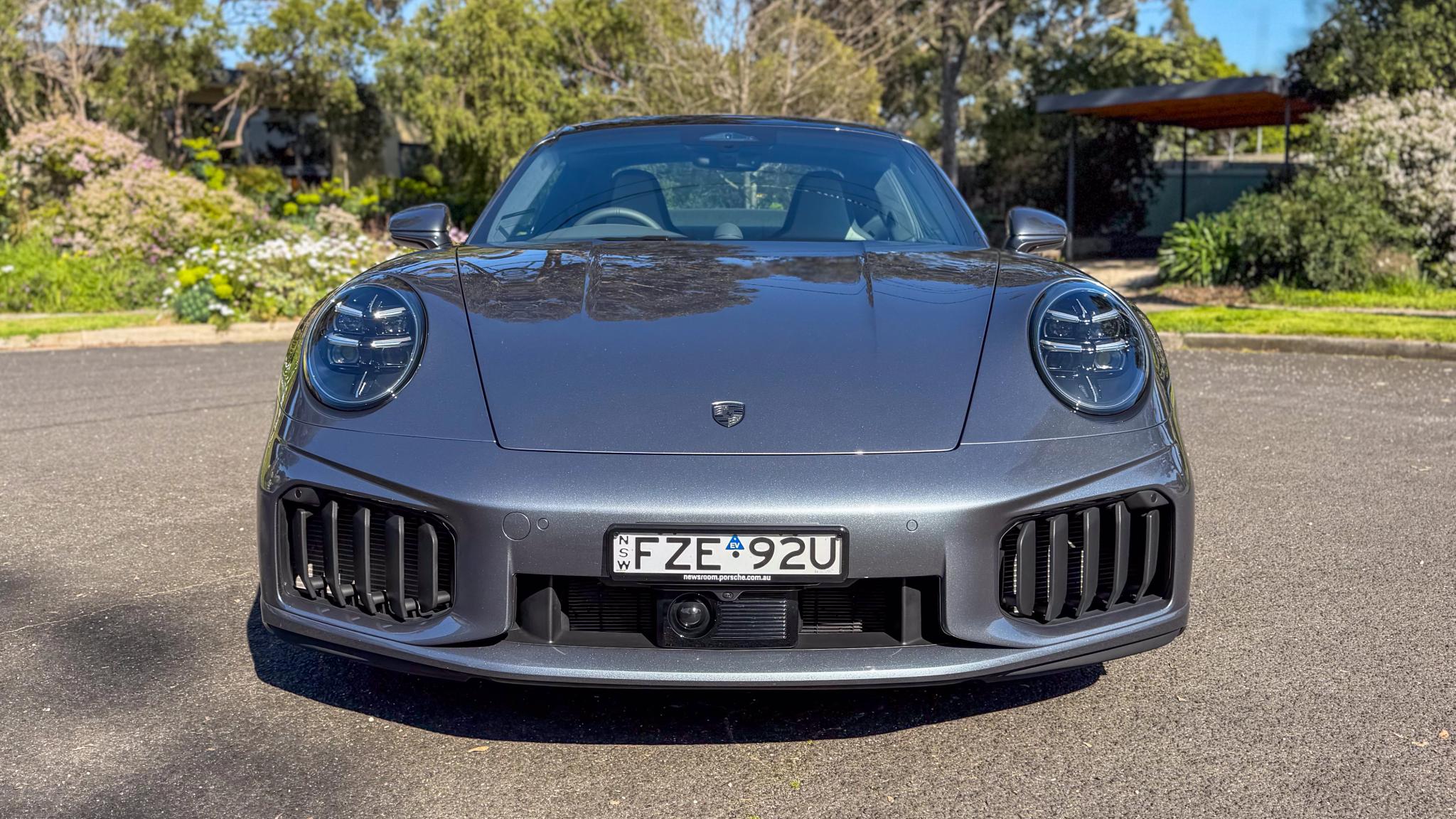
Vertical slats in the front bumper stay shut around town and open when the engine needs cooling, and an adaptive front spoiler works with the pop-up rear wing to manage airflow at speed.
Porsche now finishes its Turbo models in a dark grey called Turbonite. You'll spot it on the bonnet crest, the wheel centres, the wing slats and the window surrounds, and it gives the car a sombre, expensive look that suits it.
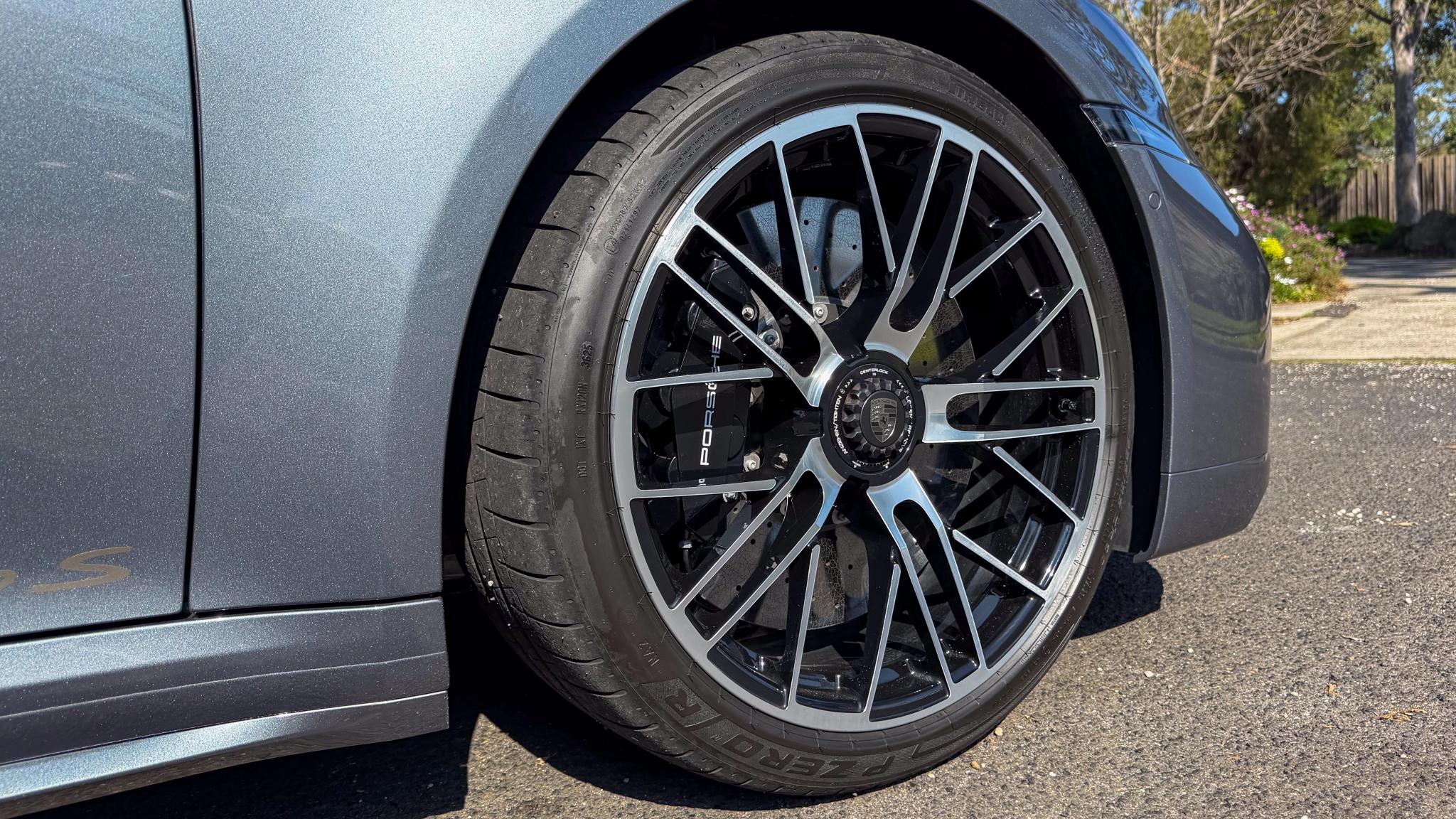
The staggered 20-inch front and 21-inch rear wheels wear 255mm and 325mm tyres respectively, and the titanium tailpipes add a little edge. It's also 1900mm wide across the body, so measure the garage before you sign anything.
What is the 911 Turbo S like inside?
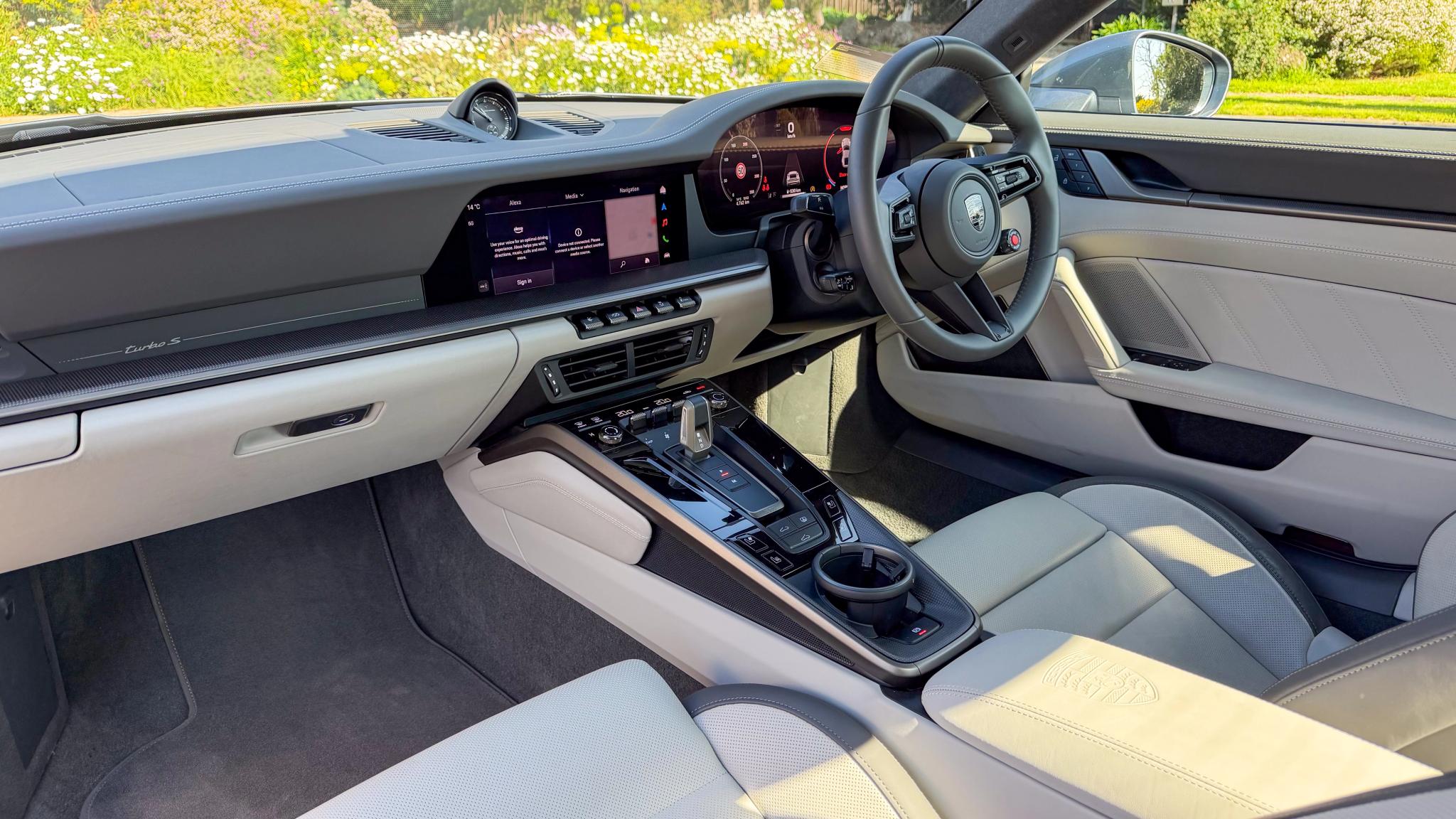
If you've sat in any recent 911, you'll know this cabin.
A 12.6-inch curved digital cluster sits ahead of the driver and can mimic the traditional five-dial layout, while a 10.9-inch touchscreen handles infotainment.
Porsche deserves credit for keeping physical controls where they matter. Climate settings have proper switches and a row of toggles below the screen covers the things you'll adjust on the move including the exhaust, the suspension and the front lift.
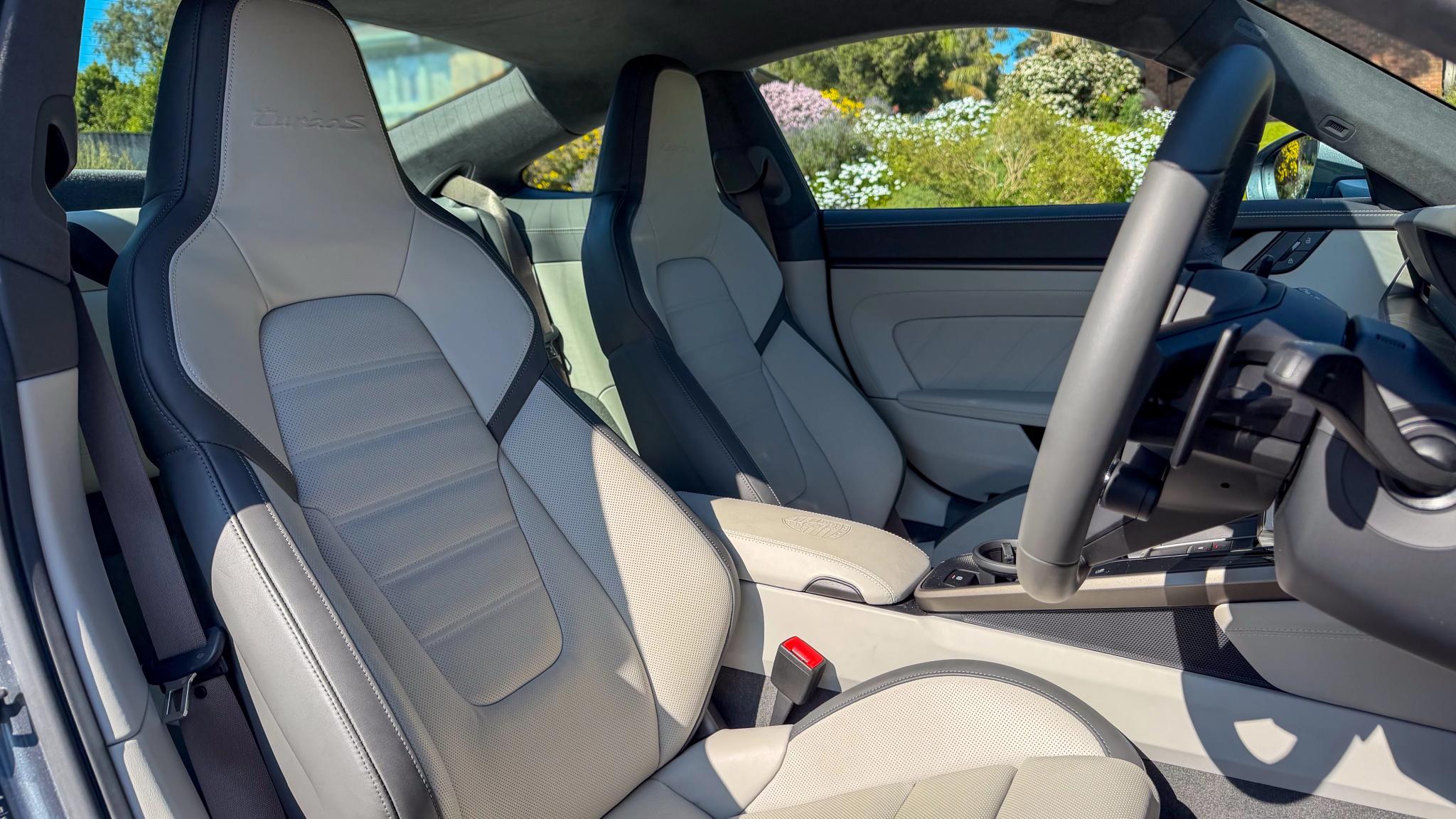
The 18-way power seats are superb over longer distances and hold you properly when the road gets twisty. The optional carbon-backed buckets look great but are harder work to live with.
Build quality is flawless, but the ambience is less lavish than the price suggests. A Bentley Continental GT feels more special inside for similar money and the Porsche needs expensive leather options to close that gap.
How practical is the 911 Turbo S?
It’s surprisingly usable for something this fast.
The 128-litre front boot swallows a couple of soft bags and the space behind the front seats is where the real carrying happens.
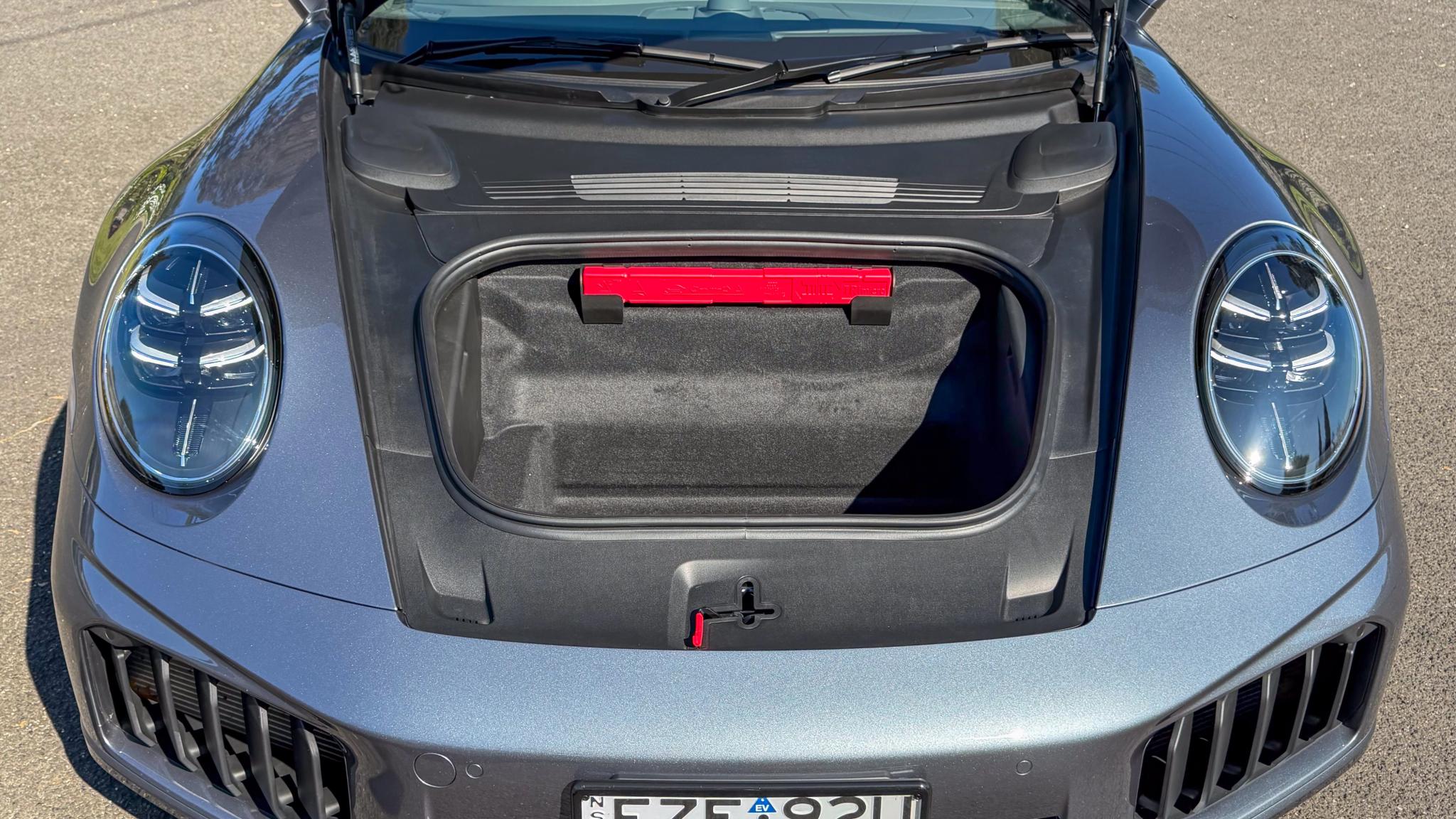
The rear seats are a no-cost option in the coupe and worth ticking. They're too tight for adults, but they take bags, jackets and shopping, and there are ISOFIX points for small children if you're brave enough to do the school run in one.
Fold the rear backrests down and you have a flat shelf big enough for weekend luggage. Add the front boot and two people can travel interstate without packing like minimalists.
The 10.9m turning circle is tidy for a car this wide, and four-wheel steering helps in car parks. Just budget for that front lift, because the long nose will scrape on more ramps than you'd expect.
What is the 911 Turbo S like to drive?
The first thing you notice is how quickly it responds. Each turbo has a small electric motor that spins it up before exhaust gas arrives, so the old pause between pressing the throttle and feeling the shove has almost disappeared.
The result is a car that reacts to your right foot the way a naturally aspirated engine would, only with 800Nm arriving from 2300rpm and hanging around until 6000rpm. Add the 60kW motor in the eight-speed dual-clutch gearbox and there's no gear, speed or rev range where it feels short of breath.
Porsche claims 0-100km/h in 2.5 seconds and 0-200km/h in 8.4 seconds, and it laps the Nürburgring roughly 14 seconds quicker than the previous Turbo S. On the road, what stands out is how effortlessly it builds speed.
That's where the chassis shines. Four-wheel steering makes a 1725kg car feel shorter than it is, and the electro-hydraulic anti-roll system keeps the body flat without making the ride brittle.
On a damp road it's close to untouchable. All-wheel drive and those enormous tyres find traction on surfaces that would have a rear-drive supercar squirming, and the stability systems intervene so smoothly you barely notice them working.
Around town it's docile. The gearbox shuffles through ratios without fuss, the steering is light enough for parking and the suspension soaks up city bumps better than a car with this much grip has any right to.
The soundtrack is the weak spot. The flat-six gets louder as revs climb but never develops the howl of a GT3 or the snarl of an AMG V8, and coarse-chip Australian bitumen generates plenty of tyre roar at highway speeds.
The firmest suspension settings are best saved for smooth roads, too. On typical country bitumen, the softer modes let the tyres stay in contact with the surface, and that's when the car is at its fastest.
How efficient is the 911 Turbo S?
Don't be fooled by the hybrid badge. The 1.9kWh battery exists to boost performance, not to save fuel, and the car can't creep out of the driveway on electric power alone.
Porsche claims 11.8L/100km, and gentle freeway driving gets you close. Use the performance and the figure climbs quickly into the high teens or beyond, which matters with a 63-litre tank and 98-octane premium unleaded required.
Servicing is due every 12 months or 15,000km, alternating between smaller and larger services, with no capped-price program. Expect dealer pricing to reflect the badge.
The factory warranty is three years with unlimited kilometres, which is on par with Ferrari and Aston Martin but shorter than a mainstream hatchback. Porsche offers paid extensions out to 15 years, the hybrid battery is covered for eight years or 160,000km, and there's a 12-year anti-corrosion warranty.
Is the 911 Turbo S safe?
The 911 has never been crash tested by ANCAP or Euro NCAP, so there's no independent rating to lean on. Airbag coverage is limited to the front seats: dual front, side and curtain airbags.
Standard driver assists include autonomous emergency braking with pedestrian detection, lane keep assist, blind-spot warning, traffic sign recognition, driver fatigue monitoring, front and rear parking sensors and a 360-degree camera.
Rear cross-traffic alert isn't available at all, and adaptive cruise control is an option. Both are poor omissions on a car at this price.
The brakes and headlights are much more impressive. The carbon-ceramic brakes (420mm front, 410mm rear) are the largest ever fitted to a road-going 911, and the matrix LED headlights light up country roads at night like few others.
What are the main competitors to the 911 Turbo S?
The Ferrari Amalfi is the Italian drama option, from around $503,000 plus on-roads. Its twin-turbo V8 sounds far more exciting and the badge carries more glamour, but the Porsche is quicker on a real road and easier to live with.
The Aston Martin DB12 is the grand tourer, from around $465,000 plus on-roads. It's gorgeous, plush and properly fast, but it can't match the 911's traction or precision when the road turns wet and tight.
The McLaren Artura is the mid-engined hybrid, from around $423,000 plus on-roads. It's lighter, more exotic and more involving at the limit, but it's lower, less practical and far less forgiving as a daily car.
The Mercedes-AMG GT 63 is the V8 bruiser, from around $419,000 plus on-roads. It has more personality and a better soundtrack for much less money, but it's heavier and less powerful, and the 911 is sharper in every corner.
The Porsche 911 Carrera GTS is the sensible alternative, from $392,200 plus on-roads. It uses a single-turbo version of the same hybrid tech, it's more engaging at normal speeds, and it leaves enough change to buy a Macan as well.
Cross-shop the Ferrari and McLaren if emotion and exclusivity matter most. Cross-shop the GTS if you want most of the Turbo S experience and can live without its last word in pace.
Should I buy the 911 Turbo S?
If you want one car that can commute on Monday, cross the Great Dividing Range in the rain on Saturday and embarrass supercars on the way, there's nothing better. The new hybrid powertrain makes it sharper and more responsive than any Turbo before it, without sacrificing the civility that makes it so easy to drive every day.
The Turbo S wins on ability, not atmosphere, and several rivals deliver more theatre for less money, including the 911 GTS from the same showroom.
Few cars can do this many things this well. It’s brutally fast when you want it to be, yet still easy enough to use every day. Just go in knowing that the most complete 911 isn't always the most memorable one.
VerdictThe Beep Verdict
Rob Leigh
Co-founder & Director
Rob Leigh is Co-founder and Director of The Beep based in Melbourne, Australia. He has 15+ years inside a major automotive OEM, specialising in product planning, pricing and vehicle strategy.
About Author