2026 Kia Stonic review
The facelifted Stonic finally looks and feels like a current Kia, and it remains one of the few light SUVs that is actually fun, but the price of admission now demands a serious think.

Rob Leigh
Pros
- Chassis and steering still deliver real driving enjoyment
- Facelift genuinely modernises the face and the dashboard
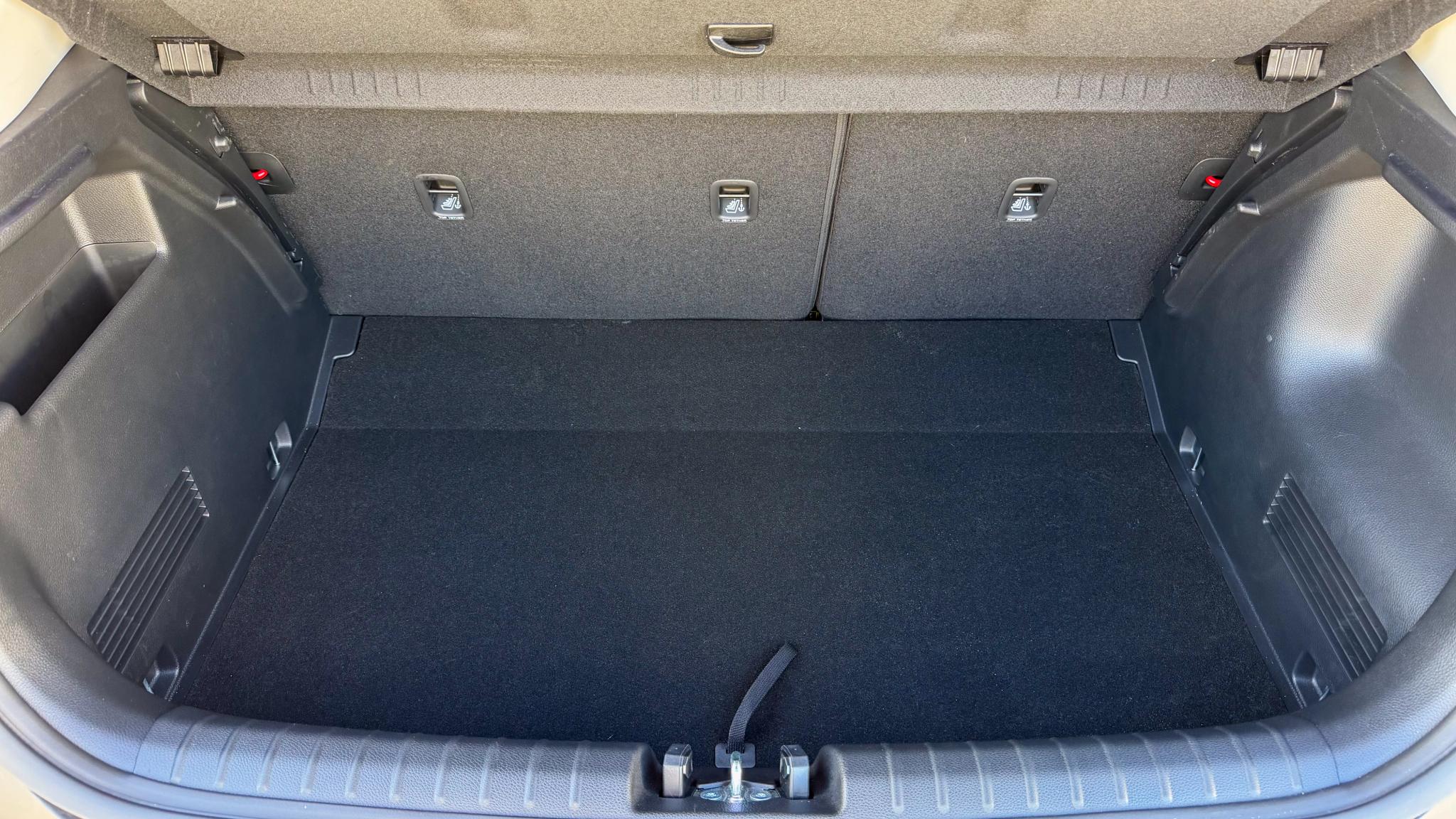
- 352-litre boot is class-leading in a segment full of shoeboxes
Cons
- Real-world fuel use lands nowhere near the 5.0L/100km claim
- Spare wheel deleted for a battery you barely notice working
- Wireless smartphone mirroring vanishes on the two upper grades
Our verdict
The 2026 Stonic is aimed squarely at the city buyer who wants something small, easy to park, quick to refuel and entertaining on a back road. It does that better than almost anything else at this size, and the facelift fixes the cabin that was starting to date badly.
Its biggest issue is money. Prices are up roughly two grand across the board, servicing is expensive, and the mild hybrid system does not deliver the economy it promises.
What does the Stonic cost in Australia?
Kia uses national driveaway pricing across the range, so what you see is what you pay. The entry point is the S for $29,990 driveaway and you can almost picture the Kia marketing team breathing a sigh of relief.
| Specifications | S | Sport (tested) | GT-Line |
| Driveaway price | $29,990 | $34,690 | $38,190 |
| Powertrain | 1.0L turbo petrol mild hybrid | 1.0L turbo petrol mild hybrid | 1.0L turbo petrol mild hybrid |
| Power | Torque | 88kW | 172Nm | 88kW | 172Nm | 88kW | 172Nm |
| Transmission | 7 speed DCT | 7 speed DCT | 7 speed DCT |
| Drivetrain | FWD | FWD | FWD |
| Fuel use (claimed) | 5.0L/100km | 5.0L/100km | 5.0L/100km |
| Braked towing | 900kg | 900kg | 900kg |
| ANCAP | Not yet rated | Not yet rated | Not yet rated |
| Warranty | 7 years | Unlimited km | 7 years | Unlimited km | 7 years | Unlimited km |
View Stonic driveaway pricing and specifications →
The Sport is arguably the sweet spot of the range, at $4,700 more than the S. For that you get 17-inch alloy wheels, dual 12.3-inch screens with navigation and DAB radio, Kia Connect with remote climate control, adaptive cruise control, an improved AEB system with junction turning assist, automatic climate control and a front centre armrest.
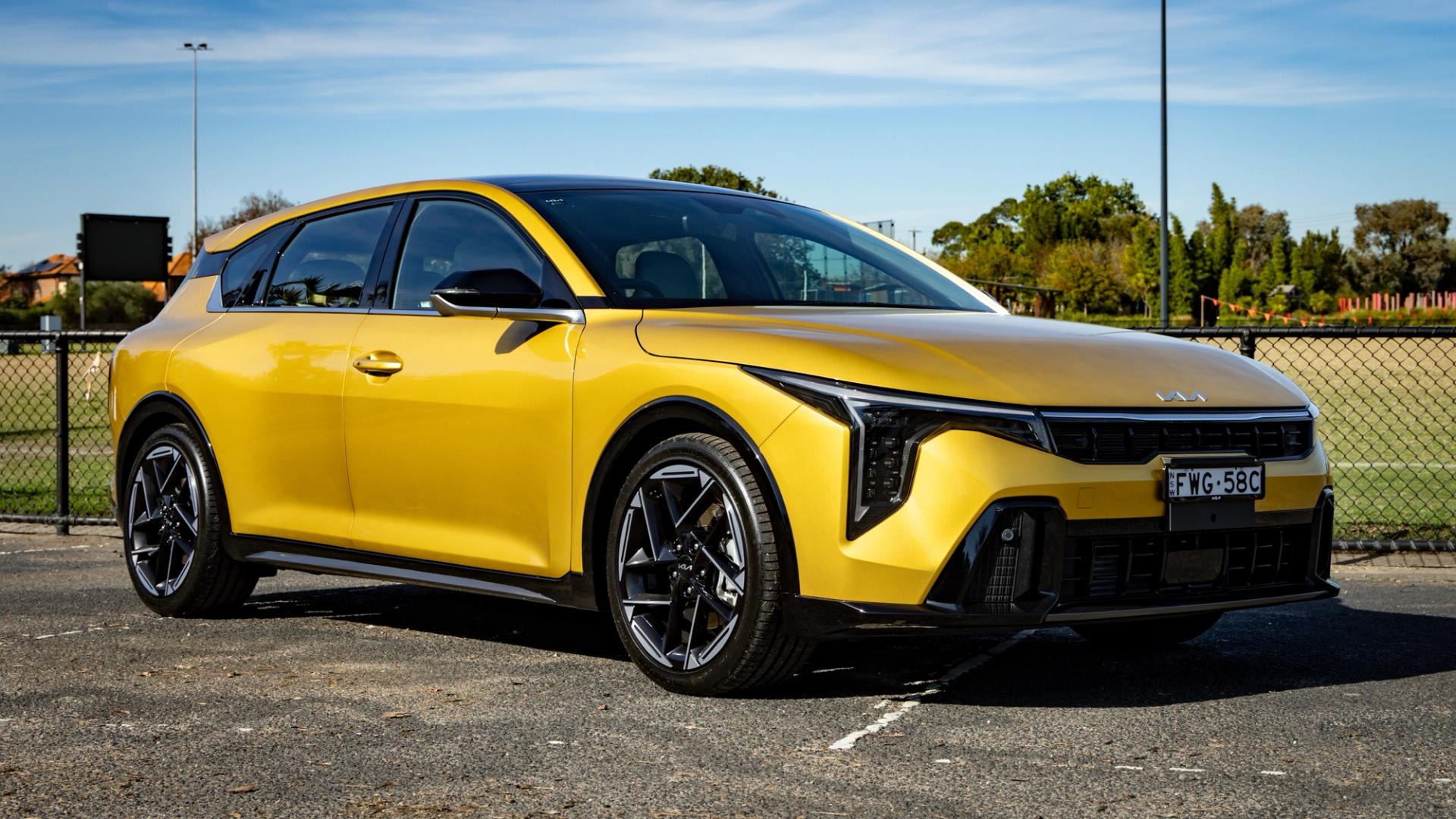
Step up to the GT-Line and you get everything in the Sport plus a tilt and slide sunroof, LED headlights, heated front seats and steering wheel, ambient interior lighting and a wireless phone charger. These are all nice to have, but a $38,190 light SUV is difficult to swallow when a Kia K4 sits in the same showroom for similar money with considerably more metal.
What does the Stonic look like?
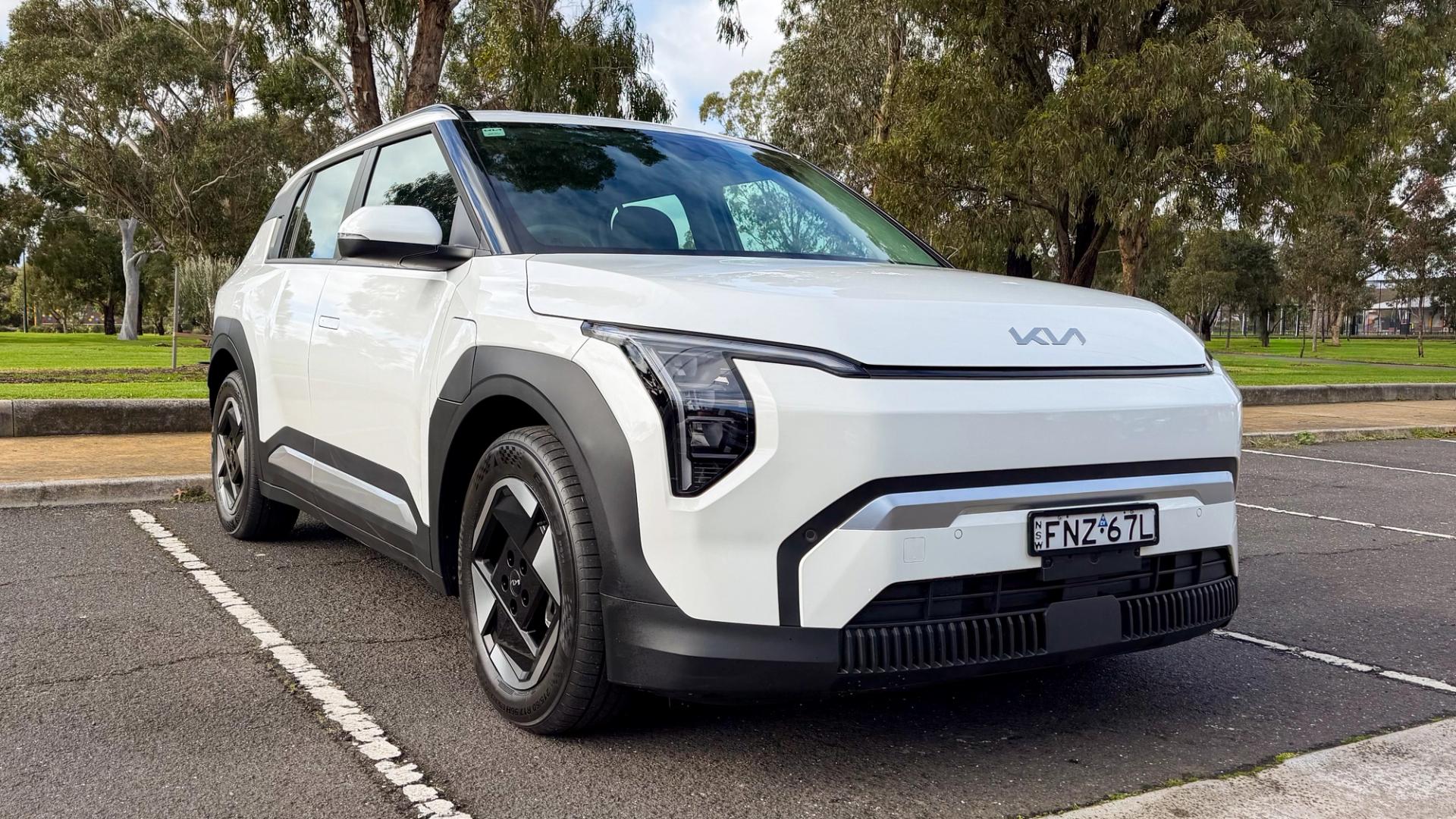
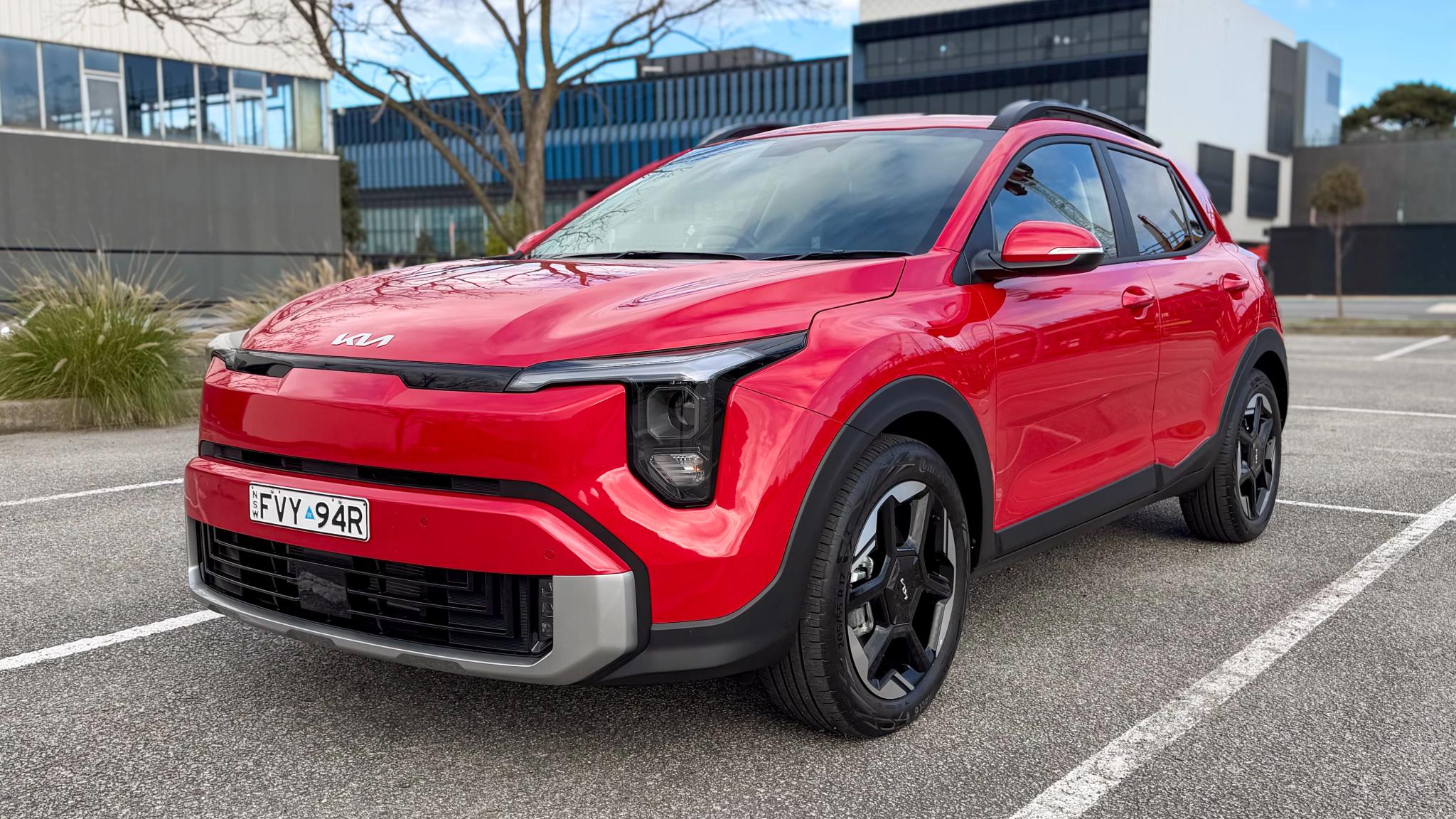
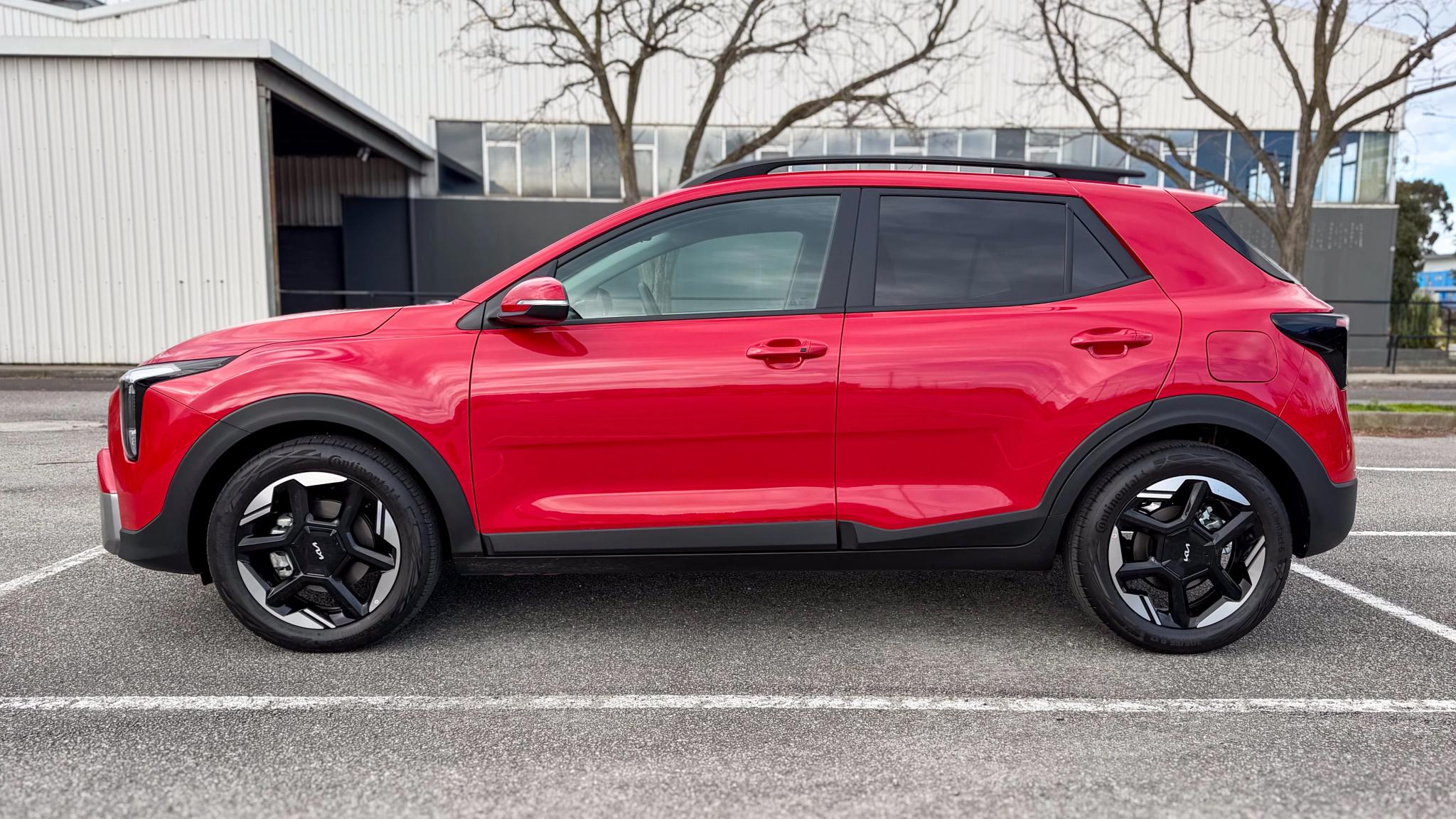
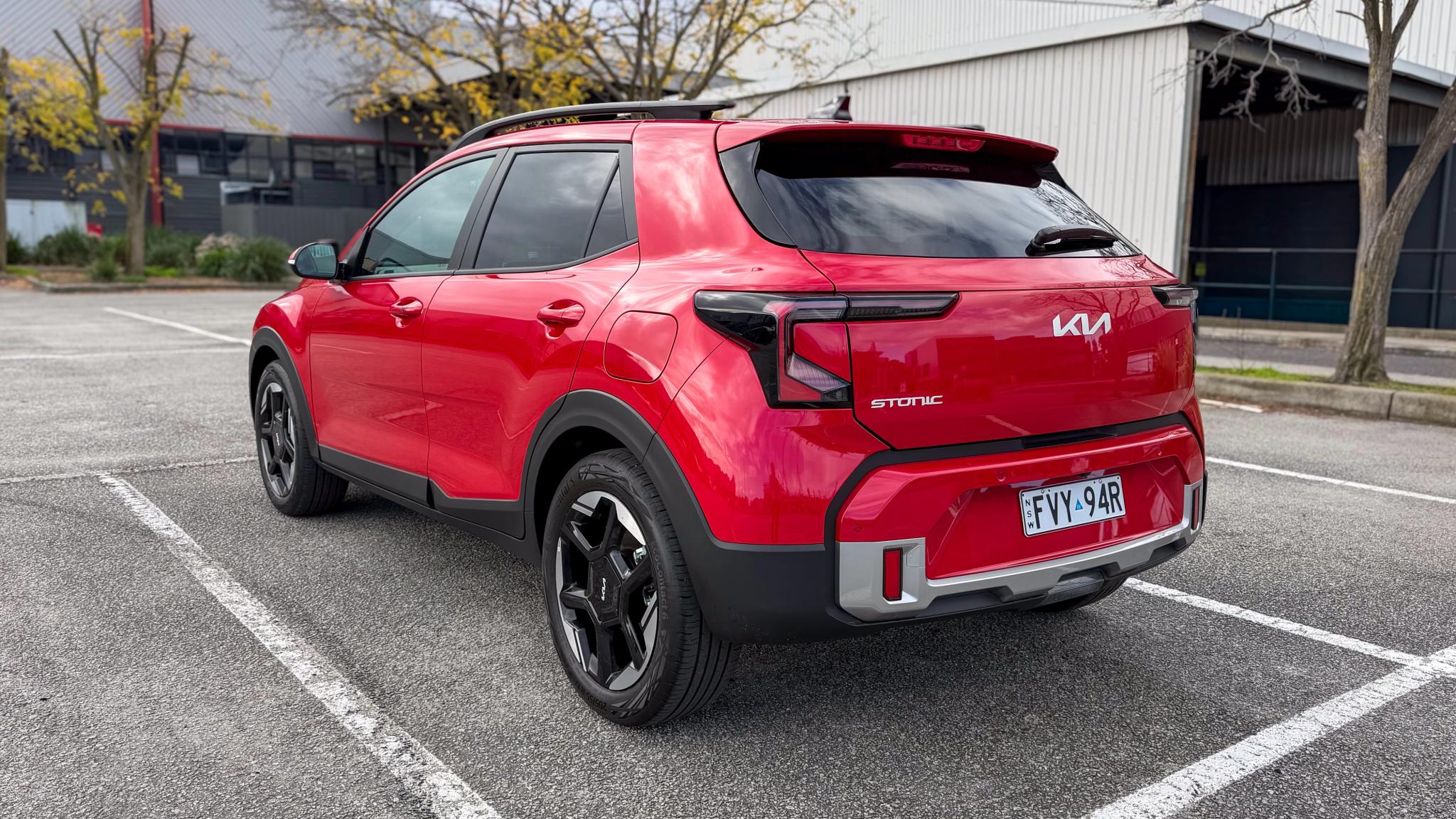
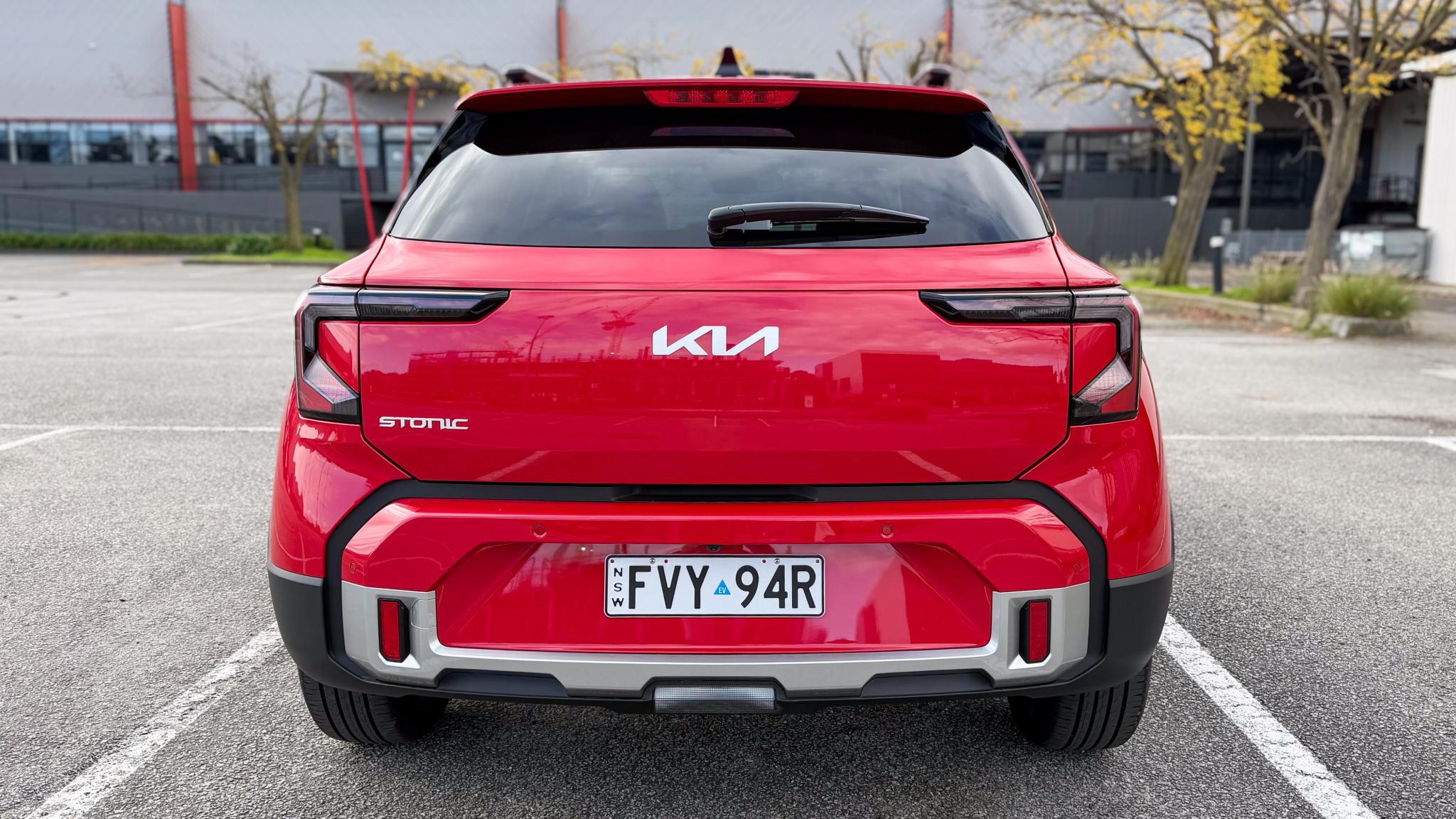
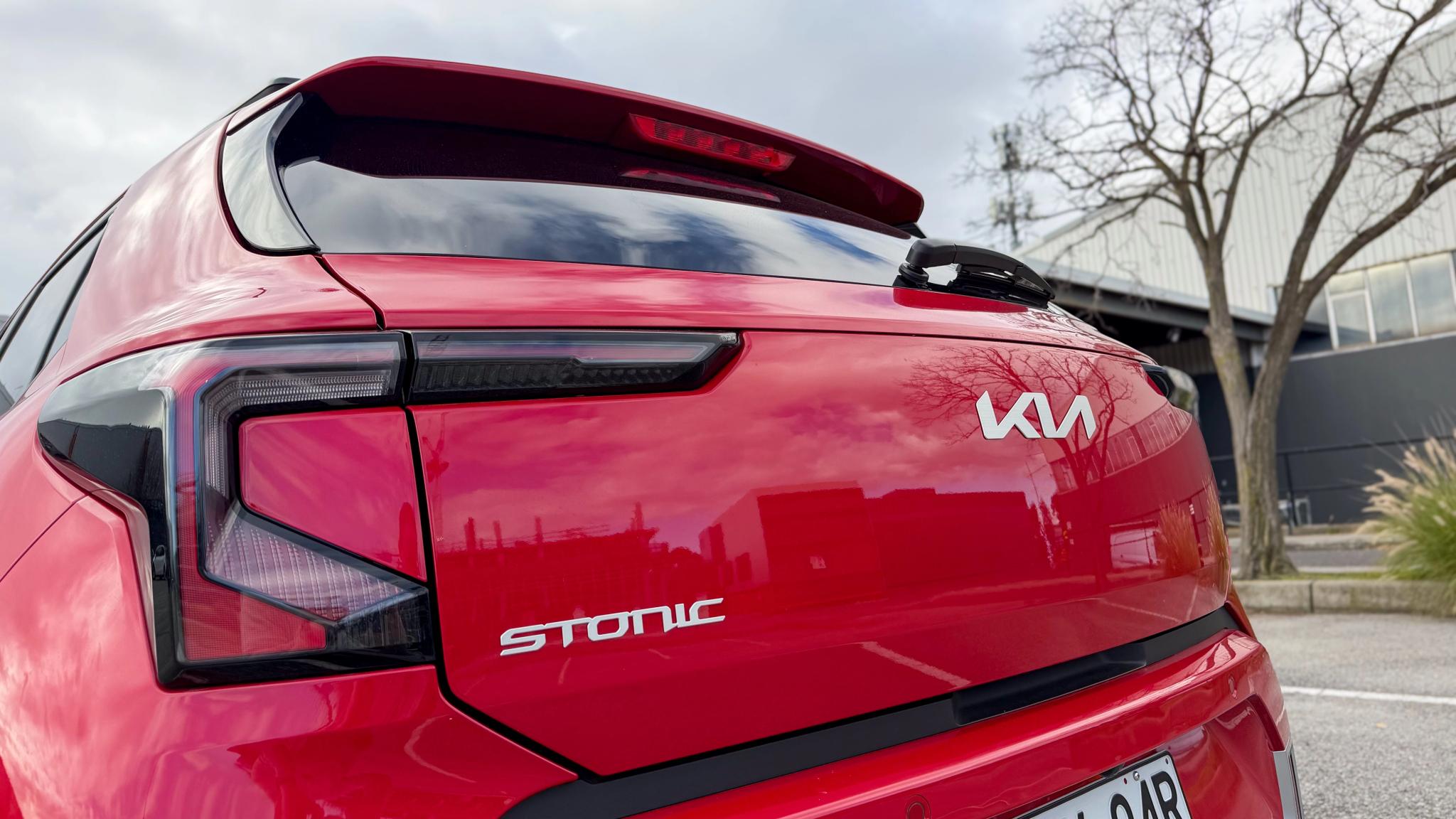
The 2026 car gets new front and rear styling that finally aligns it with the rest of the Kia range, replacing a nose that had started to look like a leftover from a previous design language.
The vertical light signatures at the front and rear of the vehicle give it more presence than you'd expect for something so small. The GT-Line variant goes a step further with black mirror caps and full LED lights, and Kia will struggle to justify halogen projectors on the S and Sport in 2026.
Wheel size is fairly conservative with 16 inch alloy wheels as standard on the S and 17 inch alloys on Sport and GT-Line.
Parked next to a Mazda CX-3, the Kia looks a generation ahead, and next to the Chinese SUVs it looks like it costs more than it does, which is not something Korean brands could always claim.
What is the Stonic like inside?
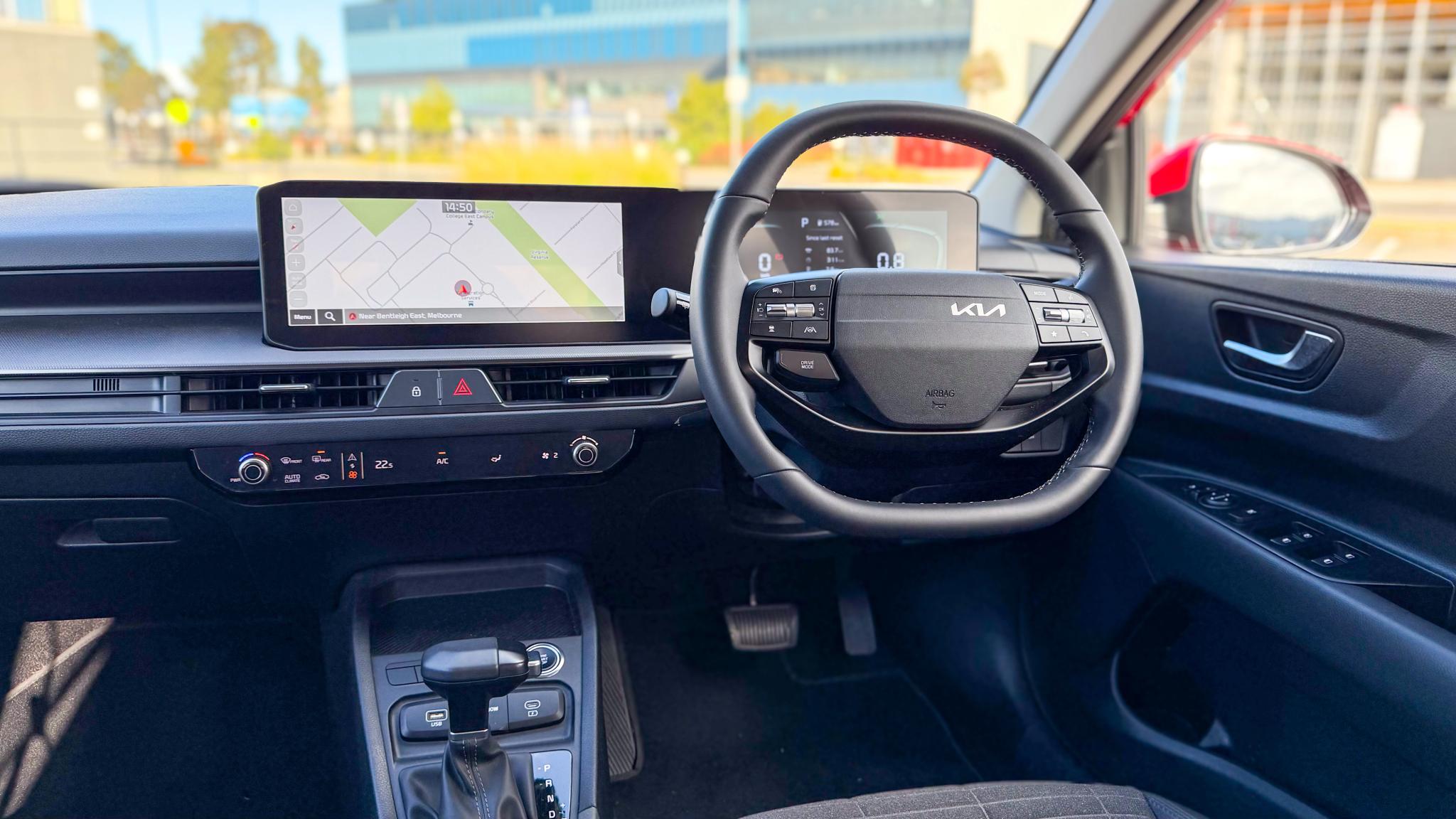
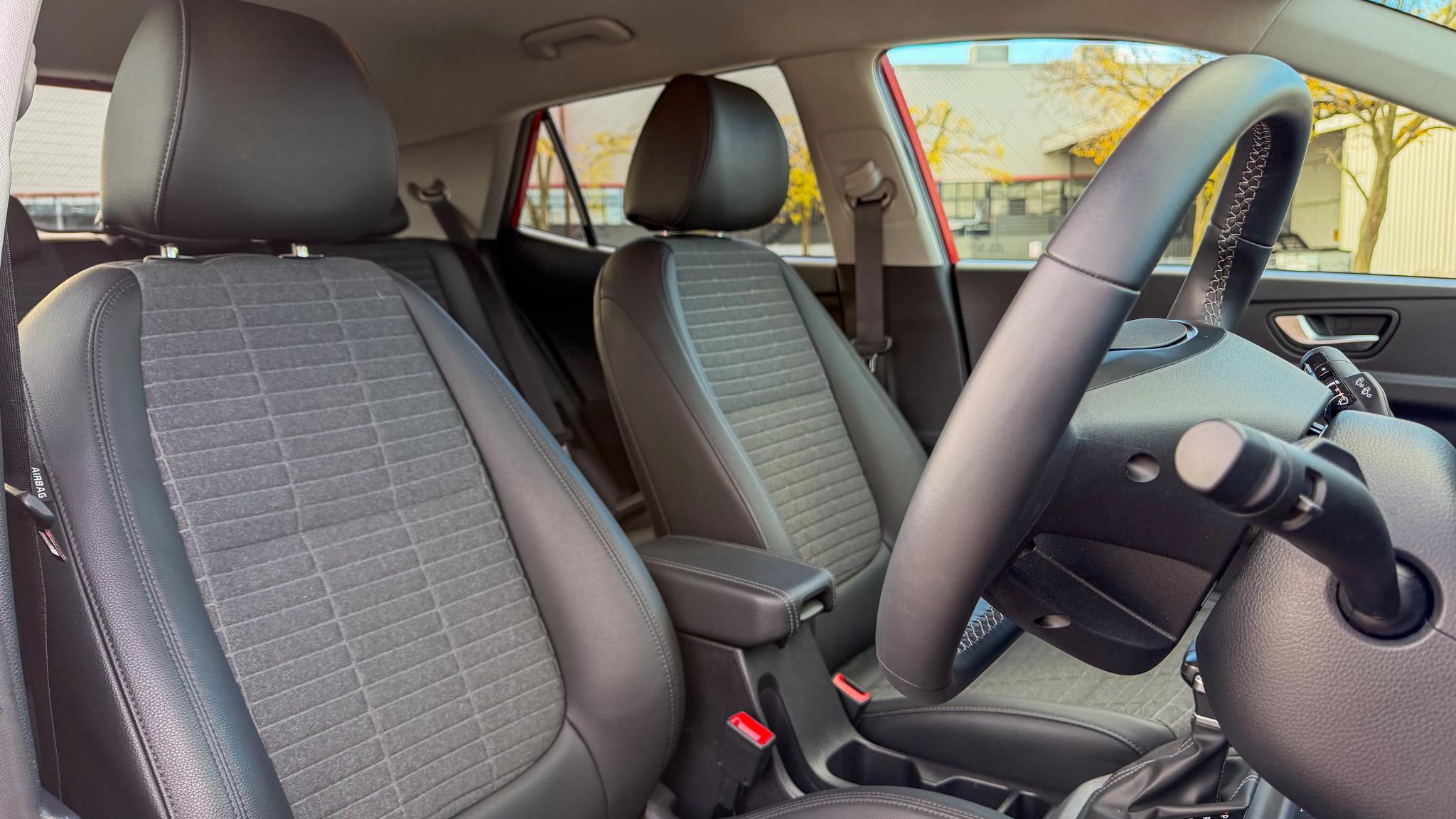
Kia's clearly put a lot of investment into this one, which is surprising for a facelift and means the Stonic is likely to stick around for a while. The dashboard is completely new, laid out in the horizontal direction as in the Sportage, and the result is a cabin that feels roomier than the car’s size suggests.
The new steering wheel is a highlight, especially the two-tone model on the GT-Line, and the switchgear looks like it's properly put together. Nothing rattles, nothing flexes when you press on it.
Even better, the climate controls haven't been sacrificed to a giant screen. They sit on a physical bar below the display where your hand can reach without having to take your eyes off the road, which is an important thing that seems to be forgotten in this segment.
The infotainment is where the Stonic stumbles. Sport and GT-Line get a crisp 12.3-inch touchscreen running Kia's previous-generation software rather than the newer ccNC system, and it produces a genuinely irritating quirk: Apple CarPlay and Android Auto are wired only on those two grades.
The base S, with its smaller 8.0-inch unit, gets wireless mirroring. Spend more, plug in more. Somebody in product planning owes us an explanation.
Material quality is about what you'd expect for the money. There's plenty of hard plastic on the doors and lower dash, and although the GT-Line dresses things up nicely, nothing here feels especially premium.
How practical is the Stonic?
Front space is excellent with plenty of legroom for front passengers, and the electronic parking brake means there's actually more storage space in the centre console.
Kia's designers have included a very practical open space for storing all the bits and pieces you need while driving, as well as two cupholders. From the Sport upwards, there's also a sliding centre armrest.
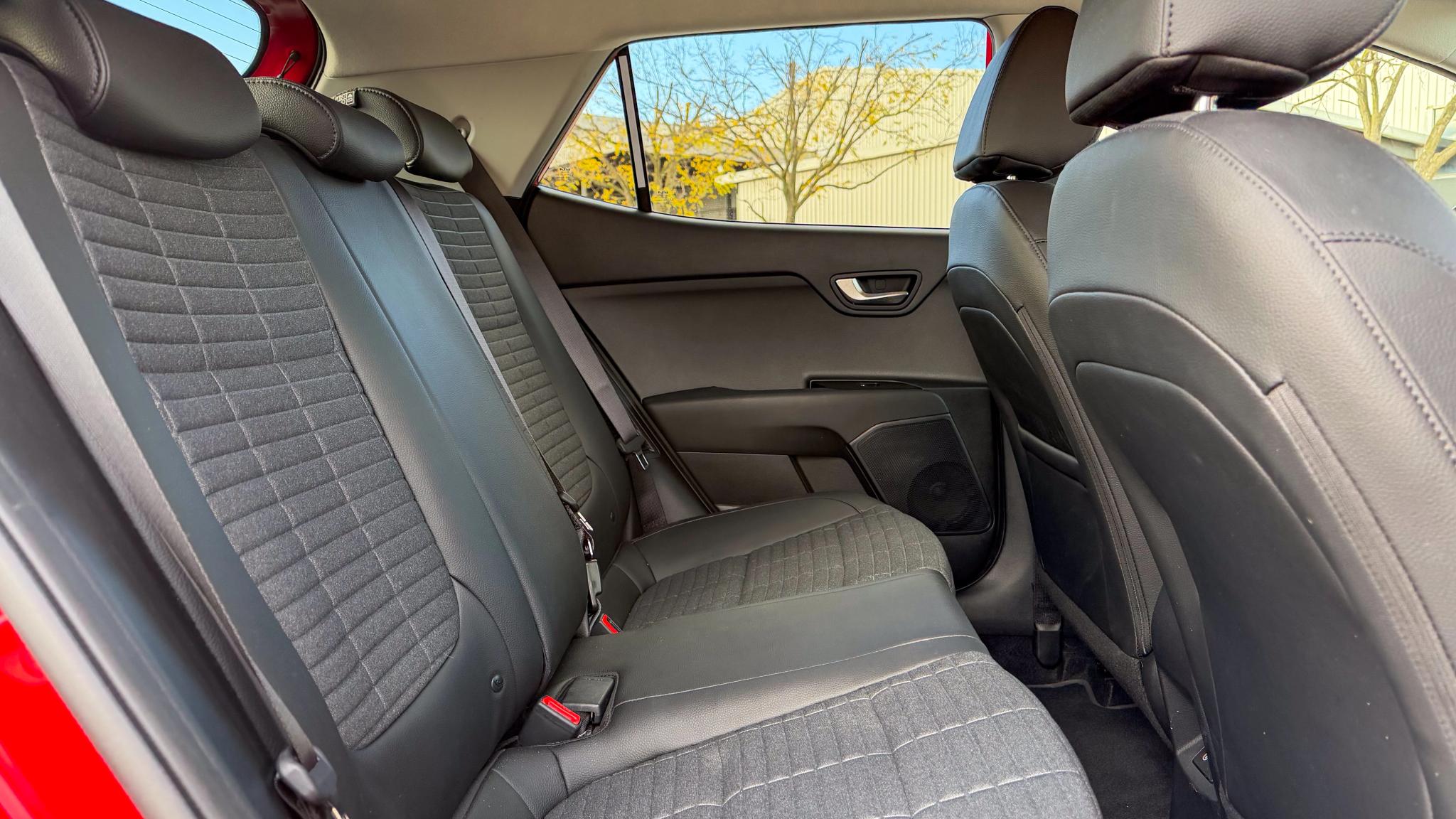
Two adults will fit behind two adults without complaint on a short run, and a six-footer can sit behind their own driving position, but the 2,580mm wheelbase is unchanged and it shows.
The rear seats are also lacking in comfort, with no air vents or centre armrest for the back passengers. There's a USB-C port and bottle holders in the doors, but the back of the Stonic isn't really designed for long trips.
The boot is one of the Stonic's genuine strong points with 352L of space when the seats are in place, and 1,155L with them folded. That comfortably out-carries the Mazda CX-3 and puts the Stonic at the top of the light SUV class for cargo room. The revised layout now sits flush against the rear seat base so long items slide in without fighting a ridge.
The cost of the new mild hybrid engine is that the spare wheel has been replaced by a tyre repair kit. If you regularly drive outside the city, this will be a problem.
What is the Stonic like to drive?
Small SUVs have become essentially white goods. Luckily this one is not.
The locally tuned suspension is firm without being brittle, and the steering has actual weight to it. Turn into a corner and the nose settles quickly, the body stays flat and the whole car feels light on its feet.
The 16 and 17 inch wheels have plenty of tyre sidewall to absorb the bumps on rough roads.
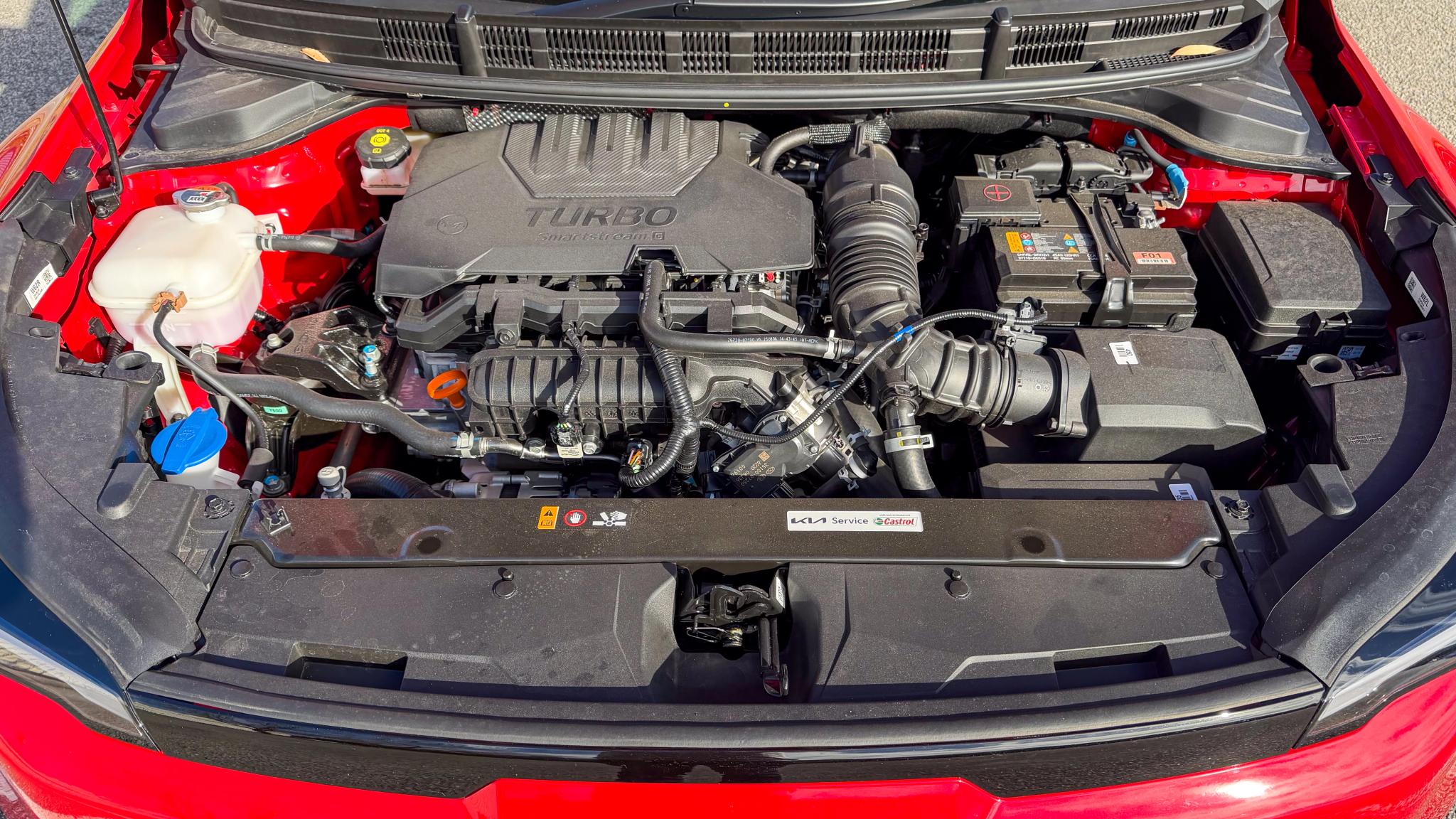
The 1.0 litre turbocharged three-cylinder engine is the perfect engine for this small SUV and it produces 88kW and 172Nm. It's not particularly quick at around 10 seconds to 100 km/h, but the midrange is excellent and it makes a pleasing noise when wound up.
The seven-speed dual-clutch transmission is well behaved, although it does have a slight hesitation at low speed in traffic.
A real irritant is the stop-start system. It is abrupt on shutdown, slow to catch on restart, and in stop-go traffic it undermines the smoothness the rest of the drivetrain works hard to deliver. The 48-volt system is supposed to smooth this over. It does not.
Noise levels are acceptable. There is some road roar on coarse surfaces, but the engine settles into a quiet hum at highway pace and the car feels genuinely stable at 100km/h, which not every light SUV manages.
How efficient is the Stonic?
Kia claims that the Stonic will return 5.0L/100km. Over the course of a week's driving, we averaged closer to 7.0L/100km. This seems to be a common finding.
The mild hybrid system will save some fuel compared to the previous, non-electrified Stonic, but it doesn't offer the luxury of electric only driving or electric only launches. Don’t be fooled by the hybrid badge here.
There's a 45L fuel tank on board and regular 91 RON petrol is recommended. On average this gives a realistic range of around 640km. Running costs are not so impressive.
| Ownership item | Detail |
| Service interval | 12 months / 10,000km |
| Capped-price servicing (5 years) | Approx. $2,460 |
| Capped-price servicing (7 years) | $3,780 |
| Warranty | 7 years / unlimited kilometres |
| Roadside assistance | Up to 8 years |
The 10,000km interval stings. Rivals commonly run 15,000km between visits, so anyone doing average kilometres will be back at the dealer more often and paying more each time.
The seven-year, unlimited-kilometre warranty remains excellent and applies to private, fleet and government buyers alike.
Is the Stonic safe?
The short answer: it's not rated. The Stonic's five star ANCAP rating - awarded in 2017 on the back of the defunct Rio hatch - lapsed in January 2025 and Kia Australia hasn't put the car back through the process.
That's a business decision, not a safety one, but it's important to know: this car hasn't been rated under current criteria, and current criteria are considerably tougher than 2017's.
The spec sheet is strong. Six airbags, AEB with car, pedestrian and cyclist detection, lane keeping assist with lane following, blind spot assist with braking, driver attention monitoring, front and rear parking sensors, a reversing camera and multi-collision braking are all standard across the range.
The Sport and GT-Line add adaptive cruise control with stop and go, and a refined AEB system with junction turning assist. Paired with the lane centring, the result is a capable, chilled semi-autonomous assist on the open road.
Two absences stand out across the range: no rear cross-traffic alert and no 360-degree camera. Both would be expected at this price. On the plus side, the driver monitoring and lane keep are far less intrusive than some new Kia and Hyundai offerings, and there's no incessant speed-limit beeping.
What are the main competitors to the Stonic?
The Mazda CX-3 remains the segment's best seller despite being older than the Stonic and offering no electrification at all. It is a touch more playful through corners and the interior has aged with dignity, but the boot is tiny by comparison and the value equation is now working against it.
The Toyota Yaris Cross is the one to buy if fuel bills are the deciding factor. Its full hybrid system will comfortably beat the Kia in the real world, and the Toyota ownership experience is hard to fault, but it is duller to drive and starts higher.
The Hyundai Venue undercuts the Stonic significantly and comes from the same corporate parent. It is boxier, more upright and more practical for its length, though the naturally aspirated engine and less resolved chassis make it the sensible choice rather than the enjoyable one.
The Chery Tiggo 4 Hybrid is the value argument, offering hybrid power and a long equipment list for around $30,000 driveaway. Resale, long-term durability and driving polish are where the Kia still holds the advantage, and that gap matters more to some buyers than others.
The Kia K4 is the Stonic's most dangerous rival, and it wears the same badge. It is bigger, newer, better equipped inside and priced close enough that anyone shopping the GT-Line owes themselves a test drive in both.
Should I buy the Stonic?
Buy it if you actively want a small car. Not a compromised one, not a downsized one, but a genuinely compact SUV that thrives in the inner-city and rewards you on a good road. On that brief, the Stonic is very convincing.
Buy the Sport. It's well-specced and rides on 17s with a much plusher feel. At $34,690 driveaway, it's the best value in the range.
Walk away if you're driven by stats. The true fuel consumption figure is nowhere near the claimed average, the servicing schedule is expensive and the ANCAP safety rating expired in 2025. There is no spare tyre tucked under the boot floor either.
The Stonic is better than ever. The problem is that it now costs enough that being good is no longer enough.
VerdictThe Beep Verdict
Rob Leigh
Co-founder & Director
Rob Leigh is Co-founder and Director of The Beep based in Melbourne, Australia. He has 15+ years inside a major automotive OEM, specialising in product planning, pricing and vehicle strategy.
About Author