2026 Kia EV3 review
Kia's smallest electric SUV is the best thing to drive in its class by a clear margin, but the money only truly makes sense at the bottom of a range that now stretches past $68,000 driveaway.

Rob Leigh
Pros
- Australian-tuned ride and steering that no rival gets close to
- Korean-built quality, seven-year warranty, genuinely cheap servicing
- Air Long Range claims 604km, still the range benchmark under $60,000
Cons
- Higher grades ask premium money for the same 150kW motor
- No spare wheel and the space for one is sitting right there
- No surround-view camera anywhere in the range
Our verdict
The EV3 is one of the few small electric SUVs that feels properly sorted on Australian roads. It is aimed squarely at the buyer who wants one EV to do the commute, the school run and the occasional country trip without drama. The catch is the up-sell, because the cheapest EV3 is the sharpest EV3.
What does the Kia EV3 cost in Australia?
The EV3 now spans four front-drive grades on driveaway pricing with more than $21,000 between the cheapest and the dearest. That is a lot of ground for one small SUV to cover.
| Variant | Powertrain | Drivetrain | Driveaway price |
| EV3 Air Standard Range | Electric, 150kW, 436km | FWD | $46,990 |
| EV3 Air Long Range | Electric, 150kW, 604km | FWD | $52,990 |
| EV3 Earth Long Range | Electric, 150kW, 563km | FWD | $58,990 |
| EV3 GT-Line Long Range | Electric, 150kW, 563km | FWD | $68,490 |
View Kia EV3 driveaway pricing and specifications →
The Air Standard Range gets a 58.3kWh battery and everything above it runs the 81.4kWh pack.
At $46,990 driveaway the Air is up against cars that are bigger and cheaper on paper, and it wins anyway on how it drives and where it is built. Very little else lands in a driveway under $47,000 with this much engineering behind it.
The awkwardness starts higher up. At $68,490 driveaway the GT-Line wants luxury-adjacent money for a front-drive small SUV with the same 150kW motor as the base car, and that is a much harder sell.
There is a new dual-motor GT-Line AWD at $66,490 before on-road costs arriving soon, however it’s hard to see a real justification for choosing this variant.
What does the Kia EV3 look like?
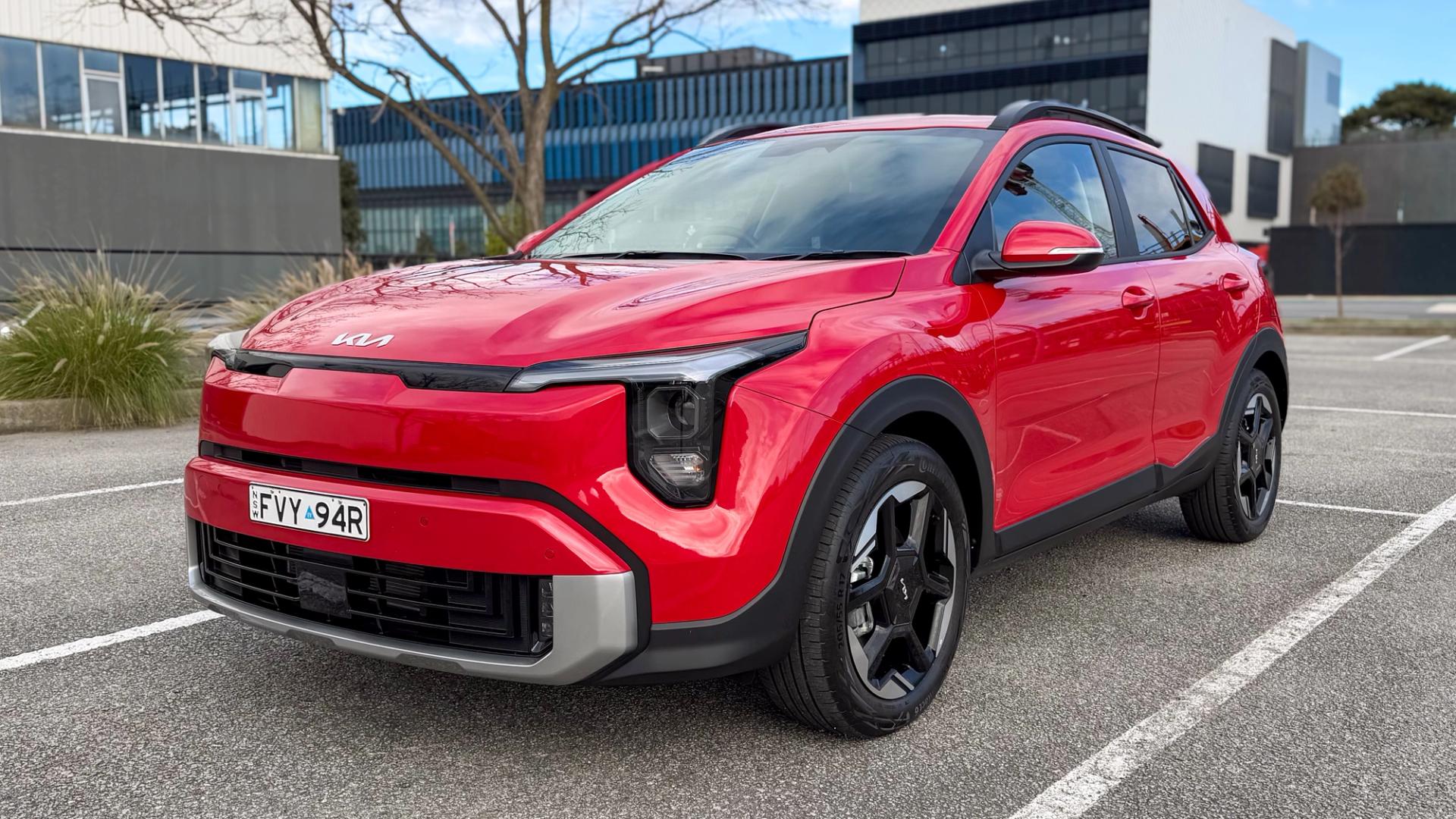
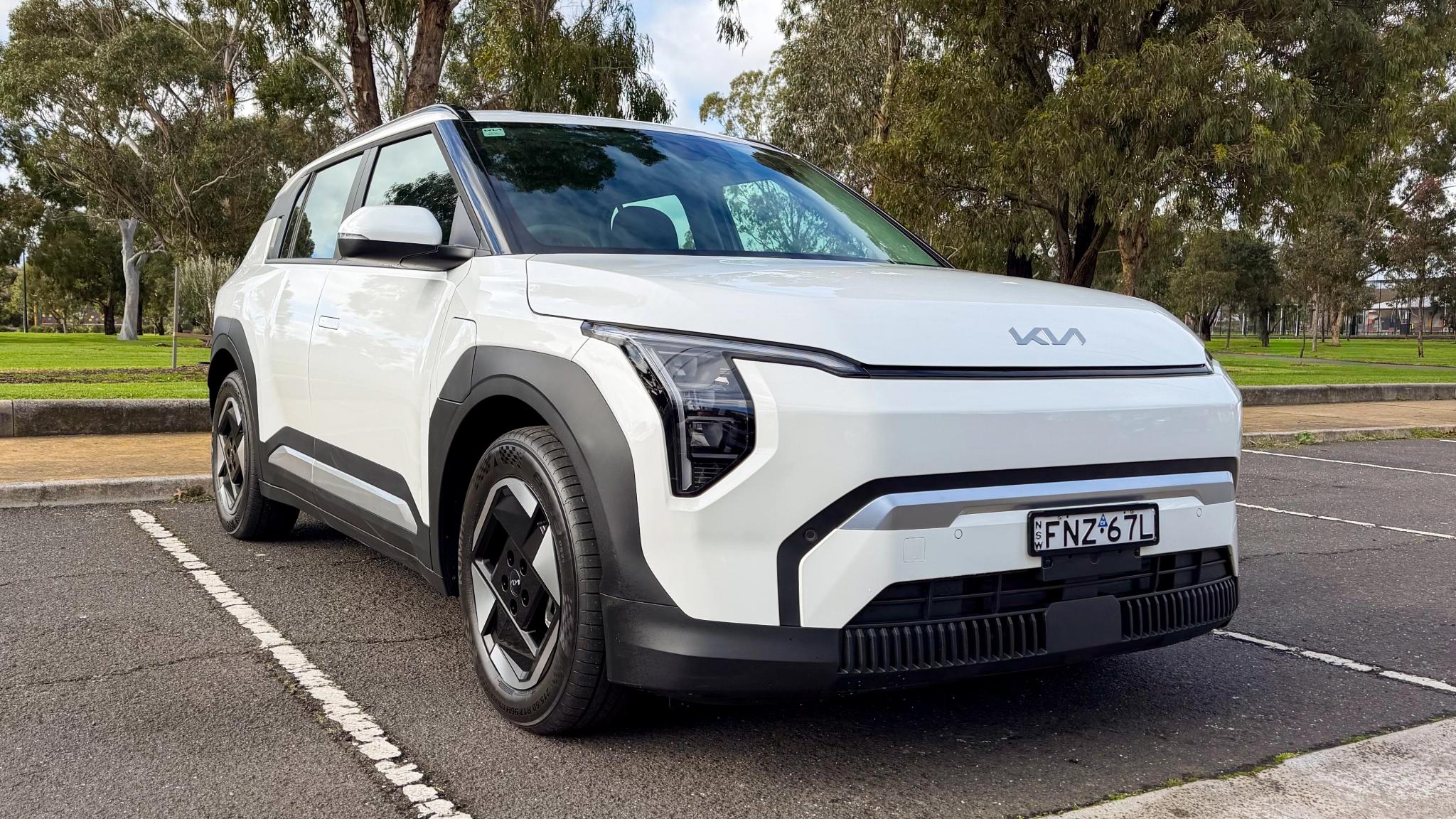
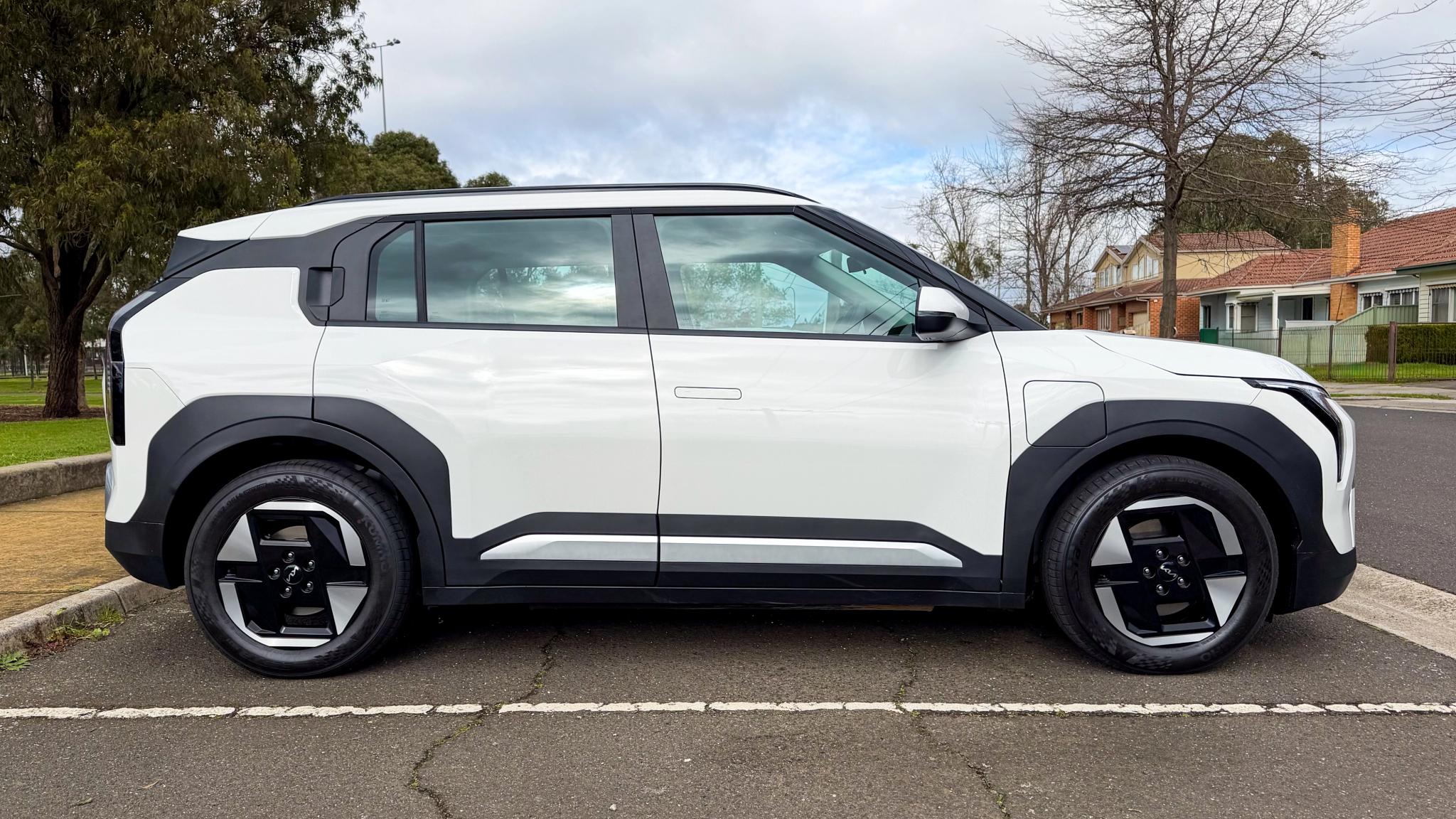
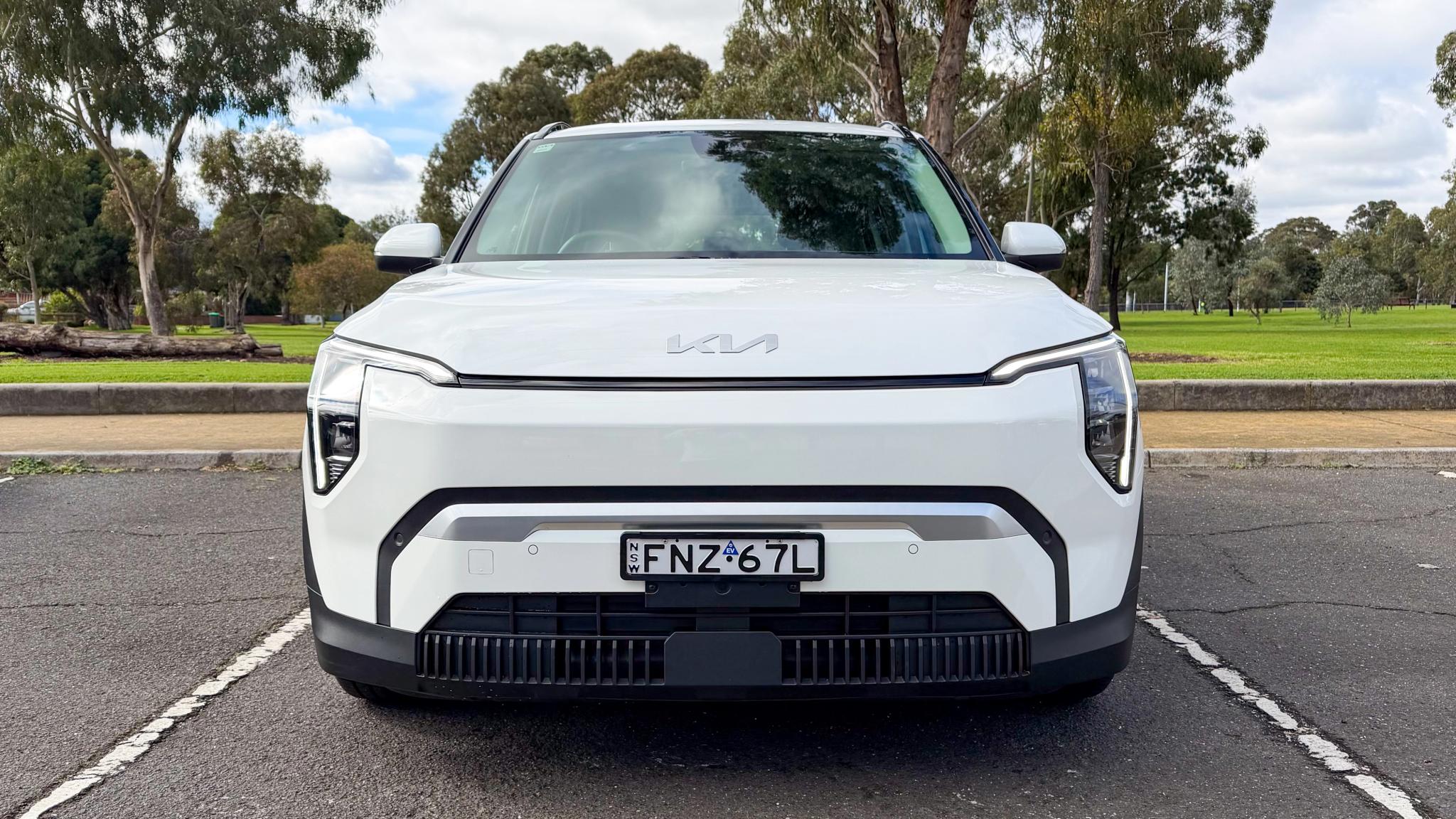
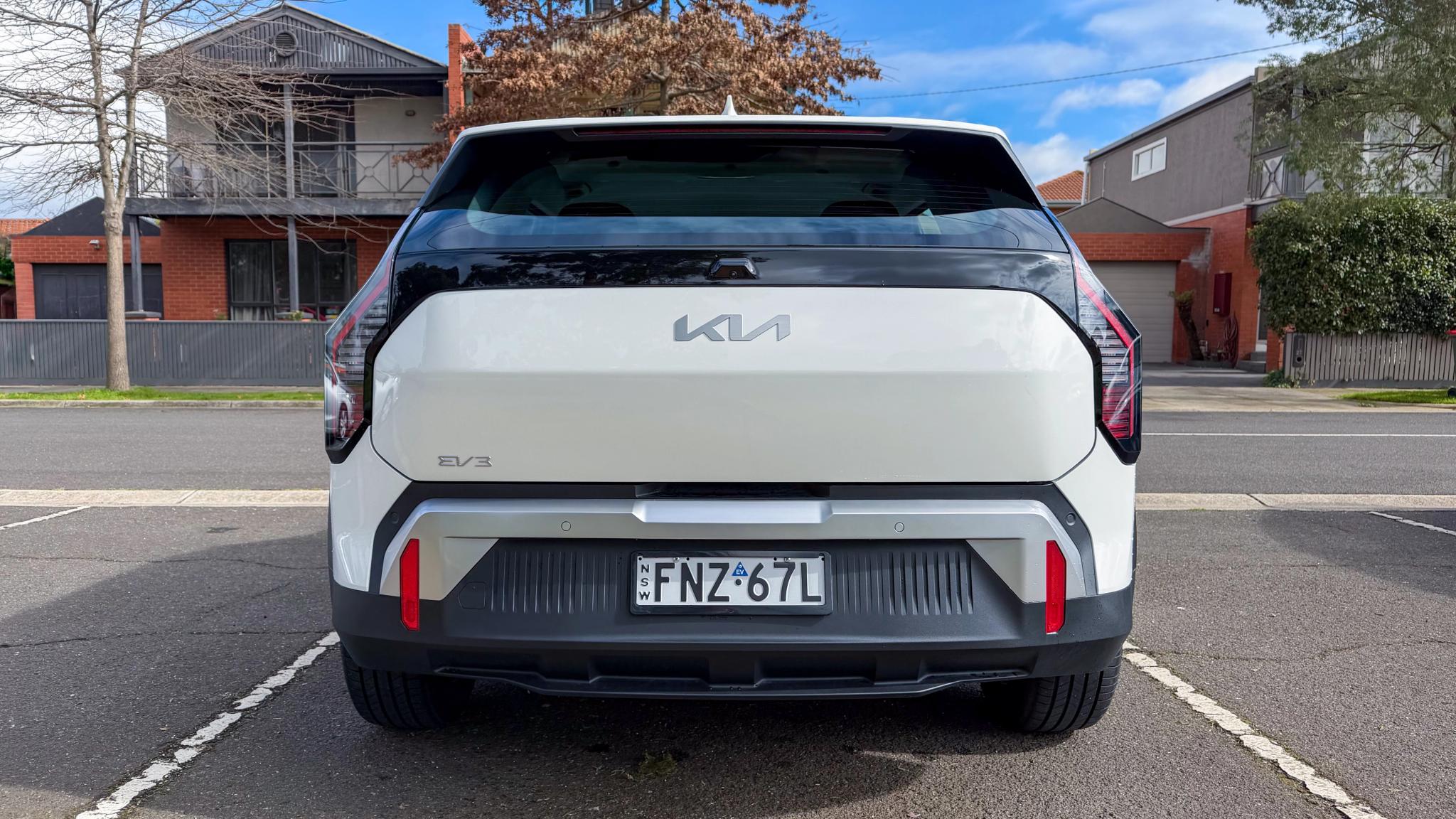
Kia has spent five years turning up the volume on its design language and the EV3 is the most concentrated dose yet. It is the EV9 formula shrunk down without being softened, all vertical light signatures, blunt nose and squared-off shoulders, and it has real presence for something barely 4.3 metres long.
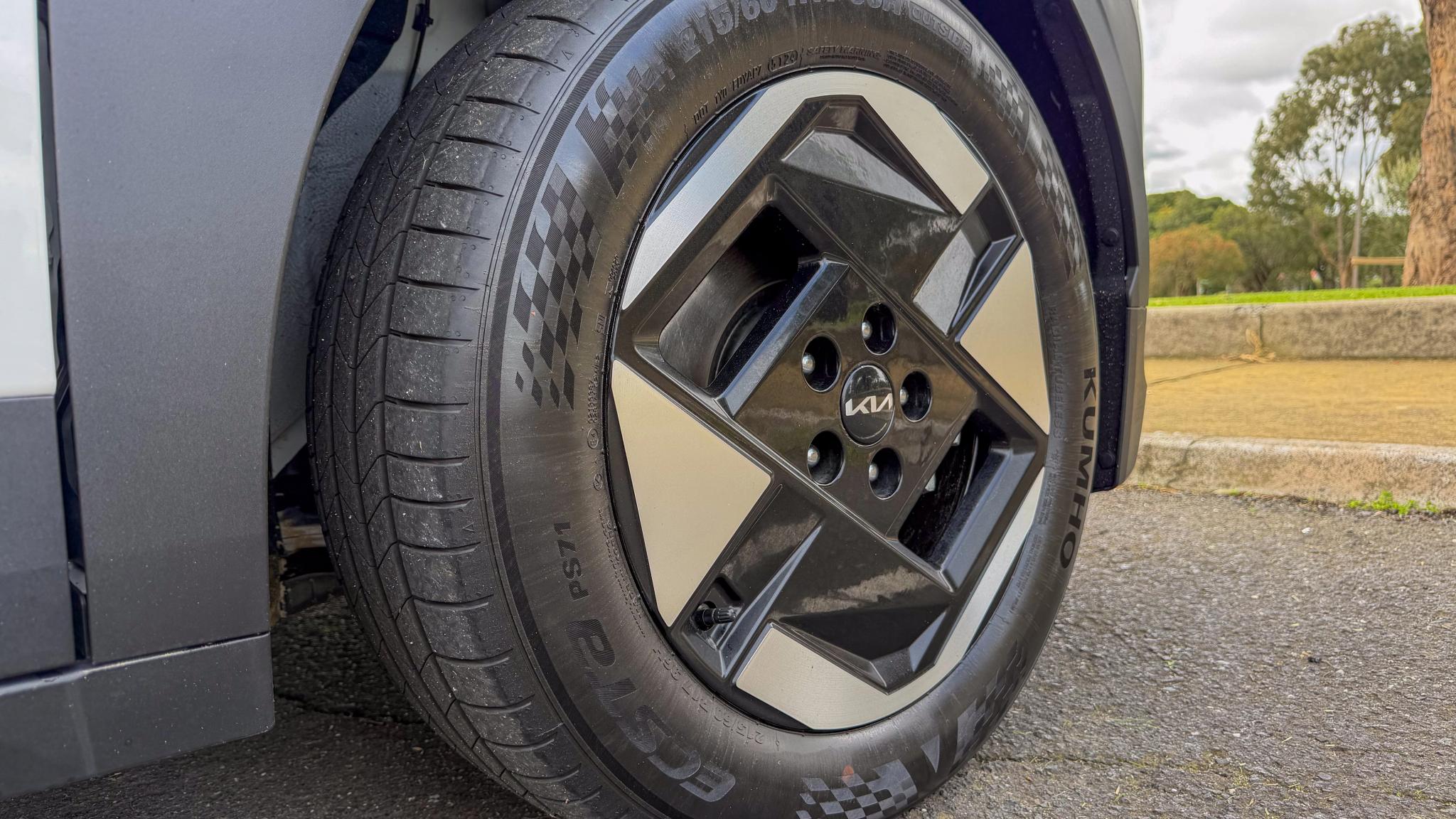
Look closer and most of the design works just as well. The wheel arch cladding and aero-first wheel designs are polarising, and the GT-Line's gloss black garnish adds visual busyness rather than menace.
That is the odd part of the walk-up. The base Air, on its 17-inch wheels and body-coloured cladding, is arguably the cleaner-looking car. The GT-Line's light cubes and dynamic welcome sequence are good theatre, but nobody is going to mistake one grade for a different vehicle.
What is the Kia EV3 like inside?
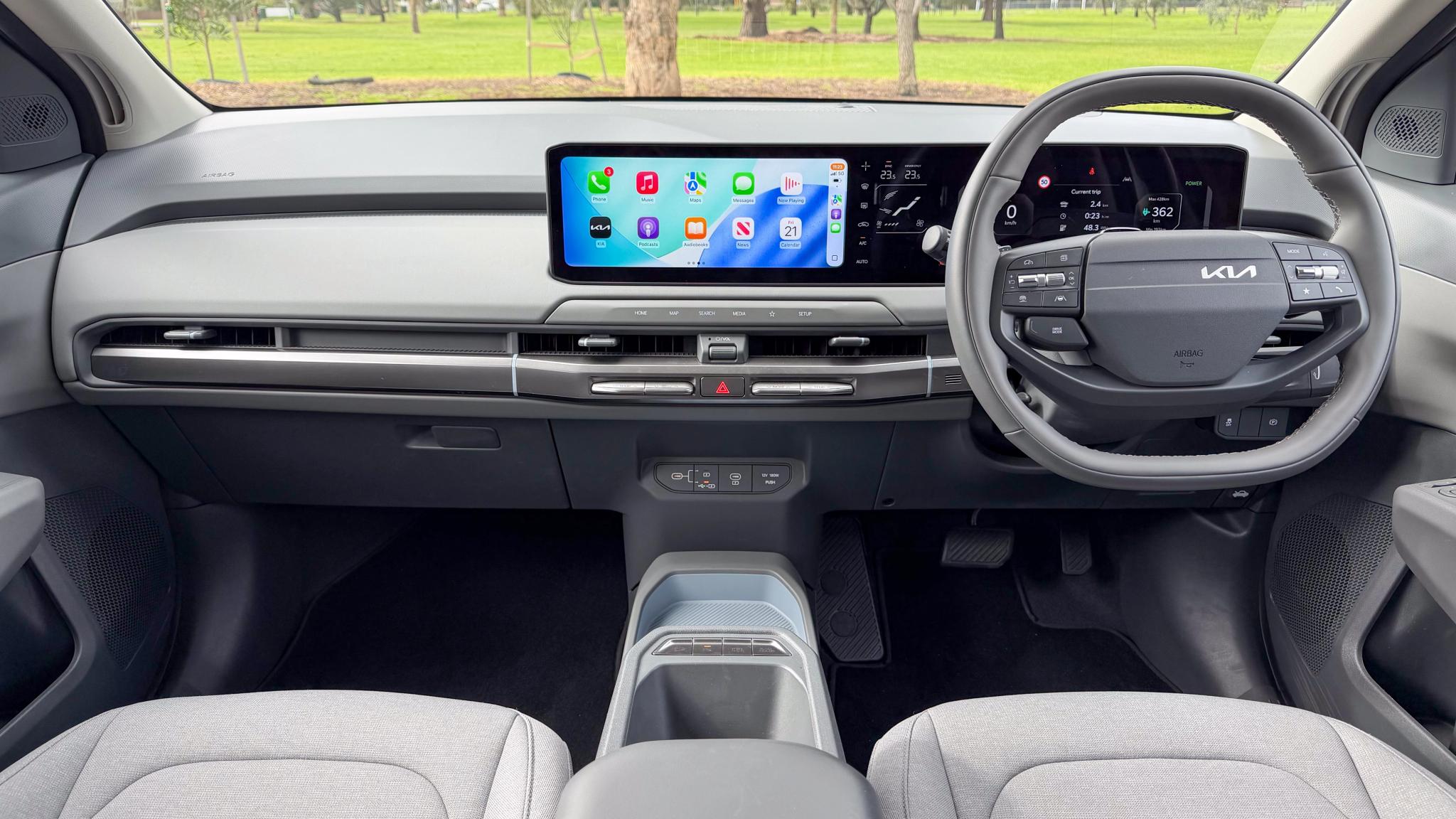
Kia has found an interior template it likes and applied it across the EV range - and that is not a criticism. Twin 12.3-inch displays flank a 5.0-inch climate panel, the physical shortcut buttons underneath actually work, and the menus respond quickly enough that you stop thinking about them.
The climate strip is the weak link. It sits low and slightly out of your sightline and its graphics look a generation behind the screens either side of it.
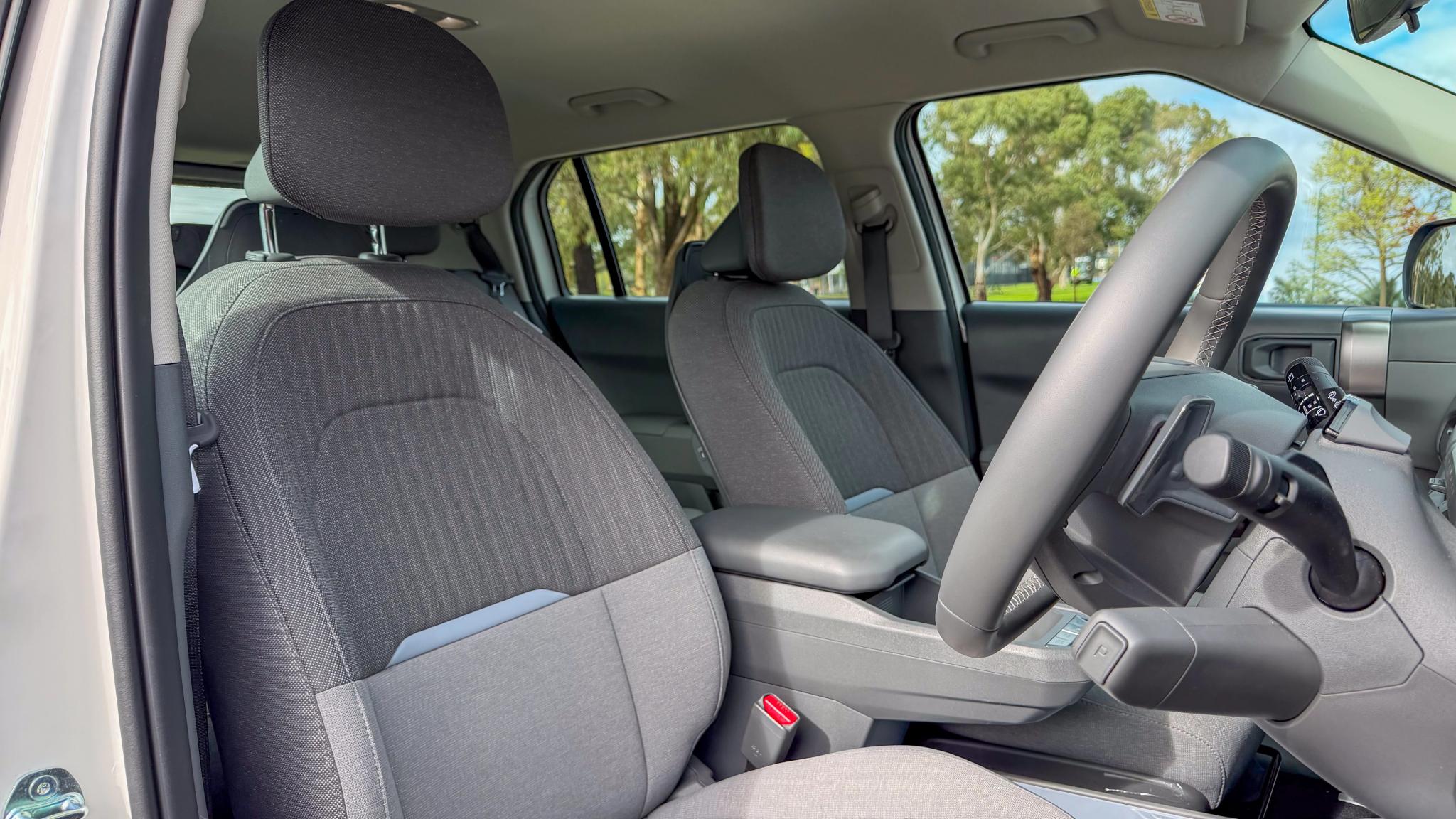
Material quality is better than expected. The recycled and animal-free materials feel surprisingly premium, rather than like a compromise, and the GT-Line's two-tone treatment is one of the better cabin colourways in the segment. The Air's cloth trim is quietly excellent too, with a texture that will age better than white plastic and a light-coloured synthetic leather that shows every fingerprint.
Door-mounted controls for seat heating, ventilation and memory are a small win that you will appreciate every day. Less charming are the front door handles, which are fiddly to grab and paired with a proximity unlocking system that hesitates often enough to become a running joke.
How practical is the Kia EV3?
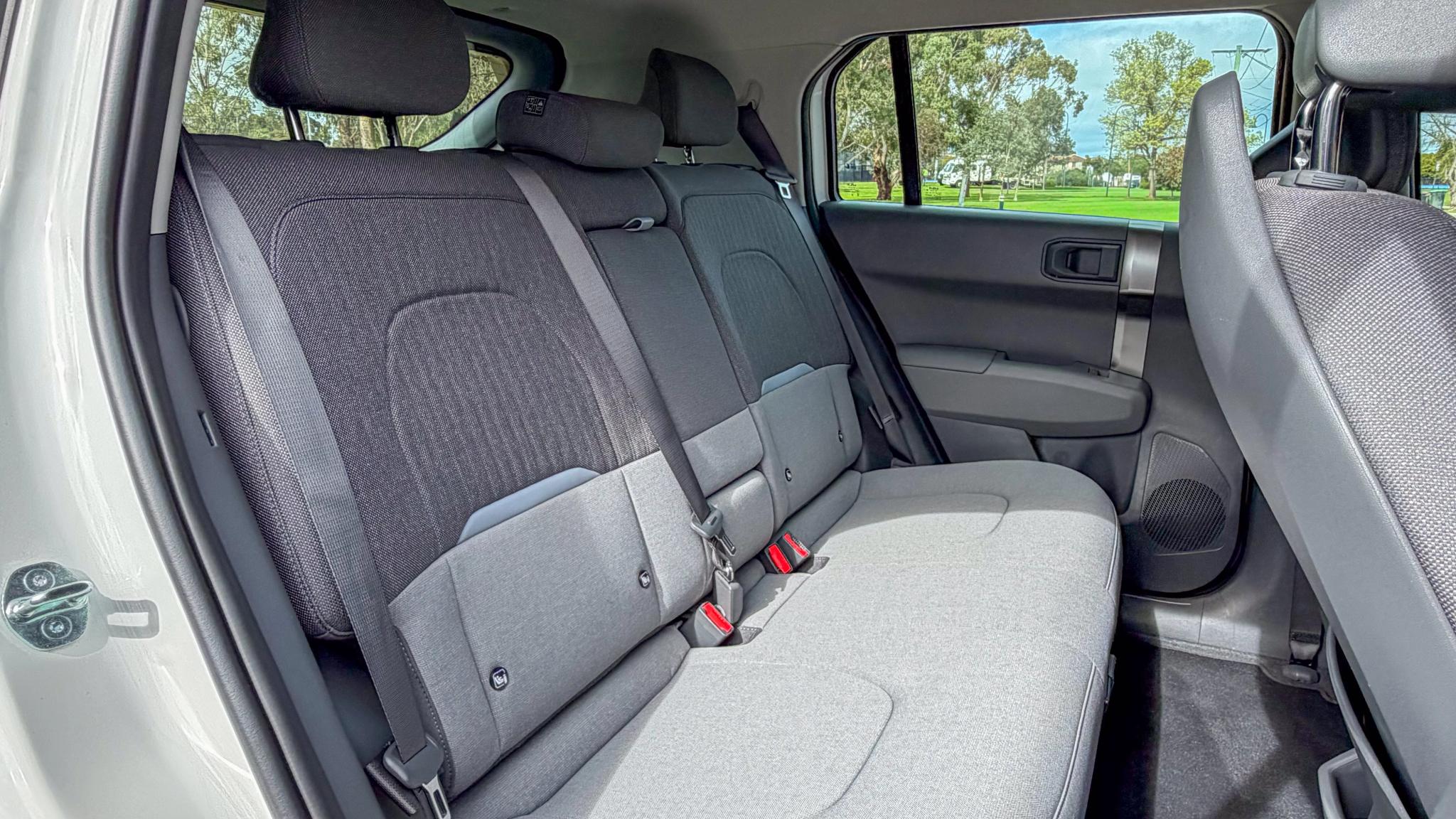
The 2680mm wheelbase and flat floor mean a six-footer can comfortably sit behind their own driving position. Headroom is the limiting factor rather than legroom, because the battery raises the rear cushion and taller adults will brush the glass roof.
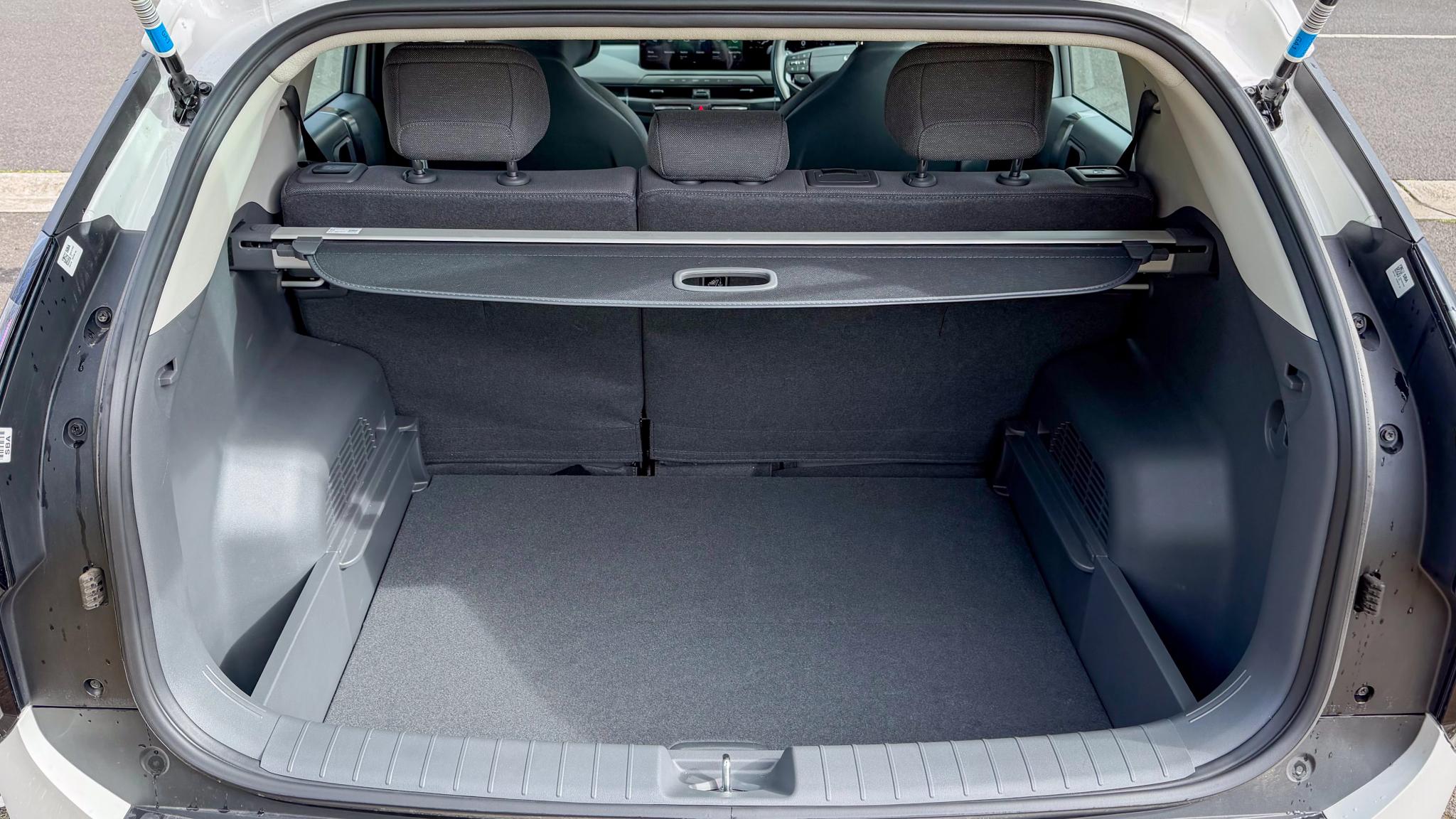
Boot space is 460 litres with the seats up, expanding to 1251 litres folded, plus 25 litres under the bonnet for charging cables. The dual-height floor is genuinely useful.
What is not useful is the tyre repair kit sitting in a cavity clearly shaped for a space-saver. For a car Kia expects families to take out of the city, that is a strange place to save weight.
Storage is otherwise excellent. The open tray between the front seats swallows bags and bottles, all four doors have deep sleeves, and the GT-Line's sliding table is the kind of gimmick you end up using far more than you expected.
What is the Kia EV3 like to drive?
This is the section that justifies the price.
Kia Australia's ride and handling team got early access to the EV3 because it is built in Korea rather than China, and the result is a set of springs, bars, dampers and a steering map developed for our road surfaces rather than adapted to them afterwards.
You feel it immediately. The EV3 settles over the sort of mid-corner ripples and patched bitumen that make most small EVs skitter, and it does it without the wooden, over-damped feel that heavy battery packs usually force on engineers.
The steering is the other highlight. It is accurate, evenly weighted and quick enough to make the tight turning circle feel deliberate rather than lucky. The steering and chassis also feel well matched, so you quickly know what the car is doing underneath you.
It is not fast and it never pretends to be. The 150kW single motor delivers 7.5 seconds to 100km/h in the light Air and 7.9 in the heavier 19-inch grades, but the instant torque means the only time you notice is merging at highway speed.
Refinement is good rather than exceptional, with some tyre roar on coarse-chip surfaces and a little wind noise at freeway pace. The i-Pedal 3.0 regen system is a genuine step forward, with paddle-adjustable strength and a true one-pedal mode that will stop the car completely.
The nagging is the one thing that will wear you down. The driver attention camera interprets a glance at your mirrors as a lapse, and switching it off requires a trip through the menus every single time you start the car. Kia has fixed harder problems than this with a software update.
How efficient is the Kia EV3?
Claimed consumption is 14.9kWh/100km for the 17-inch Air grades and 16.2kWh/100km once you move to 19s. Expect the bigger-wheeled cars to sit closer to 17kWh/100km in mixed real-world driving, which is respectable rather than class-leading.
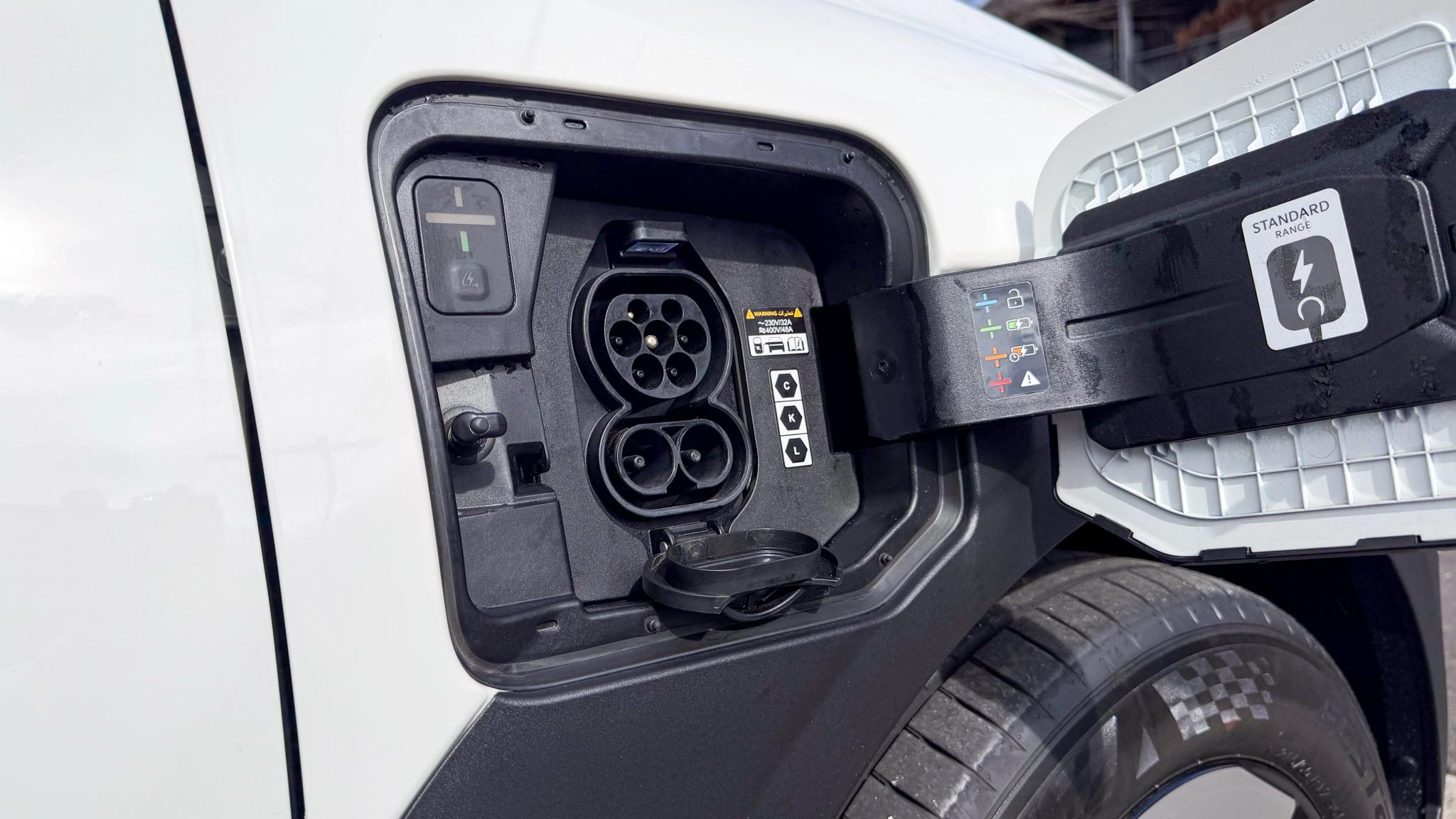
Range is the headline. The Air Long Range claims 604km on WLTP, the Earth and GT-Line 563km, and the Air Standard Range 436km. Even discounted by 20% the smallest battery covers a fortnight of average suburban commuting.
Charging is where the 400-volt architecture shows its cost-saving. DC charging peaks around 128kW for a 10 to 80% stop of roughly 31 minutes, and AC charging tops out at 11kW, which needs three-phase at home to be realised.
Ownership costs are a strong point. Kia covers the car for seven years and unlimited kilometres, the high-voltage battery for seven years or 150,000km, and roadside assistance extends to eight years when you service on schedule at 12 months or 15,000km.
| Prepaid service plan | Cost |
| 3 years / 45,000km | $674 |
| 5 years / 75,000km | $1285 |
| 7 years / 105,000km | $1897 |
Is the Kia EV3 safe?
The EV3 carries a five-star ANCAP rating, scoring 83% for adult occupant protection, 86% for child occupant protection, 78% for vulnerable road users and 81% for safety assist.
Kia fits the full active safety suite to every grade, including autonomous emergency braking with junction, pedestrian and cyclist detection, blind-spot collision avoidance, rear cross-traffic assist, Highway Driving Assist 2 and navigation-linked smart cruise. Seven airbags are standard, including a front centre bag.
The omission is a surround-view camera along with Kia's excellent blind-spot view monitor. Cars costing $20,000 less have both.
What are the main competitors to the Kia EV3?
The Geely EX5 is the value option from around $41,990 plus on-roads for a 160kW front-driver with a 68.4kWh battery and 475km of range. It is bigger inside, better equipped on paper and thousands cheaper, but it cannot match the Kia for chassis polish or the way it deals with a broken country road.
The BYD Atto 3 has just been reinvented as the Atto 3 Evo, from $41,990 plus on-roads for the front-drive Dynamic and $46,990 for the rear-drive Premium with 800-volt charging and up to 510km of range. That charging architecture is a real advantage over the EV3 on long trips, though the Kia feels better sorted on the road and comes with a longer battery warranty.
The Volvo EX30 is the premium alternative, now from around $49,990 plus on-roads after a substantial price cut, with 200kW, rear-wheel drive and a badge that carries weight in the school car park. It is quicker and more fashionable, but the minimalist single-screen interface removes physical controls the Kia sensibly keeps, and the EX30's back seat is noticeably tighter than the EV3's.
The Kia EV5 is the in-house problem from $56,770 plus on-roads for the Air, or about $61,000 for the Air Long Range. It is a size up with a bigger boot, so anyone eyeing an EV3 GT-Line should drive one back to back, but the EV5 is China-built and does not ride or steer with the same conviction.
Cross-shop on price and space and the EX5, Atto 3 Evo and EV5 will all tempt you away. Cross-shop on how the car actually feels on an Australian road and the EV3 wins comfortably.
Should I buy the Kia EV3?
Yes, and specifically the cheap one. The EV3 Air Standard Range is one of the best small electric SUVs under $50,000 driveaway in this country, because it delivers the chassis tune, the build quality, the safety kit and the warranty without asking you to fund garnish you did not want.
If your driving genuinely demands the range, the Air Long Range at $52,990 driveaway is the smarter stretch than the equipment-led grades, since it is the only EV3 that claims over 600km and it keeps the lighter 17-inch wheels that make the car ride at its best.
The GT-Line is harder to recommend. It looks the part and the cabin is lovely, but it costs $68,490 driveaway, adds no performance over the base car, and still leaves you reversing with a single camera.
The EV3 makes its strongest case at the bottom of the price list, which is exactly where a car like this should be at its best.
VerdictThe Beep Verdict
Rob Leigh
Co-founder & Director
Rob Leigh is Co-founder and Director of The Beep based in Melbourne, Australia. He has 15+ years inside a major automotive OEM, specialising in product planning, pricing and vehicle strategy.
About Author