2026 Honda HR-V e:HEV RS review
Honda's flagship HR-V is the most polished small SUV of its size and the best version of the car, but at $44,400 driveaway the RS charges a lot for styling rather than substance.

Rob Leigh
Pros
- Hybrid system is smooth, quiet and genuinely frugal
- Magic Seats make a small car swallow big things
- Rides and steers better than almost anything at the price
Cons
- Four seats only, which rules it out for plenty of families
- RS badge adds looks, not performance
- No 360-degree camera or wireless charger at $44,400
Our verdict
The HR-V e:HEV RS is for the buyer who wants a small SUV that feels properly engineered rather than heavily equipped, and who does most of their driving inside 30km of home. It rides, steers and sips fuel better than the price-leading Chinese hybrids that have flooded this segment and Honda's seat packaging is still the cleverest in the class.
Where it falls down is the asking price. Almost everything that makes the HR-V good is already there two grades below, which makes the RS the version we most enjoyed and the version we would least recommend buying.
What does the HR-V RS cost in Australia?
Honda sells the HR-V on fixed driveaway pricing which takes the haggling out of it and makes the walk up the range very easy to read. The RS sits at $44,400 driveaway, which is $11,500 above the petrol Vi X and $4,500 above the entry hybrid.
| Specifications | Vi X | e:HEV X | e:HEV L | e:HEV RS (tested) |
| Driveaway price | $32,900 | $39,900 | $42,900 | $44,400 |
| Powertrain | 1.5L petrol | 1.5L hybrid | 1.5L hybrid | 1.5L hybrid |
| Power | Torque | 89kW | 145Nm | 96kW | 253Nm | 96kW | 253Nm | 96kW | 253Nm |
| Transmission | CVT | e-CVT | e-CVT | e-CVT |
| Drivetrain | FWD | FWD | FWD | FWD |
| Fuel use (claimed) | 6.2L/100km | 4.3L/100km | 4.3L/100km | 4.3L/100km |
| ANCAP | Four stars (2022) | Four stars (2022) | Four stars (2022) | Four stars (2022) |
| Warranty | 5 years | Unlimited km | 5 years | Unlimited km | 5 years | Unlimited km | 5 years | Unlimited km |
View Honda HR-V driveaway pricing and specifications →
For that $4,500 jump from the e:HEV X you get styling, better seat trim, a heated steering wheel and the L grade's comfort kit. You do not get more power, a bigger screen, a 360-degree camera or a wireless phone charger, all of which turn up in Chinese rivals selling for $10,000 less.
That’s the problem with the RS. The HR-V is good enough to justify a premium, but $44,400 is hard to swallow when cheaper rivals give you more equipment.
What does the HR-V RS look like?
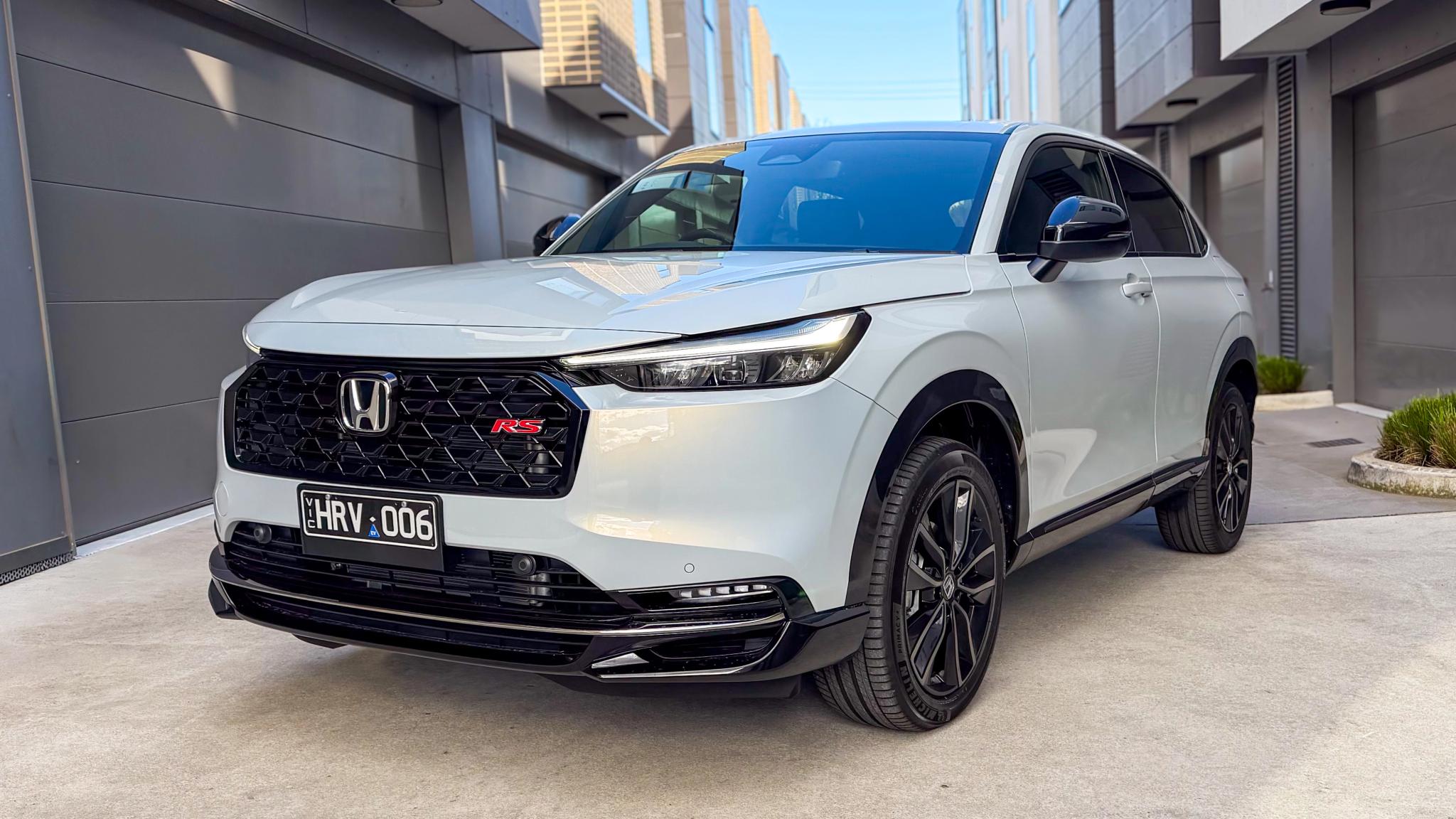
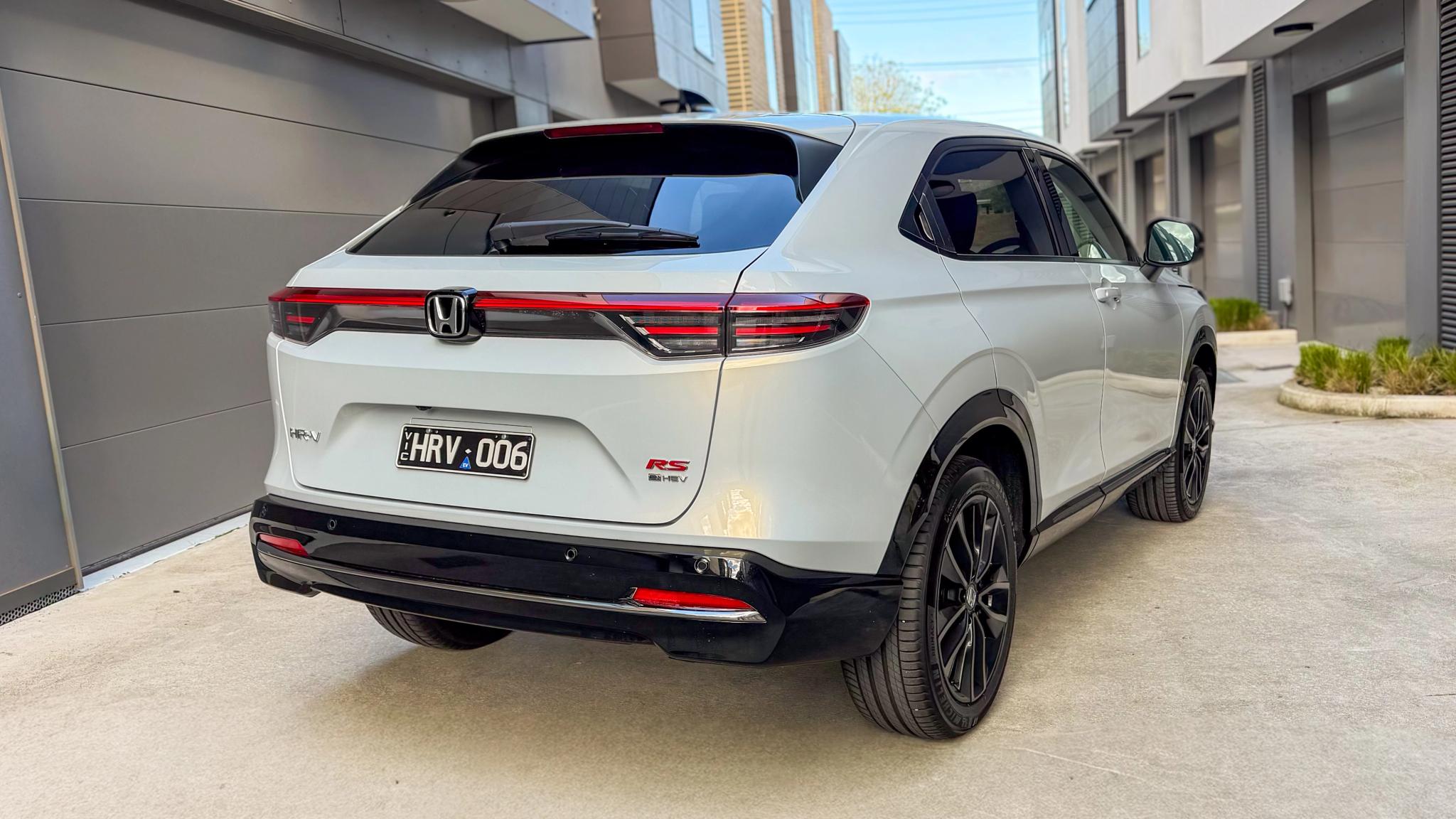
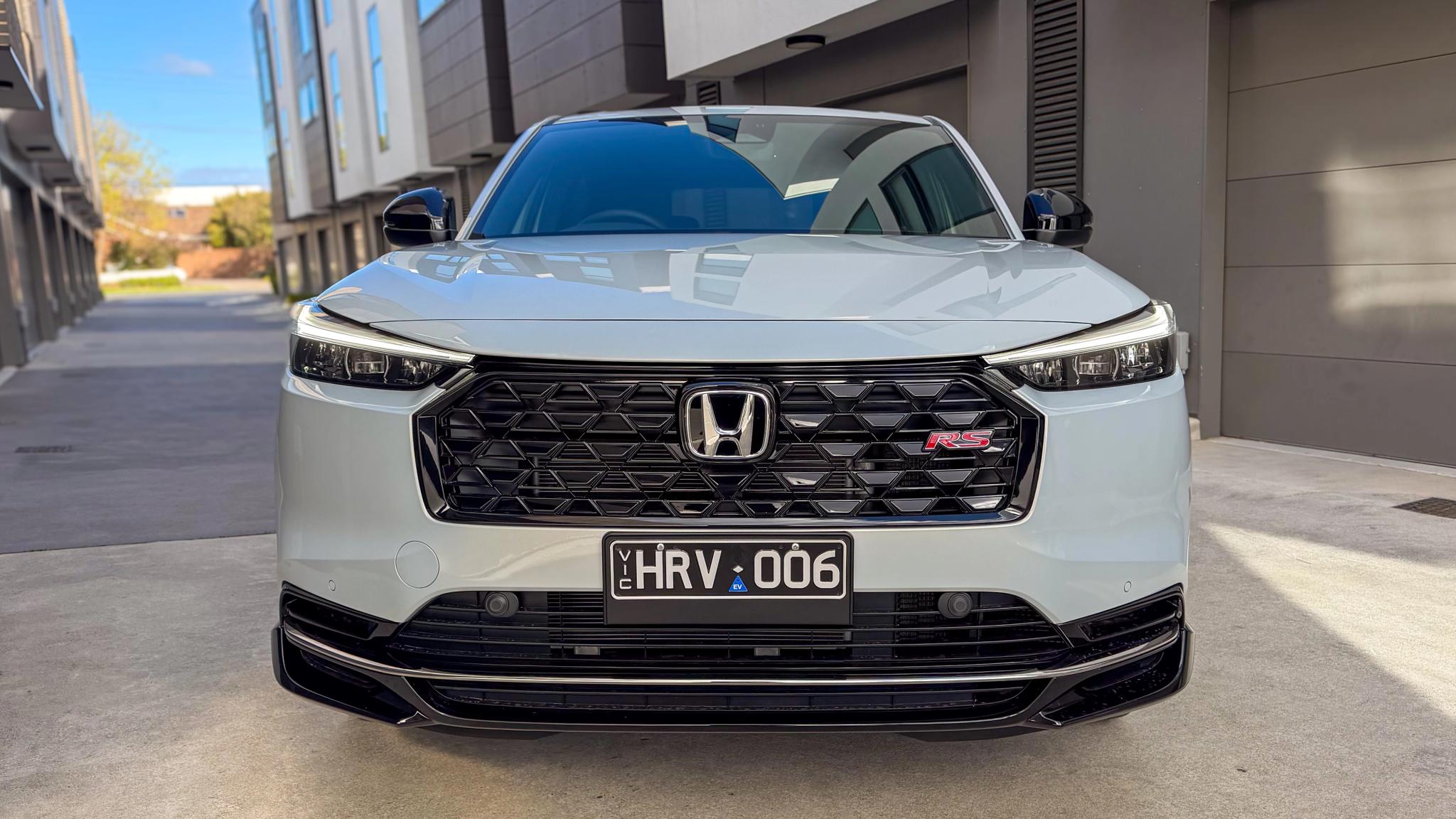
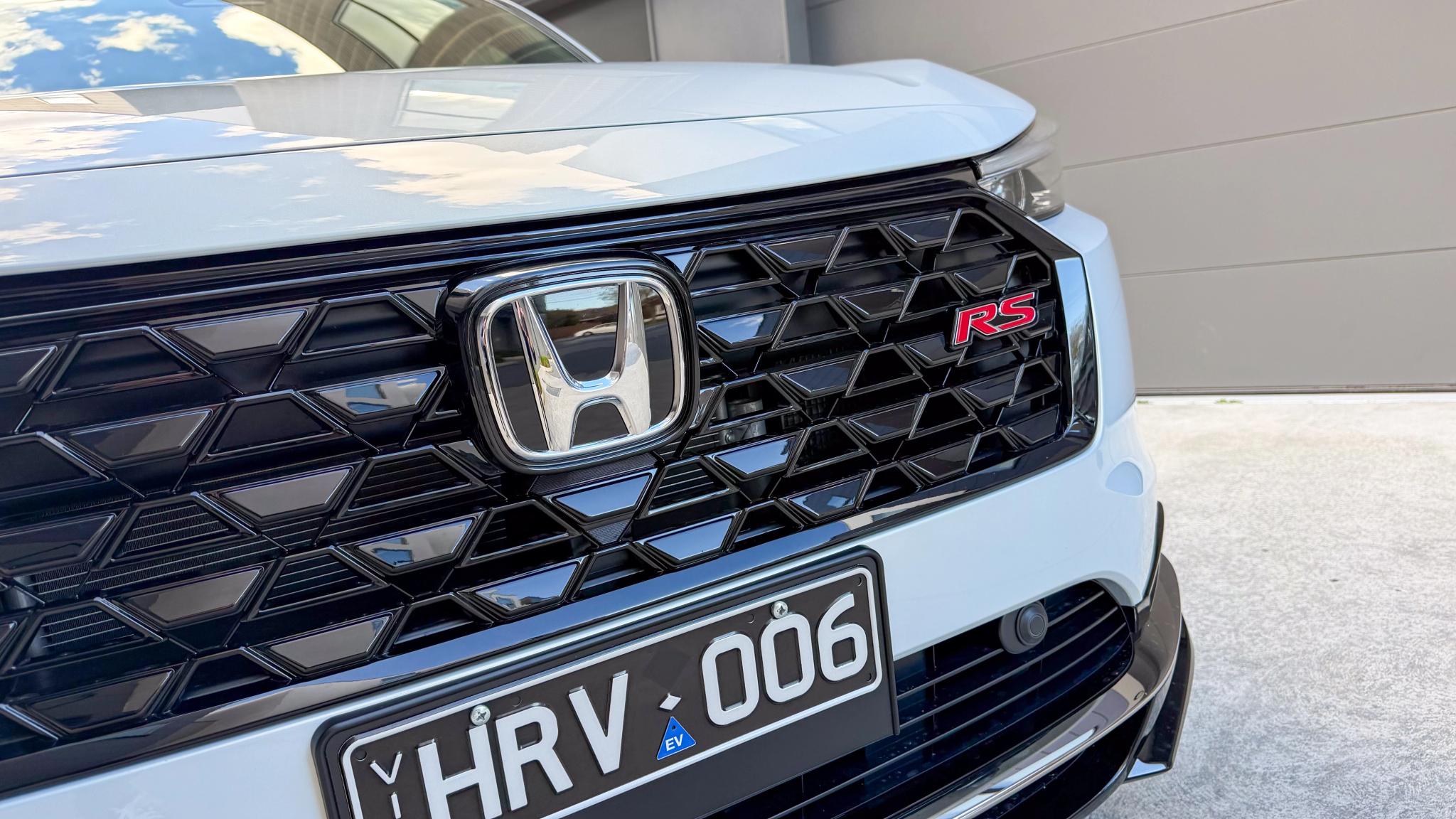
The standard HR-V is fairly anonymous, which has always been part of its appeal and part of its problem. The RS treatment sorts it out with a black mesh grille, gloss-black bumper inserts, dark chrome accents, black mirror caps and a black shark-fin aerial.
None of it is overly loud and shouty. Park an RS beside a base car and the difference is obvious. It’s the best looking HR-V you’ll find.
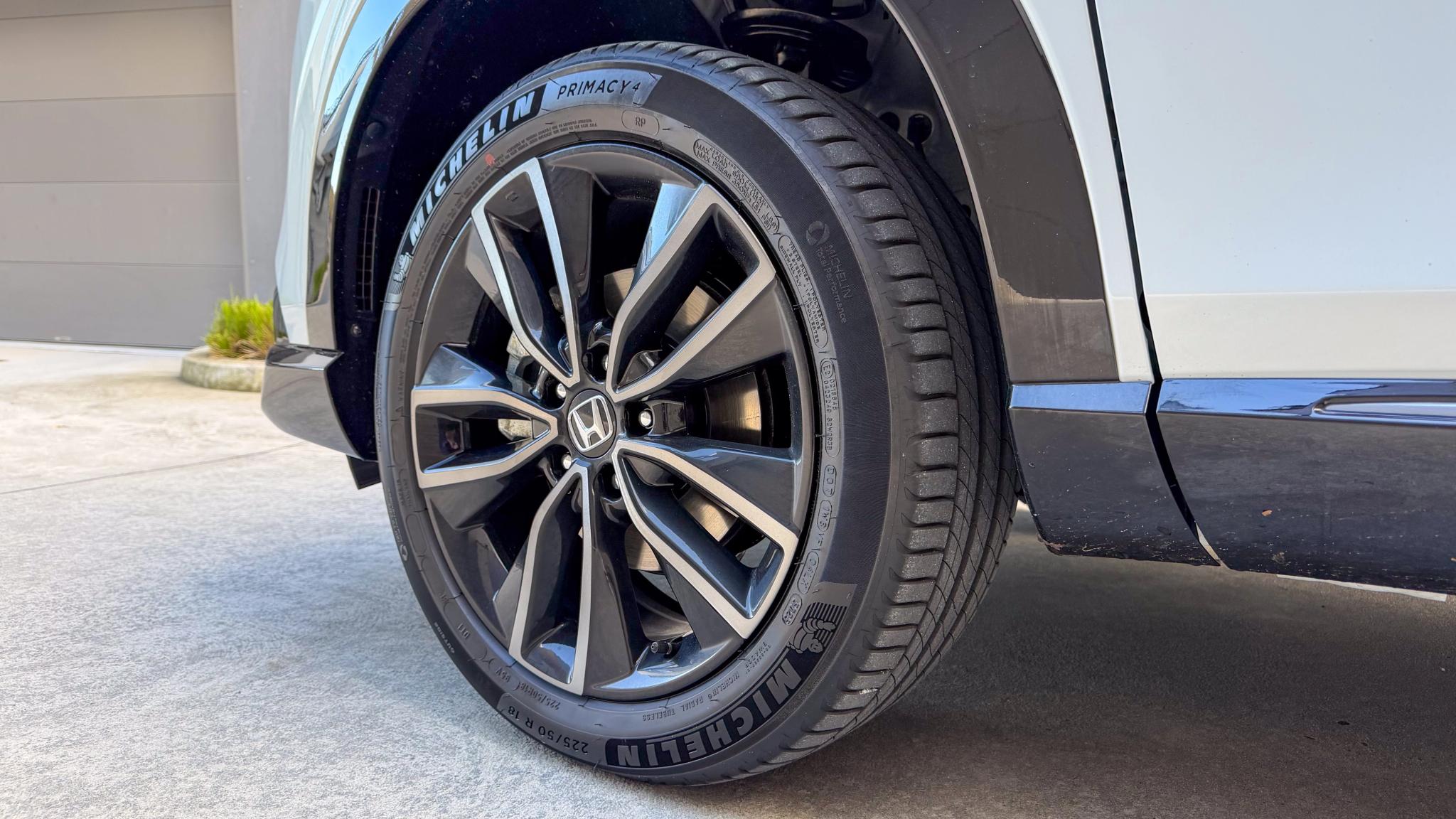
The 18-inch alloys are the right size for the body, and Honda has fitted Michelin Primacy 4 rubber rather than the budget tyres that too many cars wear at this money. It is an unglamorous detail that you feel every single day.
The slim LED headlights help, sitting tight against the grille with daytime running strips that run almost the full width of the nose, and that horizontal emphasis makes the HR-V look wider and lower than it really is.
At 4390mm long and 1790mm wide, the HR-V remains genuinely small, which is increasingly rare in a segment busy inflating itself into medium-SUV territory.
What is the HR-V RS like inside?
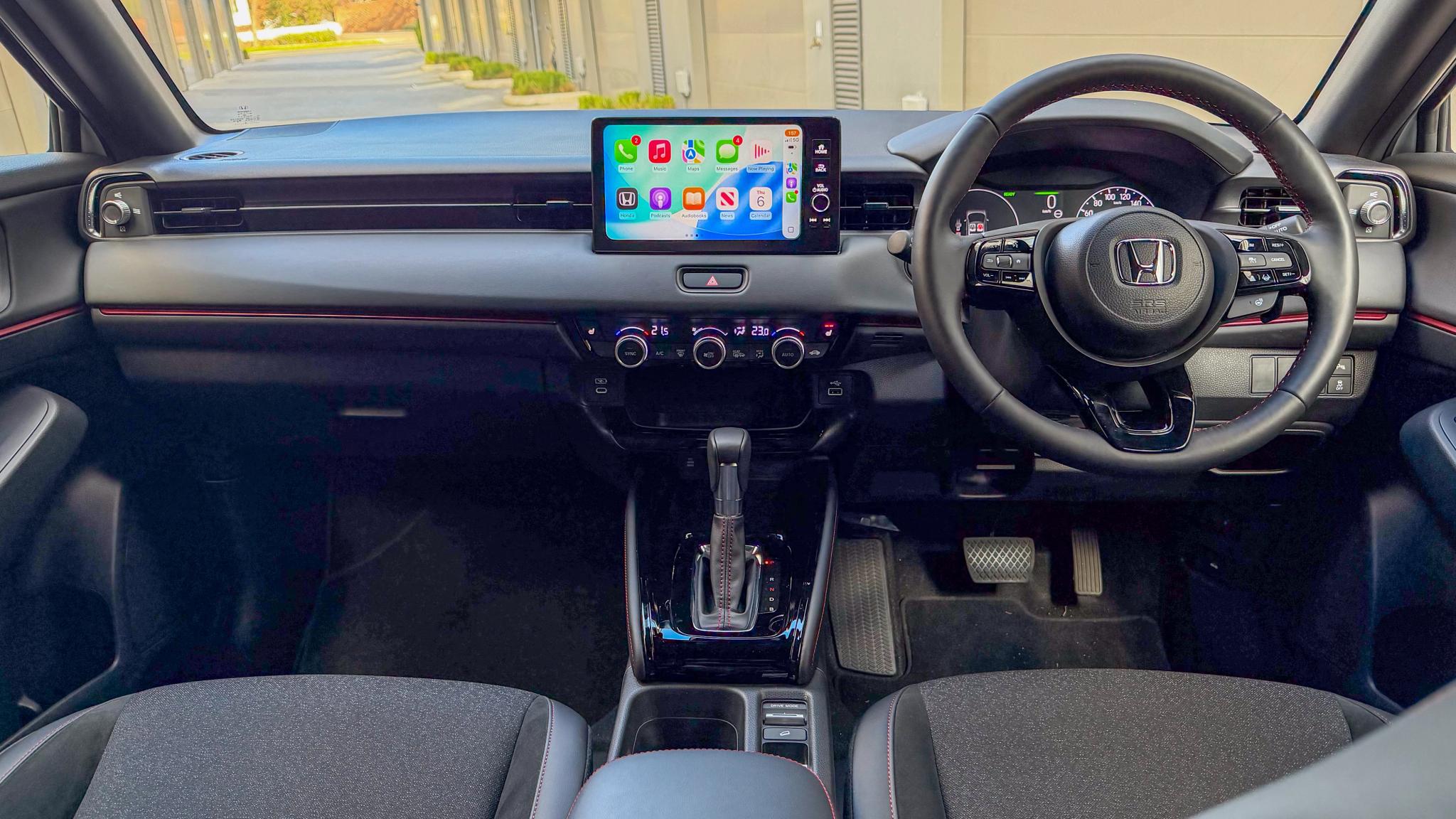
The cabin is the strongest argument for spending Honda money. The cabin looks plain at first, but spend some time in it and you start to appreciate how well everything works.
Physical climate controls, real dials for the vents, a logical dash layout and a driving position that needs no negotiation. After a few years of carmakers burying the temperature adjustment three menus deep, the HR-V feels like an adult designed it.
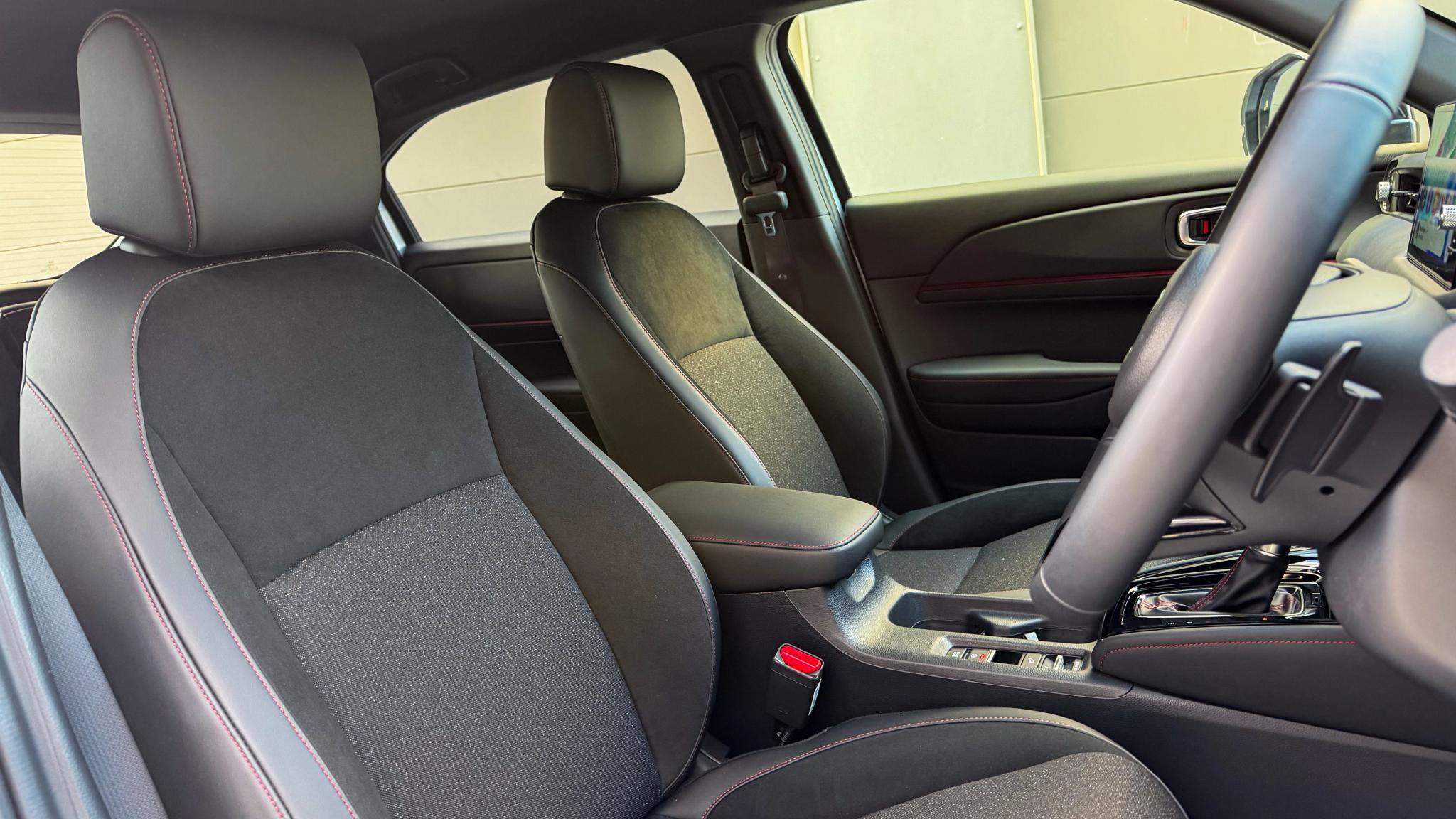
The RS seats are trimmed in a mix of leatherette, fabric and suede-look material with red stitching, and the fabric is placed where your body actually makes contact. They are supportive without being firm and the heated seats and heated steering wheel are welcome during the winter.
The 9.0-inch touchscreen is where the age shows. It runs wireless Apple CarPlay and Android Auto without fuss, which covers most of what people use a screen for, but the graphics and response speed are a generation behind and it looks small in 2026.
Two omissions grate at this price. There is no wireless charger, which is odd in a car that encourages wireless phone mirroring, and no 360-degree camera, which nearly every rival now fits.
Storage is sensible rather than cavernous with usable cupholders, a deep console bin and a soft armrest. The piano-black trim is the only genuine quality misstep, collecting dust and fingerprints within days.
How practical is the HR-V RS?
Here is the biggest compromise: the Australian HR-V is a four-seater. There is no centre rear seat, no fifth belt and no middle top tether, so a family of five can stop reading now.
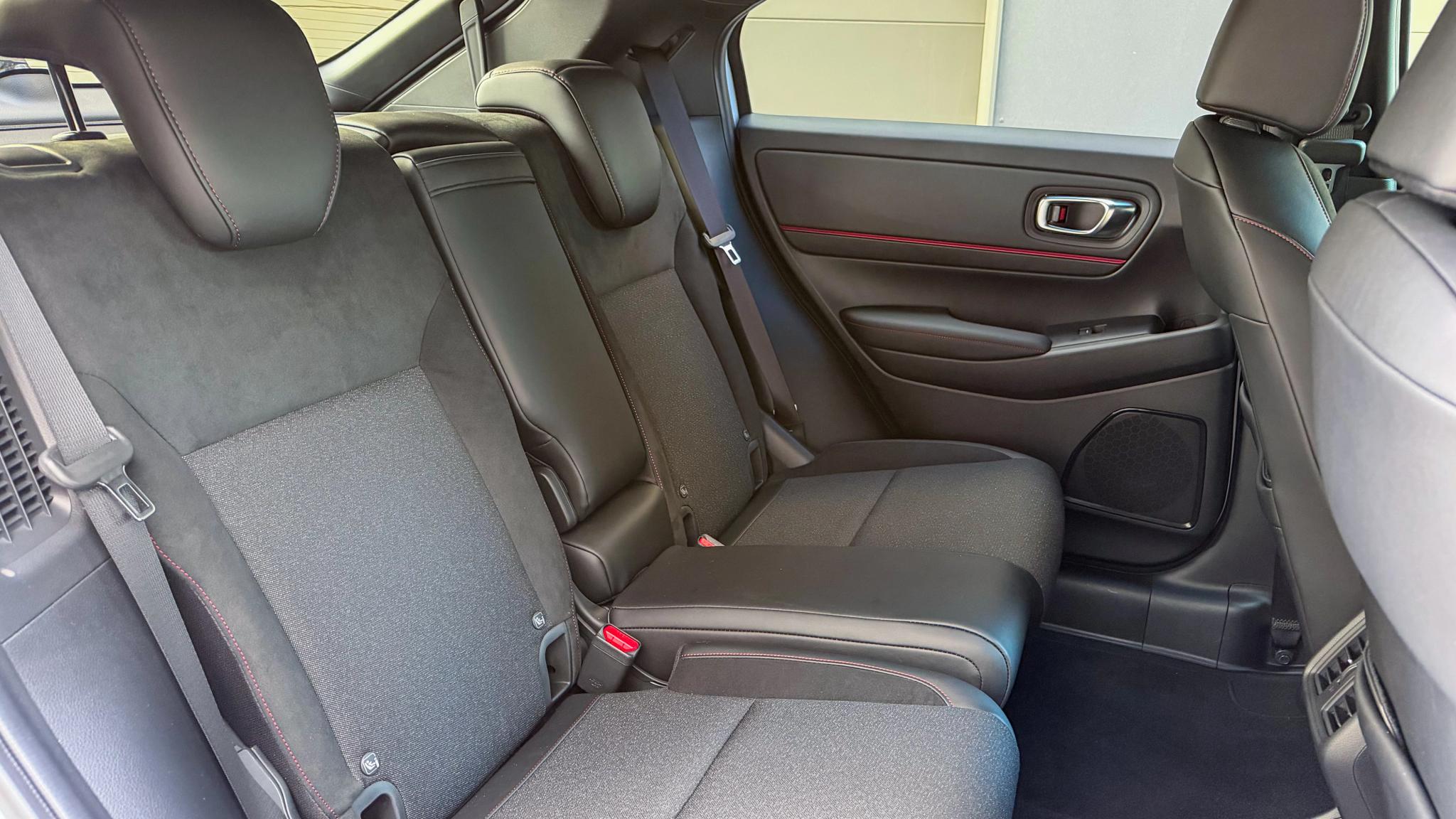
For everyone else, the two rear positions are excellent. Legroom behind a tall driver is better than in some medium SUVs, the backrest angle is right, and rear passengers get air vents, USB-C charging, a folding armrest with cupholders and door bins.
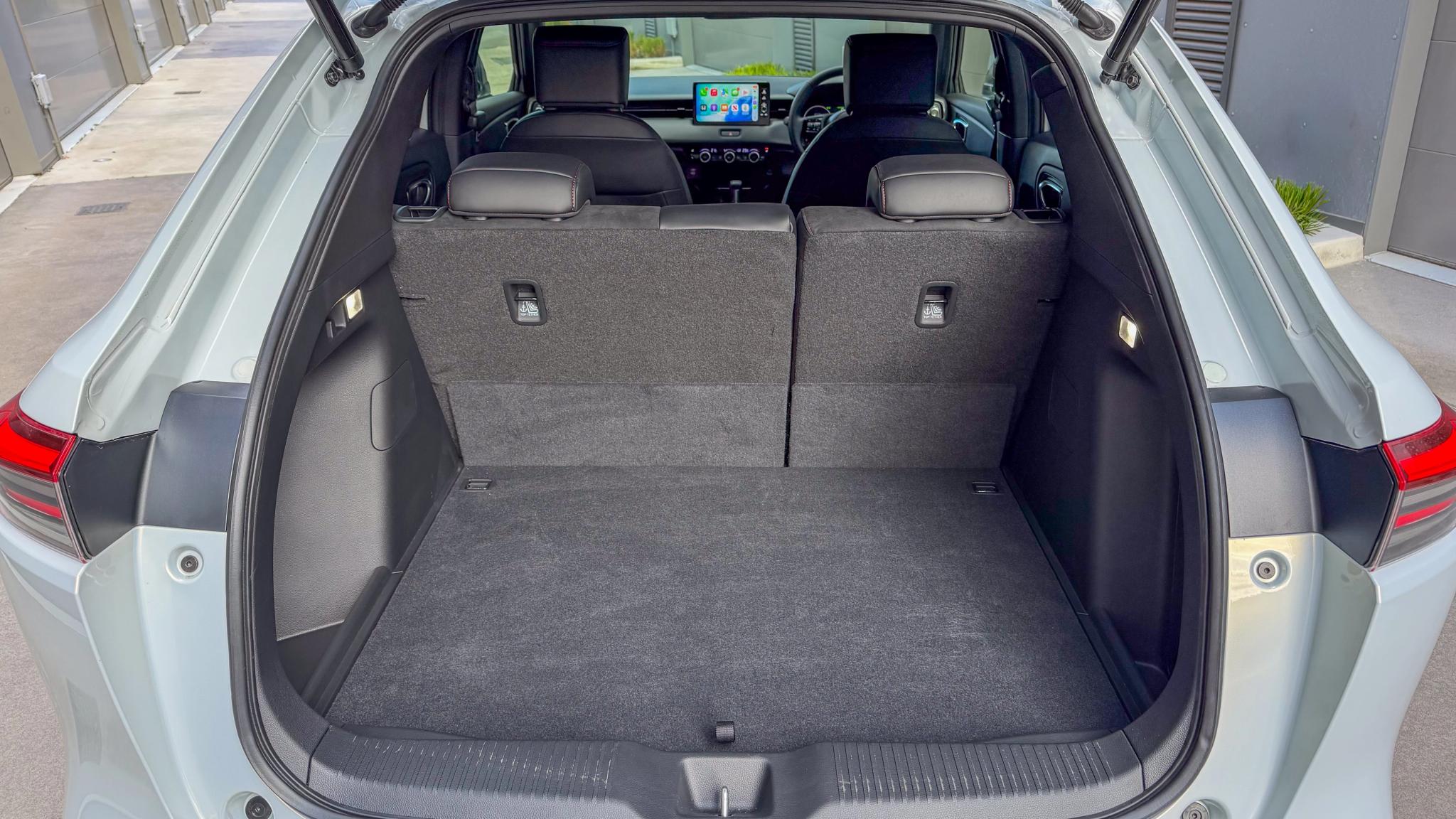
The boot measures 304 litres which sounds modest and understates the car badly. The opening is square, the tailgate lifts high and the load floor is long once the rear seats are down, opening out to 1274 litres to the roof.
Then there are the Magic Seats, which remain the HR-V's best idea. Flip the rear seat bases up and you get a tall, flat-floored space behind the front seats that will take a bike, a pot plant or a flatpack that has no business fitting in a car this size.
One annoyance: the rear door handles are hidden high in the C-pillar, which small kids cannot reach and adults regularly fumble for in the dark.
There is also no spare wheel, just a repair kit, which is worth knowing if you head bush regularly.
What is the HR-V RS like to drive?
On the road, you start to understand why the HR-V costs more than some of its rivals. The HR-V drives with a maturity that the value-focused hybrids from China have not managed to replicate.
The ride is the standout. It takes the edge off broken surfaces rather than crashing over them, settles in one movement after a speed hump, and stays composed on the coarse-chip surfaces that make so many small SUVs on 18s feel busy and brittle.
Steering is light at parking speed and builds weight naturally as you move, with enough accuracy to place the car confidently in a narrow lane. There is body roll if you push, but the chassis feels of a piece, and on a good road the HR-V is quietly more entertaining than it has any need to be.
The hybrid drivetrain is the other highlight. In town it drives like an EV, with the electric motors doing the work and the petrol engine firing up in the background to generate charge, usually so smoothly you notice it only in the tacho.
Ask for full throttle and the e-CVT drones, because the engine revs to a fixed point and sits there while the car gathers speed. It is not unpleasant, but it does remind you the RS badge is a trim level and not a performance promise.
Outputs are 96kW and 253Nm, identical to every other hybrid HR-V. Around town the torque makes it feel brisker than the numbers suggest, and it is only on a long uphill overtake that you find the ceiling.
Refinement at highway speed is good, with well-controlled wind and road noise, and the driving position gives you clear sightlines and a reassuring sense of where the car's corners are.
How efficient is the HR-V RS?
Honda claims 4.3L/100km combined and unlike plenty of claimed figures this one is within reach. In mixed suburban running, the low fives are realistic, and a commute weighted to city traffic will get you closer to the claim.
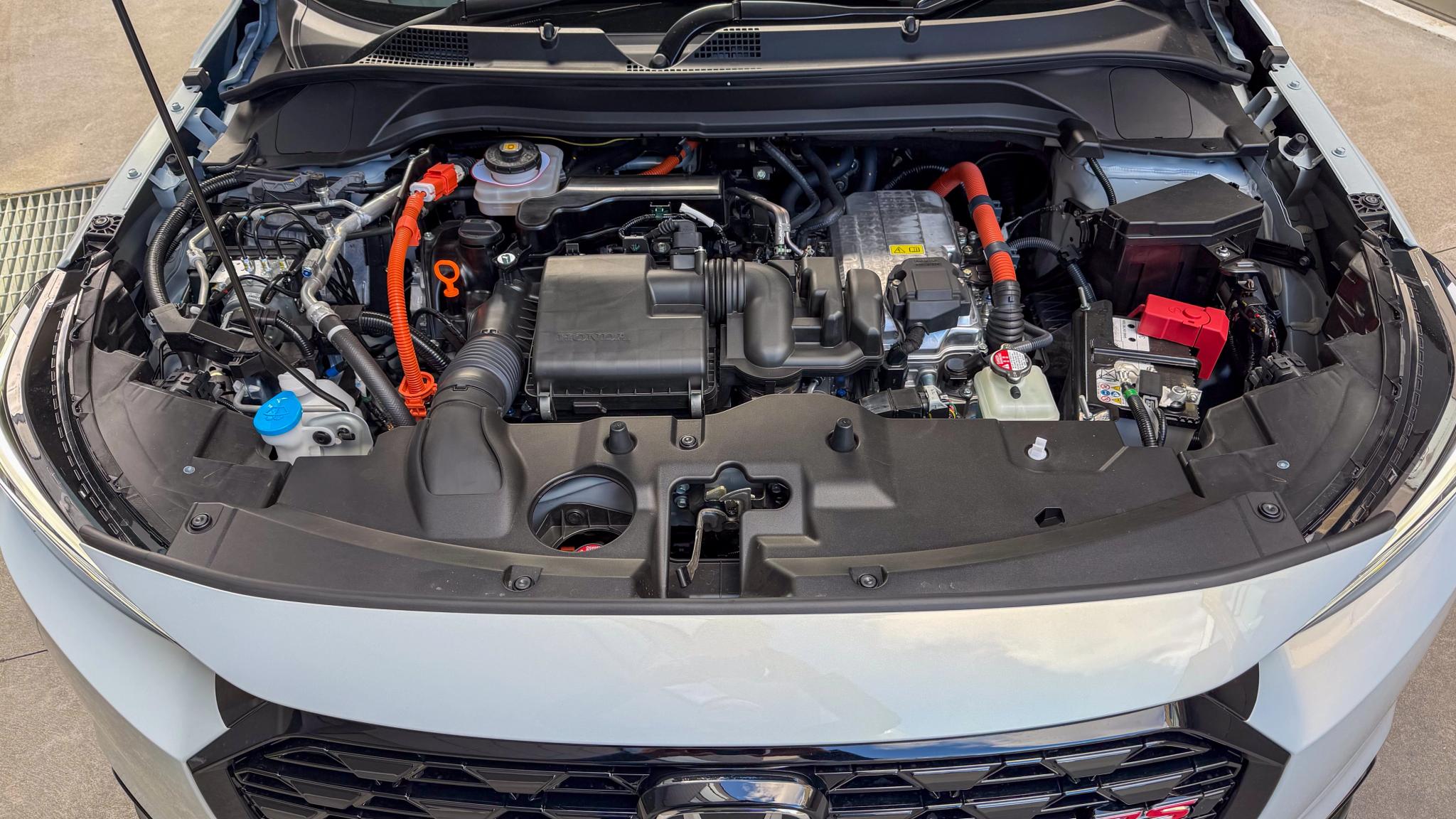
Motorway driving is where the efficiency advantage shrinks. At higher speeds the HR-V relies more heavily on its petrol engine, so fuel use climbs into the mid fives.
Servicing is due every 12 months or 10,000km, which is a shorter distance interval than the 15,000km some rivals offer. Honda offsets it with capped pricing that is among the cheapest in the segment.
| Service | Interval | Price |
| 1 | 12 months / 10,000km | $199 |
| 2 | 12 months / 10,000km | $199 |
| 3 | 36 months / 30,000km | $199 |
| 4 | 48 months / 40,000km | $199 |
| 5 | 60 months / 50,000km | $199 |
The 5 year total is just $995.
Warranty is five years and unlimited kilometres for private buyers, with the hybrid battery module covered for eight years. Honda also includes five years of connected services and map updates, which helps offset the high purchase price.
Is the HR-V RS safe?
The HR-V carries a four-star ANCAP rating from 2022, which applies across the range. Adult occupant protection scored 82% and child occupant protection 77%, with vulnerable road user protection at 72% and safety assist at 69%.
The gaps are specific rather than general. There is no centre airbag between the front occupants, far-side impact performance was rated marginal, and there is no rear autonomous emergency braking or driver attention monitor, all of which are now common at this price.
The active safety list is otherwise solid. Honda Sensing is standard across the range with forward AEB, lane keep assist, road departure mitigation, adaptive cruise with low-speed follow, traffic sign recognition and traffic jam assist, while the hybrids add blind-spot monitoring and rear cross-traffic alert.
In practice the systems are well calibrated by class standards, with no shrieking speed-limit chimes and an adaptive cruise system that holds a sensible gap. The one tune we would change is the lane centring, which sits a touch left of centre on Australian lanes and needs a nudge to stay honest.
Child seat provision is two ISOFIX points and two top tethers, matching the four-seat layout. If you need three across, this is not your car.
What are the main competitors to the HR-V RS?
The MG ZS Hybrid+ is the value option, with the top Essence hybrid at $33,888 driveaway, more than $10,000 under the RS. It has five seats, a bigger screen and a longer features list, and the hybrid drivetrain is genuinely good, but the Honda counters with better damping, quieter running and a cabin that will still feel solid in five years.
The GWM Haval Jolion is the equipment answer, with the flagship Ultra Hybrid at $38,990 driveaway and a kit list that includes the 360-degree camera the Honda skips. It is roomier and cheaper, though the ride is less resolved and the driver assistance is more talkative, which is exactly where the HR-V pulls back ahead.
The Toyota Yaris Cross is the efficiency benchmark and the closest thing to a direct philosophical rival, landing in the low $40,000s driveaway in upper grades. It matches the Honda on frugality and beats it on resale confidence, but it is smaller inside, noisier and nowhere near as clever with its rear seats.
The Hyundai Kona Hybrid is the grown-up alternative, priced from $36,950 before on-roads and stretching to $48,950 for the flagship. It is bigger, better equipped and offers five seats with a proper boot, which makes it the obvious pick for anyone who found the HR-V's four-seat layout a dealbreaker.
Cross-shop on price and equipment and the MG and GWM will make the Honda look indefensible on paper. Cross-shop on how a car feels after six months of potholes, school runs and wet Monday mornings and the HR-V starts winning the argument back.
Should I buy the HR-V RS?
Yes to the HR-V, maybe to this particular one. The car underneath is excellent, and the hybrid, the ride quality, the Magic Seats and the cheap servicing make a strong case for a small SUV you keep for a decade.
The RS just is not where the value sits. Our pick is the e:HEV X at $39,900 driveaway, which gives you every mechanical strength of this car for $4,500 less, and the Vi X at $32,900 driveaway remains the sharpest buy if you can live without the hybrid.
Buy the RS if the styling is what sells you on the car and you are comfortable paying for Honda's engineering rather than its features list. It is the best HR-V to drive and to look at, and the only question is whether you need it to be the best-value one as well.
VerdictThe Beep Verdict
Rob Leigh
Co-founder & Director
Rob Leigh is Co-founder and Director of The Beep based in Melbourne, Australia. He has 15+ years inside a major automotive OEM, specialising in product planning, pricing and vehicle strategy.
About Author