2026 Toyota bZ4X review
The updated bZ4X finally has the range, the price and the equipment to matter in a crowded electric SUV segment, provided you can live with where Toyota has put the instruments.

Rob Leigh
Pros
- Huge range gain for a much smaller price
- Genuinely excellent real-world efficiency
- Quiet, easy, unbothered on any commute
Cons
- Driving position ruins it for some drivers
- Boot and storage trail the class
- Nothing about the drive excites
Our verdict
The bZ4X finally feels like the EV Toyota should have launched in the first place. It’s efficient, easy to drive and now seriously competitive on price. It does the things that matter – range, efficiency and calm – better than almost anything at the price. The catch is a cabin layout that will either suit you perfectly or irritate you every single day, so the test drive is not optional here.
What does the bZ4X cost in Australia?
Toyota has wielded the scalpel on the pricing. The 2WD bZ4X now lists from $55,990 plus on-roads, a reduction of $10,010, while the AWD is down $6,910 to $67,990.
| Specifications | 2WD | AWD | Touring AWD |
| Price excluding on-roads | $55,990 | $67,990 | $69,990 |
| Powertrain | Electric | Electric | Electric |
| Power | Torque | 165kW | 268.6Nm | 252kW | 438.4Nm | 280kW | - |
| Transmission | 1 speed | 1 speed | 1 speed |
| Drivetrain | FWD | AWD | AWD |
| 0-100km/h | 7.4 sec | 5.1 sec | 4.5 sec |
| Electric range (claimed) | 591km | 517km | 488km |
| Battery | DC charging | 74.7kWh | 150kW | 74.7kWh | 150kW | 74.7kWh | 150kW |
| Braked towing | 750kg | 1500kg | 1500kg |
| ANCAP | Five stars (2025) | Five stars (2025) | Five stars (2025) |
| Warranty | 5 years | Unlimited km | 5 years | Unlimited km | 5 years | Unlimited km |
See bZ4X driveaway pricing and specifications →
Two years ago the bZ4X was the expensive answer to a question nobody asked; now it is priced like a Toyota should be.
That entry price is the big headline because it drops the Toyota below the Tesla Model Y RWD ($58,900), the Zeekr 7X ($57,900) and the Kia EV5 ($56,770), and within a whisker of the BYD Sealion 7 and XPeng G6.
The extra $12,000 for the AWD gets you 20-inch wheels, a fixed panoramic roof, ventilated and memory front seats, JBL audio, a digital rear-view mirror, auto parking and X-Mode off-road settings. It also gets you 74km less range and doubles the towing capacity. We would keep the cash.
If a more capacious load bay is required, the wagon-bodied bZ4X Touring comes above this range from $69,990 plus on-roads, and we have reviewed that separately here.
What does the bZ4X look like?
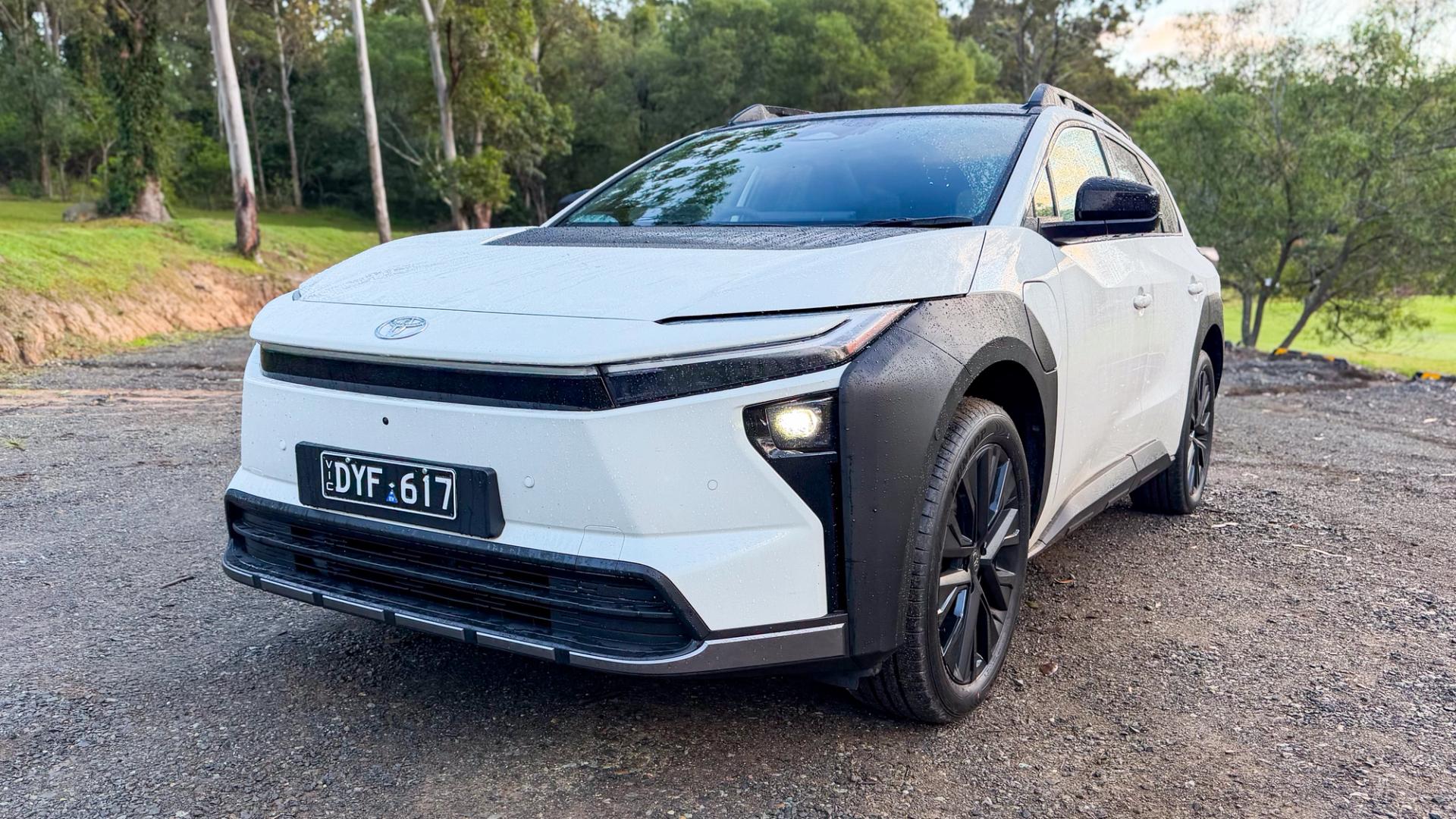
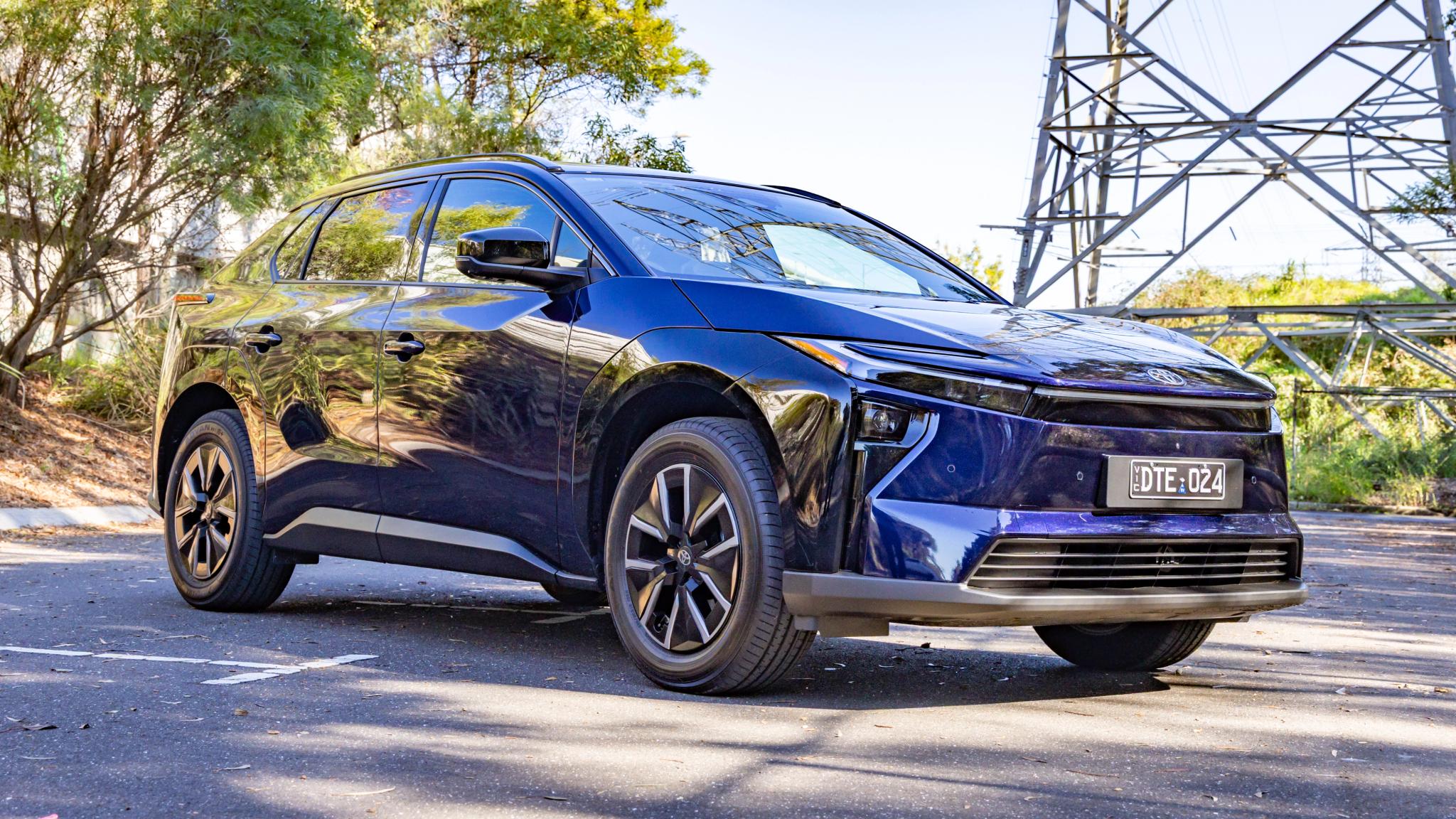
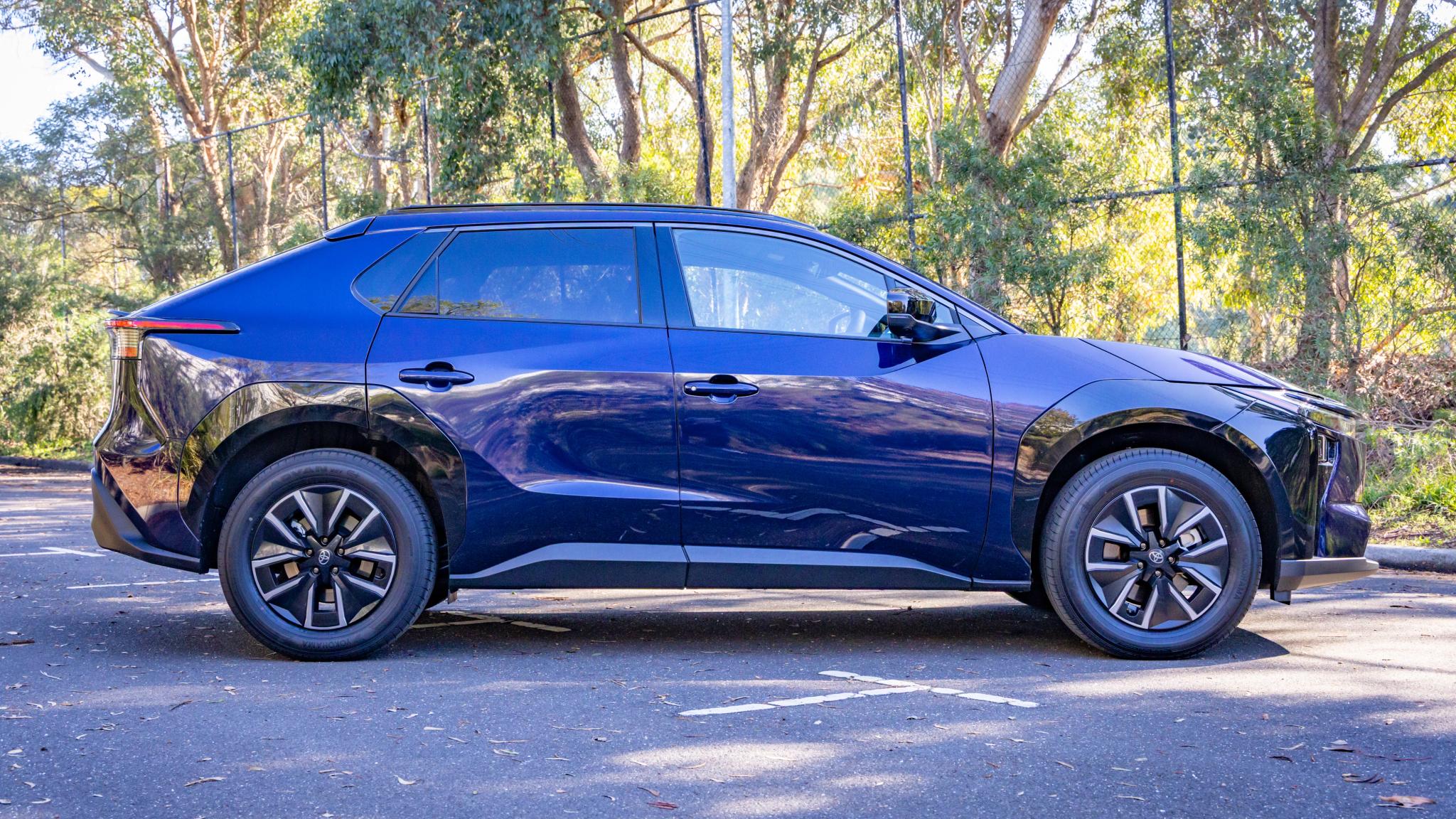
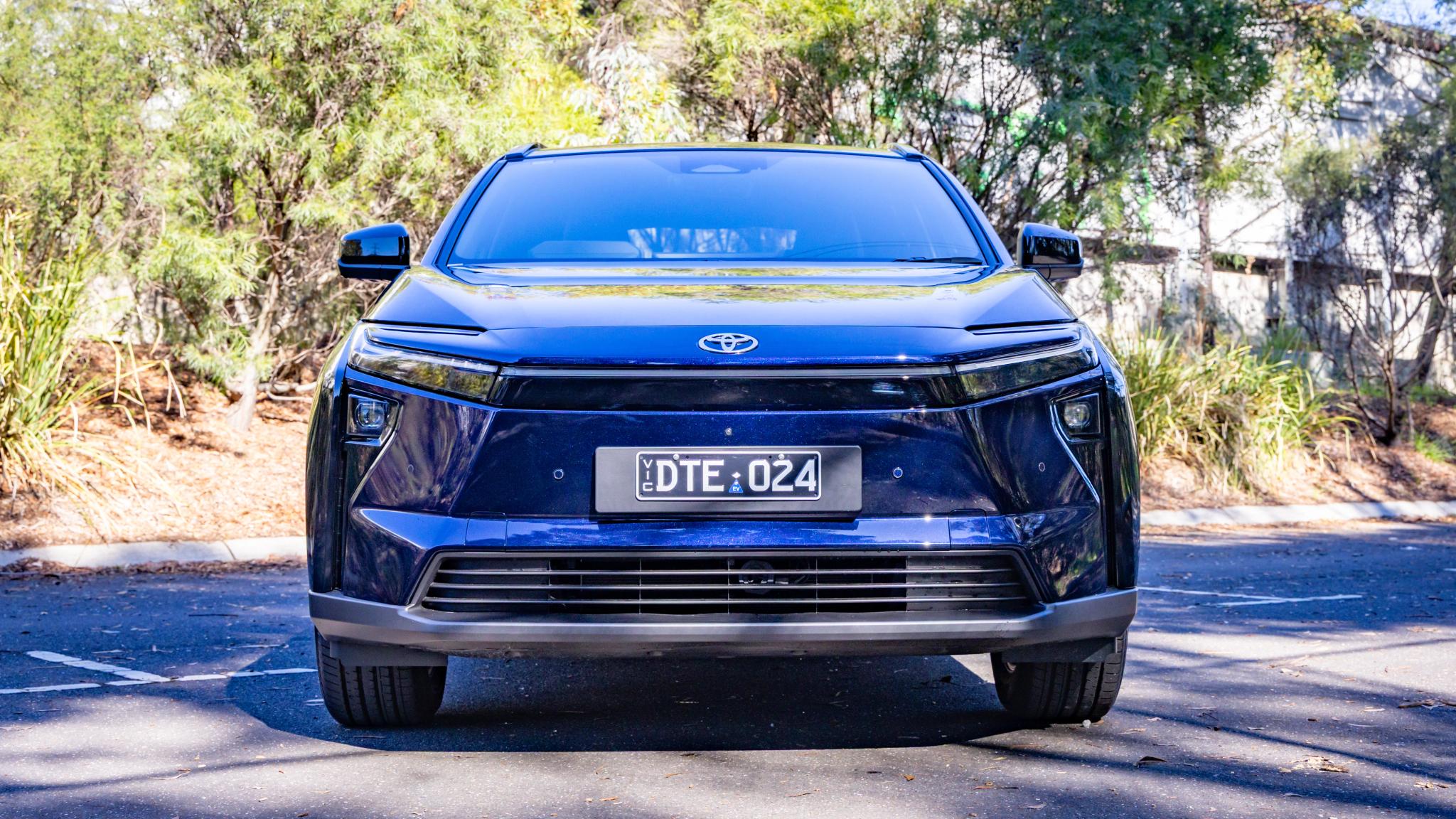
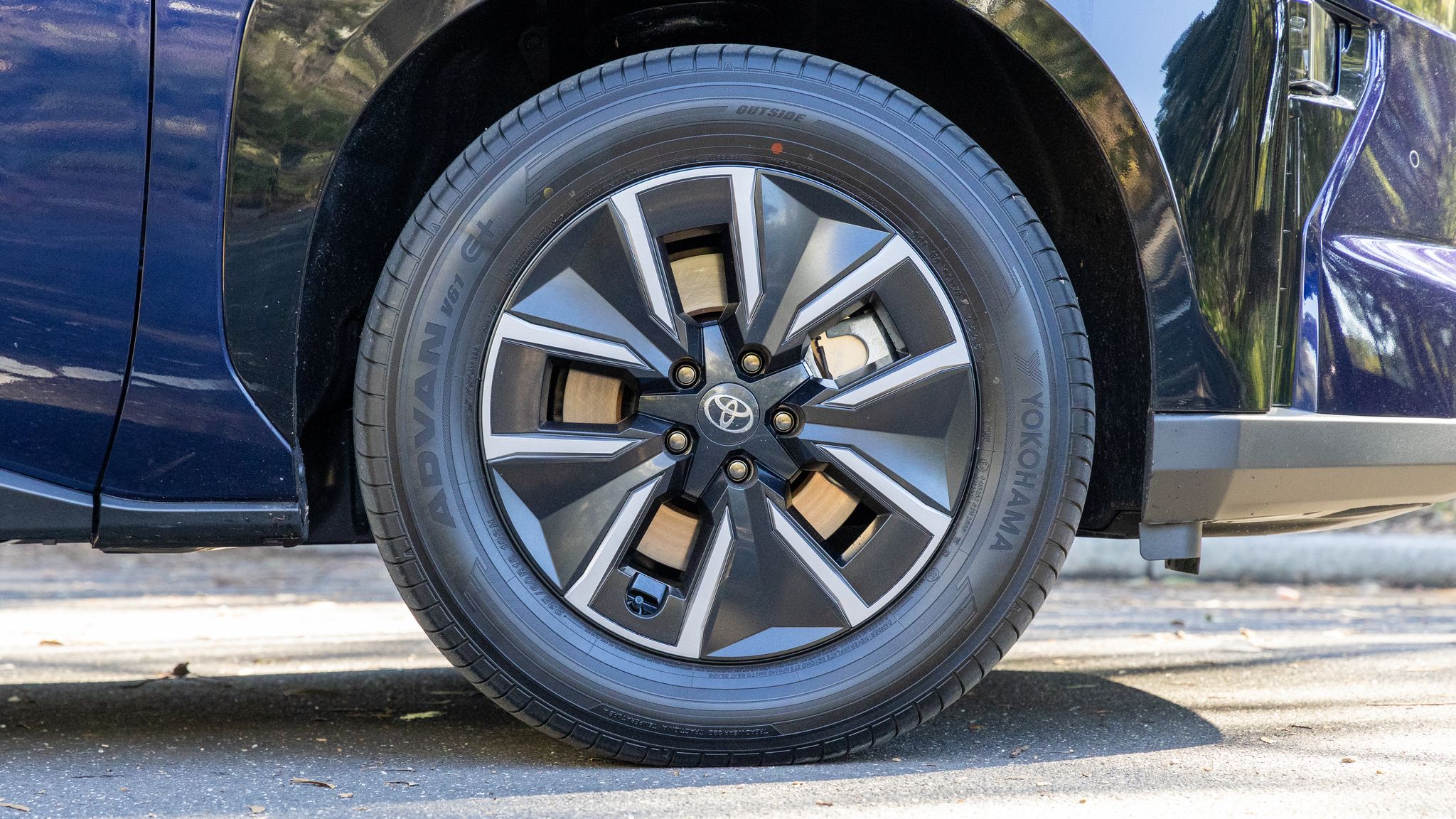
Toyota has gone for a clean rather than a drastic look with new split headlights and a reprofiled front bumper sharpening the aggressive front. There’s gloss black finish applied to the wheel arches and the 2WD sports a new 18-inch wheel with two-tone aero covers in place of the 20s fitted to the old 2WD bZ4X.
Dropping the wheel size is usually a no go from the manufacturer, but in this case it is one of the single best things Toyota has done. It adds range and also smooths out the ride, while the AWD retains its 20s at a cost.
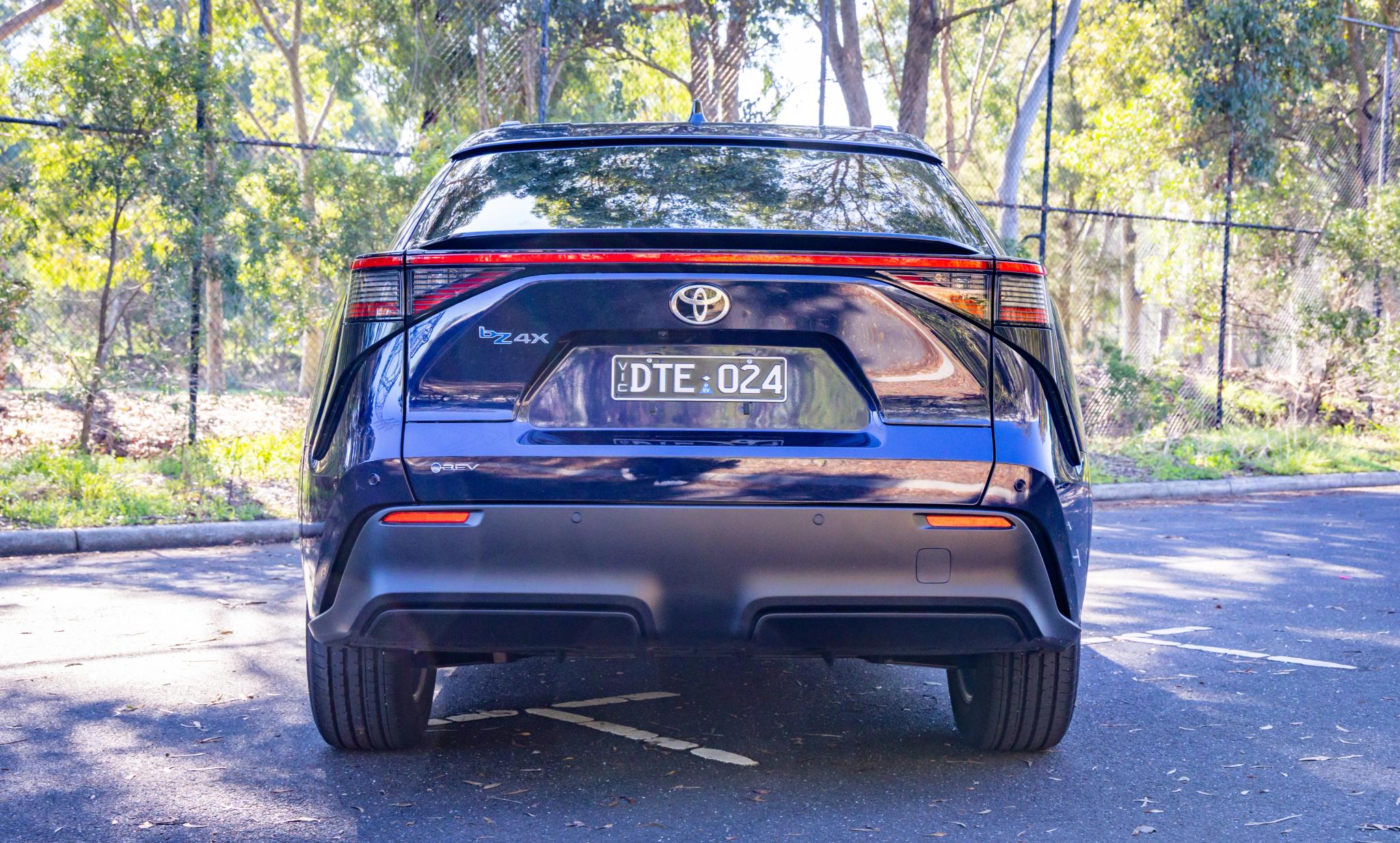
The proportions are still a struggle. At 4690mm long and 2850mm between wheels, it falls between a RAV4 and a Model Y, but its tapered profile and solid sides give it the look of a large hatchback trying to emulate an SUV. It is pretty much inoffensive from any angle and forgettable from all angles.
Black is the only no-cost colour. Saturn Blue, Feverish Red, Liquid Mercury and Frosted White are all $600 more, and all look a little better on the finished product than the free shade.
What is the bZ4X like inside?
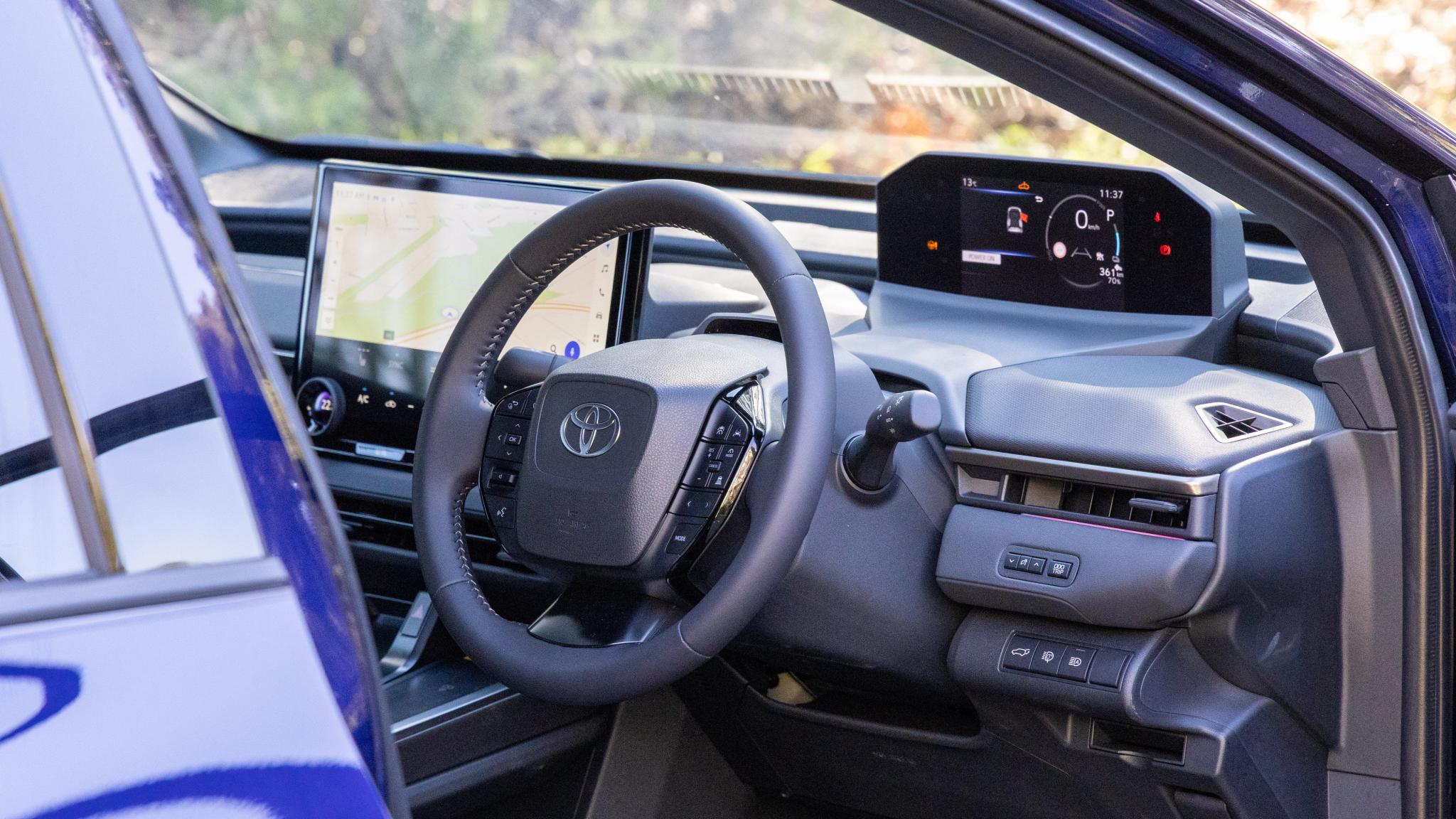
We’ll start with the good news. The 14-inch touchscreen, borrowed from a new Lexus, is a generation on from the previous Toyota offerings, with crisp menus and sharper camera footage. The rotary climate control dials and a volume knob have been retained rather than hidden behind menus in the touchscreen.
Where it falls short is in the software with menus that are confusing to work through, no easily-accessed home screen, and the car can time-out of menus you are fiddling with while on the move (which is sensible enough from a driver safety perspective, but frustrating as a passenger trying to direct your driver to a destination).
Wireless Apple CarPlay and Android Auto are standard fitment and, realistically, most owners will spend their time connected to their phones rather than in the Toyota menus.
There are some drawbacks with the high-mounted digital instrument cluster. Toyota has mounted it high on the dash, which means you look over the top of the tiny steering wheel, rather than through it.
It works for those with long legs, but for anyone who likes to sit lower in the driving position the wheel rim cuts into the display at the top or bottom, and you are forced to choose between seeing your speed or having the steering wheel in the correct position. There is no head-up display to offset the lack of visibility of the speedometer.
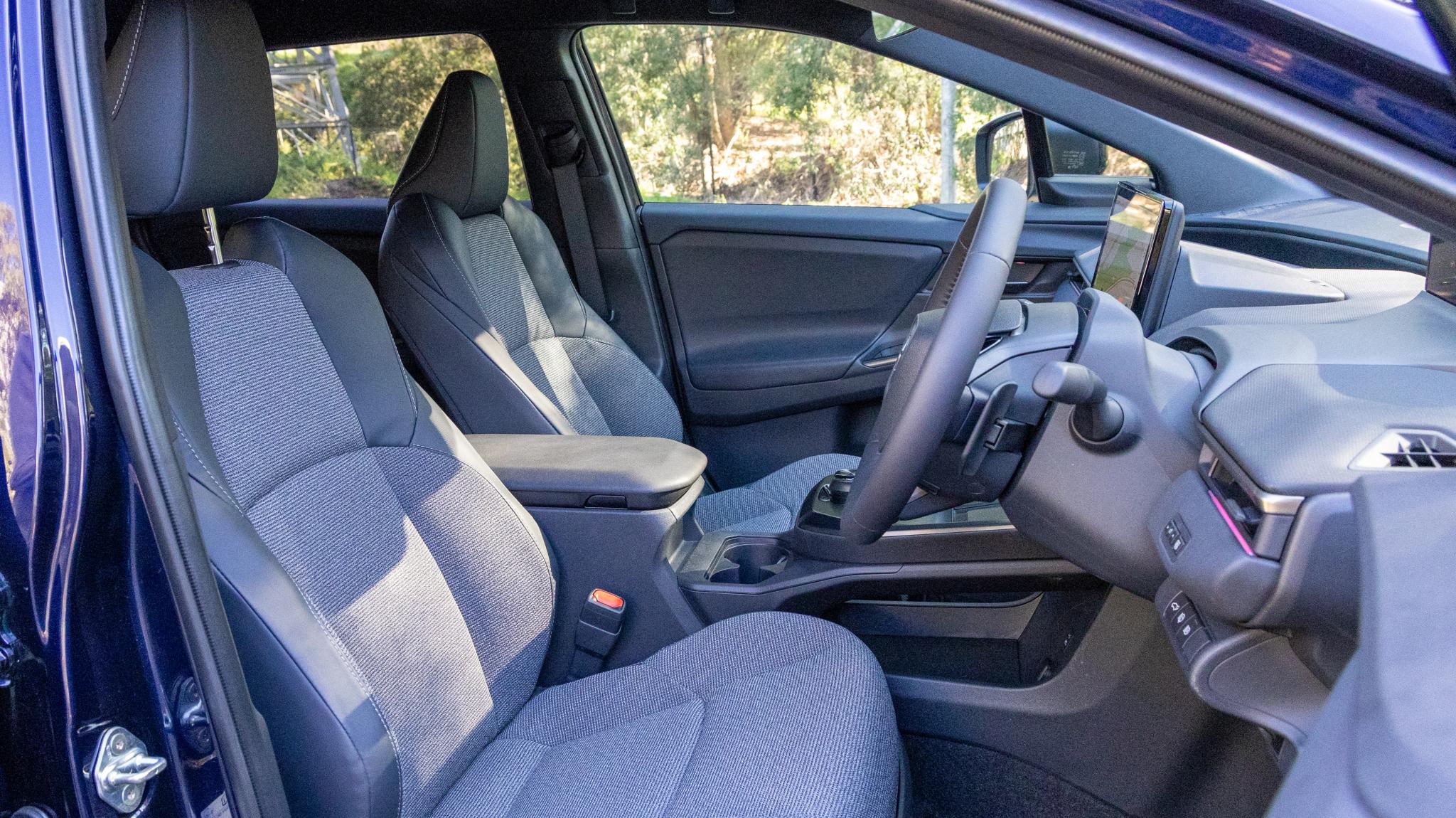
The quality of materials on offer is fairly average. Leather-look material is stretched across the dash and door inserts with little softness or give, the headliner is a very dark colour which makes the cabin feel a little like a cave, and the best thing for your back to lean up against are the seat centres in the front seats (which are covered in cloth, not the synthetic leather that dominates the interior).
Storage is lacking. There is no room for a glovebox because the space is taken up by the under-dash radiant heater, the centre console is relatively shallow, and the door pockets don’t offer a massive amount of space.
Positives include the presence of two places for wireless charging of compatible phones just in front of the centre console, and the sideways-opening lid of the console is a neat trick and will please plenty of drivers.
How practical is the bZ4X?
The second row is better than the official numbers let on with plenty of legroom, adjustable seats with a large range of movement for the backrest angle and a near flat floor meaning that the middle seat has to be reserved for children.
In the second row, the high battery floor and lack of low floor space underneath the seats means there is very little room for the shins of the passengers and very little support for those long legs.
It is well-equipped for family needs with three top tether positions and two ISOFIX mounting points for child seats, three air vents, three USB-C sockets, map pockets, bottle holders and an armrest with cup holders and a slot for a tablet computer.
The boot is 452L in volume and the AWD loses a few more litres to accommodate the extra hardware in its underfloor battery. It is a wide, useable space with a cover over the aperture, plenty of bag hooks and space underneath the load floor to stash away charging cords, but we have seen larger spaces in the Model Y and EV5.
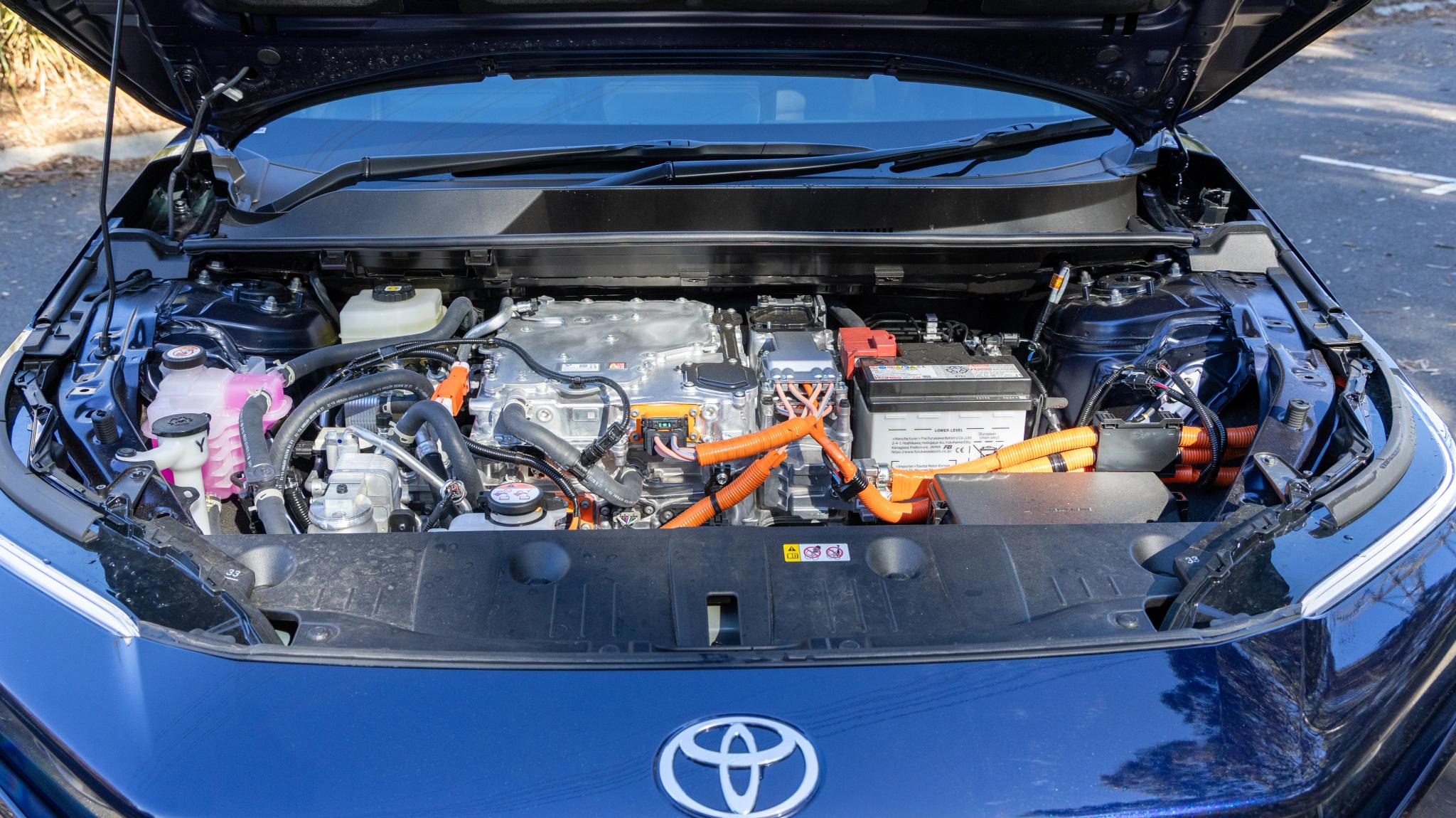
There is no ‘frunk’, just a 1500W vehicle-to-load socket in the boot which could power a number of electrical appliances including a fridge or freezer, a camping coffee machine, a power tool, a small electric kettle or a couple of portable heaters (Toyota recommends that it should not be used to power high-energy appliances such as ovens).
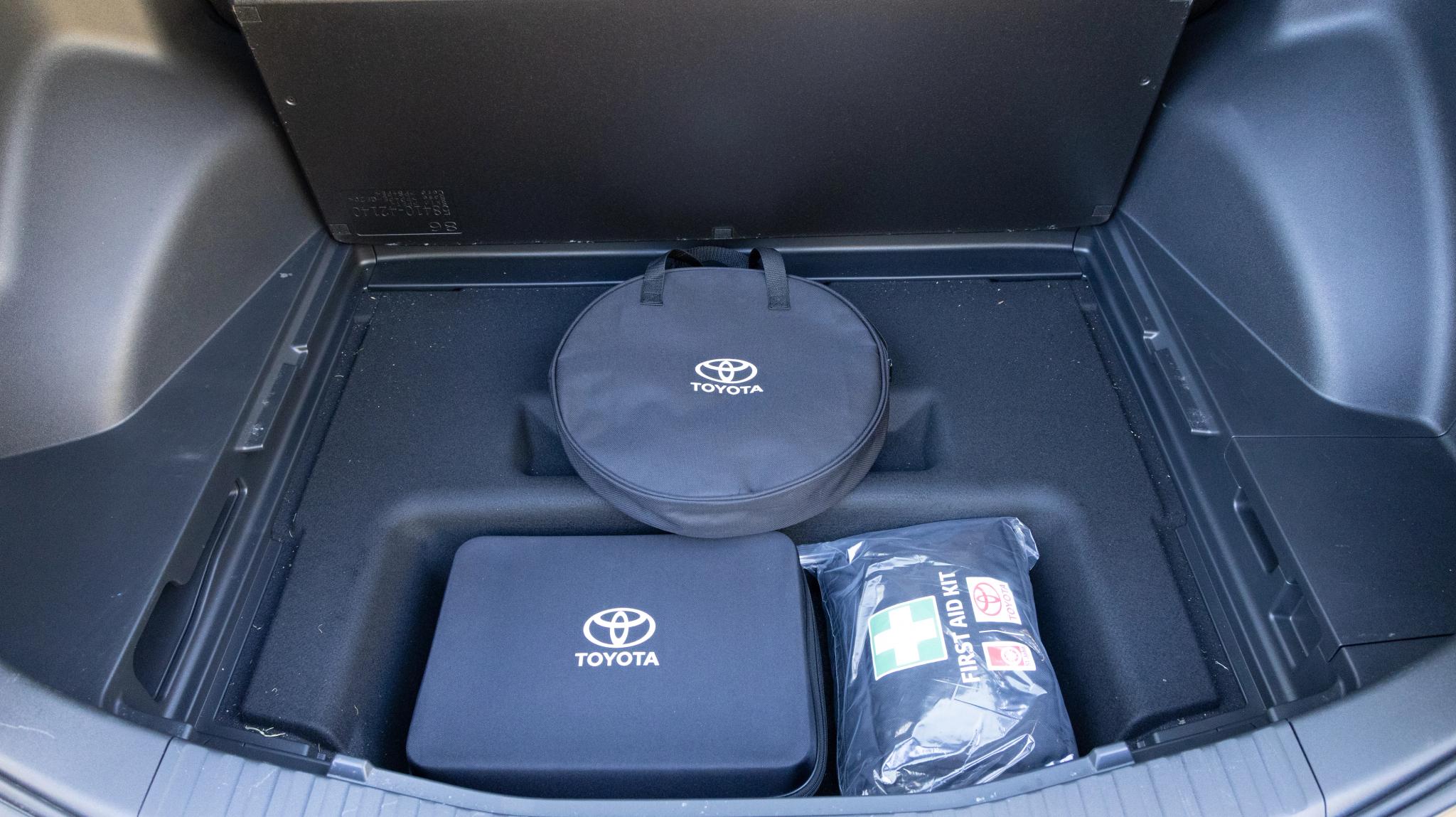
There’s no spare wheel, just a tyre repair kit, which feels like a disappointing omission in a Toyota built with long-distance and regional driving in mind.
What is the bZ4X like to drive?
The bZ4X is the definition of a calm and quiet room. It pulls away smoothly and doesn’t get in the way of the driver.
The front-wheel-drive 2WD bZ4X puts its power to the front wheels, and its motor produces maximum torque from 0rpm. It is claimed to sprint from 0-100km/h in 7.4 seconds, which is slightly faster than the time it felt in our testing.
It’s hard to put your finger on the exact point at which the motor loses its punch, but the front-wheel drive and the 675kg battery pack weighing it down in the middle of the chassis means that the front wheels can lose traction if the motor is asked to put too much power down on a slippery surface. It’s more alarming than dangerous, and we didn’t notice the problem in the AWD bZ4X.
It’s a fairly comfortable ride with 18-inch wheels and the tall tyres that come on those wheels to soak up a lot of the harsher road imperfections. The body rolls quite a bit when cornering, but that’s not a bad thing in a family wagon, and it settles back into a comfortable stance at higher speeds.
There is very little feeling coming through the steering and you just have to trust the wheel when cornering at speed. It also tells you very little, so on a good road you drive it accurately rather than enthusiastically.
There are four levels of regenerative braking available via the paddles mounted on the wheel, and the paddle mounted on the floor, and they are worth getting to know if you want to maximise your range. It does lack a true one-pedal driving mode, so when you lift your foot from the accelerator you’ll need to apply the brakes to come to a complete stop, and the regen level is reset each time you turn the key which is a little inconvenient.
The one real intrusion on all this calm is road noise. On coarse chip surfaces the tyres set up a drone that a car this otherwise refined should not have.
How efficient is the bZ4X?
This is where the bZ4X has improved most.
The larger 74.7kWh battery and the improved eAxle architecture increases the 2WD bZ4X’s range to 591km (up 155km), while the AWD is rated for 517km between charges.
What is even more impressive is that the range rating translates into real-life range. We’d recommend that you set your expectation at around 14-15kWh/100km of driving in mixed conditions, which equates to a real-life range of 450-500km. For a vehicle with this level of range in the segment, it is impressive value.
Charging is a mixed result with AC charging capacity of 22kW, which is the benchmark for this class and means about 3.5 hours of charging time will get you to a full battery if you have a three-phase home charger set up. DC charging capacity is 150kW, and while the manufacturer claims 45 minutes to charge from 10-80%, in the real world the results we saw in the bZ4X were around 30 minutes to charge from 10 to 80%.
| Servicing | Detail |
| Interval | 12 months / 15,000km |
| Cost per visit | $180 |
| Total, 5 years / 75,000km | $900 |
| Roadside assistance | $99 per year, extra |
The bZ4X is covered by a five year, unlimited-kilometre warranty, and seven years of coverage on the electric motors if you maintain the vehicle according to schedule. The high-voltage battery is warranted for eight years or 160,000km, and can be extended to 10 years if you book in for annual Toyota battery health inspections.
Charging roadside assistance is separate when nearly every rival includes it. That feels like a petty way to claw back a few dollars.
Is the bZ4X safe?
The bZ4X holds a five-star ANCAP safety rating (2025 criteria) and is rated to the latest criteria rather than holding a carryover rating. Safety scores are 88/100 for adult occupant protection, 86/100 for child occupant protection, 80/100 for vulnerable road user protection, and 82/100 for safety assist.
Eight airbags, autonomous emergency braking with cyclist/motorcycle detection, adaptive cruise with stop and go, blind spot monitoring, rear cross traffic alert, safe exit assist, lane centring and a 360 camera come as standard on all variants.
It is a well-rounded safety feature list. Lane keeping does not fight you, the speed sign reading system does not constantly beep at you, and there is a button to turn off the lane keeping system entirely. Lane centring in particular is nicely calibrated – it is not a constant or violent tug, but keeps you right in the centre and only steps in when you are straying into another lane.
The driver monitoring system is the only feature we found intrusive, because it constantly insists you be upright and looking forward when you already are, and can interrupt driving on the open road. It makes for a frustrating and inconsistent experience.
What are the main competitors to the bZ4X?
The Tesla Model Y is the benchmark, from around $58,900 plus on-roads. It has the bigger boot, the frunk, the faster charging, the better software and the Supercharger network, and it remains the sharper thing to drive. The Toyota answers with better efficiency, a conventional cabin layout, physical controls and a dealer in every regional centre, which matters more to some buyers than any spec sheet.
The Kia EV5 is the family pick from around $56,770 plus on-roads. It packages its space more cleverly than the Toyota, feels roomier in the second row and comes with a seven-year warranty. The bZ4X counters with substantially more claimed range and better real-world consumption.
The BYD Sealion 7 is the value option from around $54,990 plus on-roads. It undercuts the Toyota, throws more equipment at you and feels flashier inside. It cannot match the bZ4X for efficiency, and the Toyota feels the more resolved and better isolated car on a long drive.
The Zeekr 7X is the upmarket option from around $57,900 plus on-roads. Its 800-volt architecture makes DC fast charging genuinely quick, the cabin feels a class above for materials and screen response, and even the base car gets gear the Toyota reserves for its flagship. The bZ4X answers with better efficiency, cheaper capped-price servicing and a service network with real depth.
Cross-shop on efficiency, running costs and peace of mind and the bZ4X makes a strong case. Cross-shop on boot space, cabin tech or charging speed and it starts losing arguments quickly.
Should I buy the bZ4X?
The update turned a mediocre, overpriced EV into a seriously competitive one. Nearly 600km of claimed range, real-world efficiency that beats cars costing far more, $900 of servicing across five years and a calm, quiet, low-effort driving experience add up to a sensible family EV.
Buy the 2WD. The AWD is quicker and grippier in the wet, but $12,000 and 74km of range is a heavy price for traction most owners will most likely never use.
There’s no major deal-breaker here. It’s just let down by a few annoying things, mainly the awkward instrument layout, small boot and lack of included roadside assistance.
Take a long test drive and take whoever else will be driving it. If everyone gets comfortable behind that wheel, this is one of the smartest EV buys in Australia right now. If they do not, no amount of range will fix it.
VerdictThe Beep Verdict
Rob Leigh
Co-founder & Director
Rob Leigh is Co-founder and Director of The Beep based in Melbourne, Australia. He has 15+ years inside a major automotive OEM, specialising in product planning, pricing and vehicle strategy.
About Author