2026 Subaru Forester review
Subaru's petrol Forester isn't particularly efficient, and its interior is more rugged than flashy. But few family SUVs are as comfortable or capable once the bitumen runs out.

Rob Leigh
Pros
- Permanent AWD and 220mm of clearance make it genuinely capable on dirt
- Full-size spare, a square boot and excellent visibility
- Accurate steering and a settled, comfortable ride
Cons
- The 2.5-litre petrol is a little thirsty around town
- Portrait screen layout takes some getting used to
- The more efficient hybrid loses the spare wheel
Our verdict
The petrol Forester isn't the most exciting SUV around town, but take it onto a rough country road and you'll quickly understand why people buy them. With permanent all-wheel drive, 220mm of ground clearance and a proper spare wheel, it's better prepared for a trip off the beaten track than most family SUVs. The catch is an engine that's a little thirsty and the more efficient hybrid gives up the spare.
What does the Subaru Forester cost in Australia?
The petrol Forester comes in four grades, from $43,490 before on-road costs for the AWD to $50,990 for the Touring. That's roughly $5000 more than the previous generation, which makes this the most expensive petrol Forester yet.
Every grade gets the same 2.5-litre boxer, CVT and permanent all-wheel drive, so the extra money buys equipment rather than performance. Even the AWD comes with an 11.6-inch touchscreen, wireless Apple CarPlay and Android Auto, a wireless phone charger, heated front seats, dual-zone climate with rear vents and 18-inch alloys.
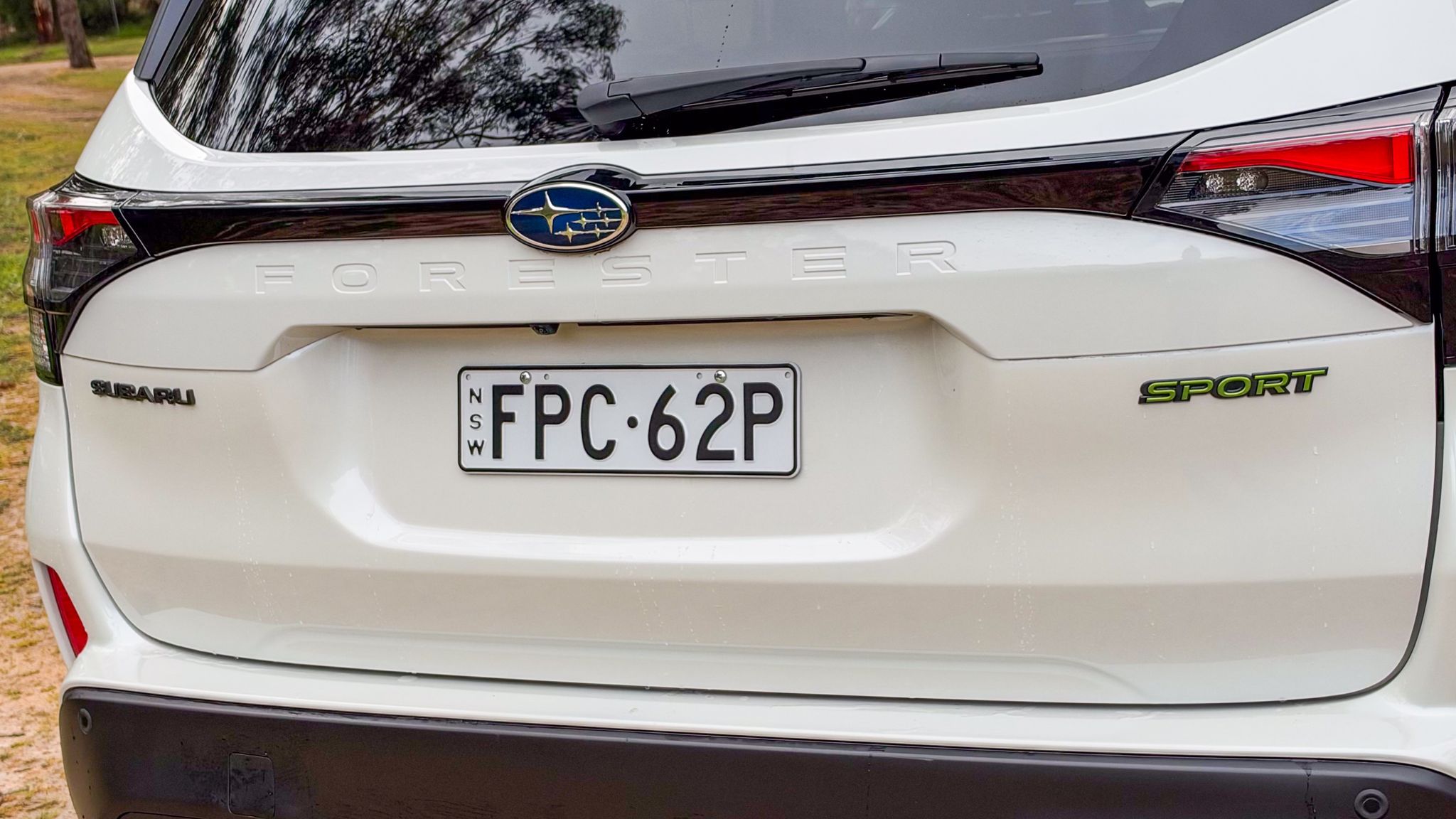
The Premium adds $3000 and brings a hands-free power tailgate, power front seats and built-in navigation. The Sport we tested is another $2000 and adds a sunroof, water-repellent synthetic leather, dark 18-inch wheels with green highlights and a dual-mode X-Mode system with a dedicated deep snow and mud setting.
The Touring tops the petrol range with leather and suede trim, ventilated front seats and a 10-speaker Harman Kardon stereo. Three hybrid grades sit alongside from $46,490 to $55,990, and we'll cover those in a separate review.
The problem for Subaru is that there are some pretty good alternatives for less money. An all-wheel-drive Mazda CX-5 starts at $39,990 and an AWD Nissan X-Trail at $41,305, while Toyota's cheapest AWD RAV4 is $49,340. All-wheel drive across the range softens the blow, but this is no longer a bargain.
| Specifications | AWD | Premium | Sport (tested) | Touring |
| Price excluding on-roads | $43,490 | $46,490 | $48,490 | $50,990 |
| Powertrain | 2.5L petrol | 2.5L petrol | 2.5L petrol | 2.5L petrol |
| Power | Torque | 136kW | 247Nm | 136kW | 247Nm | 136kW | 247Nm | 136kW | 247Nm |
| Transmission | CVT | CVT | CVT | CVT |
| Drivetrain | AWD | AWD | AWD | AWD |
| Fuel use (claimed) | 7.9L/100km | 7.9L/100km | 7.9L/100km | 7.9L/100km |
| Braked towing | 1800kg | 1800kg | 1800kg | 1800kg |
| ANCAP | Five stars (2024) | Five stars (2024) | Five stars (2024) | Five stars (2024) |
| Warranty | 5 years | Unlimited km | 5 years | Unlimited km | 5 years | Unlimited km | 5 years | Unlimited km |
View Subaru Forester driveaway pricing and specifications →
What does the Subaru Forester look like?
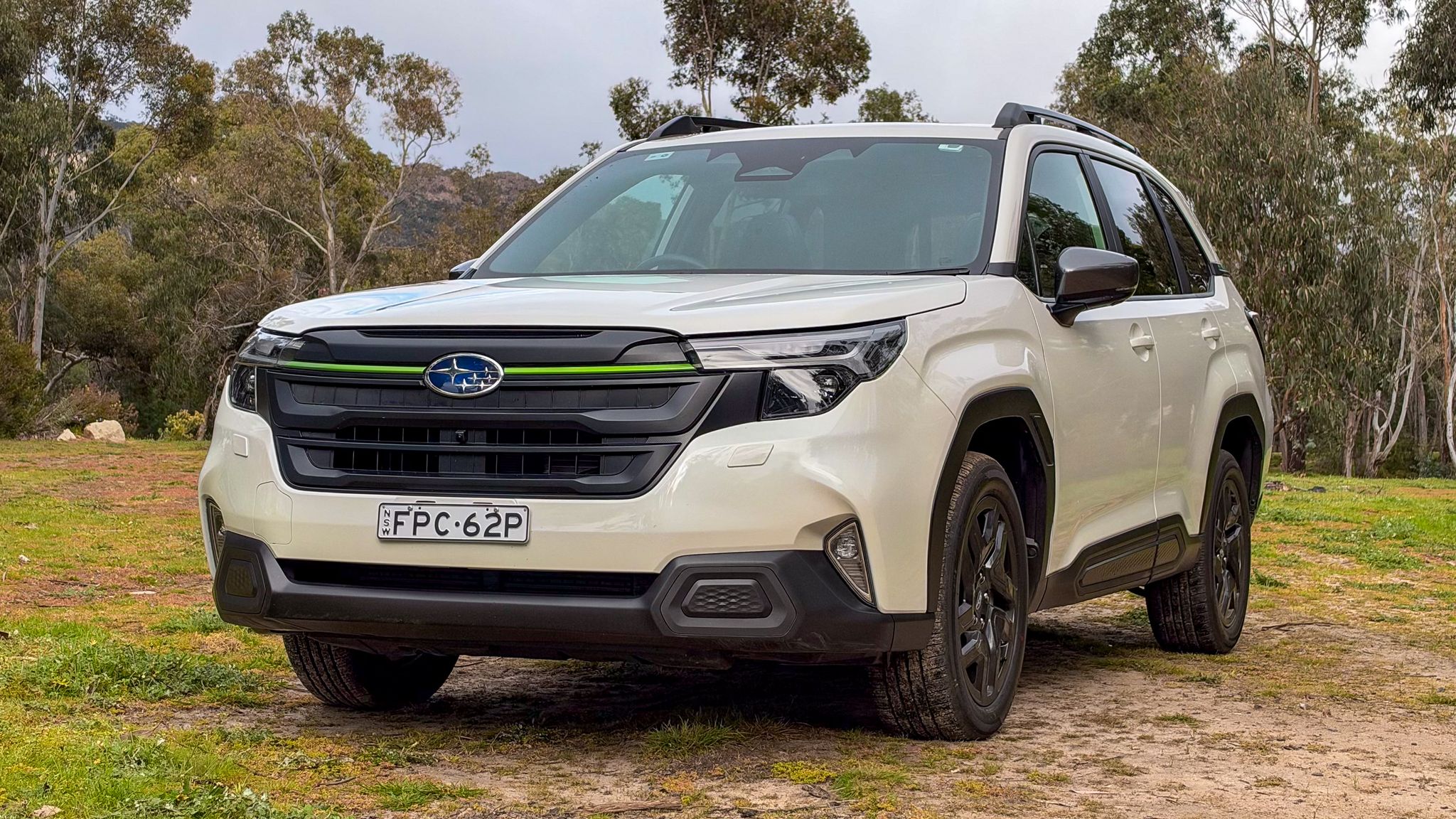
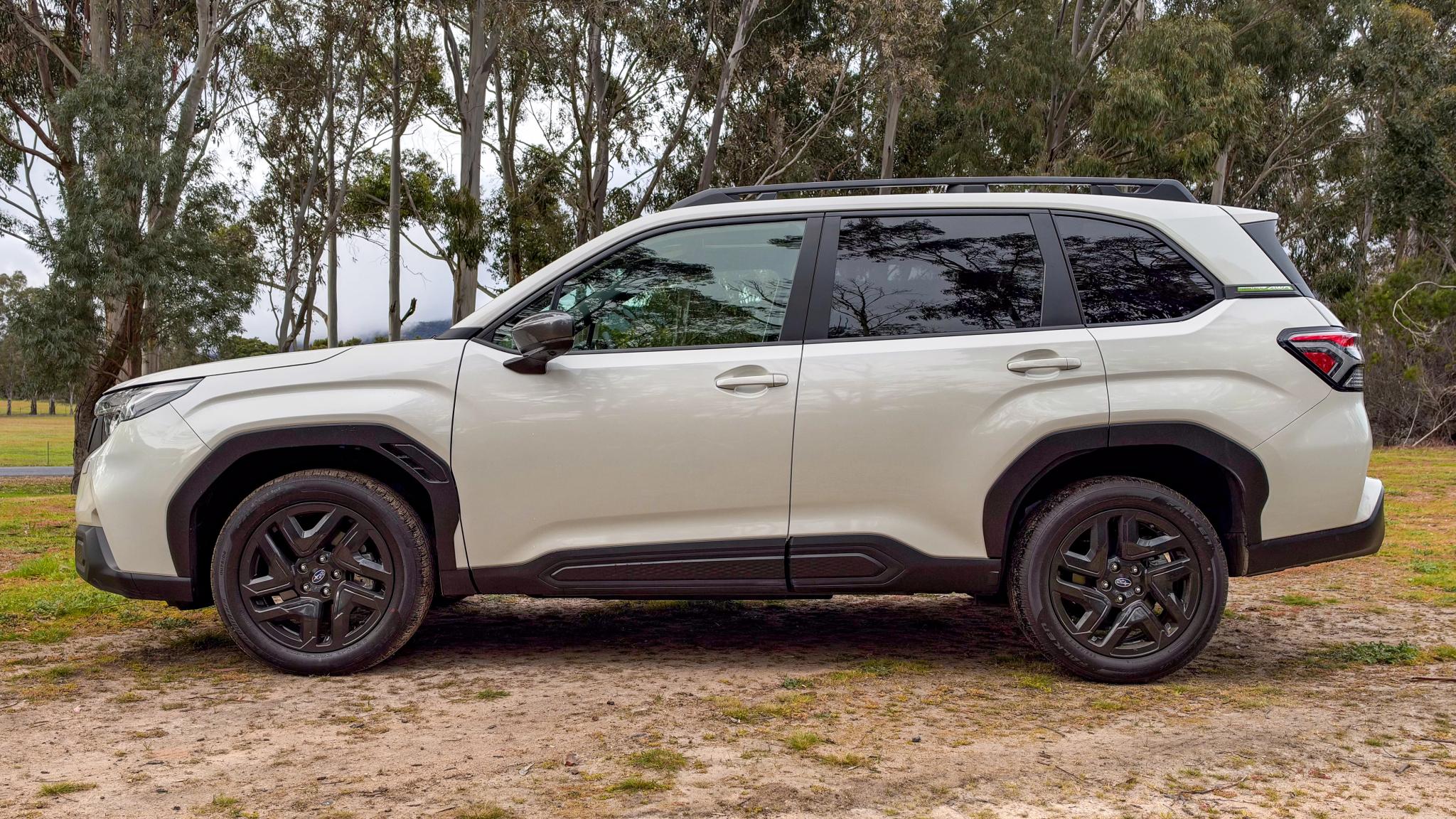
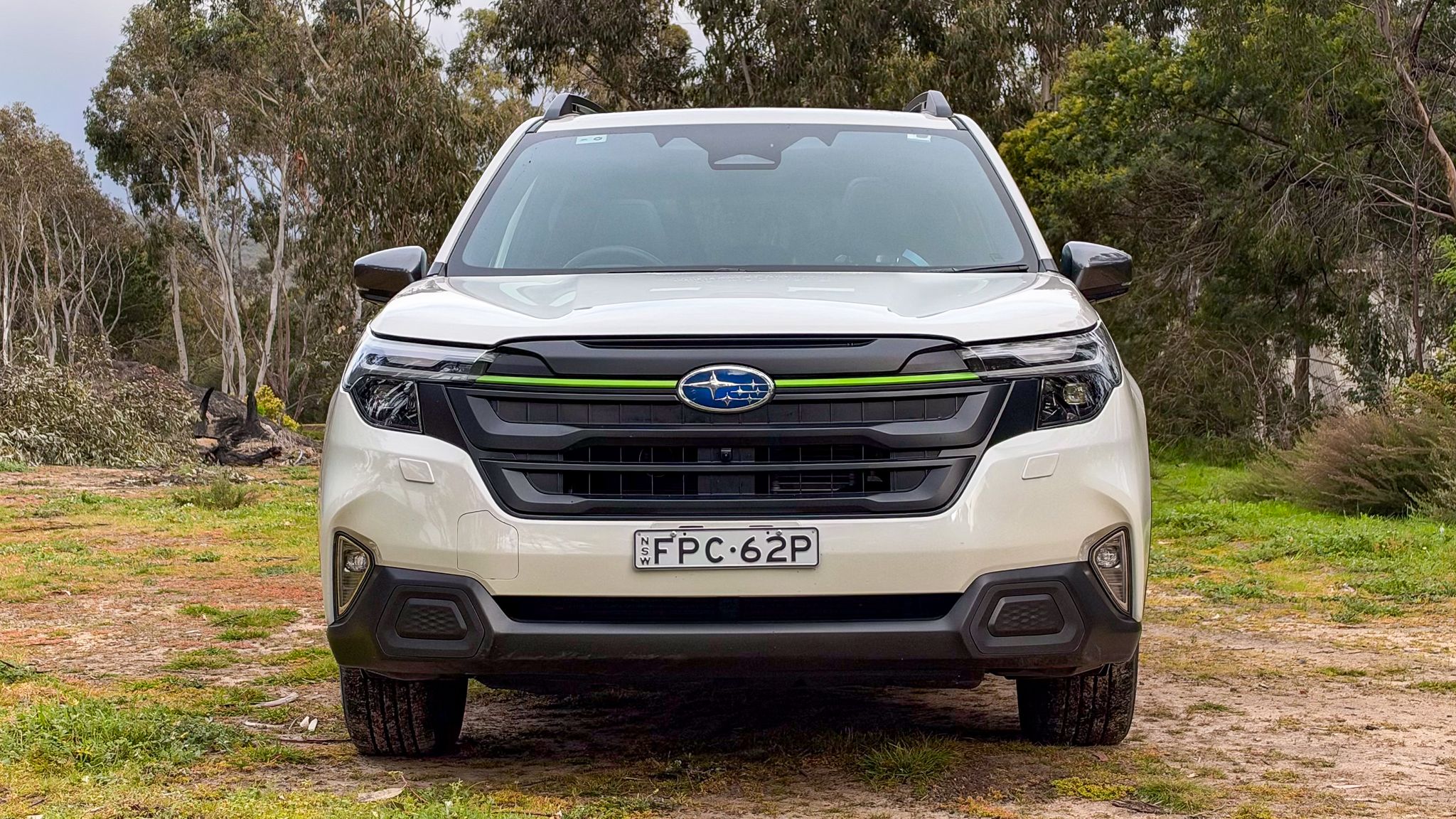
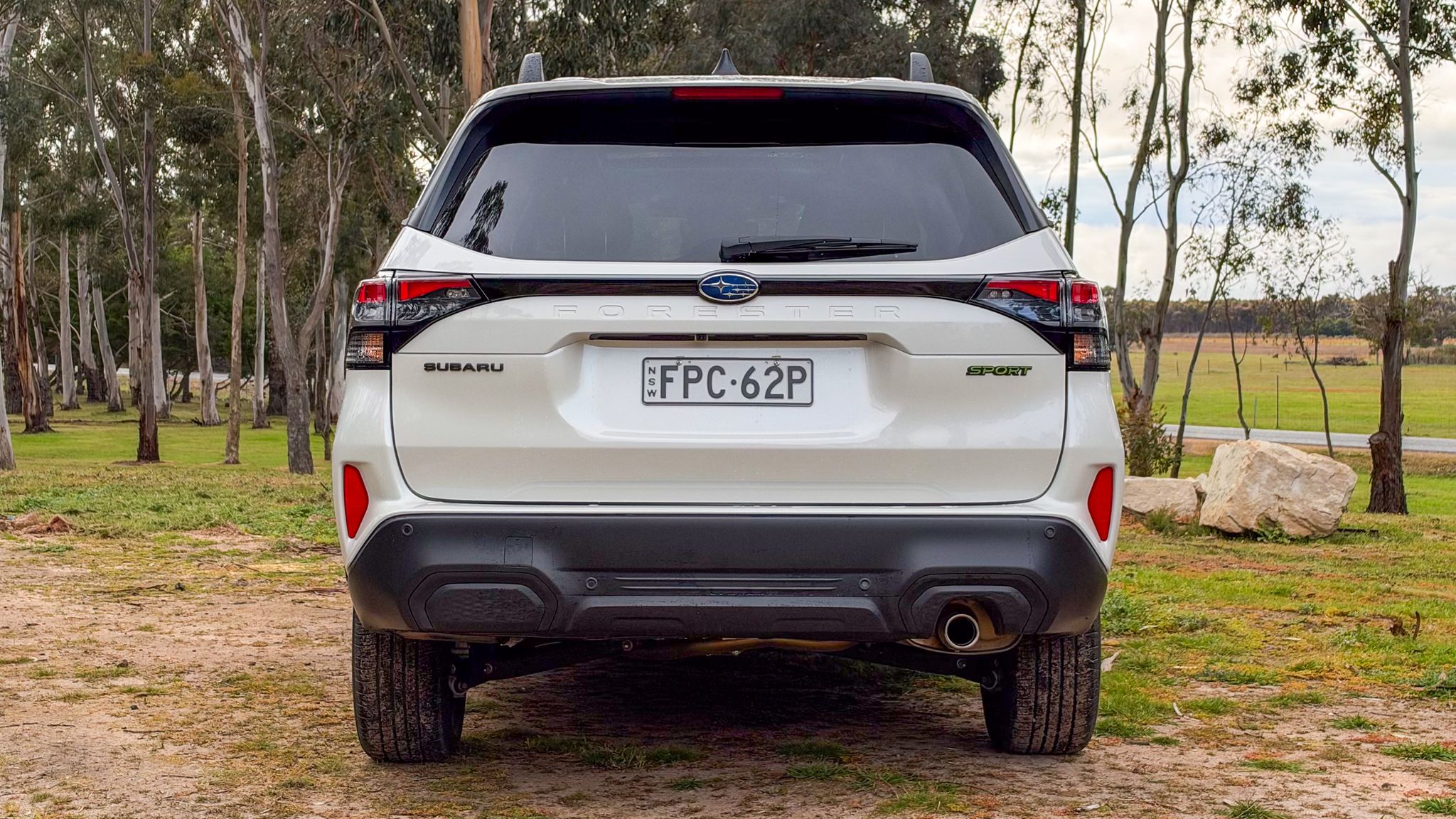
The new Forester has gone squarer and tougher, and it suits it. The upright body, flat bonnet and chunky black cladding give it more of a wagon-on-stilts look than the soft, generic shapes most mid-size SUVs wear now.
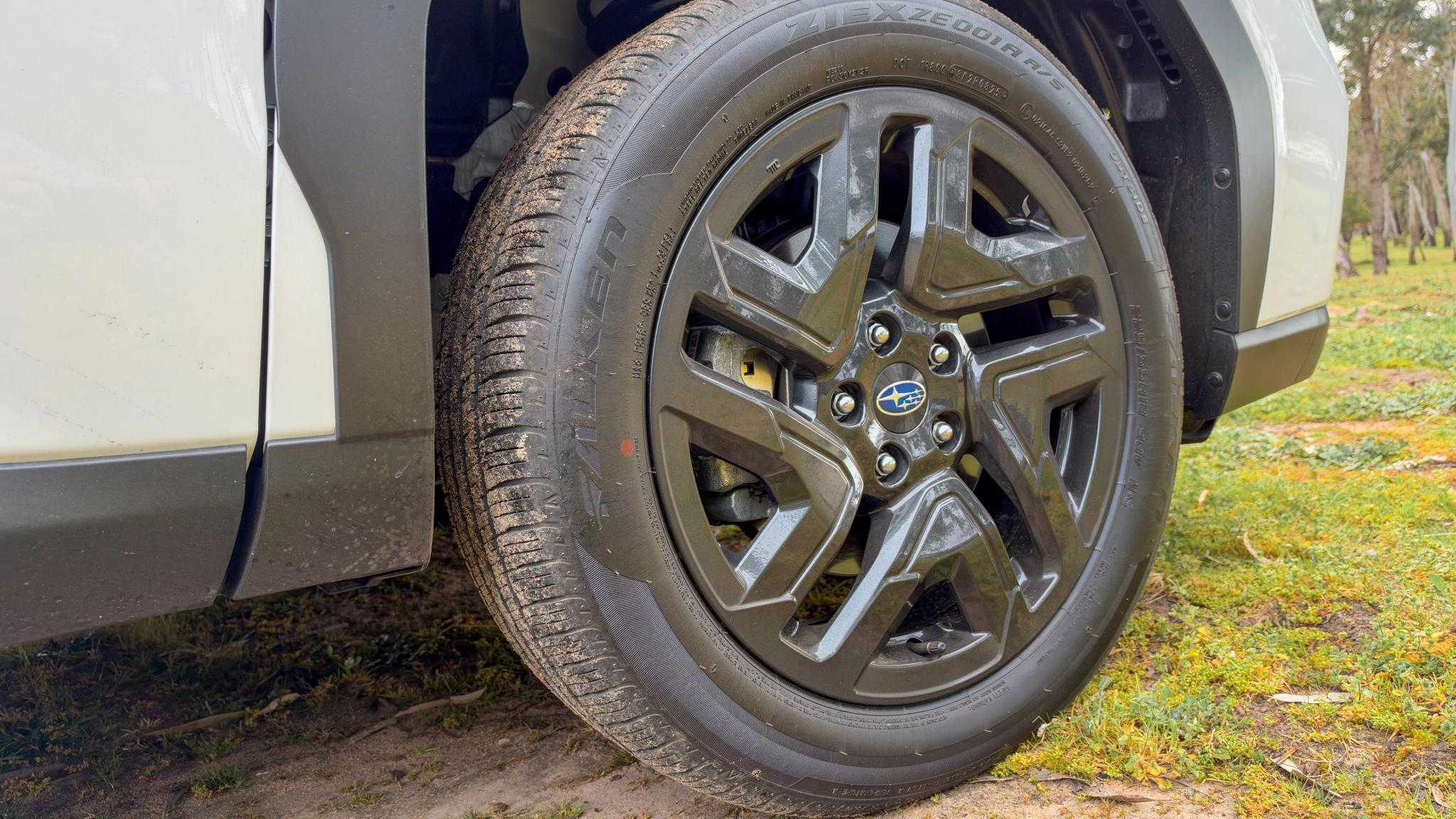
The Sport is the pick of the petrol range visually, with dark metallic wheels, a black grille with a green insert and green badging that looks like it was specced by someone who owns a kayak. The Touring goes the other way, using gloss-black trim and low-profile roof rails for a cleaner, more polished finish.
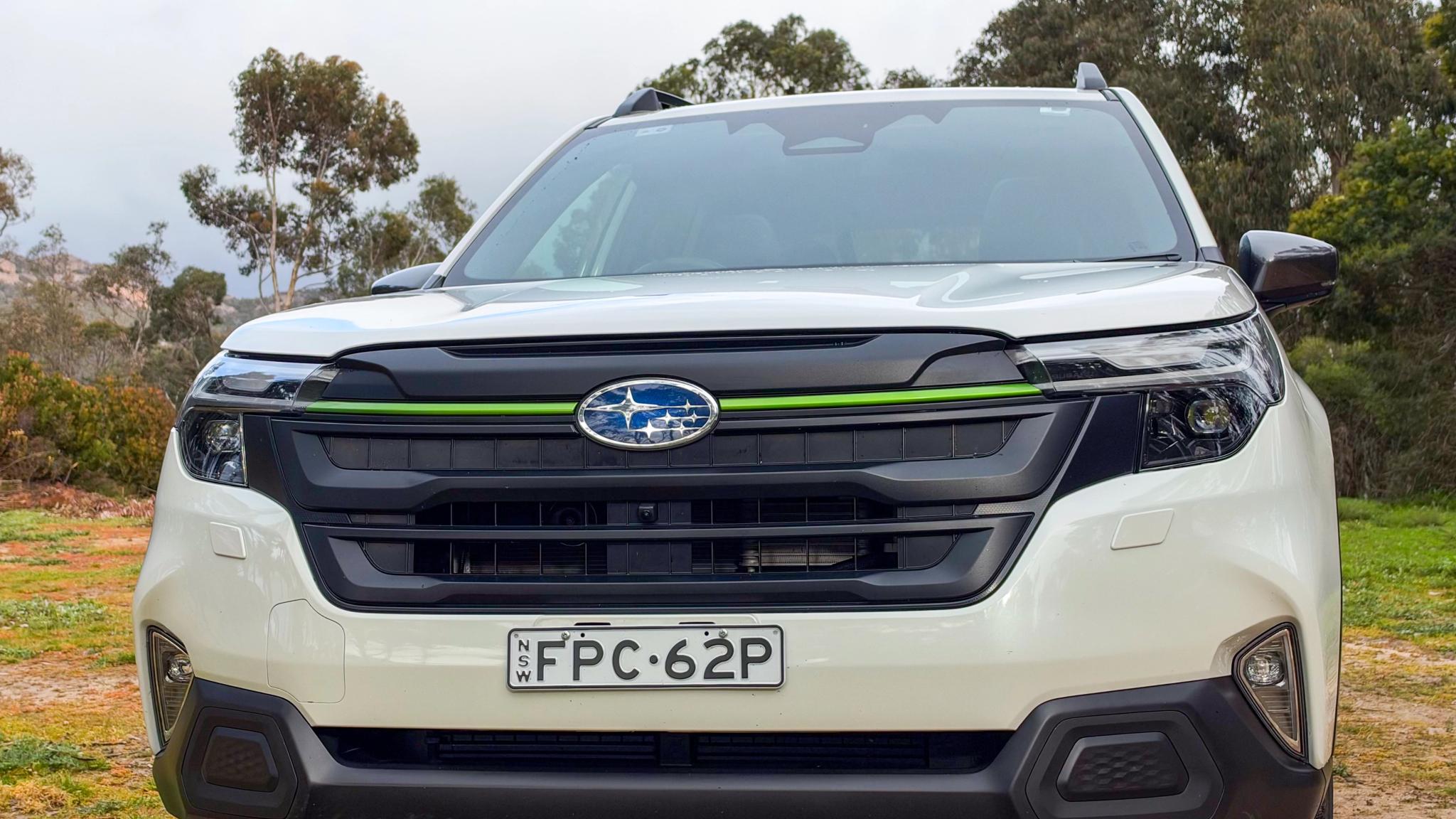
The AWD and Premium wear tall ladder-style rails that will take a roof rack without any fuss. It's a fairly conservative design, but I reckon that suits the Forester.
What is the Subaru Forester like inside?
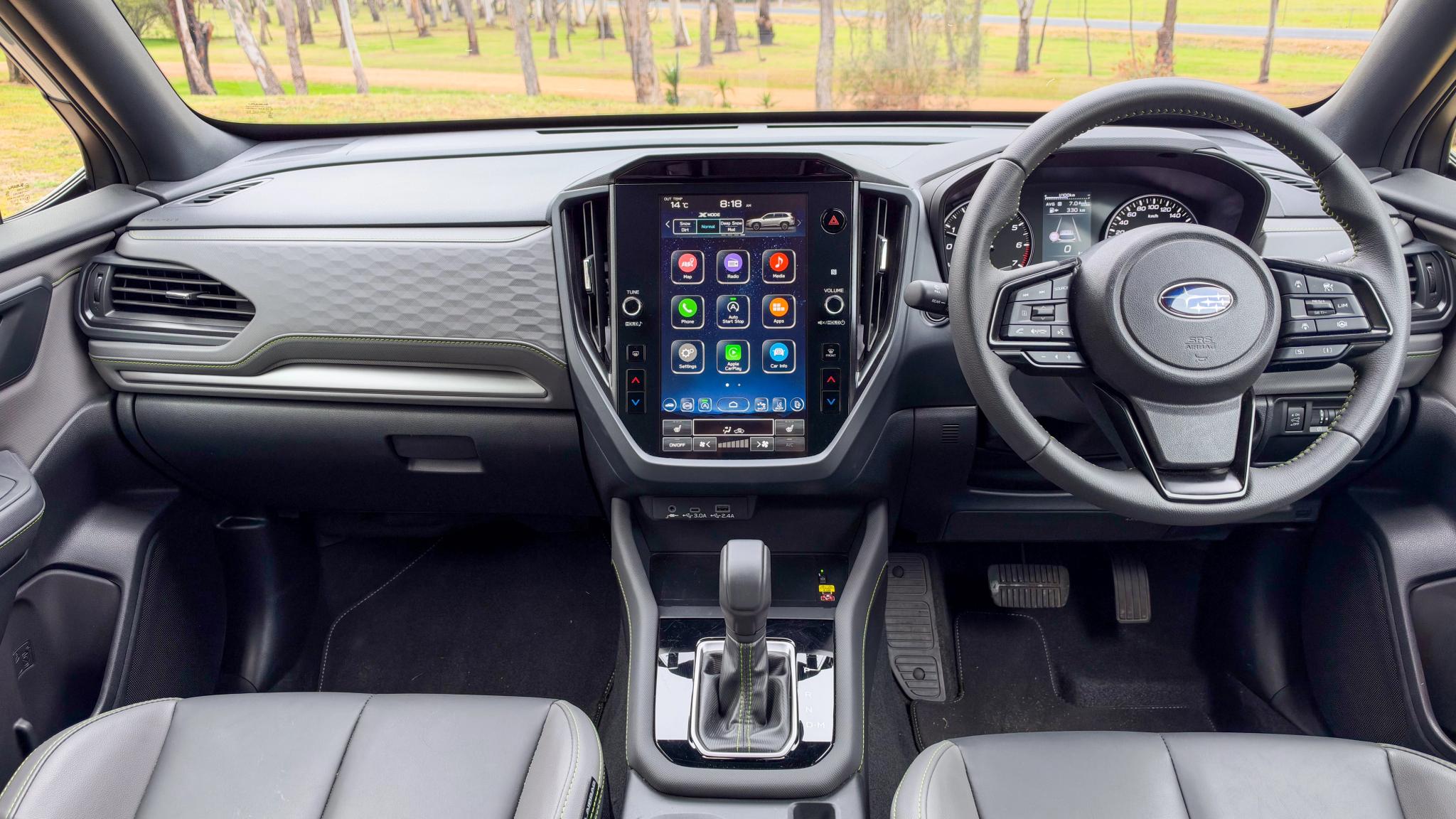
The cabin takes a more traditional approach than most rivals. Subaru uses this dashboard layout across much of its range, and the 11.6-inch portrait touchscreen at its centre has a chunky, rugged look that's quite different to the widescreen displays elsewhere in the segment.
It's the same screen in every grade, which is good news for AWD buyers. The graphics are simple rather than slick, and the layout takes a little learning, with some climate functions at the bottom of the display while temperature and demisting stay on physical buttons.
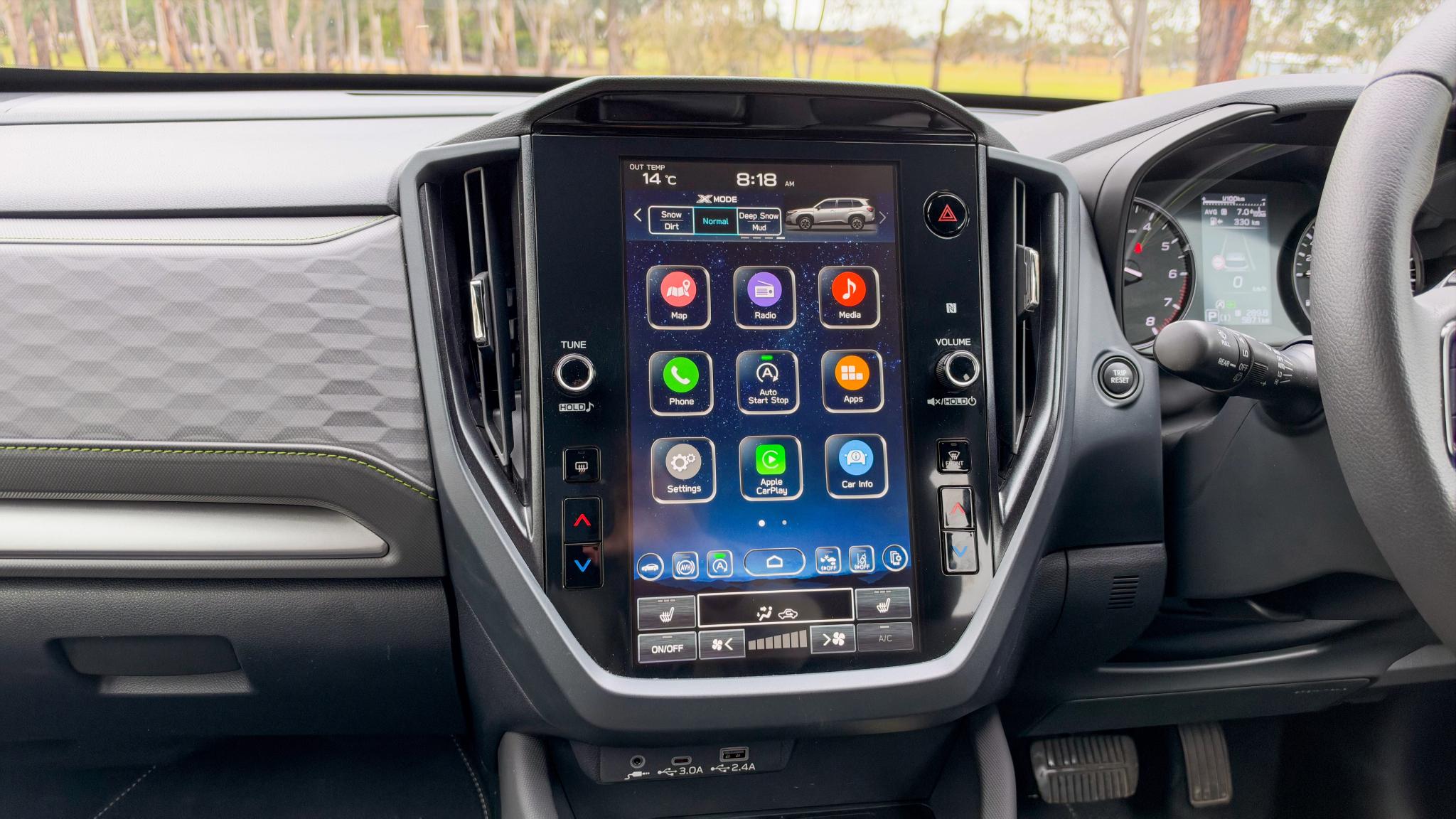
Petrol models keep analogue dials with a small 4.2-inch screen between them, which is clear enough but basic. The 12.3-inch digital cluster is reserved for the top two hybrids.
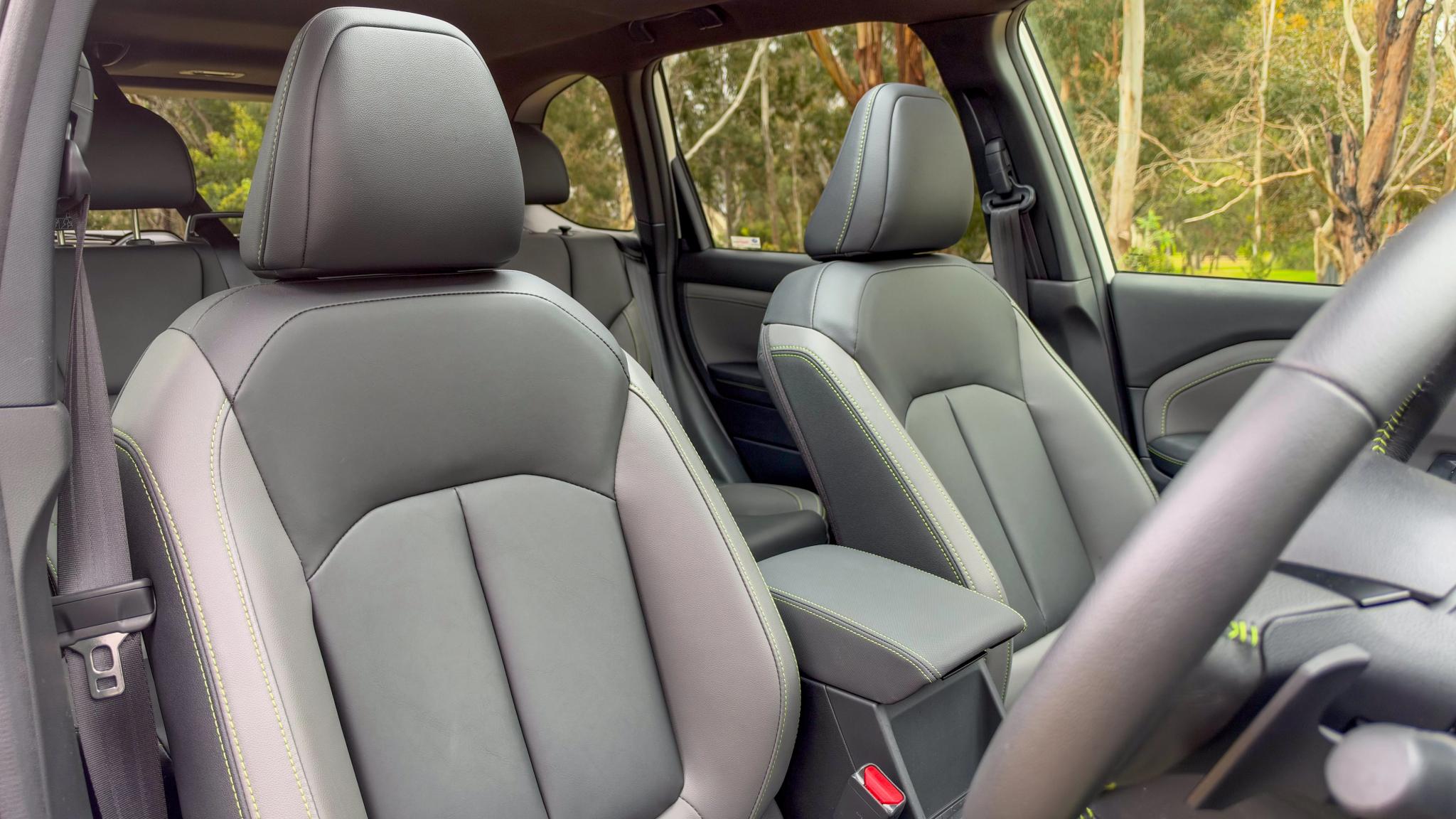
One thing I really liked about the Forester was just how solid everything felt. The switches, handles and trim all feel built to survive a decade of muddy boots and dog hair, and nothing creaked or rattled over rough gravel.
The Sport's water-repellent seats are a highlight for anyone who comes home wet or sandy. The cloth in the AWD and Premium is hard-wearing too, while the Touring's leather and suede feel more upmarket but are less suited to the drive home from the beach.
How practical is the Subaru Forester?
This is one of the Forester's strengths. Rear legroom is generous, the tall roofline leaves heaps of headroom, and the big windows make the back seat feel light and open rather than cave-like. Rear passengers get their own air vents plus USB-A and USB-C ports.
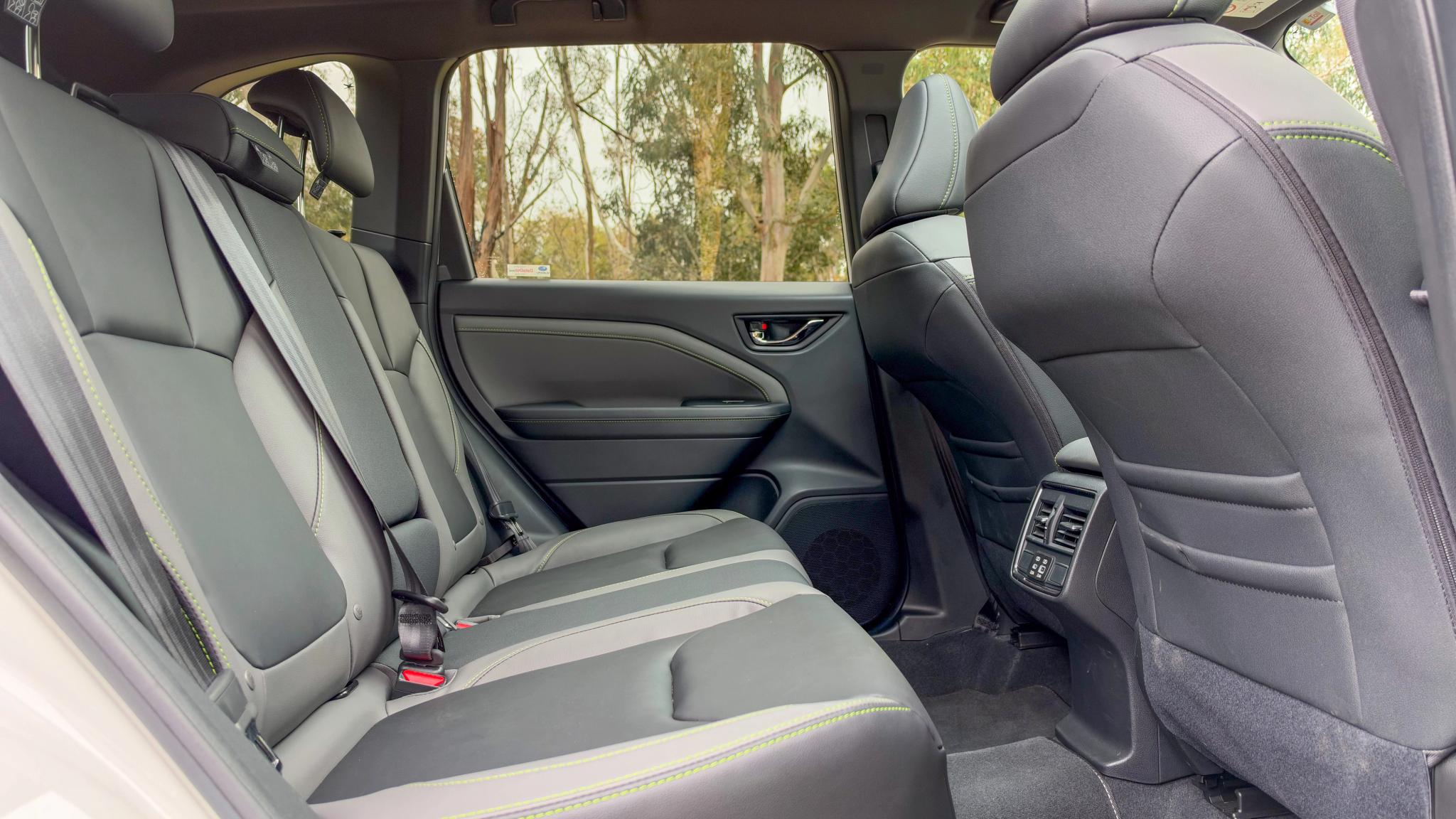
Visibility is excellent in every direction, helped by slim pillars and a near-vertical tailgate. It sounds minor, but it makes the Forester easier to place on a narrow track and less stressful in a tight car park.
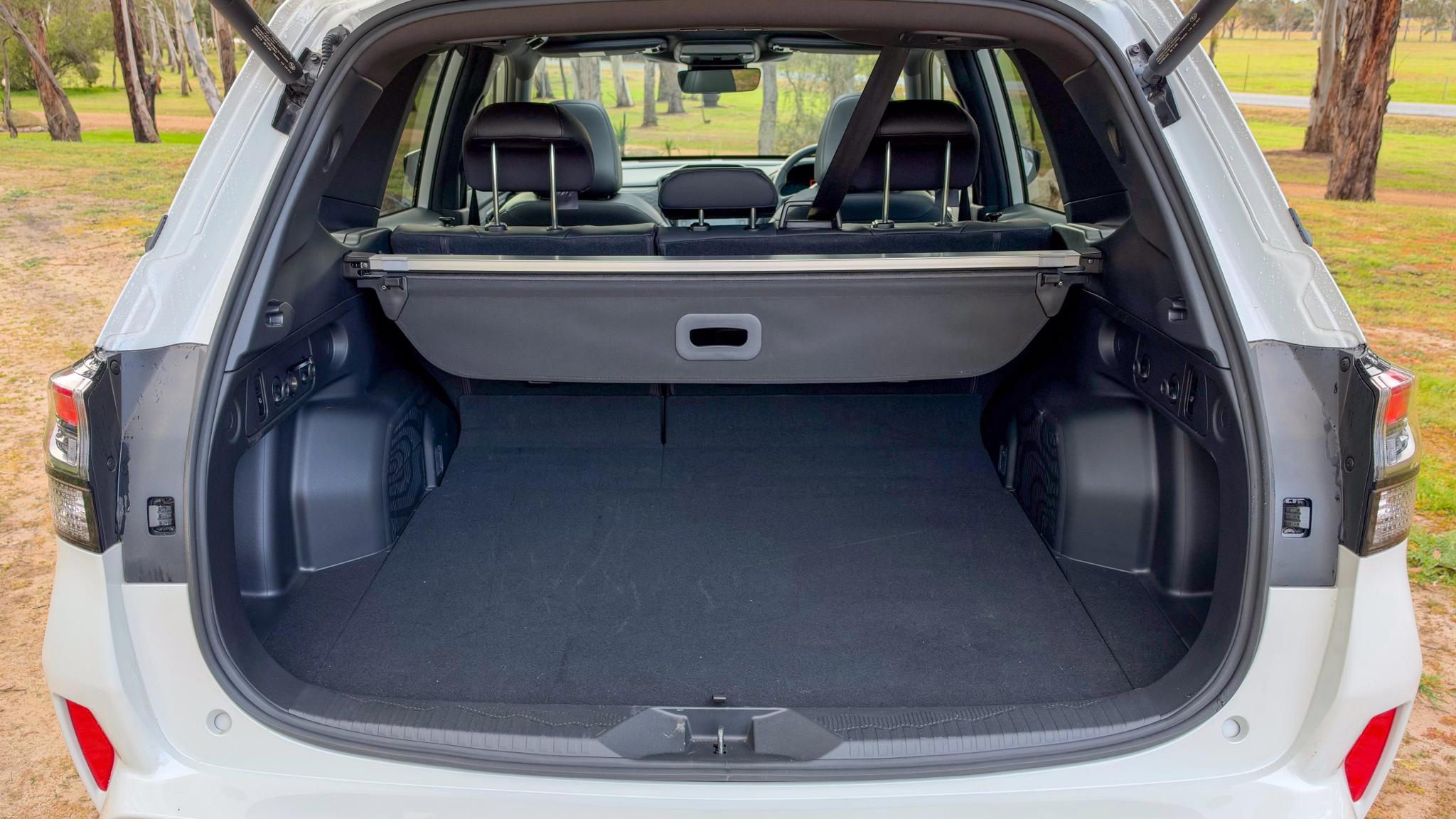
The boot measures 496 litres with the rear seats up and 1174 litres with them folded, and its square shape makes it more usable than the numbers suggest. The Premium and above get a hands-free power tailgate.
Under the floor of every petrol Forester sits a full-size spare wheel. That matters more in this car than in almost any rival, because the Forester is the one people actually take down rough roads, where a repair kit won't fix a torn sidewall.
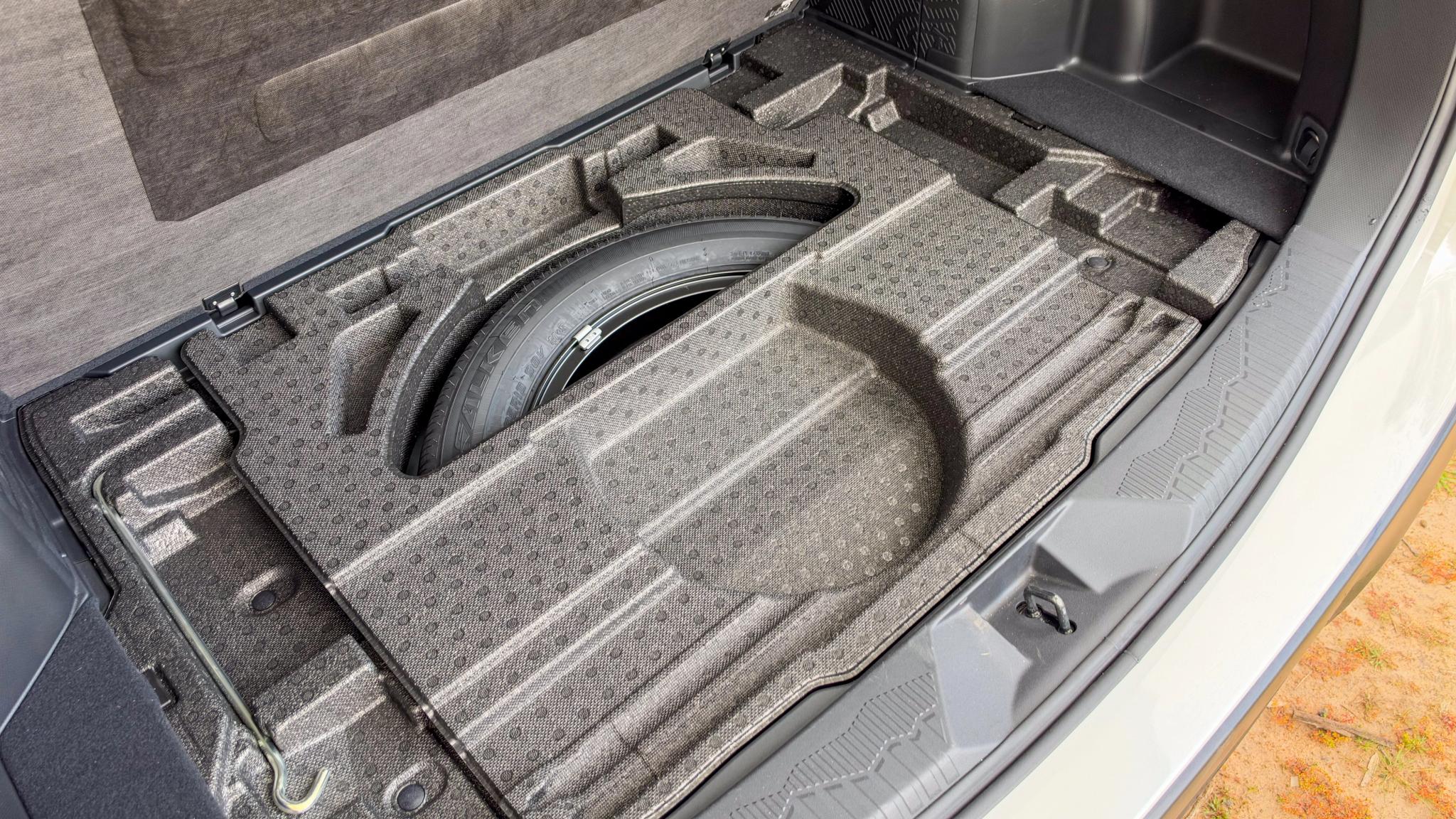
Strangely, though, you don't get a spare wheel at all if you choose the hybrid. It makes do with a repair kit, with a towbar-mounted carrier offered as an accessory.
What is the Subaru Forester like to drive?
Around town, there's nothing particularly exciting about the way the Forester drives, although it's comfortable and easy to manoeuvre. The engine and CVT are less happy in stop-start traffic, which is also where fuel use rises most.
Country roads suit it much better. The steering is accurate and nicely weighted, the body stays settled over broken bitumen, and it feels surprisingly agile for something shaped like a fridge.
Turn onto gravel and it gets better again. The permanent all-wheel drive feels planted and predictable on loose surfaces, the suspension soaks up corrugations without crashing through, and 220mm of ground clearance means you stop worrying about what's underneath.
The Sport and Touring get dual-mode X-Mode, which adds a Deep Snow/Mud setting to the Snow/Dirt mode on the AWD and Premium. It's more than most owners will need, but it's handy on beach access tracks and muddy campsites.
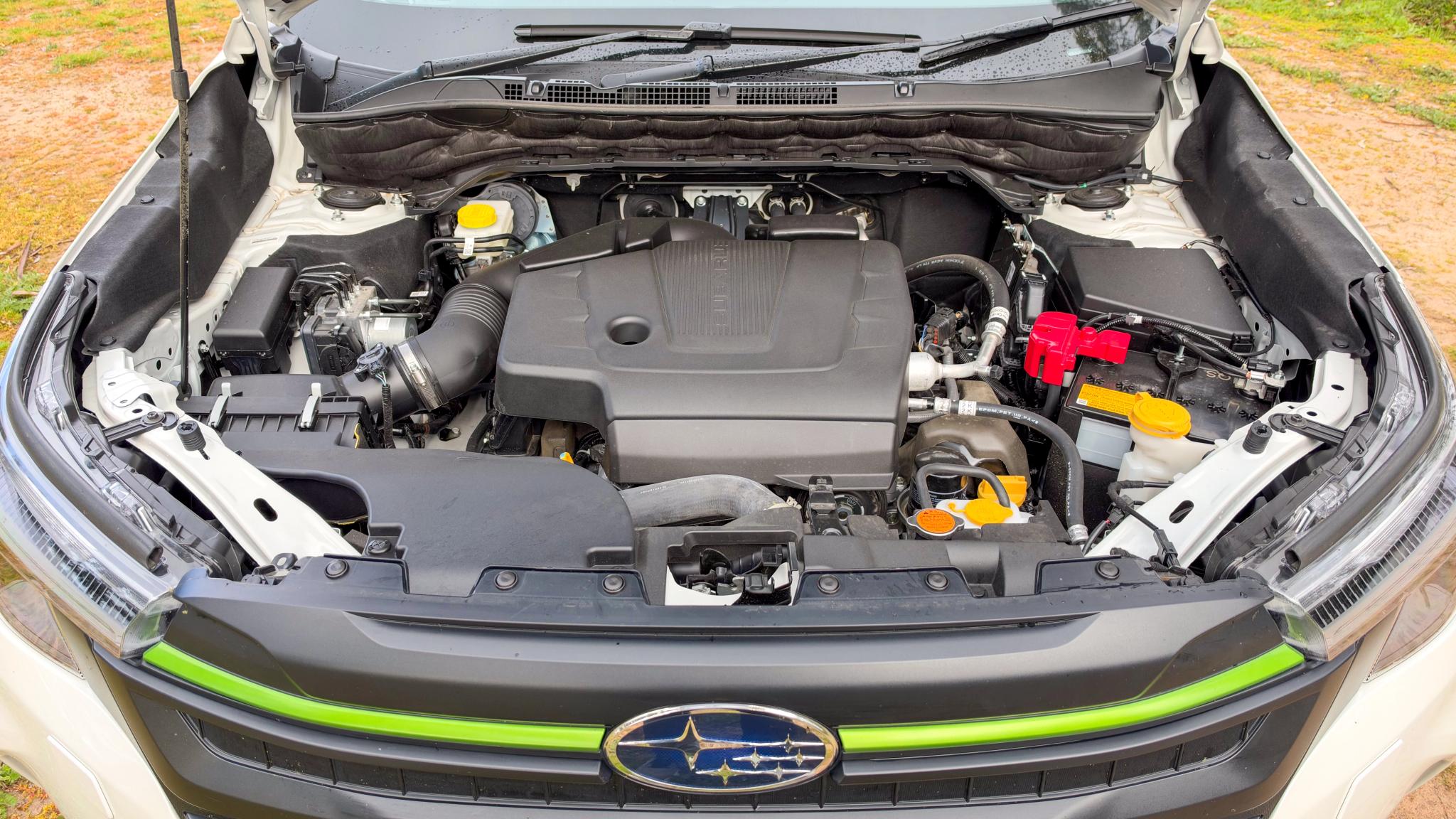
The 2.5-litre boxer makes 136kW and 247Nm, and it's punchy enough around town and at country speeds. It runs out of enthusiasm for quick overtakes, and the CVT holds the revs high and noisy while it waits for the speed to arrive.
Tyre noise is noticeable on coarse-chip roads, though never tiring. The bigger irritation is the driver monitoring camera, which chimes far too readily when you glance at the instruments or mirrors.
How efficient is the Subaru Forester?
Subaru claims 7.9L/100km on the combined cycle, and the Forester runs on 91 RON regular unleaded from a 63-litre tank. On test it reached into the 9s mostly in urban driving, which is the main trade-off with the petrol car.
Fuel consumption improves once you're out on the highway, where the engine settles down and doesn't have to work nearly as hard.
The hybrid claims 6.2L/100km and will suit buyers who spend most of their time in the city, provided they can live without a spare.
Servicing is due every 12 months or 15,000km and is capped for the first five years at Subaru dealers. The fourth service is the expensive one, and the five-year total is a few hundred dollars more than a Nissan X-Trail or Mitsubishi Outlander, both of which also offer longer warranties when serviced at their dealers.
Servicing costs
| Service | Interval | Cost |
| Service 1 | 12 months | 15,000km | $348 |
| Service 2 | 24 months | 30,000km | $521 |
| Service 3 | 36 months | 45,000km | $393 |
| Service 4 | 48 months | 60,000km | $679 |
| Service 5 | 60 months | 75,000km | $358 |
| Total (5 years) | - | $2299 |
Servicing and Warranty
| Servicing and Warranty | Subaru Forester |
| Service interval | 12 months | 15,000km |
| Servicing cost (5 years) | $2299 |
| Average annual cost | $460 |
| Vehicle warranty | 5 years | Unlimited km |
Is the Subaru Forester safe?
The Forester carries a five-star ANCAP rating from 2024, with scores of 83% for adult occupant protection, 91% for child occupant protection, 86% for vulnerable road user protection and 75% for safety assist. It's a good result overall, although the 75% safety assist score isn't particularly impressive.
Every grade gets nine airbags, including a front-centre far-side bag and a passenger seat-cushion bag. Subaru's EyeSight suite brings autonomous emergency braking in both directions, emergency steering, adaptive cruise with lane centring, blind-spot monitoring, rear cross-traffic alert, traffic sign recognition, a surround-view camera and rear parking sensors.
There's plenty of safety equipment, but some of the systems are more annoying than helpful. Lane-keep assistance intervenes more than it should, and the driver monitor's habit of treating a glance at the speedo as a distraction gets old quickly.
What are the main competitors to the Subaru Forester?
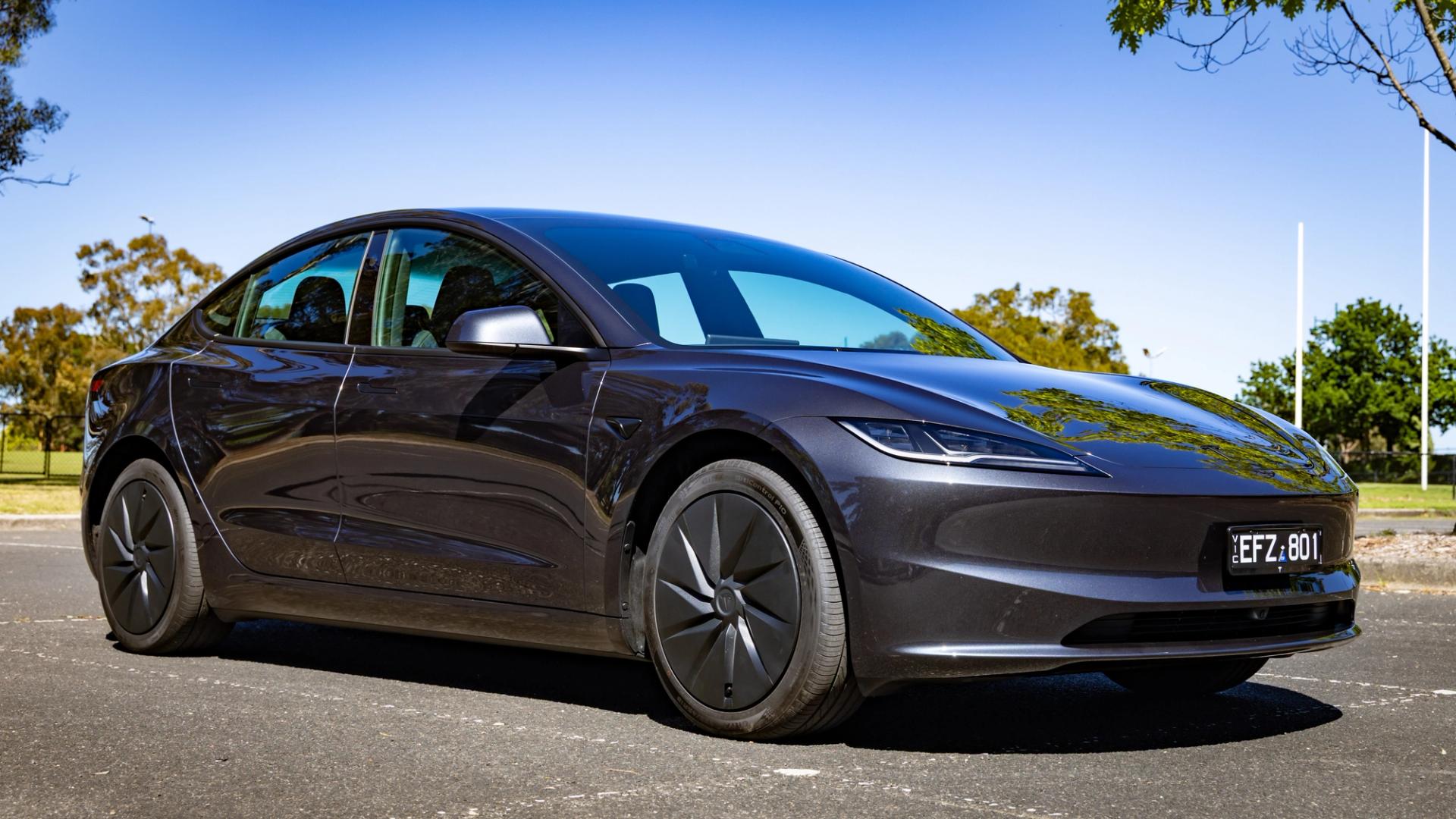
The Toyota RAV4 starts at around $49,340 before on-roads in AWD form, and its hybrid-only line-up uses less fuel than the petrol Forester. It also has a more modern cabin, but the GX gets a space-saver spare and a full-size wheel is only a cheap option on that grade. The Forester is cheaper to get into with all-wheel drive and sits higher off the ground.
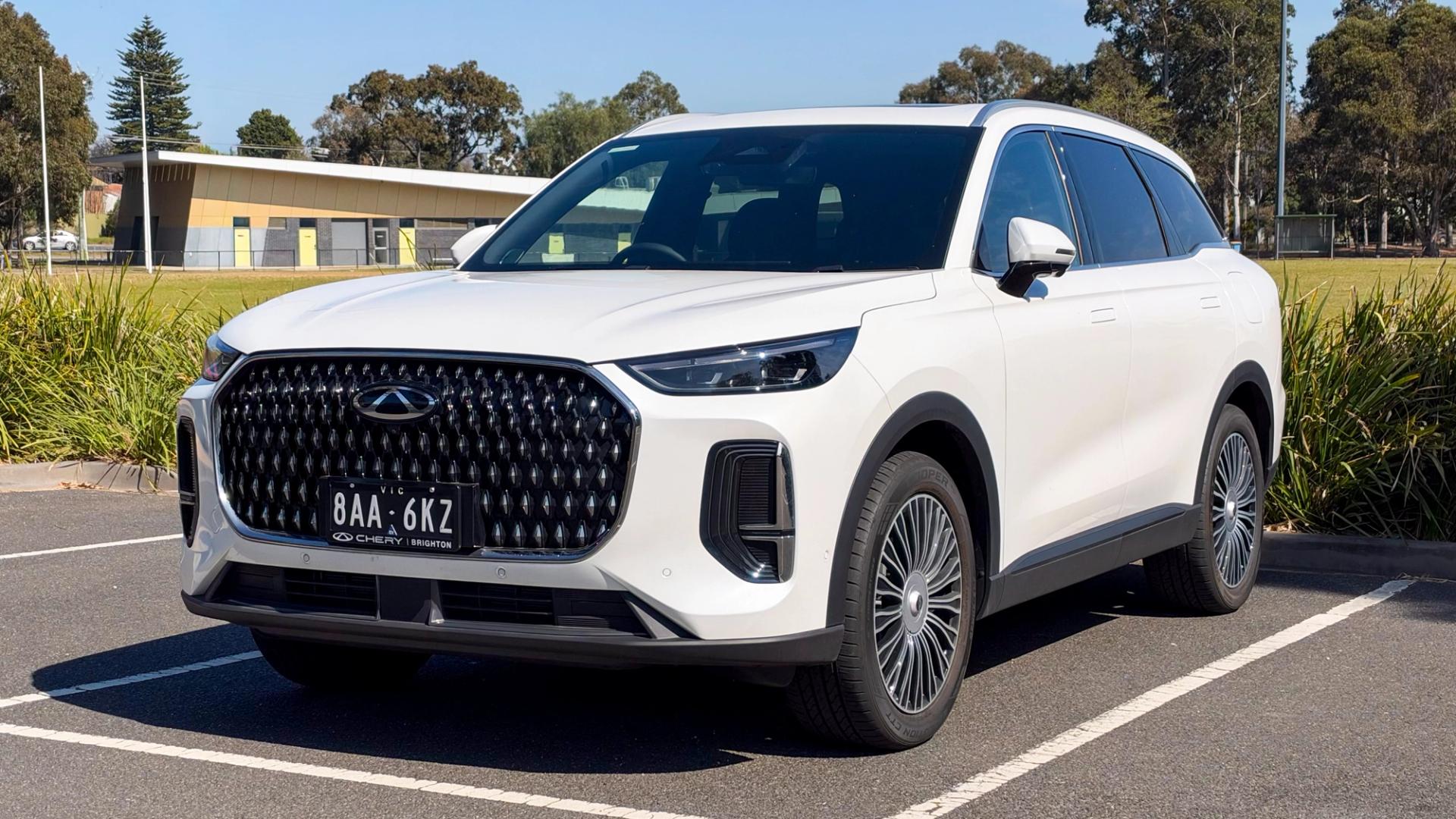
The Mazda CX-5 starts at around $39,990 before on-roads, now with all-wheel drive standard and a 2.5-litre petrol of its own. Its interior feels more premium and it's cheaper across the range. The Forester answers with more clearance, better visibility and more composure once the road turns to dirt.
The Nissan X-Trail starts at around $41,305 before on-roads for the AWD petrol, with a seven-seat Rock Creek from $48,315. A 10-year warranty and $399 services make it cheaper to own. The Rock Creek is more of a styling pack than a hardware upgrade, though, and the Forester is the more convincing car on gravel.
The Mitsubishi Outlander starts at around $43,240 before on-roads in AWD form, with seven seats in most grades and a 10-year warranty when serviced at Mitsubishi dealers. It's the better pick for bigger families. The Forester has more ground clearance and feels more solid and composed off the bitumen.
If my weekends involved a dog, a tent and a dirt road, the Forester is the one I'd buy.
Should I buy the Subaru Forester?
If you live in the city and rarely leave it, probably not. The petrol Forester is a little thirsty in traffic, and rivals like the RAV4 and CX-5 do the suburban commute more efficiently and with plusher interiors.
But head out of town for the weekend, especially if there are a few dirt roads involved, and the Forester starts to show what it's really good at. The steering, the ride on gravel, the visibility and the feeling that it's built to last all count for more the further you get from town.
The Sport is the one to buy. Its water-repellent seats and dual-mode X-Mode suit exactly the kind of driving this car does best, and it's still under $50,000 before on-roads.
The hybrid will tempt city buyers with its lower fuel use, but for anyone who spends real time on dirt roads, the petrol is still the more practical choice.
It's not cheap, the engine could be more efficient and the interior is a bit old-fashioned. But if you regularly head out of town and onto dirt roads, I'd take the Forester over plenty of its rivals.
VerdictThe Beep Verdict
Rob Leigh
Co-founder & Director
Rob Leigh is Co-founder and Director of The Beep based in Melbourne, Australia. He has 15+ years inside a major automotive OEM, specialising in product planning, pricing and vehicle strategy.
About Author