2026 Mazda BT-50 GT review
Mazda's ute has stopped pretending to be an SUV on stilts and the GT is better for it: proven Isuzu hardware, a rear diff lock, heated leather seats and a driveaway deal that makes sense.

Rob Leigh
Pros
- Proven 3.0-litre diesel and 4x4 hardware that just gets on with it
- GT spec adds real comfort without a luxury price
- Rear diff lock, rough terrain mode and now a 360-degree camera
Cons
- efinement trails a Ranger and the engine gets vocal under load
- Rear end skips around with nothing in the tub
- Driver aids and parking sensors nag more than they should
Our verdict
The BT-50 GT is a ute for people who actually use their ute. It does the fundamentals better than almost anything at the price: 450Nm of low-down shove, a 3500kg tow rating, low range, a locking rear diff and a cabin that no longer feels like a penalty for buying the working one. The catch is refinement. Next to a Ranger it feels a generation older in noise, ride and steering polish, and you need to decide whether that bothers you before you sign.
What does the BT-50 GT cost in Australia?
The GT sits one rung below the SP in the mainstream range, with the accessorised Thunder parked above both as the halo. For 2026 the GT dual-cab pickup lists at $68,160 before on-road costs, up $1,540 on last year, and most of that increase pays for the new 360-degree camera.
Mazda has been running driveaway offers that land the GT in the high $60Ks. At that money it lines up almost exactly with a Triton GSR and an Isuzu D-Max LS-U+, and undercuts a comparably equipped Ranger XLT once on-roads are added.
Here is how the 4x4 dual-cab pickup range shakes out. The GT is also available as a cab-chassis at $65,020, and there are 4x2 and 2.2-litre variants below this list for fleet and tradie buyers.
| Specifications | BT-50 GT |
| Price excluding on-roads | $68,160 |
| Powertrain | 3.0L turbo diesel |
| Power | Torque | 140kW | 450Nm |
| Transmission | 6 speed auto |
| Drivetrain | 4WD |
| Fuel use (claimed) | 7.1L/100km |
| Braked towing | 3500kg |
| ANCAP | Five stars (2022) |
| Warranty | 5 years | Unlimited km |
View BT-50 driveaway pricing and specifications →
Every 4x4 dual-cab pickup runs the same 3.0-litre engine. Below the XTR sit the XT at $57,720 and the new Boss at $60,220, while the Thunder tops the range at $78,400. The GT is also available as a cab-chassis at $65,020, and there are 4x2 and 2.2-litre variants for fleet and tradie buyers.
Over the XTR, the GT adds black leather trim, an eight-way power driver's seat, heated front seats, heated mirrors, front parking sensors and remote engine start. Everything else that matters, including the 9.0-inch screen, wireless phone mirroring, dual-zone climate, side steps, tub liner and a factory-fitted tow bar, is already standard on the XTR. The GT is really a comfort pack and it is priced like one.
What does the BT-50 GT look like?
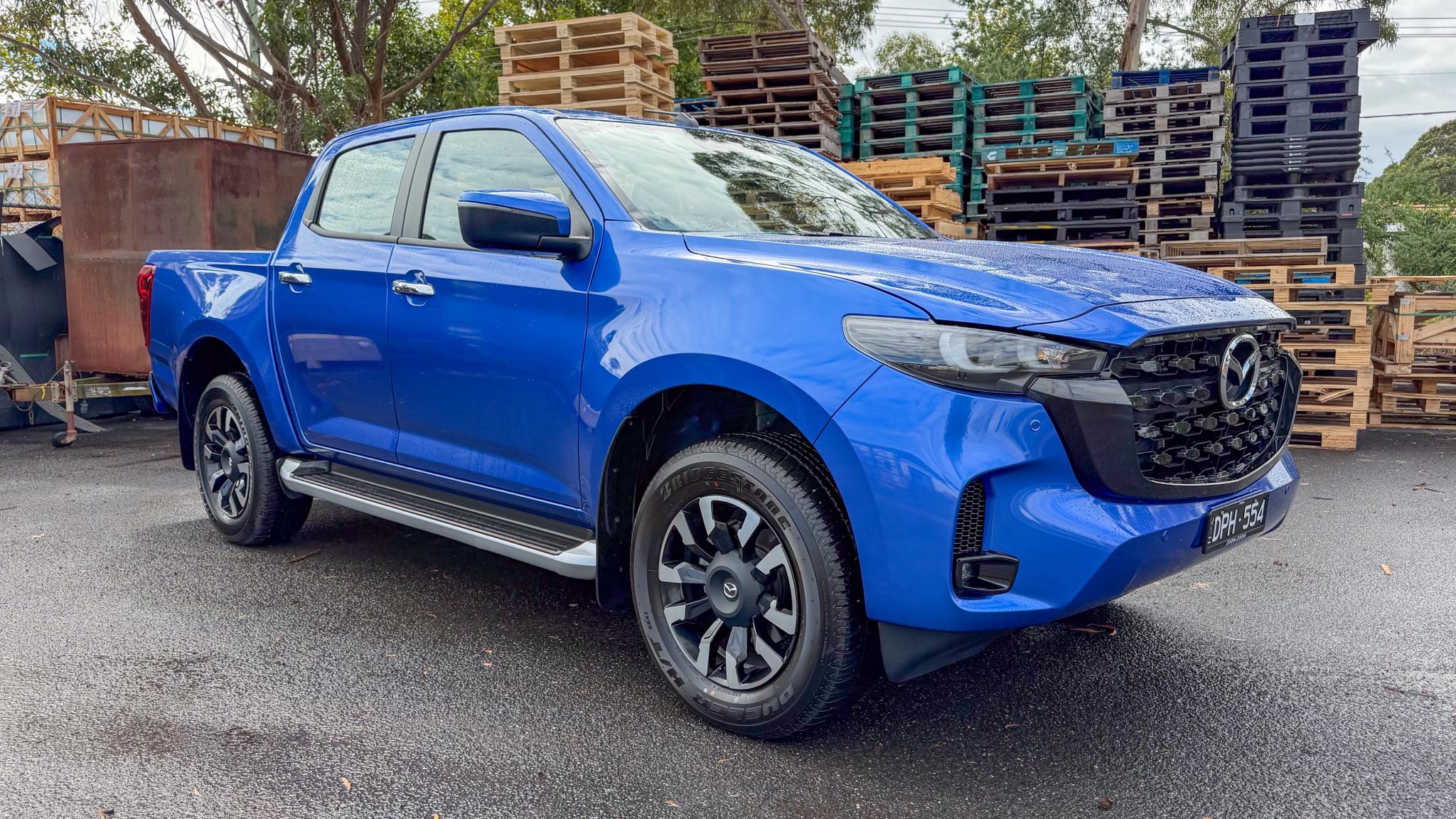
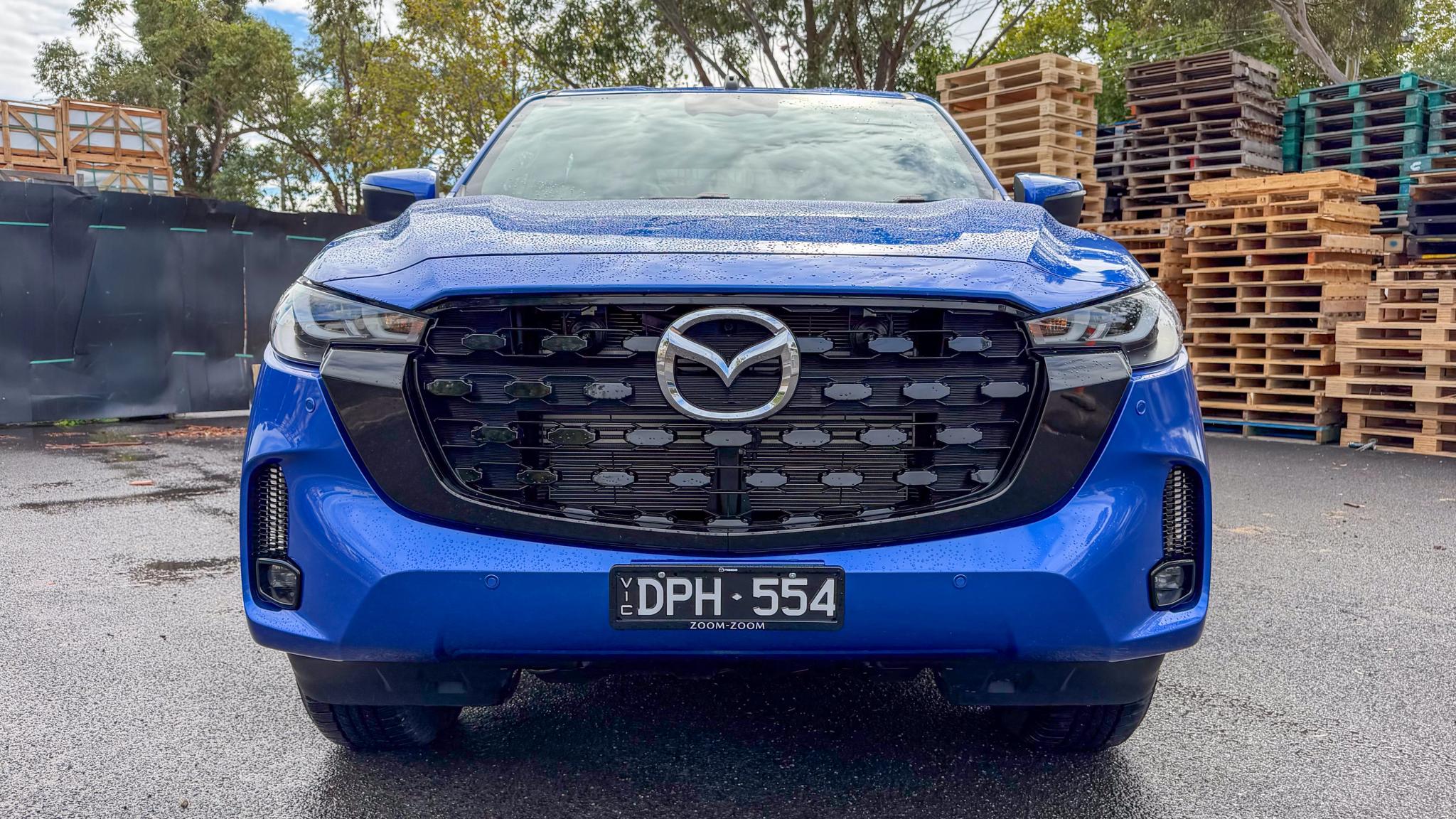
The 2025 facelift finally gave the BT-50 its own face rather than a CX-5 nose grafted onto an Isuzu. The grille is enormous, the Mazda badge is bigger again and the slim LED headlights and fog lights make the whole front end look wider and lower than the numbers say it is.
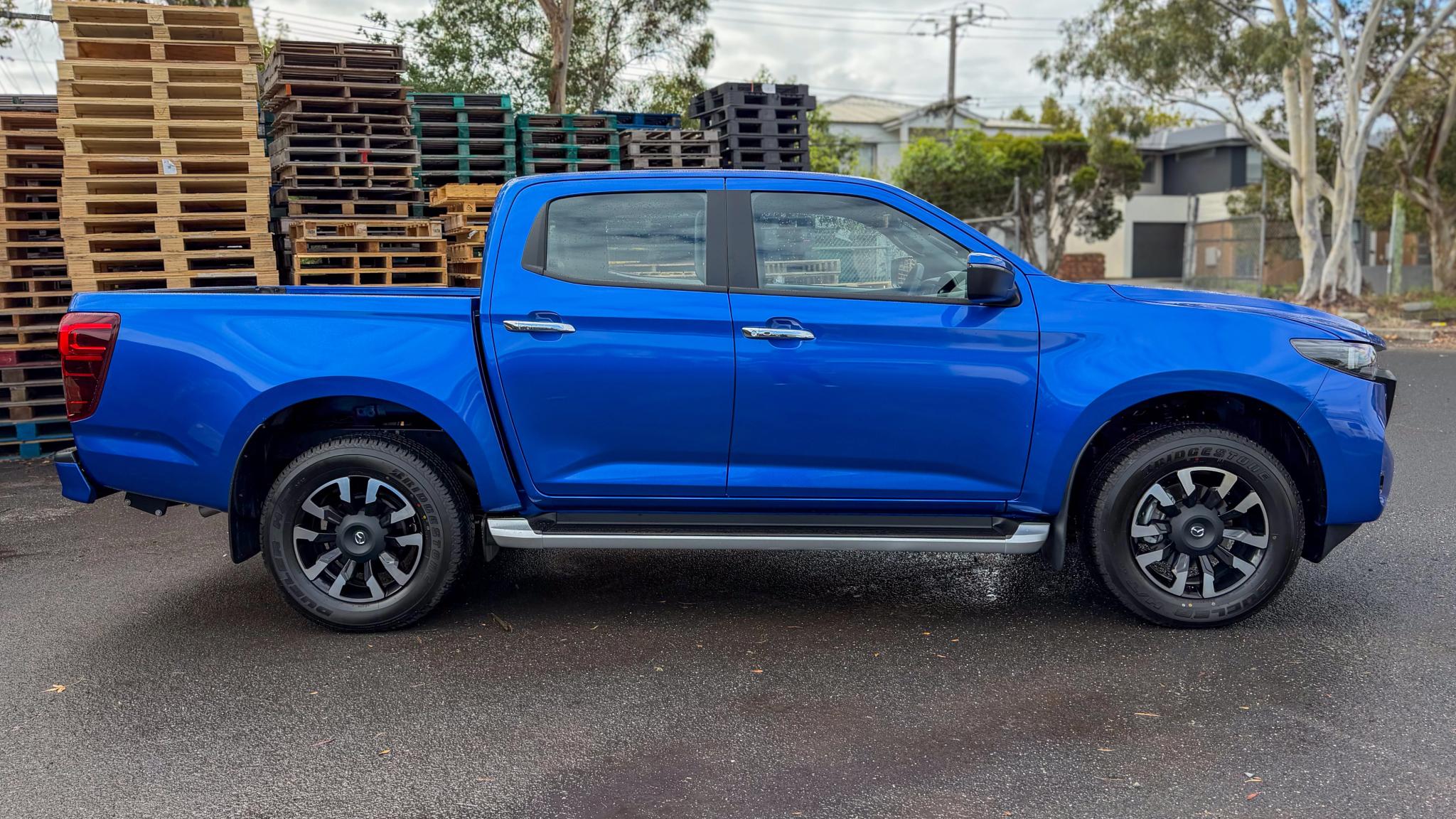
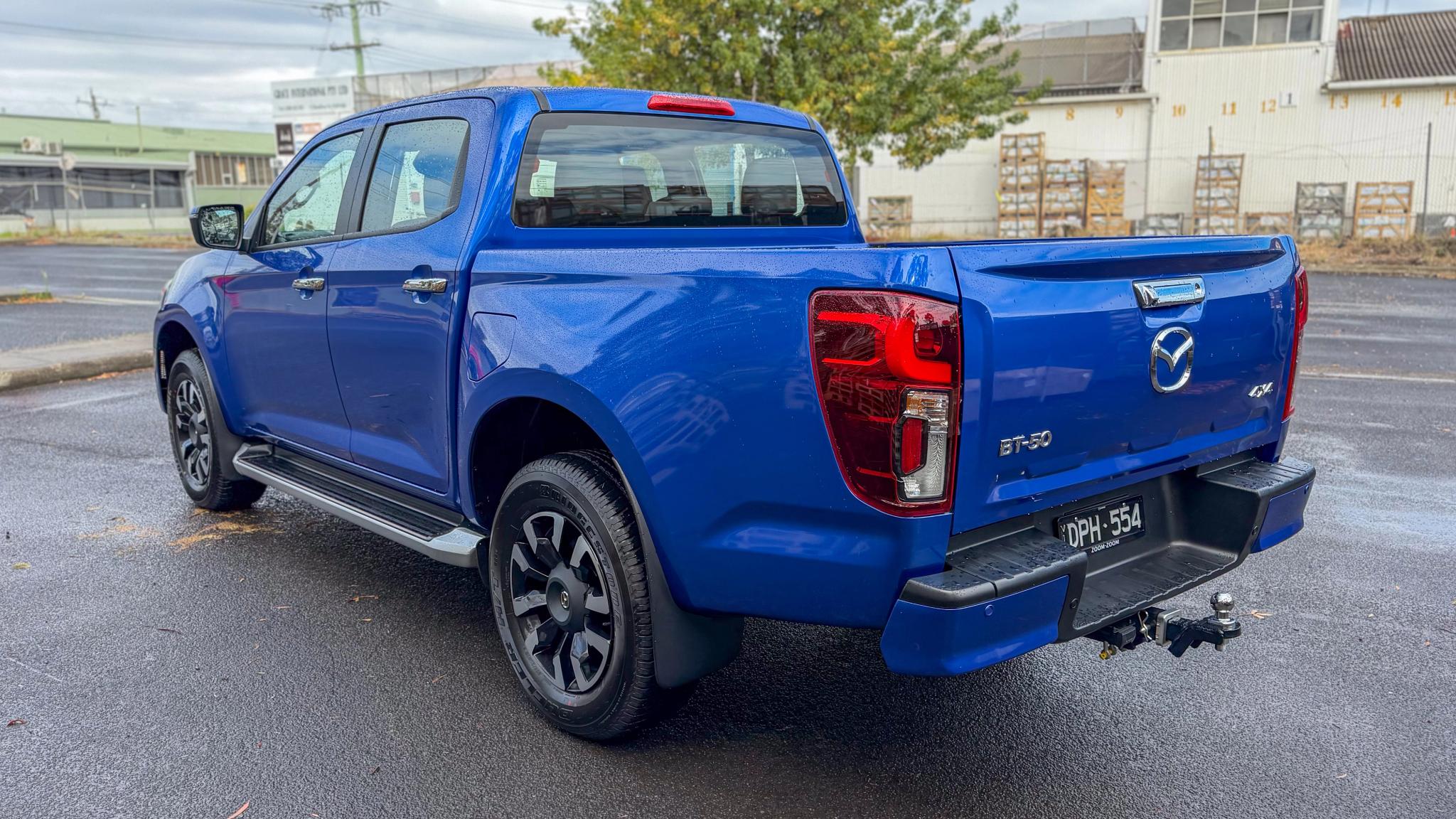
On 18-inch machined alloys the GT looks tidy rather than aggressive. There is no sports bar, no sailplane and no black-out kit, which will suit buyers who plan to fit a canopy or their own tray setup and would rather not pay for jewellery they'll remove.
The tailgate got a rethink too with pressed indents and a proper damper so it no longer drops like a drawbridge. In Red Earth Metallic, the colour Mazda's designers came up with after a stint in the Australian outback, it stands out in a car park full of grey Rangers. That paint is a $695 option and worth it.
What is the BT-50 GT like inside?
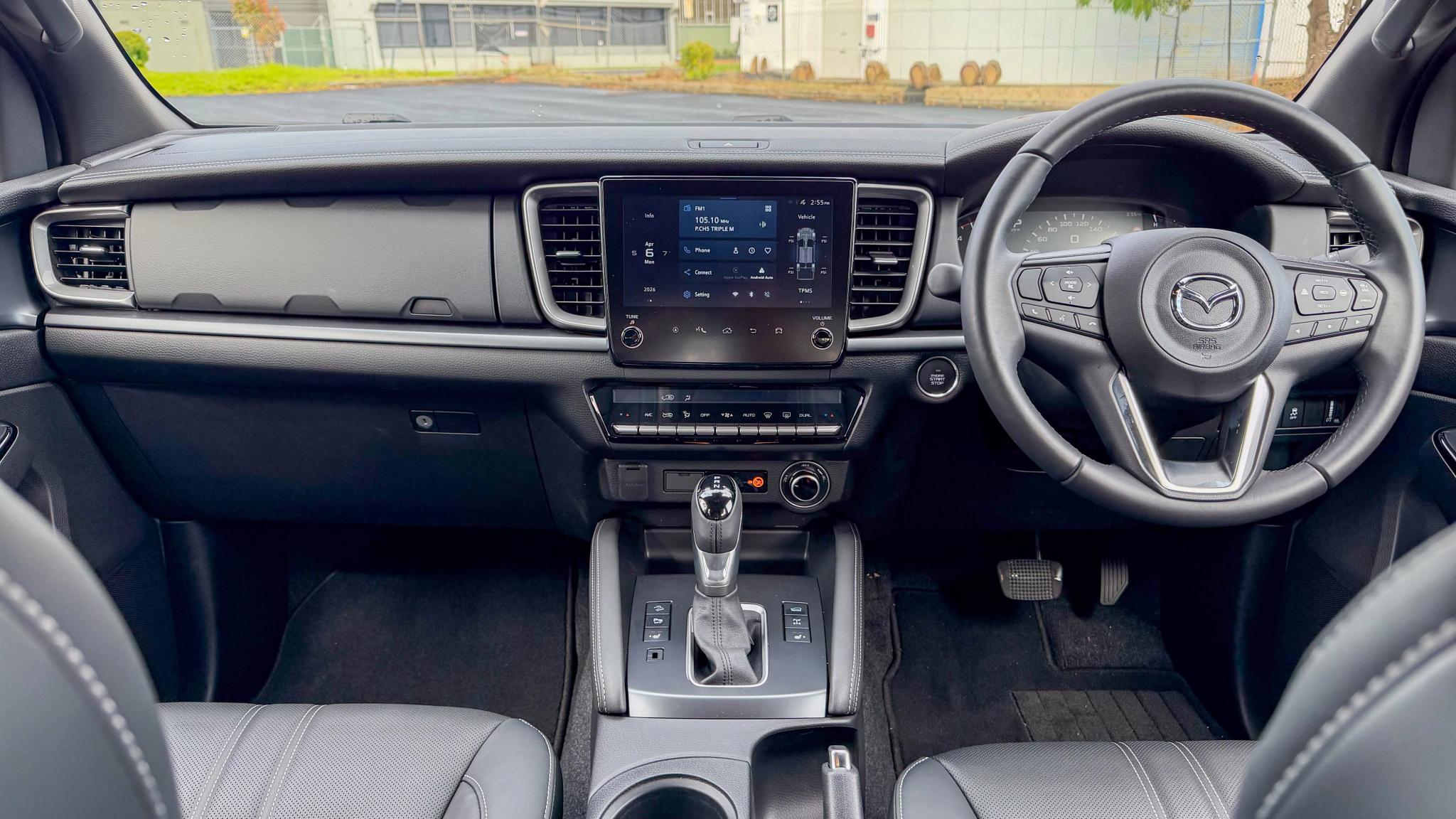
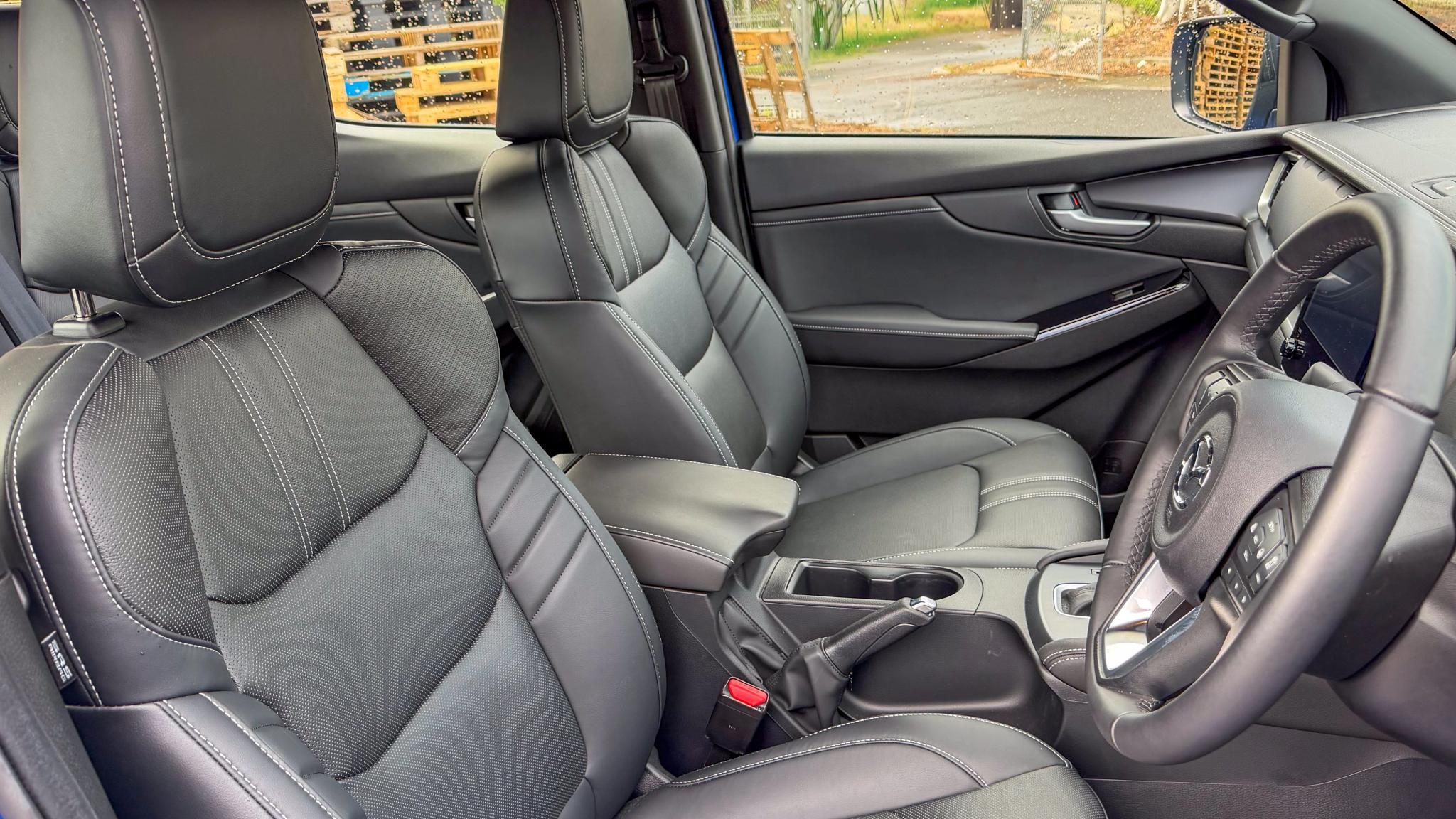
The basic cabin architecture comes from the D-Max, but Mazda has done enough with the materials and trim to make the GT feel a little more upmarket. The dash is simple and horizontal, the switchgear is chunky, and the important stuff is on physical buttons rather than buried in a screen. The climate panel in particular is a model of clarity: a row of large switches with the settings displayed directly above them.
The GT drops the old two-tone brown leather for a black-on-black scheme. It is less interesting but harder to offend, and the leather itself is decent. The leather-wrapped wheel is the best thing you touch in here, and the heated seats turn a winter site start into something you look forward to.
The 9.0-inch touchscreen runs Isuzu's software, not Mazda's, so there is no MyMazda app connectivity. The interface is legible and the shortcut buttons and two knobs beneath it are welcome, but it looks and behaves like a system from a few years ago. Wireless Apple CarPlay and Android Auto are standard, though the wireless connection can be temperamental and there is no wireless charging pad, so most owners will end up plugging in anyway.
The 7.0-inch cluster sits between two analogue dials and is easy to read at a glance. Fit and finish is solid rather than plush. The armrests use gloss black plastic that will scratch, the handbrake is a manual lever, and there is a mystery button blank next to the steering wheel controls that does nothing in any Australian variant. None of it is a deal-breaker. It just reminds you what this ute is.
How practical is the BT-50 GT?
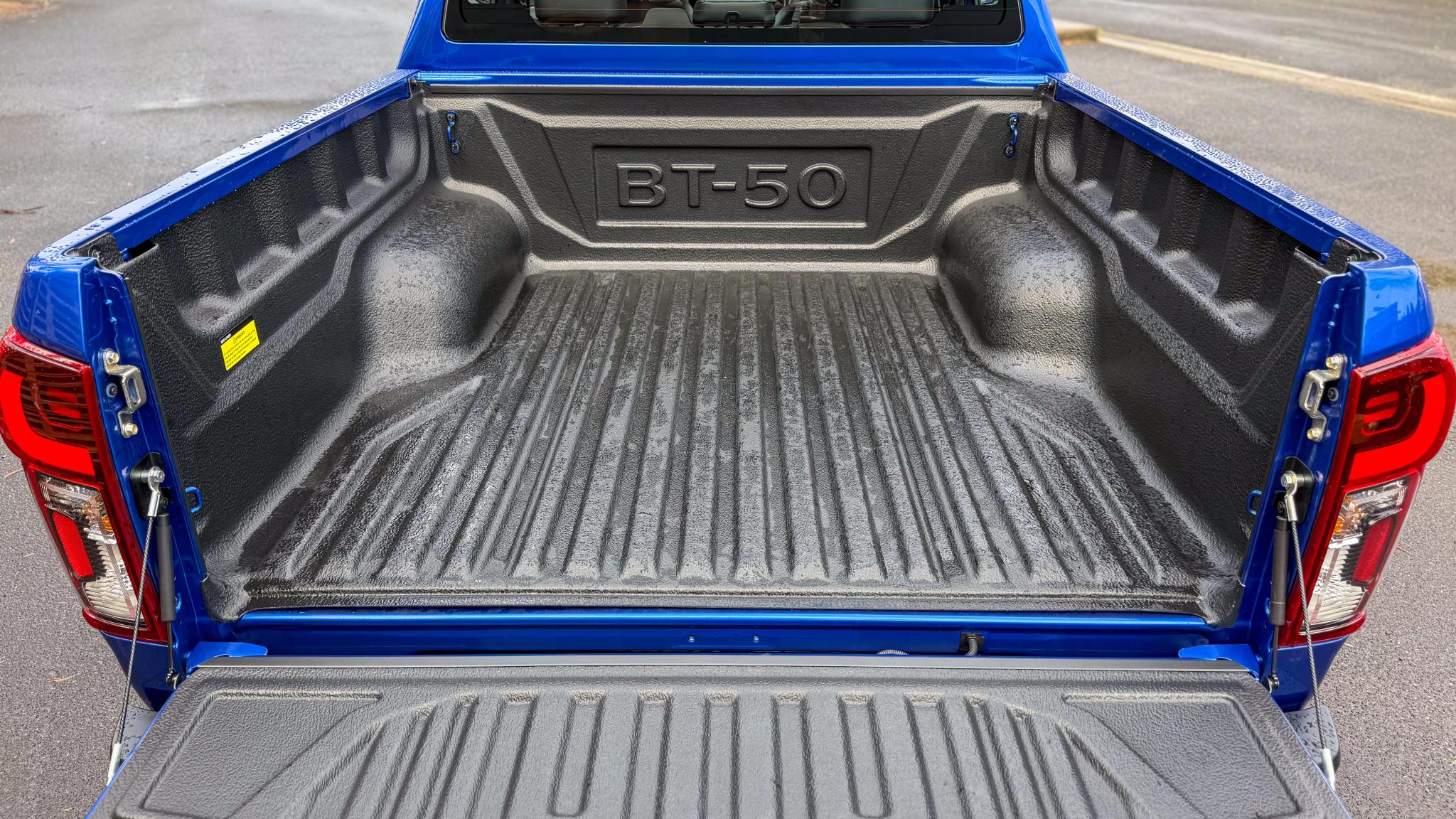
The tub is one of the longer ones in the segment at 1571mm, with 1120mm between the arches and 490mm of depth. The GT gets a tub liner and four tie-down points as standard, but no tub lighting and no power outlet, which rivals at this price now offer.
Payload is 998kg, gross vehicle mass is 3100kg and gross combination mass is 6000kg. That means you cannot run full payload and a full 3500kg trailer at the same time. It’s standard dual-cab maths, but buyers towing big vans need to run the numbers.
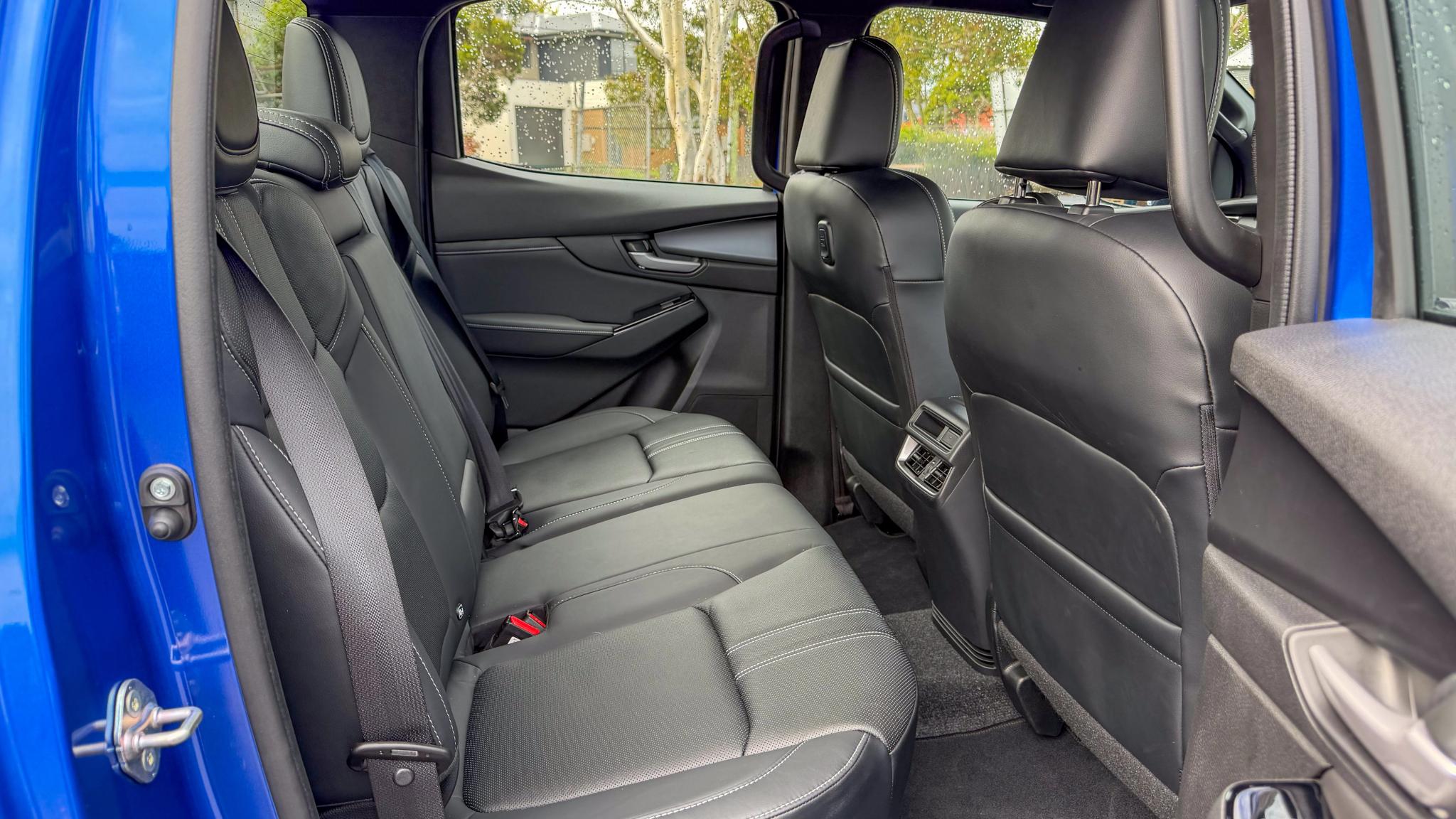
Inside, front-seat space is generous and the driving position is upright and commanding. The rear bench is fine for kids and shorter adults, with rear air vents and a USB-C port on the back of the console. Tall passengers will find knee room tight and head room marginal, because the rear seat base sits high.
There is plenty of useful storage with two gloveboxes, a decent centre console bin, door bottle holders and cupholders front and rear. Grab handles on both pillars and full-length side steps make climbing in easy for smaller family members.
What is the BT-50 GT like to drive?
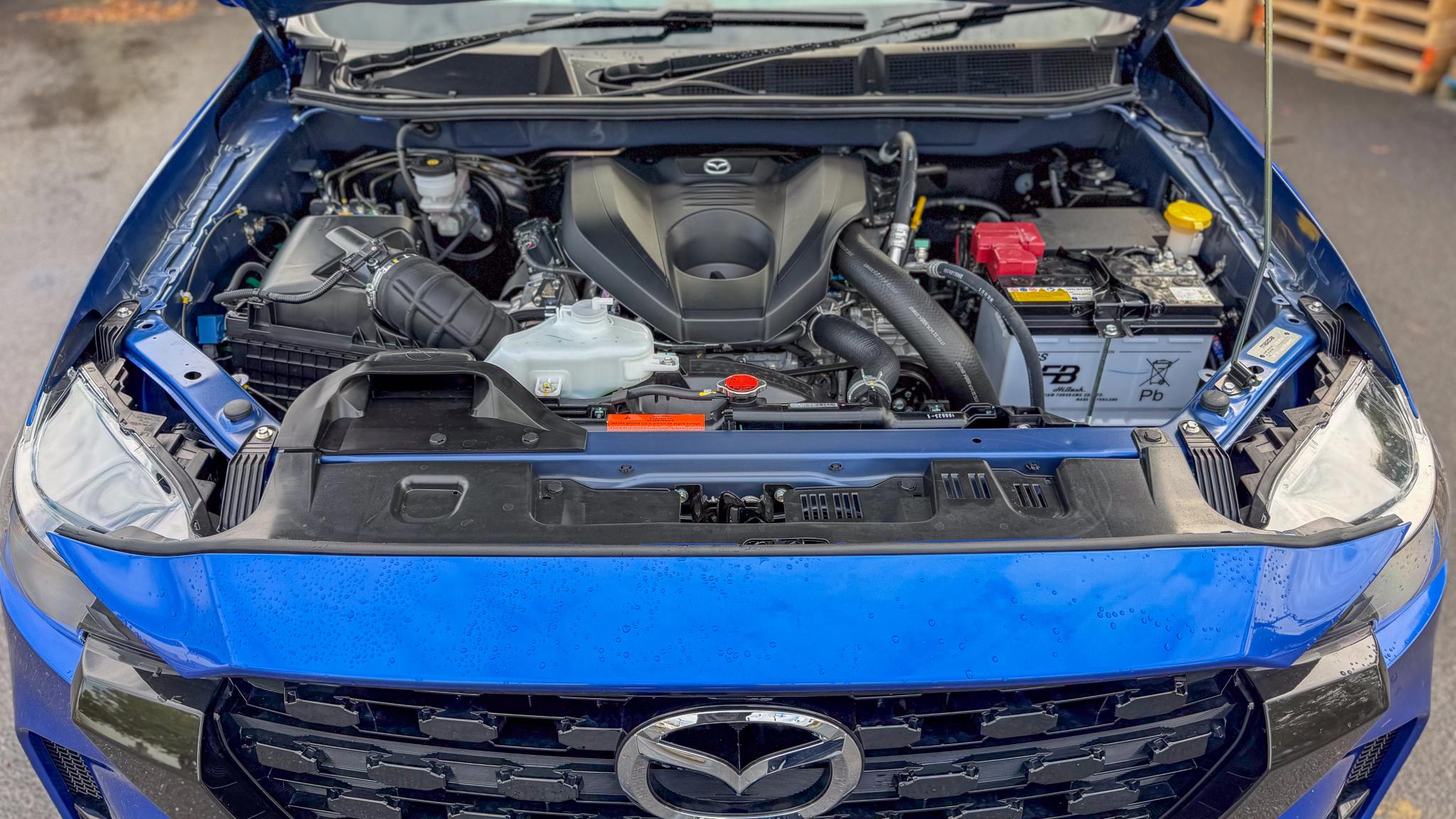
The 3.0-litre four-cylinder turbo-diesel makes 140kW and 450Nm, and the torque arrives early. Roll onto the throttle from 1600rpm and the BT-50 just leans into the load without needing revs. It is not quick, and the numbers are middling next to a Ranger V6 or even a twin-turbo Triton, but it never feels like it is working hard at highway speed.
The six-speed automatic is a relaxed thing. It holds top gear happily at 110km/h and drops a cog cleanly for an overtake. On undulating roads it can get busy, kicking down on every rise, and on long descents it downshifts earlier than you'd choose. Some drivers will appreciate the engine braking. Others will tap it across to manual and pick their own gear.
This is where the Ranger comparison bites. The Ford is quieter, smoother and steers with more precision. The BT-50's steering is slow and a little heavy at parking speeds, there is wind noise around the mirrors at highway pace, and the diesel gets vocal and vibey when you ask it to maintain speed up a long hill.
The suspension is tuned for a tonne in the back, and that is deliberate. Unladen, the rear axle skips and bucks over sharp bumps, and there is noticeable body roll if you push through a corner. Put a couple of hundred kilos in the tub or hitch a trailer and the whole ute settles. This is a work-tuned chassis, not a compromised one.
Off the bitumen it is excellent. Rough Terrain Mode sharpens the traction control for loose surfaces and lets the ute walk out of rutted climbs without touching the rear diff lock, and when you do need the lock, it engages at the push of a button. You also get low range, 240mm of ground clearance and an 800mm wading depth. The standard highway-terrain tyres are the obvious weak point if you plan to use it off-road.
Two things to know before hitting a track. Turn off the autonomous emergency braking, because a steep approach or overgrown scrub can trigger it. And be prepared for the front parking sensors to complain about everything.
How efficient is the BT-50 GT?
Mazda claims 8.0L/100km combined for the 4x4 3.0-litre. In the real world expect closer to 10L/100km. The 76-litre tank gives a realistic touring range of around 800km between stops which is genuinely useful in the bush.
Servicing is every 12 months or 15,000km, and capped pricing runs for seven years. Budget around $2,500 for the first five years, which puts it within a couple of hundred dollars of a D-Max or Triton over the same period.
The warranty is five years, unlimited kilometres, with five years of roadside assistance. Crucially, Mazda applies no kilometre cap to commercially used vehicles, which matters if this ute is going on the books. Isuzu offers six years on the mechanically identical D-Max, so Mazda is a year short of its own twin.
Is the BT-50 GT safe?
The BT-50 carries a five-star ANCAP rating from 2022, scoring 86% for adult occupant protection, 89% for child occupant protection, 67% for vulnerable road users and 84% for safety assist. Eight airbags are standard, including a driver's knee bag and a centre airbag between the front seats.
The driver assistance suite is comprehensive: autonomous emergency braking with pedestrian, cyclist and motorcycle detection, adaptive cruise control with stop and go, lane keeping and lane centring, blind-spot monitoring, rear cross-traffic braking, traffic sign recognition and driver attention monitoring. The stereo camera system was upgraded with the facelift and is noticeably calmer when passing trucks than the old setup.
For 2026 the GT gains a 360-degree camera as standard and on a ute this size it is not a luxury. Tub-obscured reversing and tight site parking are exactly where a surround view pays off, and it was the single biggest omission on the previous model.
The remaining gripe is calibration. The parking sensors chirp at cars passing in the next lane, the AEB warnings fire more often than in most rivals, and the adaptive cruise cannot hold the ute stationary in traffic for more than a couple of seconds before it disengages. It is all switchable, but you will find yourself switching.
What are the main competitors to the BT-50 GT?
The Ford Ranger is the refined all-rounder. From around $64,000 plus on-roads for an XLT, it is quieter, rides better unladen, steers more sweetly and offers a 10-speed automatic and an optional V6. It is also the ute everyone else is measured against. The BT-50 counters with a simpler drivetrain and a sharper driveaway price.
The Isuzu D-Max is the twin under the skin. From around $66,000 plus on-roads for an LS-U+, it shares the BT-50's engine, gearbox, chassis and cabin architecture, and adds a sixth year of warranty. If you prefer the Isuzu's face or your local Isuzu dealer, there is no wrong answer here. The Mazda's edge is a slightly nicer interior finish and, right now, a keener deal.
The Mitsubishi Triton is the value option. From around $64,000 plus on-roads for a GSR, it brings a smoother twin-turbo 2.4-litre with 150kW and 470Nm, a Super Select 4x4 system that can run four-wheel drive on sealed roads, and a 10-year conditional warranty. The BT-50 answers with a bigger, simpler engine that many buyers trust more for hard towing, and a more resolved off-road traction package.
The BYD Shark 6 is the curveball. From around $58,000 driveaway, the plug-in hybrid Shark offers 100km of electric range, far more power and a cabin that makes the Mazda's look like a farm shed. It cannot match the BT-50's tow rating or its low-range hardware, and it is a very different ownership proposition.
Cross-shop on refinement and the Ranger wins. Cross-shop on hard work per dollar and the BT-50 GT, the D-Max and the Triton are close enough that your dealer experience and the deal on the day should decide it.
Should I buy the BT-50 GT?
Not every ute is trying to be a luxury SUV and the BT-50 GT is proof. It is a workhorse first, with a proven 3.0-litre diesel, proper 4x4 hardware, a rear diff lock and a full 3500kg tow rating, and everything else comes second.
That ordering shows. It is not as polished as a Ranger, the engine grumbles when pushed, the rear end fidgets when empty and the driver aids need a firm hand. None of that makes it especially sophisticated, but it does make the BT-50 feel like a ute designed for hard use. The GT then adds enough comfort to make it perfectly liveable during the week.
If you want to feel fancy, buy an SP or look elsewhere. If you actually use your ute, tow with it, load it and take it somewhere without phone reception, the BT-50 GT in the high $60Ks driveaway is one of the smartest buys in the segment.
VerdictThe Beep Verdict
Rob Leigh
Co-founder & Director
Rob Leigh is Co-founder and Director of The Beep based in Melbourne, Australia. He has 15+ years inside a major automotive OEM, specialising in product planning, pricing and vehicle strategy.
About Author