2026 BMW iX1 review
BMW's smallest electric SUV has quietly become one of its smartest buys, yet the biggest threat to the iX1 is now parked a few metres away in the very same showroom.

Rob Leigh
Pros
- Cabin that feels lifted from a much pricier BMW
- Hushed, beautifully sorted ride you never tire of
- Fresh pricing sneaks it under the LCT threshold
Cons
- Range and charging speed trail the segment leaders
- The newer iX3 overshadows it on tech
- Plus servicing plan gets expensive
Our Verdict
The iX1 is the small premium EV for people who want a BMW to actually feel like a BMW, without the theatre or the shouty styling. It nails the fundamentals, cabin, comfort and refinement, and a recent price cut has turned it into a genuine value proposition for anyone leasing.
The catch is that BMW's own new-generation iX3 has arrived and made the iX1 look a step behind.
What does the BMW iX1 cost in Australia?
BMW has sharpened its pencil on the iX1 and the difference is significant. The all-wheel-drive xDrive30 now opens from $77,900 plus on-road costs, a big drop on the roughly $86,800 it commanded at launch. In the process, the cheaper front-wheel-drive eDrive20 has been dropped, so the dual-motor car is now the entry point to the range.
| Variant | Powertrain | Drivetrain | Price excluding on-roads |
| iX1 xDrive30 | Electric, 230kW, 400km | All-wheel drive | $77,900 |
See iX1 driveaway pricing and specifications →
A limited xDrive30 Sport Collection also joins the range at $79,900 driveaway, bundling M Sport styling, 19-inch alloys, adaptive M suspension and the Driving Assistant Professional and Surround View packages, finished in Alpine White.
On value, the numbers do real work. Expect roughly $85,000 driveaway and because the list price sits comfortably under the luxury car tax threshold, the iX1 qualifies for the EV fringe benefits tax exemption. That makes it a genuinely compelling novated lease, which is how a lot of these will find homes.
The elephant in the room is the Tesla Model Y. A Long Range all-wheel-drive Model Y now starts from $68,900 before on-road costs, so it undercuts the BMW while offering far more space.
The German alternative sits the other way, with the Audi Q4 e-tron opening at $84,900. Mercedes-Benz has all but wound down the EQA, with its electric GLA replacement not due until 2027, which leaves a hole in the segment the iX1 is well placed to fill. Among the premium set, the BMW now looks keenly priced.
What does the BMW iX1 look like?
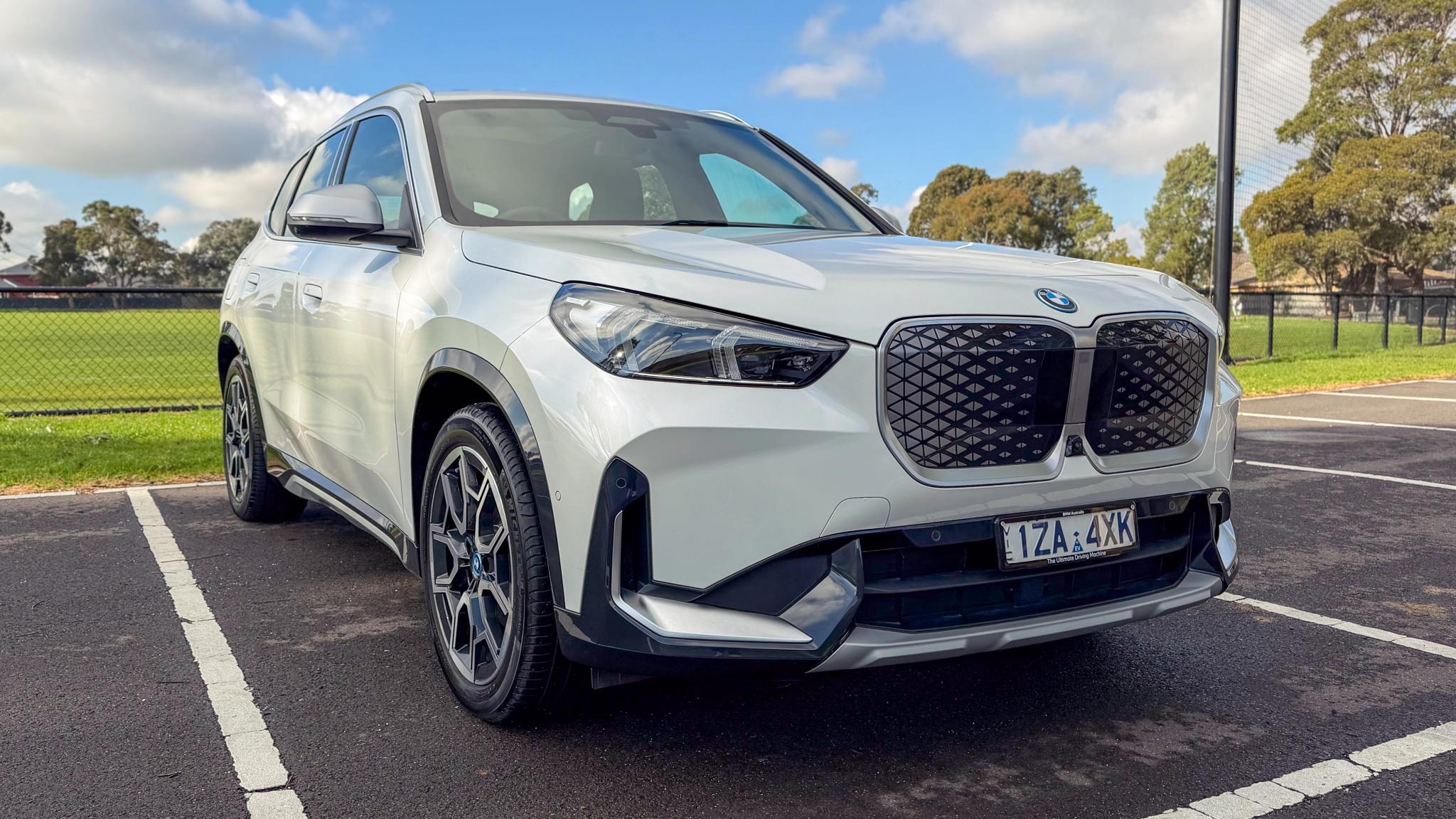
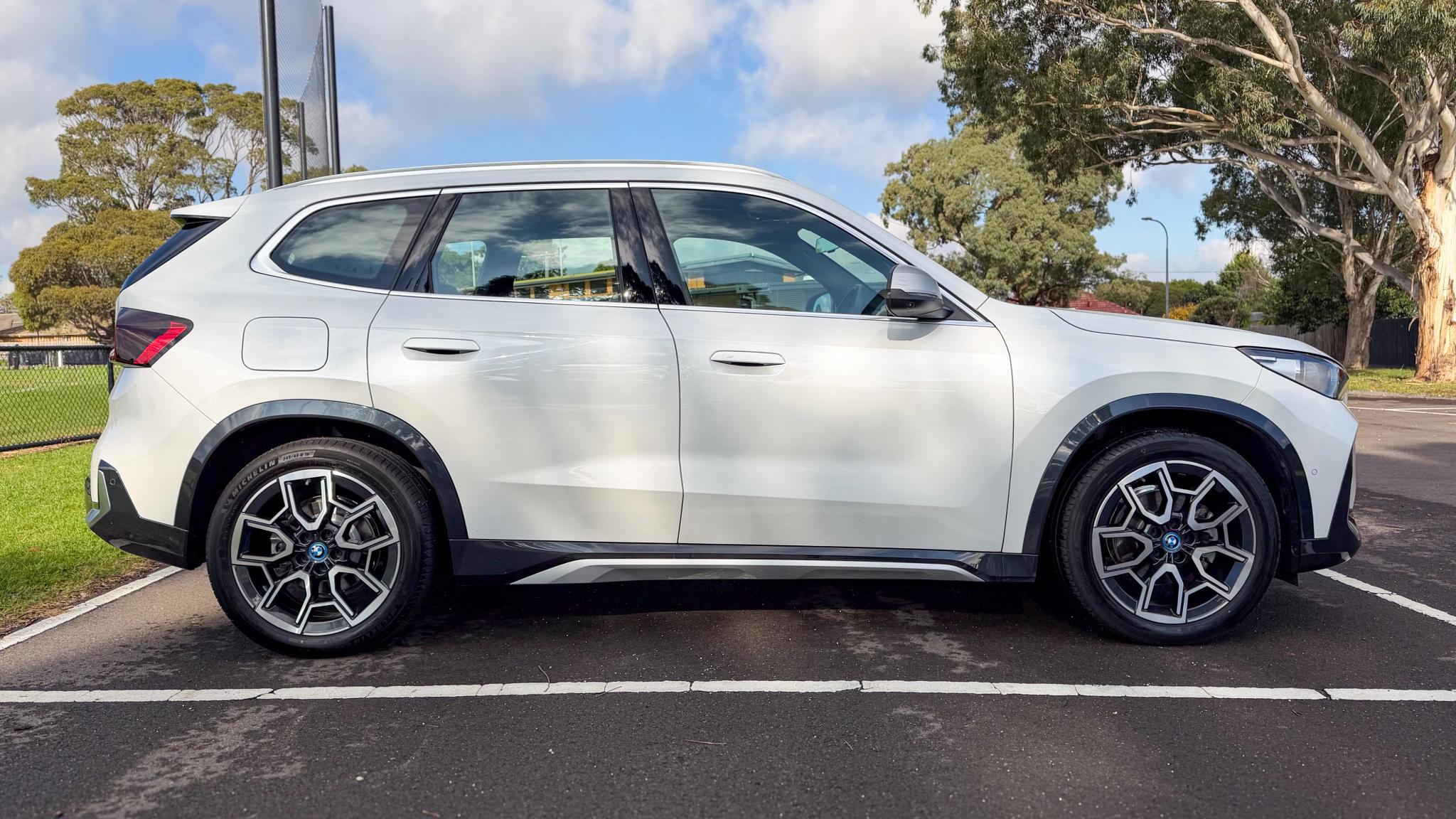
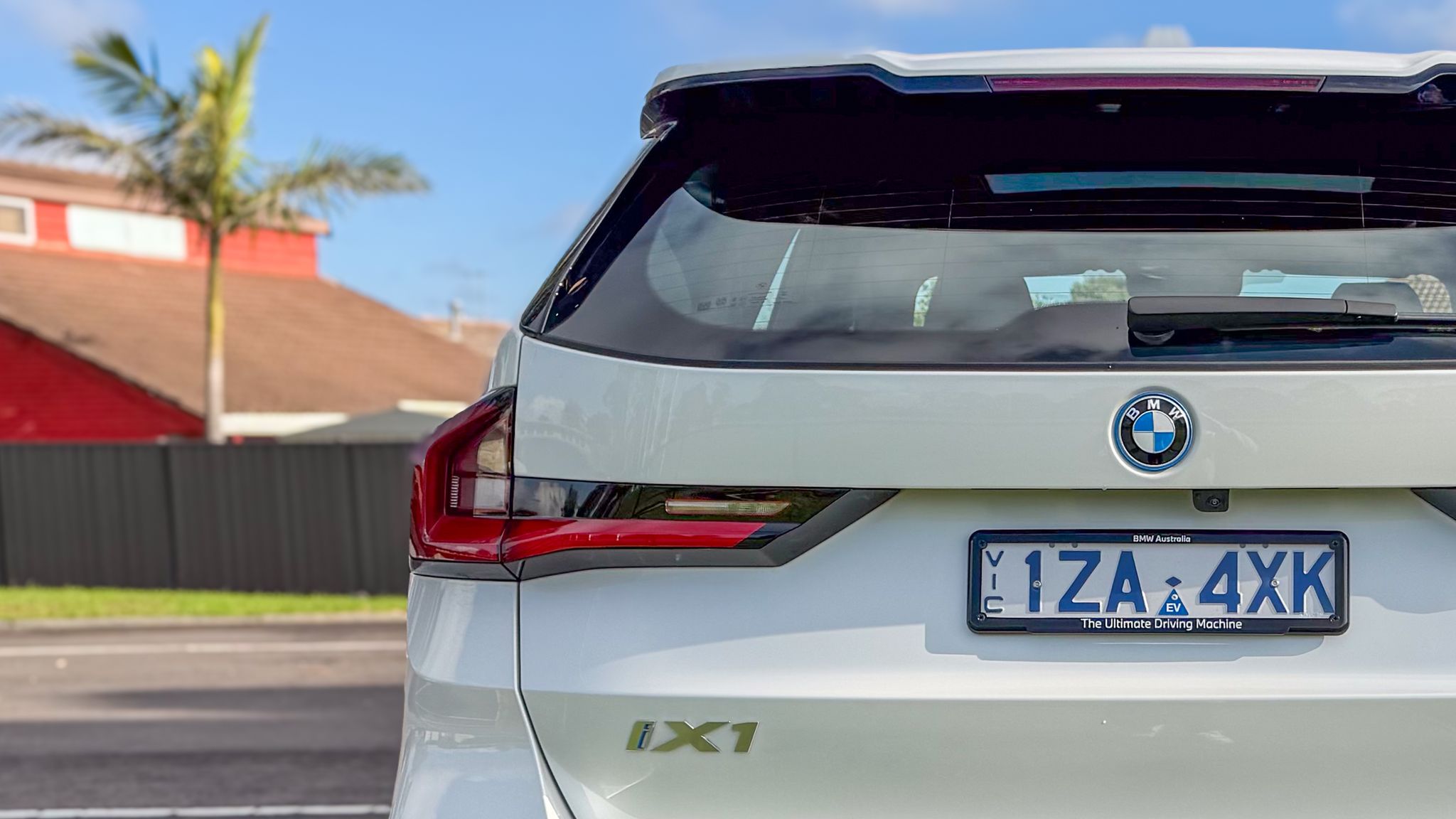
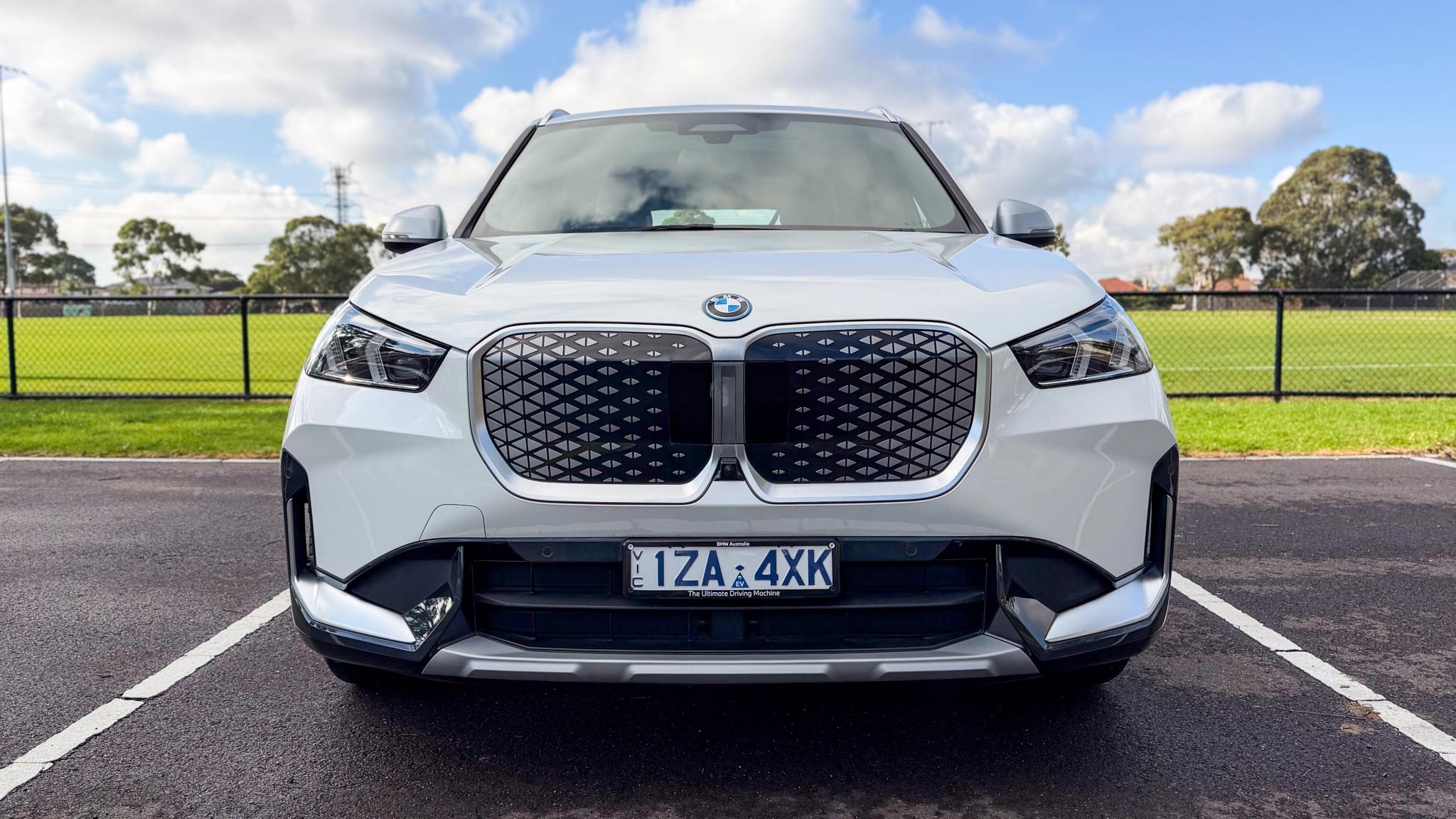
The iX1 is a study in restraint and that is deliberate. Where plenty of EVs try to announce themselves with sci-fi surfacing, this one looks like the handsome third-generation X1 it is based on, just with a closed-off kidney grille and subtle blue accenting.
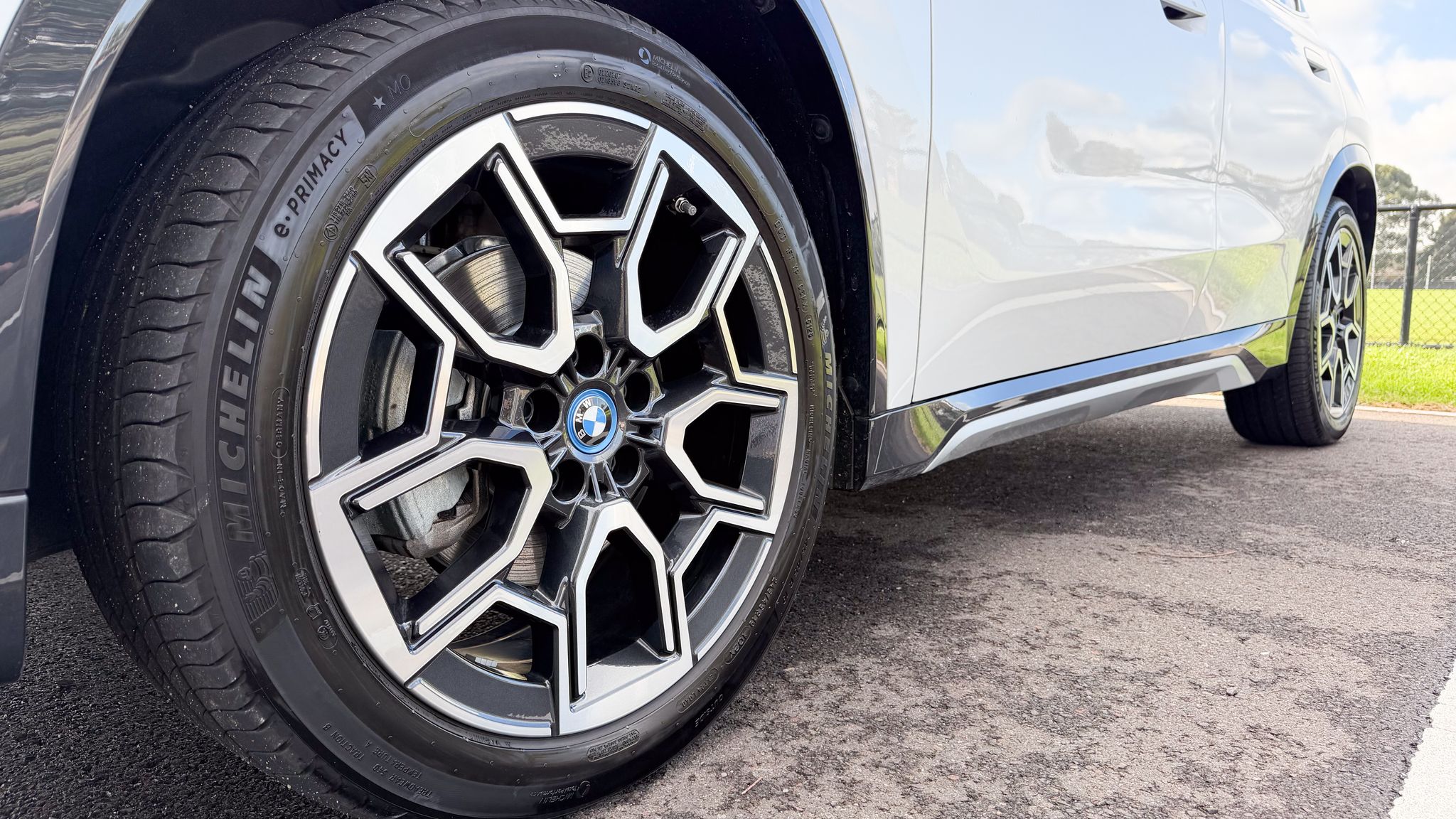
You get adaptive LED headlights, 19-inch alloys and, on the Sport Collection, the more aggressive M Sport bumpers and satin grille. It is crisp, upmarket and quietly confident.
In a segment that ranges from the minimalist Model Y to the fussier Mercedes EQA, the iX1's low-key maturity is a selling point. This is an EV for people who would rather not make a song and dance about it.
What is the BMW iX1 like inside?
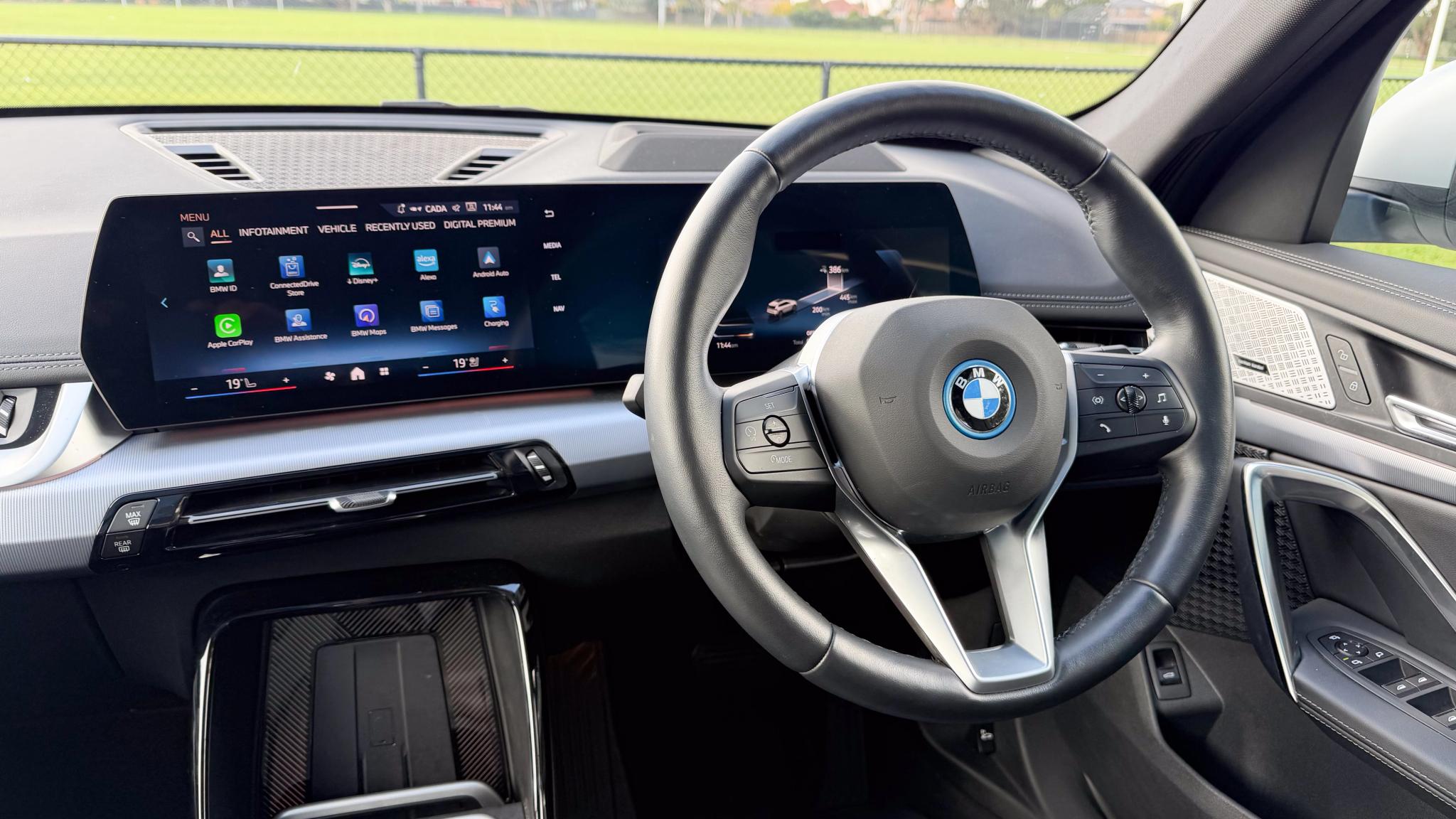
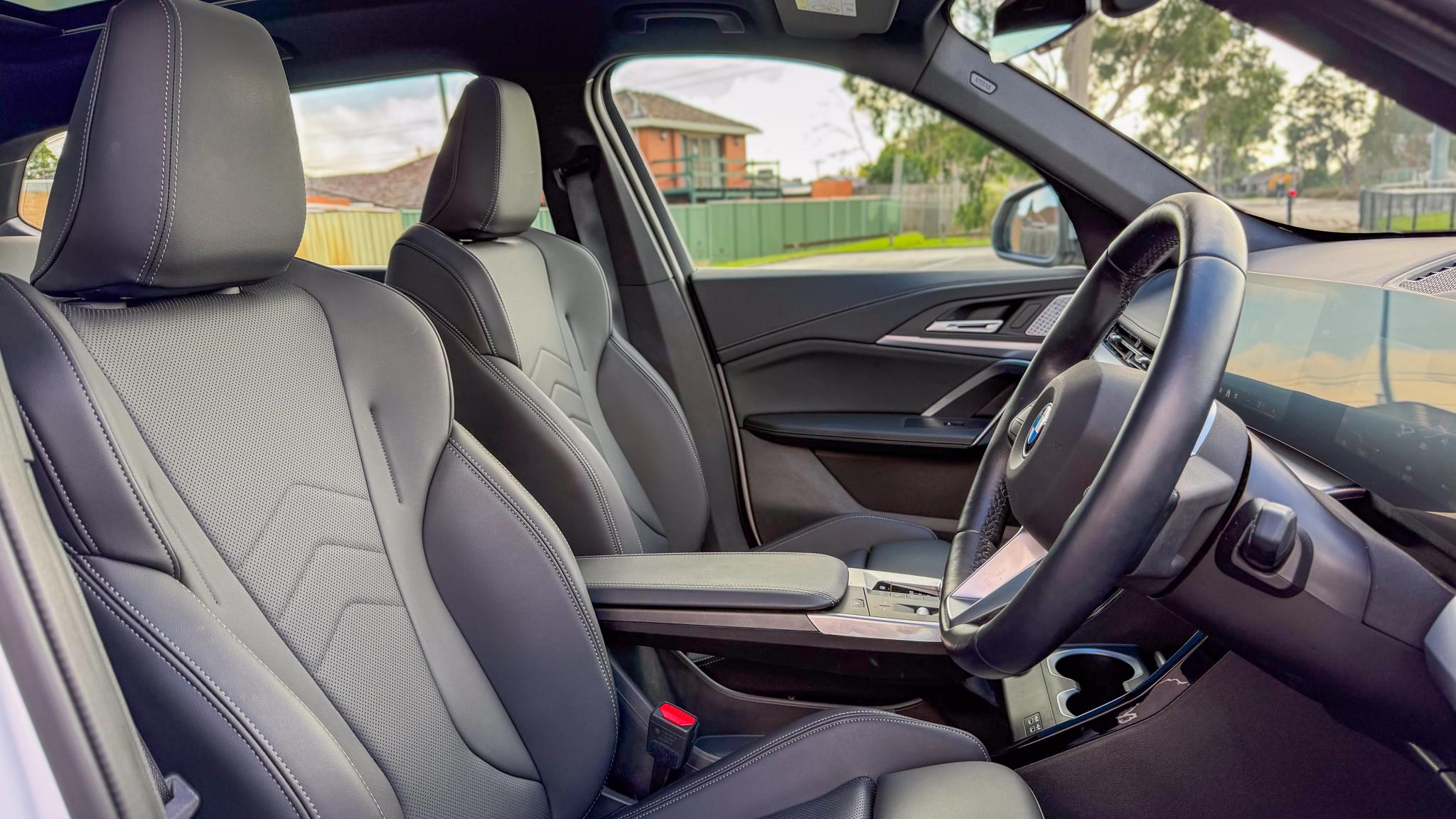
This might be one of BMW's more affordable models, but the cabin carries the same sense of occasion you would expect from something considerably dearer.
The curved display pairs a 10.25-inch driver's cluster with a 10.7-inch touchscreen, and the whole dash is lifted by ambient lighting, Veganza leatherette and, if you option it, lovely open-pore wood trim. Material quality is a highlight, with metal-look surfaces that genuinely look like metal and speaker grilles that feel expensive.
The floating centre console is a smart piece of packaging, opening up the cabin and housing an upright wireless charger that grips your phone properly rather than swallowing it. There are hard plastics down low, but they are kept away from where your knees and elbows land.
The one gripe is BMW's march towards the touchscreen. Some functions that deserve a physical button now live in menus, which takes your eyes off the road longer than it should. The system itself is quick and slick, so once you learn it the frustration fades, but it is a step backwards on the move.
How practical is the BMW iX1?
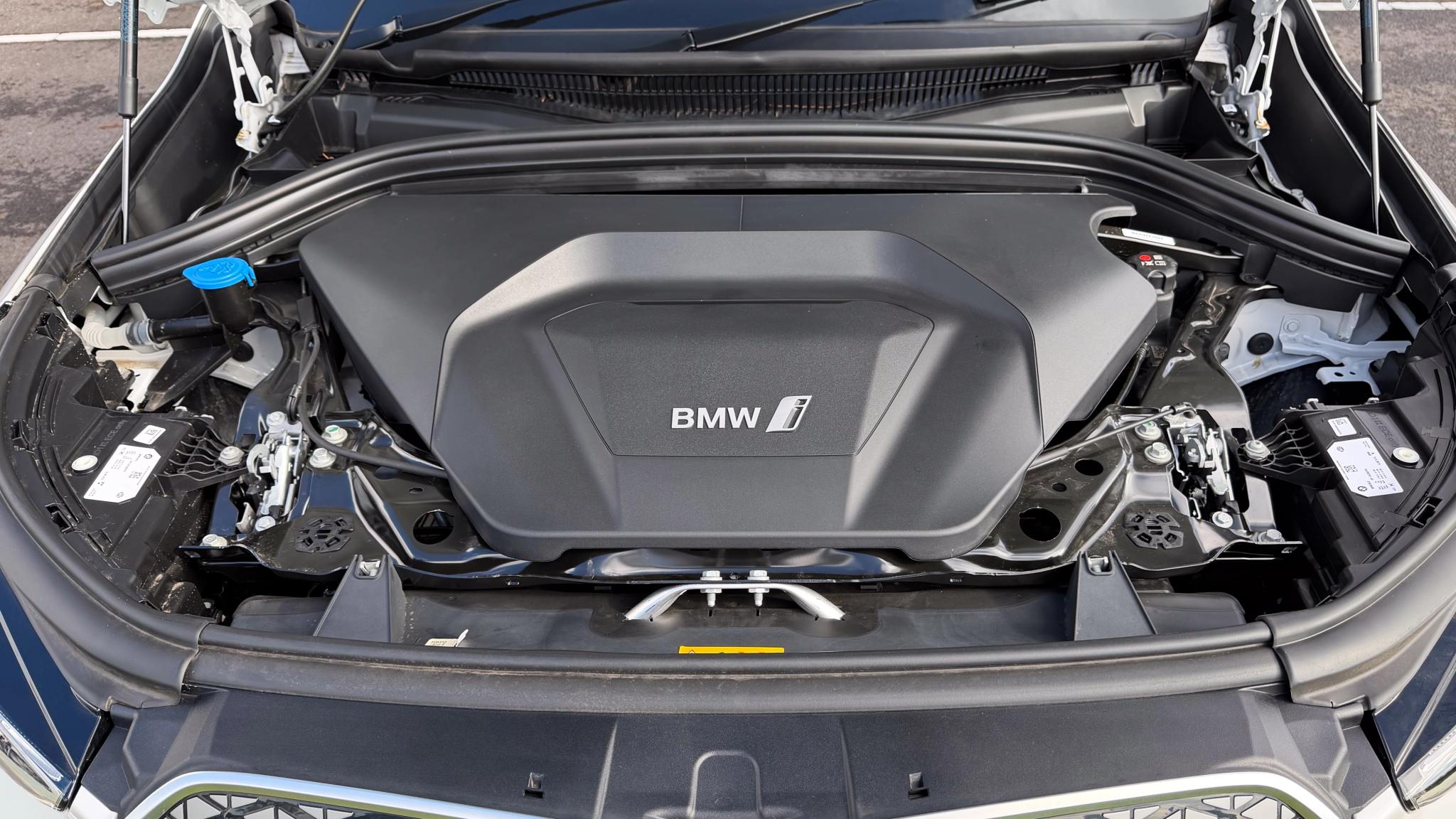
For a compact SUV, the iX1 is more accommodating than its footprint suggests.
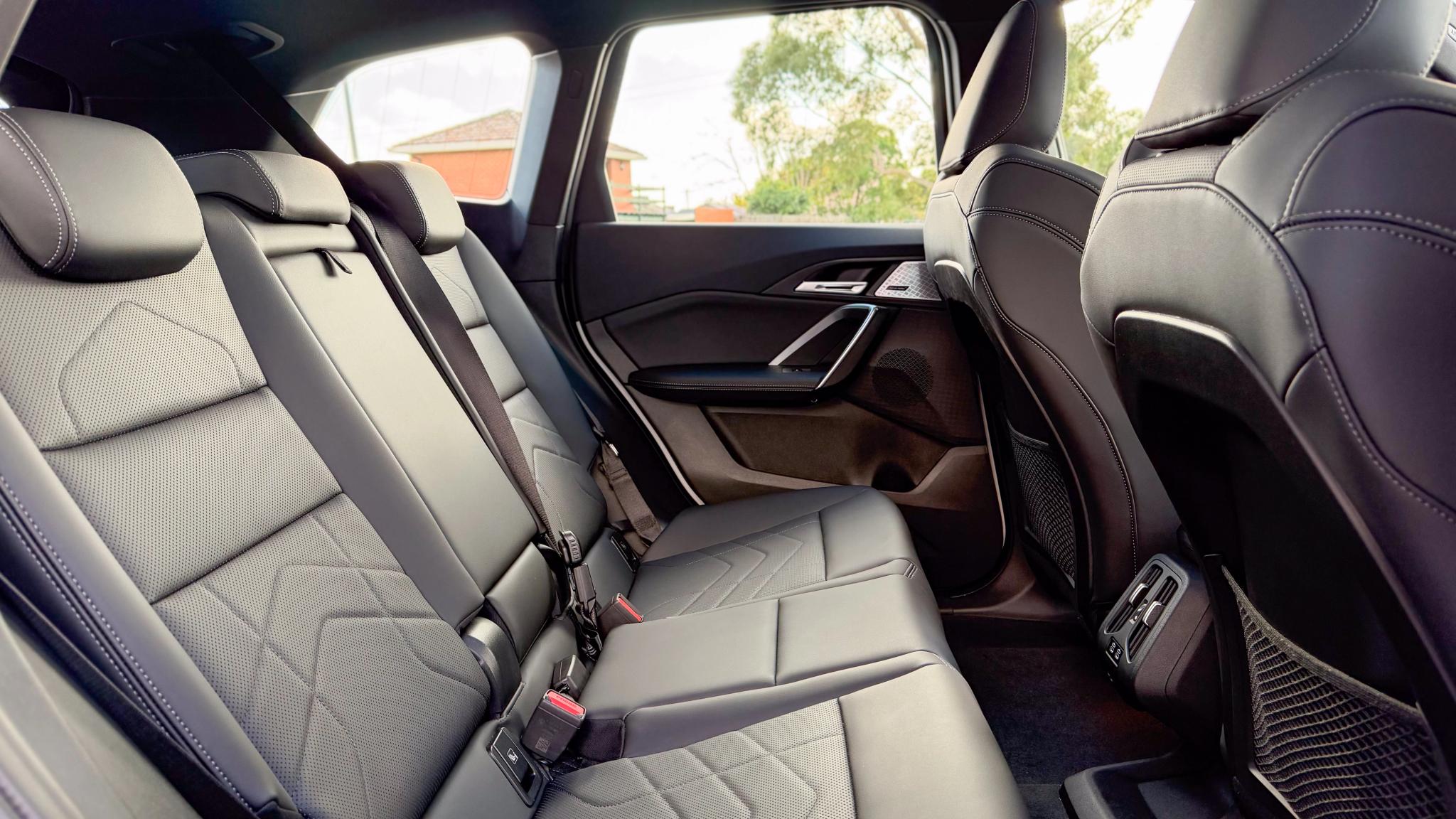
There is real room in the back for adults, a near-flat floor, rear air vents and a pair of USB-C ports, so the second row is a genuinely usable place to spend time.
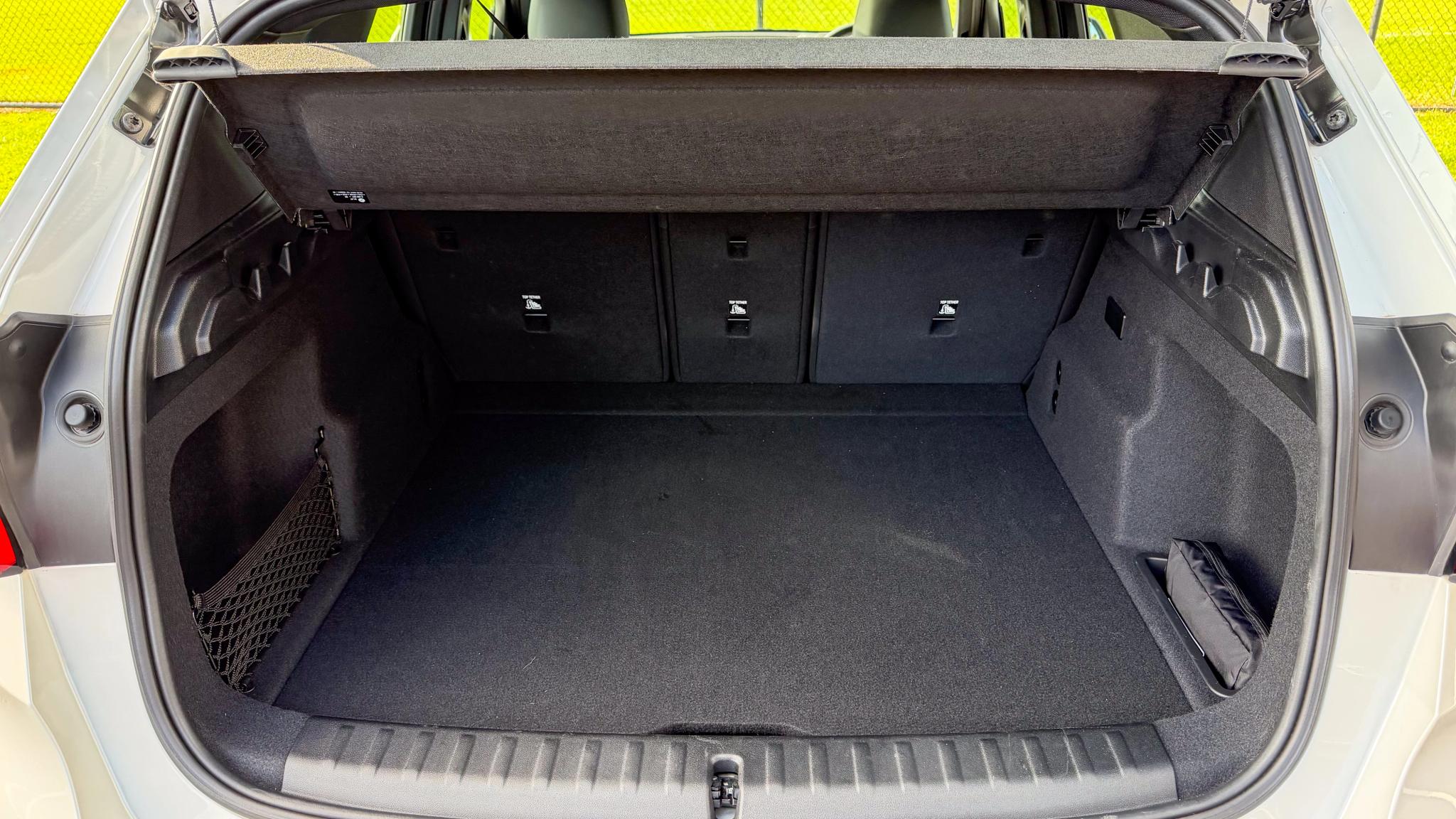
Boot space is a healthy 490 litres, expanding to 1495 litres with the 40:20:40 rear seats folded. That is generous for the class, even if it falls well short of the cavernous Model Y. There is no front boot, which is a minor black mark against a car on a combustion-derived platform.
Storage around the cabin is clever, with big door bins and a deep console shelf, though the little bin under the armrest is too small for a modern phone. Worth noting there is no spare wheel either, just a tyre repair kit, so a serious sidewall puncture means a call to roadside assist. As a family runabout with two ISOFIX points and easy access, it otherwise does the job with room to spare.
What is the BMW iX1 like to drive?
Two things stand out the moment you pull away. The seating position is nicely elevated, so forward visibility is excellent, and the iX1 is remarkably quiet, hushed even by EV standards. Those two traits set the tone for the whole car.
The ride is the star. Thanks to standard adaptive suspension, the iX1 rounds off sharp edges and stays composed over broken surfaces where lesser EVs turn brittle and jittery. It feels grown up, settled and expensive, and that composure never lets up.
On paper it has the muscle too, with 230kW and 494Nm from its dual-motor all-wheel-drive layout and a claimed 0-100km/h in 5.6 seconds. The steering is light and accurate, which makes it a doddle to thread through the city, and the one-pedal B mode is one of the more intuitive setups going, smoothing traffic into something almost relaxing.
It is not flawless. The brakes lack outright bite at the top of the pedal, and this is a refined cruiser rather than a back-road weapon. If you want drama, BMW's Hans Zimmer Iconic Sounds pipe in a synthesised soundtrack, but the iX1 is at its best simply gliding along in near silence.
How efficient is the BMW iX1?
BMW quotes around 18.3kWh/100km and a 400km range on the ADR cycle (440km WLTP), and in the real world you can expect figures in the high teens depending on how much time you spend at highway speed. That range is competitive rather than class-leading, and it is the iX1's clearest efficiency weakness against rivals nudging past 500km.
Charging is respectable without setting records. The iX1 tops out at 130kW on DC, good for a 10 to 80% top-up in about 29 minutes, and a strong 22kW AC onboard charger means quick top-ups at a suitable wall box. BMW also throws in a Chargefox subscription to sweeten public charging.
Ownership is covered by a five-year, unlimited-kilometre warranty, with the high-voltage battery guaranteed for eight years or 160,000km. Servicing is condition-based, and BMW offers prepaid Service Inclusive packages in two tiers.
| Service Inclusive package | 4 years | 6 years |
| Basic | $1,263 | $1,800 |
| Plus (adds brakes and wipers) | $5,219 | $6,240 |
The Basic plan is reasonable for a premium EV. The Plus plan, which folds in brake and wiper replacement, is where costs climb steeply, so budget carefully if you plan to keep the car long term.
Is the BMW iX1 safe?
The iX1 carries a five-star ANCAP rating based on 2022 testing of the X1 range. It posted strong results across the board, including 86% for adult occupant protection, 88% for child occupant protection and an excellent 94% for safety assist.
Standard kit is comprehensive with seven airbags including a front-centre bag, autonomous emergency braking with pedestrian and cyclist detection, blind-spot monitoring, rear cross-traffic alert, and a lane-centring assistant that works without nagging. The surround-view camera system is among the clearest in the class.
What are the main competitors to the BMW iX1?
The Tesla Model Y is the default choice and the value benchmark, with a Long Range all-wheel-drive version now from $68,900 plus on-road costs. It is roomier, longer-legged and charges faster, but its minimalist cabin and firmer edge feel a world away from the BMW's plushness. Cross-shop it if space and range top your list.
The Volvo EX40, the electric SUV formerly badged XC40 Recharge, remains a strong rival with its own understated Scandinavian charm and a punchy twin-motor option. It matches the iX1 for premium feel and edges it on outright range, so it deserves a look for anyone drawn to the BMW's low-key character.
The Genesis GV60 is the left-field premium play, a well-built, richly equipped electric SUV from Hyundai's luxury arm riding on the same fast-charging architecture as the Ioniq 5. It lacks the badge cachet of the BMW but counters with strong range, rapid charging and a generous ownership package, so it rewards buyers willing to look beyond the established names.
The Audi Q4 e-tron is the most direct German rival, opening from $84,900, so it asks more than the freshly repriced iX1. It offers a roomy, well-built interior and Audi's usual polish, making it the obvious alternative if the BMW is sold out or you simply prefer the four rings.
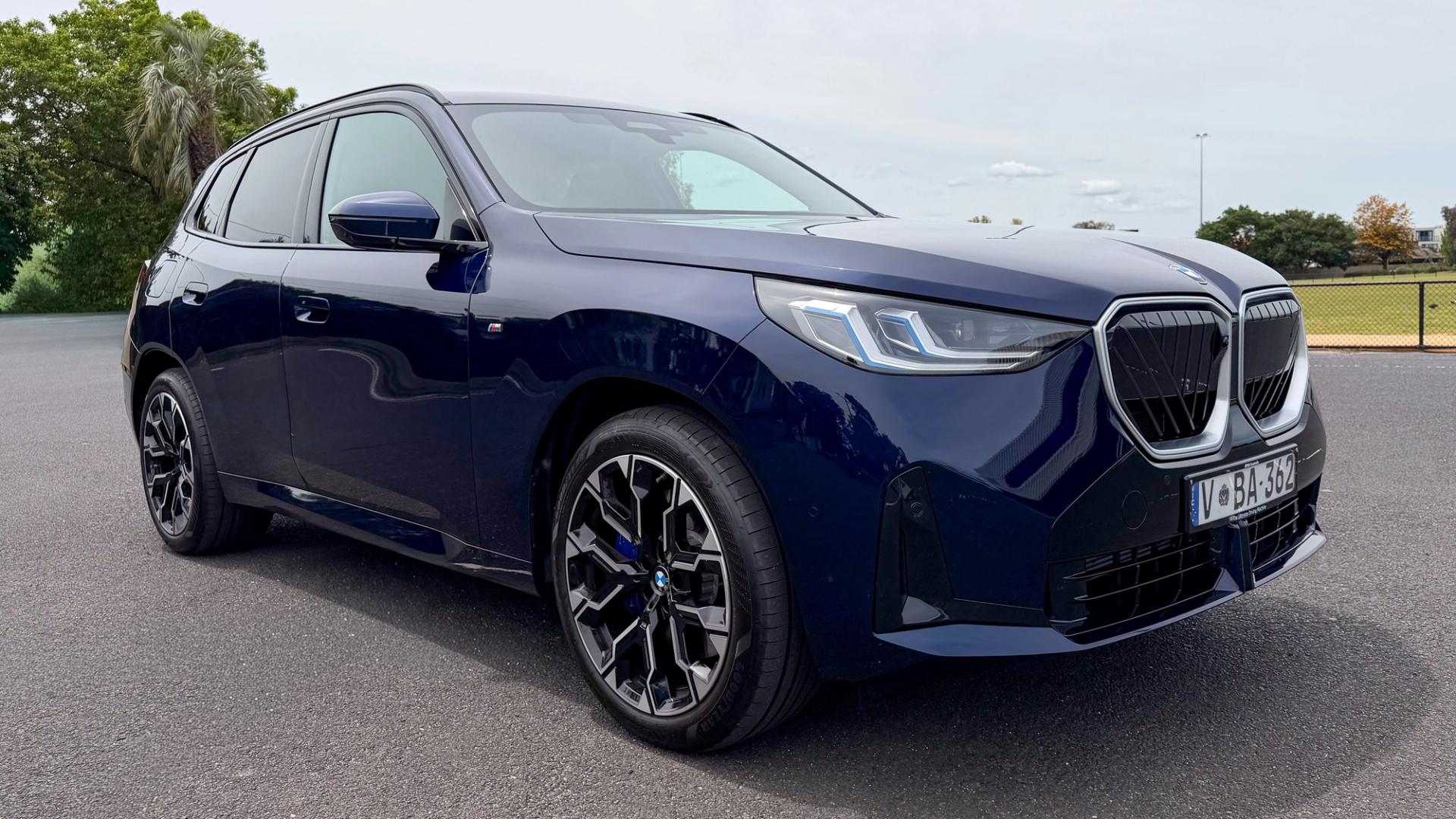
The BMW iX3 is the rival that matters most, and it comes from inside BMW's own showroom. At $89,900 for the iX3 40 it also sits under the LCT threshold, and for around $12,000 more it delivers a car on a dedicated next-generation Neue Klasse platform with more space, more range and newer tech. If your budget can stretch, it makes the iX1 feel a step behind, and it is the single biggest reason to think carefully before signing.
Should I buy the BMW iX1?
Yes, with one big caveat.
The iX1 does the important things brilliantly. It feels genuinely premium, rides beautifully, stays whisper quiet and, thanks to that price cut, now makes real financial sense for lease buyers slipping under the LCT threshold.
The problem is internal. BMW's new iX3 40 lands at $89,900, also under the threshold, so for around $12,000 more you step up to a car on a dedicated next-generation EV platform with more space, more range and newer tech. Next to it, the iX1 suddenly feels a generation behind.
None of which stops the iX1 being a thoroughly likeable small electric SUV, and a sharply priced one at that. This is a car we would lease rather than buy outright, and the maths backs that up. It slips under the LCT threshold, qualifies for the FBT exemption and makes a strong novated proposition, so you get into a genuinely good BMW for sensible money.
That is also the smarter play given what is coming. The iX1 is good enough to recommend today, but the iX3 is already here and BMW's Neue Klasse rollout will only accelerate from here.
Lease it, enjoy it, and when the contract ends the better car you will inevitably want should be sitting right there waiting.
VerdictThe Beep Verdict
Rob Leigh
Co-founder & Director
Rob Leigh is Co-founder and Director of The Beep based in Melbourne, Australia. He has 15+ years inside a major automotive OEM, specialising in product planning, pricing and vehicle strategy.
About Author